17 Best Outdoor Adventures for Active Toddler Families

You’ll find the best outdoor adventures for your active toddler right in your neighborhood—from nature scavenger hunts on short trails to splash pad play and berry picking at local farms. Transform beach walks into tide pool discoveries, start backyard camping to build confidence, and explore botanical gardens during outdoor story time. Winter offers snowman building and animal tracking, while warmer months bring butterfly gardens and wildlife watching. Each activity builds your toddler’s curiosity and physical skills while creating lasting family memories you’ll both cherish as they grow.
Key Takeaways
- Nature scavenger hunts on flat trails under one mile build observation skills while toddlers explore at their own pace.
- Splash pads and beach tide pools offer safe water introduction with proper supervision and protective gear like water shoes.
- Wildlife watching at nature reserves during early morning hours maximizes animal activity and engagement for young explorers.
- Outdoor obstacle courses using natural materials like logs and rocks develop physical skills through age-appropriate challenges.
- Seasonal activities like berry picking and backyard camping introduce outdoor adventures while building lifelong appreciation for nature.
Nature Scavenger Hunts on Easy Walking Trails
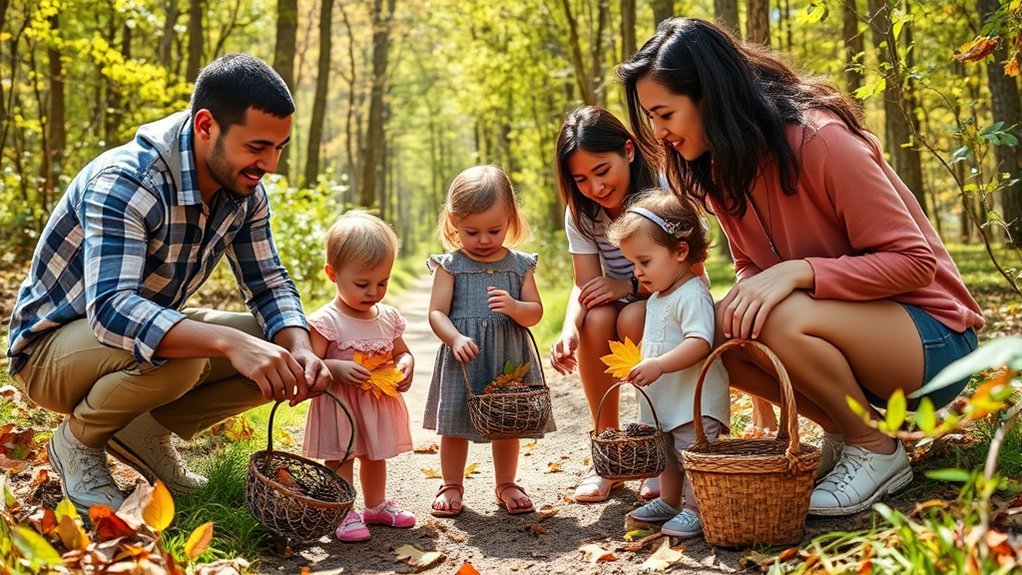
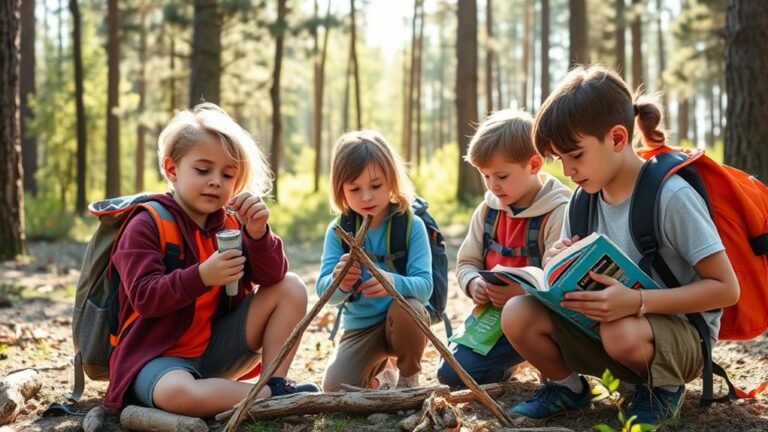
Nature scavenger hunts transform ordinary walks into exciting adventures that capture your toddler’s natural curiosity. Create simple checklists with pictures of items they can find: pinecones, colorful leaves, smooth rocks, or different textures of bark. This approach encourages sensory exploration as little ones touch, smell, and examine their discoveries.
Choose flat, well-maintained trails under one mile with minimal obstacles. Your toddler’s attention span typically lasts 20-30 minutes, making shorter paths ideal. Pack a small collection bag for treasures and bring your phone for basic tree identification using apps.
Focus on three to five items per hunt to prevent overwhelm. Let your child set the pace, stopping frequently to investigate their finds. These outings build observation skills while burning energy in constructive ways.
Splash Pad and Water Play Adventures
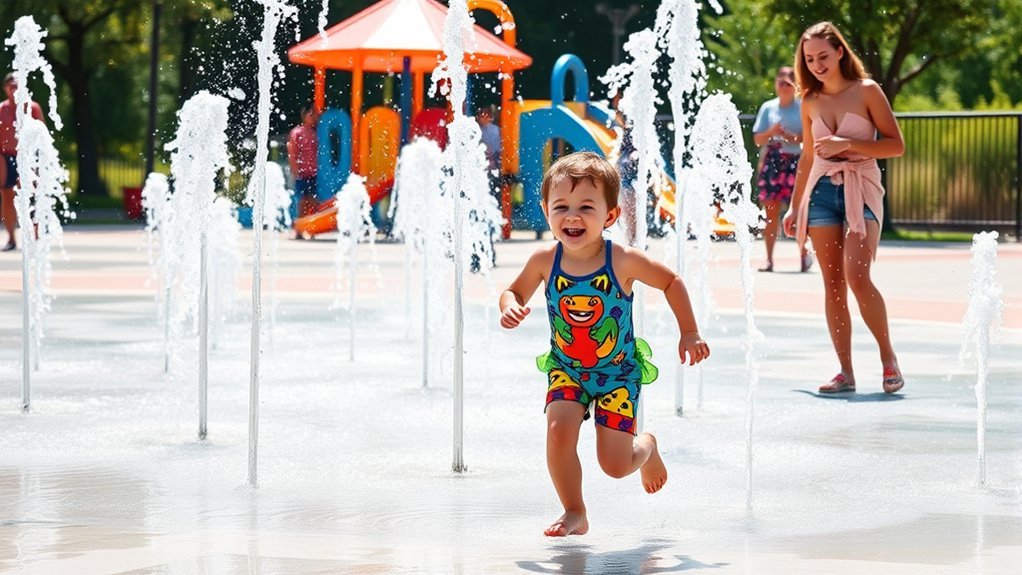
When summer temperatures soar, splash pads offer the perfect low-stakes water introduction for toddlers who aren’t ready for pools or lakes.
You’ll find these interactive water features at parks and recreation centers, where ground-level sprays and fountains let your toddler explore at their own pace.
Pack water shoes to prevent slips, apply waterproof sunscreen, and bring extra clothes for the ride home.
Essential splash pad gear: grippy footwear for safety, reef-safe sunscreen for protection, and a complete dry outfit for comfortable travels afterward.
While splash pads are generally shallow, water safety remains important—always maintain arm’s-reach supervision and teach your toddler not to drink the sprayed water.
Introduce simple splash games like “follow the spray” or “jump over the water stream” to encourage active play.
Many facilities operate on timed cycles, giving you natural break opportunities.
Arrive during morning hours for smaller crowds and optimal sun protection.
Berry Picking at Local Farms

Berry picking transforms a simple snack run into an educational outdoor adventure that engages your toddler’s senses while teaching them where food comes from.
Local farm experiences offer hands-on learning opportunities where little ones discover textures, colors, and tastes while developing fine motor skills through gentle plucking.
Choose strawberries or blueberries for easier picking heights and softer terrain. Arrive early when it’s cooler, and bring sun protection, water, and a wagon for tired legs. Most farms provide containers, but bring extra for enthusiastic pickers.
The adventure continues at home with simple berry recipes like no-bake fruit parfaits or frozen treats. Your toddler will proudly eat what they’ve harvested, making them more willing to try fresh foods.
It’s exercise, education, and family bonding combined.
Beach Exploration and Tide Pool Discoveries
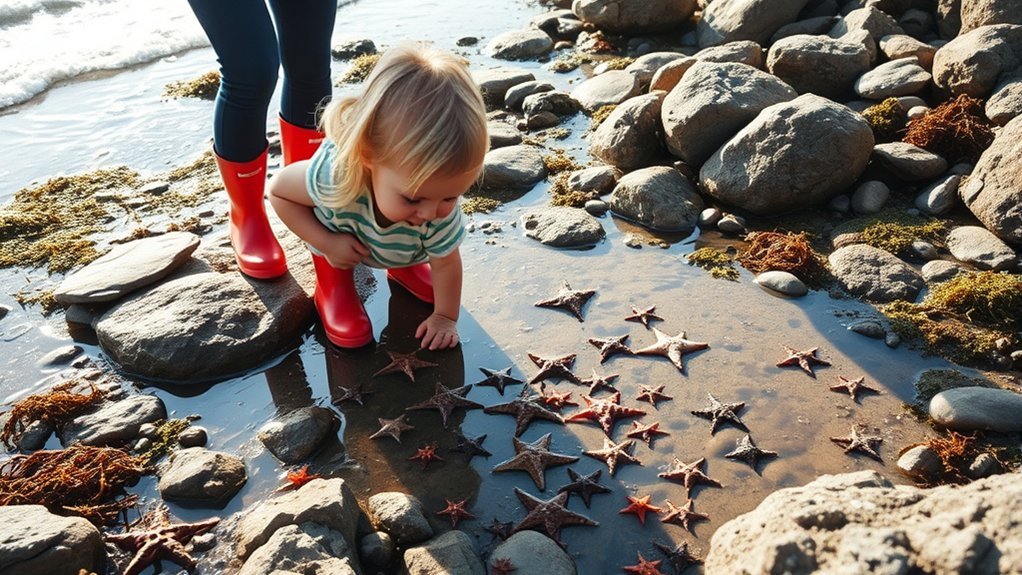
The ocean’s edge offers an ever-changing playground where your toddler can explore tide pools teeming with starfish, hermit crabs, and sea anemones.
These shallow pools become natural aquariums during low tide, revealing fascinating marine life that’ll captivate your little one’s curiosity.
Bring a bucket for their shell collection and teach gentle observation skills. Your toddler can spot colorful creatures hiding under rocks while learning to respect ocean habitats.
Essential Tips for Tide Pool Adventures:
- Check tide schedules – Visit during low tide when pools are most accessible and marine life is visible
- Pack water shoes – Protect small feet from sharp rocks and slippery surfaces
- Bring a field guide – Help identify different species and turn exploration into an educational experience
Time your visits carefully to maximize discovery opportunities.
Beginner-Friendly Camping in Your Backyard or Campground
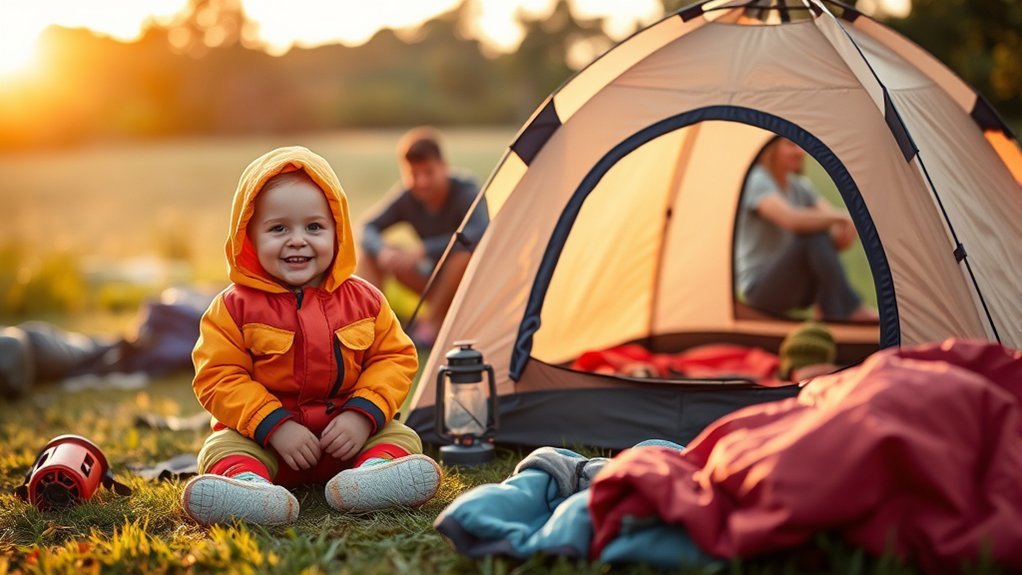
Camping introduces your toddler to outdoor living without requiring a major expedition. Start with backyard camping to test gear and routines in a familiar setting. Your little one can help with tent setup, learning to identify poles and stakes while building confidence.
Practice essential skills like using flashlights, rolling out sleeping bags, and organizing supplies. Once you’re comfortable, progress to established campgrounds with toddler-friendly amenities like bathrooms and water access. Choose sites with level ground and nearby trails suitable for short legs.
A small backyard campfire teaches fire safety and creates memorable moments roasting marshmallows. Keep first trips brief—one night succeeds better than ambitious weekends. Pack familiar comfort items, maintain regular nap schedules, and embrace flexible expectations.
These early experiences establish lifelong appreciation for outdoor adventures.
Gentle Stream and Creek Wading
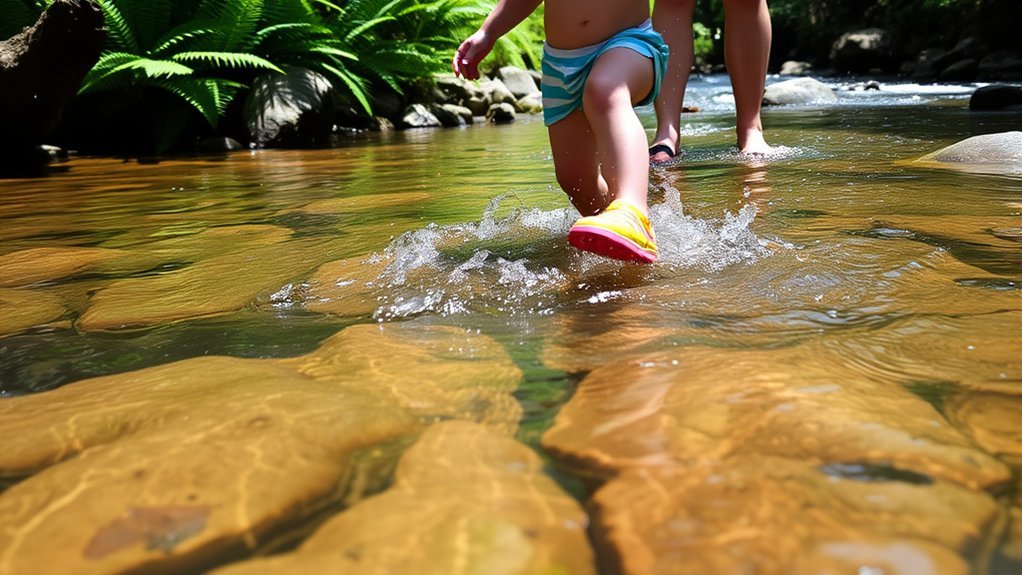
Shallow creeks offer sensory-rich environments where toddlers can safely explore moving water while developing balance and coordination.
You’ll find these gentle waterways perfect for introducing your little one to aquatic adventures without overwhelming them.
Before wading, prioritize stream safety by checking water depth, flow speed, and temperature. Look for calm areas where water moves slowly and reaches only ankle to knee height on your toddler.
Essential gear and activities for creek exploration:
- Water shoes with grip – Protect tiny feet from rocks while preventing slips on algae-covered surfaces
- Creek critters observation – Help your toddler spot minnows, tadpoles, and water striders in shallow pools
- Simple tools – Bring nets and buckets for catch-and-release discovery
Always maintain arm’s length supervision near water.
Paved Bike Trail Rides With Trailer or Balance Bikes
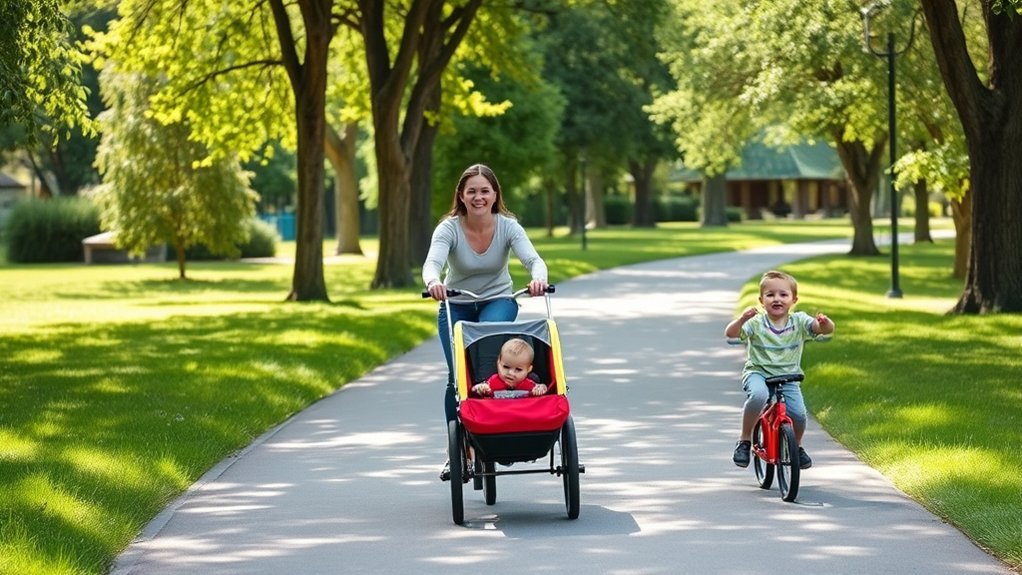
While water adventures offer one type of exploration, paved bike trails open up entirely different terrain for your toddler to experience. Start with bike trailer adventures, ensuring trailer safety through proper harness use and helmet fitting.
Paved bike trails provide safe, controlled environments for introducing toddlers to cycling adventures while building their confidence and coordination skills.
As your child grows, introduce balance bike techniques on flat paths, teaching them steering and stopping basics. Research bike path destinations near you, prioritizing those with gentle grades and rest areas.
Master bike trail etiquette by keeping right, announcing passes, and controlling speed around others. Invest in quality family cycling gear including sun protection and hydration packs.
Apply these toddler biking tips: start with short distances and gradually increase. Toddler biking safety requires constant supervision and choosing low-traffic times.
Join family cycling events to connect with other active parents while building your child’s confidence.
Playground-to-Playground Hiking Adventures
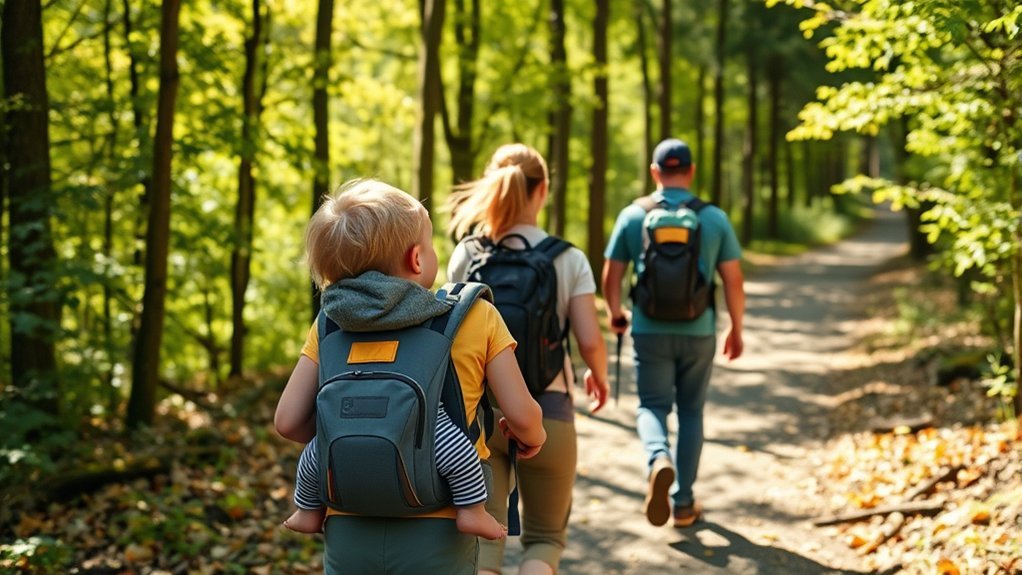
Transform ordinary hikes into exciting adventures by planning routes that connect multiple playgrounds, giving your toddler built-in motivation and reward stations along the way.
Strategic Playground Exploration Tips:
- Map Multi-Stop Routes – Use park apps to identify 2-3 playgrounds within a 1-2 mile radius, creating natural rest points that break up longer walks into manageable segments for little legs.
- Pack Nature Play Activities – Bring magnifying glasses, collection bags, and field guides to transform the journey between playgrounds into educational experiences where toddlers discover leaves, rocks, and insects.
- Time It Right – Start at less crowded playgrounds during peak hours, hiking to busier ones as crowds thin, ensuring your toddler gets quality play time without overwhelming stimulation.
This approach combines physical activity with social interaction, making every trail segment purposeful and engaging for energetic toddlers.
Wildlife Watching at Nature Reserves
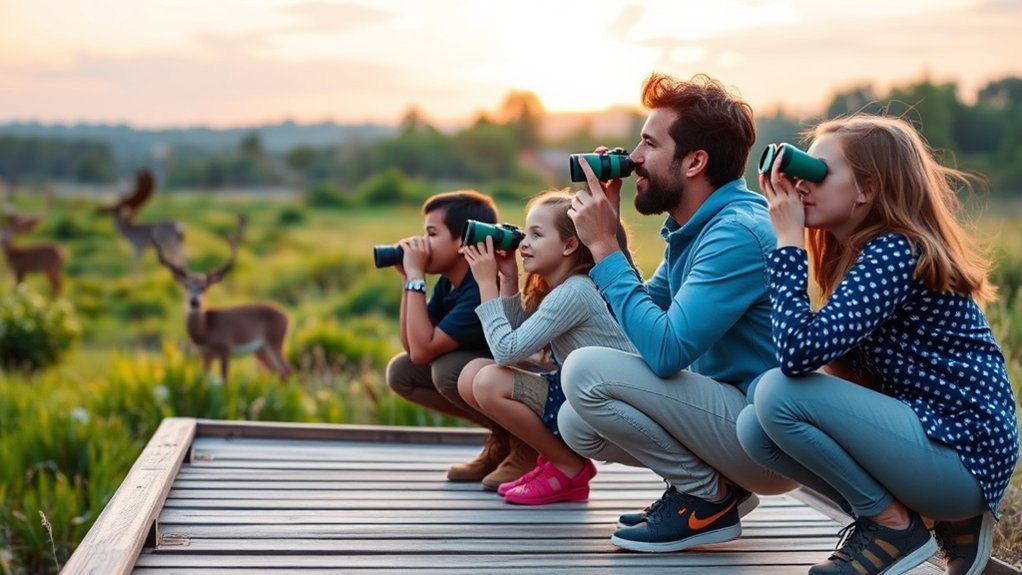
Nature reserves offer toddlers front-row seats to observe birds, butterflies, and small mammals in their natural habitats, turning patience into an exciting skill rather than a chore.
You’ll find that bird watching captivates young minds when you bring child-friendly binoculars and a simple identification guide with colorful pictures.
Animal tracking becomes an interactive treasure hunt as you help your toddler spot footprints, feathers, and other wildlife clues along trails.
Reserve visitor centers typically provide activity sheets designed for young explorers, making learning feel like play.
Choose reserves with shorter loop trails and observation platforms where restless legs can move freely.
Early morning visits reward your family with peak animal activity, though you’ll want to pack snacks since toddlers rarely appreciate wildlife on empty stomachs.
Outdoor Obstacle Courses and Nature Gyms
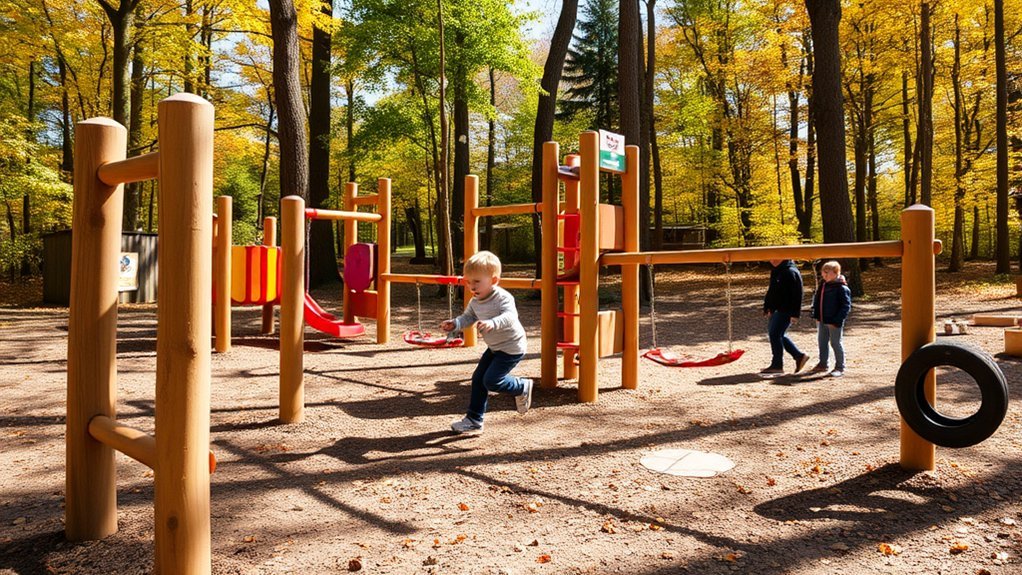
After your toddler has practiced stillness during wildlife watching, they’ll be ready to release that pent-up energy at outdoor obstacle courses and nature gyms.
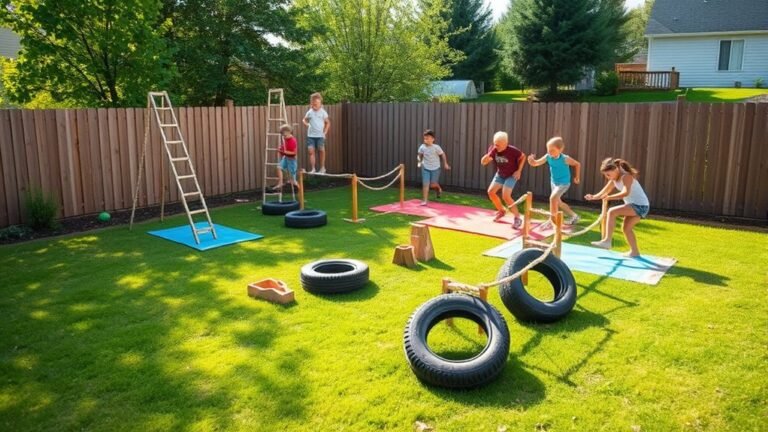
These natural play spaces combine physical challenges with environmental exploration, offering nature gym benefits like improved coordination, confidence, and problem-solving skills.
When selecting locations, consider these obstacle course design features:
- Age-appropriate challenges: Look for low balance beams, gentle slopes, and climbing structures under three feet high.
- Natural materials: Prioritize courses using logs, rocks, and rope rather than plastic equipment to enhance sensory development.
- Progressive difficulty levels: Choose sites offering multiple paths so your toddler can advance at their own pace.
You’ll find these facilities at state parks, adventure playgrounds, and specialized nature centers throughout most regions.
Wildflower Walks and Garden Trails
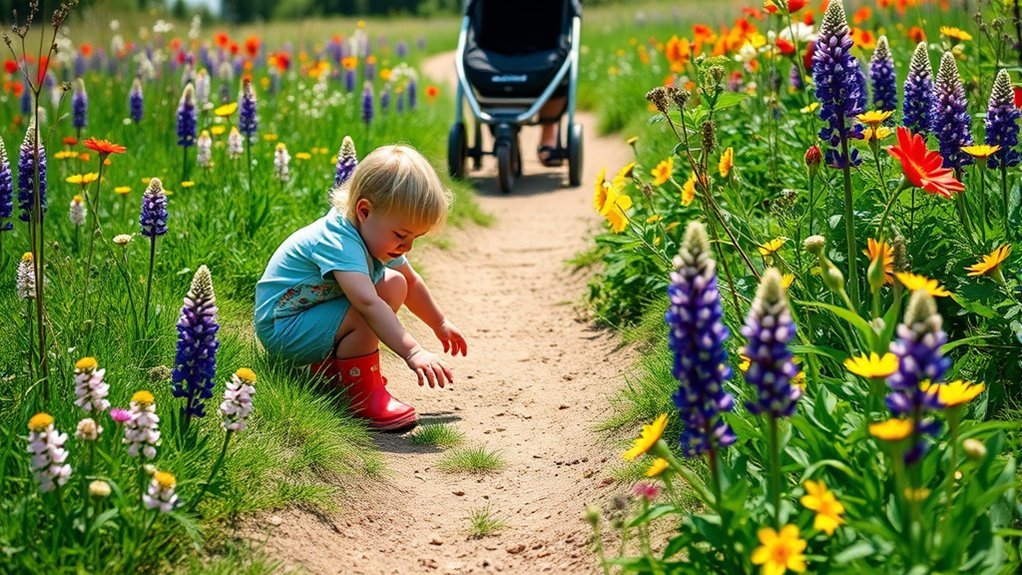
Once your toddler has burned off energy at obstacle courses, they’ll appreciate the gentler pace of wildflower walks and garden trails. These outings transform simple strolls into engaging learning experiences where your child can practice wildflower identification while building observation skills.
Choose botanical gardens or nature centers with designated children’s trails. These spaces often feature low-growing plants at toddler eye level, making exploration naturally accessible. Bring a magnifying glass and field guide to examine petals, leaves, and insects up close.
Garden sensory experiences captivate young minds through touch-friendly plants like lamb’s ear, fragrant herbs, and textured bark. Let your toddler smell lavender, feel fuzzy leaves, and listen to rustling grasses.
These multi-sensory encounters develop curiosity while teaching respect for living things, creating memorable outdoor moments.
Petting Zoos and Farm Visits
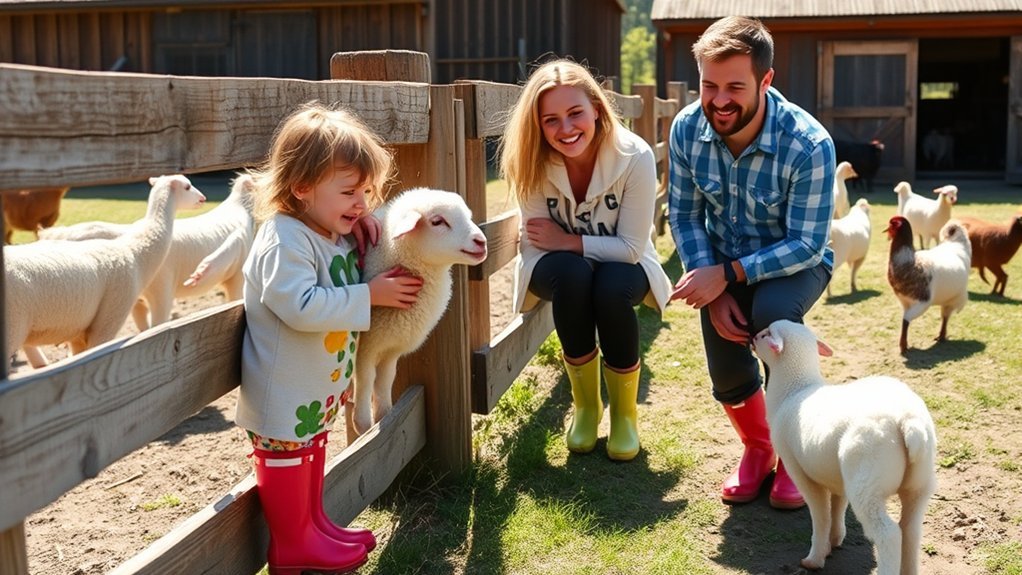
While garden trails engage your toddler’s senses, petting zoos and farm visits add interactive animal encounters that create unforgettable outdoor experiences.
These farm animal interactions teach gentle touch, responsibility, and respect for living creatures while keeping your little one physically active and mentally engaged.
Top toddler friendly activities at farms:
- Feeding stations – Let your toddler hand-feed goats, sheep, and chickens with supervised portions, developing fine motor skills and confidence around animals.
- Egg collecting – Many farms invite children to gather fresh eggs from coops, providing hands-on learning about where food comes from.
- Tractor rides – Hayrides offer exciting outdoor exploration while giving tired toddler legs a break between walking activities.
Schedule morning visits when animals are most active and your toddler’s energy peaks.
Geocaching Adventures for Little Explorers
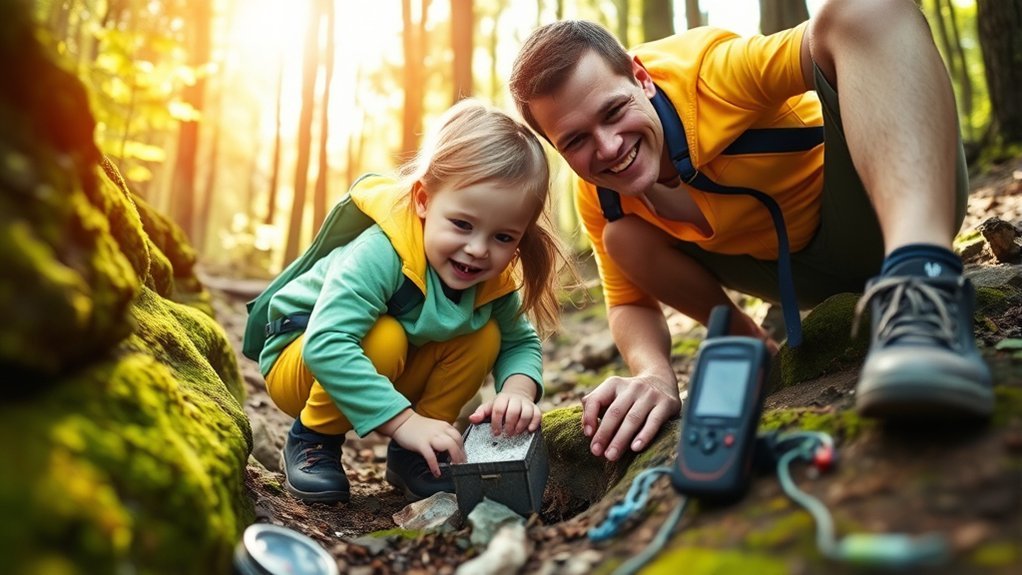
Transform ordinary walks into treasure hunts by introducing your toddler to simplified geocaching—a GPS-based outdoor game that turns nature exploration into an exciting quest.
Start with beginner-friendly caches near playgrounds or parks. You’ll find toddler-appropriate containers filled with small toys and trinkets they can trade.
Before heading out, create a simple treasure map together, marking landmarks like big trees or benches to build anticipation.
Master basic geocaching techniques by letting your little one hold the GPS device or smartphone while you guide them. They’ll love watching the distance countdown as you approach each cache.
Keep adventures short—15 to 20 minutes initially—and celebrate every discovery enthusiastically.
Pack small toys for trading, hand sanitizer, and snacks. Your toddler will develop problem-solving skills while experiencing the thrill of finding hidden treasures outdoors.
Rock Collecting and Beach Combing Expeditions
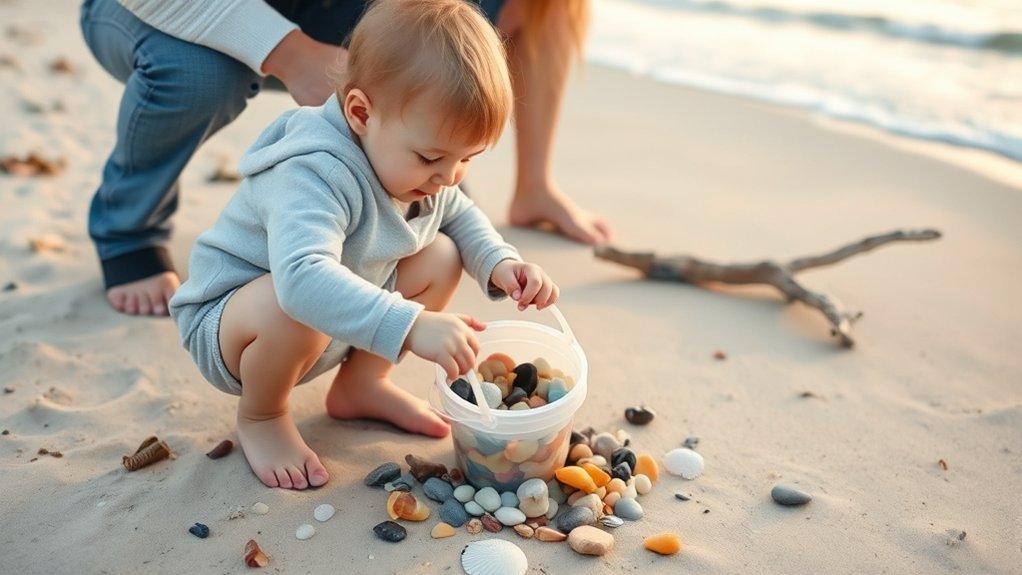
Because toddlers naturally gravitate toward picking up interesting objects, rock collecting and beach combing transform this instinct into purposeful outdoor learning.
You’ll watch your child develop observation skills while building their nature collection. Beach safety remains paramount—always supervise near water and check tide schedules before exploring.
Essential supplies for successful expeditions:
- Collection containers – Small buckets or mesh bags let toddlers carry their treasures while keeping hands free for exploration
- Basic rock identification guide – Picture-based books help little ones match their finds to common rock types and shells
- Magnifying glass – Toddlers love examining textures, colors, and patterns up close
Create a dedicated display space at home where your toddler can arrange their discoveries.
This encourages sorting skills and keeps the learning experience alive between adventures.
Butterfly Gardens and Insect Observations
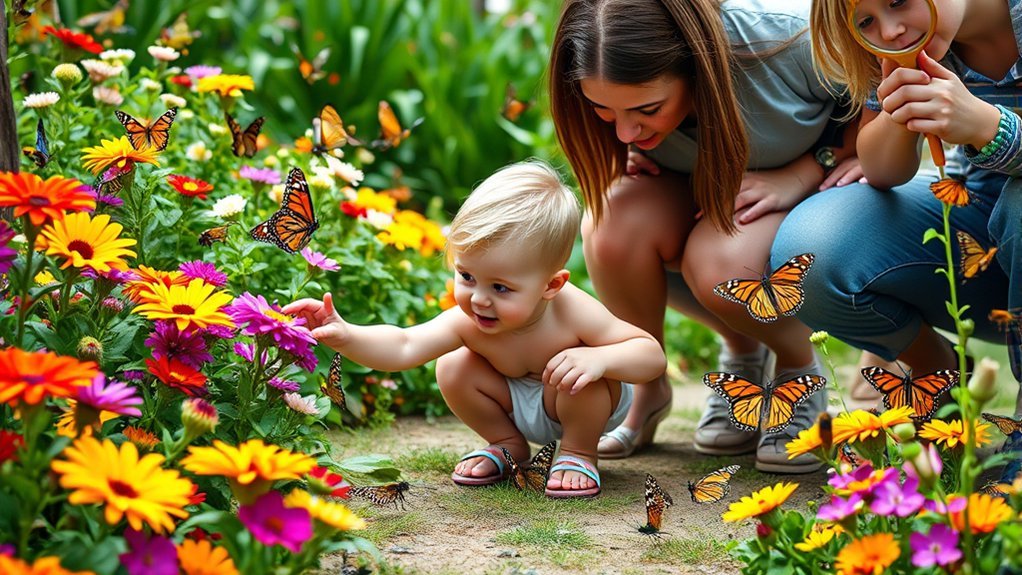
When you introduce your toddler to butterfly gardens and insect watching, you’re opening a window into one of nature’s most accessible and captivating classrooms.
Visit local pollinator gardens where colorful butterflies, busy bees, and fascinating beetles create living lessons right before your child’s eyes.
Bring magnifying glasses and observation jars to examine insects safely up close. Point out different wing patterns, counting legs together, and discussing colors. Many botanical gardens offer dedicated insect habitats with informational signs perfect for curious toddlers.
Create your own butterfly station at home by planting native flowers that attract pollinators. Milkweed, coneflowers, and zinnias work wonderfully.
Morning visits yield the best activity when insects are most energetic. Remember to teach gentle observation—looking without touching helps protect these delicate creatures while fostering respect for wildlife.
Outdoor Story Time at Parks and Botanical Gardens
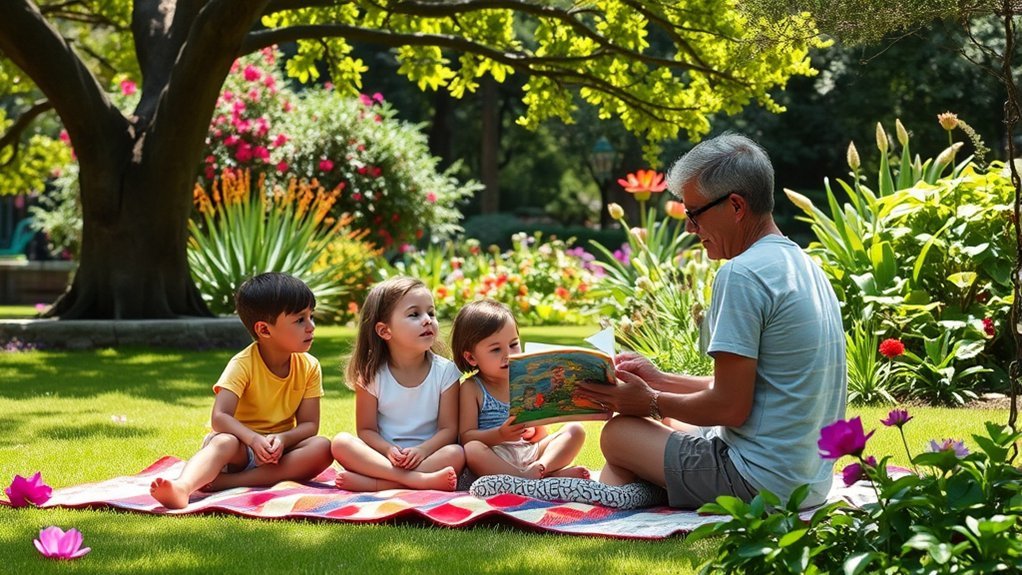
Taking your toddler’s favorite picture books outside combines the magic of storytelling with fresh air and natural surroundings. Parks and botanical gardens provide perfect backdrops for interactive storytelling sessions where your little one can connect book characters with real-world elements.
Top locations for outdoor reading adventures:
- Shaded picnic areas – Spread a blanket under trees where dappled sunlight creates natural ambiance.
- Garden benches near flower beds – Let your toddler observe butterflies and bees while reading nature themed books.
- Grassy hillsides – Roll down together between chapters for active breaks.
You’ll find many public gardens host organized story times during warmer months.
Bring nature themed books that match your surroundings, allowing your toddler to immediately explore concepts they’re hearing about in stories.
Snow Play and Winter Nature Exploration

Winter transforms familiar outdoor spaces into sensory wonderlands where toddlers can explore entirely new textures, sounds, and activities.
Winter awakens young senses through crisp textures, muffled sounds, and magical discoveries that transform everyday surroundings into extraordinary learning landscapes.
You’ll find snowman building creates perfect opportunities for teaching your child about shapes, sizes, and teamwork while developing fine motor skills through packing and stacking snow.
Winter hiking introduces your toddler to animal tracking, where you’ll follow footprints and discuss which creatures left them behind.
Keep trails short and manageable, stopping frequently to catch snowflakes on mittens or examine icicles hanging from branches.
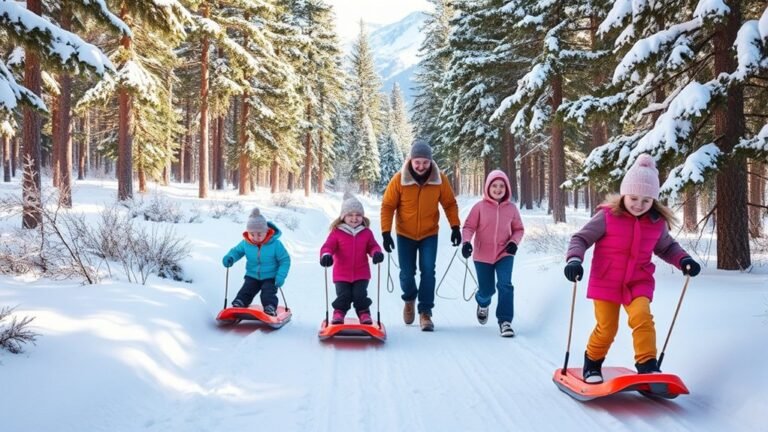
Bring sleds for downhill excitement and let your child experience the crunch of snow underfoot.
Pack warm layers, hand warmers, and thermoses with hot cocoa.
Remember that toddlers chill quickly, so watch for signs of cold and head inside before discomfort sets in.
In case you were wondering
What Safety Gear Should Toddlers Wear During Outdoor Adventures?
You’ll need toddler helmets for biking and scootering, plus sun protection like hats and sunscreen. Don’t forget closed-toe shoes, properly fitted life jackets for water activities, and weather-appropriate clothing to keep your little adventurer safe and comfortable.
How Do I Handle Bathroom Emergencies While Exploring Outdoors With Toddlers?
Pack emergency supplies including portable potty seats, wet wipes, and plastic bags. You’ll want to scout locations with portable toilets beforehand. Always bring extra clothes and hand sanitizer, and teach your toddler to communicate their needs early.
What Snacks Provide Sustained Energy for Active Toddlers on Outdoor Trips?
You’ll want nutrient dense options like nut butter sandwiches, cheese sticks, and dried fruit for sustained energy. These portable snack ideas won’t spoil quickly and they’re easy for little hands to manage during outdoor adventures.
How Can I Keep My Toddler Engaged When They Resist Activities?
You’ll overcome resistance by offering simple toddler distractions like collecting rocks or spotting animals. Switch to different engaging activities when interest fades—let them lead sometimes, and you’ll find they’re more willing to participate in your planned adventures.
What Is the Ideal Adventure Duration for Toddlers by Age?
Research shows 1-2 year-olds manage 30-45 minutes outdoors, while 3-4 year-olds handle 1-2 hours. You’ll find the ideal adventure duration increases with toddler age—match your outings to their developing stamina and attention span for success.
Conclusion
Picture this: your toddler’s sun-kissed cheeks glowing with excitement, tiny hands clutching treasured rocks and pinecones, muddy boots kicked off by the door. You’ll hear their belly laughs echoing through forest trails and watch their eyes widen at fluttering butterflies. These outdoor adventures aren’t just activities—they’re memories being painted in vibrant colors. So grab those little hands, step outside, and let nature become your family’s favorite playground.