Backyard Learning Treasure Hunts for Family Fun
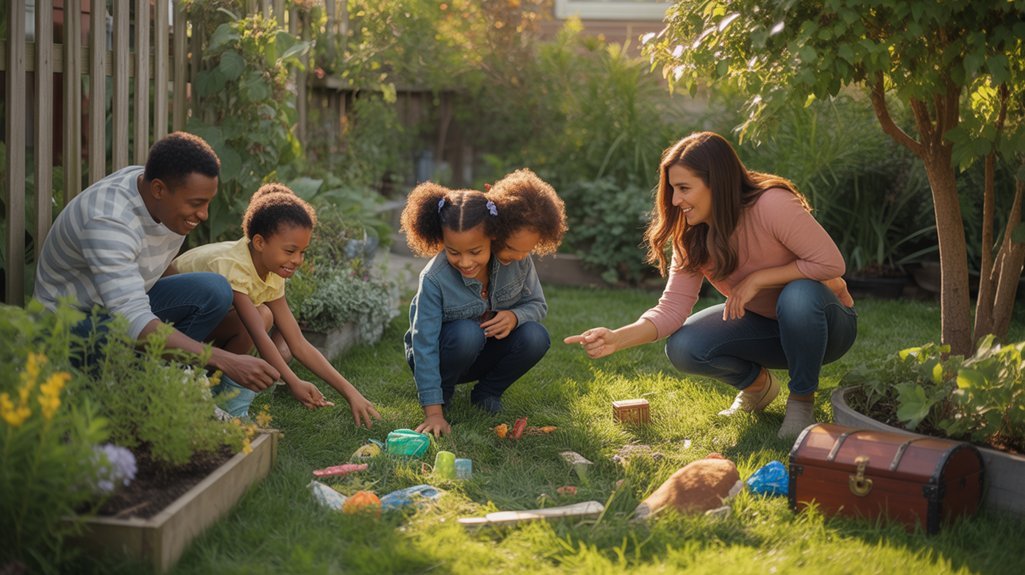
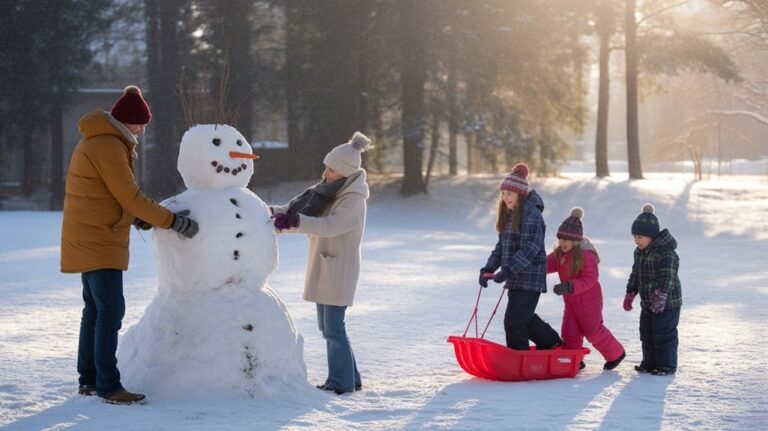
You can transform your backyard into an engaging educational adventure by creating treasure hunts that combine learning with excitement. Start by gathering simple supplies like paper, markers, and waterproof containers to hide clues and prizes. Design age-appropriate challenges that incorporate math problems, science discoveries, and nature identification tasks to keep kids moving while they’re learning. Establish clear boundaries, prepare a first-aid kit, and test your clues beforehand to ensure they’re challenging but achievable. The following sections will show you exactly how to plan memorable hunts that captivate children of all ages.
Key Takeaways
- Outdoor treasure hunts engage multiple senses, reducing stress while building problem-solving skills, physical fitness, and independence in children.
- Essential supplies include paper, markers, weatherproof containers, educational prizes, and timers to create engaging clues and document the experience.
- Match hunt complexity to age: use picture clues for preschoolers, word puzzles for elementary students, and multi-step challenges for older children.
- Incorporate math equations, pattern recognition, nature identification, and science questions to transform learning concepts into interactive outdoor adventures.
- Establish clear boundaries, remove hazards, provide hydration stations, keep first-aid accessible, and test clues beforehand for safe, successful hunts.
Benefits of Outdoor Educational Activities for Children
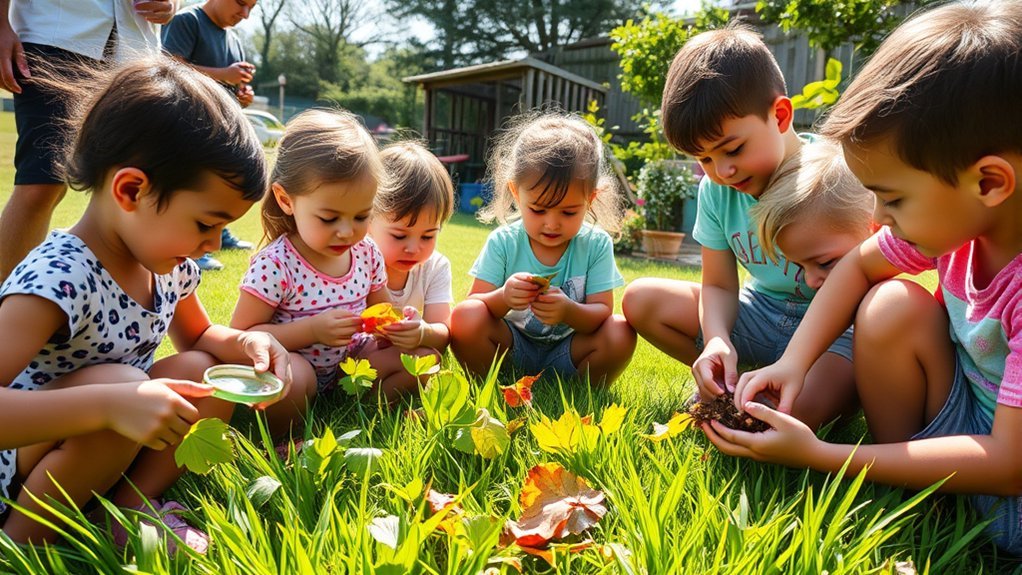
When children step outside to learn, they engage multiple senses simultaneously, strengthening memory retention and comprehension in ways traditional classroom settings can’t replicate.
You’ll notice your kids develop problem-solving skills as they navigate natural environments, which directly supports cognitive development through hands-on exploration and discovery.
Outdoor activities boost physical health by encouraging movement, building coordination, and strengthening immune systems through fresh air exposure.
Your children burn energy while learning, reducing sedentary behavior and improving cardiovascular fitness.
Nature-based learning also reduces stress and anxiety in young minds.
You’re giving them space to be curious, make mistakes, and learn through trial and error.
These experiences build confidence and independence that’ll serve them throughout their lives, creating well-rounded individuals who thrive both academically and personally.
Essential Supplies and Materials for Your Treasure Hunt
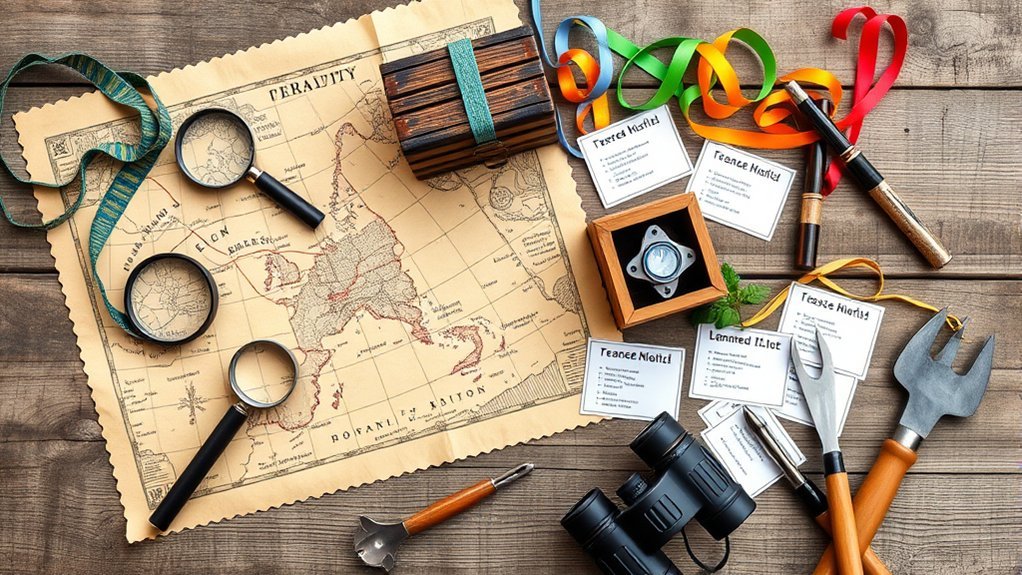
Creating a successful treasure hunt requires just a handful of basic materials you probably already have at home.
You’ll need paper and markers for treasure maps and clue creation, which form the foundation of your adventure. Grab some plastic containers or small boxes to hide treasures along the route.
Consider adding laminating sheets or plastic bags to protect your clues from weather elements. You’ll want prizes that match your educational theme—books, art supplies, or nature specimens work wonderfully.
Weatherproof your clues with simple protection and select educational prizes like books or nature items that enhance the learning adventure.
A timer or stopwatch adds excitement for older children who enjoy racing against the clock.
Don’t forget a camera to document the adventure and clipboards for teams to record their findings.
These simple supplies transform your backyard into an engaging learning environment without breaking the bank.
Age-Appropriate Hunt Ideas: Preschool Through Elementary
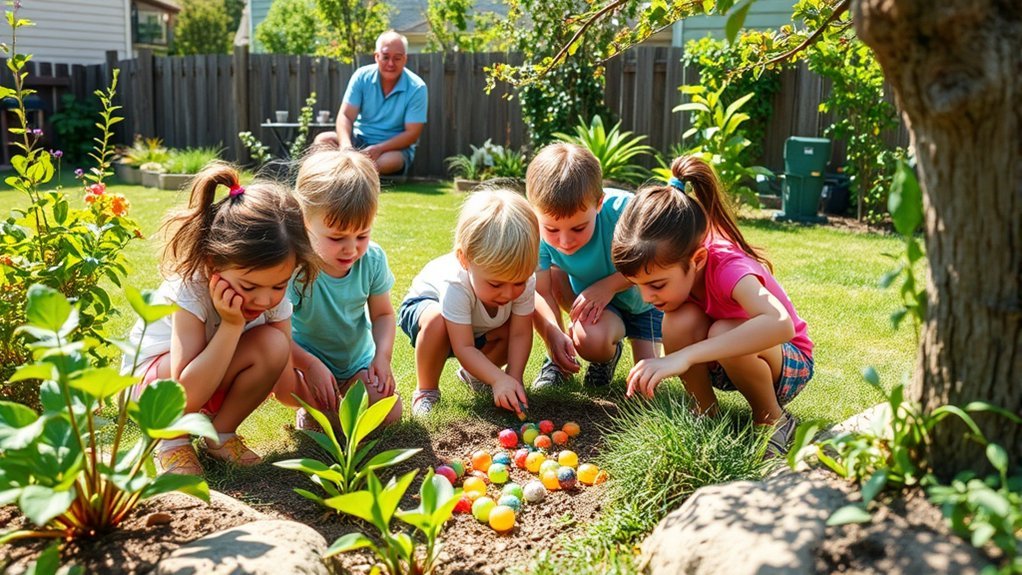
Preschoolers thrive with simple picture-based hunts where colorful images guide them from station to station.
Your preschool scavenger activities should feature large, recognizable objects like red flowers, smooth rocks, or fuzzy leaves. Keep the hunt contained to visible areas within your yard, limiting clues to five or fewer stops.
Kindergarteners can handle basic word clues combined with pictures. They’ll enjoy matching colors, counting items, and identifying shapes as they progress through their hunt.
First through third graders excel with elementary quests that incorporate reading comprehension and problem-solving. You’ll challenge them with riddles, simple math problems, and directional instructions.
These kids can manage 8-10 clue stations.
Fourth and fifth graders need complex challenges featuring multi-step puzzles, coded messages, and educational content that reinforces classroom learning while maintaining excitement.
Math-Based Challenges That Make Numbers Exciting
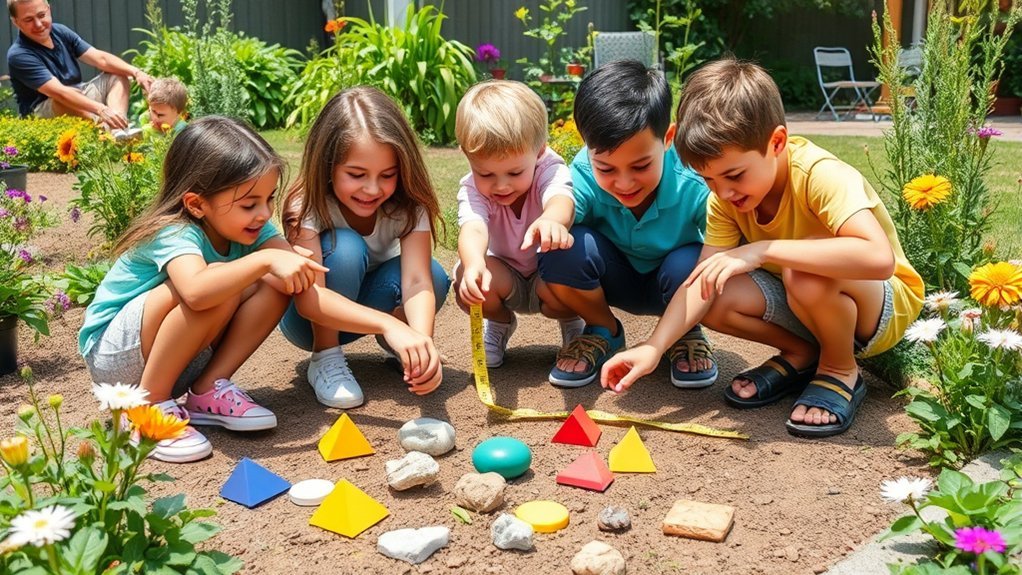
Transform your backyard treasure hunt into an engaging math adventure by weaving numerical challenges throughout the clue sequence. You’ll make learning enjoyable when kids solve math puzzles to unlock their next location. Number games naturally blend into treasure hunting by requiring calculations to discover hidden coordinates or decode messages.
Effective math-based treasure hunt challenges:
- Skip counting paths – Children hop on numbered stones or markers using multiplication sequences (2, 4, 6, 8) to reach the next clue.
- Equation coordinates – Solve simple addition or subtraction problems where answers reveal specific backyard locations (tree #7, rock #12).
- Pattern completion – Identify missing numbers in sequences to decode directional hints or treasure box combinations.
These activities transform abstract concepts into hands-on exploration, helping children associate mathematics with adventure rather than worksheets. Your backyard becomes an interactive classroom where problem-solving earns tangible rewards.
Science and Nature Discovery Clues
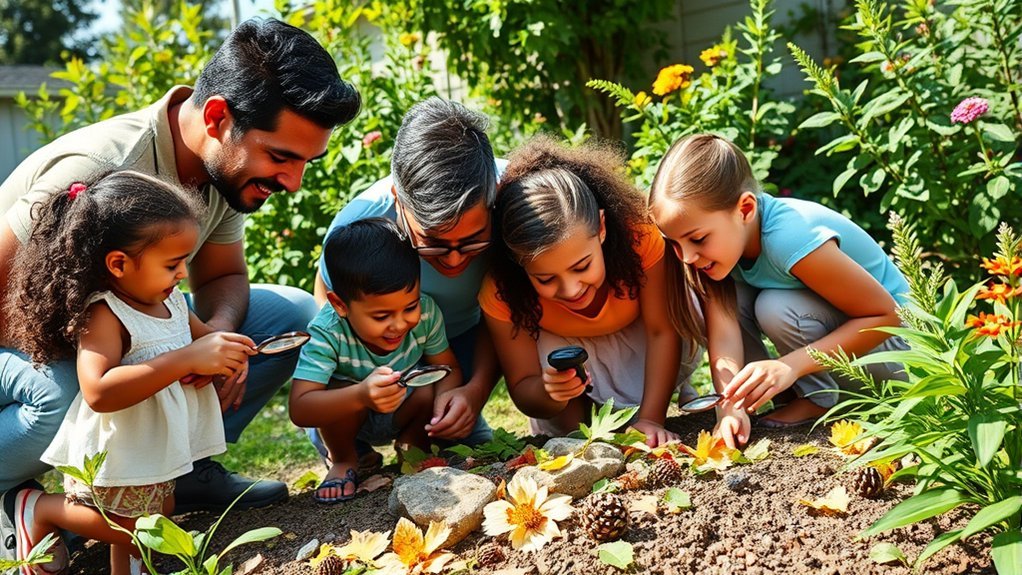
Your backyard treasure hunt becomes a living laboratory when you incorporate clues that require children to observe, identify, and interact with their natural surroundings.
Design a nature scavenger hunt where kids must find specific leaf shapes, count flower petals, or locate insects before receiving their next clue. Plant identification challenges work exceptionally well—ask children to match leaves with tree names or distinguish between native and non-native species.
Create clues based on bird calls, cloud formations, or shadow measurements throughout the day. You’ll encourage scientific thinking by incorporating questions about why leaves change color, how ants work together, or what makes soil different colors.
Transform everyday natural phenomena into educational clues that spark curiosity about the scientific world happening right in your backyard.
These hands-on discoveries transform abstract concepts into tangible learning experiences. Kids won’t realize they’re studying biology, ecology, and environmental science while having fun outdoors.
Reading and Literacy Treasure Hunt Activities
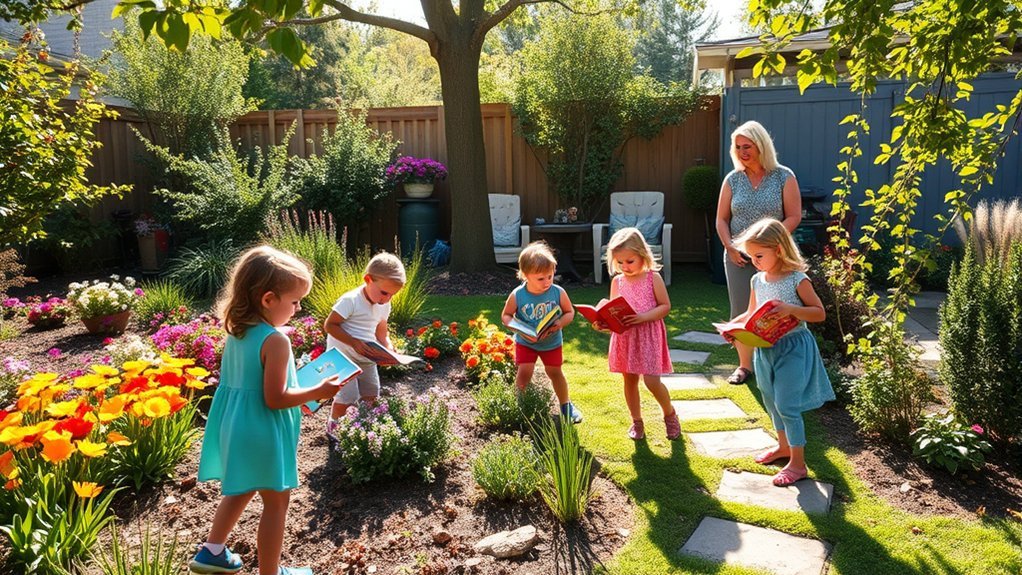
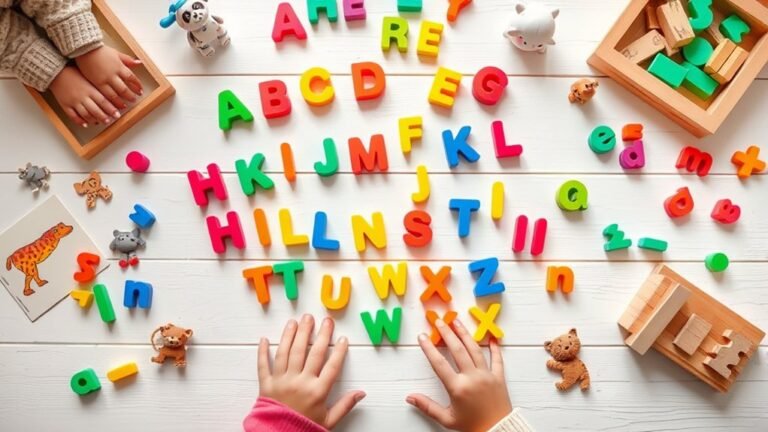
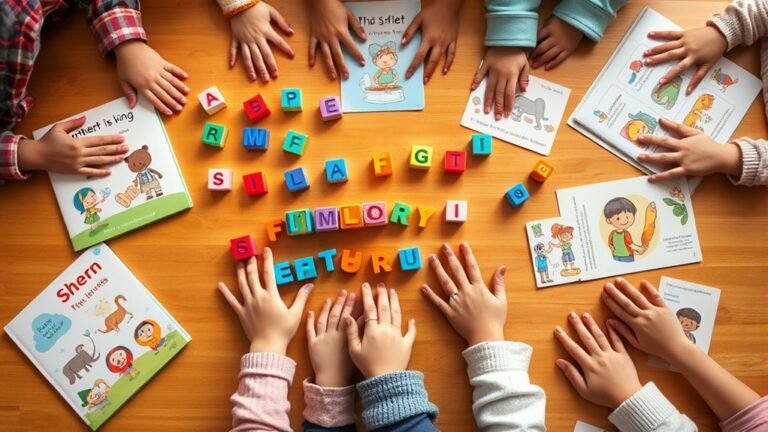
While treasure hunts naturally excite children, they’re also powerful tools for building essential reading skills in your backyard setting. You can transform outdoor spaces into literacy games that challenge comprehension and vocabulary development.
Hide reading prompts throughout your yard that require children to decode clues, follow written directions, or answer questions before advancing to the next location.
Create engaging activities by incorporating:
- Rhyming riddle cards that lead to specific garden features or hidden objects
- Story sequence challenges where kids arrange scattered sentence strips to form complete narratives
- Word scavenger hunts requiring children to find items matching vocabulary lists or spelling words
These literacy games strengthen phonics awareness, reading comprehension, and critical thinking while keeping kids physically active and engaged outdoors.
Creating Multi-Subject Hunts for Mixed Age Groups
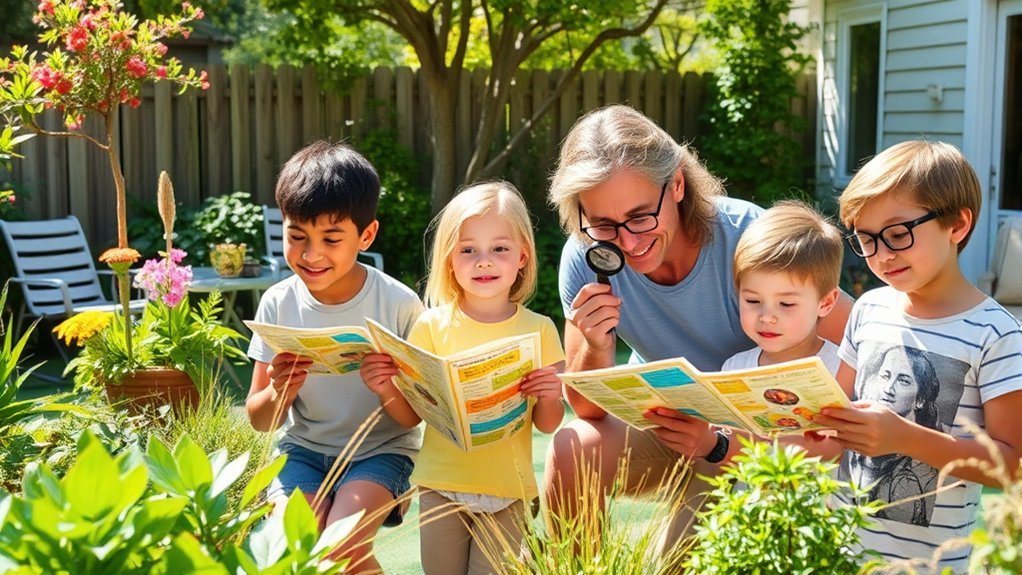
When you’re managing children of different ages, multi-subject treasure hunts let each participant engage at their appropriate skill level while working toward a common goal.
Design stations that blend math, science, reading, and art challenges. Younger children can count objects while older ones solve multiplication problems at the same location. This approach promotes mixed age collaboration naturally, as siblings help each other through different tasks.
Create tiered clue cards color-coded by difficulty level. Each family member chooses their appropriate challenge, yet everyone’s answers contribute to finding the final treasure.
Incorporate physical activities alongside academic tasks to maintain energy and interest. You’ll foster inclusive participation when older children mentor younger ones, building confidence across age groups.
This method transforms your backyard into a dynamic learning environment where everyone succeeds together.
Tips for Designing Clues That Engage and Challenge
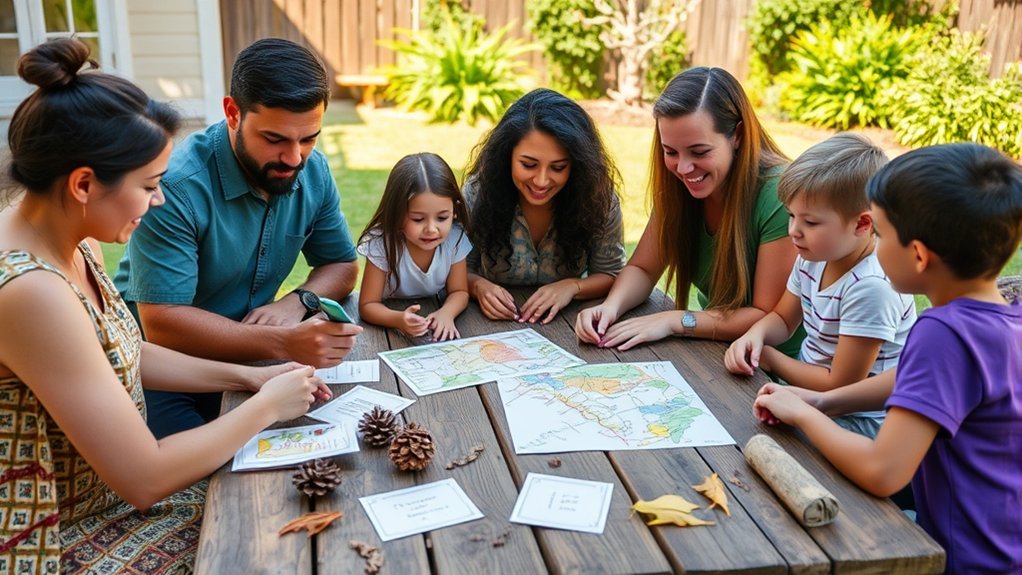
Effective treasure hunt clues strike a balance between mystery and accessibility—too easy and children lose interest, too cryptic and they’ll feel frustrated.
Your clue creativity should match each child’s developmental stage while maintaining excitement throughout the hunt.
Consider these strategies for optimal puzzle difficulty:
- Layer your clues progressively — start with straightforward riddles and gradually increase complexity as hunters build confidence.
- Use multi-sensory elements — incorporate rhymes, visual puzzles, or physical challenges that engage different learning styles.
- Provide strategic hints — design backup clues or subtle nudges you can offer if participants struggle beyond productive challenge.
Test your clues beforehand with one child to gauge timing and comprehension.
You’ll discover which prompts spark enthusiasm versus confusion, allowing you to refine the experience before the official hunt begins.
Safety Considerations and Best Practices for Backyard Adventures
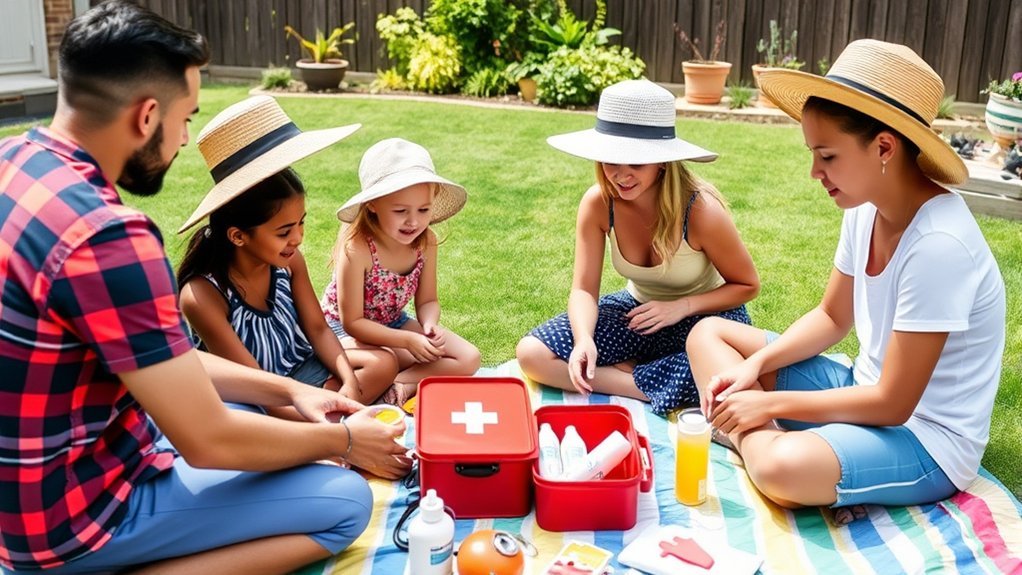
Before children embark on their treasure hunting adventure, you’ll need to establish boundaries and minimize potential hazards in your outdoor space. Walk through your yard beforehand, removing sharp objects, checking for poisonous plants, and identifying uneven terrain. Clear pathways prevent trips and falls during excited treasure searches.
Establish boundaries and remove hazards from your outdoor space before children begin their treasure hunting adventure to ensure safe exploration.
Backyard safety requires setting explicit ground rules. Define off-limit areas like tool sheds, pools, or garden beds. Establish check-in points so you can monitor progress without hovering. Consider weather conditions—postpone hunts during extreme heat or storms.
Effective adventure planning includes age-appropriate challenges. Younger children need closer supervision and simpler routes, while older kids can handle more independence.
Keep a first-aid kit accessible, ensure adequate hydration stations, and always maintain visual or auditory contact with participants throughout the activity.
In case you were wondering
How Long Should a Typical Backyard Treasure Hunt Last?
A typical backyard treasure hunt should last 20-45 minutes. You’ll want to follow duration guidelines based on age considerations—shorter hunts work best for toddlers, while older kids can handle longer adventures that’ll keep them engaged and excited throughout.
Can Treasure Hunts Be Done Indoors During Bad Weather?
Absolutely! You’ll find treasure hunts work perfectly indoors during bad weather. You can transform your home into an exciting adventure space by creating creative clues that lead through different rooms, making indoor activities engaging and educational.
What Prizes Work Best for Treasure Hunt Rewards?
You’ll find creative rewards like small toys, stickers, or special treats work wonderfully. Choose age appropriate prizes that match your children’s interests—books, art supplies, or outdoor gear. Consider making the hunt itself part of the reward experience.
How Often Should We Organize Treasure Hunts to Maintain Interest?
Studies show kids’ engagement drops 40% with daily repetition. You’ll maintain peak interest levels by organizing treasure hunts weekly or bi-weekly. This frequency recommendation balances anticipation with novelty, preventing burnout while keeping excitement high for your family’s outdoor adventures.
Should Parents Participate in the Hunt or Only Supervise?
You’ll find the best hunt dynamics when you actively participate rather than just supervise. Your parent involvement creates excitement, models problem-solving, and strengthens family bonds. Join the adventure—you’re not just organizing it, you’re experiencing it together.
Conclusion
You’ve probably heard that learning only happens inside classrooms—but your backyard proves that theory completely wrong. Every treasure hunt you create transforms ordinary outdoor space into a powerful educational environment where your children absorb concepts naturally. They’re not just finding hidden objects; they’re building critical thinking skills, fostering curiosity, and developing a genuine love for learning. So grab your supplies and start planning. Your backyard classroom awaits, and the lessons your kids discover there will stick far longer than any worksheet.