10 Fun Kitchen Learning Activities for Kids
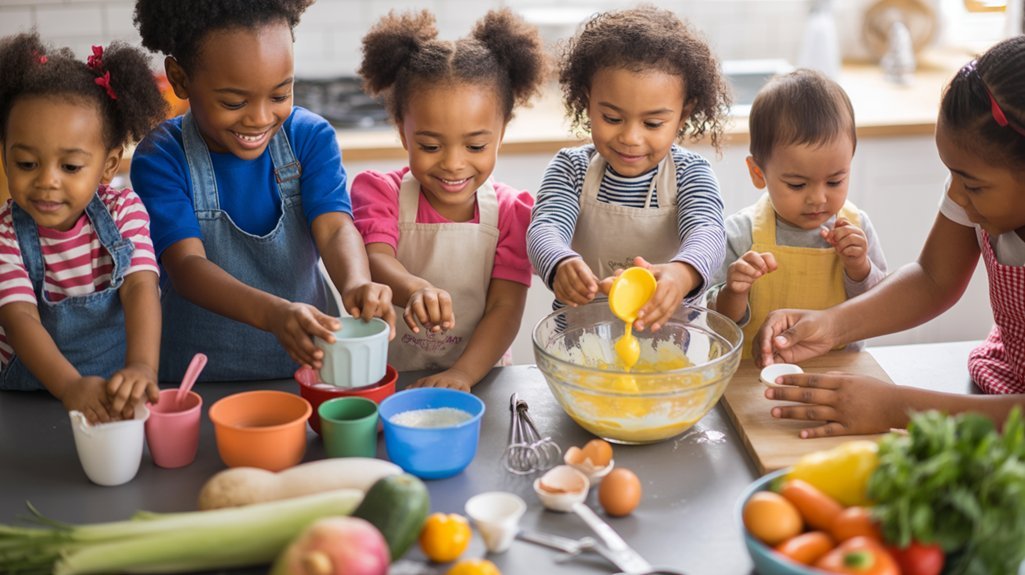
You can transform your kitchen into an exciting learning lab where kids master fractions by cutting homemade pizza, discover chemistry through butter-making experiments, practice graphing with rainbow vegetables, and build reading skills by creating personalized recipe cards. They’ll explore science with volcano cupcakes, learn geometry through cookie shapes, develop math skills with no-bake energy balls, and enhance sensory awareness by identifying spices. These hands-on activities combine education with delicious results, and there’s so much more you’ll discover about making each experience meaningful for your children.
Key Takeaways
- Pizza making teaches fractions through cutting slices into halves, quarters, and eighths while exploring equivalent fractions with toppings.
- Shaking cream in a jar demonstrates scientific transformation as fat molecules separate to create homemade butter.
- Rainbow vegetable sorting combines nutrition education with graphing activities to practice counting and data analysis skills.
- Creating personalized recipe cards strengthens reading comprehension while building vocabulary and culinary skills through illustrated instructions.
- Sensory spice exploration develops descriptive vocabulary and flavor recognition through tasting, smelling, and categorization activities.
Fraction Fun With Pizza Making
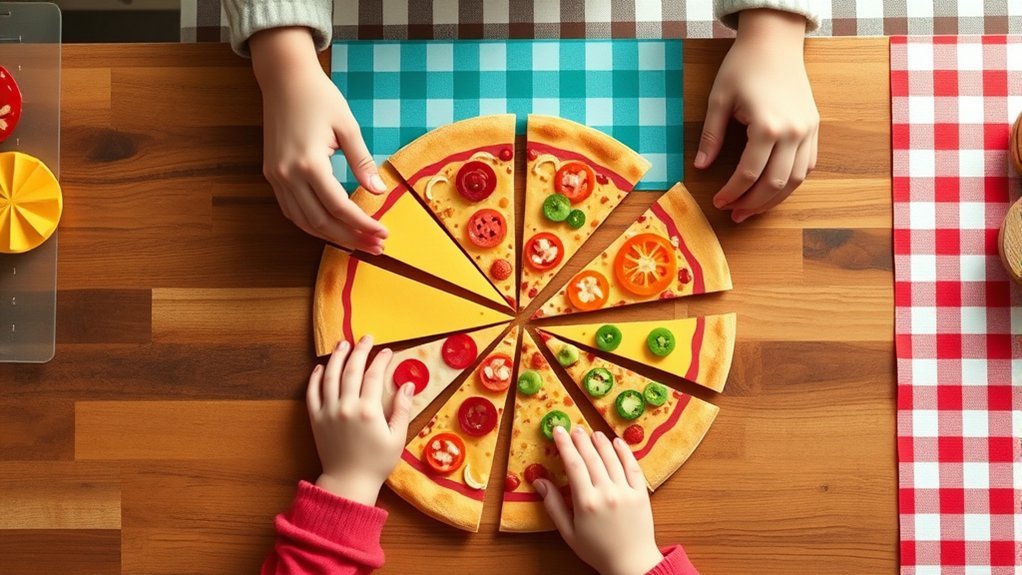
Pizza making transforms abstract fraction concepts into hands-on learning experiences that kids can see, touch, and taste. You’ll find that rolling out dough and dividing it into equal slices makes pizza fractions immediately understandable.
Have your child cut the pizza into halves, quarters, or eighths, then identify what fraction each slice represents. Topping proportions offer another learning opportunity. Challenge your kids to cover one-half with pepperoni and one-quarter with mushrooms, leaving the remaining quarter plain.
They’ll practice adding fractions while creating their custom pizza. You can also explore equivalent fractions by showing how two eighths equal one quarter.
This delicious math lesson sticks because children actively manipulate ingredients, visualize mathematical relationships, and enjoy eating their educational creation afterward.
Homemade Butter in a Jar Science Experiment
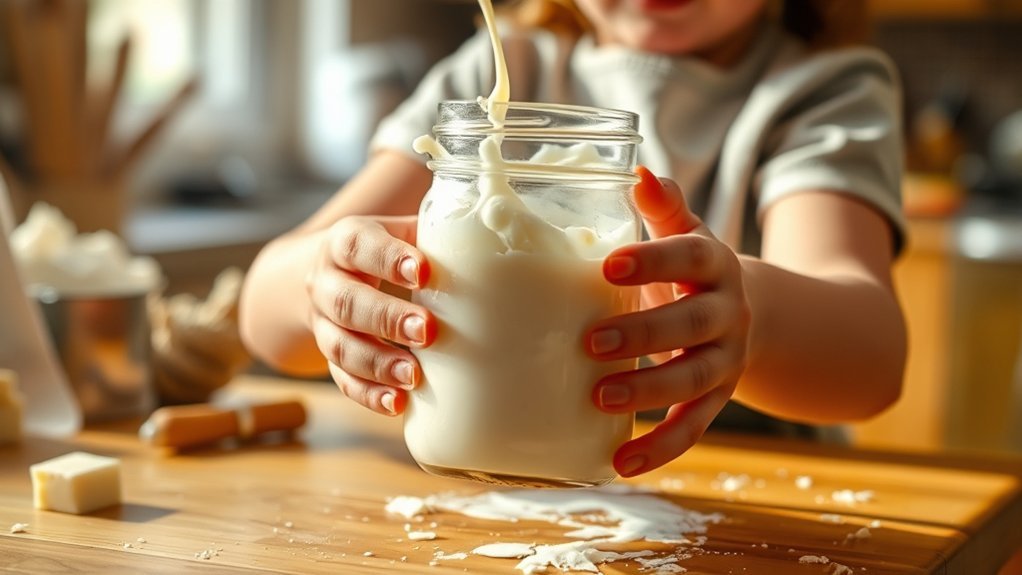
Shaking cream into butter demonstrates scientific transformation that captivates young learners while teaching them about physical and chemical changes. This butter science experiment requires minimal supplies and delivers maximum educational impact. You’ll simply need heavy cream, a jar with a tight lid, and energetic kids ready for jar shaking action.
The process works through agitation, separating fat molecules from liquid. Here’s what you’ll need:
Agitation breaks down cream’s emulsion structure, forcing fat globules to clump together while separating from the liquid buttermilk.
- Heavy whipping cream (room temperature)
- Clean mason jar with secure lid
- Marble or clean coin (optional accelerator)
- Salt for flavoring
- Crackers for tasting
Kids observe the cream’s gradual transformation through consistent shaking, typically requiring 10-15 minutes. They’ll witness liquid becoming solid, understanding emulsion breakdown firsthand. The reward? Fresh, homemade butter they’ve created through persistent effort and scientific principles.
Rainbow Vegetable Sorting and Graphing
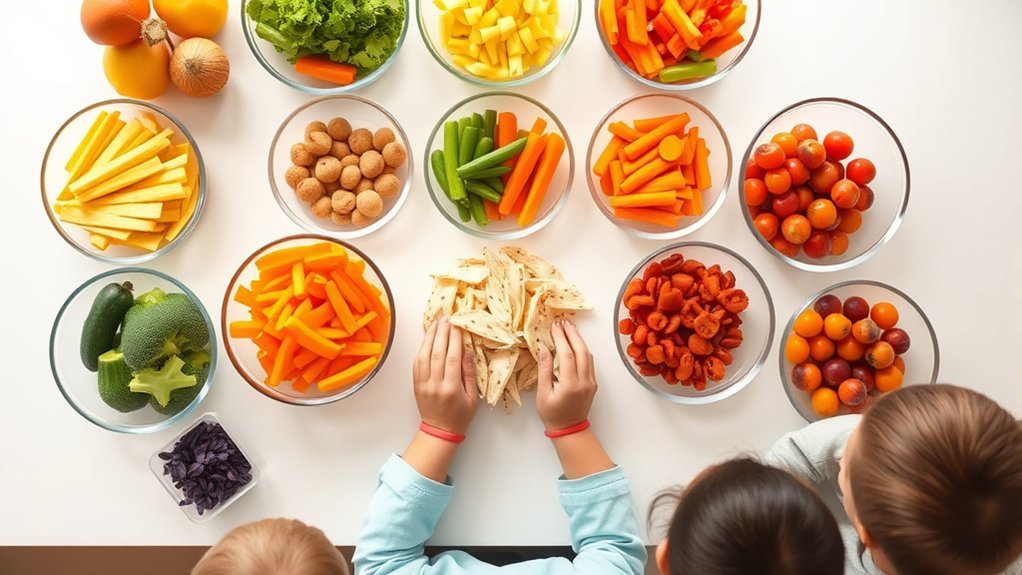
Transforming colorful vegetables into a hands-on math lesson combines nutrition education with essential STEM skills.
You’ll gather an assortment of vegetables in different colors—red tomatoes, orange carrots, yellow peppers, green cucumbers, and purple cabbage. Have your child sort them by color, creating rainbow categories that reinforce color recognition while introducing data collection concepts.
Once sorted, create a simple graph using paper or a whiteboard. Your child can count each vegetable and represent the quantities with drawings, stickers, or colored blocks. They’ll compare which color has more or fewer items, practicing counting and early data analysis.
This activity naturally promotes healthy eating as kids handle and examine nutritious foods.
After graphing, wash the vegetables together and prepare a colorful snack, connecting math learning with positive food experiences.
DIY Recipe Card Creation for Reading Practice
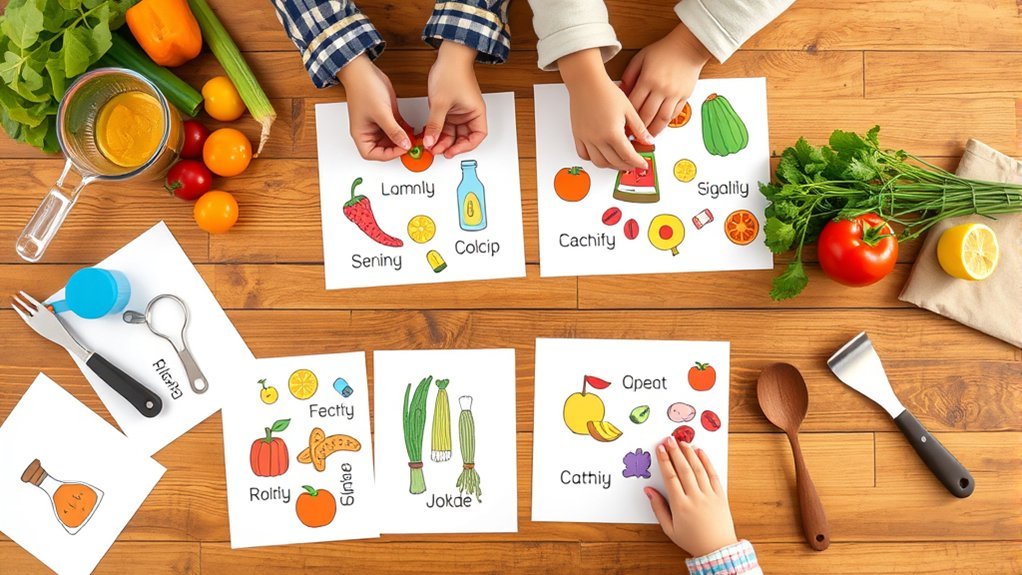
Recipe cards offer an engaging way to strengthen your child’s reading skills while building kitchen confidence. Creating personalized cards transforms cooking vocabulary into a hands-on literacy activity. Your child can design cards for their favorite simple recipes, incorporating both words and illustrations.
Recipe cards blend reading practice with cooking fun, turning your child’s favorite dishes into personalized literacy lessons they can actually taste.
Here’s what to include in your recipe card design:
- Clear ingredient lists with measurements
- Step-by-step numbered instructions
- Pictures or drawings for visual learners
- New vocabulary words highlighted
- Space for personal notes or modifications
Let your child decorate cards with colors, stickers, or drawings that represent each dish.
They’ll practice reading comprehension by following their own instructions during meal prep. Store completed cards in a special recipe box, creating a growing collection that celebrates their developing literacy and culinary skills.
Baking Soda and Vinegar Volcano Cupcakes
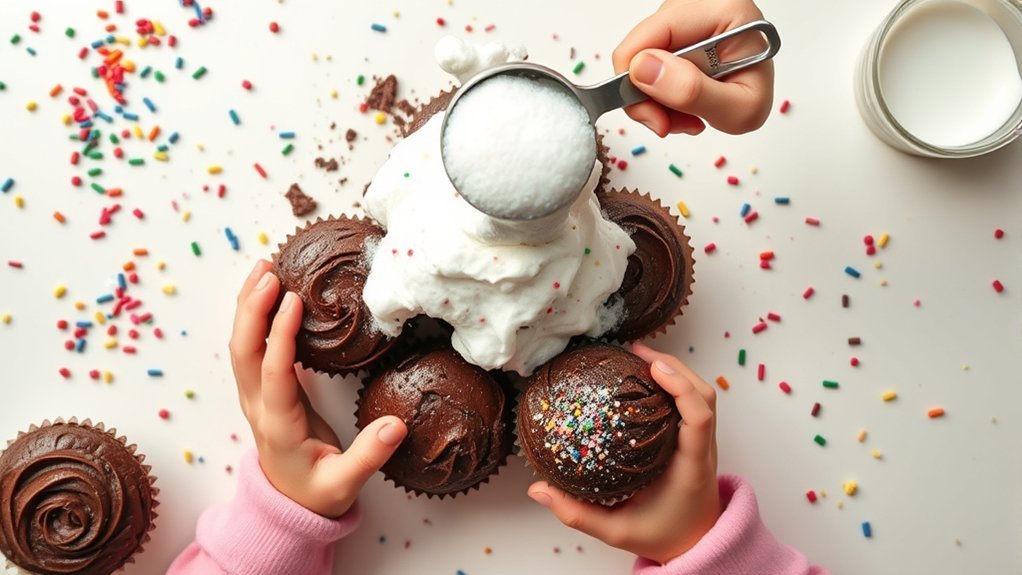
When science meets dessert, learning becomes deliciously memorable. You’ll transform ordinary cupcakes into exciting volcano eruption experiments that teach chemistry principles while satisfying sweet cravings.
Start by baking chocolate cupcakes and hollowing out their centers. Fill each cavity with baking soda mixed with a few drops of food coloring. When you’re ready for the demonstration, add vinegar to trigger the chemical reaction. Your kids will watch in amazement as fizzy “lava” bubbles over the top.
Before the eruption, focus on cupcake decoration by frosting the sides to resemble mountain terrain. Add green sprinkles for vegetation and crushed cookies for rocky texture.
This activity combines artistic expression with scientific observation, helping children understand acid-base reactions while developing fine motor skills through hands-on creation.
Measuring Cup Water Transfer Station
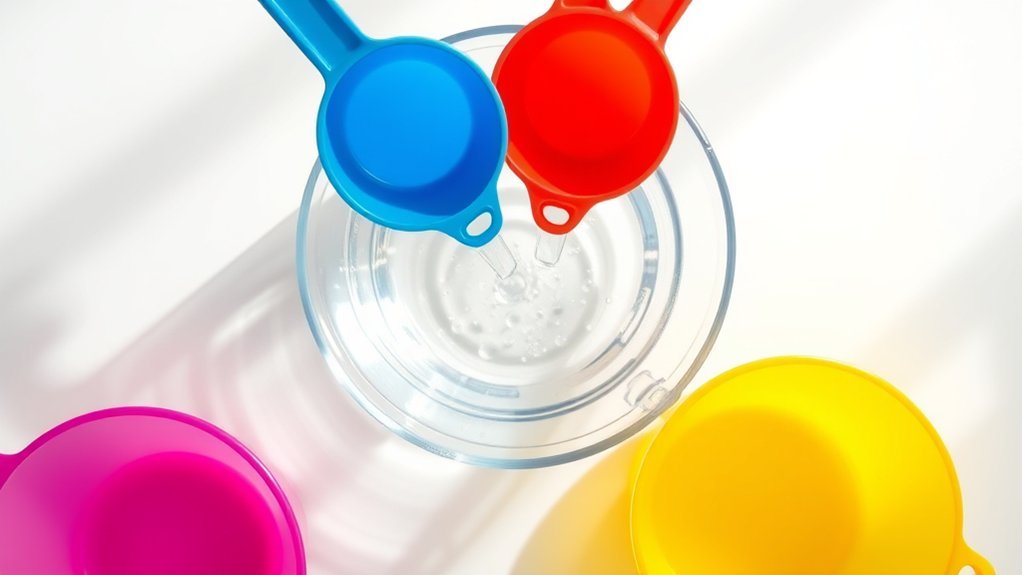
While erupting volcanoes teach chemistry concepts, water play offers equally valuable lessons in mathematics and physics.
You’ll create a simple water pouring station using various measuring cups, giving your child hands-on experience with cup measurements and volume relationships.
Set up this activity with:
- Large plastic bin or tray to contain spills
- Various measuring cups (1/4, 1/3, 1/2, 1 cup sizes)
- Clear containers in different shapes
- Food coloring for visual tracking
- Towels for cleanup
Your child discovers that four 1/4 cups equal one full cup through repeated water pouring.
Through hands-on pouring experiments, children naturally grasp fractional relationships like how four quarter-cups combine to make one whole cup.
They’ll observe how liquid takes the shape of its container and develop fine motor skills. This sensory activity strengthens number sense while keeping kids engaged for extended periods.
Edible Geometry With Cookie Cutters
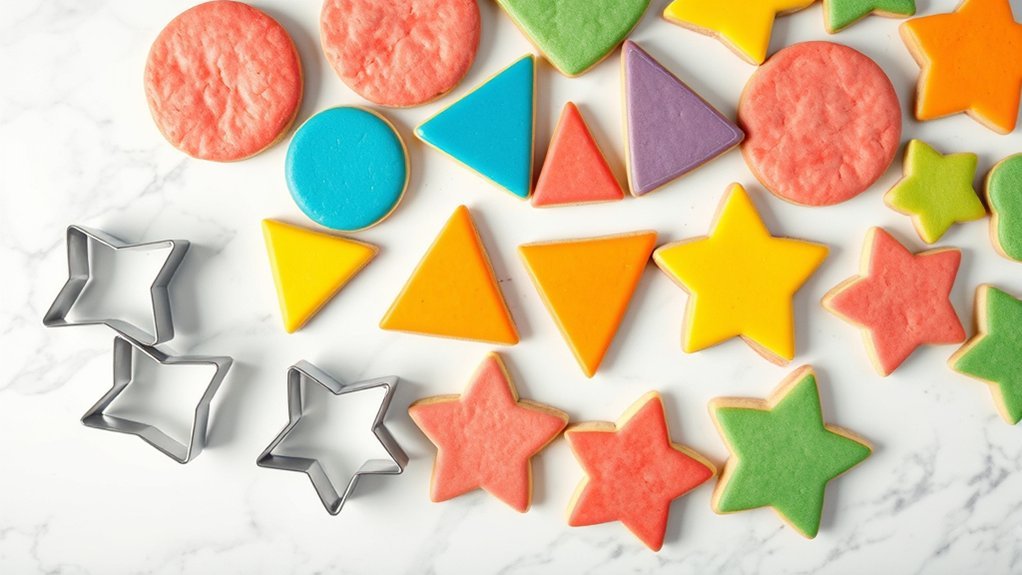
Cookie cutters transform ordinary playdough or sandwich bread into three-dimensional geometry lessons your kids can touch, manipulate, and even eat.
You’ll strengthen their geometry skills by having them identify cookie cutter shapes like circles, squares, triangles, and stars. Ask them to count the sides and corners of each shape they create.
Take learning further by cutting cheese, deli meat, or fruit into different geometric forms. Your kids can compare sizes by placing shapes side-by-side or creating patterns by alternating cookie cutter shapes on their plate.
They’ll practice sorting by grouping similar shapes together.
For edible fun, let them cut sandwiches into various forms, then arrange them into pictures or designs. This hands-on activity makes abstract mathematical concepts concrete and delicious.
Grocery Store Scavenger Hunt and Meal Planning
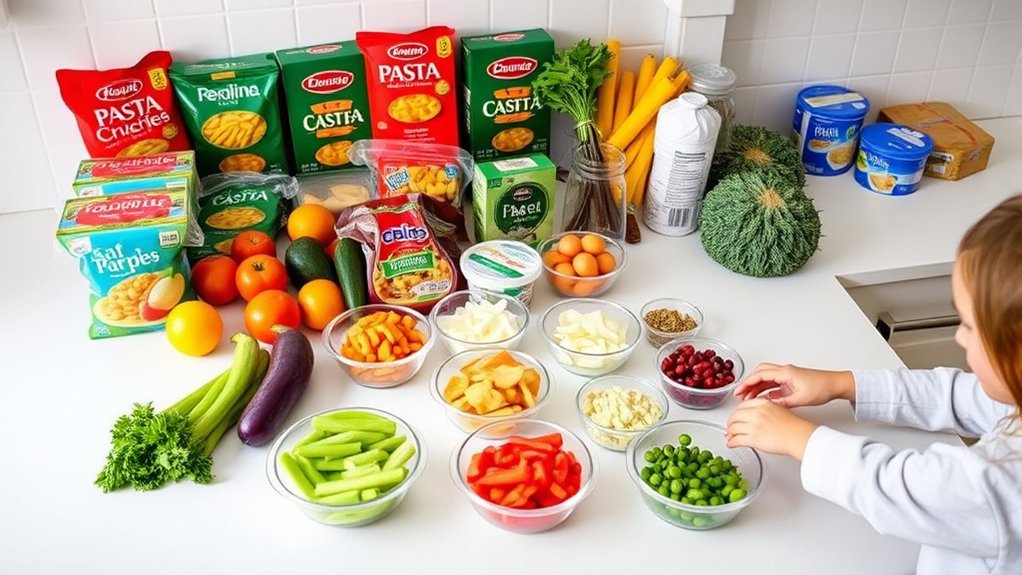
Transform your regular grocery shopping trip into an educational adventure by creating a scavenger hunt that teaches your kids about nutrition, budgeting, and meal planning. Hand them a grocery list with specific items from different food groups and challenge them to find the best prices while making healthy choices.
Create age-appropriate tasks that build budgeting skills:
- Compare unit prices between brands to find the best value
- Identify five colorful vegetables from different food groups
- Calculate the total cost of breakfast ingredients
- Find three whole grain options in the bread aisle
- Select fruits within a set budget of $10
You’ll watch your children develop practical life skills while actively participating in family meal decisions and understanding nutrition fundamentals.
Sensory Exploration Through Spice Identification
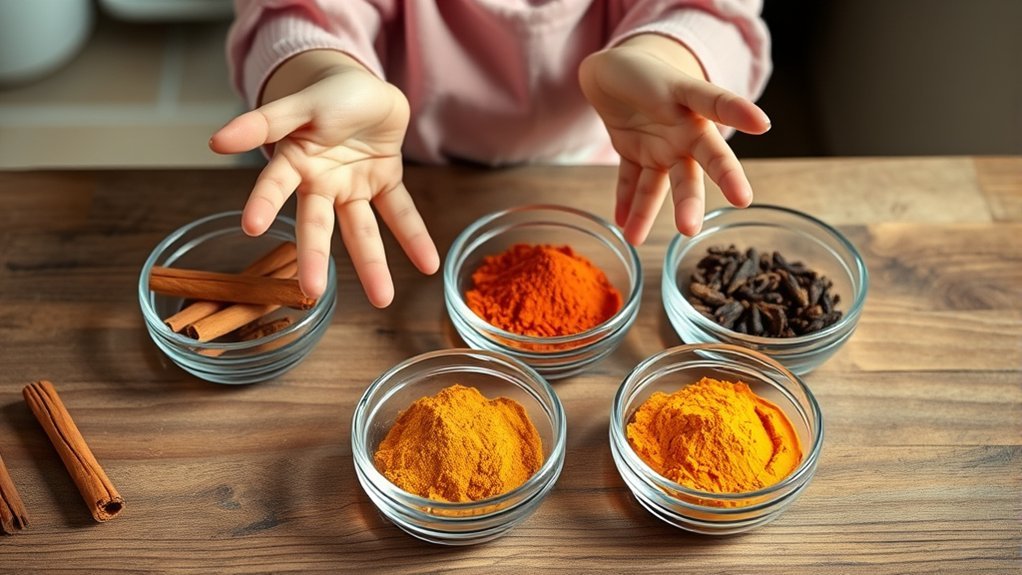
Have you ever noticed how your child’s face lights up when they encounter a new smell or texture? Spice identification transforms this natural curiosity into educational exploration.
Set up small bowls containing common spices like cinnamon, vanilla, cumin, and oregano. Encourage your children to smell each spice aroma carefully, describing what they notice. They’ll develop vocabulary while strengthening their sensory awareness.
Next, introduce flavor profiles by letting them taste tiny amounts on their fingertips. Ask them to categorize spices as sweet, savory, spicy, or earthy.
Create a simple matching game where they identify spices blindfolded, relying solely on scent. This activity enhances memory, sharpens observation skills, and builds confidence in the kitchen.
You’ll be amazed at how quickly they’ll recognize these familiar scents during meal preparation.
No-Bake Energy Balls for Counting and Estimation
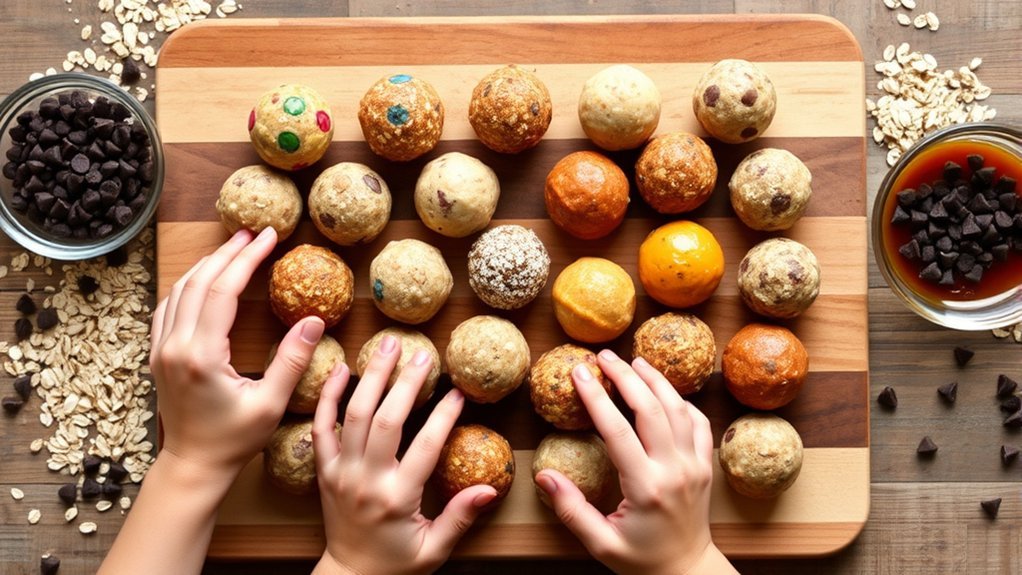
While traditional baking requires precise measurements and oven supervision, no-bake energy balls offer a forgiving, hands-on introduction to kitchen math.
You’ll transform snack time into counting fun as your child measures oats, counts chocolate chips, and estimates portion sizes.
Start by laying out energy ball ingredients in separate bowls:
- 1 cup rolled oats for scooping practice
- ½ cup honey for sticky measurement discussions
- ½ cup peanut butter for estimation exercises
- ¼ cup mini chocolate chips for one-to-one counting
- 2 tablespoons chia seeds for observing small quantities
As you roll the mixture into balls, ask your child to predict how many they’ll make.
They’ll practice estimation, compare sizes, and count the final batch.
This tactile experience reinforces mathematical concepts while creating nutritious snacks they’re proud to share.
In case you were wondering
What Age Is Appropriate to Start Teaching Kids Kitchen Safety With Knives?
You can introduce basic knife handling around age 5-7 with butter knives, then progress to sharper knives by age 8-10. Always follow age guidelines based on your child’s maturity level, motor skills, and ability to follow safety instructions carefully.
How Do I Handle Food Allergies When Doing Group Kitchen Activities?
You’ll need clear allergy awareness from parents beforehand. Did you know 1 in 13 children has food allergies? Always prepare ingredient substitutions, label everything clearly, maintain separate prep areas, and ensure kids wash hands between tasks to prevent cross-contamination.
What Should I Do if My Child Refuses to Try New Foods?
Don’t force it. Keep offering repeated food exposure without pressure. Use positive reinforcement when they touch, smell, or help prepare new foods. Let them see you enjoying these foods, and they’ll eventually become more curious and willing.
How Can I Keep My Kitchen Clean During Messy Learning Activities?
Use waterproof mats and aprons for mess prevention, and clean spills immediately. Keep wet cloths nearby for quick wipes. These cleaning tips make activities manageable: designate specific zones, use trays to contain ingredients, and involve kids in cleanup routines.
Are There Printable Worksheets Available to Complement These Kitchen Activities?
You’ll hit the jackpot – yes, there’re numerous printable resources available online! You can find worksheet activities that perfectly match kitchen learning tasks, including measurement conversions, recipe reading comprehension, and cooking vocabulary exercises for your kids.
Conclusion
Like Mary Poppins transforming medicine time with a spoonful of sugar, you’ve now got the recipe to turn your kitchen into an adventure-filled classroom. These activities won’t just keep little hands busy—they’ll spark curiosity, build confidence, and create memories that’ll last far longer than any worksheet. So tie on those aprons, embrace the flour-dusted chaos, and watch your children discover that learning’s most delicious when it’s hands-on. Your kitchen awaits its transformation into an educational wonderland.