What Nature Walks Teach Families About Connection?
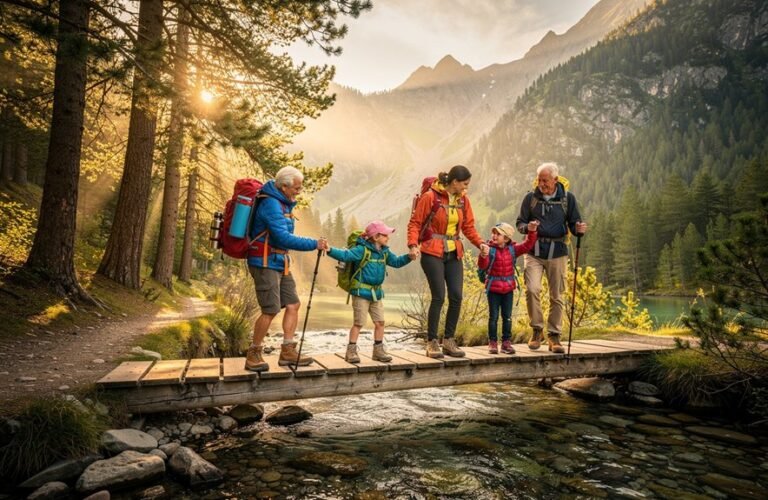
Nature walks teach families about connection by encouraging you to slow down and truly see each other. When you put away phones and walk together, you notice small wonders—a bird call, a winding stream, a funny-shaped rock. You’ll build trust through shared challenges like crossing logs or climbing hills. These screen-free moments create stories you’ll retell for years. The lessons go deeper than you might expect.
Key Takeaways
- Nature walks encourage families to slow down, disconnect from screens, and share mindful moments that deepen appreciation for each other.
- Putting away phones allows families to observe and listen together, fostering curiosity and meaningful conversations without digital distractions.
- Shared outdoor challenges like crossing streams or climbing hills build trust, teamwork, and confidence among family members.
- Following nature’s unhurried rhythms teaches patience as families watch clouds, track wildlife, or notice small details together.
- Screen-free outdoor experiences create lasting family memories and stories that hold more meaning than digital entertainment.
The Art of Slowing Down Together

When life feels like a blur of schedules and screens, a simple walk outside can bring your family back to each other. Nature has a way of pressing pause on the rush.
Try these mindful moments on your next outing:
- Stop to watch a squirrel gather acorns
- Listen for three different bird sounds
- Feel the bark on an old tree together
These small pauses create space for real family bonding. You’re not just walking. You’re sharing wonder.
Small pauses in nature create the space where real connection happens—where families stop walking and start wondering together.
Kids notice details adults often miss. Let them lead sometimes. Ask what catches their eye.
The path doesn’t matter as much as the pace. Slow steps open hearts. Your family will thank you for the unhurried time together.
Learning to Observe and Listen Without Distractions
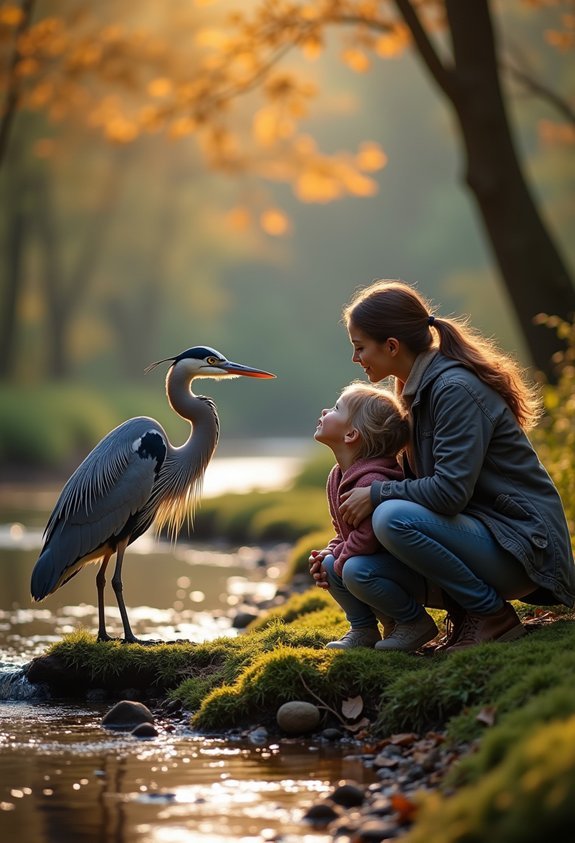
Putting away your phone might feel uncomfortable at first, but that small act opens up a whole new world of connection. When screens disappear, your senses wake up.
Try these mindful observation practices together:
- Count how many bird songs you hear
- Spot three different leaf shapes
- Notice the smell of damp earth after rain
Active listening goes beyond sounds. Watch your child’s face light up when they discover a ladybug. Hear their questions without rushing to answer.
You’ll find that nature rewards patience. A squirrel might freeze, then dart. A cloud shifts shape. Your family learns to wait, watch, and wonder side by side.
These quiet moments build bonds that busy days simply can’t.
Building Trust Through Shared Outdoor Challenges
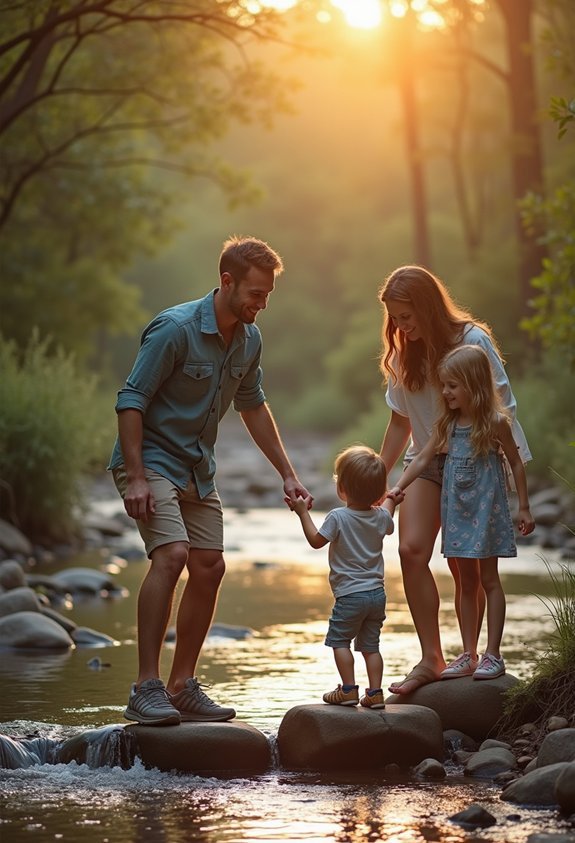
Although nature walks offer peaceful moments of observation, they also present small challenges that bring families closer together.
Crossing a stream on stepping stones, climbing a steep hill, or navigating an unfamiliar trail—these moments become natural trust exercises. You’ll watch your child reach for your hand. You’ll feel them believe you won’t let them fall.
Simple outdoor teamwork builds bonds:
- Help each other over fallen logs
- Take turns leading the way
- Share the job of carrying supplies
- Celebrate small victories together
When you face a challenge as a team, something shifts. Your kids learn they can count on you. You learn they’re braver than you knew.
These shared moments create memories that last far longer than any screen time ever could.
Discovering Patience in Natural Rhythms
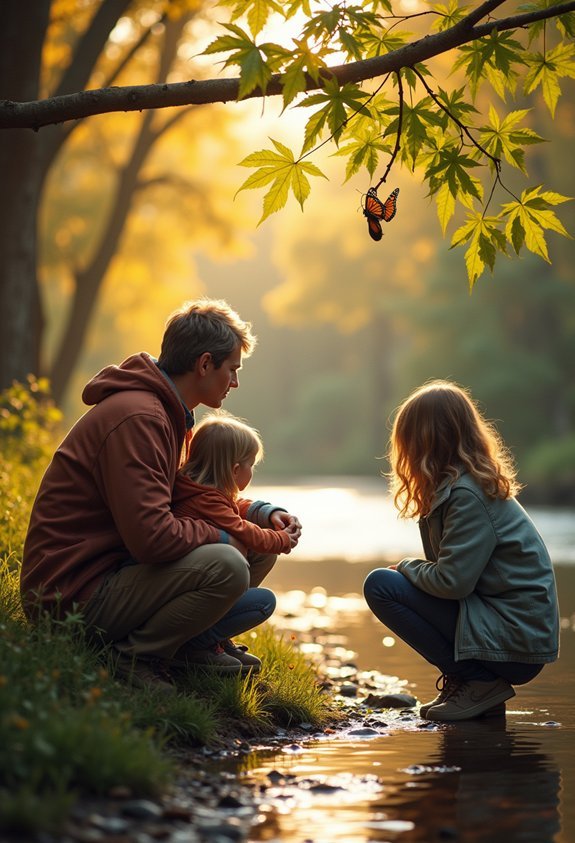
Because nature moves at its own unhurried pace, spending time outdoors teaches your family something screens never can—the art of slowing down. You can’t rush a sunset or speed up a butterfly landing on a flower. This natural pacing helps everyone breathe deeper and feel calmer together.
When you embrace mindful moments in nature, patience becomes a shared practice rather than a chore.
- Watch clouds drift and guess their shapes together
- Follow an ant’s journey across the trail without interrupting
- Listen for bird calls and count how many you hear
- Notice how leaves change color throughout the seasons
These small observations build patience naturally. Your family learns that good things unfold in their own time.
Creating Lasting Memories Beyond the Screen
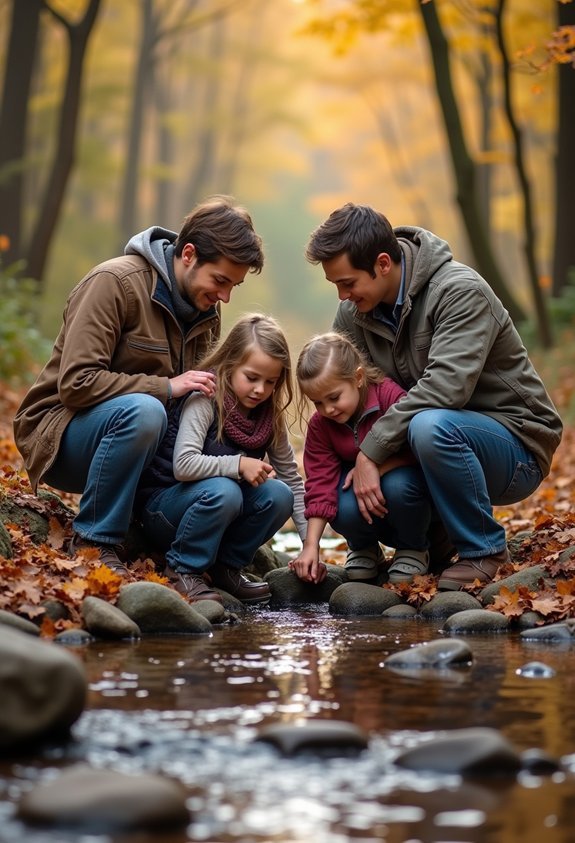
When you step outside with your family, you’re doing more than getting fresh air—you’re building memories that stick.
Why Screen Free Activities Matter
Nature gives your family something screens can’t: shared experiences you’ll talk about for years. That funny moment when Dad slipped in the mud? The butterfly that landed on your child’s hand? These become your family’s stories.
Nature gives families what screens never can—real moments that become the stories you’ll tell forever.
Simple Ways to Boost Family Bonding****
- Collect rocks, leaves, or pinecones together
- Play “I spy” with natural objects
- Take silly photos along the trail
- Share one thing you’re grateful for during the walk
These small moments add up. Your kids won’t remember another TV show, but they’ll remember the walk where you spotted deer together. That’s the gift of unplugged time.
Nurturing Curiosity Across Generations
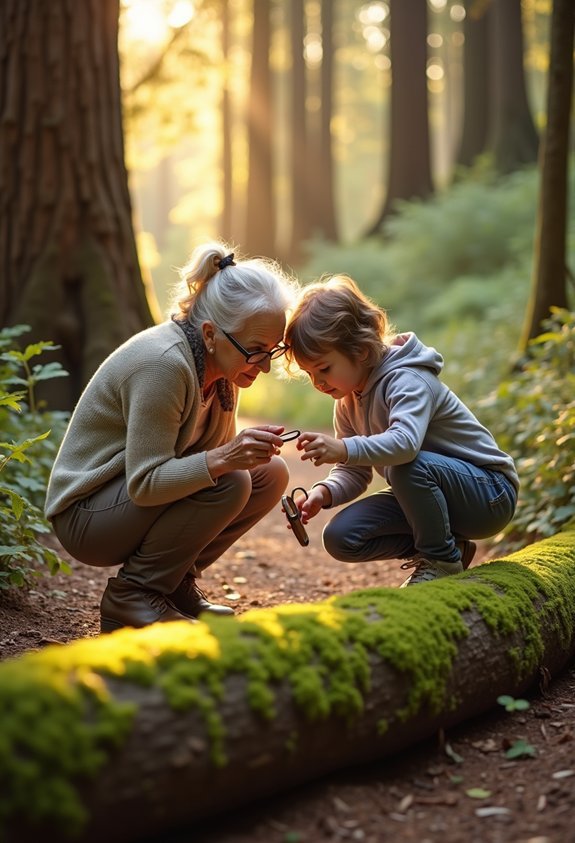
Those shared memories you’re creating? They spark something bigger. Nature exploration opens doors for grandparents, parents, and kids to learn together. Everyone becomes both teacher and student.
Family bonding deepens when you discover things side by side. A child’s question about a bird can lead to a grandfather’s story. A parent’s wonder at a sunset teaches kids it’s okay to pause and feel awe.
Ways to nurture curiosity together:
- Ask open-ended questions like “What do you notice?”
- Let kids lead the way sometimes
- Share what you don’t know and look it up later
- Celebrate small discoveries with enthusiasm
You’re building a family culture of wonder. That gift passes down through generations.
In case you were wondering
What Age Is Appropriate for Children to Start Going on Nature Walks?
You can start nature walks with your child as early as toddlerhood. Toddler readiness typically begins around 18 months when they’re walking steadily. Age recommendations suggest keeping walks short initially, gradually increasing duration as your child develops.
How Long Should a Family Nature Walk Typically Last for Beginners?
Don’t bite off more than you can chew—start with 30-45 minutes for your nature walk duration. Following beginner guidelines, you’ll want to keep it short, allowing everyone to enjoy the experience without exhaustion.
What Essential Items Should Families Pack for a Nature Walk?
You’ll want to create a packing checklist that includes water bottles, sunscreen, first-aid supplies, and bug spray. Don’t forget snack ideas like trail mix, fruit, and granola bars to keep everyone energized throughout your adventure.
Are Nature Walks Safe During Different Weather Conditions and Seasons?
Surprisingly, nature doesn’t check your calendar before unleashing storms! You’ll stay safe by checking weather precautions beforehand and wearing appropriate seasonal attire. You can enjoy walks year-round when you’re properly prepared for conditions.
How Often Should Families Schedule Nature Walks to Strengthen Their Bond?
You’ll strengthen your family bond by adding nature walks to your weekly schedules at least once or twice. These bonding activities don’t require hours—even short, consistent outdoor time together builds lasting connections and shared memories.
Conclusion
Like Thoreau finding wisdom at Walden Pond, you’ll discover that the forest holds lessons no classroom can teach. When you walk together through nature, you’re not just exercising. You’re weaving bonds that last.
So lace up those shoes. Leave the devices behind. Let the trail guide your family toward deeper conversations, shared wonder, and quiet moments that matter.
Nature’s waiting. Your family is ready.