Why Simple Diwali Crafts Delight Young Children?
Simple Diwali crafts delight young children because they offer something powerful—a chance to create, complete, and proudly hold something they made all by themselves. When your child finishes a paper diya or colorful rangoli, you’ll see that “I did it!” moment light up their face. These projects build fine motor skills, spark creativity, and create meaningful connections to cultural traditions. Below, you’ll discover easy craft ideas perfect for little hands.
Key Takeaways
- Simple crafts give children a sense of control and mastery, making them feel capable and confident.
- Completing easy projects creates “I did it” moments that foster pride and accomplishment in young children.
- Sensory exploration through crafting brings joy and keeps children engaged throughout the activity.
- Simple Diwali crafts develop fine motor skills through cutting, threading, and pressing while feeling like fun.
- Crafting builds meaningful connections to cultural heritage through hands-on activities and natural storytelling opportunities.
The Psychology Behind Simple Crafts and Childhood Joy
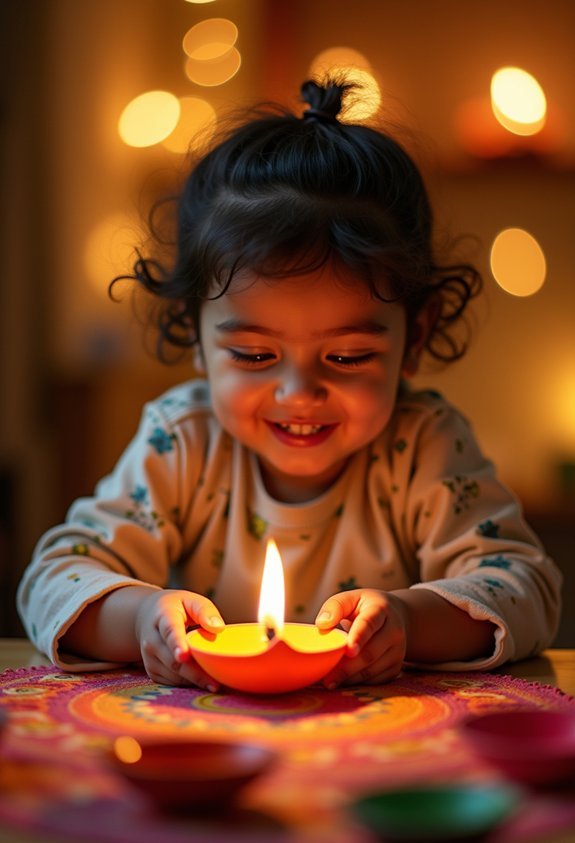
When children sit down to create something with their own hands, something powerful happens in their minds. Their brains light up with activity. They’re not just making art—they’re building confidence.
Why Simple Crafts Work
You’ll notice your child experiences:
- A sense of control and mastery
- Pride in completing a task
- Joy from sensory exploration
Simple projects support cognitive development in ways complex crafts can’t. When the steps feel doable, kids stay engaged. They don’t give up. They finish.
The Magic of “I Did It”
That moment when your child holds up their paper diya or rangoli? Pure delight. They made something real. Something beautiful.
When a child creates something real with their own hands, confidence blooms in that moment of pure pride.
You gave them that gift. Keep the projects simple. Watch their confidence grow.
Paper Diyas That Little Hands Can Master
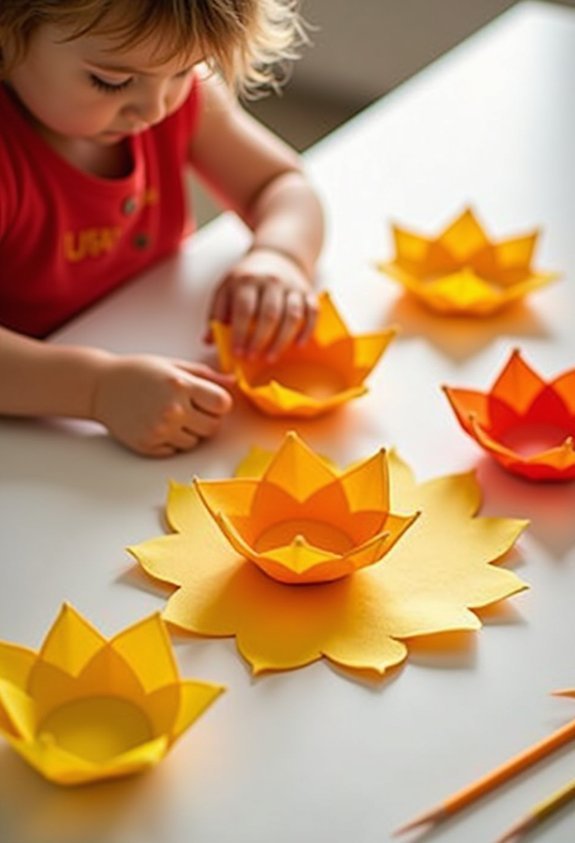
Paper diyas make a perfect first Diwali craft because they deliver that “I did it” moment with just a few folds and snips.
Your child gets a real creativity boost from shaping something meaningful. The sensory exploration happens naturally—feeling paper textures, pressing creases flat, watching colors come together.
Simple steps to try:
- Cut a circle from yellow or orange paper
- Fold it in half, then half again
- Snip the edges for a decorative rim
- Unfold and pinch the center upward
- Add a paper flame on top
That’s it. Five steps. One proud smile.
You don’t need perfection here. Wobbly edges and uneven folds carry their own charm. What matters is your child’s hands made something beautiful.
Easy Rangoli Patterns Perfect for Preschoolers
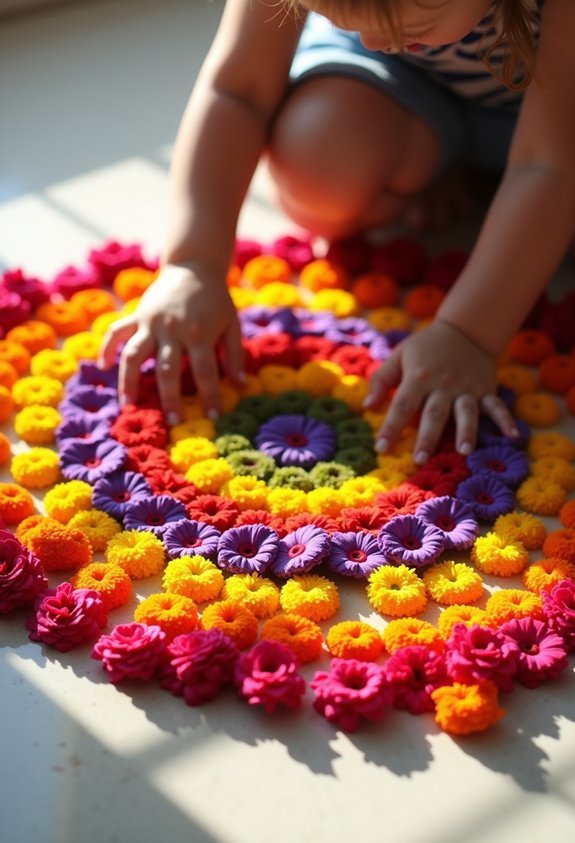
Because rangoli celebrates joy through color and pattern, it’s a natural fit for preschool hands eager to create. You don’t need perfection here—just enthusiasm and a willingness to get a little messy.
Start with simple rangoli templates featuring basic shapes like circles, hearts, or stars. Your child can fill these outlines with colorful powders, rice, or even flower petals.
Try these beginner-friendly approaches:
- Use paper plates as ready-made circular borders
- Draw large dots and let kids connect them freely
- Offer squeeze bottles filled with colored sand for easier control
The goal isn’t a flawless design. It’s watching your little one beam with pride at their vibrant creation. That smile? That’s the real celebration.
Colorful Lanterns Made With Basic Materials
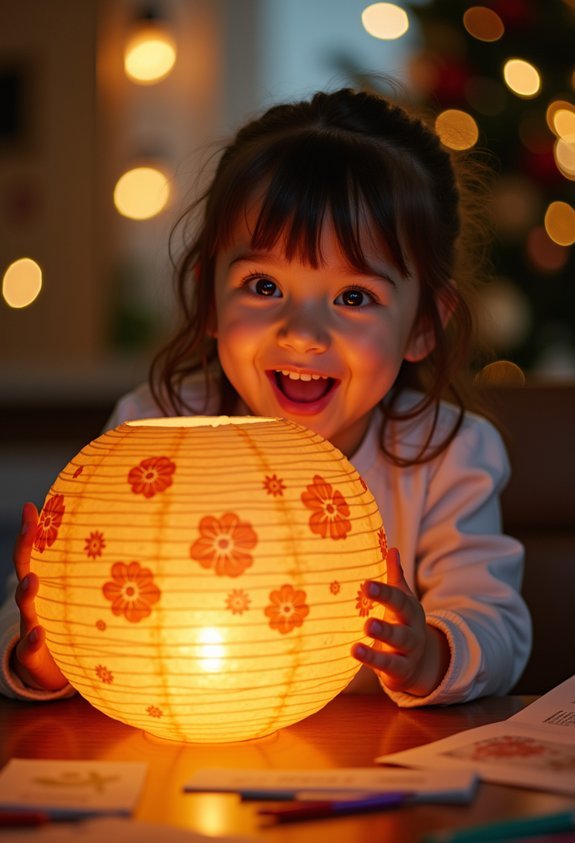
From glowing rangoli designs on the floor, let’s turn our eyes upward to another beloved Diwali symbol: the lantern. You’ll love watching your child create these glowing treasures with items you already have at home.
Simple Lantern Designs to Try:
- Paper bag luminaries with cut-out shapes
- Decorated glass jars wrapped in tissue paper
- Folded construction paper cylinders
What You’ll Need:
- Paper bags, jars, or cardstock
- Safety scissors
- Glue sticks
- Festive colors like orange, gold, red, and purple
Your child can cut simple shapes—stars, circles, or diamonds—to let light shine through. Battery-operated tea lights keep little fingers safe while making lantern designs glow beautifully.
These lanterns build fine motor skills and spark creative thinking. Hang them together and watch your child beam with pride.
Building Fine Motor Skills Through Festival Crafting
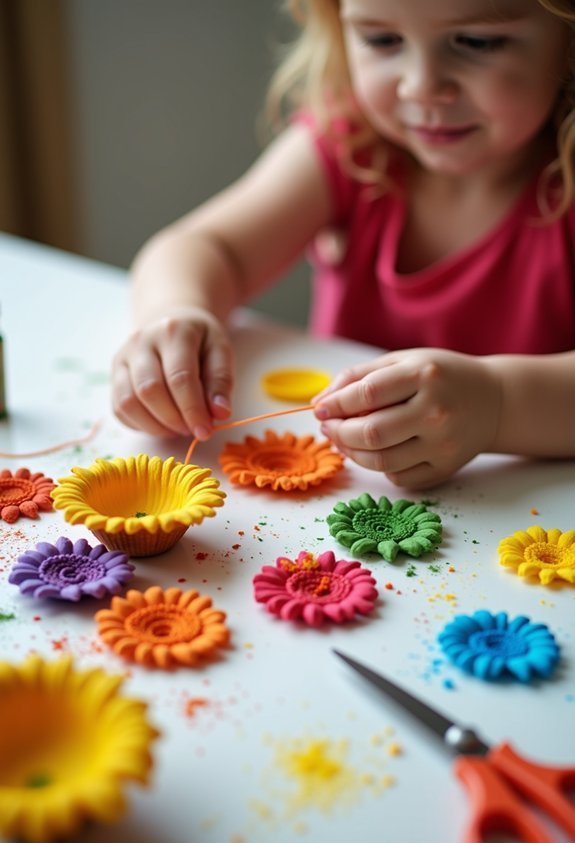
Every snip, fold, and dab of glue during Diwali crafting does something wonderful for your child’s growing hands. Those tiny muscles get stronger with each creative project. You’ll notice improved control and coordination over time.
Festival crafting offers a natural creativity boost while building essential skills:
- Cutting paper shapes strengthens hand muscles and teaches precision
- Threading beads for garlands develops pincer grip and patience
- Pressing rangoli designs improves finger control and spatial awareness
Fine motor development happens best when kids don’t realize they’re practicing. Diwali crafts make skill-building feel like pure fun. Your child focuses on the colorful results while their hands grow more capable.
These moments matter. Celebrate each wobbly cut and proud creation.
Creating Lasting Cultural Connections One Craft at a Time
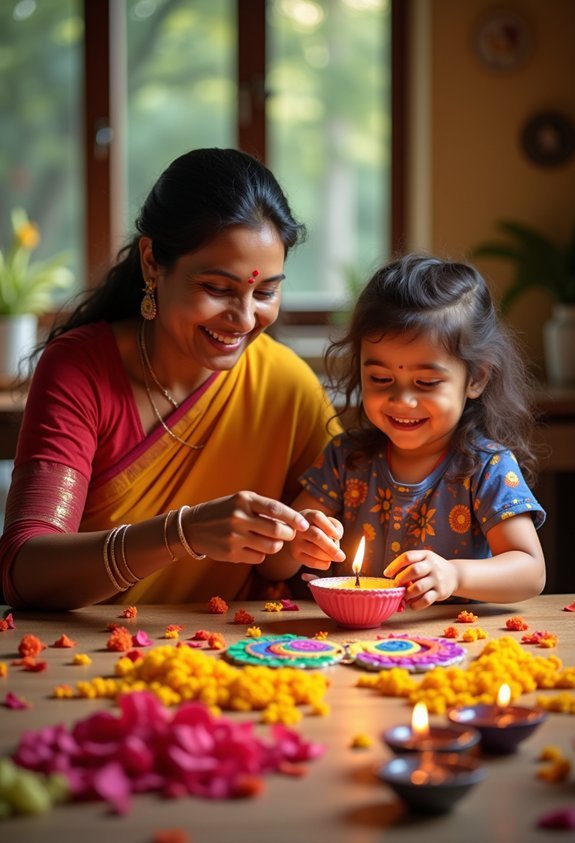
When your child shapes a diya from clay or strings marigold garlands, they’re doing more than crafting. They’re building bridges to heritage through their hands.
Cultural storytelling happens naturally when you craft together. You share memories. You explain traditions. Your child listens while their fingers stay busy with sensory exploration.
These moments matter because:
- Hands remember what eyes forget
- Stories stick when paired with making
- Pride grows from creating something meaningful
Each craft becomes a tiny anchor to culture. Your child won’t just hear about Diwali traditions—they’ll feel them in the clay’s coolness, smell them in the marigold petals.
Start small. Pick one simple project. Watch connection bloom through creation.
Age-Appropriate Diwali Projects That Spark Independence
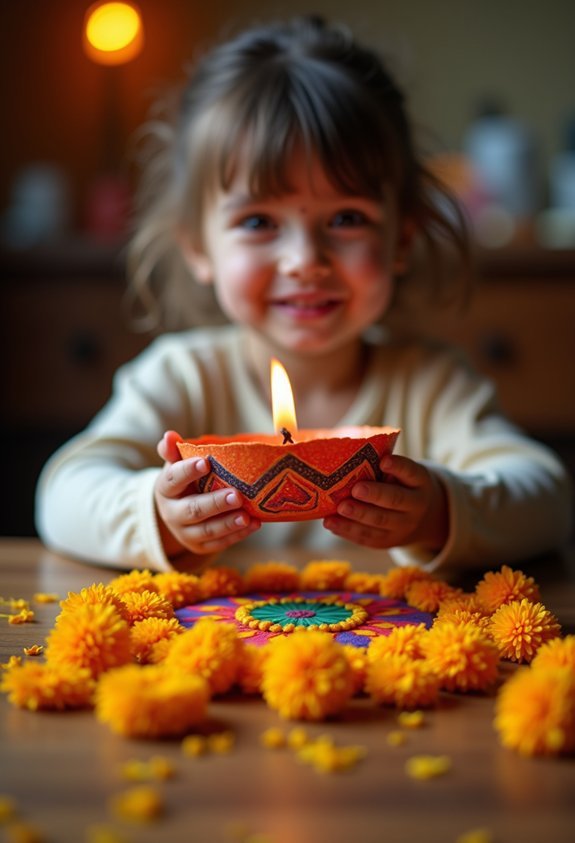
Choosing the right craft for your child’s age makes all the difference between frustration and joy. When projects match their abilities, children experience a real creativity boost that keeps them engaged and proud.
Simple Diwali crafts build independence skills naturally. Your child learns to trust their own hands and ideas.
Try these age-matched projects:
- Ages 3–4: Paper plate diyas with torn tissue paper—no scissors needed
- Ages 5–6: Rangoli patterns using cotton swabs and paint dots
- Ages 7–8: Paper lanterns with measured cuts and folding steps
You’ll notice something wonderful happening. Each completed craft builds confidence. Your child starts saying, “I can do this myself!” That’s the magic moment. They’re not just making decorations—they’re discovering what they’re capable of creating.
In case you were wondering
What Are the Best Non-Toxic Craft Supplies for Toddlers Making Diwali Decorations?
You’ll want eco friendly materials like vegetable-based dyes, beeswax crayons, and flour-based paste for toddler safety. Choose water-based paints, recycled paper, and natural clay—they’re perfect for little hands creating beautiful Diwali decorations safely.
How Long Should a Diwali Craft Session Last for Young Children?
You’d think toddlers could craft for hours, right? Wrong! With toddler attention spans, you’ll want to keep craft session duration between 10-20 minutes. You shouldn’t push longer—they’ll let you know when they’re done!
Can Children With Sensory Sensitivities Participate in Diwali Craft Activities?
Yes, you can include children with sensory sensitivities by choosing sensory friendly materials like smooth paper and non-scented glue. You’ll find inclusive crafting activities allow every child to celebrate Diwali joyfully at their comfort level.
What Diwali Crafts Work Best for Mixed-Age Sibling Groups?
Crafting together becomes a bridge connecting hearts when siblings collaborate on paper diyas or rangoli designs. You’ll find sibling collaboration thrives with layered projects where older kids cut while younger ones decorate and paste.
How Do I Clean up Glitter and Paint Spills From Diwali Crafting?
You’ll master glitter cleanup by pressing lint rollers or damp paper towels across surfaces. For paint removal, you should act quickly—wipe wet spills immediately and use warm soapy water on dried spots.
Conclusion
You’ve got everything you need to create magical moments with your little one. Here’s something powerful: studies show children who participate in cultural crafts develop 40% stronger cultural identity connections than those who don’t.
So grab that paper. Pull out the glitter. Let those small hands create something beautiful.
Your child isn’t just making decorations—they’re building memories, skills, and roots that last a lifetime.