10 Ways to Teach Kids Kwanzaa Principles
You can teach your kids the seven Kwanzaa principles year-round through hands-on activities that make each value meaningful. Try building a kinara together to explore Umoja (Unity), setting personal goals for Kujichagulia (Self-Determination), or starting a simple family business for Ujamaa (Cooperative Economics). Daily affirmations strengthen Imani (Faith), while service projects bring Ujima (Collective Work) to life. These activities help children connect to their heritage while building confidence and character—and there’s plenty more to explore below.
Key Takeaways
The user wants me to create an unordered bullet list of 5 key points that help answer the search intent for “10 Ways to Teach Kids Kwanzaa Principles” based on the background information provided.
Let me identify 5 key points from the background that would be most helpful:
- Create a Kinara craft together as a family to teach Umoja (Unity) through collaborative effort.
- Plan family service projects to teach Ujima (Collective Work and Responsibility) through community involvement.
- Help kids set personal goals to teach Kujichagulia (Self-Determination) through self-reflection and achievement.
- Start a kids’ business activity to teach Ujamaa (Cooperative Economics) through teamwork and financial literacy.
- Practice daily affirmations to teach Imani (Faith) through positive reinforcement and confidence building.
- Create a practice chart to track progress on each of the Nguzo Saba principles throughout the year.
- Celebrate progress together to reinforce principles and create lasting memories.
I’ll select 5 that are diverse and cover the main teaching methods. Each should be under 25 words.
- Create a Kinara craft together where each family member decorates a section to teach Umoja (Unity) through collaboration.
- Plan family service projects like community gardening or food pantry volunteering to demonstrate Ujima (Collective Work and Responsibility).
- Help children set personal goals and track progress to celebrate Kujichagulia (Self-Determination) and build accountability.
- Start a simple kids’ business like a hot cocoa stand to teach Ujamaa (Cooperative Economics) and teamwork.
- Create affirmation cards for daily practice to strengthen Imani (Faith) and build children’s confidence and resilience.
Create a Kinara Craft to Explore Umoja (Unity)
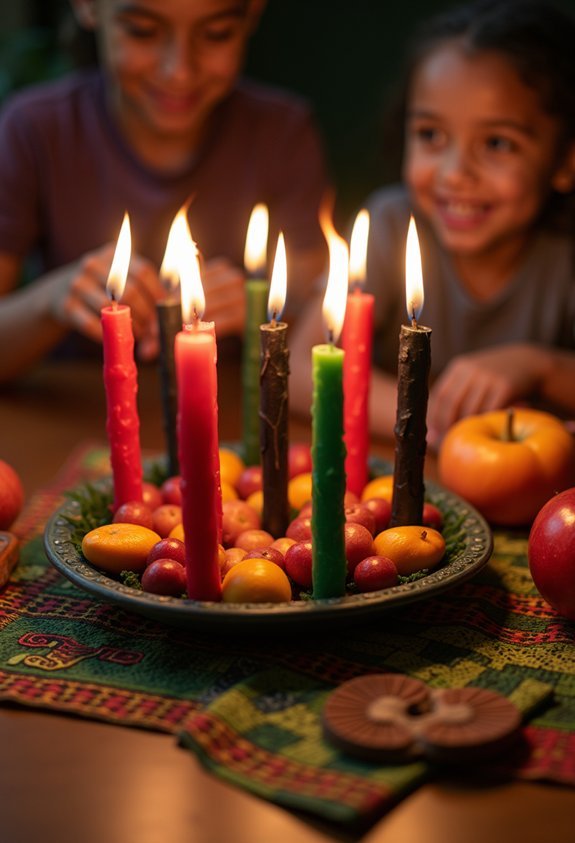
When you’re ready to dive into Kwanzaa’s first principle, there’s no better way than creating a kinara together. This candleholder sits at the heart of every Kwanzaa celebration.
The kinara symbolism runs deep. It represents African roots and family heritage. Building one as a family shows unity significance in action—everyone contributes something meaningful.
The kinara holds generations of meaning—each flame connecting your family to African heritage and the strength of togetherness.
Simple steps to try:
- Gather cardboard tubes, paint, and craft supplies
- Let each family member decorate one section
- Combine the pieces into one complete kinara
- Talk about how separate parts form something whole
As you work side by side, you’re living Umoja. You’re showing kids that unity means working together, supporting each other, and creating something beautiful as one.
Set Personal Goals That Celebrate Kujichagulia (Self-Determination)
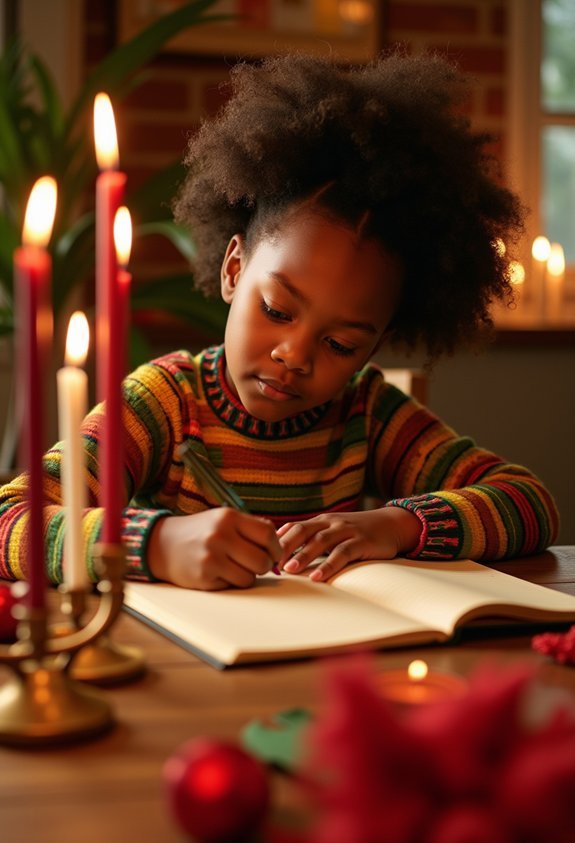
Because self-determination sits at the core of Kujichagulia, this principle gives kids a powerful gift—the chance to define who they are and what they want to become.
Start with simple self reflection activities. Ask your child:
- What makes you proud?
- What do you want to learn?
- How can you help others?
These questions spark real thinking about identity and purpose.
Next, try these goal setting strategies together:
- Pick one meaningful goal for the new year
- Break it into small steps
- Write it down and decorate the paper
- Check progress weekly
Your child’s goals don’t need to be big. Learning a new skill or being kinder to a sibling counts. What matters is they chose it themselves.
Plan a Family Service Project for Ujima (Collective Work and Responsibility)

Although personal goals build character, Ujima asks your family to think beyond yourselves. This principle reminds us that we grow stronger when we lift others. Service learning turns lessons into action kids can feel.
Start by exploring community partnerships near you. Local food banks, shelters, and neighborhood cleanups welcome helping hands of all ages. Let your children help choose the project—ownership matters.
Picture your family:
- Sorting canned goods side by side at a food pantry
- Planting flowers in a community garden together
- Making care packages for neighbors who live alone
These moments stick with kids. They learn that their small hands can do big things. You’re showing them responsibility isn’t a burden—it’s a gift we share.
Start a Kids’ Business Activity for Ujamaa (Cooperative Economics)
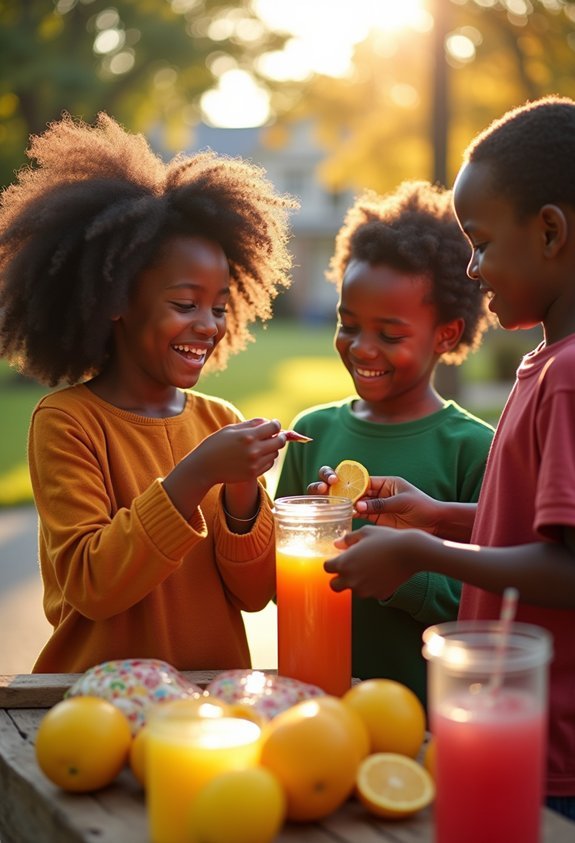
Ujima shows kids how helping others strengthens everyone. Now let’s build on that teamwork spirit with Ujamaa—working together to create something profitable.
Help your child start a simple business with friends or siblings. Try these ideas:
- Homemade bookmarks or friendship bracelets
- Hot cocoa stand
- Pet treat packaging
Getting Started
- Do basic market research together. Ask neighbors what they’d actually buy.
- Practice price setting by adding up supply costs and deciding fair profits.
- Split responsibilities so everyone contributes.
The magic happens when kids see their combined efforts create real results. They’ll learn money skills while understanding community support.
You’re teaching them that when we invest in each other, everybody wins. That’s Ujamaa in action.
Read Books That Highlight Nia (Purpose)

Stories have a special way of showing kids what purpose looks like in real life. When you read together, you’re opening doors to meaningful nia discussions about dreams and goals.
Choose books where characters discover their calling or help their community. These stories spark natural purpose exploration conversations.
Try these reading moments:
- A cozy corner with pillows where you can pause and talk about the character’s goals
- A bedtime routine where you ask “What do you think their purpose was?”
- A library trip where your child picks books about people who made a difference
After reading, ask your child what purpose means to them. You’ll be amazed at their answers.
Honor Ancestors Through Storytelling for Kuumba (Creativity)
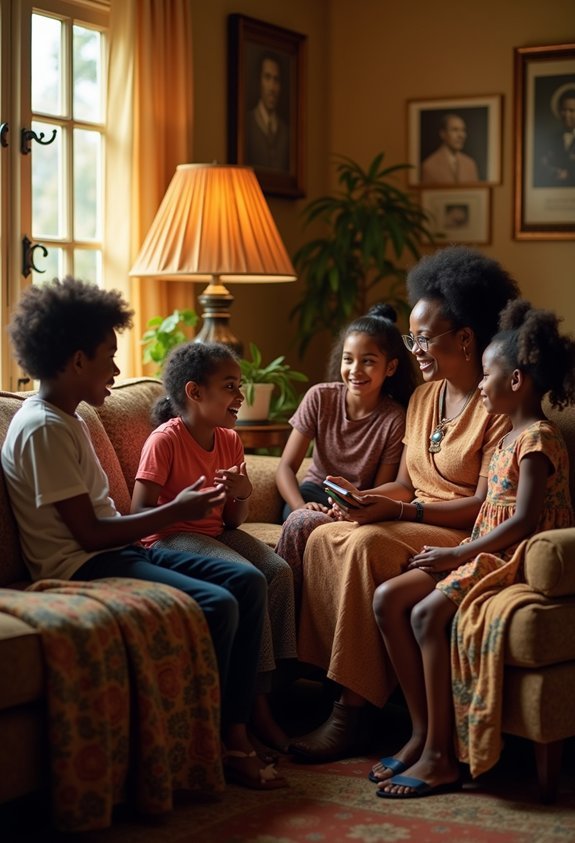
When you share family stories with your children, you’re giving them a precious gift that celebrates kuumba in its truest form. Ancestor stories connect kids to their roots while sparking creative expression.
Family stories are living gifts—they root children in heritage while giving their creativity wings to soar.
Try these simple ways to bring stories alive:
- Create a story jar. Write family memories on slips of paper. Let kids draw one and retell it their way.
- Make it visual. Have children draw scenes from ancestor stories or create mini comic strips.
- Add performance. Encourage acting out tales with costumes or puppets.
Your children don’t need perfect details. They need permission to imagine, embellish, and make these stories their own. That’s creativity honoring the past while building the future.
Practice Daily Affirmations for Imani (Faith)
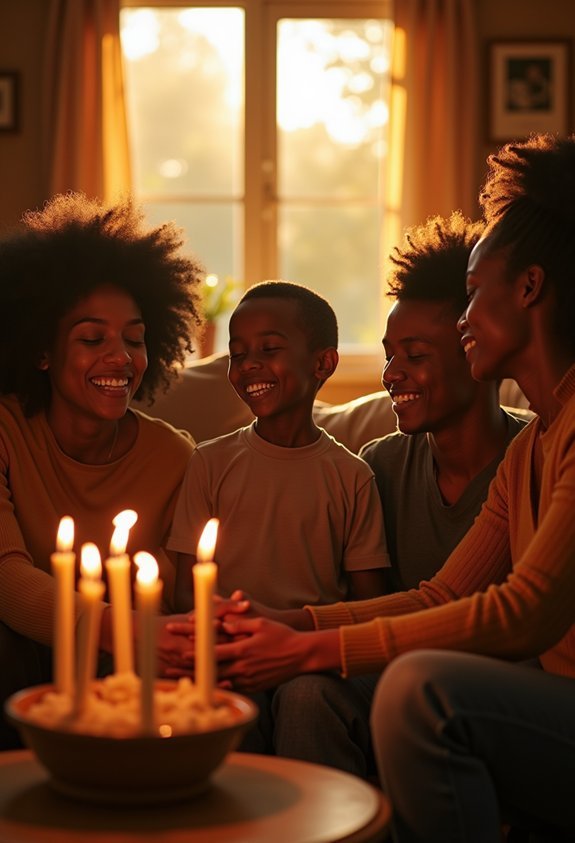
From creative storytelling, we move naturally to imani—faith—the seventh principle that anchors everything your child has learned.
Daily rituals build this foundation. Create simple affirmation cards together and read them each morning. Your child picks one, says it aloud, and carries that belief into their day.
Try affirmations like these:
- I believe in myself and my family
- I can make good things happen
- My dreams matter and I work toward them
Keep the cards where your child sees them—on a mirror, by their bed, or in their backpack. Faith grows through small, steady moments.
When your child repeats these words daily, they internalize confidence and hope. You’re teaching them that believing in themselves and their community creates real strength.
Host a Karamu Feast With Kid-Friendly Cooking Tasks
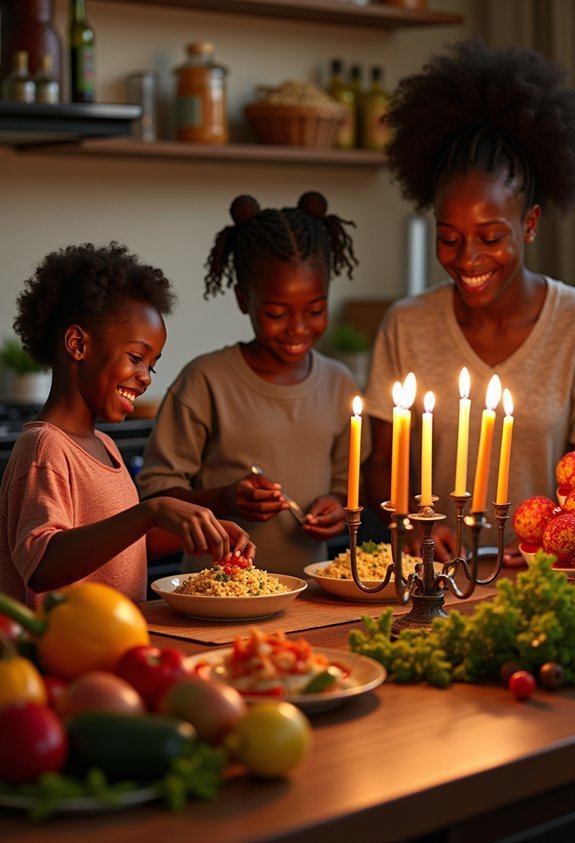
The karamu feast brings all seven principles together around one joyful table.
Cooking together creates memories that stick. Kids feel proud when they help make something everyone enjoys.
Kid-Friendly Tasks by Age:
- Ages 3–5: Wash vegetables, tear lettuce, stir cold ingredients
- Ages 6–8: Measure ingredients, roll dough, set the table
- Ages 9–12: Chop soft foods, follow simple recipes, help with timing
Making It Meaningful:
Pull out family recipes and share their stories. Who made this dish first? Why does it matter? These conversations teach Ujima (collective work) and Kuumba (creativity) naturally.
Let kids choose one dish to “own.” They’ll beam when guests compliment their contribution.
The feast isn’t about perfection. It’s about hands working side by side and hearts growing closer.
Design a Family Unity Cup Ceremony
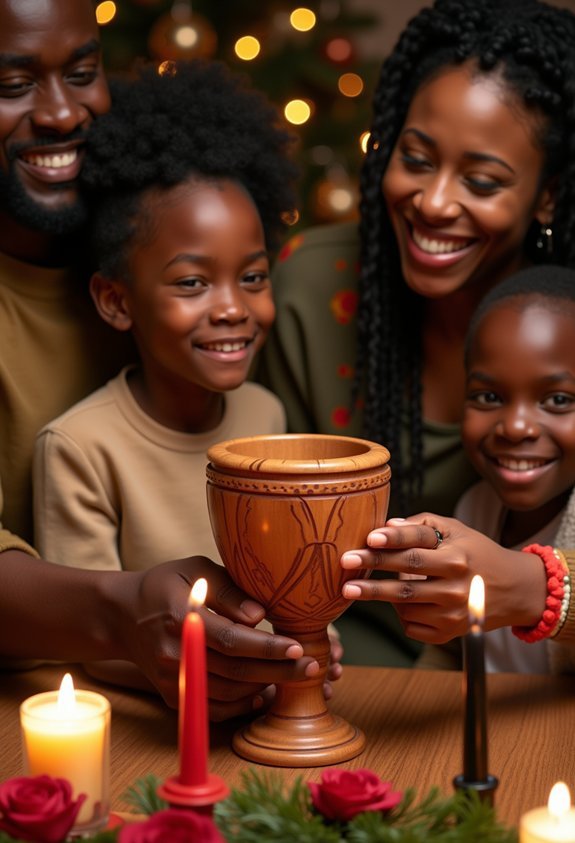
After sharing food around the karamu table, gathering around the unity cup deepens your family’s connection even more. This simple ceremony creates space for meaningful conversations about what holds you together. Let your child pour water or juice into the cup, then pass it around as each person shares one thing they appreciate about the family.
Create lasting images with these touches:
- A wooden or ceramic cup decorated with symbols your child helped choose
- Soft candlelight from the kinara glowing nearby
- Hands of different sizes holding the cup together
This moment builds family traditions that children carry into adulthood. You’re showing them that unity isn’t just a word—it’s something you practice together, one sip at a time.
Build a Year-Round Nguzo Saba Practice Chart

Everyone in your family can keep the Nguzo Saba alive long after the kinara candles burn down. A practice chart helps kids connect these seven principles to daily life.
Create your chart:
- List each principle down the left side
- Add columns for the months or weeks
- Include space for check marks or stickers
Make it work:
- Assign one principle per month to focus on
- Let kids mark small wins when they practice a value
- Celebrate progress together at month’s end
Hang your practice chart where everyone sees it. The fridge works great. Kids love tracking their growth. They’ll spot chances to show unity or creativity all year long.
In case you were wondering
What Age Is Appropriate to Start Teaching Children About Kwanzaa and Its Principles?
You can start teaching children about Kwanzaa as early as age three. During early education, kids grasp basic concepts through stories and crafts. As they reach new age milestones, you’ll introduce deeper principles they can understand.
How Can Non-African American Families Respectfully Teach Their Children About Kwanzaa?
You can teach your children about Kwanzaa through cultural sensitivity and respectful engagement by reading authentic books, attending community celebrations, and emphasizing that you’re learning about—not adopting—another culture’s meaningful traditions.
Where Can I Purchase Authentic Kwanzaa Supplies and Decorations for Activities?
You can find authentic Kwanzaa supplies through online shopping at retailers like Amazon, Etsy, or specialty stores like KwanzaaSupplies.com. You’ll discover kinaras, unity cups, and traditional decorations that’ll make your celebrations meaningful.
What Is the History Behind Kwanzaa and Who Created This Celebration?
You’ll discover the Kwanzaa origins trace back to 1966, when Kwanzaa founder Dr. Maulana Karenga created this celebration. He designed it to honor African heritage, to strengthen community bonds, and to celebrate cultural identity.
How Do I Explain Kwanzaa to Children Who Celebrate Christmas During the Same Season?
You can explain that Kwanzaa traditions focus on African heritage and community values, while Christmas comparisons show it’s not a religious holiday. Both celebrations share gift-giving and family time during the season.
Conclusion
You’ve now got the seeds to plant Kwanzaa’s wisdom in your child’s heart. These seven principles aren’t just holiday traditions—they’re roots that grow deeper with each passing year. Like candles on the kinara, your family’s understanding will brighten one flame at a time. Start small. Stay consistent. Watch your children carry these values forward, becoming the light they’ve learned to kindle.