15 Outdoor Team Building Games for Kids
Want to stop the kid chaos without yelling? Take them outside and run relay races, human knots, capture the flag, parachute games, trust walks, tower‑building, giant group jump rope, island “lava” stepping stones, and balloon relays. They’ll shout, scheme, argue, and then accidentally work together. You’ll see shy kids lead and speedsters learn patience. And best of all, you’ll still have a few wild team tricks left up your sleeve for the next backyard showdown.
Key Takeaways
- Organize relay races and balloon relays that require coordinated movement, creative rules, and shared problem-solving to succeed as a team.
- Use building challenges, like tallest-tower contests and tug-of-war with changing rules, to promote planning, adaptability, and cooperative effort.
- Facilitate trust walks and human knot activities to strengthen communication, mutual support, and patience among kids.
- Run strategy-based games like island survival and capture the flag to encourage leadership, planning, and inclusive participation in different team roles.
- Incorporate parachute play and group jump rope routines to build rhythm, timing, and cooperation while keeping the focus on fun rather than competition.
Relay Race Challenges
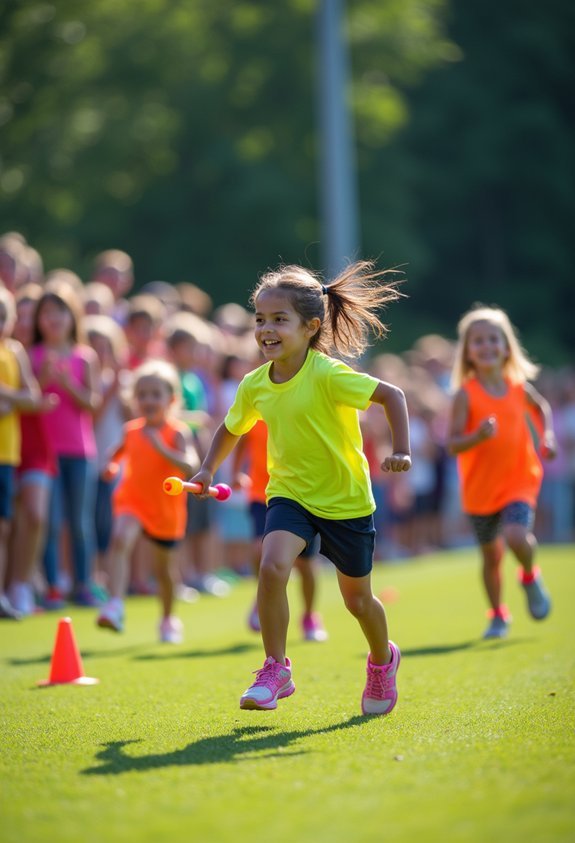
Sometimes all it takes is a couple of cones, a goofy baton, and suddenly kids are sprinting like the playground Olympics just started. You set up two lines of cones, split kids into teams, and boom—instant chaos in the best way.
Teach simple sprint strategies: short steps to start, eyes forward, run through the cone, not to it. Show baton techniques so nobody jabs a teammate in the ribs. Firm grip, arm out, smooth hand-off while both runners move.
Make silly rules to keep it fun: crab-walk relays, backward runs, or “don’t drop the giggle” where they’ve to laugh during the pass. Rotate roles so quiet kids get anchor spots too.
After each race, ask what worked and what flopped for your team.
Human Knot Circle
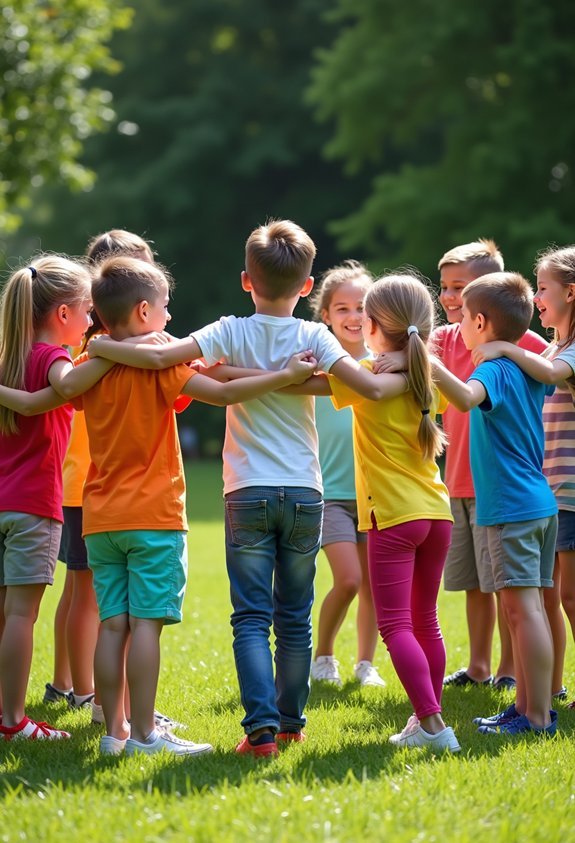
When you want instant chaos without any equipment, the Human Knot is your go-to “what is even happening” game. You have everyone stand in a tight circle, reach in, and grab two random hands. Boom—human spaghetti. Your mission: untangle the mess without letting go.
Here’s what you’ll see:
- Kids shouting, “Wait, whose hand is this?!” while trying not to fall over.
- Wild twisting, ducking, and stepping over arms as team coordination slowly appears from the madness.
- That epic moment when the circle finally snaps into place and everyone yells like they just won a championship.
You teach patience, clear talking, and real problem solving, all while everyone laughs and trips over each other. Kids remember it, beg for rematches every time.
Capture the Flag Collaboration
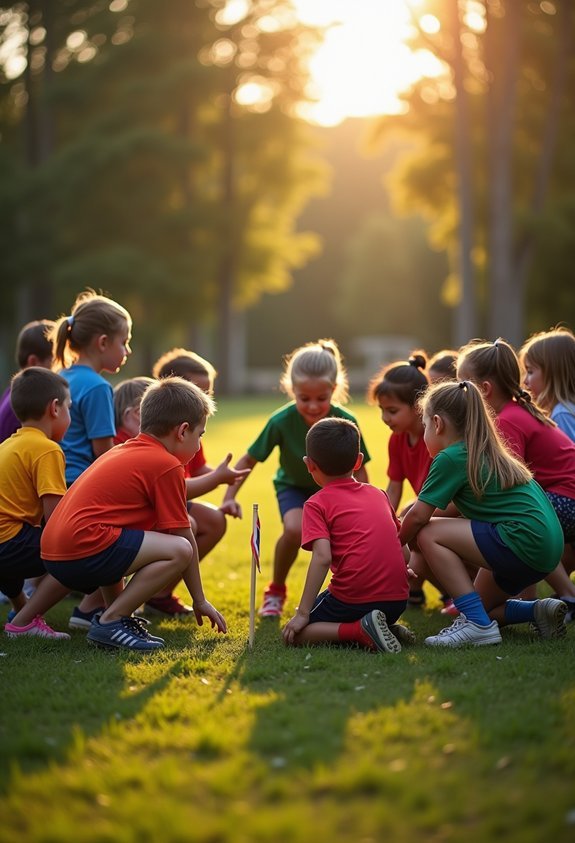
Forget quiet, careful teamwork—Capture the Flag is full-on chaos with strategy hiding inside it. Kids sprint, scream, argue about rules, then somehow pull together like a tiny sports movie.
You split the group into two teams, each guarding a flag. Your job is wild: plan team strategy, sneak into enemy turf, dodge “taggers,” and pull off a clean flag retrieval without getting sent to jail. It feels like spies, but with more grass stains.
Make kids talk before they run. Who guards? Who sneaks? Who rescues people from jail? Switch roles so the fast kid isn’t always the hero and the shy kid gets a turn to shine.
After each round, pause and ask, “What actually worked?” Let them brag, laugh, and plan more.
Parachute Play Teams

As soon as that huge rainbow parachute comes out, kids lose their minds in the best way. You’ve basically summoned a flying circus rug.
Split kids into small teams around the edge and give each group a mission. You’re not just shaking fabric; you’re sneaking in teamwork, timing, and self-control.
Now picture it:
- Kids kneel, gripping tight, and you call different parachute colors. Only those teams lift, trying not to launch sneakers into orbit.
- You shout parachute shapes—circle, wave, mushroom—and teams race to ripple or raise together without breaking form.
- Balls roll on top while teams tilt and lift, yelling directions so nothing escapes the wobbly “parachute island.”
They’re laughing, cooperating, and totally wiped. You just ran PE, therapy, and comedy hour all together.
Trust Walk Partners
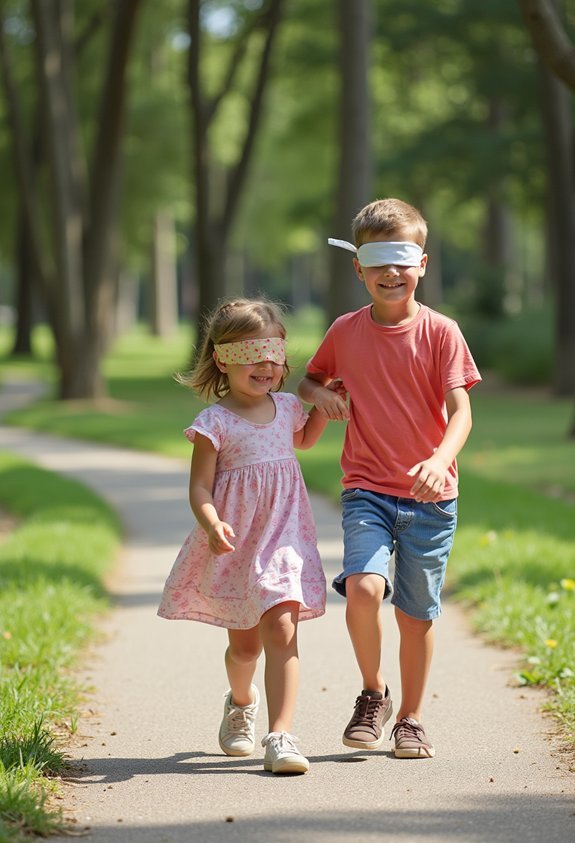
Next up, you’re taking the chaos down a notch and messing with kids’ trust instead of their arm muscles.
Pair them up. One kid wears a blindfold; the other becomes the guide. Simple, but wow, it gets real fast. You explain the rules: slow walking, no running, no “accidentally” steering your friend into a tree for laughs.
Blindfold on, trust up: guide a friend gently, no tree-collisions, no sprinting, just careful steps.
This is one of those trust exercises where every tiny move matters. The guide uses words only, no tugging or shoving, to lead their partner around the field. That blindfold navigation feels huge to kids; even stepping off the curb is dramatic.
After a minute, have them switch roles, then talk about what felt scary, what felt safe, and which partners forgot they’re not GPS robots today.
Obstacle Course Mission
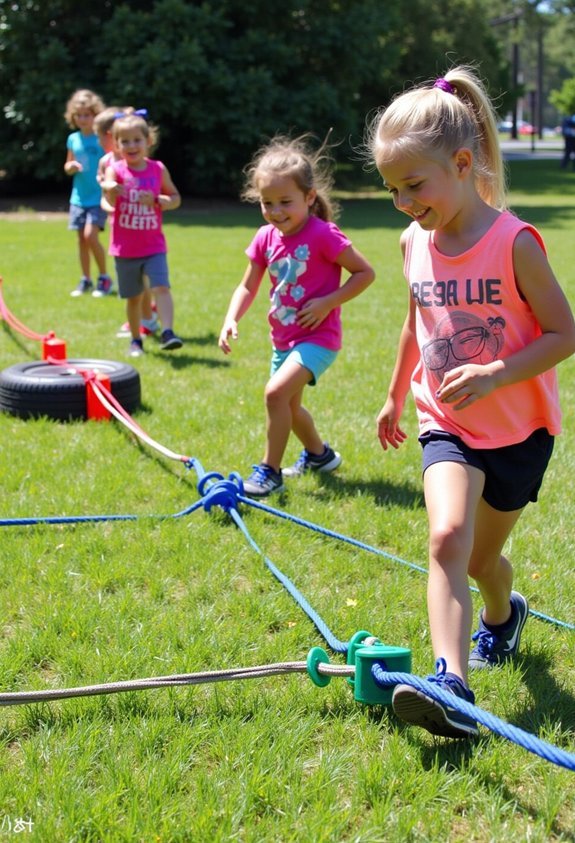
One surefire way to turn a regular field into pure chaos (the fun kind) is an obstacle course mission.
You set up a path that looks wild but stays safe and simple to follow. Think of obstacle course design like building a real‑life video game level for kids. They dash, crawl, balance, and laugh the whole way through.
Here’s one way you might map it out:
- Cones to weave through like they’re lasers guarding secret treasure.
- Hula hoops to hop in and out of, pretending the grass is boiling lava.
- A low balance beam or taped line kids must cross without “falling” into shark water.
Every station adds fresh physical fitness challenges and teamwork. You get sweat, smiles, and zero boredom.
Giant Spider Web Escape
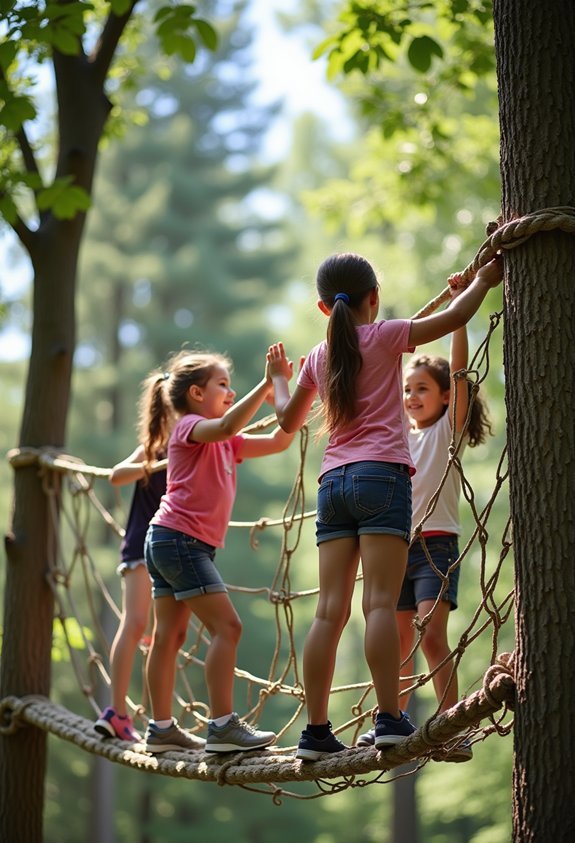
Two words: giant spider. Don’t worry, it’s not real, but your heart might still sprint. You stretch a rope or yarn spider web between trees, with big and small gaps. That spider web design matters, because every opening can be used only once.
Your team’s job: get everyone through without touching the ropes. Suddenly, tiny gaps look like brick walls. So you start testing teamwork strategies. Who’s small and flexible? Who can lift? Who gives calm directions instead of screaming, “We’re doomed!”?
You talk, plan, and try again when someone bumps a rope. Kids learn to trust teammates, ask for help, and think before leaping. When the last person makes it through, the celebration feels huge. You’ll laugh, reset the web, and play again.
Pass the Hula Hoop
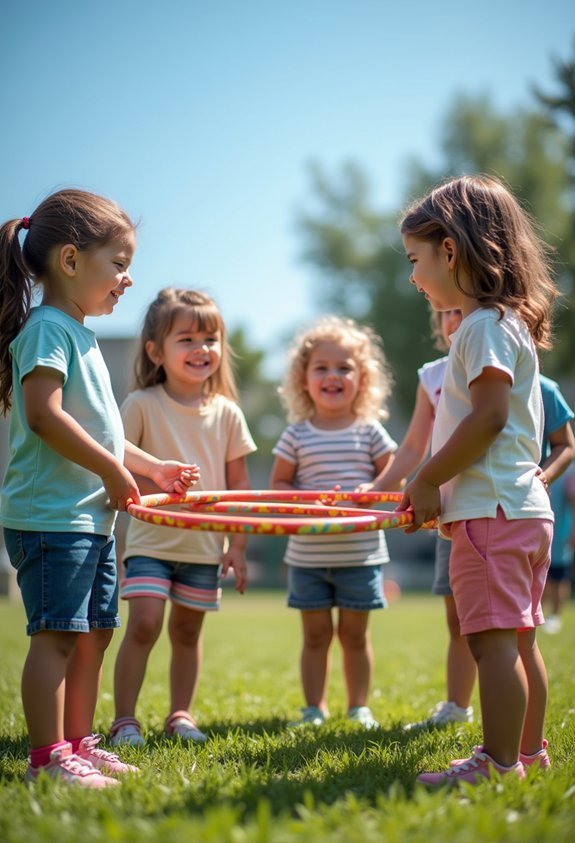
After escaping the giant spider’s “deadly” web (that somehow felt personal), you can give everyone a break from lifting and crawling with a game that looks easy but totally isn’t: Pass the Hula Hoop.
Players stand in a circle, holding hands. You slip a hoop over one joined set of hands, and nobody lets go. Their mission: move the hoop all the way around the circle, no cheating.
Picture it:
- Kids diving sideways, wiggling through the plastic ring like escape-artist noodles.
- A kid stuck halfway, shrieking, “Save yourselves!” while the group yanks them through.
- The final player bursts free as everyone explodes, because they beat the clock together.
Quick tip: share hula hoop history, then ask what teamwork benefits kids noticed.
Water Balloon Cooperation Games
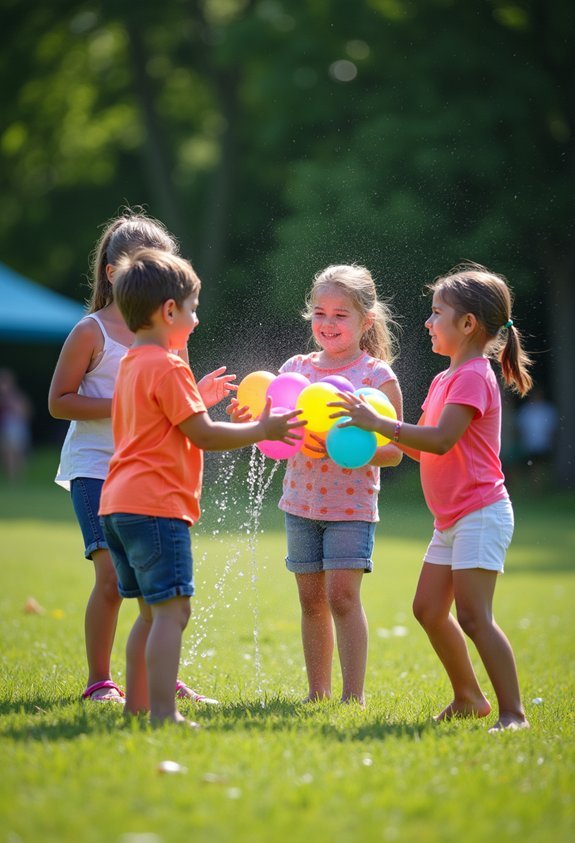
Because nothing says “team bonding” like the constant fear of getting soaked, water balloon cooperation games are pure chaos in the best way. You hand every pair of kids a balloon and explain the classic water balloon toss. They stand a few feet apart, toss, then step back after each clean balloon catch.
Soon they’re screaming, slipping, and blaming each other for terrible throws. Perfect.
To crank up teamwork, put kids in two lines facing each other. They must plan soft throws, shout warnings, and decide who’s better at catching. Switch roles so everyone tries both jobs.
You can also make groups guard one shared balloon while doing silly moves, like spinning or hopping, without letting it drop. Last balloon standing wins bragging rights.
Team Scavenger Hunt
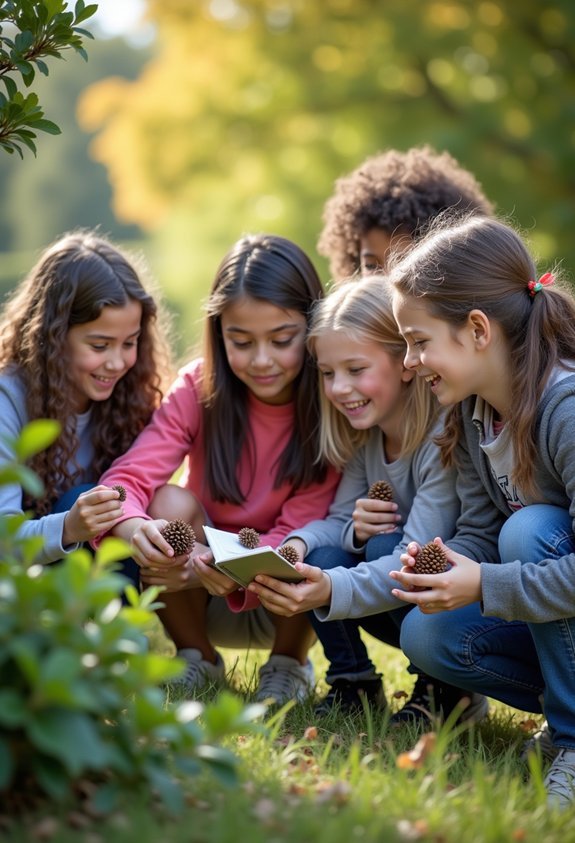
Your kids are already soaked and yelling about whose fault that last throw was, so it’s the perfect time to send them on a team scavenger hunt.
Split them into small squads and hand each group a list that forces them to use creative scavenger strategies, not just run around grabbing random sticks.
Think of it like a teamwork treasure hunt, where the real prize isn’t another plastic toy, it’s the kids actually listening to each other.
- A leaf shaped like a heart, plus a goofy group selfie while holding it.
- Something that makes a strange sound when shaken, but isn’t trash.
- A “kindness item” they must earn by helping another team complete a clue. Let them brag all recess.
Tug-Of-War With a Twist
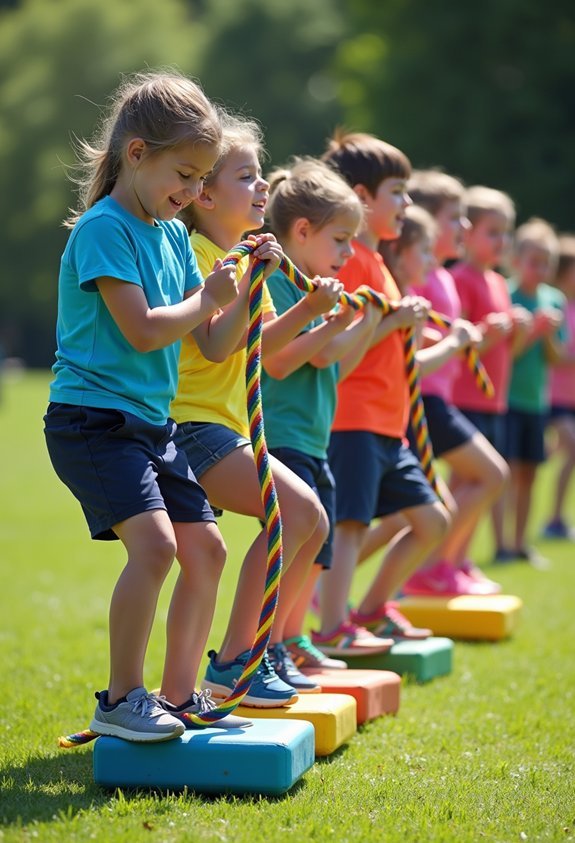
Once the kids have finished arguing about who “totally slipped” and who “definitely cheated,” it’s tug-of-war time—with a twist that actually makes them think, not just yank.
Split them into two teams like normal, but don’t say “go” yet. Tell each side they’ve thirty seconds to plan a team strategy: who leans back, who anchors, who calls the pull.
Then you add chaos. Make them hold the rope with one hand. Or tell three players they must stay on one foot. Suddenly it’s not just muscles; it’s brains and loud giggles.
Swap rules each round to keep the friendly competition wild but fair. Debrief fast: ask what worked, what failed, and who still “mysteriously slipped.”
Wrap it up laughing, not sulking or complaining.
Build the Tallest Tower
Kids finally done dragging each other through the dirt?
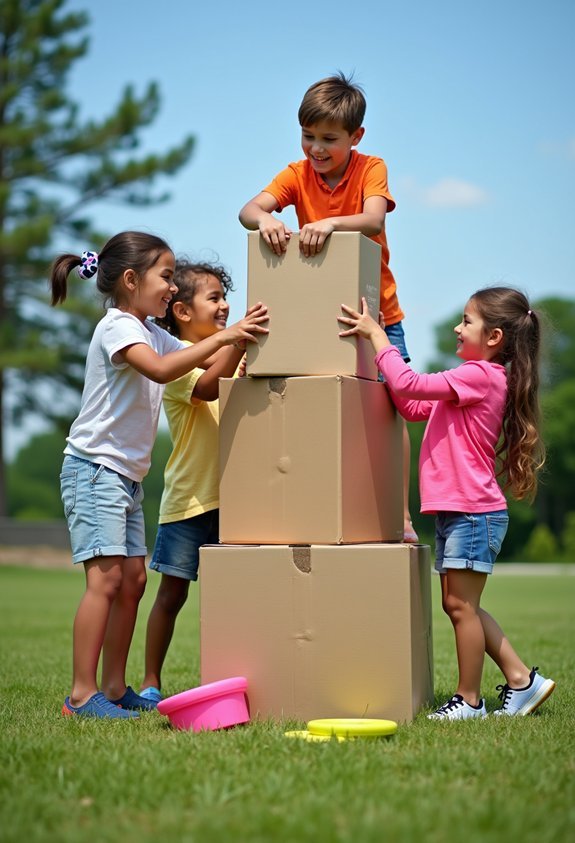
Time to make them build up instead of beat up. Split kids into small teams and challenge them to build the tallest tower before the timer explodes—uh, ends. Use safe tower materials like pool noodles, cardboard boxes, plastic cups, or sticks from the field. No digging, no glue, just creativity and chaos.
Have teams plan quick design strategies so they don’t build a wobbly noodle monster. Give them two minutes to talk, then shout, “Go!” and step back.
- Cups crash, kids scream, someone yells, “Jenga life!”
- A brave kid holds the shaking tower, laughing and panicking.
- Final seconds: towers lean, everyone howls, victory by one cup.
They remember this wild tower battle.
Group Jump Rope Routines
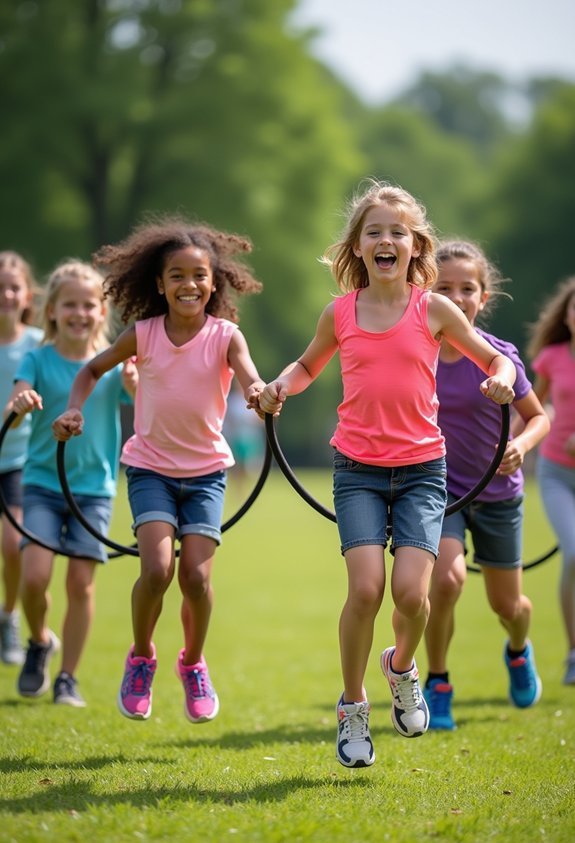
Even if everyone’s legs are noodles from other games, group jump rope routines will snap them right back to life. You grab a long rope, pick two kids to spin, and boom—you’ve got a stage.
Start simple: one jumper in the middle, in, out, in, out, no tripping, no tears. Use rhythmic counting so everyone knows when to jump: “1, 2, 3, JUMP!” Loud voices, big smiles, maybe some dramatic screams.
Then level up the jump rope techniques. Try two kids jumping together, then three, then a whole line racing through. Let kids invent silly moves—spins, claps, superhero poses.
When someone wipes out, you don’t blame them; you laugh, reset, and shout, “Next round!” Keep going until everyone’s breathless, sweaty, and weirdly proud inside.
Island Survival Stepping Stones
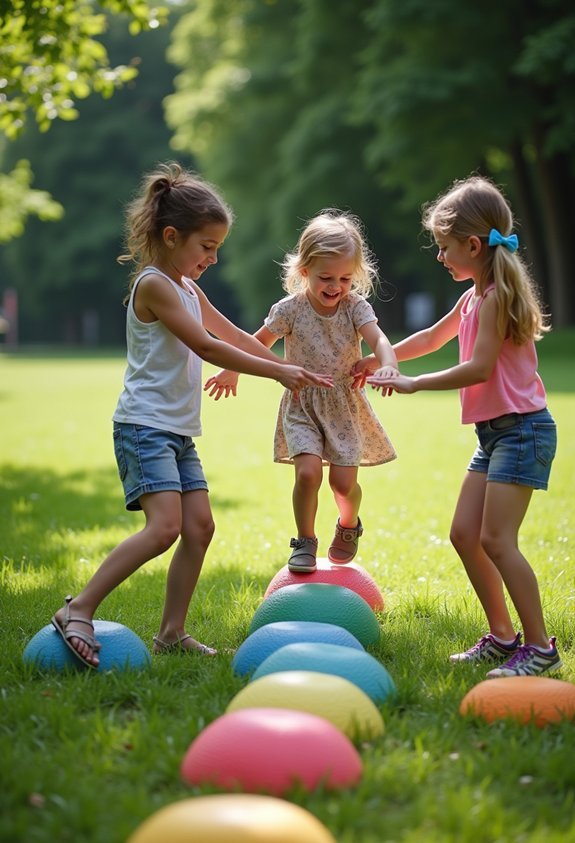
Before anyone can yell “I call the good spot!”, the ground is lava and the only safe places are tiny “islands” you build yourself. You hand out frisbees, cardboard squares, or old towels as “stepping stones.” Kids can only stand on those. If someone touches the grass? Instant “aaah, lava!” and they go back to start.
You’ll see survival skills kick in fast: who leads, who plans, who just yells “run for it!” You push teamwork strategies by giving fewer stones than players, so they must share and balance.
- A nervous kid wobbling on one tiny plate, arms windmilling.
- Three kids stacked like a wobbly sandwich on two towels.
- The whole team freezing, plotting the final giant leap over the lava.
Balloon Relay Team Tasks
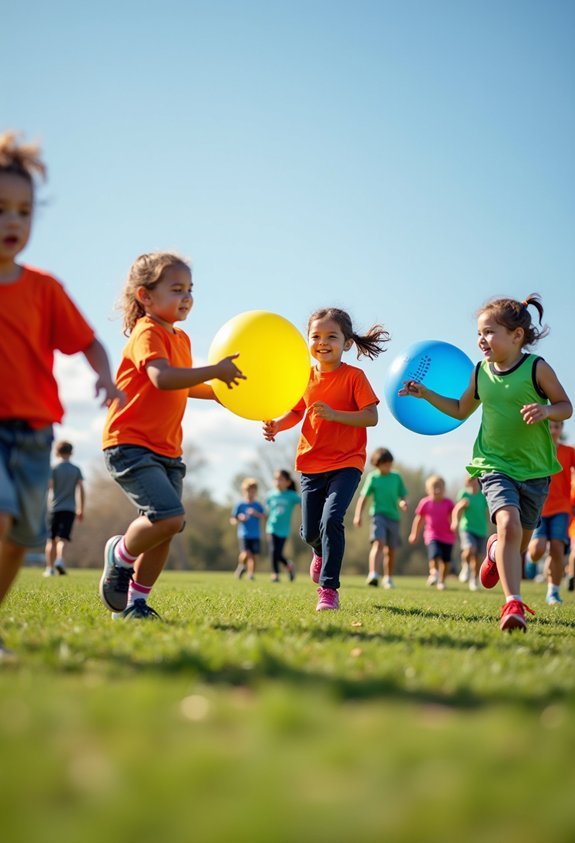
Once you bring out a big bag of balloons, the whole group turns into chaos on legs—and that’s exactly what you want.
Line kids up in teams and give each pair one balloon to guard with their lives. First relay: balloon balancing between their bellies while they wobble to a cone and back. No hands. Lots of screaming. Massive drama.
Next round, switch to knees, elbows, or backs. If it drops, they start over. You’ll see instant teamwork as they yell, shuffle, and argue about who’s walking wrong.
Then crank up the chaos: balloons clamped between knees, elbows, backs—drop it and you’re restarting
For a wild finish, do balloon popping. Teams race down, sit on the balloon, and explode it before tagging the next player. It’s noisy, ridiculous, and totally unforgettable. Kids beg to play it again. Every time.
In case you were wondering
How Can We Adapt These Games for Children With Limited Mobility or Disabilities?
You adapt games using adaptive equipment, simplifying movements, and offering seated options; you apply inclusive strategies by mixing abilities, rotating roles, softening rules, and emphasizing cooperation so each child participates meaningfully and feels valued daily.
What Group Size Works Best for Outdoor Team Building Activities With Kids?
You’ll find 6–10 kids per group works best, since studies show teams that size share 60% more ideas. Those ideal group sizes keep everyone visible, strengthen team dynamics, and let shy kids safely participate fully.
How Do We Handle Conflicts or Hurt Feelings That Arise During Competitive Games?
You pause the game, don’t interrupt; children describe feelings, and guide respectful listening. You teach conflict resolution steps, validate emotions, and encourage apologies or compromises. Afterward, you reflect together, highlighting practicing empathy and emotional communication.
What Safety Equipment or Preparations Are Recommended Before Starting These Activities?
You should review safety guidelines, inspect the area for hazards, set clear rules, ensure adult supervision, provide age-appropriate gear like helmets or pads when needed, and keep a first aid kit and emergency contacts nearby.
How Can We Modify Games for Mixed-Age Groups to Keep Everyone Engaged?
Wondering how to keep everyone engaged in mixed-age games? Use mixed age adaptations: pair older mentors with younger kids, offer tiered challenges, rotate leadership roles, and tweak rules so inclusive participation stays fair and fun.
Conclusion
Now you’ve got a whole toolbox of outdoor games that turn kids into tiny teamwork ninjas. Pick one, step outside, and hit play instead of “Please stop fighting.” You’ll see shy kids light up, loud kids dial in, and the whole group move like one big, sweaty brain. Start small, mix it up, and tweak rules as you go. Just remember: if everyone’s laughing, you’re winning way more than any scoreboard out there with them.