How to Play Energy-Burning Indoor Games
You turn your living room into a “don’t break your neck” fun zone. First, shove breakables away and set simple rules: no jumping near TVs, lamps, or the baby. Then build a pillow/blanket obstacle course, play “floor is lava,” race animal walks (crab, bear, frog), or do “freeze dance” with wild moves. Use tape lines for balance walks and mini races. End with a calm game so kids don’t stay turbo-charged forever—and that’s just the start.
Key Takeaways
- Clear a safe play zone by removing hazards, marking no-play areas, and using grippy socks to prevent slips and collisions.
- Match games to kids’ age, size, and energy level, avoiding overly competitive activities that can trigger rough play or frustration.
- Build simple obstacle courses with cushions, tape tracks, tunnels, and balance lines to channel high energy into structured movement.
- Use high-energy bodyweight games—animal walks, agility drills, and freeze games—to burn energy while keeping bodies engaged and laughing.
- Mix in cooperative and solo challenges, plus warm-up and cool-down activities, to manage intensity and encourage teamwork and self-regulation.
Turn Your Living Room Into a Safe Obstacle Course
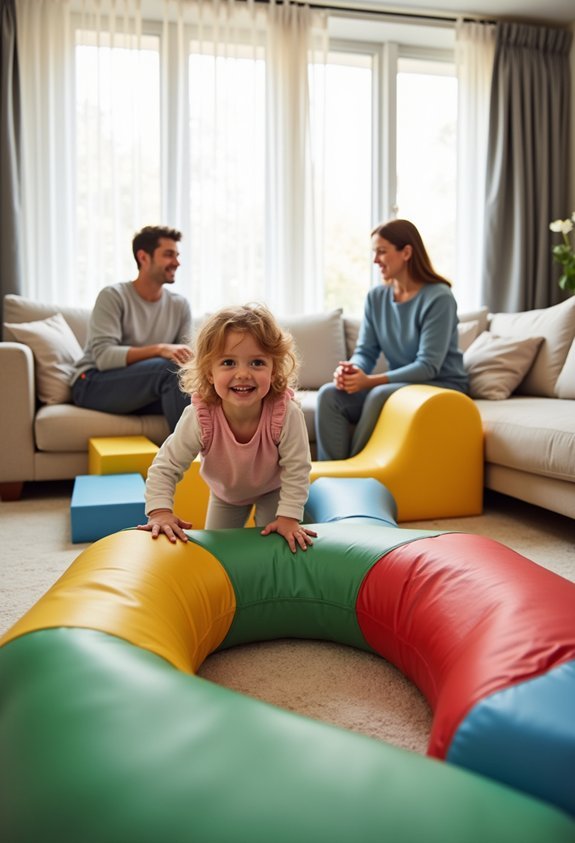
When the weather is trash and everyone’s bouncing off the walls, it’s time to turn your living room into a full-on obstacle course.
First, push tables and sharp stuff to the side, so no one nails a knee on a hidden corner. Lay down a “track” with tape or socks that shows where kids run, crawl, and hop.
Shove sharp-cornered stuff aside, then lay down a sock-and-tape racetrack for pure chaos
Build cushion hurdles with couch pillows they can jump over, not crash through. Turn chairs and blankets into furniture tunnels they army-crawl under, squealing the whole way.
Add a “slow zone” where they’ve to tiptoe along a taped balance line. You walk the course first, fixing wobbly spots.
Then hit start, cheer loud, and time each lap. Declare the fastest runner today’s Living Room Legend.
High-Energy Games That Use Only Body Weight

Forget fancy gear—you’ve already got the best workout tools: your arms, legs, and a strong desire to wear these kids out before they start climbing the fridge.
Turn basic bodyweight exercises into wild games. Try “Animal Stampede”: call out animals and everyone copies the move—bear crawls, crab walks, frog jumps, cheetah sprints in place. Switch fast so they’re laughing and gasping.
For agility drills, put tape lines on the floor and yell commands: hop forward, side shuffle, spin, drop to a plank, jump up.
Mix in “Freeze Trainer”: you do the moves, they copy, but freeze when you shout “statue.” If they wobble, they owe five more squats.
You’ll burn energy too, like it or not. Hey, that’s bonus cardio for you, coach today.
Active Play Ideas With Pillows, Blankets, and Furniture
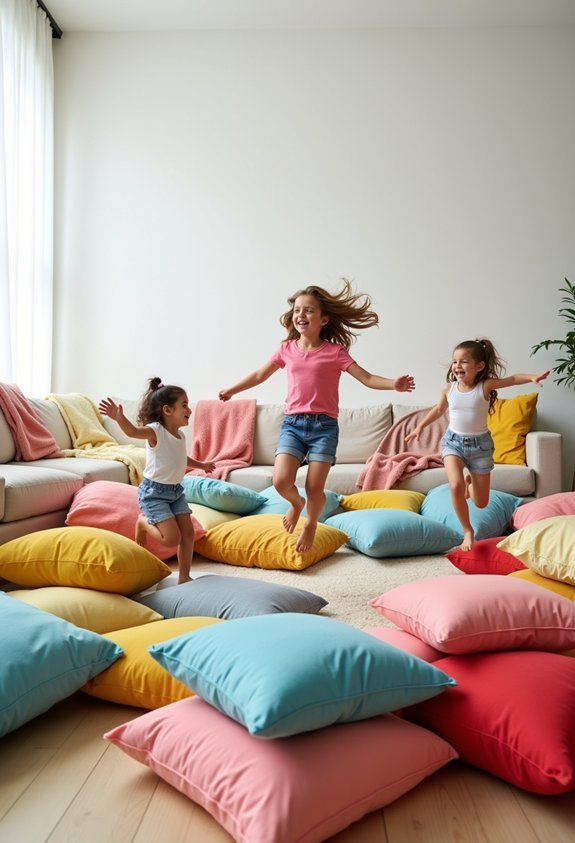
Even on a “we aren’t leaving this house” day, your living room can still turn into a full‑on playground with nothing but pillows, blankets, and the stuff you already trip over.
Start with the classic pillow fort: flip couch cushions, stack pillows, throw a blanket roof on top, and boom—instant castle, cave, or superhero base.
Next, push the coffee table aside and build an obstacle course. Kids crawl under chair tunnels, leap over cushion “lava,” and bear‑walk around the room till they’re panting.
For a wild finish, make a blanket slide by tucking one end under a mattress and letting kids scoot down on their bottoms. Add silly sound effects and “traffic rules” for extra chaos, then collapse in a happy tired heap.
Movement Games That Double as Learning Activities

Some days you just want the kids to burn energy and somehow get smarter at the same time, like a tiny, sweaty magic trick.
Turn your living room into a classroom that can’t sit still. Try an educational scavenger game: hide word cards, animal facts, or history questions around the room. They sprint, they search, they shout answers, you sip coffee like a genius.
For math movement, tape numbers to the floor. Call out “6 + 4!” and have kids jump to 10, or crab-walk to even numbers. Miss the answer? Five jumping jacks. Nailed it? Victory dance.
You’re sneaking in learning while they race, leap, and basically forget that “school” is happening. Inside, you get peace, they get tired, everyone actually wins today.
Low-Noise, High-Motion Games for Apartment Living
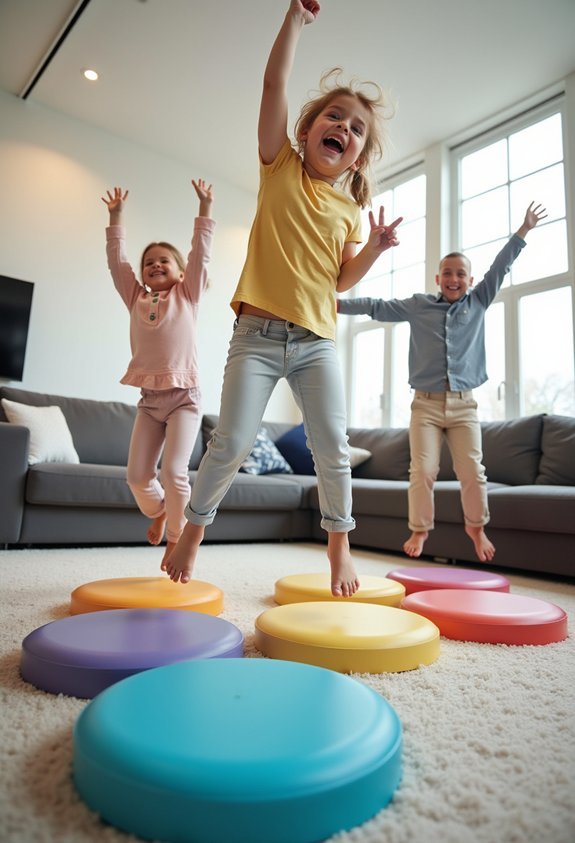
Your kids just crushed those jumpy math problems and loud scavenger hunts… and your downstairs neighbor is probably googling “laws about elephants upstairs.”
Time for games that keep the wild energy but won’t shake the walls.
Think quiet indoor parkour. Clear a hallway and have them speed-walk, tiptoe, or crab-walk laps while balancing a sock on their head. If it falls, they freeze like a statue.
Quiet indoor parkour: hallway laps, silly walks, sock-balancing, and instant freeze statues when it drops
You can race them with a broom “microphone,” giving over-the-top sports commentary.
Try creative movement stories: “The floor is marshmallow,” so they move slow and squishy, or “You’re spies,” sneaking room to room without a sound.
Track “stealth points” for soft feet and calm voices. High motion for them, low drama for your neighbors. They may even smile.
Simple Props That Supercharge Indoor Energy Burn
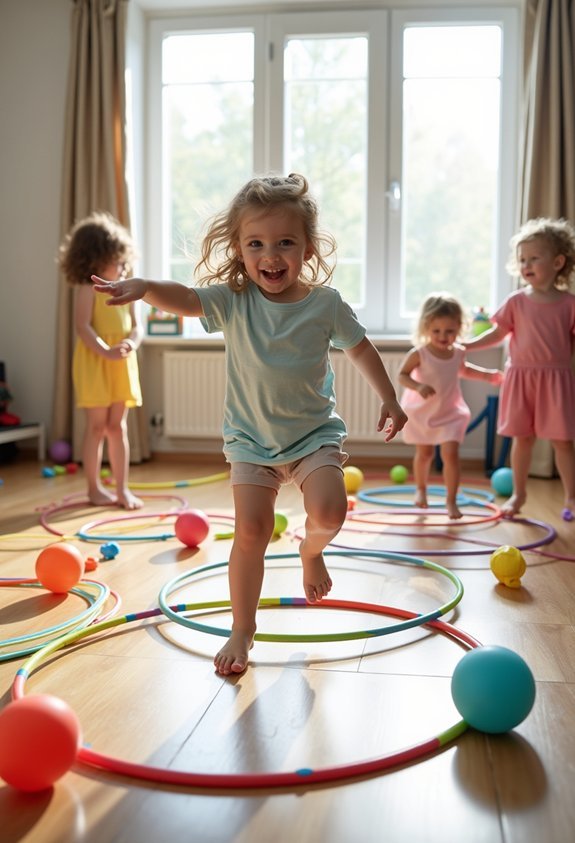
Magic is what happens when you hand a bored kid a laundry basket, three pillows, and a roll of painter’s tape. Those random things become energy props that turn your living room into a mini gym.
You don’t need fancy gear; you need stuff that can survive chaos. Laundry baskets become basketball hoops. Pillows turn into safe stepping stones over “lava.” Painter’s tape marks balance beams, start lines, and zigzag sprint tracks that feel like an obstacle course.
Add creative accessories like plastic cups, wooden spoons, or stuffed animals, and suddenly you’ve built a whole training camp. The goal is simple: more motion, less mayhem.
If it’s cheap, soft, and can’t easily break your TV, it’s fair game. Your floor becomes their wild arena.
Cooperative Games to Get Siblings Moving Together
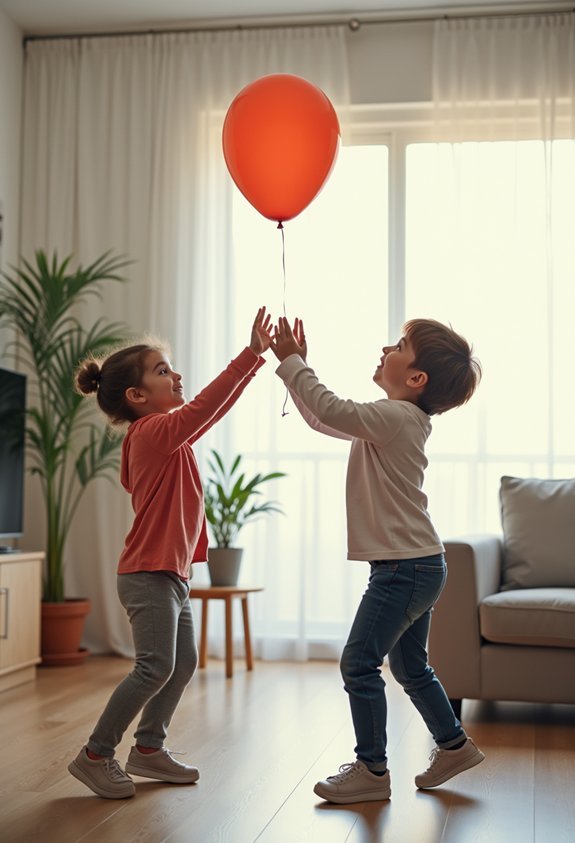
When kids team up instead of square off, the whole house breathes a little easier—and a lot louder. You’re not just burning energy; you’re sneaking in team building and sibling bonding while they think they’re just being goofballs.
Try “Floor Is Lava Rescue.” One kid’s the “scientist,” the other’s the “helper.” They’ve to move pillows, crawl, and balance to save all the stuffed animals without “touching” the floor. Expect yelling. And dramatic falls.
Play Floor Is Lava Rescue: pillows, stuffed-animal missions, dramatic saves, and louder-than-necessary victory screams
Or play “Human Machine.” One child starts with a motion and sound, then the other adds on, then they move together across the room like a wild, clunky robot. They’ll giggle, crash into cushions, and actually cheer for each other—for once.
Meanwhile, you finally drink coffee while they cooperate peacefully.
Solo Indoor Challenges for Only Children
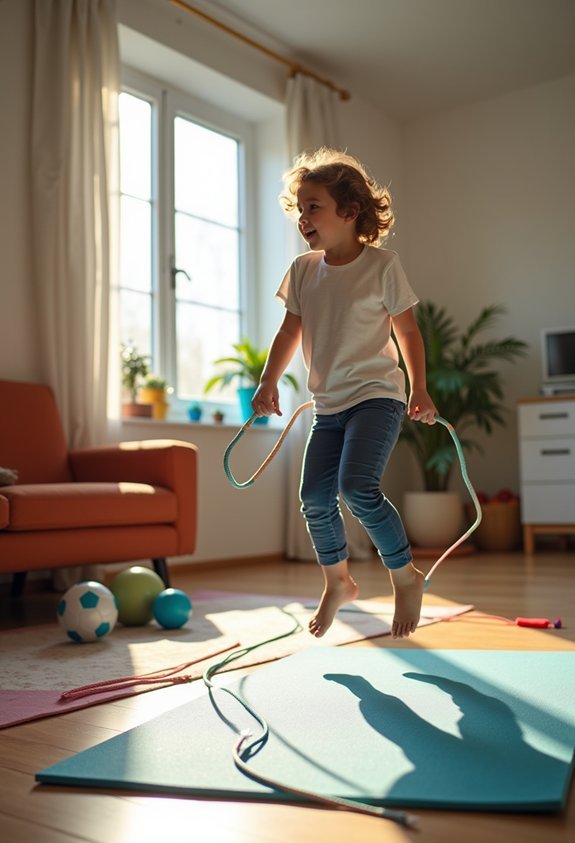
Even if there’s no sibling around to tackle, chase, or blame for the noise, one kid can still turn the living room into a full-on action zone.
You just need games that push your body, not your boredom. Crank up music, grab a timer, and turn silly ideas into mini missions.
- Run a solo scavenger hunt: find five blue things, three circles, two shiny objects, sprinting between each.
- Build a “lava path” with cushions and books, then parkour across without “dying.”
- Do indoor yoga, but make every pose a superhero stance with sound effects.
- Try speed-clean races: how fast can you clear the floor without just shoving stuff under the couch?
- Shadow-box your “evil twin” on the wall, throwing fast punches and dodges today.
Adapting Indoor Games for Different Ages and Abilities
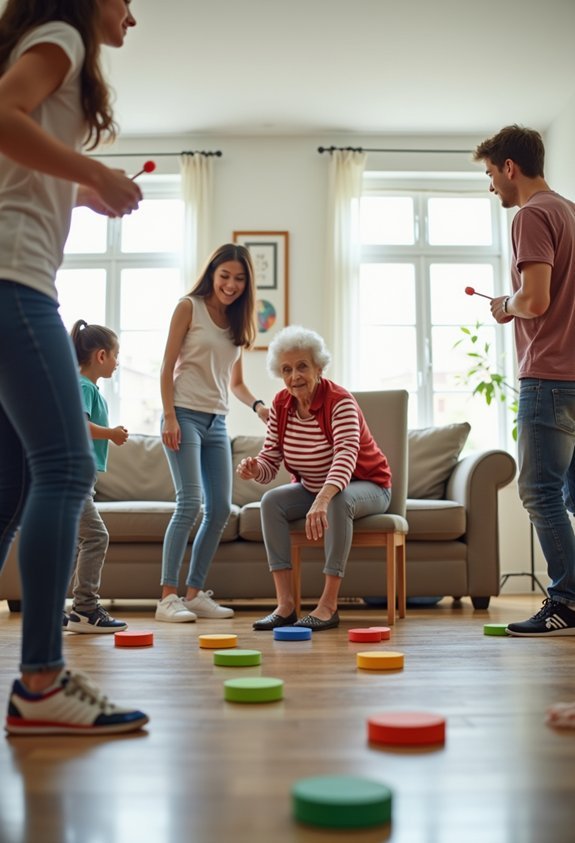
Your living room doesn’t care if it’s hosting a wild 4-year-old, a moody 10-year-old, or a grown-up who “doesn’t run” but somehow sprints for falling snacks.
You just tweak the same game so everyone can play without melting down. That’s where age appropriate adaptations save you.
> One game, all ages—just tweak the rules so everyone plays, nobody melts down.
For tag, little kids tip toes, big kids crawl, adults crab-walk. Same game, new chaos.
Turn a jumping game into marching or strong arm swings if someone can’t jump. Those are your ability inclusive options, not sad backups.
Let kids choose: “easy, spicy, or boss level?” Younger ones get bigger targets, older ones hit timers, teens keep score like it’s the world finals.
You guide, they brag, and everyone ends up sweaty, happy, tired, and asking for more.
Safety Tips and House Rules for Active Indoor Play
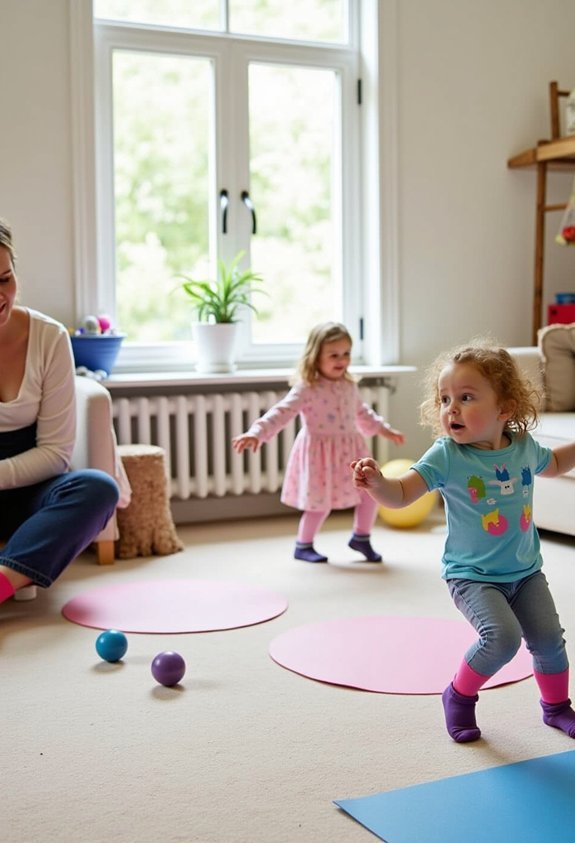
Before you launch into living-room Olympics, you’ve gotta make sure nobody ends up crying over a Lego stuck to their foot or a lamp that “just fell by itself.”
Think of safety rules like the boring-but-awesome armor that lets the fun get wild without turning into chaos.
Clear a play zone so no one wipes out on chargers or mystery socks. Set house guidelines before the first jump. Decide what’s off-limits, like couches for launching or wrestling near screens, and grab basic safety equipment like grippy socks.
- Point out danger zones and mark them no-play.
- Move breakables, lamps, and hot drinks far away.
- Match games to age, size, and energy.
- Warm up; cold muscles twist, pull, and yell.
- End with calm game to reset.
In case you were wondering
How Long Should an Indoor Energy-Burning Play Session Last for Different Age Groups?
You’ll tailor play duration by age: toddlers, 10–15 minutes; preschoolers, 15–20; early elementary, 20–30; older kids, 30–45. Use these age recommendations flexibly, watching energy, mood, and safety cues so you don’t overdo or understimulate anyone.
What Kind of Clothing and Footwear Are Safest for Active Indoor Games?
Soft, safe, and spirited, you choose breathable layers from comfortable fabrics that wick sweat and prevent chafing. You avoid loose strings or jewelry, and you pick closed-toe, supportive shoes with good grip to guard joints.
How Can I Motivate a Child Who Resists High-Energy Indoor Play?
You motivate a resistant child by offering choices, turning movement into engaging activities, and modeling enthusiasm. Use challenges, time limits, and reward systems, like stickers or story time, while validating their feelings and allowing breaks.
Can Indoor Energy-Burning Games Help With Bedtime Routines and Better Sleep?
Like a smartphone in ancient Rome, yes, these games can help; you channel restlessness, gain bedtime benefits, and support sleep improvement by creating predictable wind-down routines after play, so your child associates activity with relaxation.
How Do I Safely Include Family Pets in Active Indoor Play?
Include pets by choosing games, supervising closely, and watching body language. Prioritize pet safety with rugs, soft toys, and zones. Try game adaptations like slower fetch, obstacle walks, and treat puzzles tailored to your animal.
Conclusion
So here’s your mission: prove the “kids can’t burn real energy indoors” theory totally wrong. Test it. Ten minutes of couch-blanket chaos, and you’ll see sweat, giggles, and at least one missing sock. Notice how everyone’s calmer after? That’s your experiment results. Movement works. Inside counts. So push the table back, set a few house rules, and press play on the mayhem. Your living room’s not small; it’s a secret gym. Waiting, loud, and ridiculous.