Toddler Won’t Sleep Through the Night? Tried Everything? Get Them Back to Sleep
Your toddler’s 2 AM wake-up calls aren’t a parenting fail—about a quarter of toddlers wake multiple times nightly because their sleep cycles are still under construction. The fix? A boring-but-magical bedtime routine (think brush-book-bed), a cave-dark room, and gentle methods like silently walking them back to bed every single time. Consistency is your secret weapon here, even when you’re running on fumes. Below, you’ll find exactly how to make it stick.
What you will leave with
- Establish a consistent calming bedtime routine including brushing teeth and reading stories while eliminating screens before bed.
- Try gentle sleep training methods like silent return or the chair method, which can reduce night wakings by half within a week.
- Create an ideal sleep environment with darkness, noise control, and a consistent sleep location to promote sleep independence.
- Address separation anxiety by spending 10-15 minutes of one-on-one time daily to help your toddler feel more secure at night.
- Track sleep patterns for a week to identify issues and adjust bedtime accordingly, addressing small disruptions before they escalate.
Understanding Normal Toddler Sleep Patterns and Expectations
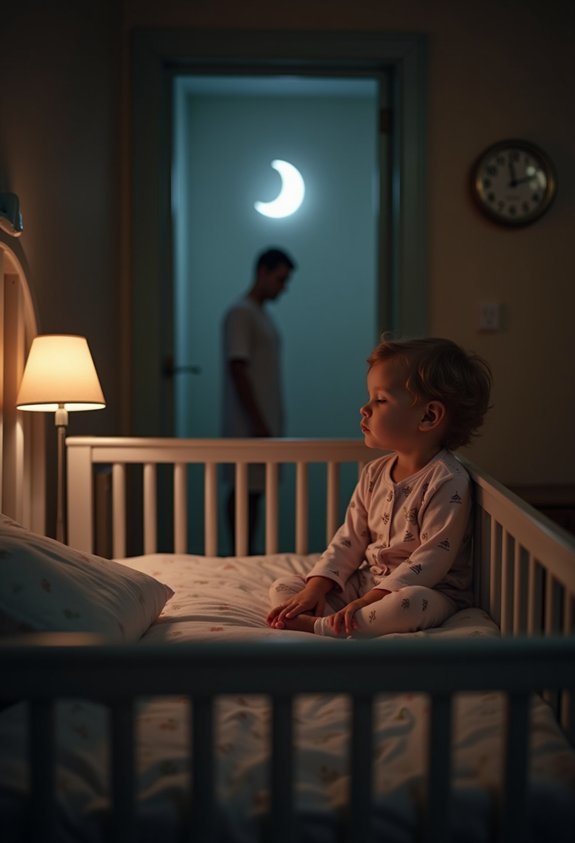
what feels like total chaos is actually pretty normal. Your little one needs about 11-14 hours of total sleep per day. That’s nighttime plus naps combined. Most toddlers clock in around 12.5 hours, which sounds great until you realize they’re spreading it across seventeen wake-ups. Fun times!
During toddler development, sleep patterns are basically a moving target. About a third of toddlers struggle to fall asleep initially. And roughly a quarter wake up multiple times each night. So if you’re exhausted? You’re in excellent company.
Here’s what matters for healthy sleep duration: anything between 10-15 hours is totally fine. Your kid isn’t broken. Their sleep cycles are just still figuring themselves out. It’s messy, but it’s normal.
Why Your Toddler Keeps Waking Up at Night

Even when you’ve perfected the bedtime routine, your toddler might still pop awake at 2 AM like a tiny, confused alarm clock. Here’s the deal—their brains are busy hitting developmental milestones, and that can seriously mess with sleep. Sleep associations really matter too. If your kiddo needs you to rock them back to sleep, they’ll summon you like a tiny dictator every single time.
Common culprits behind midnight wake-ups:
- Anxiety triggers like separation anxiety (peaks around 18 months—fun!)
- Environmental factors including too much screen time before bed
- Medical conditions such as reflux or sleep apnea causing discomfort
Sometimes behavioral patterns cause bedtime resistance. Other times? Their brain is just doing weird brain stuff. The good news? Once you spot the pattern, you can fix it.

The Science Behind Nighttime Awakenings in Toddlers

Although your toddler’s 2 AM wake-up calls feel like cruel punishment, there’s actually real science behind this chaos. Research shows 36% of preschoolers signal nighttime awakenings at least once per night. That’s not a bug—it’s a feature of developing brains!
Here’s the wild part: each wake-up costs about 38 minutes of total sleep. No wonder everyone’s cranky by breakfast.
Your toddler’s behavior during these episodes isn’t random either. Studies link frequent night waking to attention issues and mood struggles later. Boys wake more than girls, and first-borns? They’re the champions of midnight drama.
The good news? These patterns are predictable. They follow trajectories you can actually work with.
Building a Consistent Bedtime Routine That Actually Works

Before you groan at another “just be consistent” lecture, hear me out. Bedtime consistency isn’t about perfection—it’s about showing up most nights. Kids with routines five or more nights per week sleep over 60 minutes longer. That’s a whole extra episode of your show!
Here’s what actually matters:
- Brush teeth (90% of families do this—it’s basically non-negotiable)
- Read a story (67% of parents swear by it, and your kid will too)
- Skip the screens (only 41% shut devices down, but it makes a huge difference)
The magic? Routine flexibility within bedtime consistency. Same order, same vibe, but maybe bath happens every other night.
Each additional routine night means fewer 2 AM wake-ups. Your future self will thank you.
Creating the Ideal Sleep Environment for Your Toddler

Your toddler’s bedroom is basically a sleep laboratory—and you’re the mad scientist. The good news? Science actually backs up what works.
First, nail your lighting conditions. Bright rooms wreck sleep. Kids in darker spaces wake up less and snooze longer. Blackout curtains are your new best friend.
Next up: noise control. A quiet sleep space means faster sleep onset and fewer midnight wake-ups. White noise machines can help drown out household chaos.
Your sleep location matters too. Kids who sleep in their own consistent spot—not bouncing between your bed and theirs—get 17% more stable schedules. That’s huge for sleep independence.
Finally, comfort factors like a cozy crib or cot beat random bedtime environment setups every time.
These environmental influences aren’t magic—they’re just smart science.
Gentle Sleep Training Methods for Resistant Toddlers

Even with the perfect sleep setup, some toddlers treat bedtime like a personal challenge. They’ll pop out of bed seventeen times, suddenly need water, and remember urgent questions about dinosaurs. Classic toddler resistance moves!
But gentle approaches actually work better than strict methods with this age group.
Here’s your game plan:
- Silent return method: Walk them back to bed calmly, no talking, no extra cuddles—boring is the goal
- Chair method: Sit next to their bed, then scoot your chair farther away each night until you’re out the door
- Fading approach: Stay nearby while they fall asleep, then gradually reduce your presence over weeks
Research shows gentle approaches cut night wakings nearly in half within a week.
Plus, five-year studies confirm zero long-term negative effects. Your patience will pay off!
When Night Wakings Signal Something More Serious
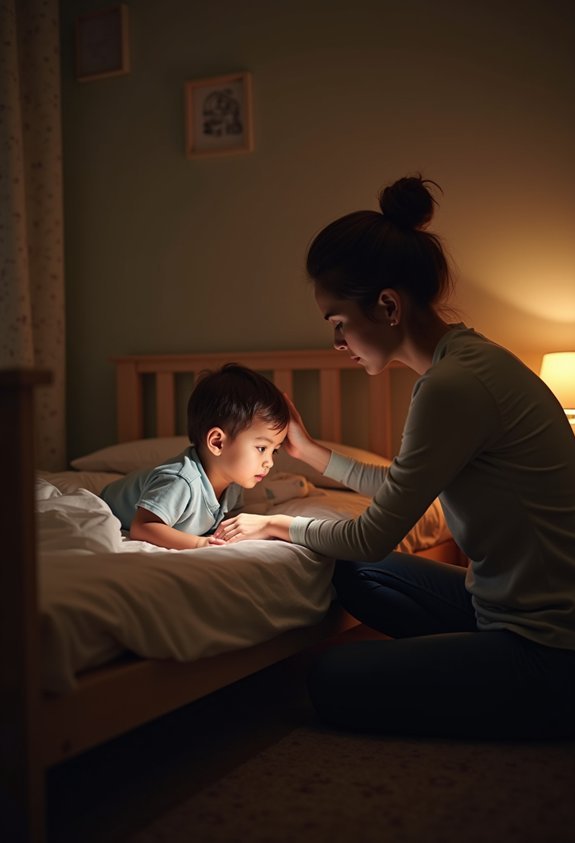
Most toddlers wake up at night for totally normal reasons—a bad dream, a wet diaper, or the burning need to tell you about trucks at 2 AM.
Toddlers wake at 2 AM for dreams, diapers, or urgent truck updates—totally normal chaos.
But sometimes those wakings are waving a red flag.
Gastrointestinal disorders like GERD can make lying flat miserable—hello, stomach acid revenge tour.
Infectious conditions? Think ear infections with funky discharge or pinworms causing itchy-bottom chaos at midnight.
Neurological disorders show up too. Restless legs syndrome makes kids feel creepy-crawly sensations that won’t quit.
Chronic conditions like cystic fibrosis mess with sleep architecture big time.
Don’t forget psychological factors—anxiety keeps little minds spinning when they should be snoozing.
Watch for inconsolable crying, fever, visible movements during sleep, or symptoms that just won’t budge.
Trust your gut. Call your pediatrician.
Age-Specific Strategies for 1 to 3 Year Olds
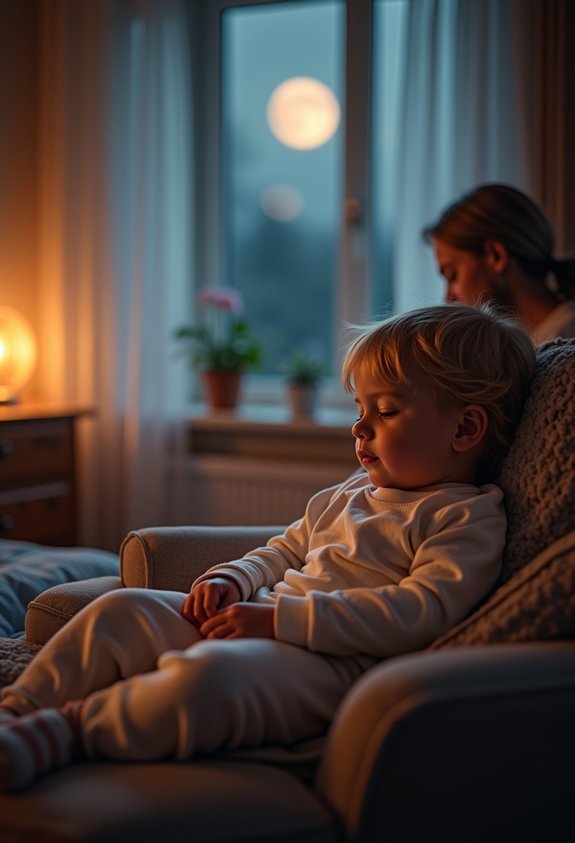
Alright, let’s get into the nitty-gritty because toddlers between ages one and three are basically sleep-sabotaging ninjas with adorable faces.
Every toddler milestone—walking, talking, potty training—can trigger a sleep regression that makes you question your sanity. The good news? Their routine adherence actually improves with age (63% at 12 months jumps to 86% by age two).
Here’s your age-specific game plan:
- 12-18 months: Focus on consistent bedtime routines five or more nights weekly—this alone adds about five extra minutes of sleep by reducing those midnight wake-ups.
- 18-24 months: Ditch nighttime breastfeeding if possible, since continuing past 18 months links to 30% more prolonged wakings.
- 2-3 years: Try bedtime fading, which cuts sleep onset time by 35%.
You’ve got this!
Maintaining Long-Term Sleep Success and Preventing Regression

So you’ve survived the age-specific trenches and your toddler is actually sleeping—now comes the part where you don’t accidentally undo all that hard work.
Sleep regression triggers are sneaky little gremlins. Travel, illness, new siblings, daylight savings—they’re all waiting to wreck your progress. Your best coping strategies? Stay boringly consistent. Keep that brush-book-bed routine locked in tight, even when life gets chaotic.
Track sleep patterns for a week if things start wobbling. Notice bedtime taking forever? Shift it 15 minutes later. Kiddo skipping naps? Move bedtime 20-30 minutes earlier.
Here’s your secret weapon: spend 10-15 minutes of dedicated one-on-one time daily. It crushes separation anxiety before it crashes bedtime.
And when small disruptions pop up? Squash them immediately. Don’t let tiny problems snowball into full-blown sleep disasters.
In case you were wondering
Is It Normal for My Toddler to Still Need Nighttime Feedings?
Like a car running on fumes, your toddler’s nighttime feedings may persist—61% of older infants still wake for milk. While common, these nighttime feedings can shorten toddler sleep duration, so you’ll want to gradually wean them.
How Do Time Zone Changes or Travel Affect Toddler Sleep Patterns?
Time zone changes cause jet lag, disrupting your toddler’s sleep schedule. Their body clock adjusts about 30-60 minutes daily. You’ll speed recovery by using morning light exposure and keeping rooms dark during early wake-ups.
Should Siblings Share a Room if One Toddler Has Sleep Problems?
You can try room sharing, but it’s tricky. For example, if your toddler wakes frequently, their sibling likely will too. Consider physical barriers like curtains and white noise to minimize sibling dynamics disruptions.
Can Teething Cause Sleep Disruptions That Last Several Weeks?
Teething rarely causes weeks-long sleep disruptions—active eruption typically lasts 2-3 days per tooth. If problems persist, explore other factors like developmental milestones. Meanwhile, try teething remedies and pain management to ease discomfort during eruption periods.
Do Screen Time Habits During the Day Impact Nighttime Sleep Quality?
Screen time acts like a thief stealing your toddler’s rest. You’ll notice that increased screen time directly reduces sleep quality by suppressing melatonin and boosting alertness, making it harder for little ones to settle down.
Conclusion
You’ve got this, tired parent. Sleep struggles won’t last forever—even though 3 a.m. makes it feel like an eternity. Think of these wakings as waves. Some nights they’ll crash hard, but eventually, the water calms. Stay consistent, trust the process, and give yourself grace. Your toddler will sleep through the night. And when they do? You’ll finally remember what “rested” feels like. Sweet dreams are coming.