Benefits Of Boredom: Why Kids Need to Bore & Toys Won’t Entertain Them All The Day
Your child’s brain actually needs those moments of “nothing to do” because boredom activates the default mode network—a crucial system that processes experiences, consolidates memories, and builds the neural architecture for creativity. When you limit constant entertainment, you’re helping your child develop self-reliance, problem-solving skills, and emotional resilience that toys simply can’t provide. Overstimulation rewires young brains to crave continuous input, making quiet moments increasingly difficult. Understanding how to embrace boredom strategically can transform these uncomfortable moments into powerful developmental opportunities.
The Science Behind Boredom and Brain Development

When children complain they’ve nothing to do, their brains are actually doing something remarkable. During these quiet moments, the default mode network activates, allowing your child’s brain to process experiences, consolidate memories, and spark creative thinking. This is where cognitive growth truly flourishes.
When your child says there’s nothing to do, their brain is actually building the architecture for creativity.
Research shows that boredom benefits extend far beyond simple rest. When you don’t rush to entertain your child, you’re giving their prefrontal cortex space to develop problem-solving skills and self-regulation.
Studies from neuroscientists reveal that unstructured time strengthens neural pathways responsible for imagination and independent thought.
You’re not neglecting your child by allowing boredom—you’re supporting essential brain development. These seemingly empty moments build the mental architecture your child needs for creativity, resilience, and emotional processing throughout their life.
How Unstructured Time Sparks Creativity in Children

Because children’s schedules are often packed with structured activities, they rarely get the chance to discover what genuinely interests them.
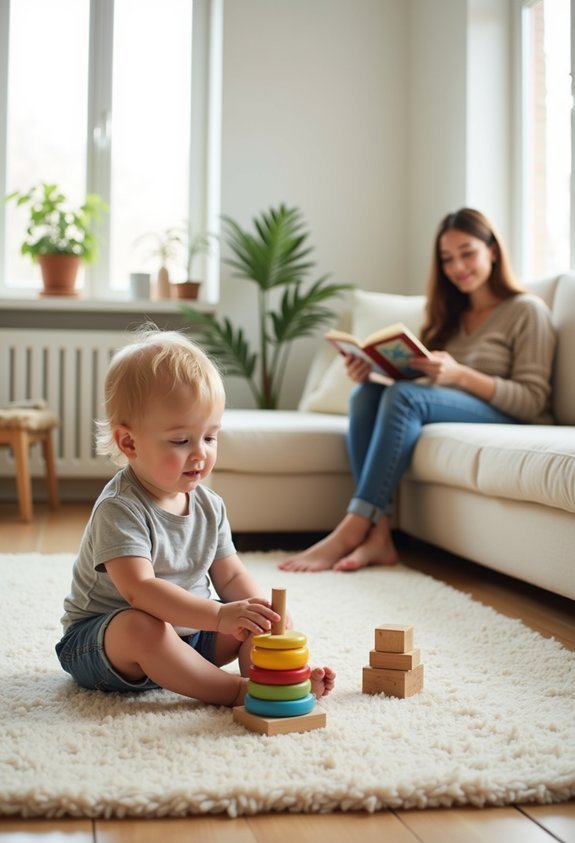
When you give your child unscheduled time, their brain shifts into a different mode. They’re forced to generate their own entertainment, which activates neural pathways associated with imaginative play.
Research shows that boredom acts as a catalyst for creative problem solving. When your child lacks external stimulation, they must look inward for ideas. This process strengthens their ability to think independently and innovate.
You’ll notice they start inventing games, building fantastical worlds, or repurposing everyday objects into toys. These moments of self-directed exploration build confidence and help children develop a lasting capacity for original thinking that structured activities simply can’t replicate.
Building Self-Reliance Through Empty Moments

Although it might feel counterintuitive to leave your child without direction, those empty moments serve as powerful training ground for self-reliance.
When you step back, your child learns to trust their own judgment and problem-solving abilities.
Research shows that children who engage in independent play develop stronger self discovery skills. They learn to entertain themselves, manage frustration, and find solutions without adult intervention.
Independent play builds self-reliance—children learn to manage frustration and solve problems without looking to adults for answers.
These capabilities translate directly into confidence and resilience.
You’re essentially giving your child permission to figure things out.
They’ll experiment, fail, adjust, and try again—all without waiting for someone else to guide them.
This process builds internal motivation and teaches them they’re capable of handling challenges independently.
That’s a gift that extends far beyond childhood.
Why Toys Have Limitations as Entertainment Tools

Even the most engaging toys can’t fully replicate what unstructured boredom offers your child’s developing brain.
Research shows that toy limitations become apparent when children rely solely on external stimulation for entertainment.
Toys provide predetermined play patterns, while boredom sparks original thinking and problem-solving skills that manufactured products simply can’t teach.
When toy dependency develops, your child misses crucial opportunities to:
- Discover their own interests and passions without external direction
- Build frustration tolerance that strengthens emotional resilience
- Create imaginary worlds using only their mind’s limitless potential
- Develop the self-motivation needed for lifelong learning
You’re not failing your child by limiting toy access.
You’re giving them space to develop internal resources that no product can replace.
Boredom becomes the catalyst for genuine creativity.
The Overstimulation Trap: When Too Much Becomes Harmful

Understanding toy limitations naturally leads to a broader concern: the constant flood of stimulation children face daily.
When you expose your child to endless entertainment options, you’re creating conditions for overstimulation effects that can fundamentally alter their developing brains.
Research shows that constant stimulation triggers attention fatigue, leaving children unable to focus when they actually need to concentrate. Their neural pathways become wired to expect continuous input, making ordinary moments feel unbearable.
Constant stimulation rewires young brains to crave endless input, making quiet moments feel unbearable and focused attention nearly impossible.
You’ll notice the signs: increased irritability, difficulty transitioning between activities, and an inability to self-soothe.
Your child’s nervous system stays in overdrive, never learning to regulate itself naturally.
The solution isn’t more engaging content—it’s strategic withdrawal. By reducing stimulation, you’re giving your child’s brain the rest it needs to develop healthy attention patterns.
Practical Ways to Embrace Boredom at Home

Because reducing overstimulation requires intentional effort, you’ll need concrete strategies to create boredom-friendly spaces in your home.
Research confirms the boredom benefits emerge when children have unstructured time without digital devices or adult-directed activities. Start by designating screen-free zones and limiting toy rotation to encourage creative play with fewer options.
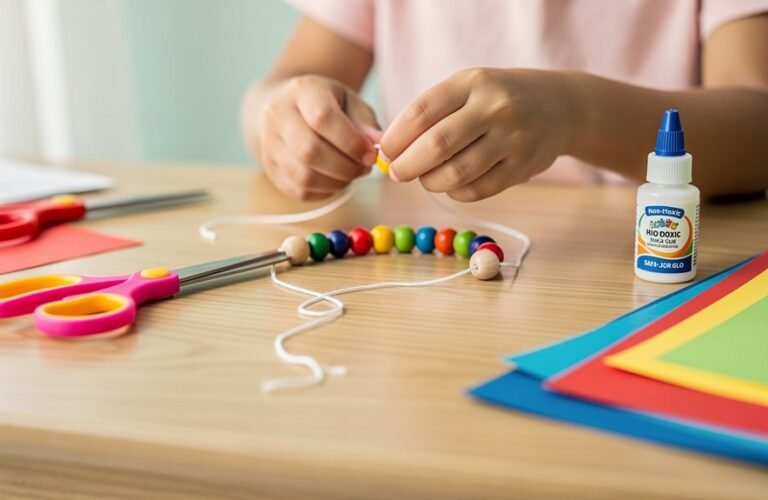
- Create a “boring box” filled with open-ended materials like cardboard, string, and fabric scraps that spark imagination.
- Schedule daily “nothing time” where children choose their own activities without parental intervention.
- Resist the urge to rescue your child from discomfort—their frustration signals growth happening.
- Model embracing stillness by putting down your own phone and sitting quietly.
These practices nurture self-reliance and unlock your child’s natural creativity.
Helping Children Navigate the Discomfort of Having Nothing to Do

When your child declares “I’m bored!” with dramatic flair, your instinct might be to fix the problem immediately—but this moment actually presents a valuable developmental opportunity.
Research shows that navigating discomfort builds emotional resilience and self-regulation skills essential for healthy development.
Learning to navigate discomfort builds the emotional resilience children need to thrive.
Instead of rushing to entertain, acknowledge their feelings without judgment. Say something like, “I hear you’re feeling bored. I wonder what you might discover to do.” This validates their experience while encouraging problem-solving.
The boredom benefits emerge when children learn to sit with uncomfortable feelings rather than escape them. You’re teaching them that discomfort isn’t dangerous—it’s a signal to engage their creativity.
Stay nearby but resist directing their play, allowing natural curiosity to guide them forward.
Long-Term Benefits of Learning to Entertain Themselves

The ability to self-entertain doesn’t just solve the immediate problem of a restless afternoon—it shapes who your child becomes as an adult.
When children develop self-discovery skills through unstructured time, they’re building cognitive and emotional foundations that last a lifetime.
Research shows that imaginative play during childhood correlates with stronger problem-solving abilities, emotional regulation, and creativity in adulthood.
Children who learn to navigate boredom become adults who:
- Handle ambiguity and uncertainty with confidence rather than anxiety
- Generate innovative solutions when faced with complex challenges
- Maintain emotional resilience during periods of transition or solitude
- Pursue meaningful hobbies and interests that enrich their lives
You’re not just helping your child pass time—you’re equipping them with essential life skills that no toy can provide.
In case you were wondering
At What Age Should Parents Start Allowing Children to Experience Boredom?
You can start allowing boredom around age 2-3, when developmental milestones support independent play. Don’t rush to fill every quiet moment—boredom benefits your child by fostering creativity, problem-solving, and emotional resilience naturally.
Is There a Difference in How Introverted Versus Extroverted Children Handle Boredom?
Studies show 70% of children develop stronger creativity through unstructured time. You’ll notice introverted coping often involves solitary imagination, while extroverted play seeks social interaction. Both responses are healthy developmental adaptations to boredom.
Can Too Much Boredom Actually Become Harmful or Counterproductive for Children?
Yes, excessive boredom can harm your child’s development. Research shows prolonged understimulation may increase anxiety and disengagement. You’ll want to balance downtime with opportunities for productive play, ensuring boredom’s impact remains beneficial rather than counterproductive.
How Do Screen-Free Boredom Benefits Compare Across Different Cultural Parenting Approaches?
Isn’t it fascinating how cultural variations shape everything? You’ll find that parenting styles emphasizing independence, like Scandinavian approaches, naturally embrace boredom’s developmental benefits, while collectivist cultures often channel unstructured time toward family-centered creativity and problem-solving skills.
Should Parents Inform Teachers About Their Boredom-Tolerance Strategies at Home?
You should share your boredom strategies through teacher communication because consistency matters. When educators understand your approach, they can reinforce boredom tolerance at school, supporting your child’s developing self-regulation and creativity across environments.
Conclusion
You’re not failing your child by letting them experience boredom—you’re giving them a telegraph to their own inner resources. Research confirms that these empty moments build creativity, resilience, and self-reliance that no toy can replicate. When you resist the urge to constantly entertain, you’re trusting your child’s developing brain to find its own solutions. Embrace the quiet. Your child’s imagination will thank you for it.