17 Best Craft Activities Teaching Colors and Shapes
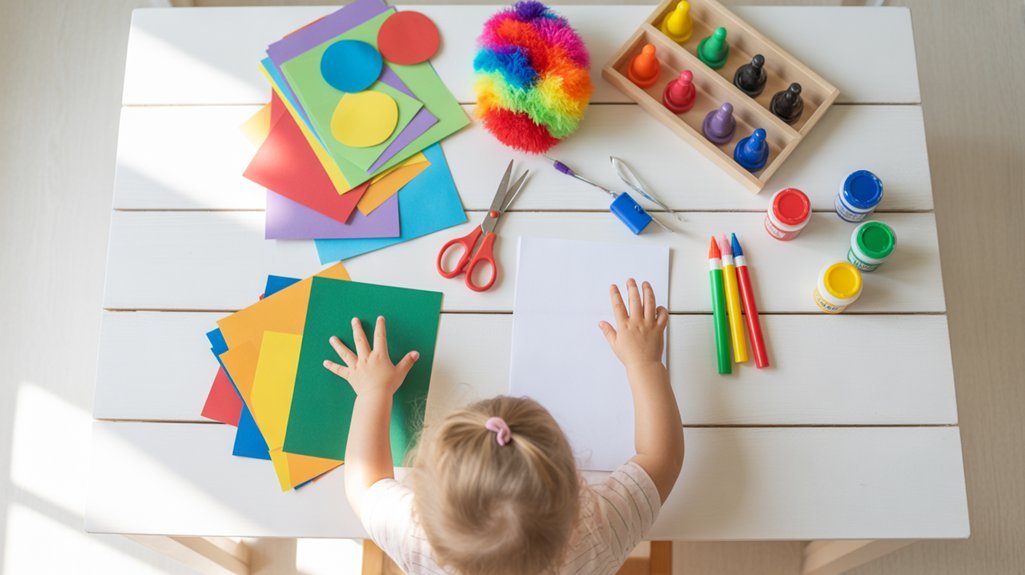
You’ll find seventeen engaging craft activities that transform everyday materials into powerful learning tools for teaching colors and shapes. From rainbow paper plate collages and pom-pom sorting games to painted rock matching and foam shape towers, these hands-on projects develop fine motor skills while reinforcing color recognition and geometric concepts. Paint chip crafts, sensory rice bins, construction paper monsters, and melting ice experiments keep children engaged without realizing they’re learning. The activities below provide detailed instructions and materials lists to help you create memorable educational experiences.
Key Takeaways
- Color recognition activities include rainbow paper plate collages, pom-pom sorting games, painted rock matching, foam shape building, and paint chip crafts.
- Shape recognition crafts feature stamping with household objects, construction paper monsters, DIY cardboard puzzles, and paper bag puppets for hands-on learning.
- Sensory activities like colored rice bins and felt busy boards combine tactile exploration with color and shape identification skills.
- Outdoor melting ice activities provide mess-free summer learning experiences that engage children through sensory exploration and active participation.
- These craft activities develop fine motor skills, encourage imaginative play, and teach geometric concepts while keeping children entertained and engaged.
Rainbow Paper Plate Collage
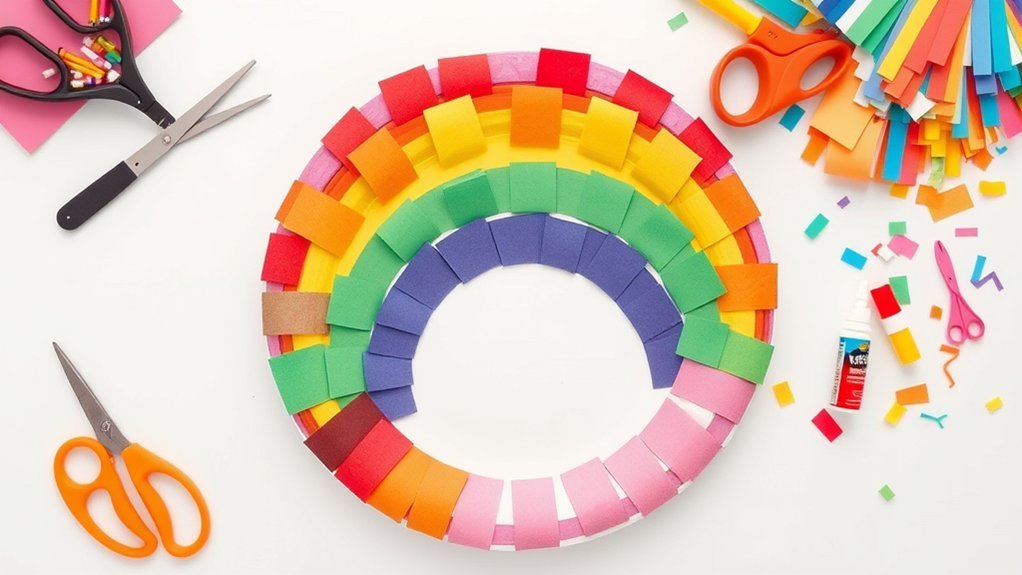
Rainbow paper plate collages transform simple household items into vibrant learning tools that captivate young minds. You’ll need paper plates, construction paper, scissors, and glue to create this engaging activity.
Paper plate rainbows turn everyday materials into colorful teaching moments that keep little hands busy and young minds engaged.
Start by cutting the plate’s center, leaving a circular frame. Have children tear or cut colored paper strips in red, orange, yellow, green, blue, and purple. They’ll arrange these pieces around the frame, learning rainbow color blending as hues naturally overlap.
This hands-on approach teaches color recognition and sequencing while developing fine motor skills. You can enhance plate collage techniques by adding cotton balls for clouds or tissue paper for texture.
The circular shape reinforces geometric concepts, making this craft both educational and entertaining for preschoolers and kindergarteners.
Shape Stamping With Household Objects
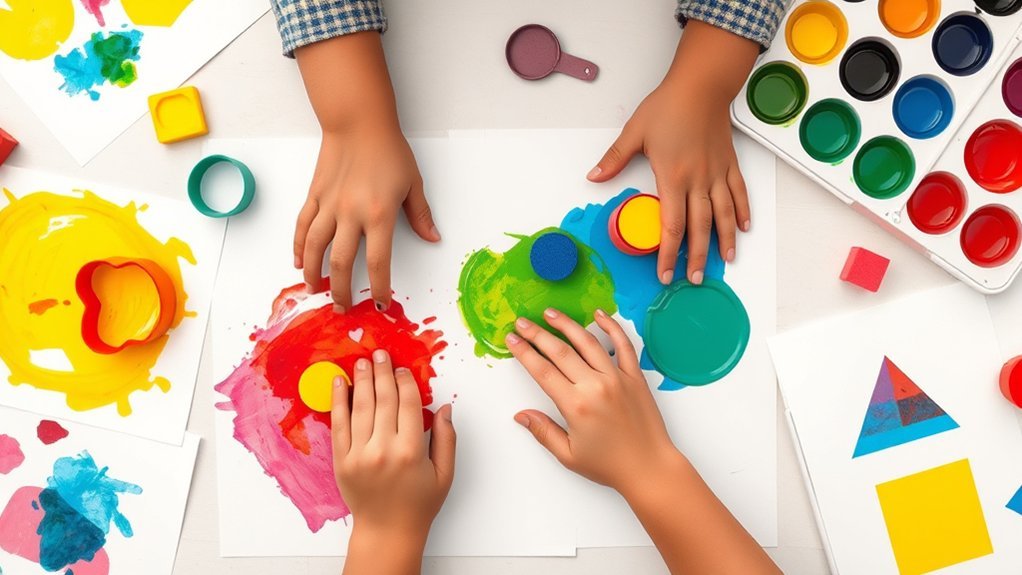
Building on colorful collages, shape stamping introduces geometry through everyday items you already have at home. Your household object selection can include cookie cutters, blocks, sponges cut into shapes, bottle caps, and cardboard tubes. Each item creates distinct geometric prints that help children recognize circles, squares, triangles, and rectangles.
Start with shape stamping techniques by pouring washable paint onto paper plates. Show your child how to dip objects into paint and press firmly onto paper. Encourage them to identify each shape before stamping and name the colors they’re using.
Create patterns by repeating shapes or combine multiple objects for complex designs. This hands-on activity strengthens fine motor skills while reinforcing shape recognition. You’ll find it’s an engaging way to transform ordinary household items into educational art tools.
Color Sorting Pom-Pom Drop
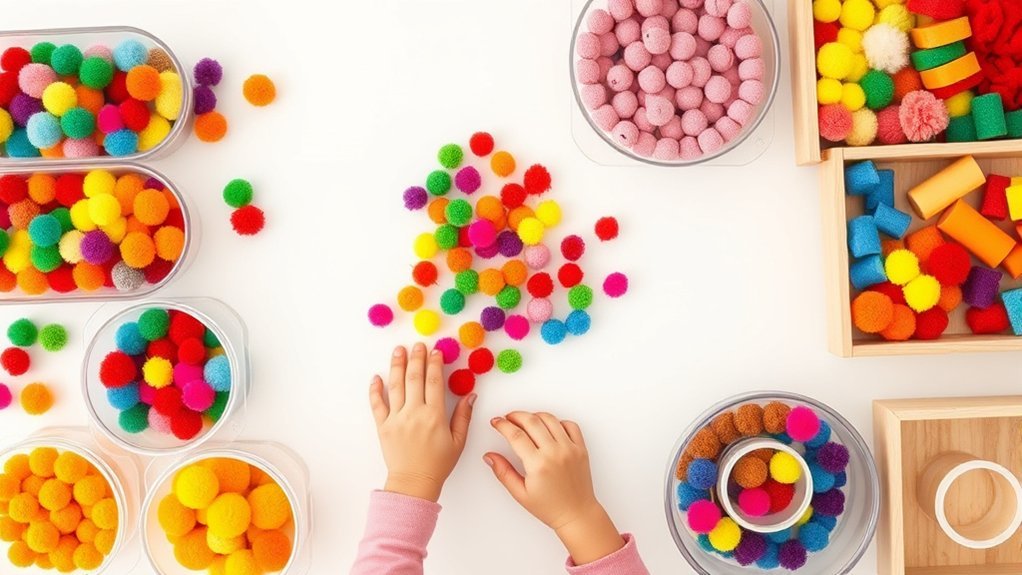
While shape stamping develops spatial awareness, color sorting pom-pom drop targets color recognition through an irresistible tactile game.
You’ll create this sensory play activity by placing colored containers beside corresponding pom pom colors. Your child picks up each fluffy ball and drops it into the matching container, strengthening fine motor skills while learning color games fundamentals.
This setup transforms sorting activities into educational fun that holds attention spans remarkably well. The soft texture provides sensory feedback, making color recognition memorable and engaging.
You can adjust difficulty by starting with three primary colors, then gradually introducing more options as confidence builds.
Use tongs or clothespins to enhance motor skills development further. Your toddler practices precision grip while concentrating on color matching, creating dual learning opportunities that make this activity exceptionally valuable for early childhood development.
Construction Paper Shape Monsters
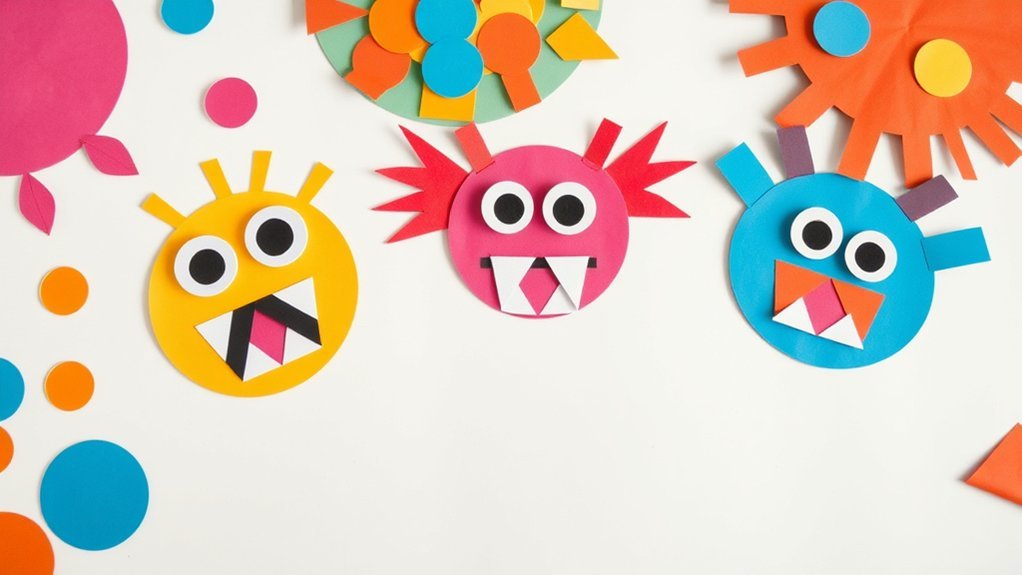
Nothing sparks creativity quite like transforming simple shapes into silly creatures that giggle back at your child.
Watch those circles and triangles come alive as your child’s imagination transforms paper shapes into giggling, googly-eyed friends.
You’ll cut circles, triangles, squares, and rectangles from construction paper in various colors. Let your child arrange these pieces to create whimsical monsters with googly eyes and pointy teeth. This activity teaches shape recognition while encouraging imaginative play.
Start with shape monster templates if your child needs guidance, then progress to freeform creation. As they build, ask questions: “What color triangle did you use for the nose?” or “How many circles make up your monster’s body?”
Once completed, encourage your child to invent colorful monster stories about their creations. This extends learning beyond crafting into language development and storytelling skills.
Painted Rock Color Matching Game
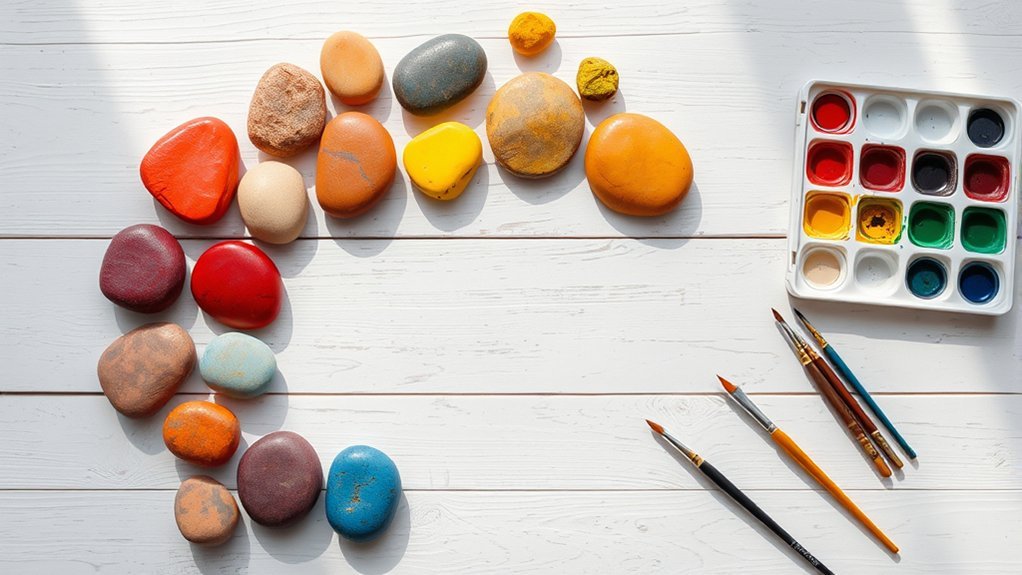
After creating imaginary creatures indoors, take the learning outside with a nature-based activity that combines art and color recognition.
You’ll collect smooth rocks during a nature walk, then transform them into colorful learning tools through rock painting.
Paint each rock a solid color using acrylics or washable paint. Once dry, children match the rocks to colored paper squares, fabric swatches, or household items. This hands-on approach reinforces color recognition while developing fine motor skills.
You can increase difficulty by creating shade variations or introducing color mixing concepts. Store the painted rocks in a basket for repeated play sessions.
This activity works perfectly for outdoor learning, sensory bins, or rainy day entertainment. The tactile nature of rocks adds a unique dimension that paper-based activities can’t provide.
Tissue Paper Stained Glass Shapes
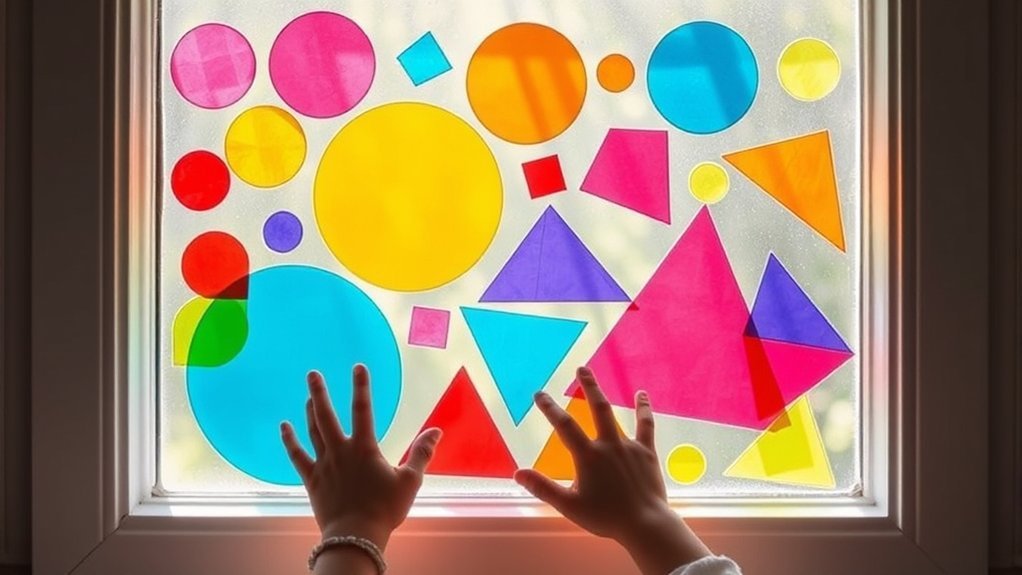
Transform ordinary contact paper and colorful tissue paper into stunning window decorations that teach shapes while creating beautiful light displays.
You’ll cut contact paper into geometric shapes like circles, squares, and triangles, then let children fill them with torn tissue paper pieces in various colors.
This activity offers impressive stained glass benefits as sunlight filters through the translucent paper, reinforcing color recognition through natural illumination.
Kids master tissue paper techniques by tearing, layering, and arranging pieces to create unique patterns within each shape.
The combination of tactile manipulation and visual learning strengthens shape identification skills.
Once completed, you can hang these creations on windows where they’ll catch the light and serve as daily reminders of geometric concepts while brightening your learning space.
Shape Hunt Nature Collage
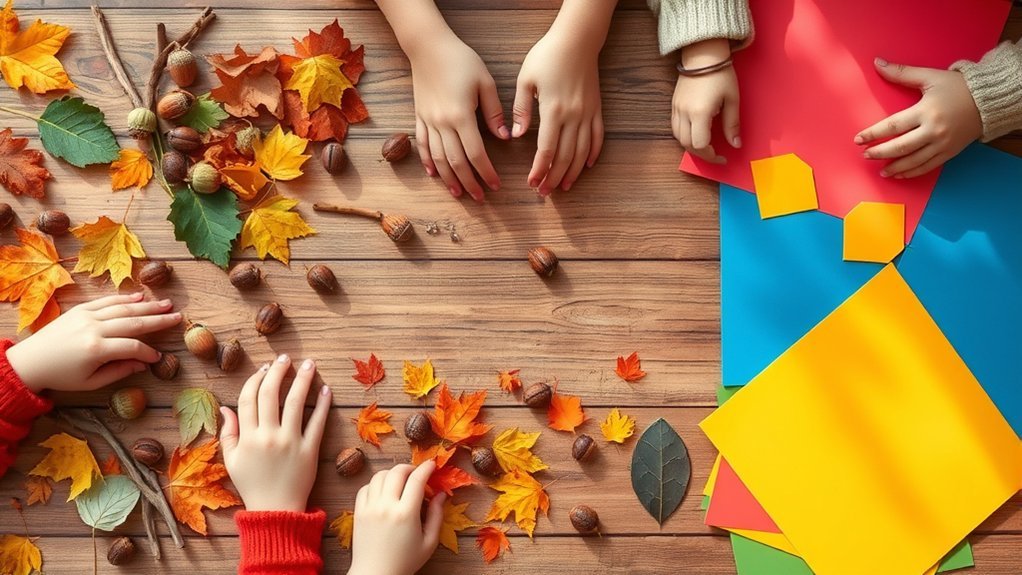
While indoor crafts create vibrant learning tools, taking the lesson outside opens up endless opportunities for shape discovery.
You’ll transform nature exploration into an exciting geometry adventure when children hunt for shapes in their environment.
Guide your students to collect natural collage materials like:
- Circular items – acorns, flower centers, or cross-cut twigs
- Triangular pieces – pine needles arranged in threes or pointed leaves
- Rectangular finds – bark strips, stems, or flat stones
Once you’ve gathered treasures, children arrange them on cardboard to create stunning collages.
They’ll identify shapes while gluing their finds, discussing how nature naturally forms geometric patterns.
This hands-on activity reinforces shape recognition through tactile experience, making abstract concepts concrete and memorable.
Color Wheel Spin Art
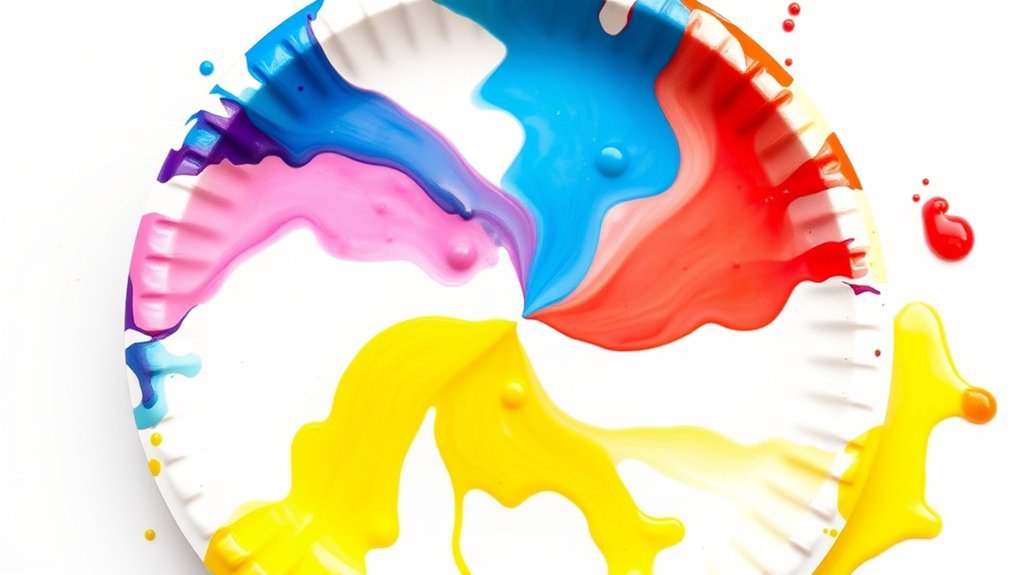
Salad spinners become powerful teaching tools when you repurpose them for color mixing experiments. Place paper inside the spinner basket, then drop primary-colored paint dots onto the surface.
When kids activate the spinner, centrifugal force creates mesmerizing patterns while demonstrating how colors blend together. This hands-on approach to color wheel creation helps children discover secondary colors naturally.
They’ll watch yellow and blue merge into green, red and yellow transform into orange, and blue and red create purple. The excitement builds as they predict outcomes before each spin.
These spin art techniques reinforce color theory through play. You’ll find kids eager to experiment with different color combinations, varying paint amounts, and multiple spinning speeds.
The resulting artwork serves as both a learning reference and beautiful keepsake.
Foam Shape Building Blocks
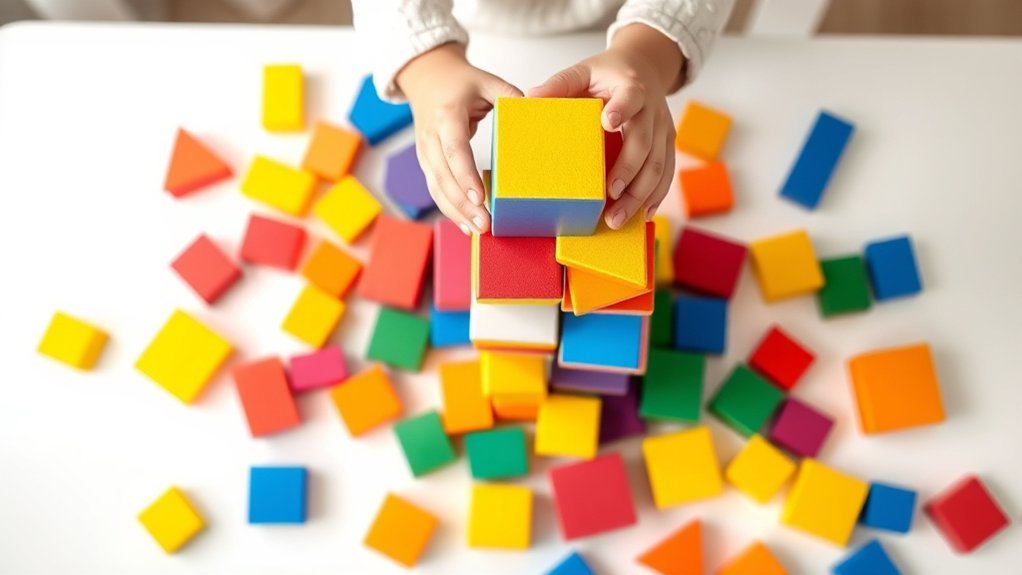
Foam building blocks offer tactile shape recognition that engages multiple senses simultaneously.
You’ll find these soft, colorful pieces perfect for introducing geometric concepts while keeping little fingers safe. Kids naturally explore through foam shape stacking and foam shape sorting, building spatial awareness as they play.
Essential activities to try:
- Color-coded towers – Challenge children to stack blocks by matching specific colors, reinforcing color identification while developing fine motor skills.
- Shape sorting stations – Set up bins labeled with different shapes where kids categorize their foam pieces accordingly.
- Pattern creation – Guide students to arrange blocks in color or shape sequences, introducing early math concepts.
These lightweight blocks won’t damage walls or hurt toes, making them ideal for energetic learners who need movement during lessons.
Colored Rice Sensory Bins

Because sensory play activates multiple learning pathways at once, colored rice bins transform shape and color lessons into immersive experiences.
Sensory play activates multiple learning pathways simultaneously, turning simple lessons into rich, multidimensional experiences that children retain and enjoy.
You’ll create these bins by dyeing rice with food coloring and vinegar, producing vibrant learning materials that engage touch, sight, and movement.
The colored rice benefits extend beyond basic recognition—children develop fine motor skills while scooping, pouring, and sorting different hues.
Hide foam shapes within the rice and encourage discovery through tactile exploration. Effective sensory play techniques include asking your students to match colored rice to corresponding shape containers or create patterns using both elements together.
You can introduce sorting activities where children separate shapes by color or group similar shapes together.
This hands-on approach reinforces concepts through repetition without feeling tedious, making learning memorable and enjoyable.
Shape Puzzle From Cardboard
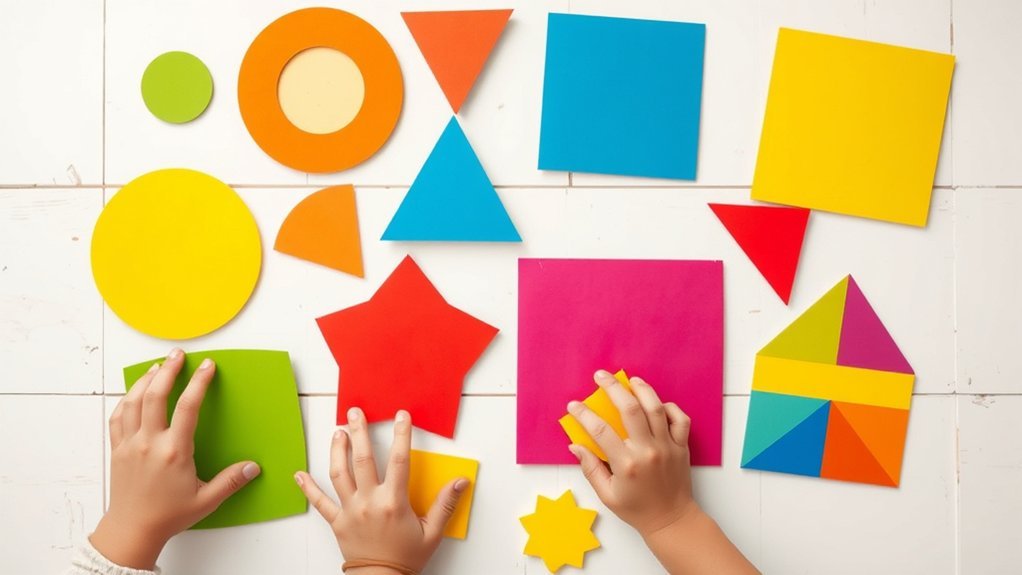
While sensory bins offer tactile exploration, creating your own shape puzzles from cardboard provides an equally engaging way to teach spatial reasoning and shape recognition.
You’ll transform recycled boxes into interactive learning tools that promote cardboard shape recognition while keeping costs minimal.
Start by cutting basic shapes—circles, squares, triangles—from sturdy cardboard. Trace each shape’s outline on a base board, creating matching slots.
Here’s how to maximize this activity:
- Paint each shape a different color to teach color-shape associations simultaneously
- Cut multiple sizes of the same shape to introduce size comparison concepts
- Create DIY shape storage using labeled boxes for easy cleanup and organization
Your child will develop fine motor skills while matching shapes to their corresponding spaces, making learning both hands-on and memorable.
Paint Chip Color Gradients

Free paint chips from hardware stores transform into powerful tools for teaching color recognition and sequencing skills.
You’ll create engaging paint chip crafts by collecting various shades of the same color family, then having children arrange them from lightest to darkest.
Cut paint chips into strips and let kids create rainbow sequences or ombré patterns. They’ll develop fine motor skills while exploring how colors transition smoothly.
Cutting and arranging paint chip strips helps children master fine motor control while discovering the beautiful way colors flow into one another.
For color gradient exploration, challenge children to match similar shades or find the “missing” color in a sequence.
Mount completed gradients on construction paper to display their work.
You can also create color-matching games where children pair paint chips with objects around the classroom. This hands-on activity strengthens visual discrimination skills while making color theory accessible and fun.
Felt Shape Busy Board
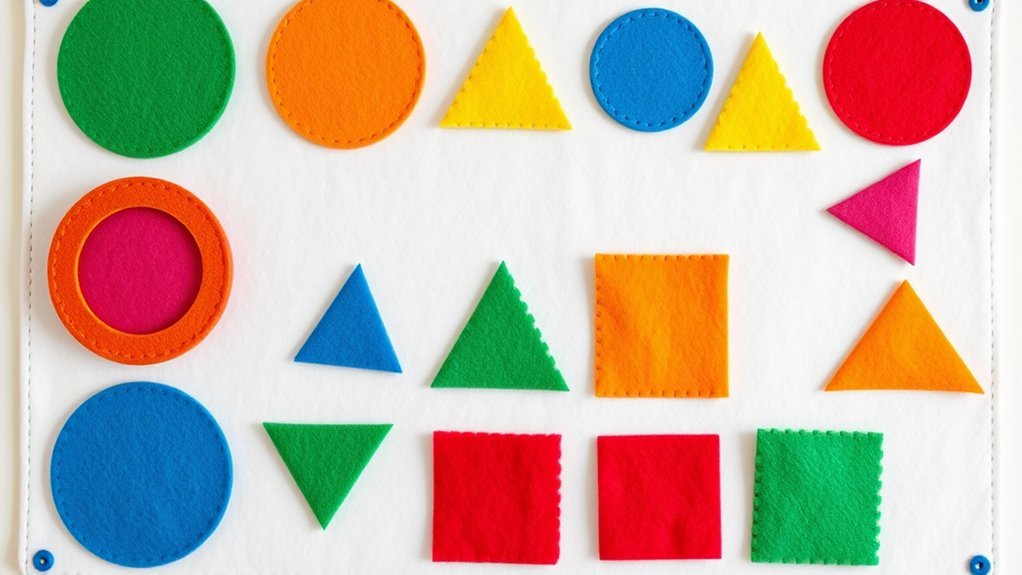
Felt shape busy boards combine tactile learning with shape recognition in a reusable activity that’ll captivate young learners for hours.
These boards encourage felt shape exploration while children match, sort, and arrange colorful shapes on a sturdy base.
Essential components for your busy board:
- Base material – Use a large piece of felt, cardboard covered in felt, or foam board as your foundation.
- Shape variety – Cut circles, squares, triangles, rectangles, and stars from different colored felt pieces.
- Attachment method – Add velcro dots to both shapes and board for easy repositioning.
This hands-on activity strengthens tactile shape recognition while developing fine motor skills.
Children can create patterns, sort by color or shape, and practice spatial awareness.
You’ll love how this versatile tool grows with your child’s learning abilities.
Egg Carton Caterpillar Colors
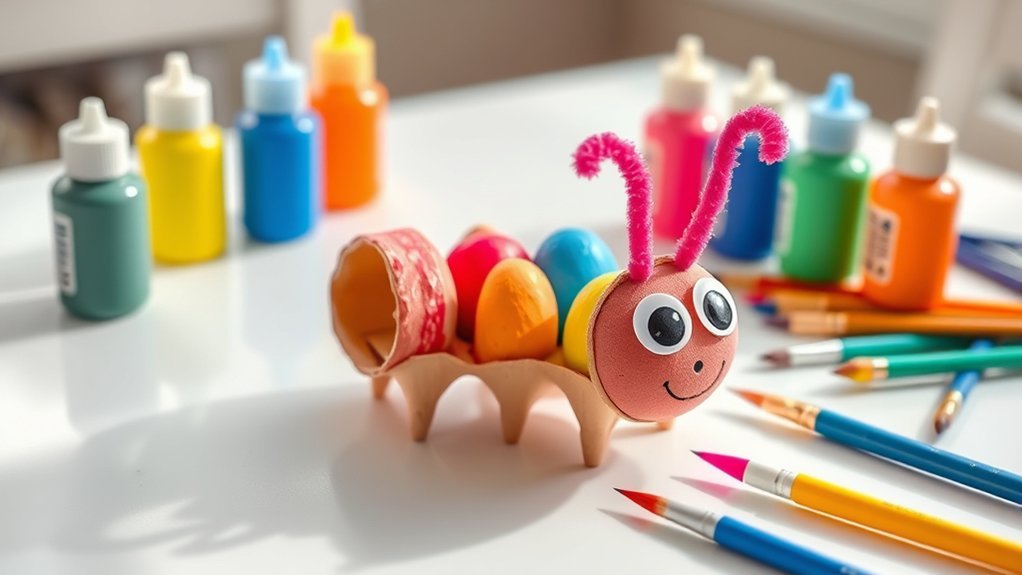
Transform ordinary egg cartons into colorful learning tools with this budget-friendly craft that teaches color recognition through playful caterpillar creation.
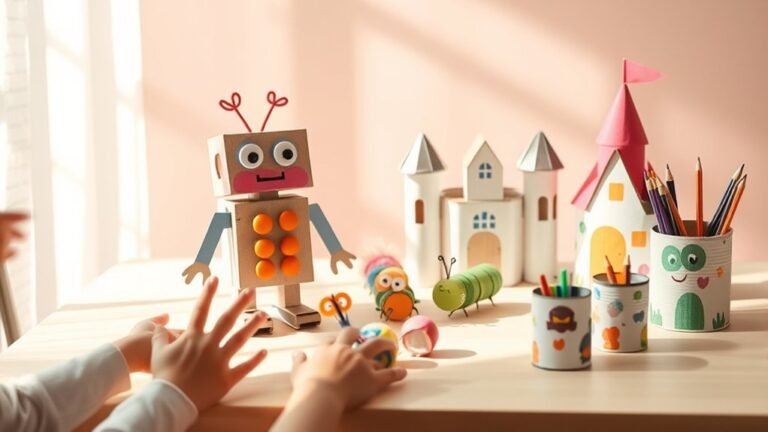
You’ll cut individual cups from the carton and let your child paint each segment a different color. Once dry, they’ll connect the pieces using pipe cleaners or string to form a wiggly caterpillar. This hands-on activity reinforces color names as children select and arrange their painted segments.
These egg carton crafts develop fine motor skills through cutting, painting, and assembling. Your child practices color sorting by organizing sections before assembly. Add googly eyes and pipe cleaner antennae for extra personality.
The caterpillar colors activity combines recycling awareness with educational play. You can create patterns by alternating colors or challenge older children to follow specific color sequences, making learning interactive and memorable.
Geometric Shape Animals
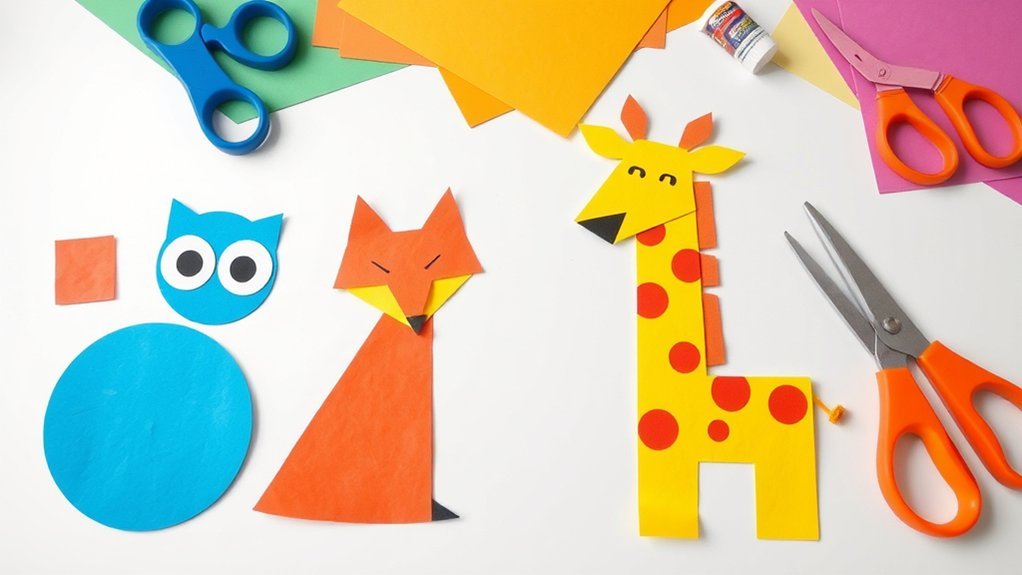
While learning shapes can feel abstract to young children, turning circles, triangles, and squares into recognizable animals makes geometry instantly engaging.
You’ll find that geometric shape art naturally combines mathematical concepts with creative expression, helping kids master animal shape recognition while having fun.
Here are three effective approaches:
- Circle creatures: Stack various-sized circles to create caterpillars, owls, or fish, teaching size relationships and symmetry.
- Triangle transformations: Arrange triangles into foxes, birds, or butterflies, demonstrating how orientation changes appearance.
- Mixed-shape masterpieces: Combine circles, squares, and triangles to construct elephants, lions, or rabbits, reinforcing shape identification.
Provide pre-cut shapes in different colors and sizes, letting children experiment with arrangements before gluing.
This hands-on method solidifies both shape knowledge and spatial reasoning skills effectively.
Color Mixing Ice Cube Painting

Ice cube painting transforms color theory into a thrilling sensory adventure that captivates even the most restless preschoolers.
You’ll freeze primary colors in ice cube trays with popsicle sticks inserted as handles. As children paint, they’ll discover how melting ice creates natural color mixing on paper.
This activity teaches essential color theory concepts through hands-on exploration. Kids watch red and blue merge into purple while experiencing cold temperatures and changing textures. The unpredictable drips and puddles make each artwork unique.
Try different ice cube techniques by adding salt for crystalline patterns or using shaped molds. You can incorporate circle and triangle stencils, combining color and shape learning.
The mess stays contained since melting ice doesn’t stain clothing. It’s perfect for outdoor summer learning sessions.
Paper Bag Shape Puppets
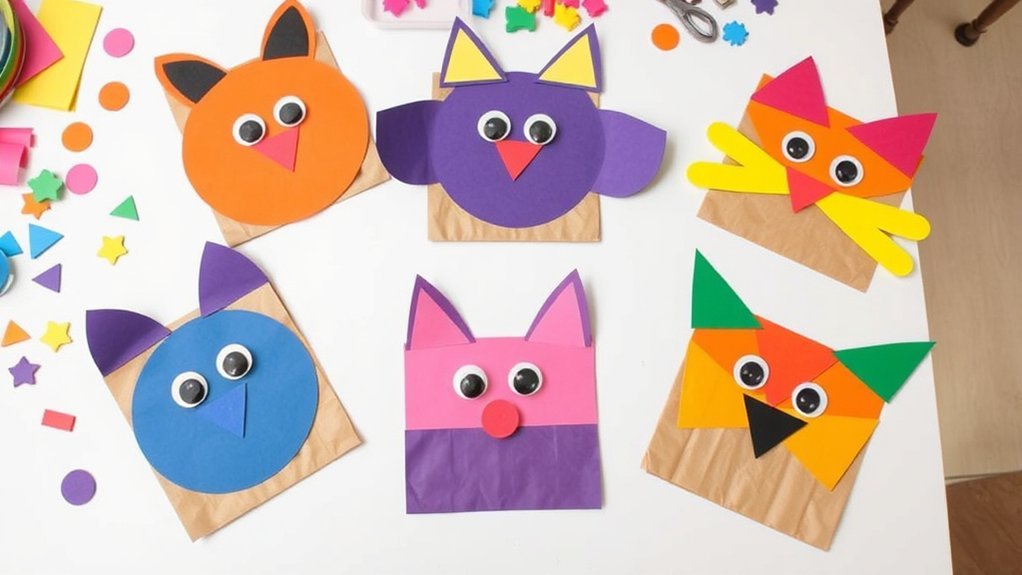
Paper bag shape puppets combine geometry lessons with imaginative storytelling in one simple craft project.
You’ll transform ordinary lunch bags into colorful characters using construction paper shapes. Cut out circles, triangles, squares, and rectangles, then let your kids attach them to create faces, bodies, and accessories on their paper bag puppets.
Materials you’ll need:
- Brown paper lunch bags (one per puppet)
- Construction paper in various colors cut into different shapes
- Glue sticks, markers, and googly eyes for decoration
Once complete, encourage a puppet show where children introduce their characters by naming the shapes they used.
This activity reinforces shape recognition while developing fine motor skills and creativity. Your students won’t realize they’re learning as they play with their geometric creations.
In case you were wondering
What Age Is Best to Start Teaching Colors and Shapes?
You can start teaching color recognition around 18 months old, though your toddler won’t master it until age 3. Shape identification typically develops between ages 2-3, when your child’s cognitive skills are ready for sorting and categorizing objects.
How Can I Adapt These Activities for Children With Special Needs?
Like a gardener tailoring care to each unique plant, you’ll adapt activities through sensory adaptation—adding textures, sounds, or movement. Use visual supports like picture schedules and step-by-step cards, ensuring every child blossoms at their own pace.
What if My Child Shows No Interest in Learning Colors?
Don’t force it—follow your child’s interests instead. Try creative motivation through engaging games that incorporate colors naturally, like color-based treasure hunts or sorting favorite toys. You’ll make learning feel like play, sparking curiosity without pressure.
How Long Should Each Craft Activity Session Last?
Keep activity duration to 10-15 minutes for toddlers and 20-30 minutes for preschoolers. You’ll find better results with shorter, focused sessions. Maintain consistent session frequency of 3-4 times weekly rather than forcing lengthy daily craft time.
Can These Activities Help Identify Color Blindness in Young Children?
While craft activities can reveal color recognition struggles, they’re not diagnostic tools. If you notice consistent visual perception difficulties during color-based activities, you should consult a pediatric eye specialist who’ll conduct proper tests for color blindness.
Conclusion
You’ve just unlocked the universe’s most spectacular collection of crafts that’ll transform your little ones into absolute color and shape geniuses! These activities aren’t just fun—they’re life-changing adventures that’ll have kids begging to learn more. Armed with pom-poms, paint, and paper plates, you’re now equipped to create the most mind-blowing educational experiences imaginable. Your home’s about to become the world’s greatest art studio and learning laboratory combined!