17 Best Family Camping Tips for Beginners
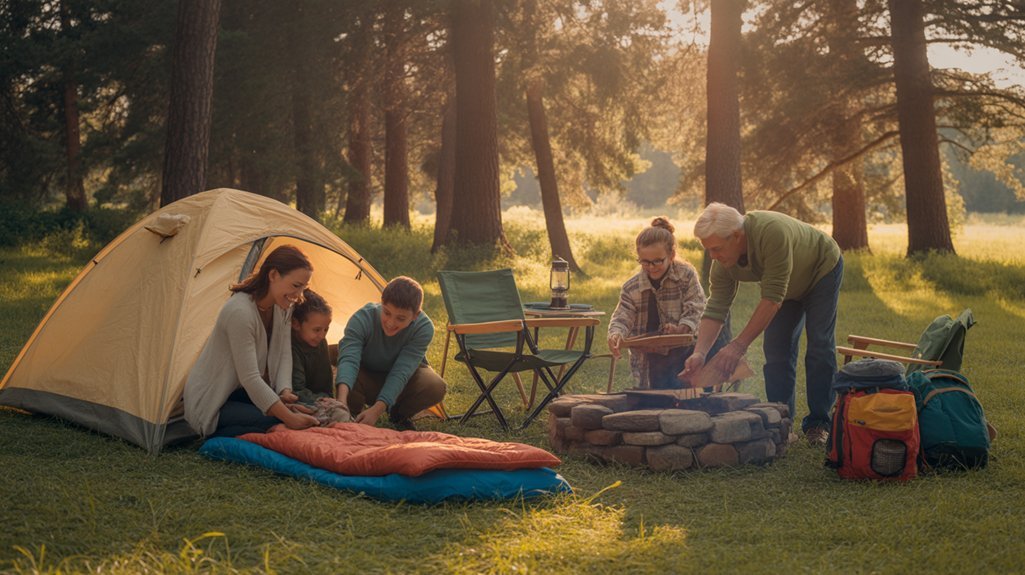
You’ll transform your first family camping trip from chaos to success by starting with a backyard practice run to test all your gear. Choose campgrounds within an hour of home that offer clean restrooms and family amenities. Pack extra layers, familiar comfort items, and headlamps for everyone. Keep meals simple with one-pot recipes and no-fuss snacks. Store food in bear-proof containers at least 12 feet high. Establish a buddy system for kids’ safety and maintain flexible expectations throughout your adventure. Below, you’ll discover detailed strategies that cover everything from emergency preparedness to entertainment solutions.
Key Takeaways
- Test camping gear in your backyard first and choose family-friendly campgrounds within an hour of home with amenities like restrooms and water.
- Plan simple, pre-prepped meals like hot dogs and foil packets, and store all food in bear-proof containers away from tents.
- Arrive during daylight to set up camp, establish a buddy system for children, and teach fire safety with designated boundaries.
- Pack a comprehensive first aid kit with bandages, medications, and burn gel in a waterproof container accessible to all family members.
- Bring entertainment like compact games, craft supplies, and audiobooks to prevent boredom and enhance family bonding during downtime.
Start With a Practice Run in Your Backyard
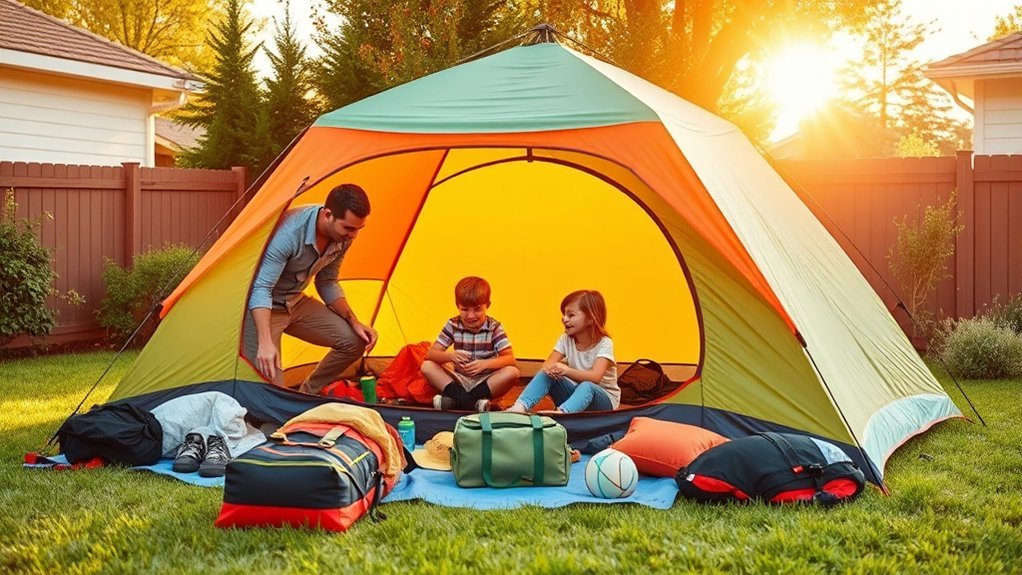
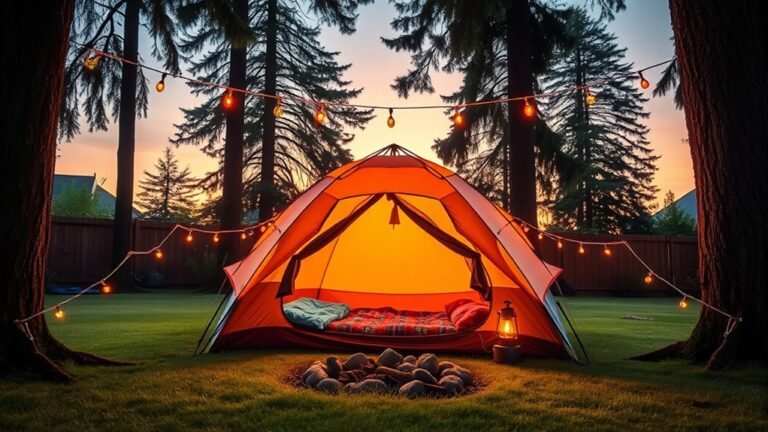
Before you venture into the wilderness with your family, set up your tent in the backyard for a trial run. This backyard setup lets you familiarize yourself with the equipment without pressure.
You’ll discover missing stakes, confusing poles, or faulty zippers while you’re still close to home. Your kids can practice sleeping in the tent and adjust to unfamiliar sounds and darkness. They’ll gain confidence for the real camping trip ahead.
You can troubleshoot problems like inadequate sleeping pads or forgotten flashlights. This practice session also creates valuable family bonding time.
You’ll work together assembling gear, roast marshmallows, and share stories under the stars. If things don’t go smoothly, you can simply head inside. It’s the perfect low-stakes introduction to camping.
Choose a Family-Friendly Campground for Your First Trip
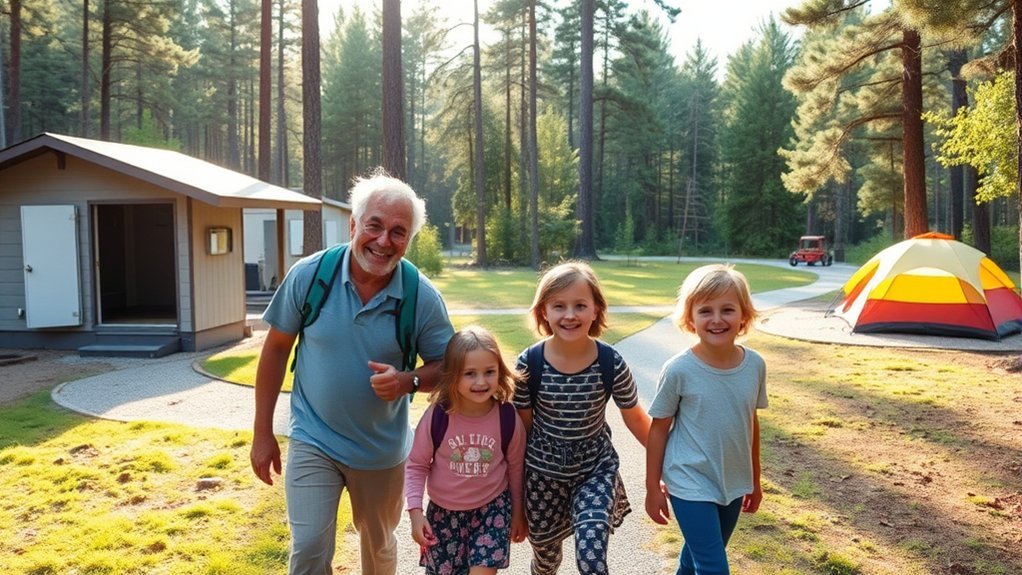
After you’ve mastered your backyard setup, you’re ready to pick your first real campground. Look for locations within an hour of home so you can easily return if needed. State parks often provide excellent beginner-friendly options with well-maintained facilities.
Prioritize campground amenities like clean restrooms, running water, and accessible parking near your site. These conveniences make your first experience less stressful and more enjoyable for everyone.
Research available family activities before booking. Swimming areas, playgrounds, and nature trails keep kids entertained throughout your stay. Choose campgrounds with ranger programs or guided hikes designed specifically for families.
Read recent reviews from other families to understand what you’ll encounter. Check if sites have picnic tables, fire rings, and level ground for tent placement. Reserve your spot early during peak seasons.
Test All Your Gear Before Leaving Home
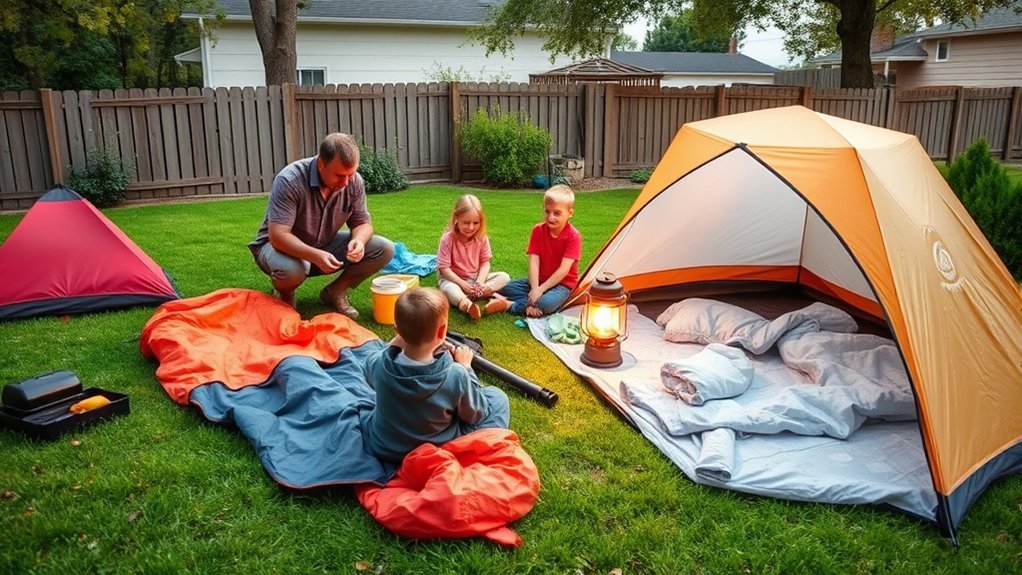
Nothing ruins a camping trip faster than discovering your tent has a broken pole or your sleeping bags smell like mildew when you’re already at the campsite.
Set up your tent in your backyard a week before departure. Check all zippers, stakes, and poles for gear functionality. Inflate sleeping pads to ensure they hold air overnight. Test your camp stove and verify you’ve got fuel. Check flashlight batteries and water filter operation.
Create a checklist for equipment organization, grouping items by category: shelter, cooking, sleeping, and clothing.
Pack everything once as a trial run to confirm it fits in your vehicle. This dry run reveals missing items and prevents last-minute panic. You’ll arrive at your campsite confident and ready to enjoy nature.
Pack Extra Layers for Everyone
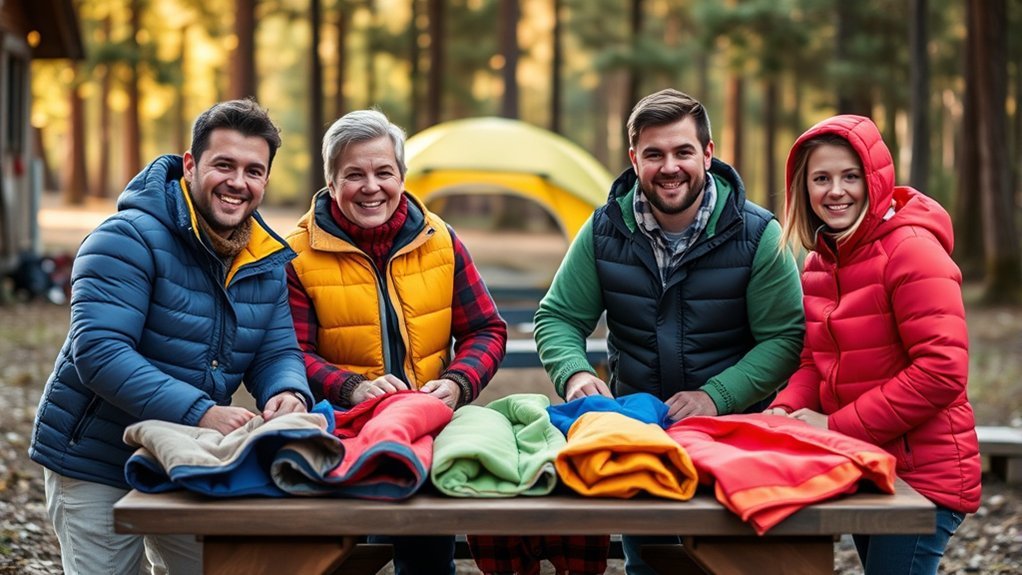
Mountain weather changes rapidly, and temperatures can drop 30 degrees once the sun sets behind the trees.
You’ll need multiple layer types for each family member to handle these temperature variations. Pack moisture-wicking base layers to keep everyone dry, insulating mid-layers like fleece for warmth, and waterproof outer layers for wind and rain protection.
Don’t forget extras beyond what you’re wearing. Kids get wet from playing in streams or spilling drinks, so bring backup shirts and pants.
Include warm socks, gloves, and hats even during summer trips—early mornings at camp can be surprisingly cold.
Store extra layers in waterproof bags to keep them dry.
When everyone’s comfortable despite changing conditions, you’ll spend more time enjoying nature and less time managing complaints.
Bring Familiar Comfort Items From Home
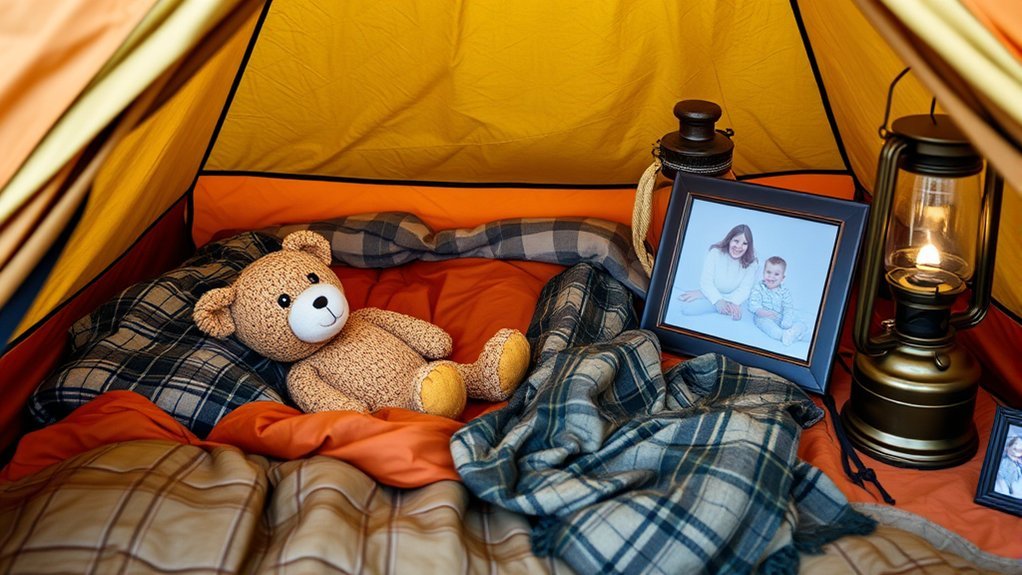
While proper gear keeps your family physically comfortable, emotional comfort matters just as much when sleeping in an unfamiliar environment.
Let your kids pack their favorite toys, stuffed animals, or books they’d normally use at bedtime. These familiar items create a sense of security in the tent and help ease anxiety about sleeping outdoors.
Don’t forget familiar blankets from home, even if you’ve got sleeping bags. That well-loved blanket with the worn edges can make all the difference between a restless night and peaceful sleep for your child.
Consider bringing pillows from home too. They take up space but provide comfort that camp pillows can’t match.
Small touches like these transform your tent into a cozy retreat rather than just shelter.
Plan Simple, No-Fuss Meals
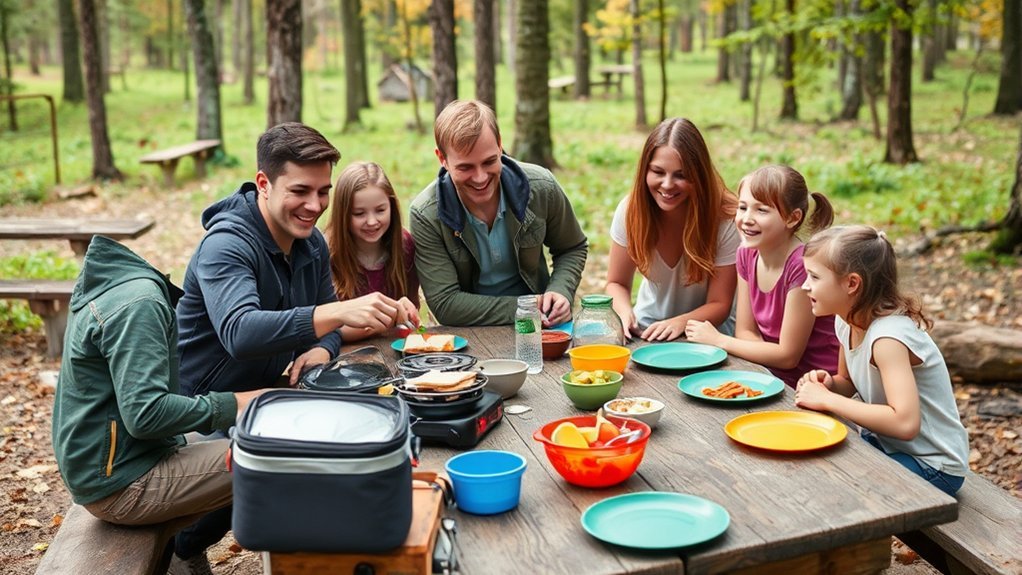
Camping meals shouldn’t become a source of stress when you’re trying to create positive memories with your family. Focus on meal prep before you leave home by prepping ingredients and packing them in labeled containers.
Choose recipes requiring minimal cooking steps and few utensils. Hot dogs, foil packet dinners, and one-pot pasta dishes work perfectly for beginners. Pre-make breakfast burritos at home and simply reheat them over the campfire.
For snack ideas, pack trail mix, granola bars, fresh fruit, and crackers with cheese. These options don’t require refrigeration and satisfy hungry kids between activities.
Bring disposable plates and utensils to minimize cleanup time. You’ll spend less time managing meals and more time exploring nature together.
Set Up Camp During Daylight Hours
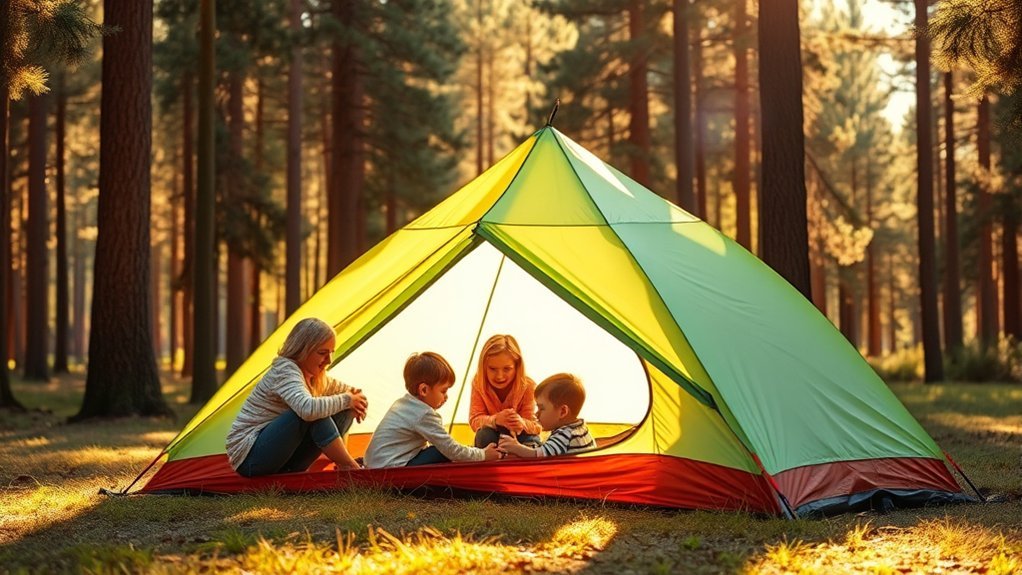
Arriving at your campsite with plenty of daylight remaining makes the entire setup process smoother and less stressful for everyone.
You’ll avoid fumbling with tent poles and stakes in the dark while trying to wrangle tired, hungry kids.
Plan your arrival for early afternoon to maximize daylight advantages. This gives you ample time for camp setup without rushing.
Arrive early afternoon for stress-free setup with plenty of daylight to spare before nightfall.
You can properly assess your site, identify hazards like roots or rocks, and choose the flattest spot for your tent.
Daylight also helps children explore safely and familiarize themselves with the campground layout.
They’ll locate restrooms, water sources, and common areas before darkness falls.
If delays occur, call ahead to inform camp hosts of your late arrival.
Many campgrounds have quiet hours, so respecting these guidelines maintains good relationships with neighbors.
Create a Designated Kids’ Activity Kit
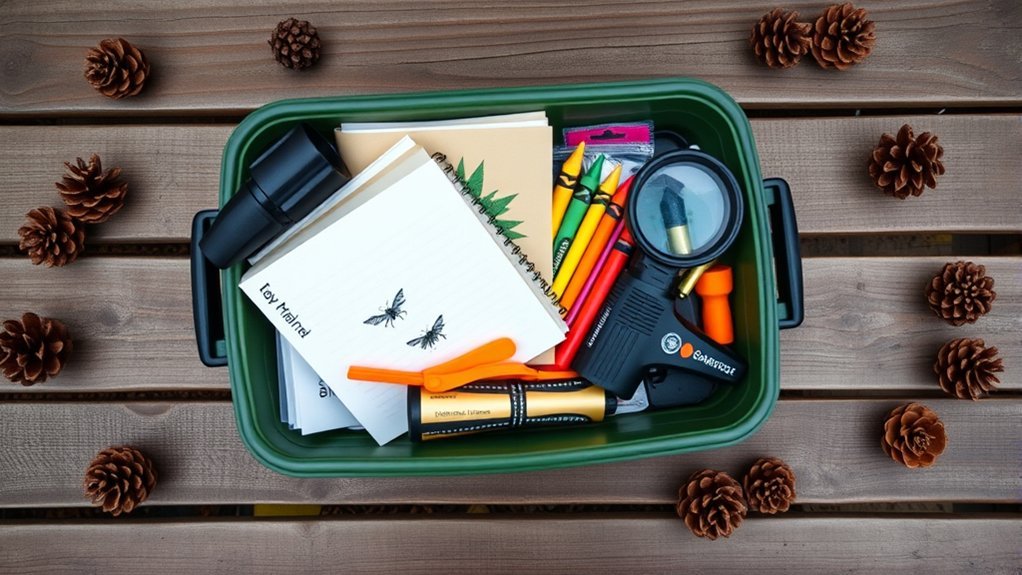
Boredom strikes quickly when kids transition from screen-filled home routines to outdoor camping life.
You’ll prevent meltdowns by packing a designated activity kit before leaving home. Include crafting activities like origami paper, colored pencils, and small sketchbooks that don’t require elaborate setup.
Add playing cards, travel board games, and a nature scavenger hunt checklist.
Pack outdoor games such as a frisbee, foam football, or jump rope for active play between meals.
Store everything in a dedicated bag or bin that’s easily accessible in your tent or vehicle.
Rotate items throughout the trip to maintain novelty and interest.
Don’t forget headlamps for evening activities around the campfire.
This preparation transforms potential whining sessions into engaged, entertained kids who’ll actually enjoy camping.
Establish a Buddy System for Safety
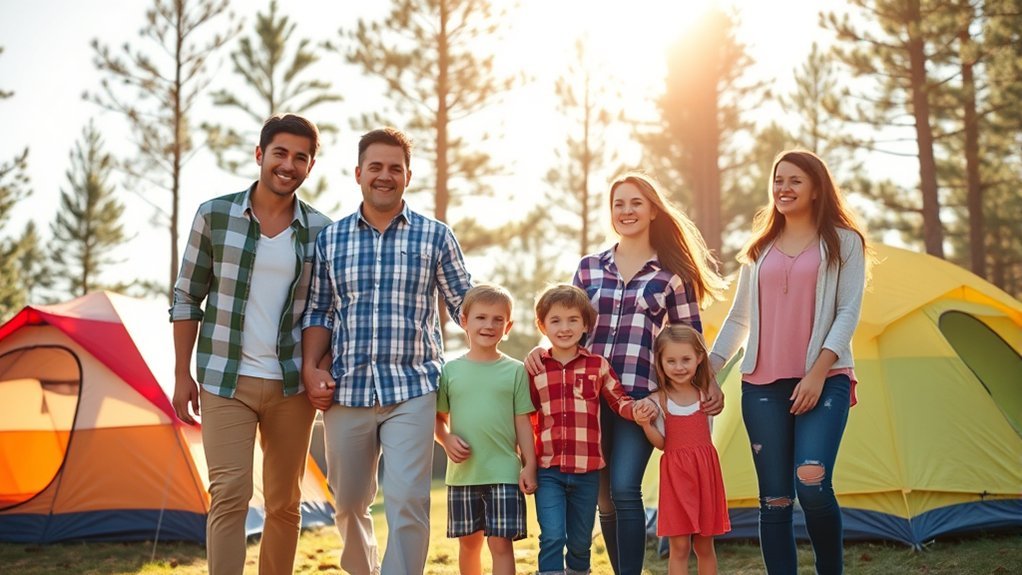
When children explore unfamiliar campgrounds and trails, pairing them with a designated buddy creates an essential safety net. You’ll ensure no child wanders off alone or faces emergencies without support.
Assign safety roles to each pair based on their ages and abilities. Older children can watch younger siblings, while similar-aged kids can monitor each other. Teach them to stay within sight and communicate their whereabouts constantly.
Match buddy pairs by age and skill level, ensuring older kids guide younger ones while peers keep each other safe and visible.
Implement regular buddy checks throughout the day—before meals, during hikes, and at bedtime. Have partners verify each other’s presence and report to you immediately if they’re separated.
This system works especially well near water, on trails, or in crowded campgrounds. Your children will develop responsibility while you maintain peace of mind knowing they’re accountable to each other.
Prepare for Bathroom Challenges
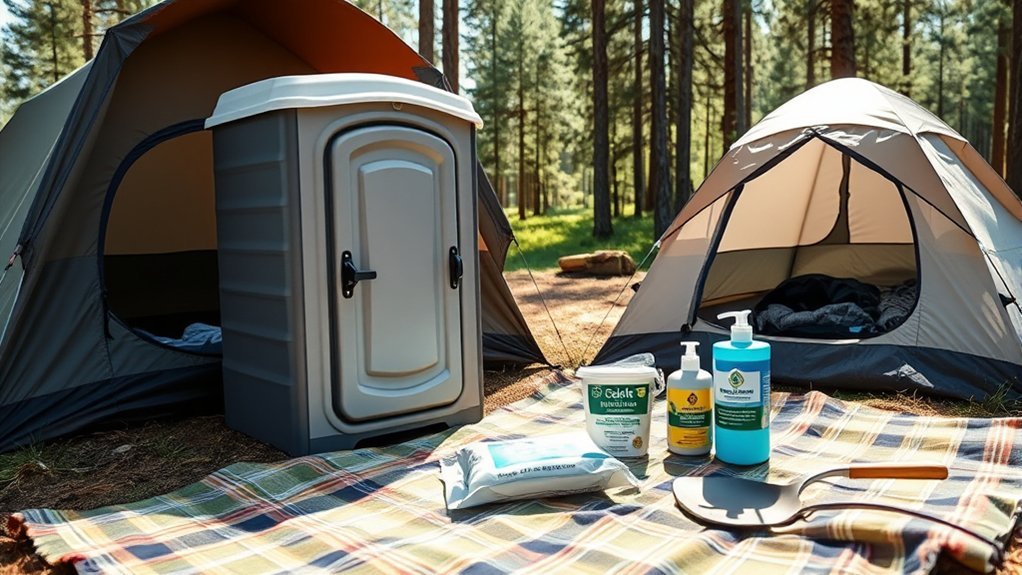
Bathroom facilities at campgrounds range from modern flush toilets to primitive outhouses—or nothing at all. Before your trip, research what’s available at your destination and plan accordingly.
If facilities are limited, consider bringing portable toilets for nighttime emergencies or young children who can’t walk far in the dark. Pack essential hygiene supplies including toilet paper, hand sanitizer, wet wipes, and a small shovel for digging catholes if you’re camping in backcountry areas.
Teach your kids proper wilderness bathroom etiquette: dig holes six to eight inches deep, stay 200 feet from water sources, and pack out used toilet paper in sealed bags.
Keep a headlamp and designated bathroom bag near your tent for convenient nighttime access to supplies.
Keep a Well-Stocked First Aid Kit Accessible
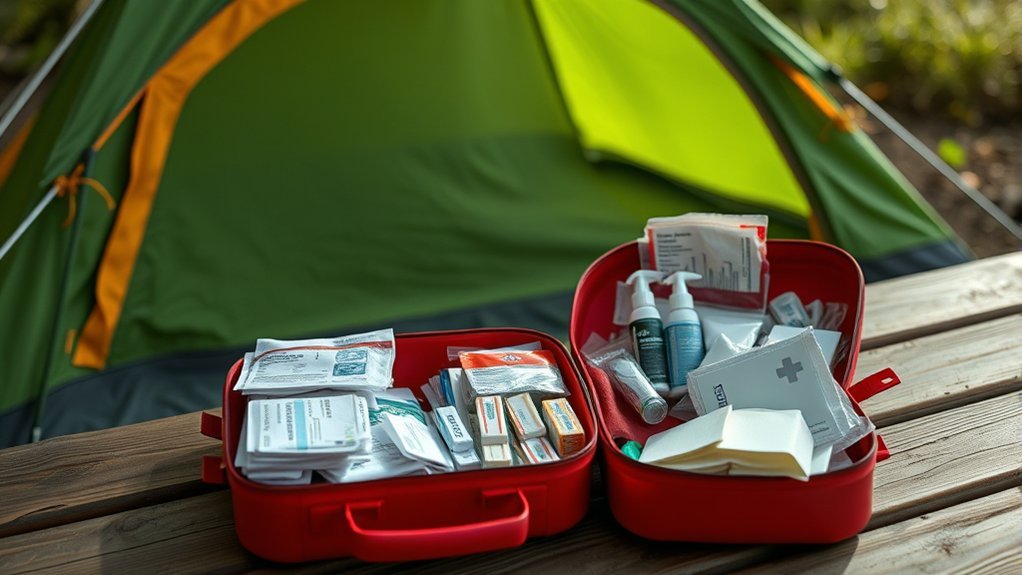
Accidents and minor injuries happen frequently during camping trips, especially when children are exploring unfamiliar terrain, cooking over open flames, or encountering insects and plants.
You’ll need a comprehensive first aid kit within easy reach at all times. Your kit essentials should include adhesive bandages in various sizes, antibiotic ointment, gauze pads, medical tape, tweezers for splinters, and scissors.
Don’t forget pain relievers, antihistamines for allergic reactions, and any prescription medications your family requires. Add insect sting relief pads, burn gel, and blister treatment supplies.
Store your first aid supplies in a waterproof container and familiarize everyone with its location. Before departing, check expiration dates and replace depleted items.
Consider taking a basic first aid course to handle emergencies confidently.
Plan for Rainy Day Entertainment
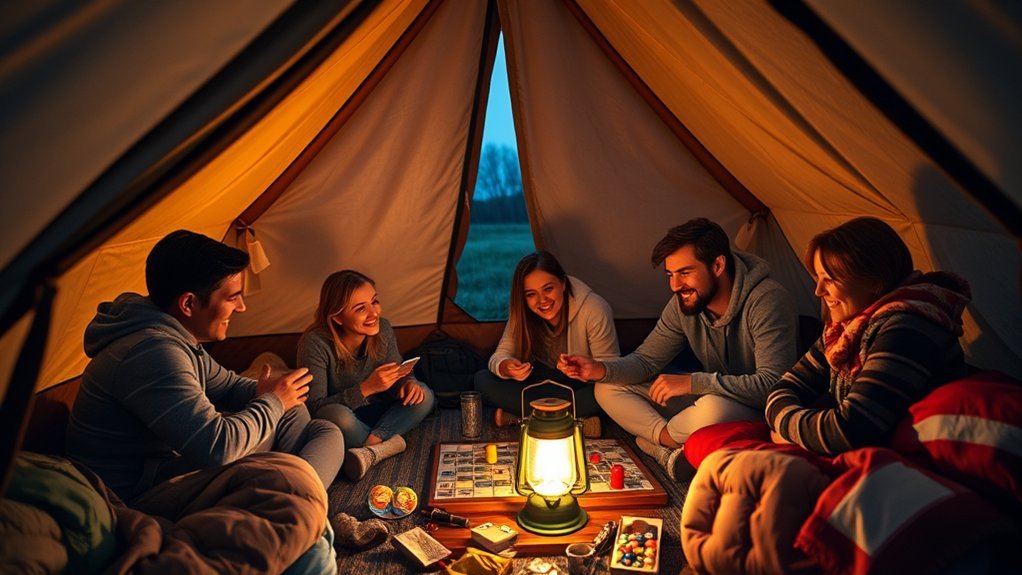
Even the most optimistic weather forecast can’t guarantee sunny skies throughout your camping trip, so you’ll want activities ready to keep restless children entertained when rain confines everyone to the tent.
Pack compact board games that don’t require much space, like card games, travel-sized chess, or magnetic versions of family favorites. Bring supplies for simple indoor crafts such as origami paper, coloring books, or friendship bracelet materials that won’t create mess in tight quarters.
Smart entertainment choices mean lightweight, space-saving games and mess-free craft supplies that work perfectly in confined camping quarters.
Download audiobooks or podcasts suitable for family listening before you lose cell service. Consider storytelling games, riddles, or “would you rather” questions that require no materials at all.
Having these entertainment options prepared prevents boredom-induced meltdowns and transforms potentially frustrating weather into quality family bonding time.
Teach Basic Campfire Safety Rules
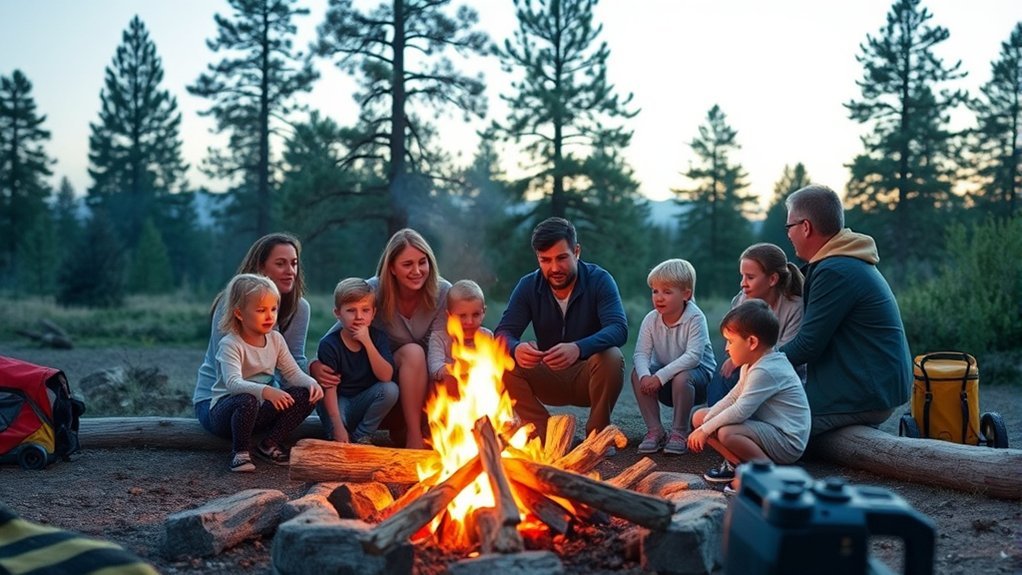
Before striking a single match, gather your children around to establish clear campfire boundaries and expectations.
Designate a safe perimeter at least six feet from the flames where kids must stay unless supervised. Teach them never to throw items into the fire or run near it.
Explain proper fire safety fundamentals: always have water nearby, never leave flames unattended, and ensure the fire’s completely extinguished before bed.
Demonstrate how sparks can jump and clothing can catch fire quickly.
Cover essential campfire etiquette too—keeping voices reasonable, respecting quiet hours, and leaving the site cleaner than you found it.
Role-play emergency scenarios so they’ll know to stop, drop, and roll. Make these lessons engaging through hands-on practice rather than lengthy lectures.
Maintain Flexible Expectations and Schedules
When camping with kids, rigid schedules often crumble under the reality of nature’s unpredictability and children’s changing moods.
You’ll find success by creating adjustable itineraries that allow room for spontaneity and surprises. If your toddler needs an extra nap or your teenager wants to explore that interesting trail, adapt accordingly.
Open minded attitudes transform potential frustrations into memorable adventures. Rain might cancel your hike, but it creates perfect puddle-jumping opportunities.
Your carefully planned fishing trip could become an impromptu rock-collecting expedition instead.
Don’t over-schedule activities or force everyone through a packed agenda. Leave gaps for rest, play, and unexpected discoveries.
Pack Headlamps and Flashlights for Everyone
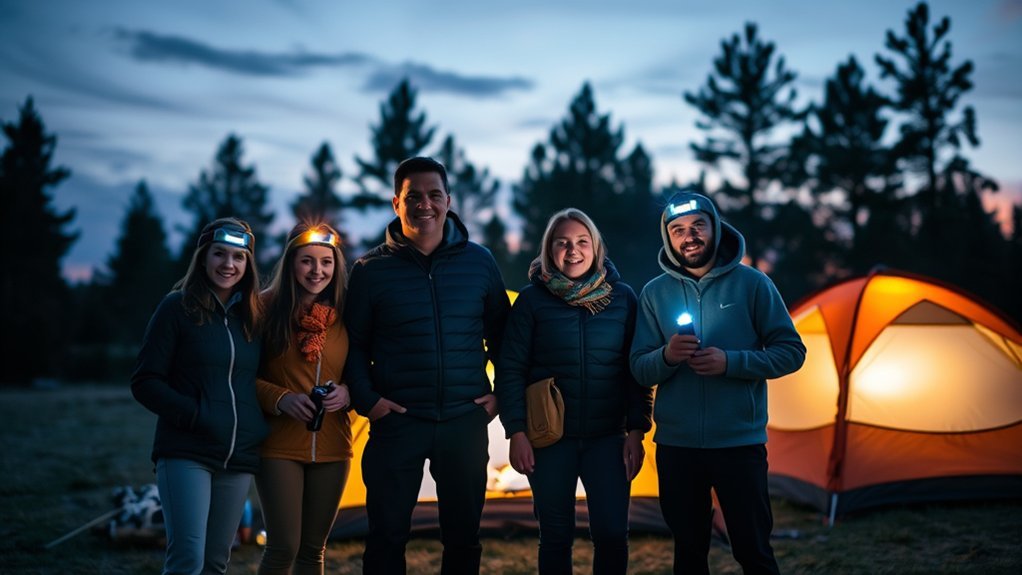
As darkness falls at your campsite, adequate lighting becomes a safety necessity rather than a convenience.
You’ll need hands-free illumination for cooking dinner, navigating to the bathroom, and setting up tents after arriving late. Equip each family member with their own headlamp. This ensures everyone can move independently without relying on shared light sources.
Consider headlamp brightness levels between 200-400 lumens for campsite activities, reserving higher settings for hiking. Pack extra flashlight batteries and store them in waterproof containers.
Test all devices before departure to avoid dead batteries ruining your first night outdoors. Keep flashlights accessible inside tents for midnight bathroom trips.
Attach glow-in-the-dark zipper pulls to make locating lights easier in complete darkness.
Store Food Properly to Avoid Wildlife Encounters

Improper food storage transforms your campsite into a wildlife buffet and puts your family at risk.
Wildlife awareness starts with understanding that animals have keen senses and will investigate food smells from miles away.
Store all food, toiletries, and scented items in bear-proof containers or hang them at least 12 feet high and 6 feet from tree trunks.
Never keep food in your tent—not even a granola bar wrapper. Clean up immediately after meals and dispose of trash properly in designated receptacles.
Teach your children about proper food storage and why it matters. Make it a family routine to secure everything before nighttime.
Cook and eat away from your sleeping area when possible.
Following these food storage practices protects both wildlife and your family while creating a safer camping experience.
End Each Day With a Family Tradition
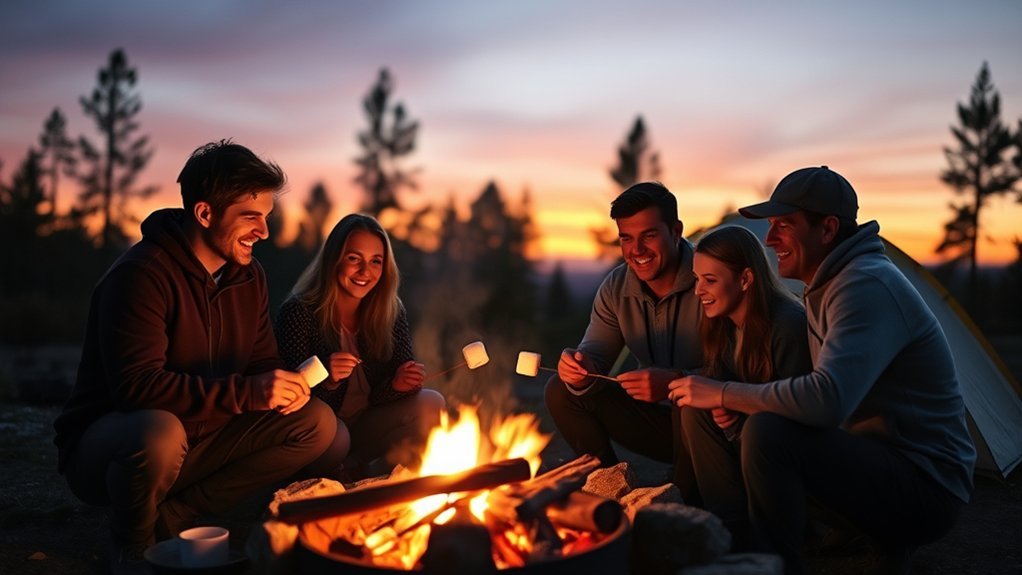
After securing your campsite for the night, gather your family for a meaningful ritual that makes camping memories stick. Family rituals create bonds that outlast any vacation, and evening reflections help everyone appreciate the day’s adventures.
Evening rituals around the campfire transform fleeting moments into lasting family memories that children will carry for a lifetime.
Consider these simple traditions:
- Stargazing stories – Take turns identifying constellations while sharing what made each person smile today.
- Campfire gratitude circle – Have everyone name one thing they’re thankful for from the day’s experiences.
- Tomorrow’s adventure planning – Let kids help choose the next day’s activities, building excitement and ownership.
These consistent practices don’t need complexity. You’ll find that kids especially cherish predictable routines.
Whether you’re singing songs, playing cards, or simply talking, ending each day together strengthens family connections and transforms ordinary camping trips into treasured traditions.
In case you were wondering
What Camping Destinations Are Best for Families With Young Children?
You’ll want family friendly campgrounds with amenities like playgrounds, clean restrooms, and shorter trails. Look for destinations offering fun outdoor activities such as easy hiking, swimming areas, and nature centers that’ll keep your young children engaged and entertained.
How Much Does Basic Camping Gear Cost for a Family?
You’ll spend around $200-$500 for essential gear when budget camping with your family. This includes a tent, sleeping bags, and basic cooking equipment. Buying quality essentials upfront saves money long-term compared to repeatedly replacing cheap items.
What Age Is Appropriate to Take Children on Their First Camping Trip?
When should you introduce kids to nature? Age recommendations suggest you’ll find success with first camping experiences around 3-4 years old. However, you can certainly start earlier with car camping if your toddler’s comfortable sleeping in new environments.
Do I Need Camping Permits or Reservations in Advance?
Yes, you’ll typically need permits or reservations, especially for popular campgrounds. Research camping regulations and reservation policies for your chosen destination well ahead of time, as many family-friendly spots book up months in advance during peak season.
Should We Rent an RV or Start With Tent Camping?
Start with tent camping for your first trip. Tent advantages include lower costs, easier setup, and authentic outdoor experiences. You’ll learn essential camping skills first. Consider RV benefits like comfort and convenience once you’ve gained experience with basic camping fundamentals.
Conclusion
You’ve now unlocked the ancient secrets that’ll transform your family from camping catastrophes into wilderness warriors! Armed with these seventeen game-changing tips, you’re practically guaranteed to avoid the million things that could go wrong on your maiden voyage. Sure, you might not become Bear Grylls overnight, but you’ll definitely survive—and maybe, just maybe, you’ll create memories so epic they’ll be retold for generations. Now get out there!