10 Best Activities for Neurodiverse Families
Try these 10 calm, practical ideas: 1) quiet holiday lights drive with soft music, 2) cozy hot cocoa bar with choice toppings, 3) DIY visual schedule, 4) short winter nature walk and picture scavenger hunt, 5) gingerbread decorating with squeeze bottles, 6) simple ornament crafts with fidgets, 7) predictable gift swap using choice boards, 8) bake-and-freeze cookies, 9) gentle music-and-movement, 10) movie night with breaks. Offer choice, clear steps, small cups, timers, and exits—there’s more comfort ahead.
Sensory-Friendly Holiday Lights Drive

Wonder meets comfort when you plan a sensory-friendly holiday lights drive. You care for your crew, so you choose peace over pressure. You set the pace. You shape the space. You make holiday light displays gentle, warm, and fun.
Wonder meets comfort on a sensory-friendly lights drive—your pace, your space, gentle, warm, and fun.
Try this simple plan:
1) Scout routes online. Pick shorter loops with exits.
2) Go early. Avoid crowds and flashing shows.
3) Prep the car: soft blanket, favorite fidgets, calm music.
4) Set signals for breaks. A thumbs-up, a squeeze, a word.
5) Keep snacks and water close.
Support calm sensory experiences with:
- Tinted glasses or hats
- Dimmed dashboard lights
- Window shades
- Clear “skip” options
Cheer small wins. One street is enough. One smile counts. You’re serving your family well, with care and intention.
Cozy At-Home Hot Cocoa Bar
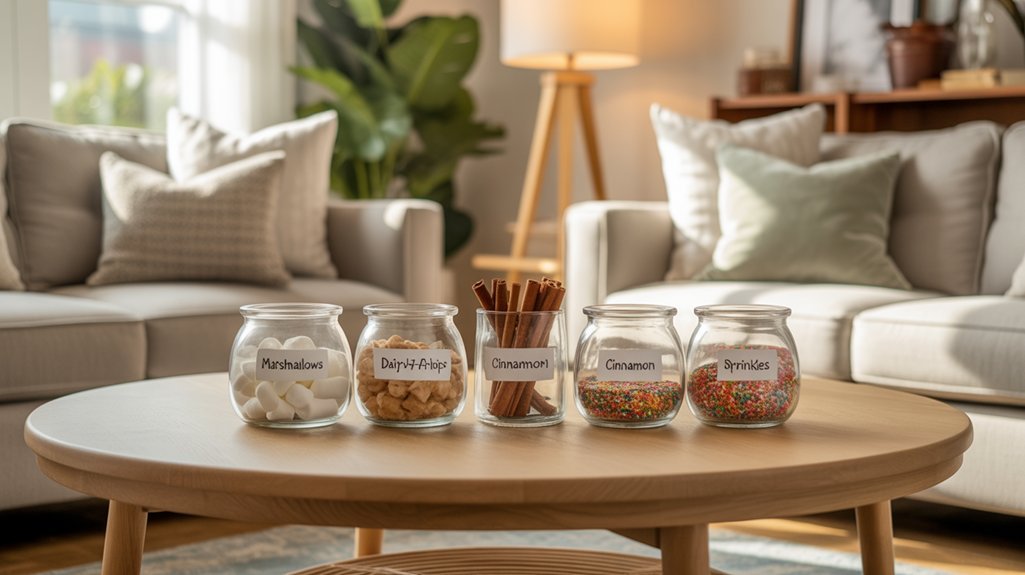
Create a sensory-friendly drink station that feels calm and predictable—warm cocoa, warm milk, and cool options, plus quiet mugs and soft napkins.
Set up a choice-based toppings bar so everyone can pick what fits: mini marshmallows, whipped cream, cinnamon, mint chips, dairy-free sprinkles.
Keep it simple with small bowls, clear labels, and a “your way” rule—slow sips, soft smiles, no rush.
Sensory-Friendly Drink Station
If chilly days pull everyone indoors, a sensory-friendly drink station can turn your kitchen into a calm, cozy spot. You’re creating comfort. You’re meeting needs. You’re making care visible.
1) Set the scene
- Choose a quiet corner.
- Use soft light and a clean tray.
- Add simple labels and a small towel.
2) Offer gentle options
- Warm drinks: cocoa, herbal tea, warm milk.
- Cool sips: room‑temp water, oat milk, decaf iced tea.
- Different drink textures: smooth, frothy, light.
3) Guide flavor exploration
- Start mild, then add a hint of vanilla or cinnamon.
- Let folks smell first. Then sip.
4) Support regulation
- Provide small cups for tiny tries.
- Use lidded mugs for security.
- Keep a timer for slow, steady breaks.
You’re making safety. You’re building choice. Smiles follow.
Choice-Based Toppings Bar
Because small choices can feel big, a choice-based toppings bar invites each person to build cocoa their way. You guide the space; they guide their cup.
Start simple. Offer clear labels, small scoops, and calm lighting. Keep options visible yet not crowded. Honor topping preferences without pressure. Smile. Nod. Invite, don’t insist.
1) Set up stations: mugs, cocoa base, dairy/non-dairy, toppings, and a quiet corner.
2) Preview choices with a short menu card.
3) Model one pour and pause for requests.
4) Offer timers for turn-taking.
5) Celebrate each sip, not speed.
- Mini marshmallows, dairy-free mallows
- Crushed peppermint, cinnamon sugar
- Sprinkles, chocolate shavings
- Orange zest, sea salt flakes
- Whipped cream, coconut cream
Encourage creative combinations. “Sweet and crunchy?” “Warm and spicy?” You serve care. They choose joy.
DIY Visual Schedule for Festive Days
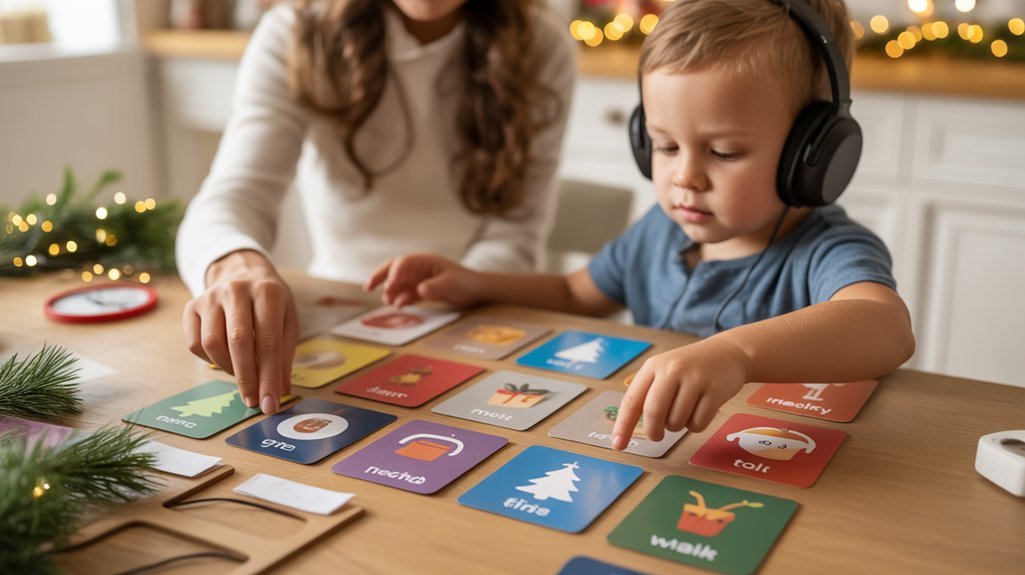
You can make a calm holiday plan with simple tools—paper, markers, sticky notes, or a whiteboard—and easy picture templates or icons.
Try a quick setup:
1) list the day’s parts,
2) match each step with a picture and word,
3) add times, checkboxes, and a “first–then–next–finished” strip.
Adjust for sensory needs with color cues, timer choices, quiet-break cards, and swap-in options like “music,” “stretch,” or “headphones.”
Materials and Simple Templates
Three simple things unlock a calm festive day: clear materials, easy steps, and a visual plan everyone can see.
You want tools that serve your family and spare your energy. Choose activity materials that are sturdy, simple, and kind to busy hands. Pick template designs that are clean and easy to read. Aim for bright, but not loud. Aim for calm, not clutter.
1) Gather basics. Paper or cardstock, scissors, markers, tape, and a folder.
2) Decide sizes. Big icons for nonreaders. Short words for early readers.
3) Print or draw icons that match your day.
4) Sort by time of day. Morning, midday, evening.
5) Store extras for swaps and surprises.
- Laminated cards for durability
- Color coding for clarity
- Velcro dots for quick swaps
- Pocket strips for travel
- Backup copies for peace
Step-By-Step Setup
Fresh tools in hand, let’s build the schedule that keeps the day steady and kind. You’ll guide the flow, reduce stress, and protect energy. Use visual communication to make each step clear. Keep it simple, bright, and calm. Small wins add up.
1) Set the timeline
– Pick wake, meals, event, quiet, bedtime.
2) Create the cards
– Words, icons, colors. One task per card.
3) Map the day
– Place cards left to right. Add “Done” pocket.
4) Preview together
– Walk through steps. Practice swapping plans.
5) Post and check-in
– Point to each step. Celebrate progress.
| Step | Purpose |
|---|---|
| Anchor times | Predictable rhythm |
| Action cards | Clear choices |
| First–Then | Gentle transitions |
| Break tokens | Respect capacity |
| Sensory exploration | Calm curiosity |
Smile, breathe, and serve with steadiness. You’ve got this.
Customizing for Sensory Needs
When holidays sparkle and routines wobble, build a visual schedule that protects senses and energy. Start with what your child needs most. Name sensory preferences first. Then plan environmental adjustments that prevent overwhelm. Keep it visual, simple, and flexible. Use photos, icons, or color dots. Add a calm cue between busy events. You’re not strict—you’re supportive.
1) Gather info. Notice triggers: sound, light, touch, smells, crowds.
2) Map the day. Break plans into small steps with start and finish times.
3) Pair supports. Add headphones, chewy snacks, fidgets, or a quiet corner.
4) Plan exits. Create “opt-out” cards and a code word. Practice it.
5) Review together. Invite choices. Update after each event.
- Clear start/stop cards
- Calm-down symbol
- “Quiet shoes” basket
- Low-light corner
- Timer with soft chime
Quiet Winter Nature Walk and Scavenger Hunt

Although winter can feel quiet and cold, it also brings calm, soft light, and simple joys you can share outside. You can lead a gentle walk that supports nature sensory needs and boosts confidence. Go slow. Notice tracks, shapes, and shadows. Invite wildlife observation with curiosity and care.
1) Set intention: calm, connection, kindness.
2) Pick a short loop. Plan a warm drink after.
3) Pack simple tools: clipboards, pencils, hand warmers.
4) Use a picture scavenger list.
5) Celebrate small wins.
- Offer choices: path, pace, pause.
- Model quiet breaths: in for four, out for six.
| Find/Feel | Support Tip |
|---|---|
| Crunchy snow | Pause and stomp together |
| Smooth bark | Touch with sleeves on |
| Bird call | Cup ears, listen, smile |
| Animal track | Compare sizes, leave it |
| Winter sun | Face it, take three breaths |
Adaptive Gingerbread Decorating Station
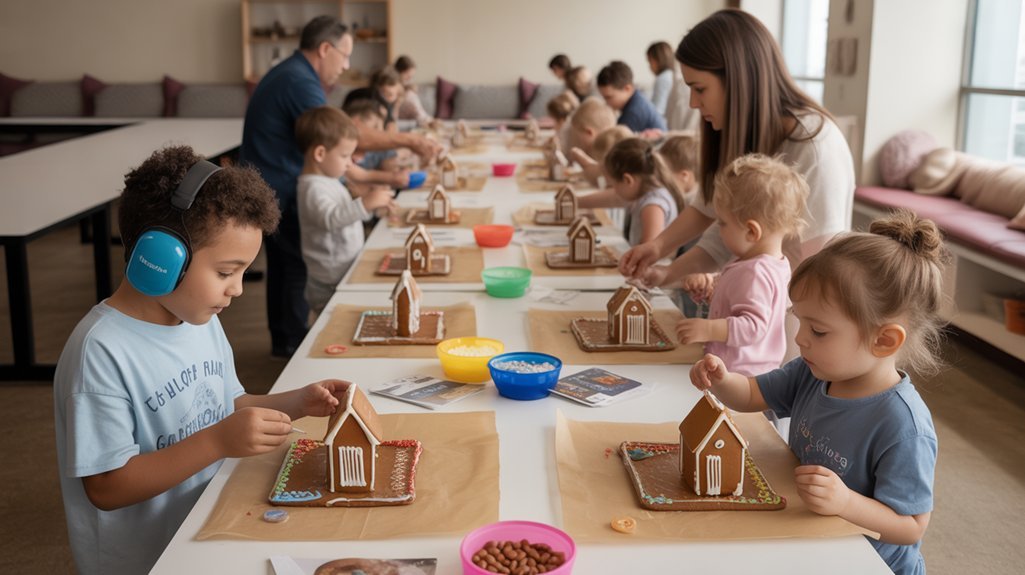
A few small tweaks turn gingerbread decorating into a calm, cozy win for everyone. You set the tone. You slow the pace. You offer choice.
Start by previewing gingerbread textures. Tap, sniff, and nibble a corner if that helps. Then map simple decorating strategies. One step at a time. Clear, kind cues.
1) Set up stations: soft icing, firm icing, sprinkles, and plain cookies.
2) Offer tools: squeeze bottles, wide brushes, and spoons for low-mess control.
3) Use visual cards that show “outline, fill, decorate.”
4) Build in quiet breaks with water, napkins, and a calm corner.
5) Celebrate effort. A dot of icing counts.
- Separate crunchy, chewy, and gluten-free options
- Pre-fit icing tips for easy grip
- Color-code bowls for predictability
- Keep scents mild or unscented
- Provide wipeable mats and warm cloths
Weighted Blanket Movie Night With Classic Films

Because cozy pressure can calm busy bodies and minds, a weighted blanket movie night gives everyone a simple way to settle and connect.
Cozy pressure soothes busy bodies and minds, making movie night a simple way to settle and connect.
Here’s a gentle plan you can lead with care.
1) Set the cozy ambiance
- Dim lights. Add soft lamps.
- Offer weighted blankets by size and need.
- Give choices: couch, floor nest, or beanbag.
2) Pick classic films
- Keep plots clear and kind.
- Try The Sound of Music, Babe, or Mary Poppins.
- Share why you chose them. Invite input.
3) Support sensory needs
- Quiet volume. Subtitles on.
- Breaks allowed. Pause without fuss.
- Fidgets nearby, snacks simple.
4) Create belonging
- Start with a short check‑in.
- Praise self‑advocacy: “Thanks for telling me.”
- End with a thumbs‑up rating.
Simple. Calm. Together. You’re building trust, one cozy scene at a time.
Calm Crafting: Ornament Making With Fidget Options

Still feeling cozy from movie night? Let’s shift to calm crafting. You’ll make simple ornaments while meeting sensory needs. Set out fidget tools so busy hands can focus.
Pick two or three ornament themes to guide choices. Keep cleanup easy. Keep the mood soft and steady. You’re creating comfort and beauty at once.
1) Gather supplies: felt shapes, ribbon, pipe cleaners, fabric glue, and a tray for bits.
2) Offer fidgets: pop tubes, textured rings, putty, and a soft lap weight.
3) Pre-cut pieces to lower stress. Provide clear models and short steps.
4) Use visual bins: “Start,” “Build,” “Finish.” Celebrate each small win.
5) Display ornaments at child eye level. Praise process, not perfection.
- Color families
- Nature textures
- Story characters
- Favorite initials
- Calm patterns
Predictable Gift Exchange With Choice Boards
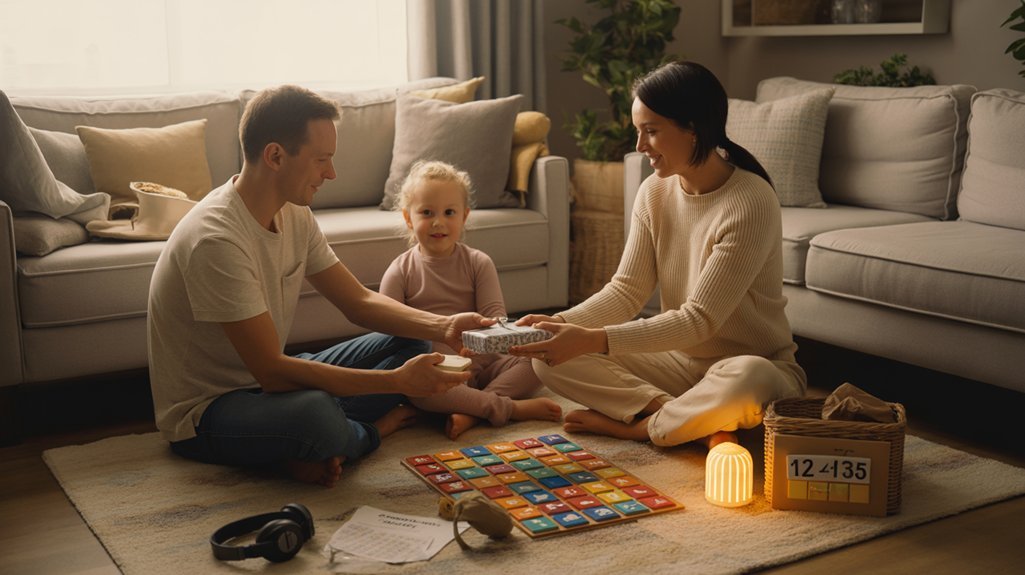
When gifts feel predictable, kids relax and join in. You can create that calm with a simple, fair plan. Use choice boards to guide gift selection. Show clear options: books, art kits, soft socks, sensory toys. Keep prices steady. Add photos. Limit surprises.
Try this quick setup:
1) Ask each person for three likes and one “no thanks.”
2) Build choice boards for each receiver.
3) Set a budget and deadline.
4) Swap names and pick from the board.
5) Wrap with a tag that lists the chosen item.
Tips that help:
- Offer two wrapping textures.
- Use timers for turn-taking.
- Practice the open-thank-you-put-away flow.
You’re serving each other with care. Predictable. Kind. Shared. Everyone knows what to do, and everyone feels seen. Smiles follow.
Bake-And-Freeze Cookie Session With Simple Steps

With a calm plan, a bake-and-freeze cookie session turns cozy, quick, and low-stress. You’ll keep energy gentle and still make plenty to share. Here’s a simple path that honors focus, comfort, and service.
A calm bake-and-freeze plan makes cookies cozy, quick, low-stress, and perfect for sharing.
1) Prep: Choose 1–2 cookie variations. Set out tools. Pre-measure basics in small bowls.
2) Pace: Use a visual timer. Short steps. Clear breaks. Water nearby.
3) Mix: Follow one bowl method. Soft butter. Room-temp eggs. Simple baking tips win.
4) Shape: Scoop with a spoon or scoop. Press flat. Add chips or seeds.
5) Freeze: Flash-freeze dough balls. Bag and label. Bake when needed.
- Offer choices: shape, mix-ins, or packaging
- Keep noise low and lights warm
- Use parchment for easy cleanup
- Share extras with neighbors
- Celebrate small wins together
Music and Movement Time With Holiday Playlists
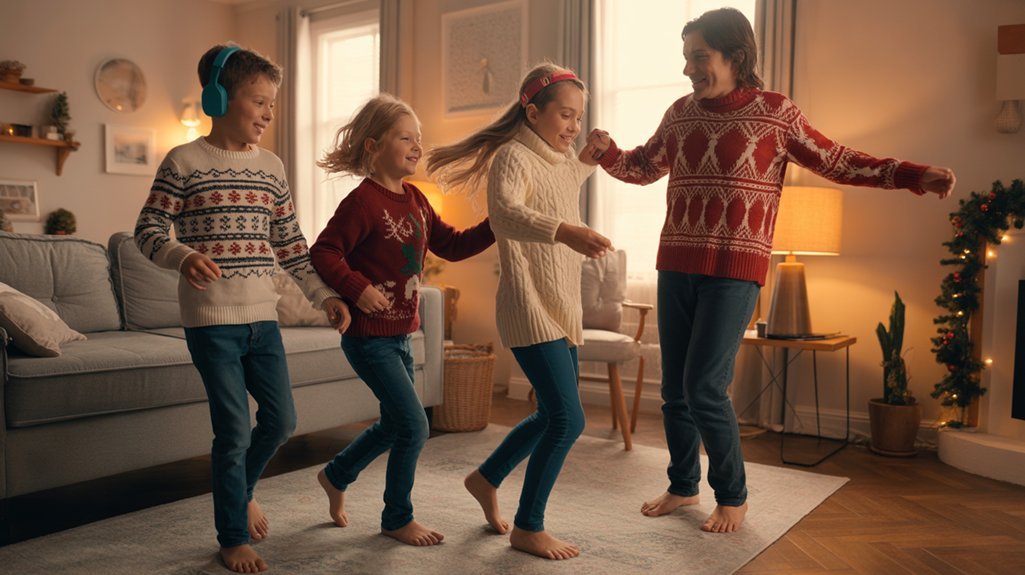
Turn on a short holiday playlist with sensory-friendly songs—soft beats, clear voices, steady tempo.
Add predictable movement routines: 1-2-3 steps like clap-tap-stretch, or sway-step-freeze, and keep the same order each time.
Use visual cues and planned breaks—simple picture cards, a “pause” sign, a cozy corner—so everyone feels safe, seen, and ready to smile.
Sensory-Friendly Song Choices
A gentle playlist can make holiday music time feel safe, fun, and calm. You set the tone with sensory friendly playlists that keep volume steady and lyrics kind.
Choose calming holiday tunes with soft voices, simple beats, and slow to medium tempos. Test each track at the level you’ll use. Watch faces. Trust your read. If someone winces, skip it. Your care matters.
1) Start small: pick 6–8 songs you already know feel gentle.
2) Favor acoustic covers over big band or heavy bass.
3) Choose songs under three minutes to prevent overload.
4) Keep a “yes” bin and a “not today” bin. Rotate with care.
5) Offer tiny choices: “bells or piano?”
- Warm vocals, low reverb
- Predictable rhythm, light percussion
- Nature sounds woven in
- Clear pauses between tracks
- Easy chorus for soft humming
Predictable Movement Routines
Two or three simple moves, done the same way each time, can turn music time into a safe rhythm your family can count on. You lead with care. Kids follow with trust. Predictable beats lower stress. Warm smiles help everyone join.
Try this simple plan:
1) Pick one holiday song. Keep it the same all week.
2) Choose three moves: clap, sway, stomp.
3) Start slow. Then repeat the set twice.
Use routine charts to show the order: song title, three moves, happy finish. Keep sessions short. Five minutes is enough. Offer praise for effort, not perfection.
Add friendly movement games:
- Freeze on the chorus
- Pass a jingle bell
- Copy-cat moves
If energy dips, pause the music. Breathe. Restart gently. You’re building calm, shared joy.
Visual Cues and Breaks
Steady beats help, and clear pictures help even more. Use your holiday playlist to cue start, move, and rest. Pair each song with a simple card. Show the card, press play, and point to what’s next. You’ll lower stress, share control, and keep the joy steady.
When energy spikes, honor it. Offer sensory breaks on purpose, not as a last resort.
1) Build visual schedules with three panels: Warm‑Up, Dance, Calm.
2) Match tempos to needs: fast for wiggles, slow for settling.
3) Pre-teach signals: “Two more moves,” then “pause.”
4) Set a break nook with soft light, headphones, and a timer.
5) End with a predictable closer.
- Picture cards for each song
- Quiet symbol for breaks
- Headphones and fidgets
- Small timer
- Cozy corner sign
In case you were wondering
How Can We Prepare Siblings to Support Neurodiverse Needs During Activities?
You prepare siblings by clarifying sibling roles, modeling empathy, and practicing scripts. You teach sensory cues, co-regulation, and safe breaks. You use empathy training, role-play transitions, celebrate helpful choices, and debrief after activities so everyone learns, serves, and thrives.
What Signs Indicate an Activity Is Becoming Overstimulating?
You’ll notice sensory overload signs: covering ears, withdrawal, rapid breathing, fidgeting, irritability, or meltdowns in overstimulating environments. Research shows 60% experience noise triggers. Offer quiet breaks, dim lights, reduce crowds, and validate feelings to serve compassionately.
How Do We Handle Unexpected Schedule Changes Without Meltdowns?
You build schedule flexibility by previewing shifts, offering choices, and using visual timers. You prevent meltdowns with calming techniques: deep breaths, sensory tools, quiet space. You validate feelings, narrate next steps, and praise coping. You model calm compassion.
What Low-Cost Adaptations Help When Budgets Are Tight?
Choose budget friendly solutions: repurpose household items as DIY sensory tools, borrow from libraries, swap with neighbors, and use free apps. You create visual schedules, calming corners, and routine bins. You steward resources while honoring each person’s needs.
How Can We Include Nonverbal Communication Preferences Throughout the Day?
You weave visual cues into routines, and, by coincidence, they align with needs. You model gestures, schedule choice boards, use communication tools consistently, layer timers, label zones, reflect feelings, celebrate attempts, and invite feedback, so everyone’s nonverbal language stays honored all day.
Conclusion
You’ve got this. Your holidays don’t need a parade of chaos to count as “special.” You need calm, choice, and a plan that actually fits your people.
- Pick one idea today. Try it for 20 minutes.
- Keep what worked. Ditch what didn’t.
- Pack a go bag: snacks, headphones, fidgets.
Remember: less noise, more joy. Clear steps, kind pacing, cozy breaks. If others want “magic,” smile and point to your schedule. That’s your sparkle—predictable, peaceful, and yours.