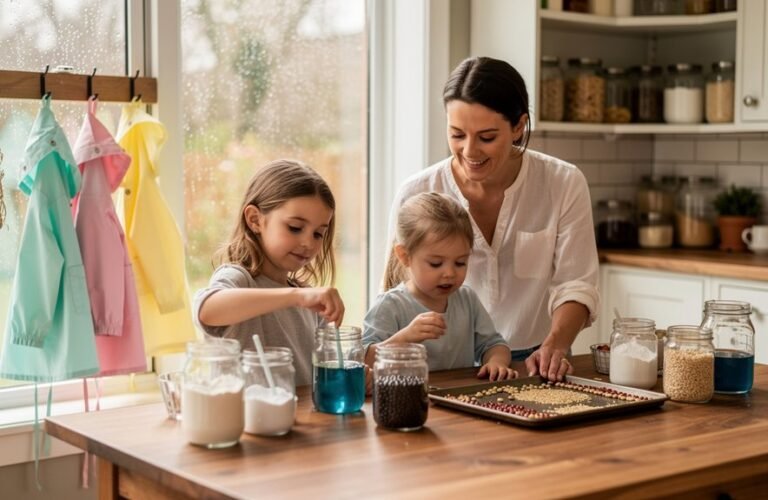
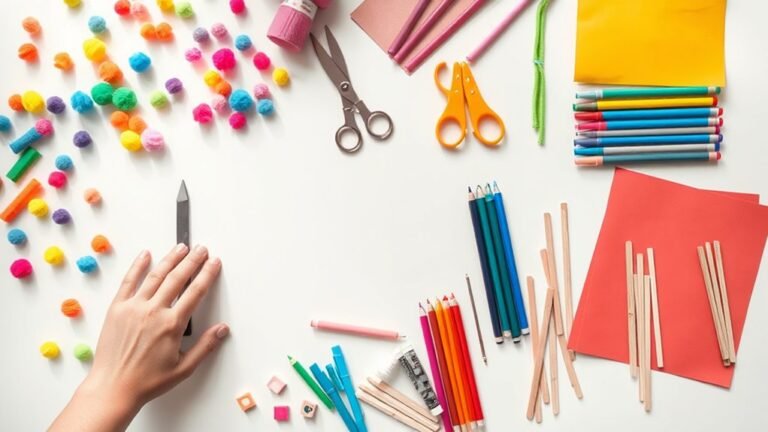
10 Fun Rainy Day Art Activities for Kids
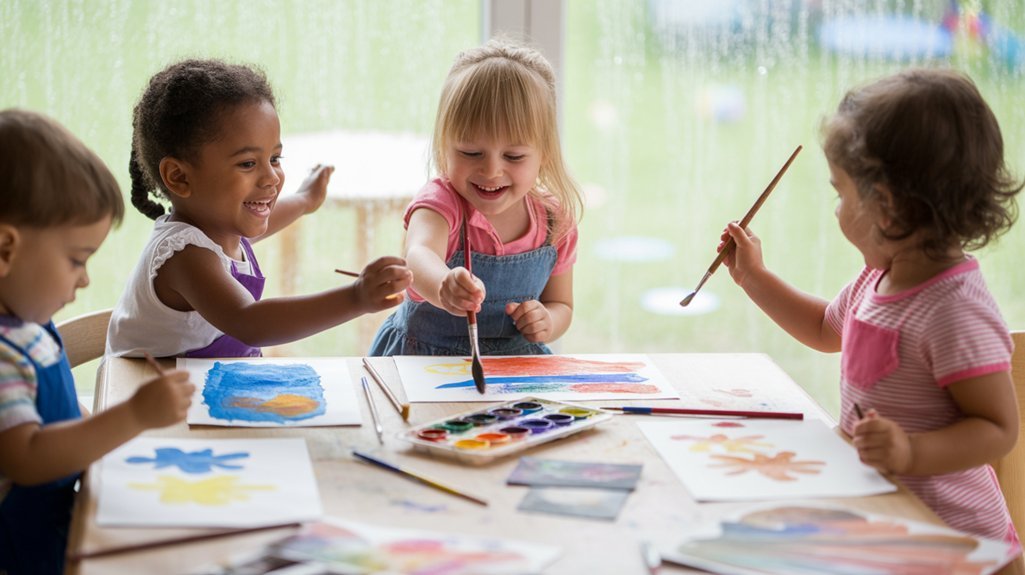
You’ll find endless rainy day entertainment with activities like coffee filter watercolor butterflies, where kids mist marker-colored filters to create stunning designs, and marble painting that teaches color mixing through rolling marbles in paint. DIY playdough made from household ingredients encourages tactile exploration, while paper plate masks spark imaginative storytelling. Nature collages with pressed flowers teach patience, and tin foil embossing creates textured metallic art. Mixed media self-portraits let kids experiment freely with magazines, fabric scraps, and dimensional details, building fine motor skills while expressing their unique artistic voice throughout each creative project.
Key Takeaways
- Mixed media self-portraits using mirrors, collage materials, fabric scraps, and dimensional embellishments encourage creative exploration and self-expression over perfectionism.
- Coffee filter butterflies with markers and water spray, plus marble painting with rolling techniques, teach color mixing while developing motor skills.
- Homemade playdough creations and paper plate masks spark imaginative play, storytelling, and puppet shows while enhancing fine motor development.
- Nature collages with pressed flowers and textured aluminum foil art combine patience-building activities with hands-on creativity for display-worthy results.
- Art activities using varied tools and materials improve hand-eye coordination and fine motor skills through tactile exploration and experimentation.
Coffee Filter Watercolor Butterflies

Coffee filter watercolor butterflies transform simple household items into vibrant works of art that’ll keep little hands busy on dreary afternoons.
You’ll need coffee filters, washable markers, spray bottles, and pipe cleaners to create these stunning insects.
Have your kids color the filters with bold markers, experimenting with different butterfly colors like orange, yellow, blue, and purple.
Then lightly mist the filters with water and watch the hues blend together. This introduces basic watercolor techniques as pigments spread and mix naturally.
Once dry, pinch the filters in the center and twist a pipe cleaner around them to form the body and antennae.
Your children can create an entire kaleidoscope of butterflies, each one uniquely beautiful with its own color combinations.
DIY Playdough Creations
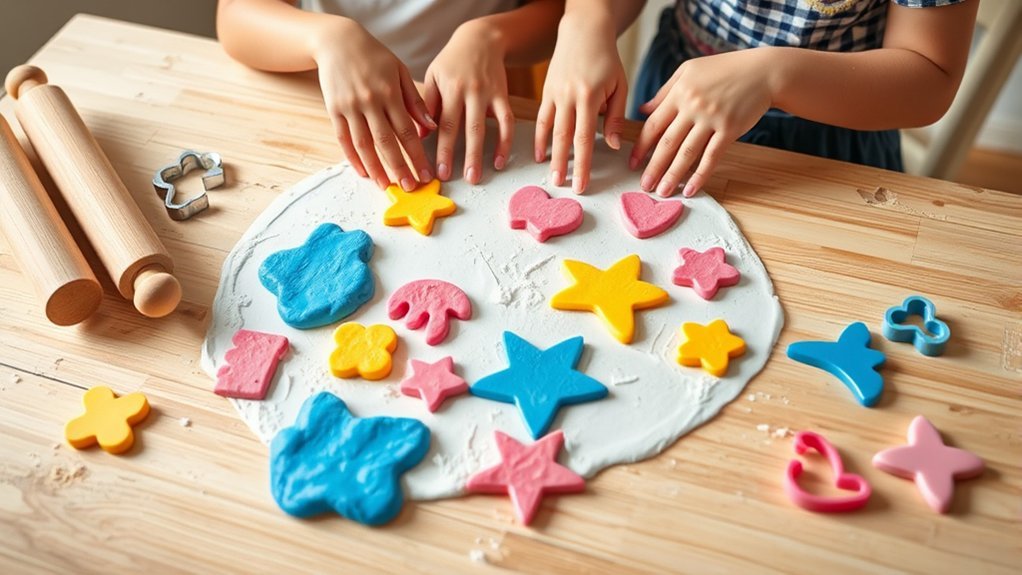
While those colorful butterflies dry on your countertop, you can whip up a batch of homemade playdough that’ll provide hours of tactile entertainment.
Mix flour, salt, cream of tartar, water, and food coloring in a saucepan over medium heat until it forms a ball. Once cooled, your kids can dive into creating playdough animals like snakes, dogs, or dinosaurs.
Transform simple pantry staples into colorful, moldable fun that sparks creativity and keeps little hands happily sculpting for hours.
Encourage them to experiment with rolling, pinching, and molding techniques to bring their playdough sculptures to life. Add cookie cutters, plastic knives, and rolling pins to expand creative possibilities.
Store the playdough in airtight containers, and it’ll last for months. This sensory activity develops fine motor skills while keeping restless hands busy during dreary afternoons.
Plus, making playdough from scratch costs pennies compared to store-bought versions.
Marble Painting Magic
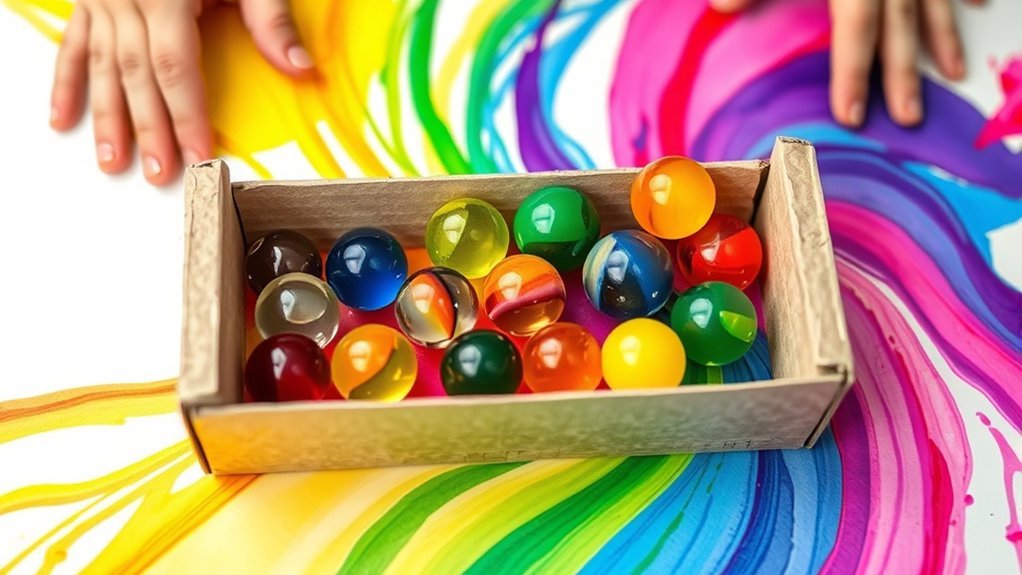
Transform ordinary paper into abstract masterpieces with this exciting marble painting technique that’ll captivate kids of all ages.
You’ll need a shallow box, paper, paint, and marbles. Place the paper inside the box, then drop paint dollops in various colors across it. Add the marbles and let your children tilt the box, watching as rolling marbles create unique patterns and trails.
This activity naturally introduces color mixing as marbles travel through different paint puddles, creating new hues where colors intersect. The unpredictable movement keeps kids engaged while developing their motor skills and understanding of cause and effect.
Try using metallic paints or adding glitter for extra sparkle. You can create greeting cards, wrapping paper, or frame the results as artwork to display proudly.
Paper Plate Masks and Characters
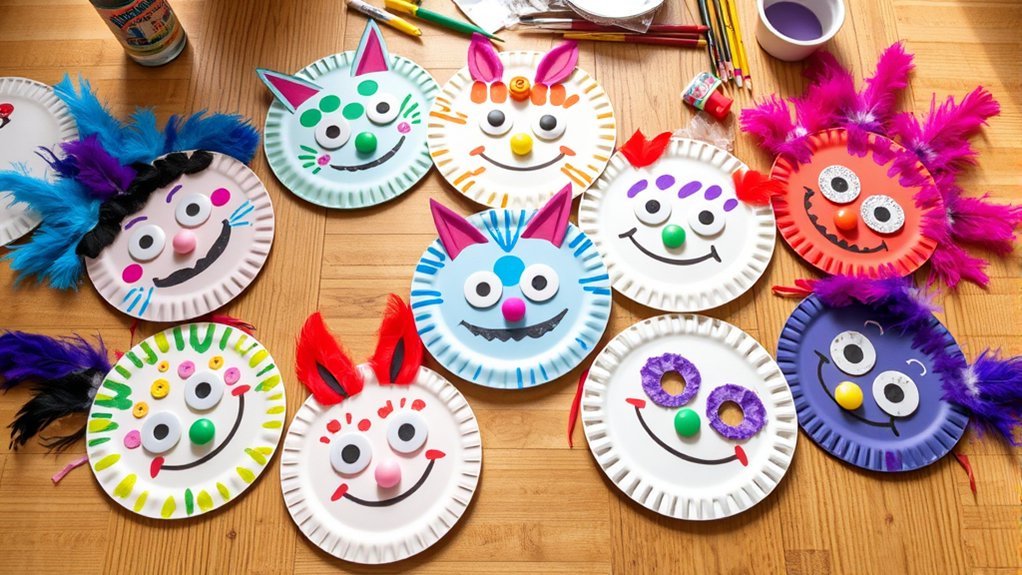
Paper plates offer endless creative possibilities when rainy weather keeps everyone indoors.
You’ll find that transforming simple plates into masks and characters sparks your child’s imagination while developing fine motor skills. Through mask decorating, kids can explore different emotions, animals, and fantastical creatures.
- Cut eye holes and attach elastic string or popsicle stick handles
- Use markers, paints, construction paper, and glitter for decoration
- Create animal faces with paper ears, whiskers, and noses
- Design superhero masks with bold colors and dramatic shapes
- Add feathers, yarn, or fabric scraps for texture
Once the masks are complete, encourage character storytelling. Your children can put on puppet shows, act out favorite stories, or invent entirely new adventures with their creations.
Nature Collage With Pressed Flowers
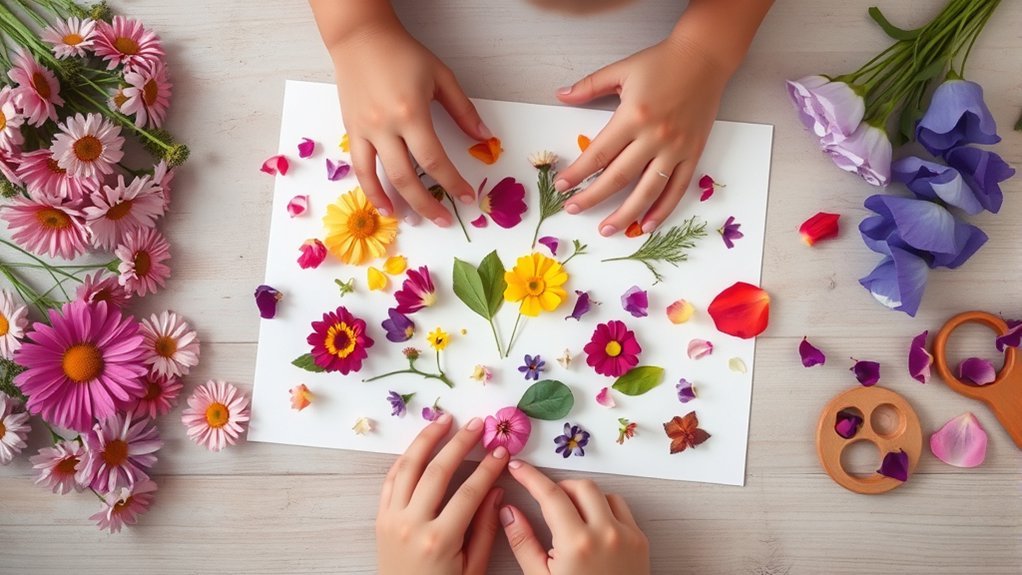
Rainy days present the perfect opportunity to preserve yesterday’s sunny adventures by creating stunning nature collages with pressed flowers.
You’ll need flowers collected from previous outdoor explorations, heavy books, parchment paper, cardstock, and glue.
Begin by placing flowers between parchment paper sheets inside heavy books. Wait 2-3 days for complete drying.
Layer your collected flowers between parchment paper inside heavy books, allowing 2-3 days for proper pressing and complete drying.
Once pressed, arrange the delicate specimens on cardstock to create beautiful compositions. Your kids can draw stems, add watercolor backgrounds, or incorporate leaves and petals into imaginative scenes.
These flower preservation techniques transform fleeting blooms into lasting artwork. Encourage children to experiment with different arrangements—creating butterflies from petals or abstract patterns.
This activity combines science and creativity, offering nature art inspiration while teaching patience and botanical appreciation. Frame finished pieces for bedroom décor.
Salt Dough Ornaments and Keepsakes
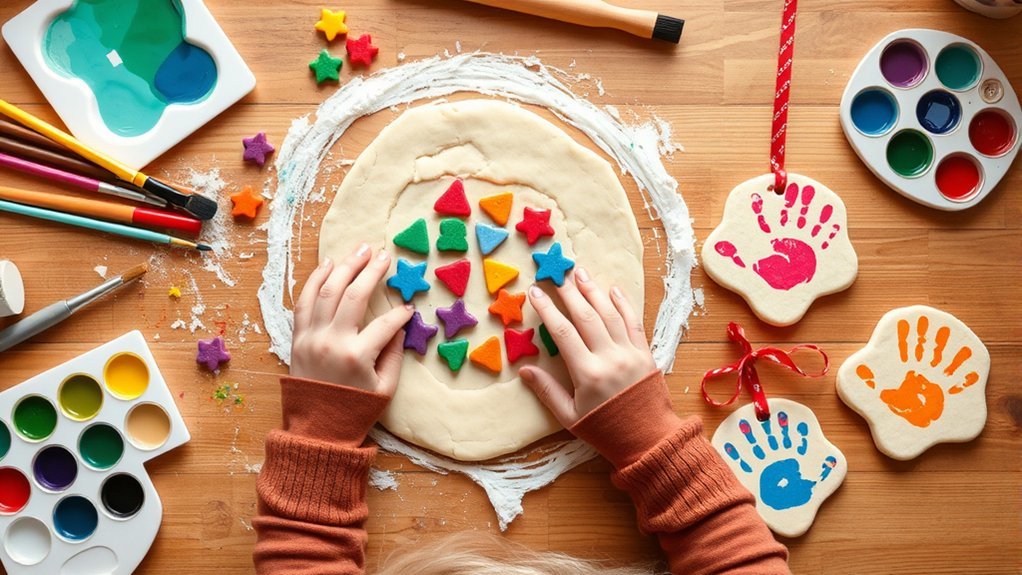
While rain patters against the windows, you can create treasured keepsakes that’ll last for years with just three simple ingredients: flour, salt, and water.
Mix two cups flour, one cup salt, and one cup water to form your salt dough. Roll it flat and let your kids cut shapes using cookie cutters or create handprint impressions for memorable keepsakes.
Essential steps for perfect ornaments:
- Poke holes at the top before baking for hanging ribbons
- Bake at 200°F for 2-3 hours until completely hardened
- Cool thoroughly before decorative painting begins
- Paint with acrylics, adding glitter or markers for personalization
- Seal with clear varnish to preserve your artwork
These homemade treasures become cherished holiday decorations or heartfelt gifts for grandparents.
Cardboard Box Sculptures
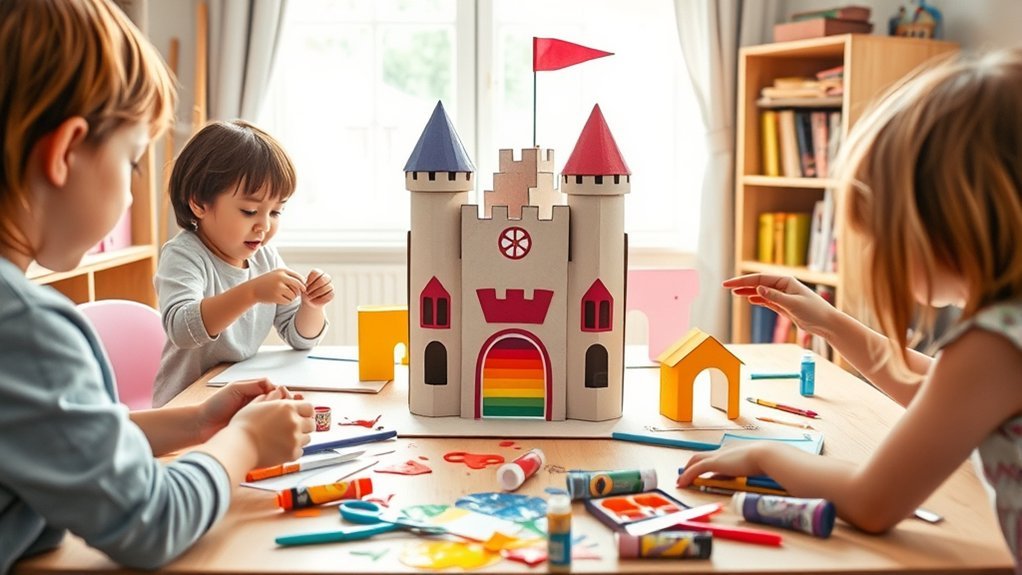
Those empty Amazon boxes piling up in your garage can transform into castles, spaceships, or whatever your child’s imagination dreams up.
You’ll need scissors, tape, glue, and paint to bring these cardboard creations to life.
Start with cardboard box castles by cutting windows and doors, then stacking boxes to create towers. Add details with markers or construction paper flags. Your kids can build entire kingdoms from different-sized boxes.
Cardboard box animals offer another creative avenue. Cut and shape boxes into dinosaurs, elephants, or robots. Use bottle caps for eyes, paper tubes for trunks, and painted details for texture.
The beauty lies in imperfection—wobbly wheels and asymmetrical features add character.
This activity develops spatial reasoning and problem-solving skills while keeping kids entertained for hours.
Shaving Cream Marbling Art
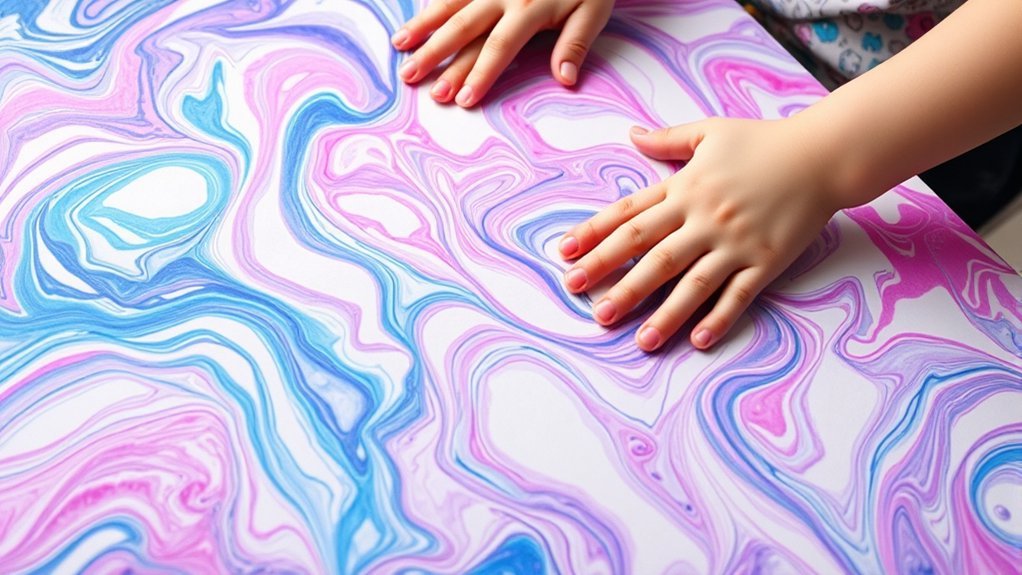
If your kids need a break from three-dimensional projects, shaving cream marbling creates stunning two-dimensional art with minimal setup. This technique transforms ordinary paper into vibrant masterpieces using simple household items.
You’ll need basic marbling supplies:
- Foam shaving cream (not gel)
- Shallow baking pan or tray
- Acrylic or food coloring paints
- Cardstock or watercolor paper
- Plastic scraper or old credit card
Spread shaving cream evenly across your tray, then drop paint colors on top. Let kids swirl patterns using toothpicks or skewers—these shaving cream techniques produce mesmerizing designs.
The magic happens when colors meet cream—simple swirls transform into one-of-a-kind patterns that captivate young artists.
Press paper firmly onto the surface, lift carefully, and scrape off excess cream. The paint transfers beautifully, revealing unique marbled patterns. Each creation turns out differently, making this activity endlessly entertaining for rainy afternoons.
Tin Foil Embossing Designs
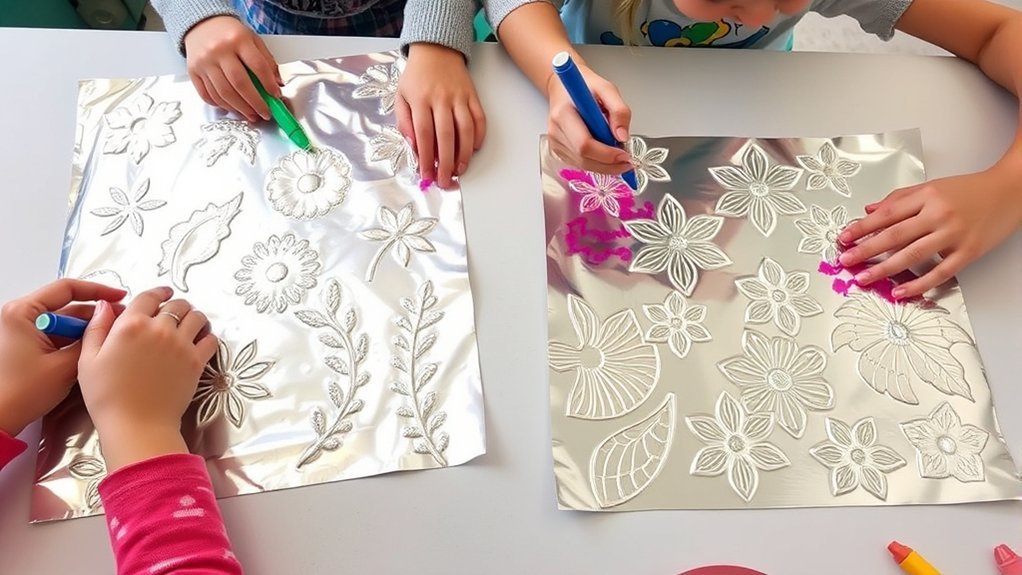
When you’re looking for an art project that combines creativity with tactile exploration, tin foil embossing delivers impressive results without requiring special tools or expensive materials.
You’ll simply need aluminum foil, cardboard backing, and simple embossing tools like dull pencils, popsicle sticks, or even dried-up pens.
Start by taping foil smoothly over cardboard to create your canvas. Your kids can draw designs directly onto the foil’s surface, pressing firmly to create raised impressions.
Encourage them to experiment with different tin foil techniques—varying pressure creates depth and dimension in their artwork.
They can create anything from geometric patterns to nature scenes. The metallic surface catches light beautifully, making even simple designs look polished and professional.
This activity develops fine motor skills while producing keepsake-worthy art.
Mixed Media Self-Portraits
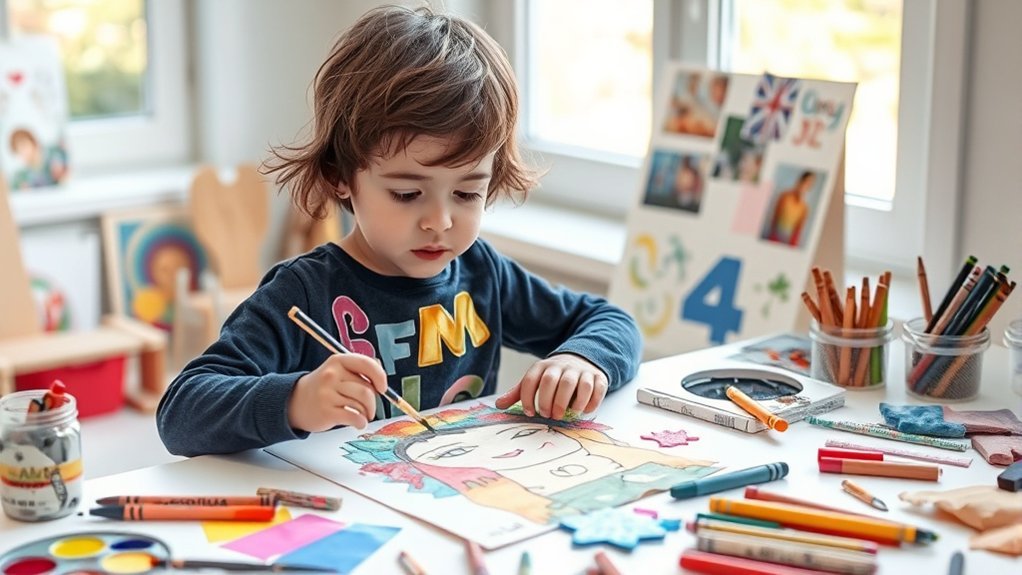
After exploring textured metallic art, turn your attention to helping kids discover their own features through mixed media self-portraits.
This activity combines various self portrait techniques with creative expression. Hand children mirrors to study their faces, then let them choose from diverse mixed media materials to capture their unique characteristics.
Essential supplies for this project:
- Cardstock or canvas as the base
- Magazines for collage elements
- Fabric scraps, yarn, and ribbon for hair and clothing textures
- Paint, markers, and colored pencils for facial features
- Buttons, sequins, and googly eyes for dimensional details
Encourage kids to experiment freely rather than aiming for photorealism.
Let creativity lead the way—focus on self-expression and personal style over perfect proportions and realistic details.
They’ll develop observation skills while expressing their personalities through color, texture, and pattern choices.
In case you were wondering
How Do I Protect Furniture and Floors During Messy Art Activities?
You’ll need furniture covers like old sheets or plastic tablecloths to protect surfaces from paint and glue. For floor protection, lay down newspapers, drop cloths, or washable mats underneath your child’s workspace before starting any messy projects.
What Age-Appropriate Activities Work Best for Toddlers Versus Older Children?
Toddler crafts should focus on sensory play like finger painting and playdough, while older kids can handle complex projects like collages and watercolors. You’ll want to match activities to their fine motor skills and attention spans for best results.
How Can I Store and Preserve My Child’s Artwork Long-Term?
Think of memories as treasures worth protecting. You’ll want an art portfolio for physical pieces, rotating favorites seasonally. For digital archiving, photograph each masterpiece with dates and your child’s commentary—you’re creating a timeless gallery they’ll cherish forever.
What Are Good Rainy Day Art Activities for Large Groups of Kids?
You’ll love organizing a group mural where kids paint together on large paper, or try collaborative sculptures using recycled materials. Both activities keep everyone engaged, encourage teamwork, and create impressive art pieces they’ll proudly display.
How Do I Keep Kids Entertained if Art Supplies Run Out?
You can switch to digital art apps on tablets or phones for creative fun. Alternatively, you’ll find nature crafts work perfectly—collect leaves, sticks, and stones from outside to create collages and sculptures indoors.
Conclusion
Rainy days don’t have to dampen your family’s fun! You’ve discovered delightful diversions that’ll keep creative kids captivated for hours. Whether you’re molding marvelous masterpieces with playdough, crafting colorful butterflies, or building bold box sculptures, these activities awaken artistic abilities. So gather your supplies, set up your space, and let little learners loose on their next project. Before you know it, you’ll transform tedious gray days into wonderful, whimsical workshops where imagination ignites and boredom becomes a distant memory.