How Craft Activities Build Fine Motor Skills
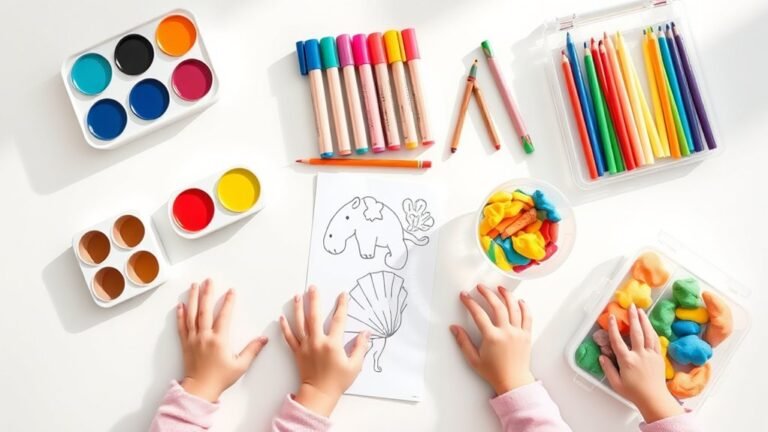
Craft activities build fine motor skills by giving your child’s small hand muscles a workout through fun, hands-on play. Threading beads strengthens finger control. Cutting with scissors teaches both hands to work together. Molding playdough builds the muscles needed for writing. Painting develops wrist flexibility and grip strength. Each project quietly trains hand-eye coordination while your little one simply enjoys creating. Below, you’ll discover specific activities to try at home.
Key Takeaways
- Threading and beading activities strengthen finger control, coordination, and focus through repetitive motions of holding, aiming, and pushing beads onto laces.
- Cutting with scissors develops hand-eye coordination by requiring both hands to perform different tasks simultaneously while building hand muscles.
- Molding clay and playdough provides sensory play that builds the small hand muscles essential for writing through rolling, pinching, and pressing movements.
- Painting exercises improve brush control, finger grip, and wrist flexibility while teaching children to adjust pressure and force during creative activities.
- Craft activities connect visual input with physical action, supporting sensory integration and helping children process touch and movement effectively.
Understanding Fine Motor Skills and Their Importance
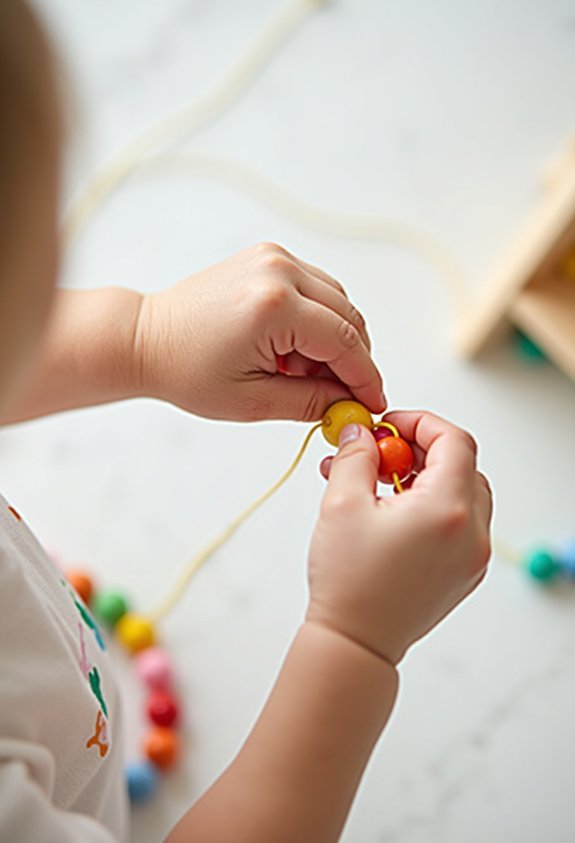
When your child threads a bead onto a string or grips a crayon just right, they’re using fine motor skills. These are the small muscle movements in hands, fingers, and wrists that make everyday tasks possible.
Fine motor skills are the small muscle movements that turn everyday tasks into victories for your child.
Why They Matter
Fine motor skills help your child:
- Button their coat
- Write their name
- Use scissors safely
- Feed themselves
These abilities build hand eye coordination—the connection between what eyes see and what hands do. They also support sensory integration, helping your child’s brain process touch and movement together.
The Good News
You don’t need fancy tools to strengthen these skills. Simple craft activities work wonders. Every pinch, twist, and squeeze builds the foundation your child needs for school and daily life.
Threading and Beading Activities for Finger Dexterity
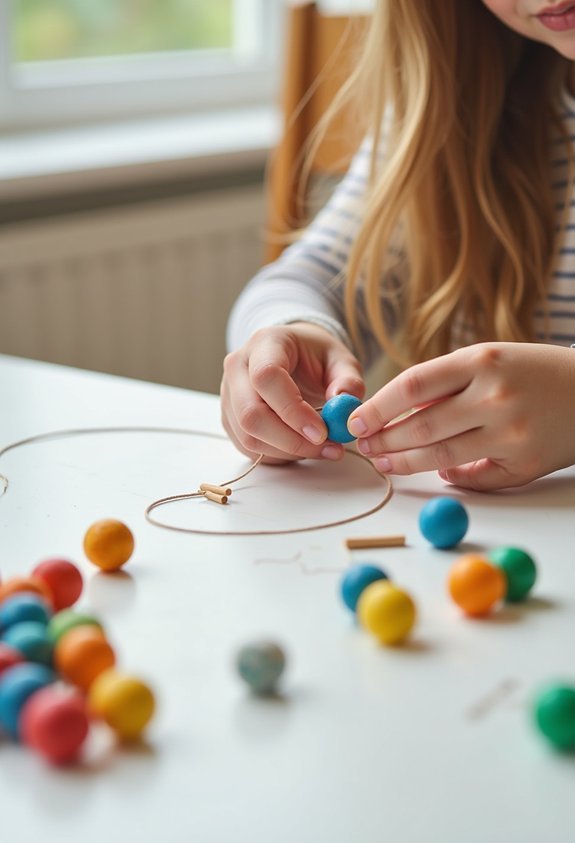
Because threading requires your child to hold, aim, and push all at once, it’s one of the best ways to build finger strength and control. Those tiny movements train the same muscles needed for writing and buttoning.
Simple ways to start:
- Use chunky beads and thick laces first
- Try bead sorting by color or size before threading
- Create threading patterns like red-blue-red-blue
You’ll notice your child’s grip getting steadier with practice. That’s real progress.
Quick tips:
- Keep sessions short—five minutes works great
- Celebrate the effort, not just the finished necklace
- Let them choose their own colors
Threading feels like play. But those little fingers are working hard and growing stronger every time.
Cutting and Scissor Skills Development
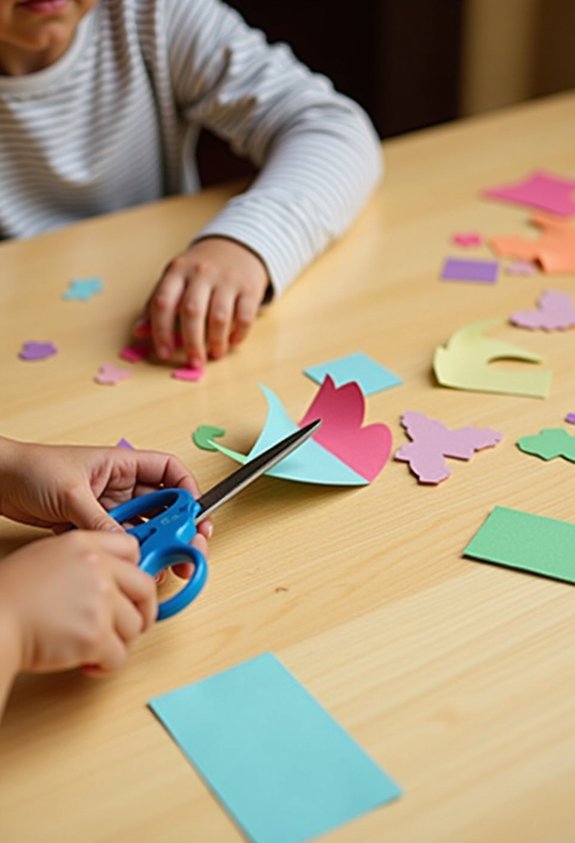
Although scissors might seem simple, they’re actually one of the trickiest tools for little hands to master. Your child needs to coordinate both hands doing different jobs at once. That’s a big deal!
Scissor Safety First
Start with these basics:
- Choose child-safe scissors with blunt tips
- Teach the “thumbs up” grip
- Always cut away from the body
- Walk with scissors pointing down
Building Cutting Techniques****
Progress through these steps:
- Snip playdough or straws
- Cut single lines on paper
- Try curved and zigzag paths
- Work toward simple shapes
You’ll notice improvement quickly. Each snip strengthens hand muscles and builds coordination. Celebrate those wobbly first cuts—they’re the foundation for beautiful creations ahead.
Molding and Sculpting With Clay and Playdough

Squishing, rolling, and shaping soft materials gives little hands a wonderful workout that’s different from cutting. When you hand your child clay or playdough, you’re offering rich sensory play that strengthens fingers and sparks creativity.
Simple Clay Techniques to Try:
- Rolling snakes and coils
- Pinching small balls flat
- Pressing objects to make texture prints
- Building simple shapes like bowls or animals
These activities build the same muscles needed for writing. Your child won’t even realize they’re working hard because it feels like pure fun.
Start with softer playdough for younger kids. As their hands grow stronger, introduce firmer clay that requires more effort. Let them explore freely at first. You can guide specific projects later. The mess is worth it—those little fingers are getting stronger with every squeeze.
Paper Folding and Origami Techniques
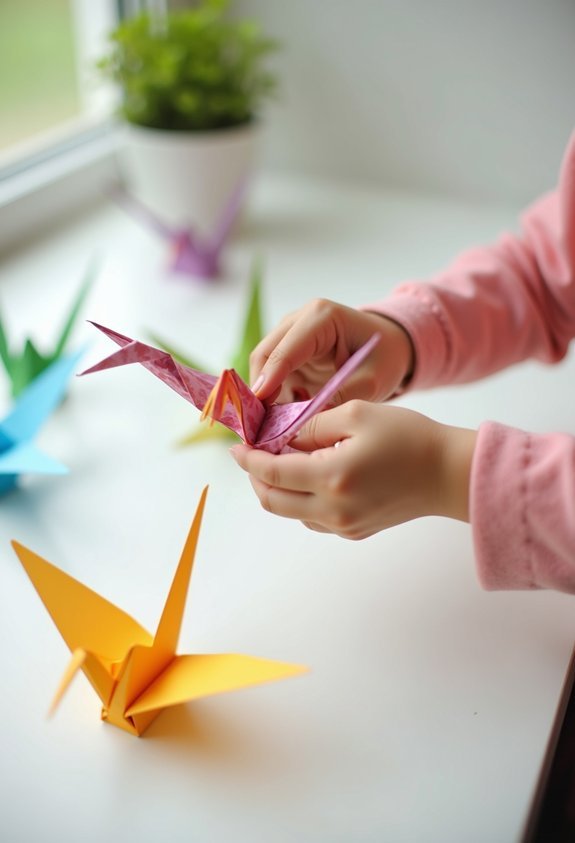
Precision meets playfulness when your child folds a simple sheet of paper into something new. Origami patterns challenge little fingers to crease, align, and press with care. Each fold strengthens hand-eye coordination and bilateral skills.
Start with these beginner-friendly projects:
- Simple boats that actually float in the tub
- Easy fortune tellers for playground fun
- Basic paper cranes that build patience and pride
You’ll notice your child’s folds becoming sharper over time. That’s progress you can see. The focus required for origami also builds attention span and spatial awareness.
Don’t worry about perfect results. Crinkled edges and crooked folds are part of learning. What matters is the repeated pinching, smoothing, and pressing. Those movements prepare small hands for writing and everyday tasks.
Painting and Brush Control Exercises
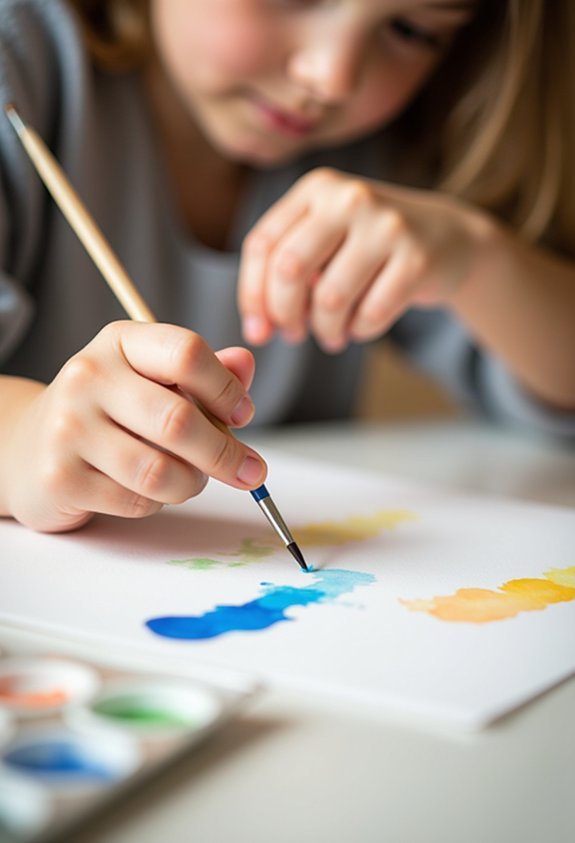
Swirling a brush across paper gives your child more than colorful artwork—it builds the same hand control needed for writing and self-care tasks.
Paintbrush play does double duty—creating art while building the hand strength your child needs for everyday skills.
Simple Brush Techniques to Try
- Dots and dabs: Press the brush tip gently, then lift
- Long strokes: Pull from top to bottom in one smooth motion
- Wavy lines: Guide the brush in curves across the page
These movements strengthen finger grip and wrist flexibility.
Explore Color Mixing Together
Let your child blend two colors on the paper. Watching blue and yellow become green feels magical—and it teaches gentle pressure control. They’ll learn to adjust how hard they press.
Start with thick brushes and large paper. As skills grow, try thinner brushes for more detailed work. Every stroke matters.
In case you were wondering
At What Age Should Children Start Practicing Craft Activities for Motor Development?
You can introduce toddler crafting as early as 18 months to 2 years old. At these age milestones, your child’s ready to explore simple activities like scribbling, tearing paper, and playing with playdough to strengthen developing muscles.
How Often Should Children Engage in Fine Motor Craft Activities Weekly?
Practice makes perfect! You should encourage your child to engage in fine motor craft activities three to five times weekly frequency. Don’t forget craft variety—mixing cutting, threading, and molding keeps skills developing and children excited.
Can Fine Motor Delays Indicate Underlying Developmental or Neurological Conditions?
Yes, fine motor delays can sometimes signal underlying developmental or neurological conditions. If you’re noticing persistent developmental delays in your child’s hand coordination or dexterity, you should consult a pediatrician for proper evaluation and guidance.
What Signs Suggest a Child Needs Occupational Therapy for Fine Motor Issues?
Like puzzle pieces that won’t connect, symptom recognition matters when your child struggles with buttons, avoids drawing, or can’t use scissors by age-appropriate milestones. These therapy indicators suggest you should consult an occupational therapist.
Are Digital Art Activities Effective for Developing Fine Motor Skills?
Digital art activities offer limited fine motor benefits compared to hands-on crafts. While you’re digital drawing or virtual sculpting, you won’t develop the same grip strength, pressure control, and tactile feedback that traditional materials provide for your child’s development.
Conclusion
You’ve got the tools now. Threading, cutting, molding, folding, painting—each activity plants seeds for stronger, more confident hands.
Think of craft time as a gym for little fingers. Every snip and fold builds muscle. Every bead threaded sharpens coordination.
So grab those supplies and dive in. You’ll watch small hands bloom into capable ones, one creative project at a time. The magic happens in the making.