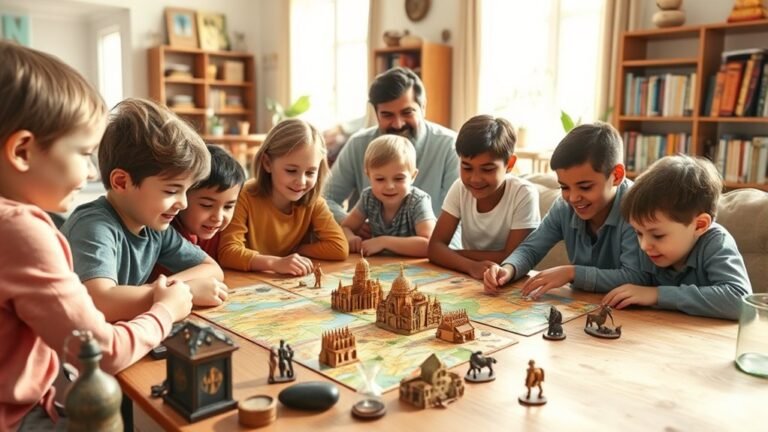
How to Choose Critical Thinking Games for Kids
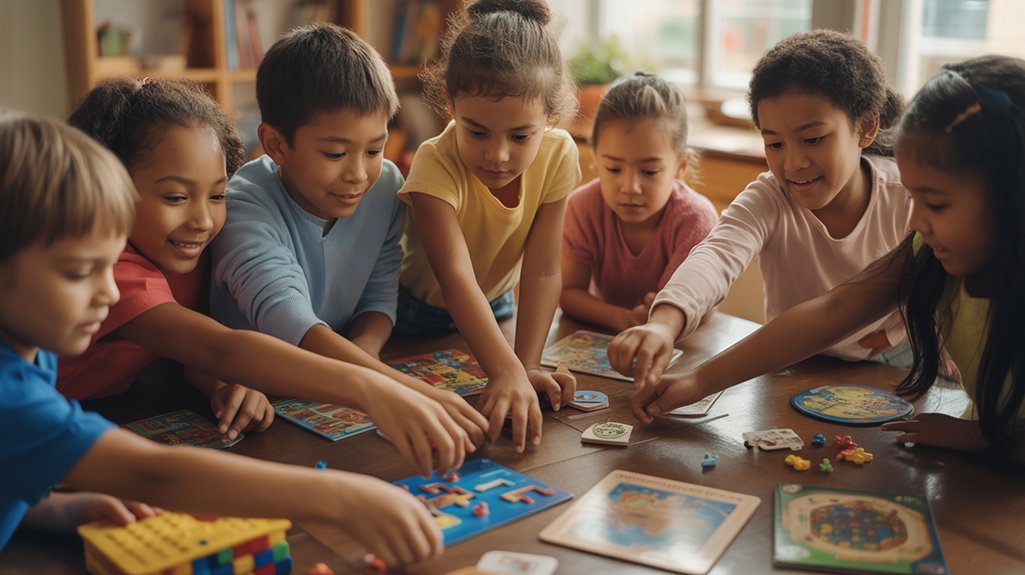
Choose critical thinking games by first matching them to your child’s age—preschoolers need simple sorting activities, while older kids handle abstract concepts. Look for games with multiple solution paths and cause-and-effect mechanics rather than just flashy graphics. Consider whether board games, digital apps, or card games suit your child’s learning style best. Visual learners excel with puzzles, while kinesthetic learners prefer hands-on challenges. Track progress through completion times and adjust difficulty as skills develop. The strategies below will help you make confident selections that truly enhance your child’s cognitive growth.
Key Takeaways
- Match game complexity to your child’s age: simple patterns for preschoolers, multi-step problems for elementary kids, abstract concepts for older children.
- Select games emphasizing strategic thinking, cause-and-effect relationships, and multiple solution paths rather than fast reflexes or flashy graphics.
- Choose formats suited to your child’s learning style: board games for social learners, digital games for adaptive feedback, puzzles for kinesthetic learners.
- Align game themes with your child’s interests to boost engagement and ensure mechanics encourage experimentation without punishing trial-and-error.
- Monitor completion times and error rates to adjust difficulty levels, advancing challenges as skills improve while preventing frustration.
Understanding Age-Appropriate Cognitive Development Stages

When selecting critical thinking games for children, you’ll need to match the complexity to their developmental stage. Understanding cognitive milestones helps you choose games that challenge without overwhelming your child.
Preschoolers (ages 3-5) excel at simple pattern recognition and sorting activities. They’re building foundational reasoning skills through hands-on exploration.
Elementary-aged children (ages 6-8) demonstrate developmental readiness for multi-step problems and basic strategy games. They can handle cause-and-effect relationships and sequential thinking.
Older kids (ages 9-12) tackle abstract concepts, complex problem-solving, and games requiring planning ahead. They’re ready for chess, logic puzzles, and strategic board games.
Observe your child’s frustration levels and engagement. If they’re consistently struggling or bored, adjust the difficulty accordingly. The right game creates that sweet spot between challenge and capability.
Identifying Quality Game Mechanics That Build Problem-Solving Skills
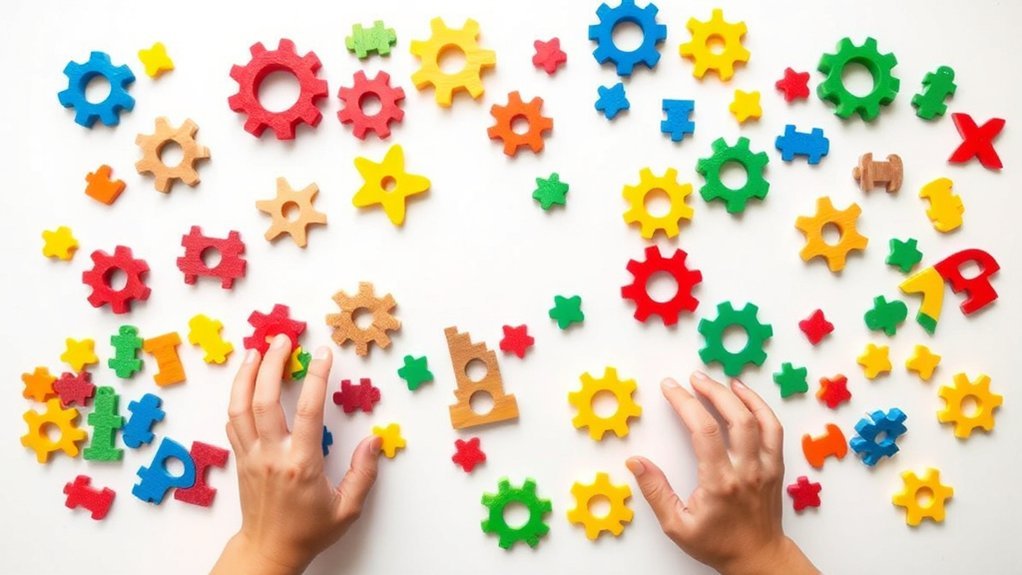
While flashy graphics and popular characters catch your child’s eye, the underlying game mechanics determine whether they’ll actually develop problem-solving skills. Look for games that require strategic thinking rather than quick reflexes alone.
Quality game mechanics that enhance problem solving include:
The best educational games prioritize mechanics that build strategic thinking skills over flashy graphics and quick-reaction gameplay.
- Cause-and-effect systems where actions create predictable consequences children must anticipate
- Multiple solution paths that reward creative thinking instead of memorization
- Graduated difficulty levels that adapt challenges as skills improve
- Trial-and-error opportunities without harsh penalties that discourage experimentation
- Resource management elements requiring planning and prioritization decisions
You’ll recognize effective games when your child pauses to think before acting, experiments with different approaches, and discusses their strategies.
These mechanics transform entertainment into genuine cognitive development opportunities that’ll benefit them beyond screen time.
Evaluating Different Game Formats and Learning Environments

Once you’ve identified games with strong mechanics, you’ll need to consider where and how your child plays them. Different game formats suit different situations. Board games encourage face-to-face interaction and social reasoning, while digital games offer adaptive difficulty and instant feedback. Card games provide portability for learning on the go.
Learning environments matter equally. Solo play builds independent thinking, but multiplayer formats develop negotiation and perspective-taking skills. Classroom settings allow guided instruction, whereas home environments offer relaxed experimentation.
Consider your child’s attention span too—some kids thrive with quick mobile puzzles, others need immersive strategy games requiring sustained focus.
Match the format and environment to your child’s learning style. A kinesthetic learner might prefer physical manipulation of game pieces over screen-based challenges.
Matching Games to Your Child’s Individual Interests and Learning Style
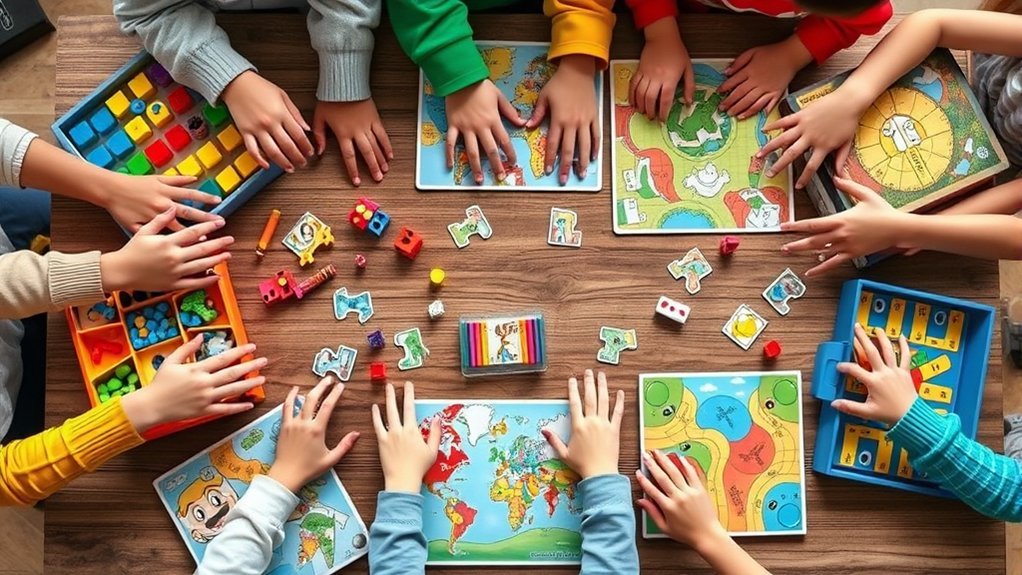
Your child’s existing passions provide the strongest foundation for critical thinking development. When you align games with their natural curiosities, you’ll see deeper engagement and sustained focus. Interest exploration reveals what truly captivates them, whether it’s dinosaurs, space, or building things.
Understanding learning preferences helps you select appropriate game types:
- Visual learners thrive with pattern recognition puzzles and spatial reasoning challenges.
- Auditory learners excel at word games, riddles, and verbal strategy discussions.
- Kinesthetic learners need hands-on puzzles, physical board games, and building activities.
- Social learners benefit from collaborative problem-solving and team-based challenges.
- Independent learners prefer solo puzzles and self-paced digital games.
Match game complexity to their current skill level while providing room for growth, ensuring they’re challenged without becoming frustrated.
Measuring Progress and Adjusting Difficulty Levels Over Time

After selecting games that match your child’s interests and learning style, tracking their development becomes your next priority.
Progress tracking helps you identify when your child masters current challenges and needs advancement. Watch for signs like faster completion times, fewer errors, or visible boredom with existing levels.
Effective difficulty adjustment means gradually increasing complexity as skills develop. Move forward when your child consistently succeeds without frustration. If they struggle repeatedly, step back to reinforce foundational skills before advancing.
Document specific achievements in a simple journal or app. Note which problem-solving strategies your child employs and where they encounter obstacles.
This information guides your decisions about when to introduce harder puzzles, add time constraints, or incorporate multi-step reasoning challenges that stretch their growing capabilities.
In case you were wondering
How Much Should I Budget for Critical Thinking Games?
You’ll find game pricing varies widely, from $10-50 per game. Your budget considerations should include buying 2-3 quality games initially rather than many cheaper ones. Don’t overspend—$30-75 total works well for most families starting out.
Can Screen-Based Games Be as Effective as Physical Board Games?
Yes, screen-based games can match physical board games’ effectiveness when you limit screen time appropriately. Both offer significant cognitive benefits like problem-solving and strategic thinking. You’ll find success depends more on game quality than format.
Should Siblings of Different Ages Play Critical Thinking Games Together?
Yes, you’ll find sibling dynamics actually strengthen when different ages play together. Surprisingly, younger kids often grasp concepts faster than expected, while age appropriateness matters less than you’d think—older siblings naturally adjust difficulty levels.
Where Can I Find Reviews From Other Parents About These Games?
You’ll find helpful parent reviews on online forums like Reddit’s parenting communities and BoardGameGeek. Check Amazon’s game reviews section, where parents share detailed experiences. Educational websites and parenting blogs also feature honest feedback from families who’ve tested these games.
How Often Should My Child Play These Games Each Week?
Aim for 2-4 sessions weekly, each lasting 15-30 minutes. This playtime frequency maximizes game benefits without causing burnout. You’ll notice your child stays engaged and develops critical thinking skills progressively when you maintain this balanced schedule.
Conclusion
You’re not just choosing games—you’re planting seeds in fertile ground. Each puzzle solved becomes a stepping stone across the river of uncertainty, each challenge conquered lights another candle in the darkness of doubt. Watch as your child’s mind blooms like a garden after rain, growing stronger with every strategic decision. These aren’t mere games; they’re keys unlocking doors to worlds where your child’s potential knows no boundaries.