How to Choose Picture Books for Family Bonding
Pick picture books you can actually finish out loud without suddenly skipping “that one weird page.” Go for funny, cozy stories with clear plots, big feelings, and pictures packed with little details kids can hunt for. Grab books that sound like your real life—siblings fighting, messy kitchens, loud holidays—and ones that show the kindness you’re trying to teach. If a book begs to be read again (and again…and again), you’re on the right track—and that’s just the start.
Key Takeaways
- Choose warm, family-friendly stories with clear plots, gentle humor, and no surprise content you’d need to skip while reading aloud.
- Look for books that reflect your family’s culture, values, languages, and traditions, while also introducing respectful perspectives from other backgrounds.
- Prioritize engaging illustrations with expressive characters and hidden details that invite questions, conversation, and simple games like “I spy.”
- Pick age-appropriate books that work for siblings: repeated lines for younger kids, background jokes or subplots for older ones, and short, manageable sections.
- Build a small home library with accessible shelves or baskets, grouping bedtime, “big feelings,” and weekend books to support regular shared reading.
Understanding What Makes a Picture Book “Family-Friendly
Before you can pick the perfect picture book for family time, you’ve gotta know what “family-friendly” actually means—and no, it’s not just “no bad words and maybe a cute bunny.”
A true family-friendly book is one you can read out loud without suddenly speed-reading a page because, oops, surprise nightmare fuel.
You want stories that feel safe but not boring, cozy but not sleepy. The plot should be clear enough that a tired adult and a wild preschooler both follow along.
The jokes should land for you and the kid, without you editing on the fly. Look for character development that kids can spot, plus narrative simplicity so no one asks, “Wait, who’s that?”
If you can reread it and not groan, it’s safe.
Choosing Stories That Reflect Your Family’s Values and Culture
- Look for families that talk, argue, and make up like yours.
- Notice holidays, food, and traditions that feel familiar.
- Grab stories where kindness actually matters.
- Include books that show your language or accent with love.
- Add a few that stretch your world just a bit more.
Looking for Illustrations That Invite Conversation and Interaction
Ever notice how some picture books basically yell, “Talk about me!” while others are just…pretty wallpaper? When you’re scanning shelves, don’t just read the title; scan the art. You want illustration styles that make your kid lean in and ask, “What’s THAT?”
Look for tiny background jokes, expressive faces, and details that change from page to page.
Hunt for interactive elements, even in books without flaps. Maybe a sneaky cat appears on every spread, or numbers hide in the trees.
You can turn those into little games: “Find the cat before I turn the page!” or “How many red things can we spot?” If the pictures hand you easy questions and silly missions, you’ll never run out of things to talk about together tonight.
Finding Age-Appropriate Books for Siblings to Enjoy Together
Your kid’s finally talking back to the book instead of just licking it—victory.
Now you’ve got siblings at different ages, and you want one story they’ll both beg for, not fight over.
One book, two ages, zero battles—just siblings begging for one more read
Think less “perfect reading level” and more “common playground.” Look for:
- Big clear pictures for the younger one, with background jokes the older one can “discover.”
- Repeated lines the little kid can shout while the big kid reads the rest.
- Topics that hit shared interests—dinosaurs, slime, pets, fart jokes.
- Short chapters or sections, so you can pause before someone melts down.
- Stories with two kids, so you can laugh about your sibling dynamics without calling anyone out… directly.
Test it: if both kids lean in, keeper material.
Using Picture Books to Spark Emotions and Deeper Talks
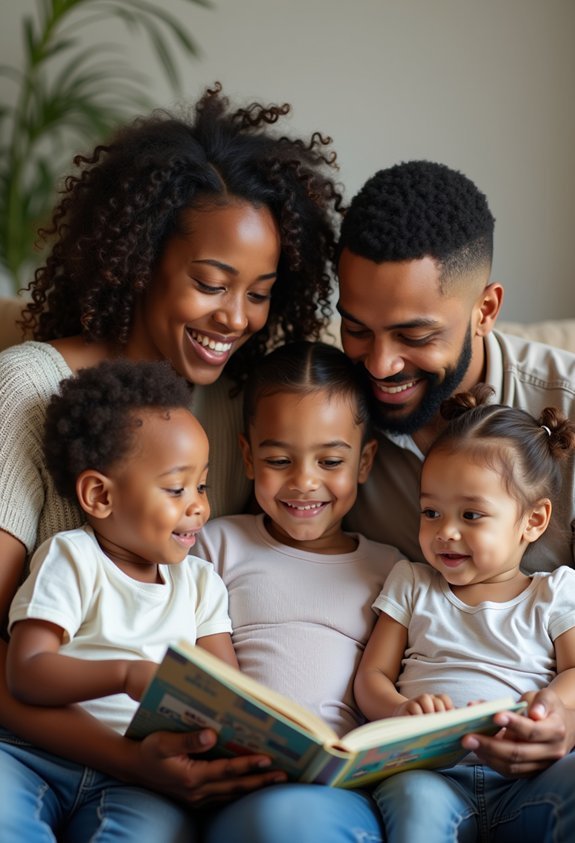
Sometimes a picture book sucker-punches you right in the feelings, and that’s where the magic is. You want stories that pull kids in and make emotional connections feel safe, not weird.
Look for books that show real family dynamics—siblings fighting over toys, parents losing patience, then making up. Those moments open doors for sharing feelings and personal experiences.
Pay attention to storytelling techniques. Does the narrative structure build tension, then release it with a laugh, or a hug? Perfect.
Are the pictures close-up so kids feel strong character empathy when someone’s left out, scared, or proud? Even better.
After reading, ask simple questions: “When did you feel like that?” Boom—now you’re exploring themes and real life.
Keep it light, honest, and a little dramatic.
Building a Home Library That Supports Ongoing Family Rituals
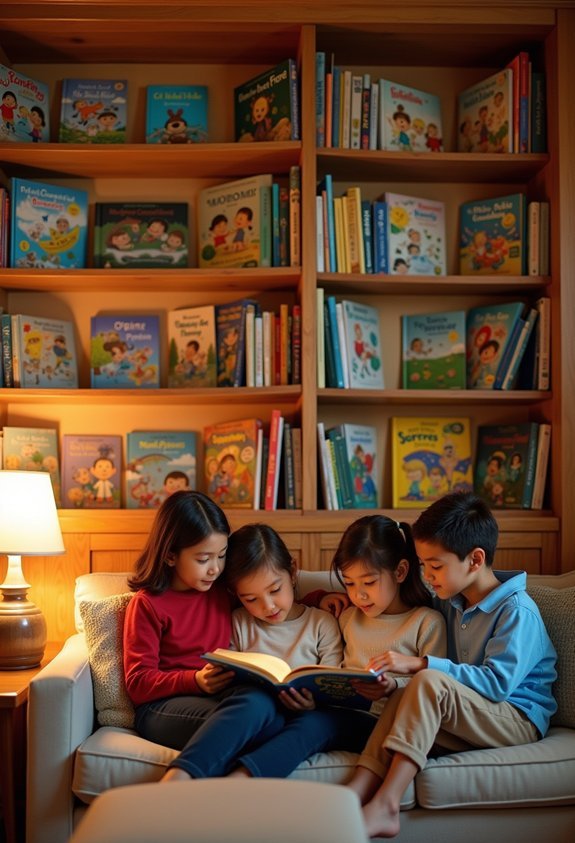
When picture books start to pile up in random corners like tiny cardboard landmines, that’s your sign: it’s time to turn the chaos into a real home library.
Think of it as building a stage where your family rituals can happen on repeat. Make books easy to grab, hard to ignore, and linked to specific moments in your day.
Build a cozy stage for daily rituals—books within reach, woven into the small moments of your day
- Keep bedtime books on a low shelf by the kids’ pillows.
- Put “Saturday-morning” books in a basket near the couch.
- Create a “big feelings” stack for meltdowns and rough days.
- Add seasonal books you rotate as the year changes.
- Let your kids help arrange and decorate so the home library feels like theirs—and they’ll keep coming back.
Soon reading together won’t feel forced, just normal.
In case you were wondering
How Many Picture Books Should We Read Together Each Week?
You might aim for three to five picture books a week, adjusting as your reading goals evolve. Fit them into weekly routines, notice your child’s engagement, and increase or reduce when attention wanes or flourishes.
What’s the Best Time of Day for Family Picture Book Reading?
The best time is whenever your family consistently connects, but you’ll feel special magic during calm morning rituals or cozy bedtime stories, when everyone unwinds, listens closely, asks questions, and turns pages together without rushing.
How Can We Involve Grandparents in Our Picture Book Routines?
Invite grandparents to choose favorite childhood stories, join video calls, and lead shared storytelling. Ask them to record read‑alouds, suggest books, and host monthly ‘grandparent nights’ that celebrate intergenerational connections and strengthen your children’s belonging.
How Do We Organize and Store Picture Books in Small Spaces?
Like a tiny library ship, you chart routes with smart shelf organization, rotate favorites, use baskets under beds, hang wall-mounted racks, and choose vertical storage solutions so every picture book stays visible, reachable, and cherished.
How Can We Use Library Visits to Strengthen Family Reading Habits?
You strengthen family reading habits by scheduling weekly library visits, letting everyone choose books, joining library programs together, and tracking progress in reading challenges, so kids see reading as a shared adventure, not an assignment.
Conclusion
So now you “just happen” to know how to spot family-friendly picture books, and wow, look at that—your couch suddenly looks like Storytime HQ. Funny coincidence, right? You focus on your values, your kids’ ages, juicy art, and big feelings… and somehow you also get cuddles, inside jokes, and fewer bedtime battles. Wild. So go on—hit the library, grab a stack, and let your new book-picking superpower do its thing.