How to Cook Fun Weekend Meals With Kids
Cooking fun weekend meals with kids starts with setting up a safe workspace and picking age-appropriate tasks. Let little ones wash veggies or stir batter. Older kids can measure ingredients or roll pizza dough. Try pancake art on Saturday mornings or a taco bar on Sunday nights. Keep recipes simple, embrace the mess, and celebrate small wins. Below, you’ll find everything you need to make these kitchen moments unforgettable.
Key Takeaways
- Set up a kid-friendly workspace with plastic bowls, wooden spoons, child-safe knives, and a sturdy step stool for counter access.
- Assign age-appropriate tasks like washing produce for toddlers, measuring ingredients for school-age kids, and supervised chopping for preteens.
- Try pancake art with squeeze bottles or smoothie bowls where kids can choose and add their own colorful toppings.
- Make Sunday dinner interactive with homemade pizza night or taco bars where children can customize their own portions.
- Teach essential safety habits including the claw grip for cutting, keeping pot handles inward, and always washing hands before cooking.
Setting Up a Kid-Friendly Kitchen Workspace
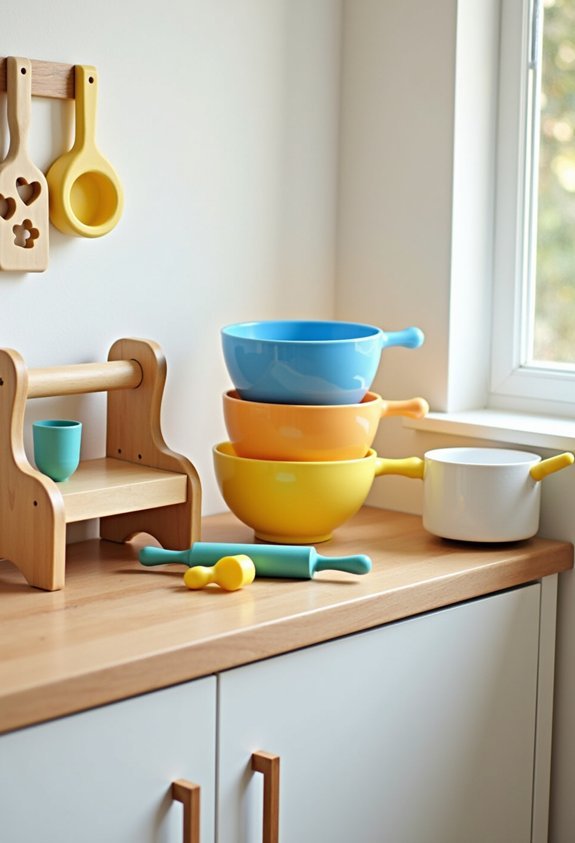
Before you hand your child a mixing spoon, take a few minutes to set up a workspace that fits their size and keeps them safe.
Workspace organization matters. Clear the counter of sharp objects and hot items. Give your child their own defined area where they can move freely.
Gather kid friendly utensils:
- Plastic mixing bowls
- Wooden spoons
- Child-safe knives with rounded edges
- Small measuring cups
A sturdy step stool brings little ones to counter height. Make sure it doesn’t wobble.
Place ingredients within easy reach. Put away anything breakable or dangerous.
You’re creating a space where your child feels capable and confident. That’s the first step toward cooking success together.
Age-Appropriate Cooking Tasks for Children
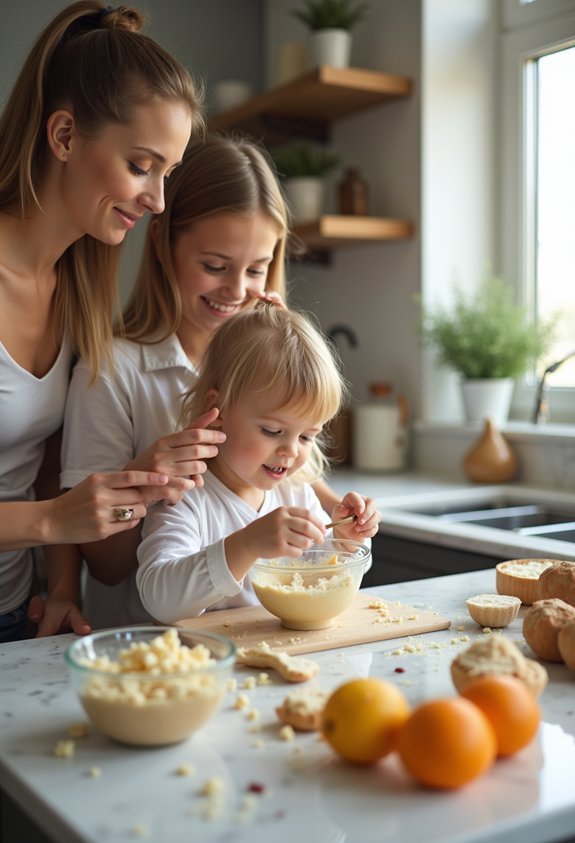
Now that you’ve got a safe workspace ready, it’s time to match tasks to your child’s age and skills.
Matching kitchen tasks to your child’s age sets them up for success—and makes cooking together fun for everyone.
Ages 3–5:
- Wash fruits and veggies
- Tear lettuce leaves
- Stir cold ingredients
- Use cookie cutters
Ages 6–8:
- Measure dry ingredients
- Crack eggs with practice
- Spread soft toppings
- Use kid-safe kitchen tools like plastic knives
Ages 9–12:
- Chop softer foods with supervision
- Follow simple recipes independently
- Learn basic cooking techniques like sautéing
- Operate the microwave safely
Start simple. Build confidence first. Your child will surprise you with what they can do when you give them the chance. Every small task teaches big skills—and makes weekend cooking something you’ll both treasure.
Easy Saturday Breakfast Recipes the Whole Family Will Love
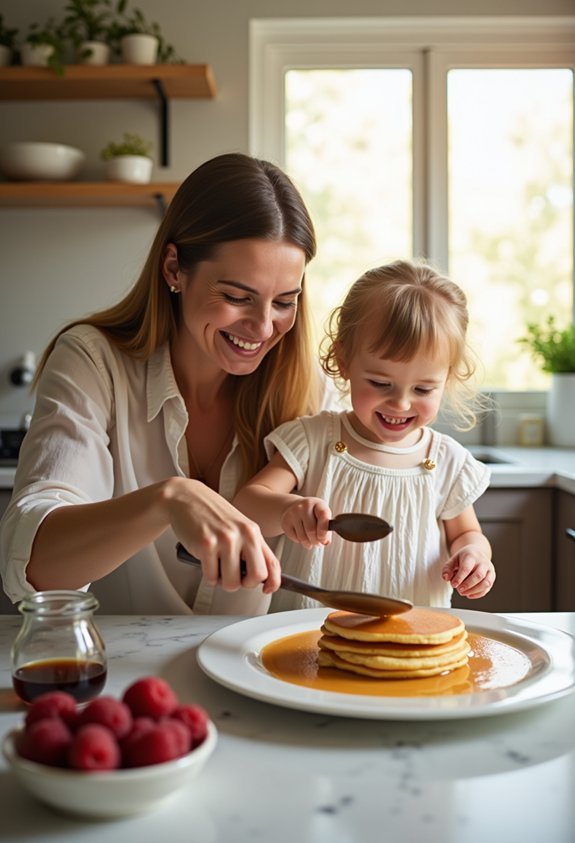
When Saturday morning rolls around, the kitchen becomes the heart of your home—and the perfect place to create memories with your kids.
Pancake Art
Let your little ones express themselves with pancake art. Pour batter into squeeze bottles and watch creativity flow. Try simple shapes first:
- Hearts
- Stars
- Their initials
Smoothie Bowls
These colorful bowls make breakfast feel special. Blend frozen fruit with yogurt, then let kids add their own toppings. They’ll love arranging:
- Fresh berries
- Granola clusters
- Banana slices
Quick Tips
- Prep ingredients the night before
- Keep wet wipes nearby
- Embrace the mess—it’s part of the fun
You’re not just making breakfast. You’re building skills and connection, one delicious bite at a time.
Simple Sunday Dinner Ideas Kids Can Help Prepare

Sunday dinners offer a special chance to slow down and cook together as a family. When you involve kids in meal planning, they feel proud and excited to eat what they helped create.
Kid-Friendly Sunday Dinner Ideas:
- Homemade pizza night – Kids can roll dough and add toppings
- Taco bar – Let little hands shred cheese and arrange fillings
- Baked chicken with roasted veggies – They can season and stir
Tips for Success:
- Pick recipes with 5 ingredients or fewer.
- Assign tasks by age—stirring for toddlers, measuring for older kids.
- Play music to keep the mood light.
Family cooking builds memories that last. Your Sunday table becomes more than dinner. It becomes connection.
Essential Kitchen Safety Tips for Young Chefs
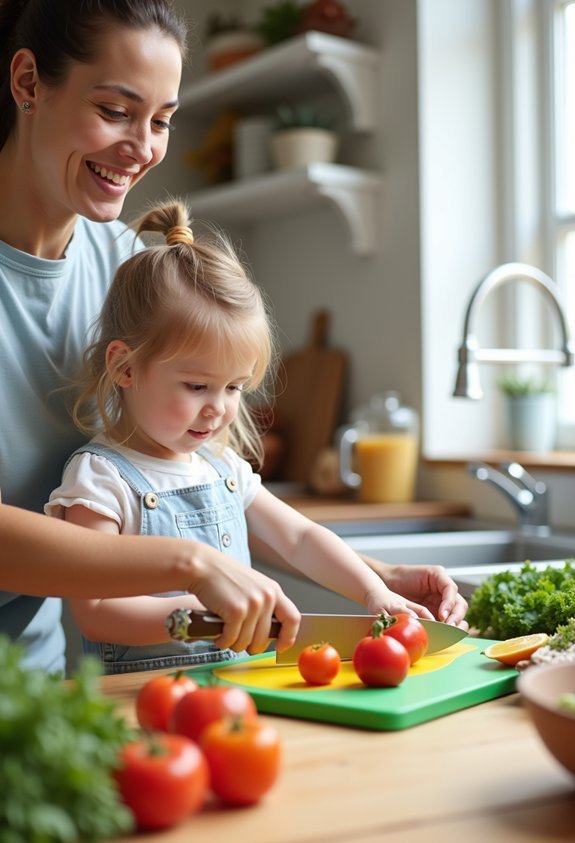
Getting kids involved in the kitchen is wonderful, but keeping them safe matters just as much as having fun.
Knife Safety Basics
Start with age-appropriate tools. Butter knives work great for young ones. Teach the “claw grip” to protect little fingers. Always cut on a stable surface and away from the body.
Heat Awareness Rules
- Pot handles turn inward, always
- Use oven mitts every single time
- Stand back when opening hot lids
- Adults handle boiling water
General Safety Tips
- Wash hands before and after handling food
- Keep floors dry to prevent slips
- Tie back long hair
- Stay focused—no running in the kitchen
You’re building good habits that last a lifetime. Take it slow and celebrate safe choices together.
Turning Cooking Mishaps Into Learning Moments

Even though you’ve followed every tip and tried your best, things will go sideways sometimes—and that’s actually okay. A burned pancake or lumpy batter isn’t failure. It’s a chance for playful experimentation and growth.
Good mistake management turns oops moments into awesome ones. Here’s how:
- Stay calm and curious. Ask your child, “What do you think happened?” Let them figure it out.
- Find the fix together. Can you scrape off the burned part? Add more milk to thin the batter?
- Celebrate the try. Effort matters more than perfection.
Kids learn best when mistakes feel safe. Your relaxed reaction teaches them that cooking is about exploring, not being perfect. Keep going!
In case you were wondering
How Do I Handle a Child Who Is a Picky Eater During Cooking Activities?
You’ll find success with picky eater strategies like letting your child choose ingredients and taste as they cook. Try fun flavor experiments by offering small samples of new foods without pressure, making exploration exciting rather than stressful.
What Kitchen Tools Are Best to Buy Specifically for Children?
You’ll want to invest in child-sized utensils like small spatulas, whisks, and measuring cups. Safe cutting tools such as nylon knives or crinkle cutters let kids chop soft foods without sharp blade risks.
How Can I Involve Multiple Children of Different Ages in One Recipe?
You can assign age appropriate tasks to each child—younger ones wash vegetables while older kids chop or measure. This approach builds teamwork skills and keeps everyone engaged in creating the meal together.
What Are Some Budget-Friendly Ingredients for Cooking With Kids?
Like a garden growing from tiny seeds, your grocery shopping doesn’t need expensive items. You’ll find budget-friendly meal prep staples in pasta, rice, beans, eggs, and seasonal vegetables—ingredients that let kids create delicious weekend dishes affordably.
How Long Should a Cooking Session With Young Children Typically Last?
You should keep your cooking duration to 15-30 minutes with young children. Their attention span is limited, so you’ll want to choose simple recipes that let them stay engaged without becoming frustrated or bored.
Conclusion
You’ve got everything you need to make weekend cooking a family adventure. Set up your space. Match tasks to your child’s age. Stay safe and patient.
The memories you’ll create in the kitchen will last a million lifetimes. Spilled flour and messy counters fade fast. But your child’s pride in making something real? That stays forever.
So grab those aprons and start cooking together this weekend.