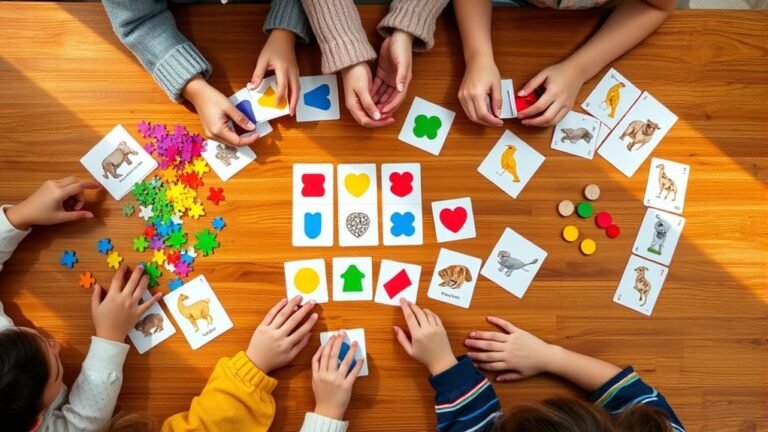
How to Make STEM Activities Kids Love

You’ll make STEM activities irresistible by starting with what already fascinates your child—whether that’s dinosaurs, bugs, or building things. Let them get messy, make mistakes, and see immediate results from projects like erupting volcanoes or wobbling bridges. Connect concepts to everyday life, like measuring ingredients or observing weather patterns, and give them control over choosing and directing their experiments. Celebrate small wins that build confidence, and you’ll transform casual interest into genuine enthusiasm that keeps them exploring further.
Key Takeaways
- Start with children’s natural interests like bugs or dinosaurs to build relevant, engaging STEM activities they care about.
- Allow messy exploration and mistakes, teaching that failures provide valuable data for problem-solving and critical thinking.
- Choose projects with immediate, visible results like catapults or color-changing slime to maintain excitement and demonstrate cause-effect relationships.
- Connect abstract STEM concepts to everyday experiences like cooking or measuring ingredients to make learning relatable and practical.
- Give children ownership by letting them choose projects and guide their exploration, avoiding micromanagement while facilitating discovery.
Start With Their Natural Curiosities and Interests

Why do children naturally gravitate toward puddles, bugs, and spinning objects? Because they’re hardwired to explore what fascinates them.
You’ll get better results when you build STEM activities around these existing interests rather than forcing predetermined lessons.
Start by observing what already captures your child’s attention. If they’re obsessed with dinosaurs, incorporate paleontology experiments. Love video games? Introduce basic coding concepts. This approach transforms learning from obligation into adventure.
Nature exploration offers endless opportunities—collecting rocks becomes geology, watching ants teaches biology, and measuring rainfall introduces data collection.
Similarly, hobby interests like cooking involve chemistry, while building with blocks teaches engineering principles.
When you align STEM activities with what your child already loves, you’re not tricking them into learning—you’re showing them that their curiosities matter.
Let Them Get Messy and Make Mistakes

The most powerful STEM learning happens when kids have permission to fail spectacularly. When you embrace messy exploration, you’re teaching children that experimentation requires trial and error.
Real learning happens in the mess—when kids have permission to fail, experiment boldly, and try again.
Let paint spill during physics experiments. Allow towers to collapse. Watch volcanoes overflow onto tables.
This approach transforms mistake learning into your greatest teaching tool. Each failed attempt provides data kids can analyze and improve upon. They’ll discover which bridge designs can’t support weight, which chemical combinations don’t react, and why certain code produces errors.
Don’t rush to correct their mistakes or clean up immediately. Instead, ask questions: “What happened? Why do you think it didn’t work? What could you try differently?”
You’re building resilience and critical thinking skills that extend far beyond STEM activities.
Choose Projects With Visible, Immediate Results

When young children watch baking soda erupt from a volcano or see their circuit light up a bulb, their eyes widen with genuine excitement. That instant feedback creates powerful learning moments you can’t replicate with projects requiring days to complete.
Select STEM activities where kids immediately observe cause and effect. Build simple catapults that launch marshmallows across the room. Create color-changing slime. Construct paper bridges that hold surprising weight. These projects deliver visual appeal while teaching fundamental concepts.
Young learners struggle maintaining interest in experiments with delayed outcomes. They need to see their work matter right now. When results appear instantly, children connect their actions directly to scientific principles.
This immediate reinforcement builds confidence and curiosity, transforming abstract concepts into tangible understanding they’ll remember.
Connect STEM Concepts to Everyday Life

Looking around your kitchen, you’ll spot dozens of STEM lessons hiding in plain sight. When you connect abstract concepts to everyday examples, kids understand why they’re learning matters.
Real world applications transform confusing theories into tangible knowledge they’ll actually retain.
Show children how STEM surrounds them:
- Measuring ingredients demonstrates fractions and ratios
- Refrigerators explain thermodynamics and energy transfer
- Smartphones reveal circuits, coding, and electrical engineering
- Garden plants teach biology, ecosystems, and life cycles
- Cooking illustrates chemical reactions through baking and caramelization
You’ll spark genuine curiosity when kids recognize these connections. Instead of memorizing formulas, they’re discovering principles that explain their world.
This approach builds critical thinking skills while proving that STEM isn’t confined to textbooks—it’s everywhere they look.
Give Them Ownership Over the Process

Start with project selection—let your child choose between building a catapult, creating a garden ecosystem, or designing a marble run. When they pick their path, they’re already invested in success.
During execution, resist micromanaging. Ask guiding questions instead of providing answers: “What happens if you adjust that angle?” or “Why do you think it collapsed?”
Guiding questions spark discovery—let children find their own answers through thoughtful inquiry rather than direct instruction.
Let them experiment, fail, and iterate independently.
You’ll notice something remarkable: kids work longer, think harder, and remember more when they’re steering their own STEM journey. Your role shifts from director to facilitator, and that’s exactly where it should be.
Use Storytelling and Challenges to Frame Activities
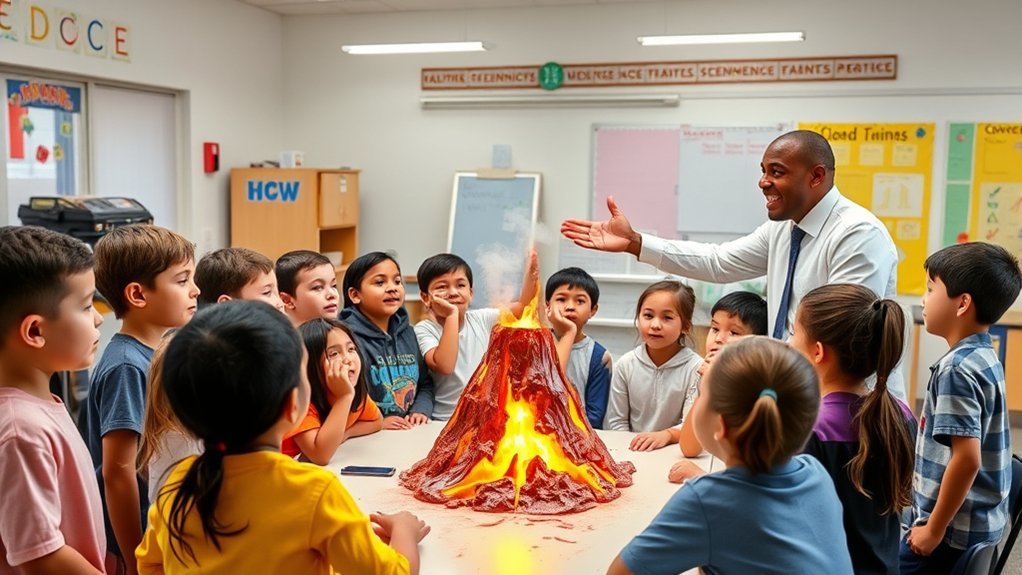
Effective storytelling techniques and challenge formats make abstract concepts concrete:
- Frame coding projects as “programming a robot to navigate alien planets”
- Turn chemistry experiments into “potion-making quests for magical ingredients”
- Present math problems as “cracking secret codes to unlock treasure chests”
- Design engineering tasks as “building shelters to survive natural disasters”
- Reframe circuits as “restoring power to a city after monster attacks”
These narrative layers activate imagination while teaching identical skills.
You’re not adding complexity—you’re adding context that helps kids understand why the problem matters.
Incorporate Movement and Multi-Sensory Experiences
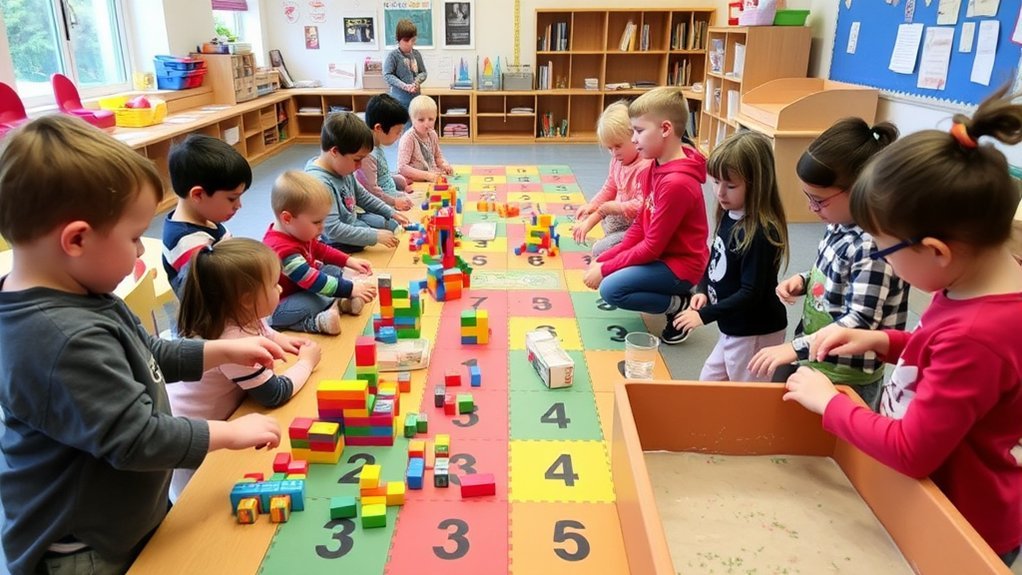
Young children process information through their entire bodies, not just their minds, making physical engagement essential for deep STEM learning. You’ll achieve better results when kids can touch, move, and manipulate materials during experiments.
Design activities that encourage active exploration. Have children jump to demonstrate gravity, build structures they can walk through, or sort objects by texture. This sensory integration strengthens neural pathways and memory retention.
Include varied textures, sounds, and visual elements in your activities. Let kids squish slime to learn about polymers, listen to different materials’ sounds when tapped, or observe color-changing reactions. The more senses involved, the deeper their understanding becomes.
Movement breaks between concentrated tasks also help maintain focus and enthusiasm throughout longer STEM sessions.
Create Opportunities for Social Collaboration

When children work together on STEM projects, they develop critical thinking skills that extend far beyond scientific concepts. You’ll find that collaborative projects naturally encourage communication, problem-solving, and shared responsibility.
Team building games with STEM elements create engaging learning environments where kids bounce ideas off each other and discover solutions collectively.
STEM team games spark dynamic learning spaces where children collaborate, share creative ideas, and solve problems together through collective discovery.
To maximize social collaboration in your STEM activities:
- Assign specific roles like materials manager, recorder, presenter, and builder
- Use partner challenges where two students must complete a task together
- Create group competitions that reward teamwork over individual achievement
- Rotate team members regularly so children work with different peers
- Implement peer teaching where advanced students help others understand concepts
These collaborative projects transform solitary learning into dynamic, social experiences that kids genuinely enjoy.
Build on Small Wins to Develop Long-Term Engagement

Success in STEM education relies on incremental achievements that motivate children to tackle increasingly complex challenges. When kids experience small achievements, they’ll build confidence and develop resilience for future projects.
Start with manageable tasks that guarantee early wins. If you’re teaching coding, begin with simple commands before advancing to complex algorithms. Document each milestone to show gradual progress over time.
Celebrate these victories genuinely. A child who successfully builds a basic circuit today gains confidence to design more sophisticated electrical systems tomorrow. This momentum creates lasting enthusiasm.
Connect each achievement to the next challenge, maintaining difficulty at an engaging level. You’ll transform initial curiosity into sustained passion by ensuring children consistently experience success while stretching their capabilities.
In case you were wondering
What Age Is Best to Start Introducing STEM Activities to Children?
You can start preschool introduction to STEM activities as early as age 3-4. Early engagement with simple concepts like sorting, building, and exploring helps develop critical thinking skills. You’ll find young children naturally curious about how things work.
How Much Should I Budget for STEM Materials and Supplies?
You can start with just $20-50 monthly for basic STEM supplies. Smart material sourcing includes using household items, visiting dollar stores, and shopping sales. These budgeting tips help you maximize learning while minimizing costs effectively.
Do I Need a Science Background to Teach STEM Activities?
No, you don’t need a science background. What matters most is your curiosity and enthusiasm for learning alongside kids. You’ll excel at fostering creativity by exploring, asking questions, and discovering answers together through hands-on experimentation.
How Long Should Each STEM Activity Session Last for Optimal Engagement?
Like Goldilocks finding the perfect porridge, you’ll discover ideal activity duration varies by age. Preschoolers thrive with 15-20 minutes, elementary kids engage for 30-45 minutes. Smart engagement strategies include built-in breaks and hands-on experimentation to maintain focus.
What Safety Equipment Is Essential When Doing STEM Projects at Home?
You’ll need safety goggles to protect eyes from splashes and flying debris, plus protective gloves when handling chemicals or sharp materials. Don’t forget a first-aid kit, aprons, and proper ventilation for your home STEM workspace.
Conclusion
You’ve got the blueprint—now picture this: your child hunched over a bubbling volcano they engineered themselves, eyes wide, asking “what if we tried *this*?” That’s the moment everything clicks. But here’s the thing most parents miss: it won’t happen on the first try. Maybe not even the second. Keep showing up. Keep exploring. Because somewhere between the mess and the laughter, you’ll watch curiosity transform into something powerful—a lifelong love of learning.