How To Manage Feeling Like A Full-time Entertainment Director Parent For Your Kid and Balance Your Family
You’re not alone if you feel like your child’s full-time entertainment director—this pressure is a modern parenting phenomenon that can leave you depleted. The good news? Children actually benefit from boredom, developing creativity, resilience, and problem-solving skills when they’re not constantly entertained. Start by setting clear boundaries around playtime, scheduling dedicated family time alongside personal downtime, and communicating your needs openly. The strategies below will help you create balance while letting go of unnecessary guilt.
Understanding Why You Feel Responsible for Your Child’s Entertainment
When you find yourself constantly planning activities, mediating boredom complaints, and feeling guilty the moment your child has nothing to do, you’re experiencing what many parents face as the designated “entertainment director” of the family.
This entertainment pressure often stems from modern parenting culture, where keeping children engaged has become synonymous with good parenting. Social media showcases elaborate activities, and parental expectations have shifted dramatically from previous generations.
You might feel responsible because you’ve internalized the message that idle children reflect poorly on you. Perhaps you grew up with parents who prioritized structured engagement, or you’re compensating for your own childhood experiences.
Recognizing these patterns is your first step toward change. Understanding why you’ve assumed this role helps you consciously decide what boundaries serve your family best.
Recognizing the Benefits of Boredom for Child Development

Although it might feel counterintuitive, allowing your child to experience boredom actually gives them a powerful developmental gift. When kids aren’t constantly entertained, their brains shift into problem-solving mode. They learn to generate their own ideas, build resilience, and discover what genuinely interests them.
The boredom benefits extend far beyond the immediate moment. Children who navigate unstimulating periods develop stronger self-regulation skills and emotional independence. They become resourceful thinkers who don’t rely on external stimulation for satisfaction.
You’ll also notice a significant creativity boost when your child works through boredom. That restless energy transforms into imaginative play, artistic exploration, or curiosity-driven learning.
Instead of rescuing your child from every dull moment, recognize that you’re actually fostering essential life skills they’ll carry into adulthood.
Setting Healthy Boundaries Around Playtime Expectations

Because children thrive with clear structure, establishing firm boundaries around playtime expectations protects both your energy and your family’s wellbeing. Effective boundary setting doesn’t make you a neglectful parent—it teaches your child valuable lessons about respecting others’ time and developing independence.
Creating consistent playtime schedules helps everyone know what to expect. Consider implementing these practical strategies:
- Designate specific “together play” times when you’re fully present and engaged with your child.
- Communicate clearly when you’re unavailable, using simple phrases like “Mommy’s working now; we’ll play at 4 o’clock.”
- Create visual schedules so younger children can see when interactive playtime happens.
You’re not abandoning your child by maintaining boundaries. You’re modeling healthy self-care while giving them space to discover their own creativity and problem-solving abilities.
Creating Independent Play Spaces That Encourage Self-Direction
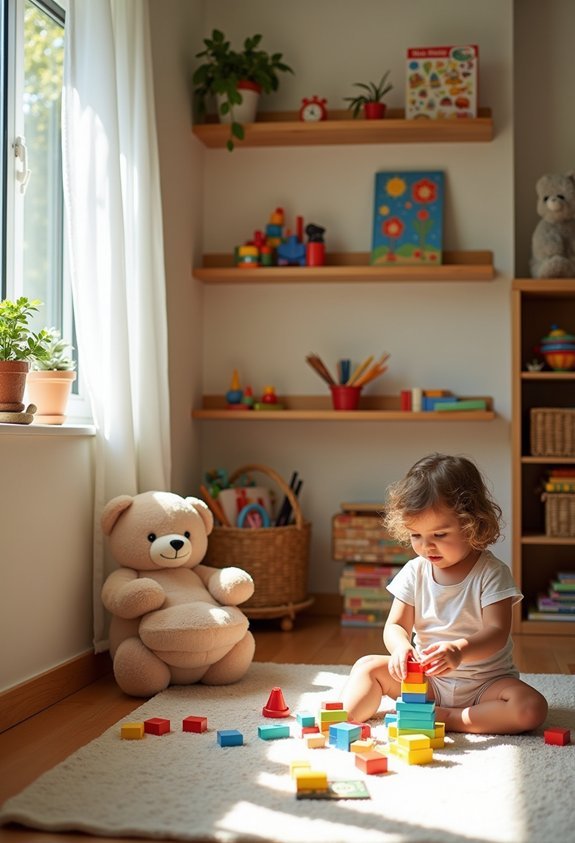
Start by dedicating a safe corner or room where your child can explore freely. Stock it with open-ended materials—blocks, art supplies, fabric scraps—that invite creative play without requiring your participation.
Rotate toys regularly to maintain novelty and spark curiosity.
Consider adding elements for sensory exploration: a bin of rice, playdough, or textured balls. These materials captivate children’s attention and build focus naturally.
Keep supplies accessible at your child’s height so they don’t need you to retrieve items. Clear organization helps them see options immediately.
You’re not abandoning your child—you’re empowering them. A well-designed space teaches problem-solving and builds confidence that extends far beyond playtime.
Teaching Your Child to Generate Their Own Activity Ideas

A thoughtfully designed play space gives your child the tools they need, but the real magic happens when they learn to dream up activities on their own.
Activity brainstorming becomes natural when you model the process and step back gradually.
When you show kids how to spark their own ideas, you give them a gift that lasts forever.
Try these strategies to nurture creative problem solving:
- Use open-ended prompts — Ask “What could you build with these blocks?” instead of suggesting specific projects.
- Create an idea jar — Help your child fill it with activity cards they’ve brainstormed, then let them draw one when boredom strikes.
- Celebrate their initiatives — When they invent a game or solve a play dilemma independently, acknowledge their creativity specifically.
You’re not abandoning your child; you’re equipping them with lifelong skills that foster confidence and imagination.
Establishing Screen-Free Zones and Times Without Guilt

While screens offer genuine value in modern family life, carving out tech-free spaces and moments helps your child develop deeper engagement with the physical world around them.
The screen free benefits extend beyond your child—you’ll notice calmer mealtimes, more meaningful conversations, and stronger family connections.
Start small by designating the dinner table or bedrooms as tech-free zones rather than overhauling your entire routine overnight.
Guilt free parenting means recognizing that boundaries aren’t deprivation. You’re giving your child the gift of presence and creativity.
When resistance arises, stay consistent but compassionate. Offer alternatives like audiobooks, puzzles, or outdoor play.
Building a Rotating Activity Station for Easy Entertainment Solutions

Because busy parents rarely have time to hunt down craft supplies mid-tantrum, a well-organized activity station becomes your secret weapon for peaceful afternoons.
Creative stations eliminate decision fatigue and give your child independence while you tackle other responsibilities.
Here’s how to set up effective activity rotation:
- Stock three to four themed bins with self-contained activities like coloring supplies, building blocks, or sensory play items.
- Rotate bins weekly to maintain novelty without buying new toys constantly.
- Place stations at child-height so kids can access materials independently.
You’ll notice fewer interruptions when everything’s within reach.
Activity rotation keeps entertainment fresh while teaching your child to self-direct their playtime.
This simple system transforms chaotic moments into manageable ones, giving you breathing room throughout the day.
Scheduling Dedicated Family Time Versus Individual Downtime
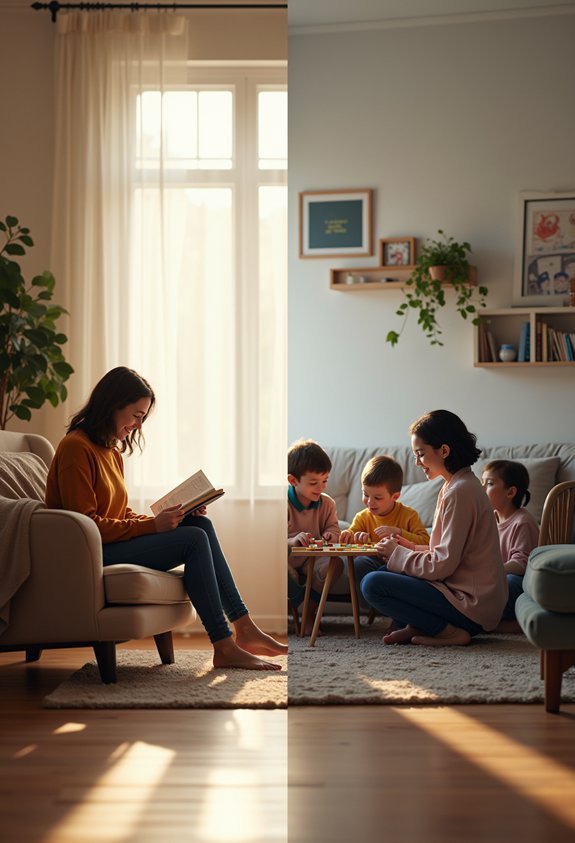
Block out specific windows for family activities on your calendar—treat them like appointments you can’t cancel. During these times, you’re fully present without distractions. Your kids learn they’ve your undivided attention, which actually reduces constant bids for engagement throughout the day.
Equally important is scheduling personal time for yourself and independent play for your children. Start small: fifteen minutes where they entertain themselves while you recharge. Gradually extend these periods as they build confidence.
You’re not abandoning your role by stepping back. You’re teaching self-reliance while protecting your own wellbeing.
Both dedicated togetherness and healthy separation strengthen your family’s rhythm.
Communicating Your Needs to Your Partner and Children

Even the most dedicated parent can’t pour from an empty cup, so speaking up about your needs isn’t selfish—it’s essential.
Creating open dialogue with your family starts with honest, age-appropriate conversations. When you express feelings clearly, you model healthy communication for your children while strengthening your partnership.
Three ways to communicate your needs effectively:
- Schedule weekly check-ins with your partner to discuss workload distribution and personal recharge time.
- Use “I” statements with children, such as “I need quiet time to rest so I can play with you later.”
- Create a family signal system that indicates when you need uninterrupted moments.
Your family wants to support you—they just need to know how. By voicing your needs consistently, you build a more balanced, understanding household where everyone thrives.
Embracing Imperfection and Letting Go of Parental Guilt

While you might excel at creating magical moments for your family, the pursuit of perfection can quietly steal your joy and drain your energy. Embracing imperfections isn’t giving up—it’s giving yourself permission to be human.
Start by recognizing that your children don’t need flawless experiences. They need your presence, your laughter, and your authentic self. When the craft project fails or the outing goes sideways, you’re modeling resilience and adaptability.
Letting go of parental guilt requires practice. Challenge negative self-talk by asking: “Would I judge another parent this harshly?” Likely not. Replace guilt with self-compassion and remember that “good enough” parenting produces thriving kids.
Your worth isn’t measured by Pinterest-worthy activities. It’s found in the everyday moments of connection, even imperfect ones.
In case you were wondering
How Do I Handle Relatives Who Criticize My Choice to Not Entertain Constantly?
Set clear family boundaries by calmly explaining your parenting approach. Use communication strategies like “I appreciate your concern, but we’ve found this works for us.” You’re doing great—trust your instincts and stay confident.
What Age Can Children Realistically Start Playing Independently for Extended Periods?
You don’t need to wait until they’re teenagers! Most children can develop independent play skills around ages 2-3, building with developmental milestones. You’ll see longer stretches naturally emerge as you consistently encourage and practice this skill.
How Do I Manage Entertainment Expectations During School Breaks and Summer Vacation?
You’ll want to set clear boundaries around screen time and involve your kids in activity planning. Create a loose daily structure together, mixing scheduled activities with free play, so you’re not constantly fielding “I’m bored!”
Should I Pay for Organized Activities if My Child Refuses Independent Play?
What if organized activities become a crutch? You shouldn’t pay indefinitely—instead, gradually introduce structured independent play time alongside activities. This teaches your child self-entertainment skills while you’re still supporting their development.
How Do Single Parents Balance Entertainment Duties Without a Co-Parent’s Support?
You’ll thrive with solo parenting strategies like rotating activity bins and scheduling “boring time” daily. Embrace creative play ideas using household items—cardboard boxes become spaceships! You’re doing amazing; independent play develops gradually with consistency.
Conclusion
You’ve officially handed in your resignation from the 24/7 circus performer position you never applied for. Congratulations! Turns out, your kid won’t actually perish from five minutes of unstimulated existence—shocking, right? By embracing boundaries, encouraging independence, and releasing that guilt, you’re giving your child the gift of creativity while reclaiming your sanity. Everyone wins, and nobody even needed a balloon animal.