Indoor Learning Games for Rainy Day Fun
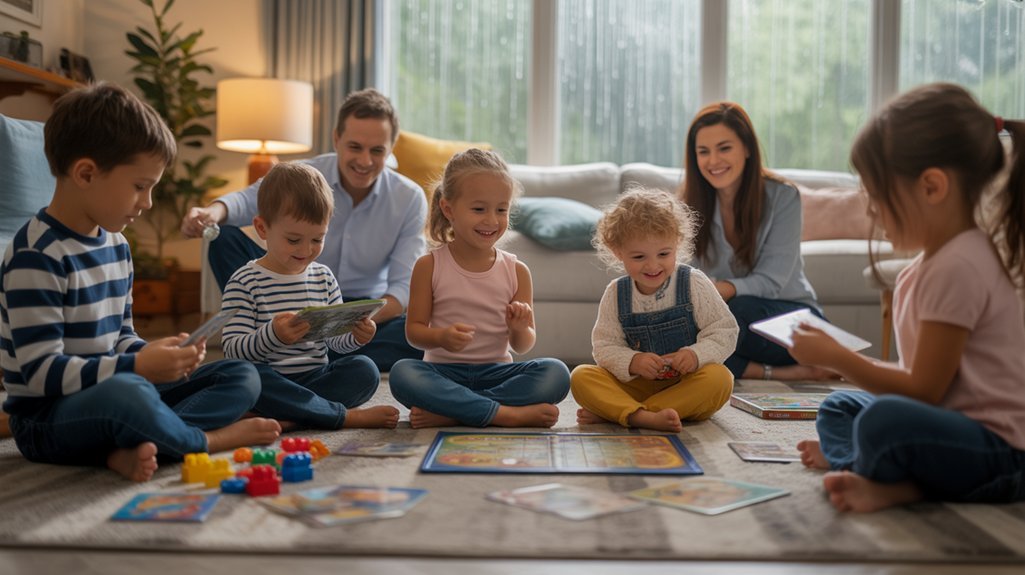
You can turn rainy days into exciting learning opportunities with games that disguise education as pure fun. Try number hopscotch for math practice, story dice for creative writing, or kitchen science experiments like baking soda volcanoes. Challenge critical thinking with logic puzzles and scavenger hunts, while creative arts activities like symmetry painting teach geometry concepts. These interactive approaches make abstract ideas tangible and keep kids engaged for hours. The following sections reveal specific techniques and step-by-step instructions to transform your home into an educational playground.
Key Takeaways
- Transform math practice into active play with number hopscotch, counting dances, and human calculator games that make learning physical.
- Build literacy skills through story dice games, word charades, and collaborative story chains that spark creativity and engagement.
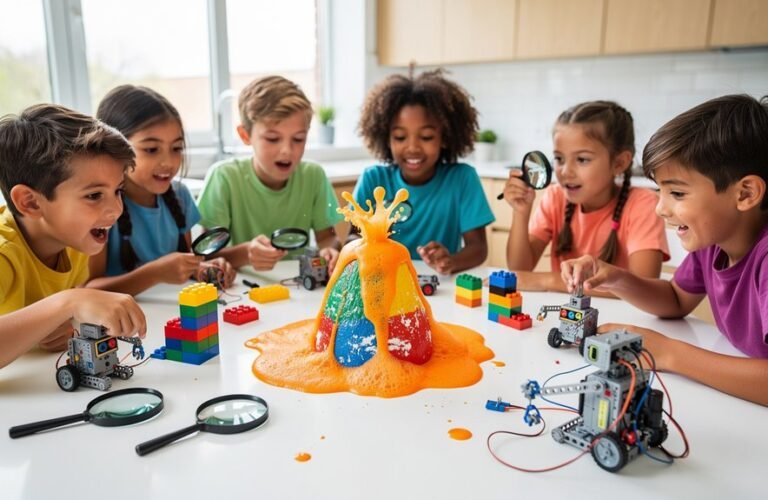
- Conduct kitchen science experiments like baking soda volcanoes, crystal growing, and density towers using common household supplies.
- Strengthen critical thinking with logic puzzles, strategy games like chess, and scavenger hunts requiring sequential reasoning skills.
- Explore creative arts activities including symmetry painting, musical patterns, and sculptural geometry that teach core academic concepts.
Math Skills Through Movement and Play
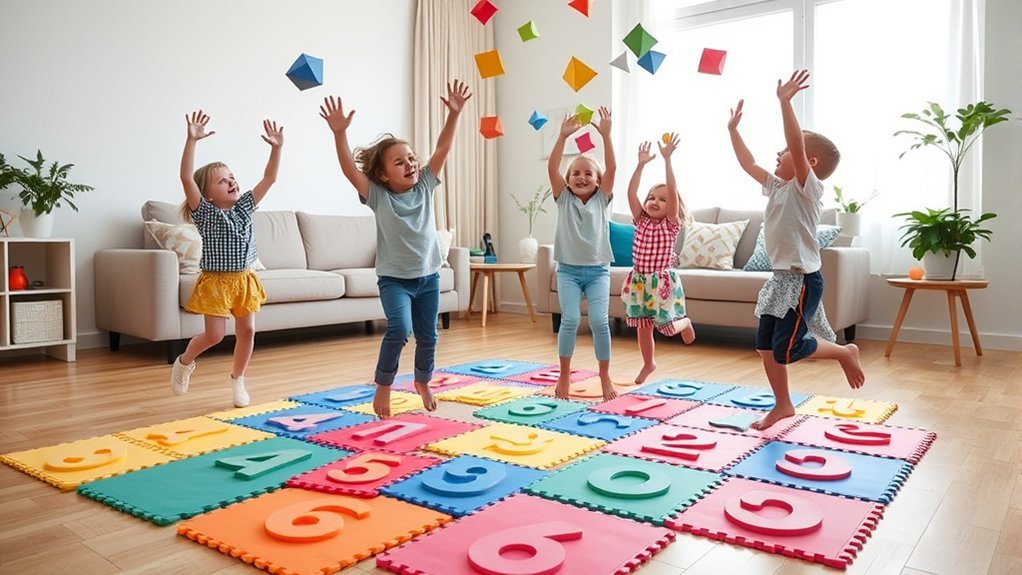
When children hop, skip, and jump their way through number patterns, they’re building mathematical foundations without realizing they’re learning. You can transform your living room into a dynamic math classroom using movement activities that keep kids engaged and active.
Try number hopscotch where children solve addition problems before jumping to the answer. Create a counting dance routine where each move represents a different number. You’ll find that number games combining physical activity help information stick better than worksheets alone.
Set up “math relay races” where kids sprint to grab objects in specific quantities, or play “human calculator” where they become living numbers and arrange themselves to solve equations.
These kinetic approaches make abstract concepts tangible, turning mathematical thinking into an adventure rather than a chore.
Literacy Adventures With Words and Stories
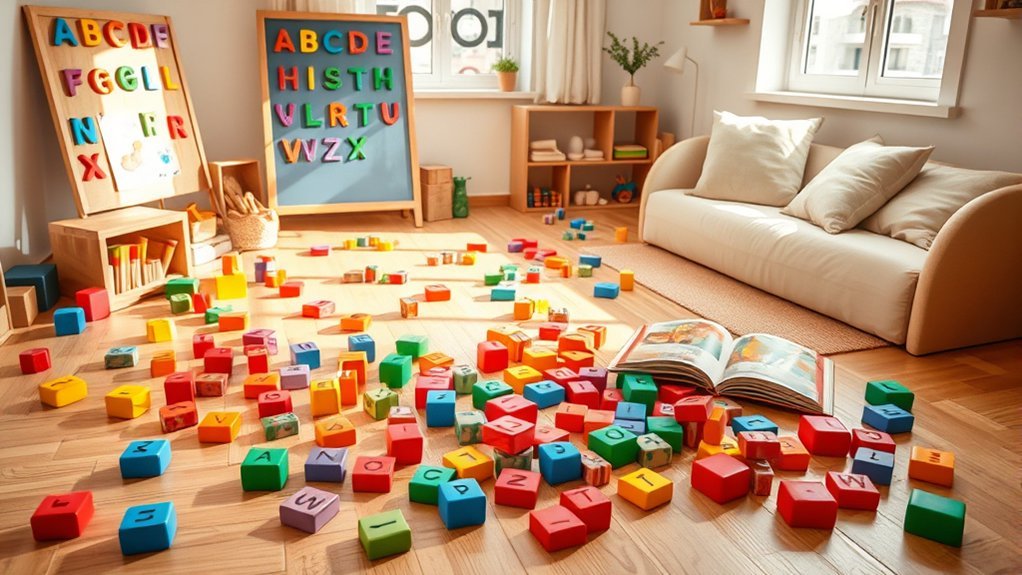
Storytelling transforms any space into a portal of imagination where children develop crucial reading and writing skills through interactive play.
Through storytelling’s magic, ordinary rooms become creative sanctuaries where young minds build essential literacy skills one imaginative adventure at a time.
You’ll find that story writing activities become irresistible when you create a “story dice” game using cubes marked with characters, settings, and actions. Your child rolls the dice and crafts tales from the combinations.
Vocabulary building flourishes through word scavenger hunts where kids search for objects matching alphabet letters or specific word categories.
Set up a cozy reading nook with pillows and flashlights for dramatic read-alouds that bring books to life.
Try “word charades” where children act out vocabulary terms, reinforcing meaning through movement.
Create story chains where each person adds one sentence, building collaborative narratives that spark creativity and language development.
Science Experiments Using Kitchen Supplies
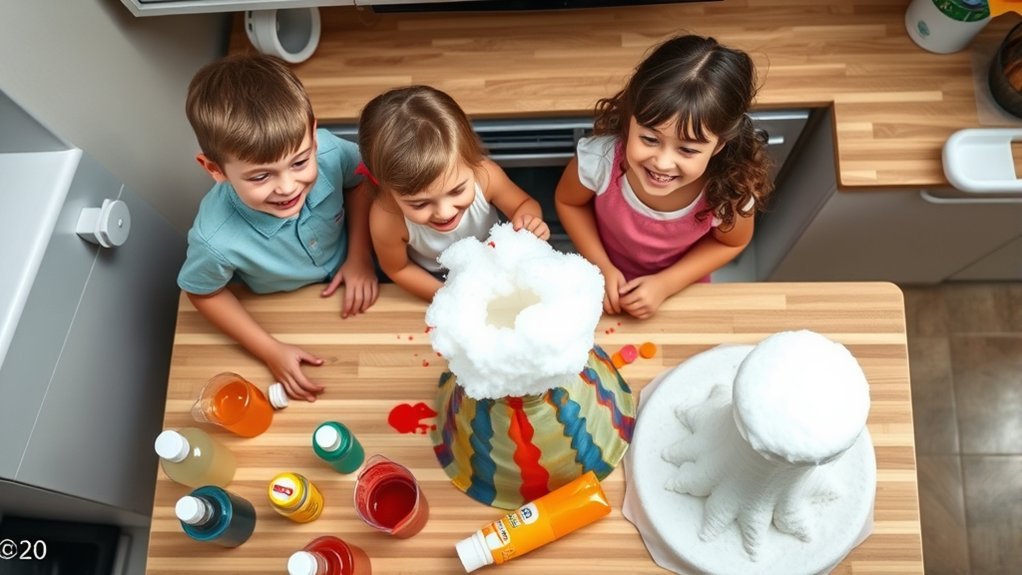
Your kitchen holds a treasure trove of scientific discovery that’ll transform ordinary ingredients into extraordinary learning moments.
Kitchen chemistry brings abstract concepts to life through hands-on exploration that engages young scientists naturally.
These edible experiments make learning deliciously fun:
- Volcano eruptions – Combine baking soda and vinegar to demonstrate chemical reactions
- Crystal formation – Grow sugar or salt crystals on strings overnight
- Density towers – Layer honey, dish soap, water, and oil to explore liquid densities
- Homemade slime – Mix glue and borax to teach polymer science
- Fizzing rainbow – Add food coloring to baking soda mounds, then drizzle vinegar
You’ll foster curiosity while teaching scientific method through observation and experimentation.
Each activity reinforces cause-and-effect relationships, encouraging kids to hypothesize outcomes before testing theories.
Critical Thinking Challenges and Problem-Solving Games
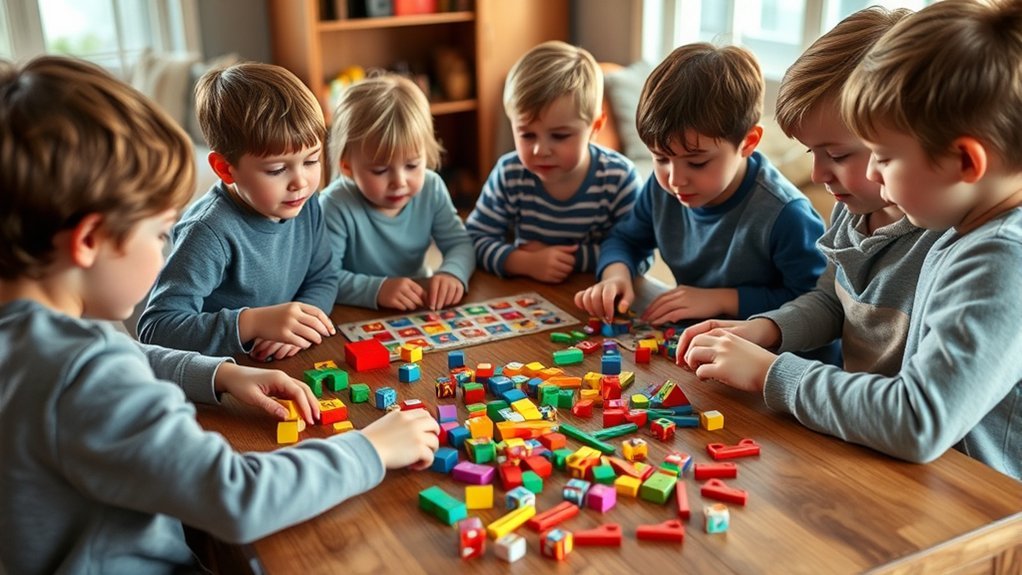
While kitchen experiments spark curiosity through hands-on discovery, critical thinking games sharpen your child’s analytical skills through strategic challenges.
Logic puzzles like Sudoku, riddles, and pattern recognition exercises teach sequential reasoning. You’ll find age-appropriate versions online or create simple grid puzzles using household items. These activities develop deductive thinking while keeping kids engaged.
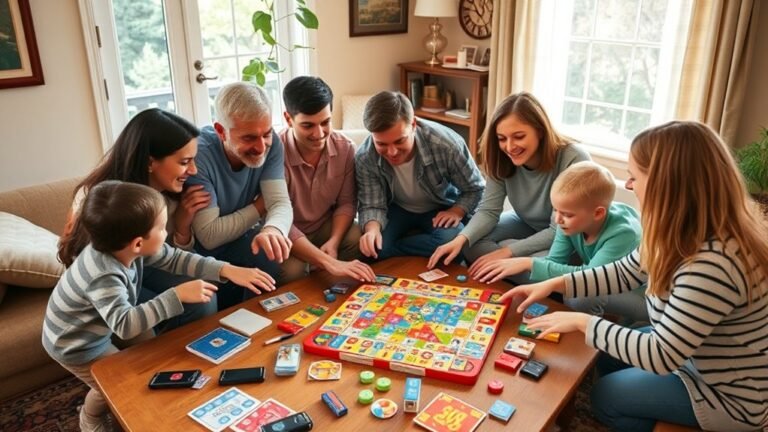
Strategy games such as chess, checkers, and Connect Four require planning ahead and predicting outcomes. Even card games like Uno teach decision-making under changing conditions. You can also design scavenger hunts where clues build upon each other, forcing children to synthesize information.
Brain teasers and “escape room” style challenges transform problem-solving into adventure. Set up scenarios where kids must decode messages or unlock boxes using mathematical clues. These immersive activities make abstract thinking tangible and entertaining.
Creative Arts Activities That Teach Core Concepts
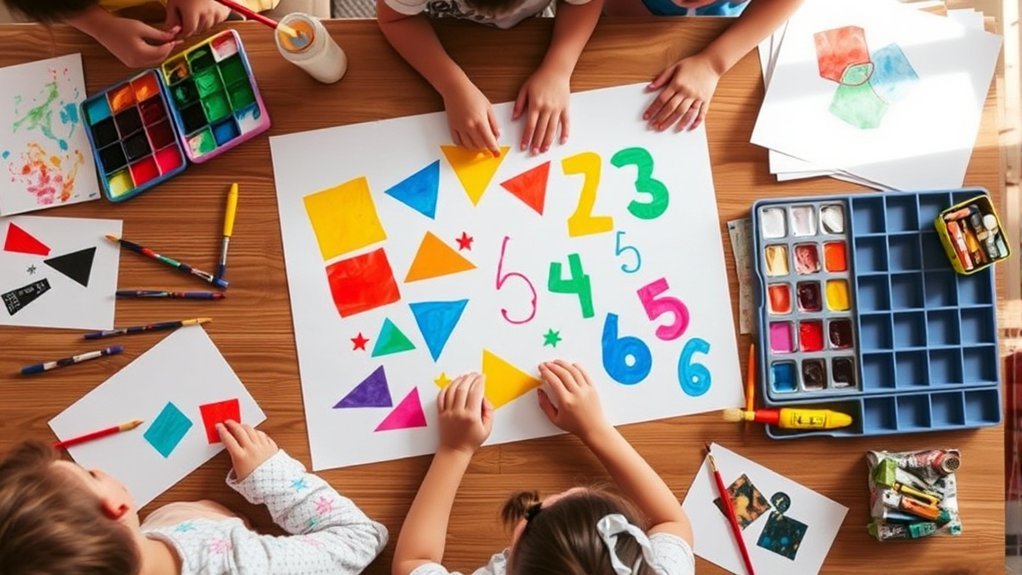
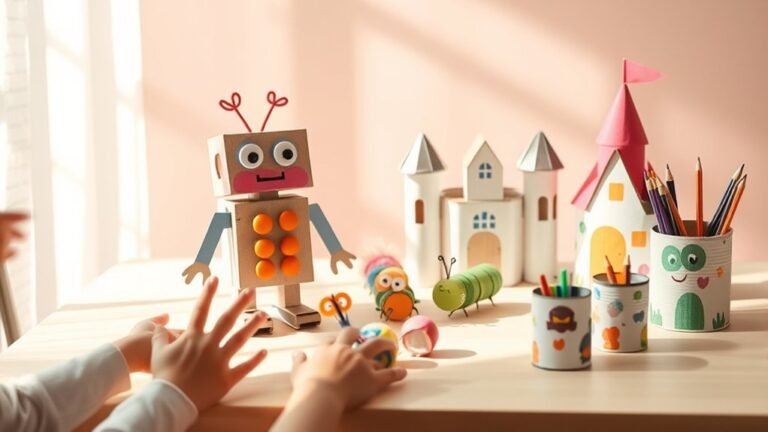
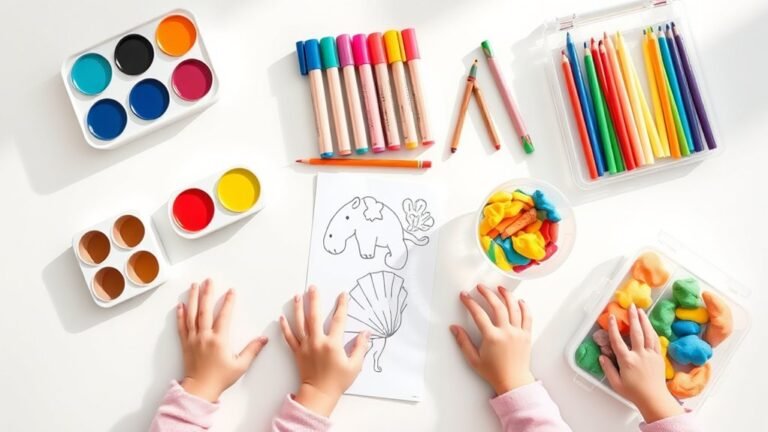
When children mix paint colors or sculpt clay shapes, they’re absorbing mathematical and scientific principles without realizing it. Creative arts activities transform abstract concepts into tangible learning experiences.
Art disguises education as exploration, allowing young minds to grasp complex principles through hands-on creative discovery rather than formal instruction.
You’ll find that painting prompts encourage pattern recognition and color theory exploration, while music mashups teach rhythm, counting, and mathematical intervals.
Engage your children with these art-based learning activities:
- Symmetry painting – Fold paper to create mirror images, teaching geometric concepts
- Musical pattern games – Clap sequences that demonstrate mathematical progressions
- Color mixing experiments – Document combinations to explore scientific prediction
- Rhythm composition – Create beats using household items, reinforcing fractions
- Sculptural geometry – Build 3D shapes with clay to understand spatial relationships
These activities seamlessly blend creativity with core curriculum, making learning feel like play rather than instruction.
Physical Education Games for Small Spaces
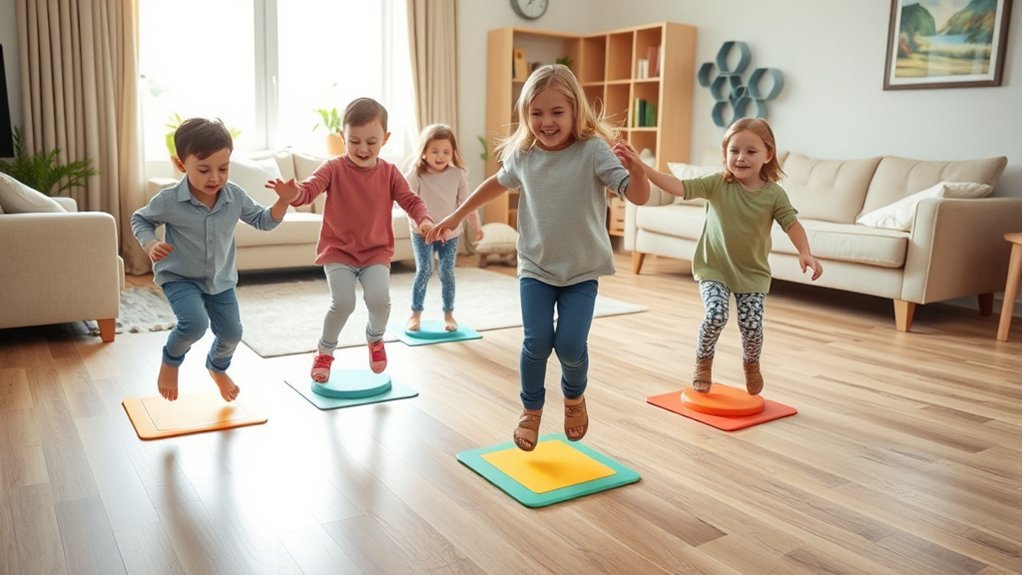
Learning doesn’t stop when you move from the art table to open floor space—it just changes form. You’ll discover that movement based learning enhances cognitive development while burning energy indoors.
Transform your limited area with space saving activities like animal walks, where kids crawl like bears or hop like frogs across the room. Set up a tape line on the floor for balance beam practice, developing coordination without equipment.
Play “Red Light, Green Light” to teach impulse control and following directions. Create an indoor obstacle course using pillows, chairs, and blankets—children navigate through, building problem-solving skills.
Try yoga poses named after letters or numbers, combining physical activity with academic concepts. Dance freeze games improve listening skills while providing cardio exercise in minimal square footage.
In case you were wondering
What Age Groups Are These Indoor Learning Games Most Appropriate For?
You’ll find these games work best for kids aged 3-12, covering various developmental stages. Younger children develop motor skills, while older kids strengthen problem-solving abilities. You can adapt most activities to match your child’s specific age range and capabilities.
How Long Does Each Activity Typically Take to Complete?
Most activities take 15-30 minutes to complete, though you can adjust the activity duration based on your child’s attention span. Time management’s flexible—you’ll find some games work better when extended, while others stay engaging kept short.
What Is the Recommended Group Size for These Games?
When Sarah’s classroom of eight struggled with charades, she learned optimal sizing matters. You’ll find 4-6 players maximizes team dynamics and group engagement. Smaller groups ensure everyone participates actively, while larger ones can create disengagement and waiting time.
Can These Games Be Adapted for Children With Special Needs?
Yes, you can adapt these games using various adaptive strategies that accommodate different abilities. You’ll want to consider sensory considerations like noise levels, lighting, and tactile elements to ensure every child participates comfortably and successfully.
Where Can I Find Printable Materials or Additional Resources?
You’ll find printable materials on websites like Teachers Pay Teachers, Pinterest, and educational blogs. Many online resources offer free activity guides specifically designed for indoor learning games. Check your local library’s website for downloadable worksheets too.
Conclusion
You’ve now got a toolkit of engaging indoor activities that’ll keep your kids learning while they’re having fun. Why let a rainy day derail your child’s development when you can turn it into an opportunity for growth? These games prove you don’t need fancy equipment or perfect weather to spark curiosity and build essential skills. So next time storm clouds roll in, you’ll be ready to transform your home into an exciting learning playground.