Mess-Free Painting Activities for Kids
You can enjoy creative art time with your kids without the cleanup stress. Try ziplock bag painting—just slip paper inside, add washable paint, seal it up, and let little hands squish away. Cotton swab painting on paper plates keeps things tidy too. For bigger fun, set up a cardboard box as a contained splatter zone. These simple swaps make art accessible and worry-free, and you’ll find even more ideas below.
Key Takeaways
- Ziplock bag painting allows kids to explore colors and textures by squishing paint inside a sealed bag without any mess.
- Painting inside a large cardboard box contains splatters and spills, making cleanup as simple as recycling the box.
- Roll-on deodorant bottles repurposed as paint applicators keep paint contained while building hand strength and creative control.
- Frozen paint cubes with craft stick handles create watercolor effects as they melt, offering minimal mess and easy cleanup.
- Cotton swab painting provides controlled dabbing techniques on paper plates, reducing spills while encouraging color mixing exploration.
Ziplock Bag Painting for Toddlers and Preschoolers
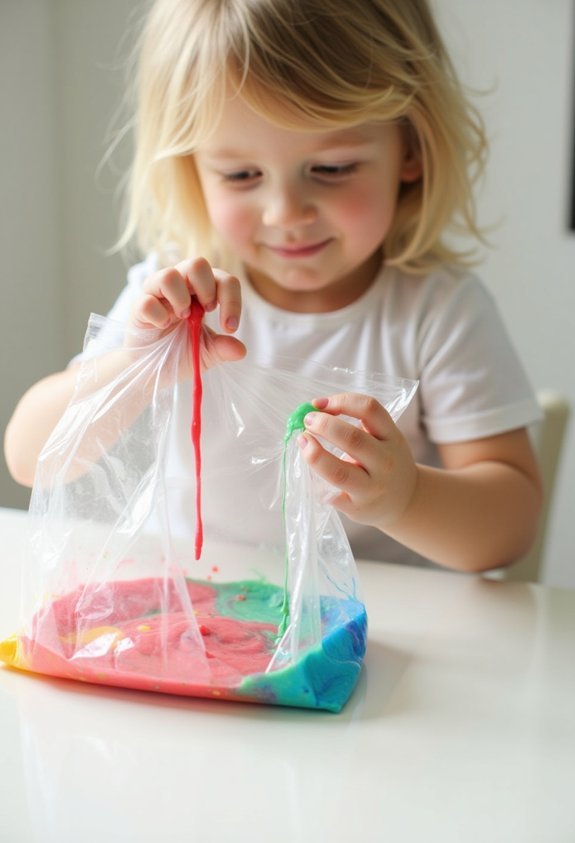
When you’re craving a creative moment but dreading the cleanup, ziplock bag painting is your new best friend. This simple activity lets little hands explore color and texture without a single stain on your table.
Mess-free art that sparks creativity—because toddler fun shouldn’t mean scrubbing paint off the ceiling.
What you’ll need:
- Gallon-sized ziplock bags
- Washable paint (2–3 colors)
- White cardstock or paper
- Tape
Steps for ziplock creativity:
- Slip the paper inside the bag
- Add paint dollops on top
- Seal it tight—squeeze out extra air
- Tape the bag to a table or window
Now watch the magic happen. Your child can squish, swirl, and blend colors freely. This toddler exploration builds sensory skills and color recognition while keeping everything contained.
Cotton Swab Painting on Paper Plates
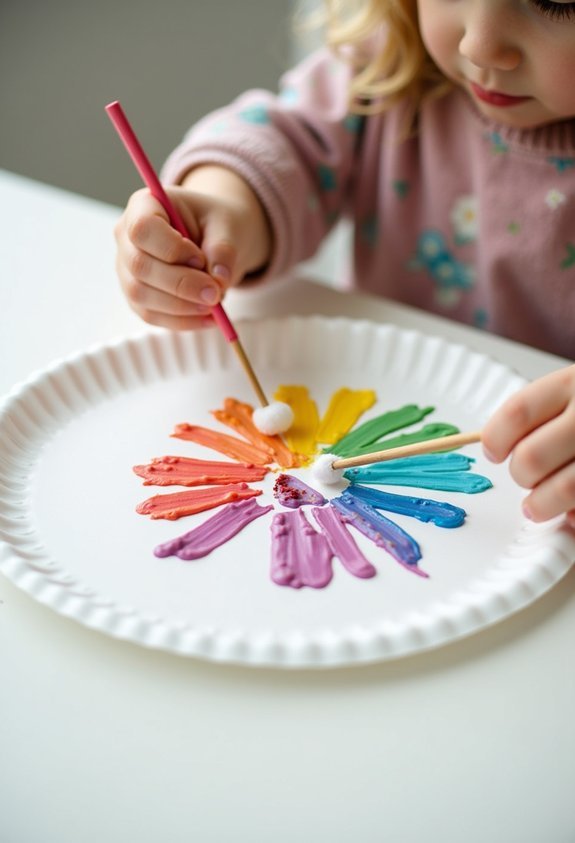
Cotton swabs offer another easy way to keep paint off tiny fingers while still sparking creativity. The round plate surface gives kids a fun canvas to explore swab techniques like dotting, swirling, and dragging.
Pour small drops of paint onto a palette. Your child can dip and dab to their heart’s content. Color mixing happens naturally as they blend dots together.
This activity brings so much joy:
- Pride when patterns emerge from simple dots
- Wonder as two colors become something new
- Calm focus during the gentle dabbing motion
- Confidence from creating real art independently
Paper plates are sturdy and cheap. You can hang finished pieces right on the fridge. Your little artist will beam with pride.
Painting Inside a Cardboard Box
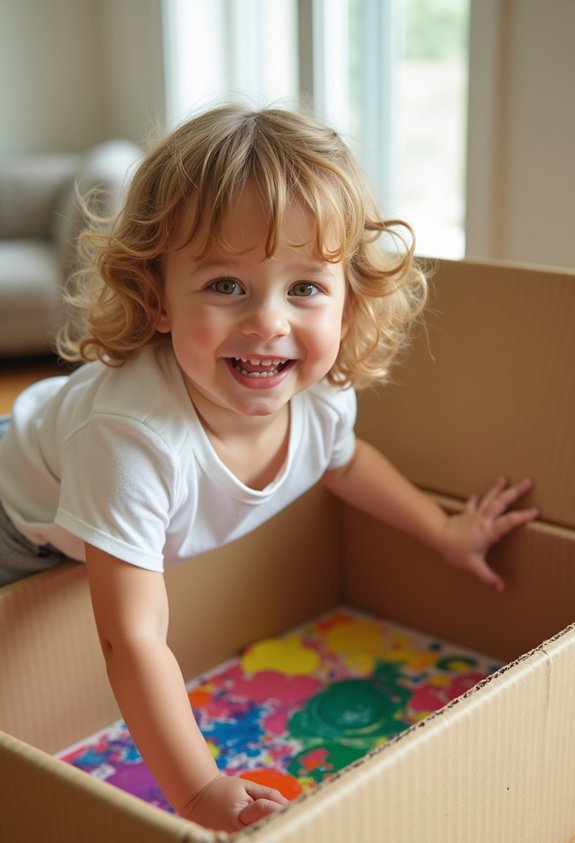
A large cardboard box turns into the perfect contained painting zone. Your child can splatter, drip, and explore without worrying about the walls or floor.
How to Set It Up:
- Find a box big enough for your child to sit inside comfortably
- Lay the box on its side or keep it upright
- Tape paper to the inside walls
- Hand over brushes, sponges, or their fingers
Why Kids Love It:
- They feel like they’re in a secret art studio
- Messes stay inside the cardboard box
- They can paint all around them
These creative spaces let little artists go wild. You’ll love how easy cleanup becomes—just recycle the box when it’s too colorful to use again!
Roll-On Deodorant Bottle Paint Applicators
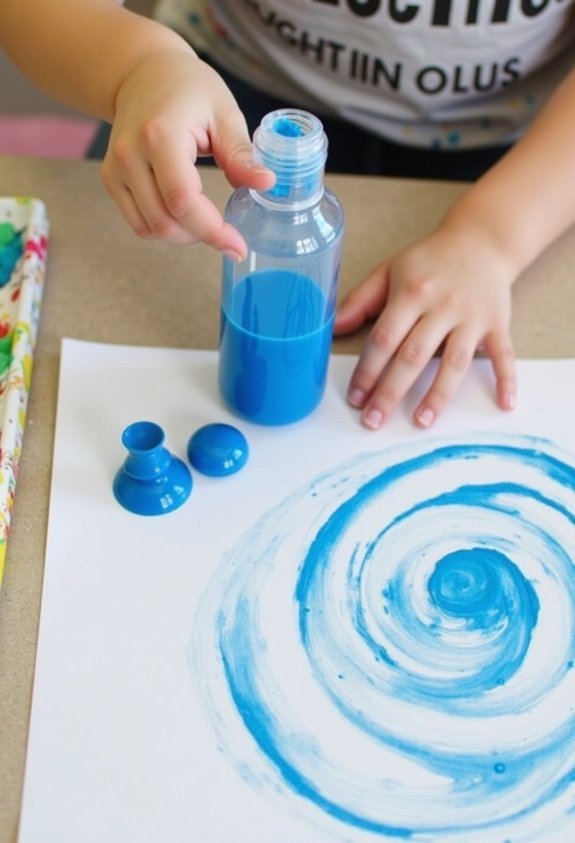
Empty roll-on deodorant bottles make surprisingly perfect paint tools for little hands. The rolling ball gives kids smooth control while keeping paint off fingers. You’ll love watching them discover new deodorant bottle techniques as they glide color across paper.
These creative paint applications work beautifully because:
- Little ones feel proud using “grown-up” tools
- The rolling motion builds hand strength naturally
- Mess stays inside the bottle, not on the table
- Kids can mix colors right on the paper
Simply rinse out an empty bottle and fill it with washable paint. Pop the ball back in, and you’re ready to go. Your child can roll stripes, swirls, or zigzags with confidence. It’s painting made simple.
Frozen Paint Cube Creations
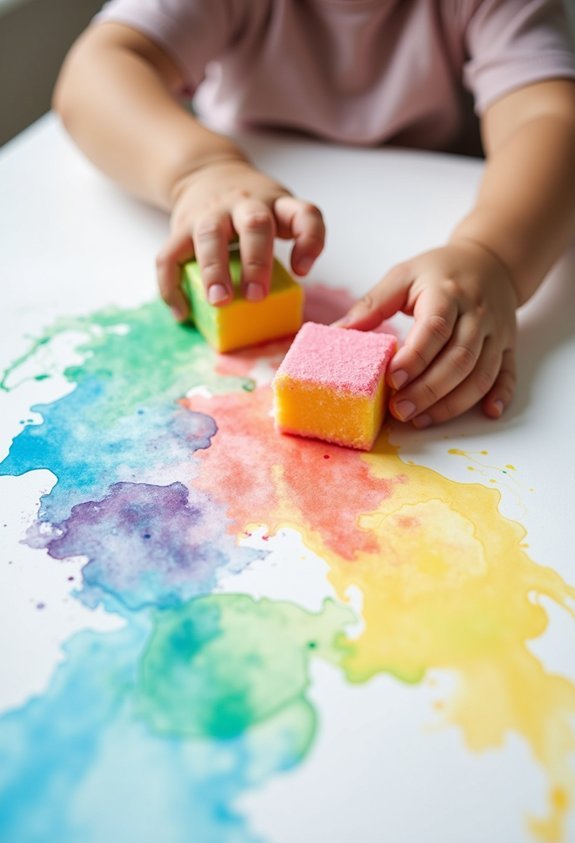
Rolling paint across paper feels satisfying, but sometimes kids crave a different kind of hands-on fun. That’s where frozen fun comes in.
How to Make Frozen Paint Cubes:
- Mix washable paint with water in ice cube trays
- Add craft sticks as handles before freezing
- Freeze overnight until solid
The Magic Happens:
Your little artist holds the stick and glides ice cube colors across thick paper. The paint melts slowly, leaving beautiful watercolor-like trails. It’s cool to the touch and incredibly soothing.
Frozen paint cubes transform art time into a cool sensory adventure that little hands can’t resist.
Pro Tips:
- Use cardstock or watercolor paper to prevent tearing
- Work on a rimmed baking sheet to catch drips
- Let kids experiment with layering colors
This activity keeps hands mostly clean while delivering a sensory experience they’ll want to repeat again and again.
Painting With Water on Construction Paper
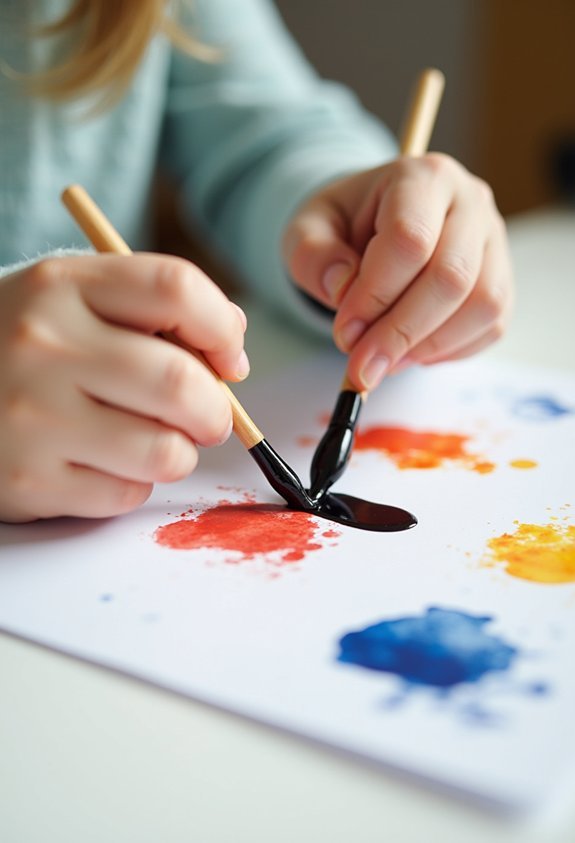
Water transforms dark construction paper into a temporary canvas your child will find absolutely fascinating.
This simple activity introduces basic watercolor techniques without any paint mess. Hand your little one a cup of water and a brush. Watch their eyes light up as dark paper turns vibrant where wet.
Here’s why kids love it:
- They feel like real artists creating magic
- Mistakes disappear as the paper dries
- They can paint the same picture over and over
- There’s zero cleanup stress for everyone
The construction paper changes color dramatically when wet, then fades back as it dries. Your child gets endless creative possibilities with just water. You get peace of mind knowing there’s nothing to stain clothes or furniture. Everyone wins.
Mess-Free Sensory Bags With Paint and Glitter
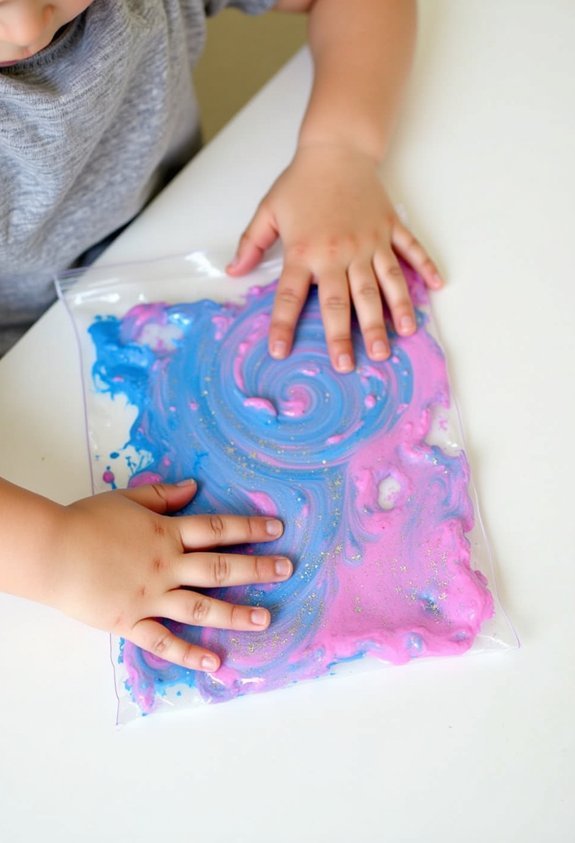
Sensory bags offer one of the easiest ways to let your child explore paint and glitter without a single drop escaping.
What you’ll need:
- Gallon-sized ziplock bags
- Hair gel or clear hand soap
- Washable paint
- Glitter, sequins, or small beads
How to create one:
- Squeeze gel into the bag until it’s about half full.
- Add drops of paint in two or three colors.
- Sprinkle in glitter for extra sparkle.
- Press out the air and seal tightly. Add tape along the edge for extra security.
Your little one can squish, swirl, and push the colors around. This sensory exploration builds fine motor skills. The glitter manipulation keeps tiny fingers busy for ages.
In case you were wondering
What Types of Paint Are Safest for Young Children to Use?
You should choose washable paints and non toxic options for your little artists. Look for labels that say “AP Certified” or “ASTM D-4236,” which indicate they’ve been tested for safety. Water-based tempera and finger paints work great.
How Can I Protect My Child’s Clothing During Painting Activities?
Picture your little Picasso covered head-to-toe in rainbow splatters! You’ll want to explore apron options or paint smocks that fully cover clothing. Old oversized t-shirts work great too, and you can use washable paints.
At What Age Can Children Start Doing Painting Activities?
You can introduce painting activities around 18 months when toddler readiness signs appear. Watch for developmental milestones like grasping crayons and showing interest in colors. You’ll know they’re ready when they enjoy sensory exploration.
How Do I Store Leftover Homemade Paint for Future Use?
A stitch in time saves nine—store your homemade paint using proper paint preservation techniques. You’ll want to transfer it into airtight paint storage containers and refrigerate them to extend freshness for your child’s next creative session.
Can These Activities Help Develop My Child’s Fine Motor Skills?
Yes, these activities can strengthen your child’s fine motor skills through gripping brushes, squeezing bottles, and making controlled movements. They’ll also boost creative expression while building hand-eye coordination and dexterity in an enjoyable way.
Conclusion
These mess-free activities aren’t just about keeping your floors clean. They’re seeds you’re planting—tiny moments that grow into a love of art and exploration.
You’ve got the tools now. Pick one activity and try it today. Watch your child’s face light up as colors swirl and mix.
Clean hands, full hearts, and a creative spirit that’s free to bloom. You’ve got this.