Simple Thanksgiving Gratitude Activities for Little Kids
You can teach your little one gratitude with simple hands-on projects like handprint turkeys, thankful jars, and kindness chains. Try pressing painted hands onto paper to create turkey feathers, then write what you’re thankful for on each finger. A mason jar filled with daily gratitude notes makes a sweet Thanksgiving tradition too. These easy activities turn everyday moments into meaningful lessons about appreciation—and there are even more creative ideas to explore below.
Key Takeaways
- Create handprint turkeys using washable paint and write grateful thoughts on each finger for a simple, hands-on activity.
- Start a thankful jar where children draw or write daily gratitude notes to read together on Thanksgiving Day.
- Make pumpkin-shaped thank you cards to share with grandparents, teachers, or neighbors using basic craft supplies.
- Organize a grateful heart scavenger hunt encouraging kids to find items and explain why each one matters to them.
- Build a kindness chain throughout November by adding paper links with kindness ideas written or drawn on them.
Gratitude Turkey Handprint Craft
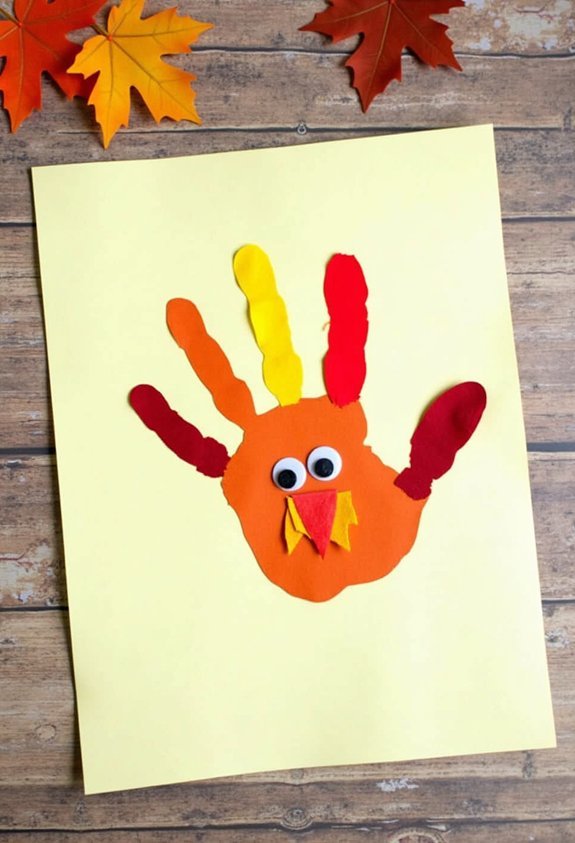
When little hands trace their fingers on colorful paper, something magical happens—they create a turkey that holds their thankful thoughts.
What You’ll Need:
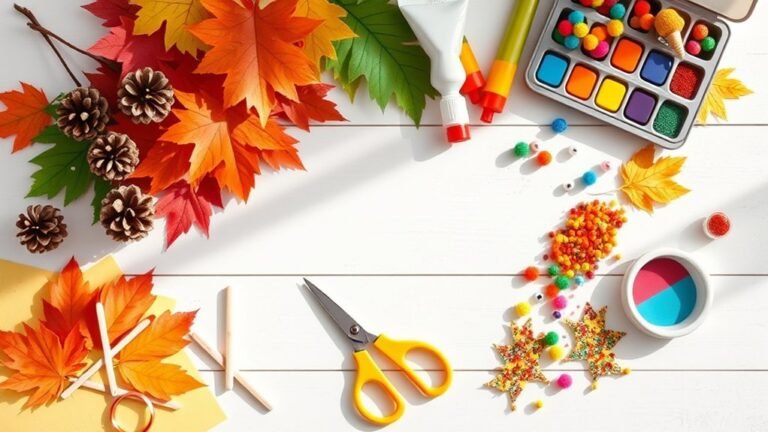
- Construction paper in fall colors
- Washable paint for handprint painting
- Markers or crayons
- Scissors and glue
Simple Steps:
- Press your child’s painted hand onto paper to form the turkey’s feathers
- Let it dry completely
- Add a turkey face to the thumb
- Write one thing they’re grateful for on each finger
These turkey decorations become meaningful keepsakes you’ll treasure for years. Hang them on windows or string them together as a garland.
These handprint turkeys transform from simple crafts into cherished memories you’ll smile at every Thanksgiving season.
The best part? Your child connects creativity with gratitude. Each finger represents something special in their life—family, pets, favorite toys, or yummy snacks.
Thankful Jar for Tiny Hands
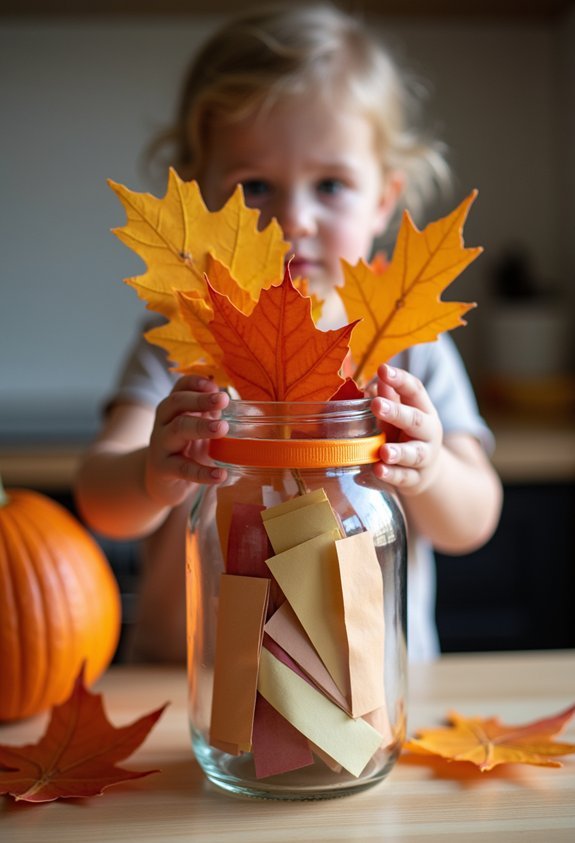
Because gratitude grows stronger with daily practice, a thankful jar gives your little one a simple way to capture happy moments all month long.
You’ll need just a mason jar, colorful paper strips, and crayons. Each day, help your child draw or write something they’re grateful for.
Easy ways to fill your jar:
- Use simple gratitude prompts like “What made you smile today?”
- Share thankful quotes at breakfast to spark ideas
- Let your child decorate each slip with stickers
- Read the slips together on Thanksgiving Day
Even scribbles count! Your child’s tiny hands are building a big habit. By month’s end, you’ll have a jar overflowing with sweet memories to treasure.
Pumpkin Patch Thank You Cards
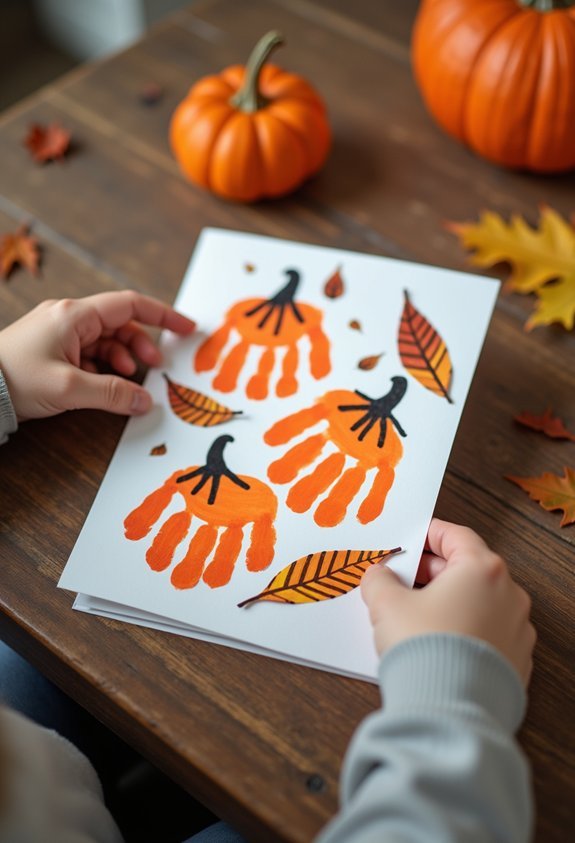
Now that your thankful jar is filling up with daily gratitude, let’s put those warm feelings into action with handmade pumpkin patch thank you cards.
Your little one can turn pumpkin patch memories into colorful card making fun. It’s simple and meaningful.
What you’ll need:
- Orange and brown construction paper
- Crayons or markers
- Kid-safe scissors
- Glue stick
Steps to create:
- Cut a pumpkin shape from orange paper
- Add a brown stem on top
- Let your child draw a face or leaves
- Write a short thank you message inside
These cards work perfectly for grandparents, teachers, or neighbors. Your child learns that gratitude feels even better when shared with someone special.
Grateful Heart Scavenger Hunt
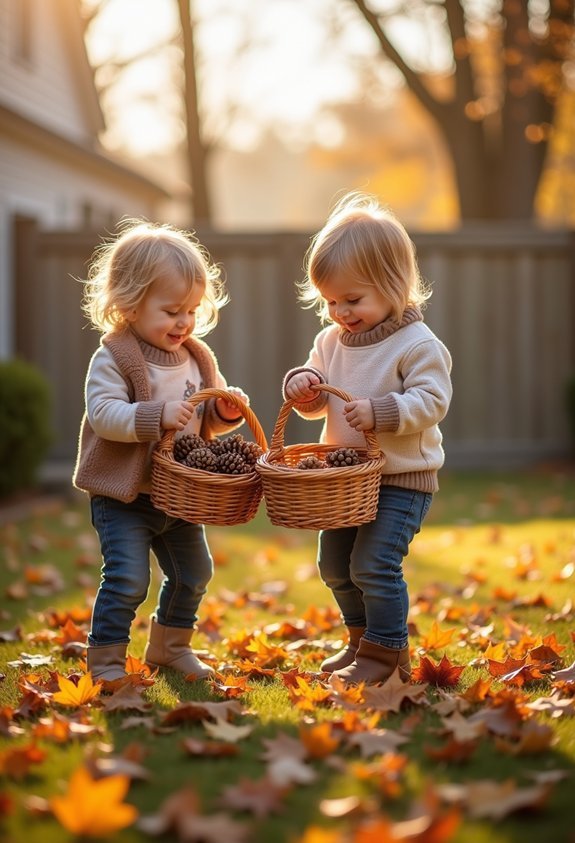
After your pumpkin patch cards bring smiles to loved ones, it’s time to get moving with a grateful heart scavenger hunt. This activity gets little legs running while building thankfulness.
Create a simple list of things to find around your home or yard. Each discovery sparks a moment of gratitude.
Turn everyday objects into thankfulness treasures with a simple scavenger hunt around your home.
Hunt for these nature treasures and family memories:
- Something that makes you laugh
- A favorite toy you’re thankful for
- A leaf or rock from outside
- A photo of someone you love
When your child finds each item, ask them why it matters. You’ll hear the sweetest answers. This hunt turns ordinary moments into gratitude lessons. Plus, it burns energy before the big Thanksgiving meal!
Thanksgiving Kindness Chain
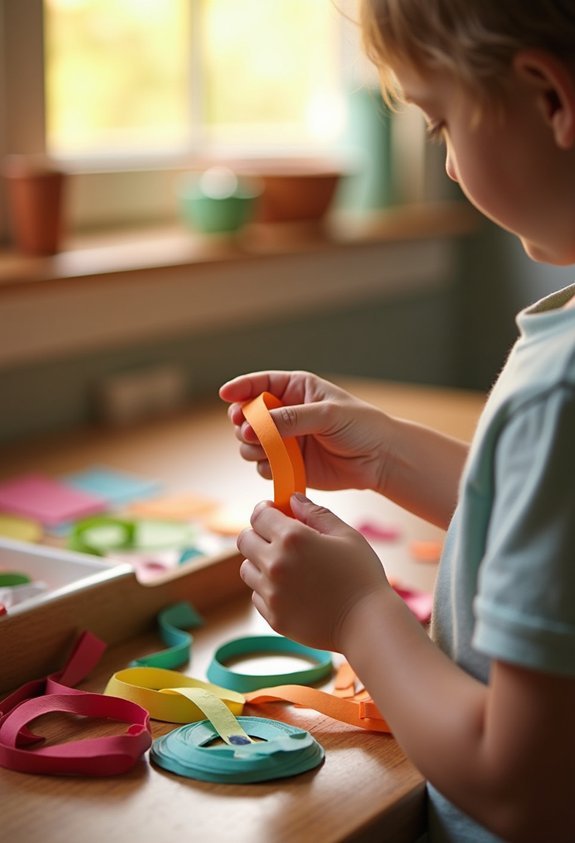
Your little scavenger hunter is now ready to create something lasting with a Thanksgiving kindness chain.
What You’ll Need:
- Construction paper strips
- Markers or crayons
- Tape or stapler
How It Works:
- Cut paper into strips about one inch wide.
- Have your child write or draw one kindness idea on each strip.
- Loop the first strip and secure it.
- Thread the next strip through and connect.
- Keep adding links throughout November.
Kindness Ideas to Try:
- Help set the table
- Share a toy
- Give someone a compliment
- Draw a picture for Grandma
This gratitude activity grows right before their eyes. Each link represents a choice to spread goodness. Hang your chain where everyone can see it and celebrate together.
Family Gratitude Tree Project
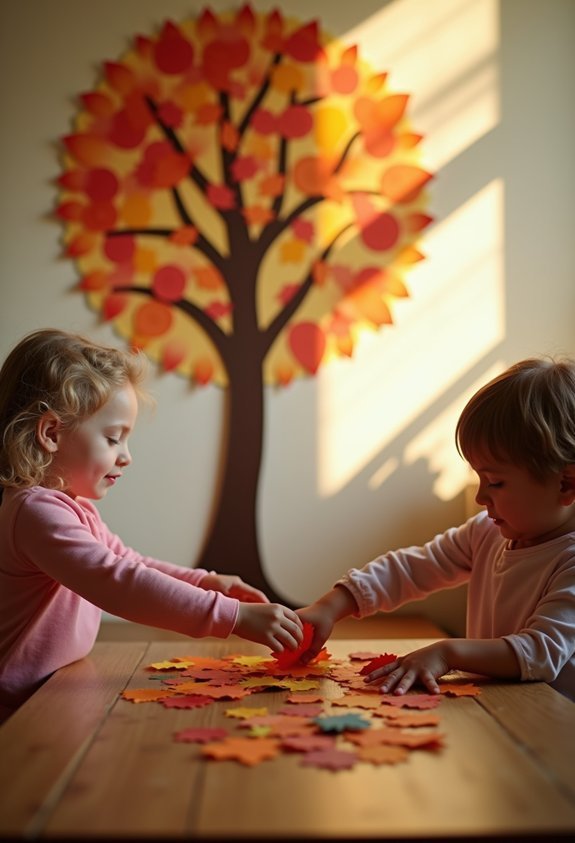
While your kindness chain keeps growing, there’s another beautiful way to watch gratitude bloom in your home. A family gratitude tree turns thankfulness into something you can see and touch together.
This project strengthens family bonding while creating seasonal traditions your kids will remember for years.
Here’s how to make your tree:
- Draw a simple tree trunk on paper or use branches in a vase
- Cut leaf shapes from fall-colored paper
- Have each family member write one thing they’re grateful for on a leaf
- Add new leaves daily throughout November
Watch your tree fill up with blessings. Kids love seeing their gratitude grow. You’re building memories that matter.
Thankful Placemats for the Holiday Table
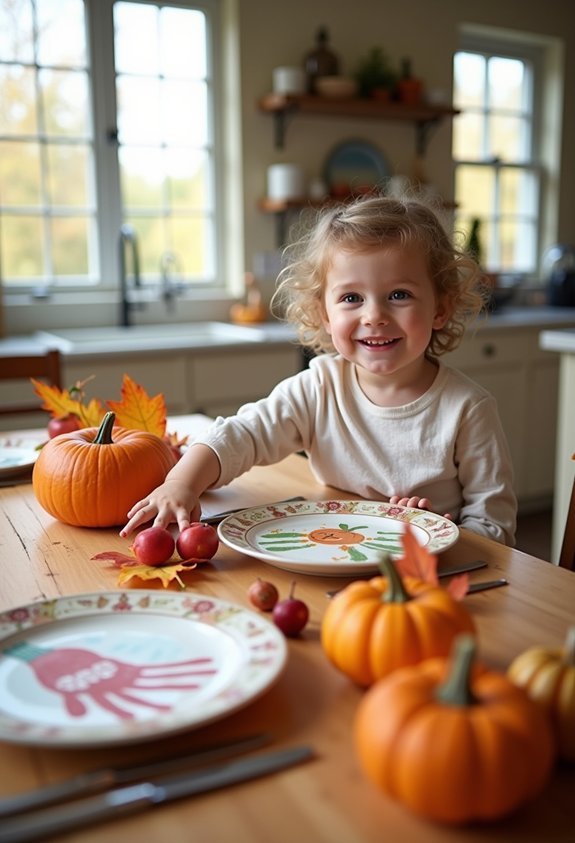
That gratitude tree brings beauty to your home, and now you can carry that same spirit right to your holiday table.
Thankful placemats make wonderful Thanksgiving crafts that double as meaningful holiday decorations. Your little ones will beam with pride seeing their work at each place setting.
What you’ll need:
- Construction paper or cardstock
- Crayons or markers
- Clear contact paper or laminating sheets
Simple steps:
- Have your child draw things they’re thankful for
- Write their words if they need help
- Cover both sides with contact paper to protect from spills
These placemats spark conversation during dinner. Guests love reading what kids appreciate most. You’re creating keepsakes that capture this sweet season perfectly.
Story Time Books About Giving Thanks
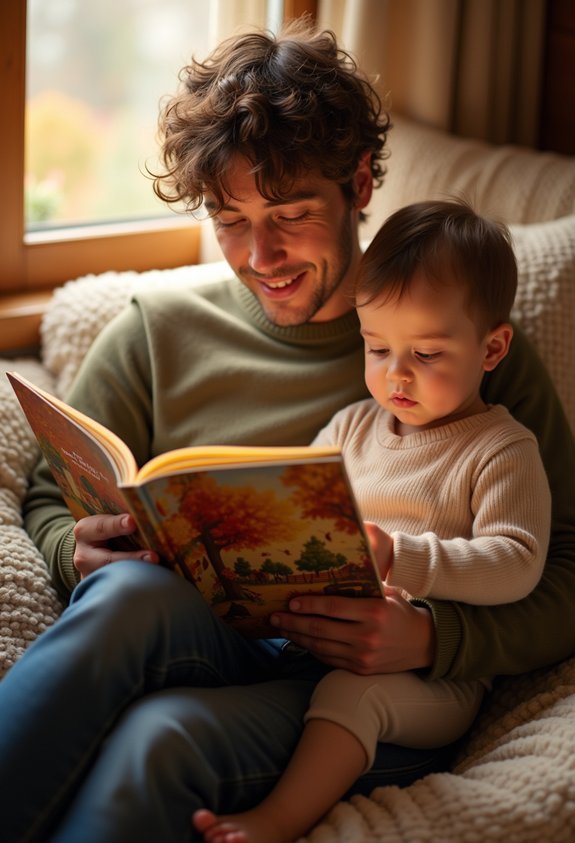
After the placemats are ready and the table is set, gather your little ones for a cozy reading session that deepens their understanding of gratitude. Thankful stories help kids connect emotions to words in ways that stick.
Try these beloved books for gratitude lessons that resonate:
- *Bear Says Thanks* by Karma Wilson—perfect for showing how sharing creates joy
- *Gratitude Soup* by Olivia Rosewood—kids love the interactive recipe concept
- *Thank You, Omu!* by Oge Mora—a beautiful tale about generosity coming full circle
- *The Thankful Book* by Todd Parr—bright pictures and simple phrases work great for toddlers
Reading together builds connection. You’re not just sharing stories—you’re planting seeds of thankfulness that grow all year long.
Daily Gratitude Circle Before Meals
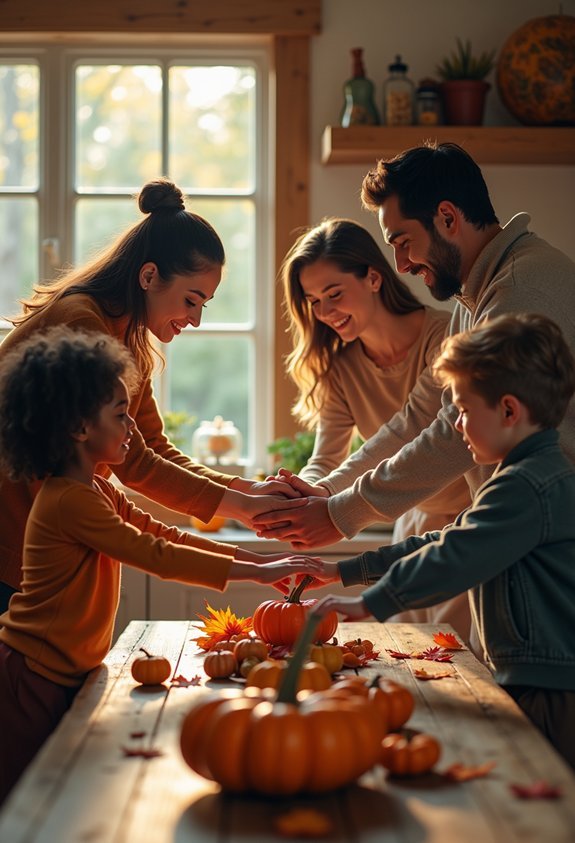
Everyone in the family can join in when you create a simple gratitude circle before meals. This tradition builds thankful moments into your daily routine.
How to start:
- Gather everyone at the table
- Hold hands or sit close together
- Take turns sharing blessings from your day
- Keep it short—one thing each works great
Young kids might say “my teddy” or “sunshine.” That’s perfect. You’re teaching them to notice good things, big and small.
When little ones share gratitude for simple joys, they’re building a lifelong habit of seeing the good.
Some days feel hard. On those days, simple gratitude still counts. A warm meal. A cozy home. Each other.
This circle takes just two minutes. But those moments add up. You’re growing grateful hearts one meal at a time.
In case you were wondering
What Age Is Appropriate to Start Teaching Gratitude to Toddlers?
You can start teaching gratitude to your child around toddler age, typically 2-3 years old. At this stage, gratitude development begins through simple thank-you prompts and modeling appreciative behavior during everyday moments.
How Long Should Gratitude Activities Last for Preschoolers With Short Attention Spans?
You’ll want to keep gratitude activities between 5-10 minutes for preschoolers. Their attention spans are naturally short, so use timing strategies like switching tasks quickly and ending before they’re bored to maintain engagement.
Can Gratitude Activities Help Children Who Struggle With Behavioral Issues?
Like planting seeds of kindness, you’ll find gratitude activities support behavior management by teaching emotional regulation skills. When you practice thankfulness regularly, you’re giving children tools to redirect negative behaviors toward positive expression.
How Do I Explain the Concept of Thankfulness to a Two-Year-Old?
You can teach thankfulness through simple gratitude examples like saying “thank you” for snacks or toys. Read thankfulness stories together and point out characters who appreciate gifts, helping your toddler connect words to feelings.
What if My Child Refuses to Participate in Thanksgiving Gratitude Activities?
Don’t force a square peg into a round hole. You’ll find creative alternatives work wonders—try incorporating gratitude into playtime or snack time instead. With gentle encouragement, you’re planting seeds that’ll bloom naturally over time.
Conclusion
These simple activities plant seeds of thankfulness that’ll bloom for years to come. You don’t need fancy supplies or perfect moments—just your presence and a willing heart. As the old saying goes, “Little by little, a little becomes a lot.” Start with one activity this week. Watch your child’s grateful heart grow. The best gift you’ll give them this Thanksgiving isn’t on any table—it’s this.