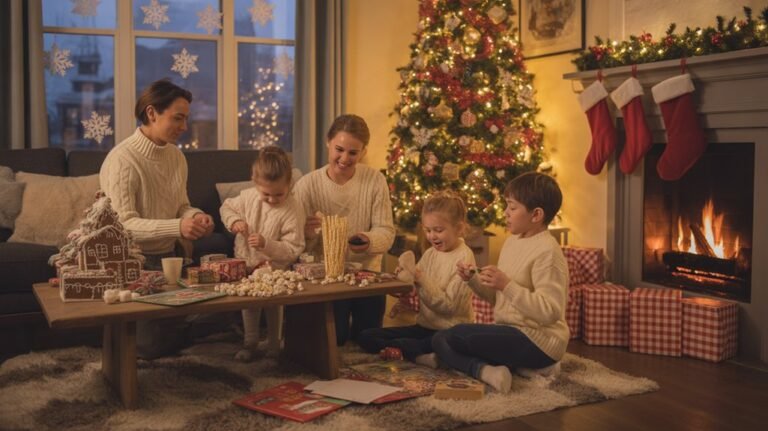
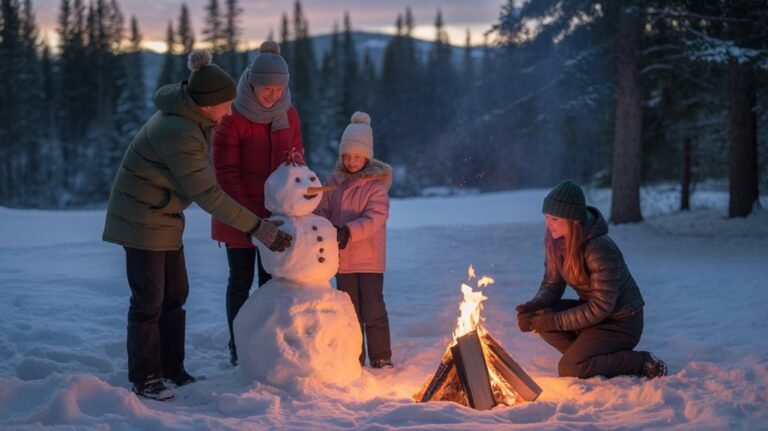
Snowy Day Outdoor Activities for Families
Turn snow into simple family fun. 1) Build a small fort together, then toss soft snowballs with fair zones. 2) Find a safe hill and sled one-at-a-time with helmets. 3) Roll a snowman village; add scarves, buttons, and kind notes. 4) Sip cocoa by a small fire, play quick games, and warm hands. 5) Try a nature hunt or a short snowshoe loop with songs. 6) Freeze ice ornaments and decorate a tree. Want easy steps and safety tips next?
Build a Family Snow Fort and Have a Friendly Snowball Match
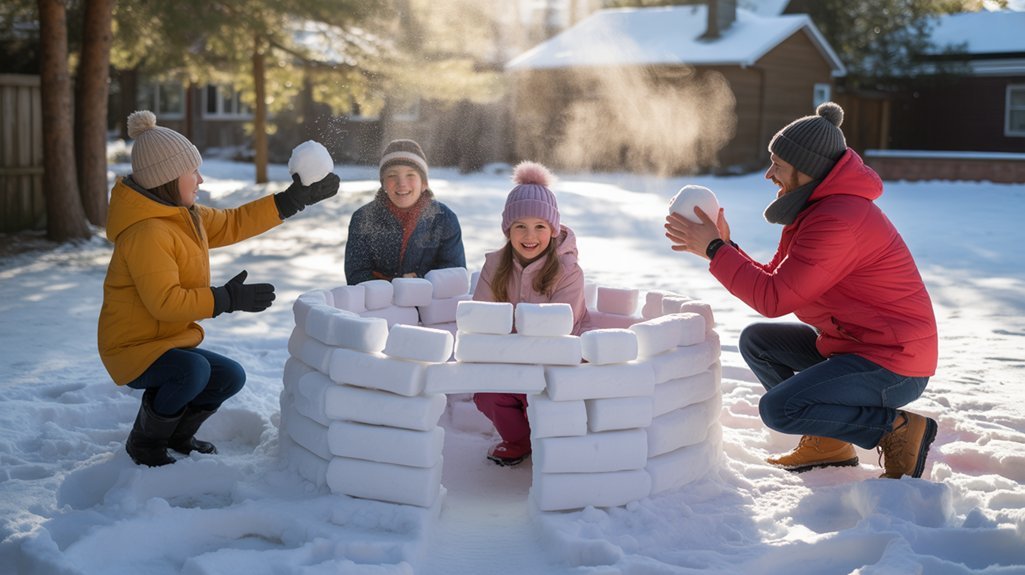
When the first good snow sticks, take it as your sign to head outside and build together.
1) Plan your snow fort design:
- Pick a safe, flat spot away from the street.
- Pack snow into sturdy blocks. Stack low walls first.
- Leave a doorway and a small lookout. Keep paths clear.
2) Build as a team:
- Give simple roles: shapers, stackers, sweepers.
- Check hands and toes. Warm up often.
- Praise effort. Celebrate small wins.
3) Prepare kind snowball strategies:
- Roll soft, palm-size snowballs. No ice, no face shots.
- Set fair zones. Pause often to smile and reset.
- Use the fort for cover, then rotate sides.
4) Serve each other:
- Share gear. Offer warm cocoa breaks.
- End with a clean-up sweep and a group high-five.
Go Sledding and Try a DIY Toboggan Run
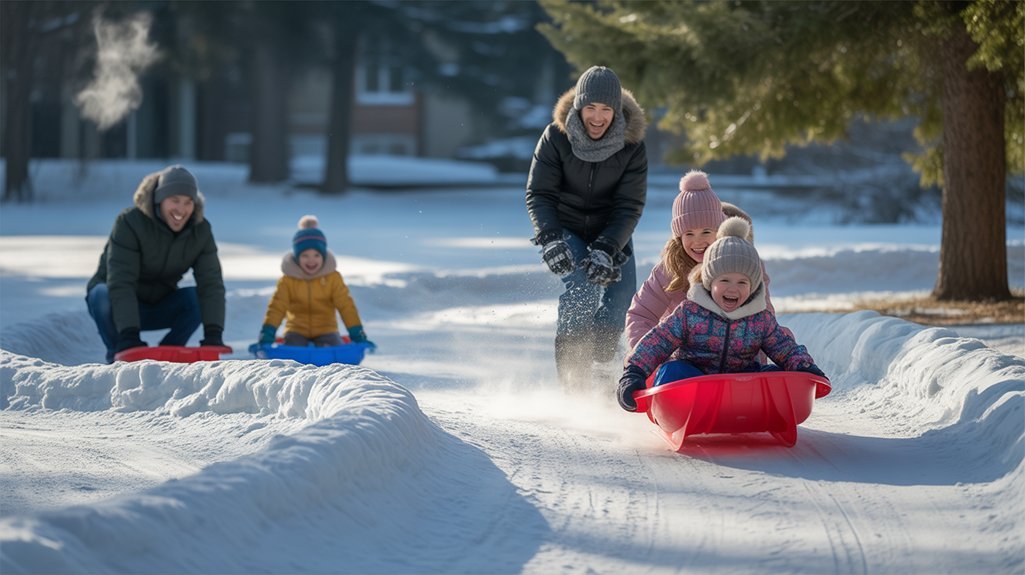
Start with the right hill: gentle slope, wide run, no trees or rocks, a long flat stop.
Then build safe snow ramps—pack the snow, shape low bumps, smooth the edges, test once, adjust.
Quick checks help: helmets on, one rider at a time, clear the path fast.
Picking the Right Hill
How do you spot a hill that’s fun, safe, and worth the trek? Start with care. You’re leading your crew, so choose with love and clear eyes. Think hill safety and hill accessibility first.
1) Scan the slope
- Look for a long, open runout.
- Avoid trees, fences, rocks, roads.
- Check for ice. Packed snow is better.
2) Check the climb
- A gentle walk-up helps little legs.
- Steps or a side path reduce slips.
- Space to rest makes spirits bright.
3) Watch traffic
- Fewer crowds mean calmer rides.
- Separate lanes for up and down.
4) Mind the grade
- Small hills for beginners.
- Medium slopes for confident riders.
5) Plan support
- Park nearby.
- Bring hot drinks, spare mittens, a small first-aid kit.
Building Safe Snow Ramps
Even with fresh snow calling your name, slow down and build it right.
You’re here to keep everyone safe and smiling. Let’s make a ramp that serves the whole group.
1) Pick a spot
- Flat start zone.
- Clear, wide runout.
- No trees, rocks, or ice.
2) Shape the base
- Pack snow in thin layers.
- Make a low, wide mound.
- Aim for gentle, not steep.
3) Smooth the surface
- Add a soft lip, 2–4 inches.
- Round edges to prevent catching.
- Brush off ice.
4) Check snow ramp safety
- One rider at a time.
- Helmets for kids and adults.
- Stand to the side, never in front.
5) Test and adjust
- Start small. Watch speed.
- If it’s fast, lower the lip.
- If it’s rough, add packed slush.
Good snow ramp design puts care first. You’ve got this.
Create a Backyard Snowman Village
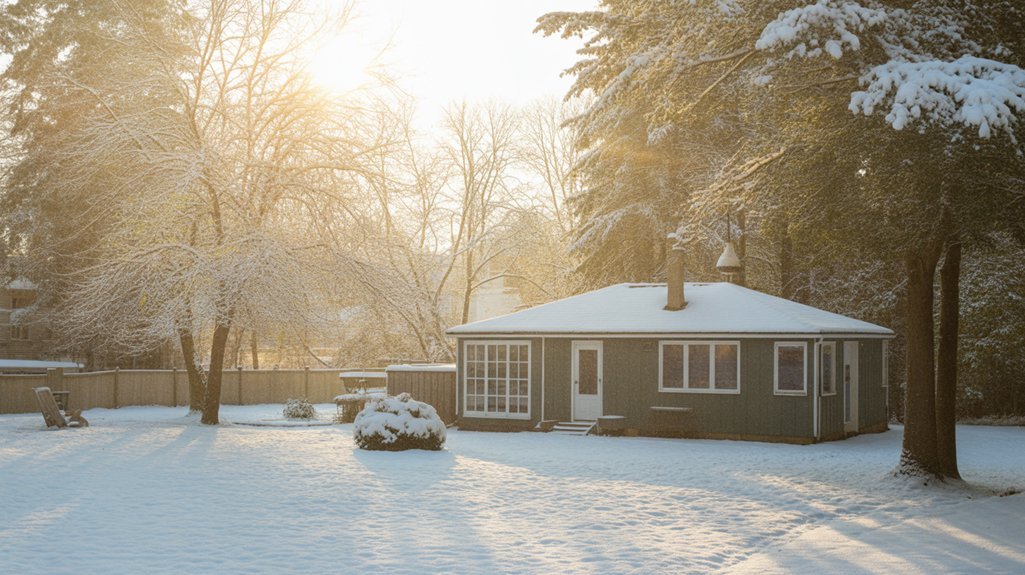
When the snow stacks up, your yard can turn into a tiny winter town full of charm.
You can build a place that lifts hearts. It’s simple, friendly, and fun to share.
1) Pick a spot.
- Flat ground helps snowmen stand.
- Leave a clear path for helpers and strollers.
2) Roll and stack.
- Make small, medium, large.
- Pack tight so they last.
3) Add snowman accessories.
- Scarves, buttons, hats.
- Twigs, pinecones, carrot noses.
4) Create themed snowmen to bless your block.
- A baker, a teacher, a nurse.
- A mail carrier, a coach, a reader.
5) Invite care.
- Make one in honor of a neighbor.
- Add kind notes on cardstock.
Quick tips:
- Use a spray bottle with water.
- Tap seams smooth.
- Take a photo and share the smiles.
Host a Hot Cocoa and Campfire Snow Gathering
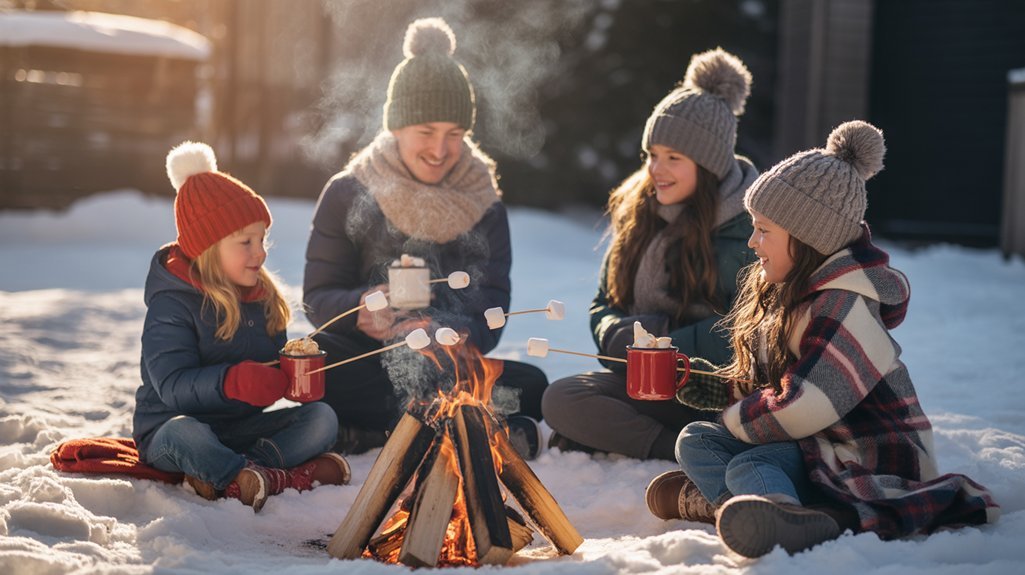
A cozy fire, a big pot of cocoa, and smiling faces can turn a chilly night into a warm memory.
1) Plan the space
- Clear a safe fire ring.
- Set lanterns for soft light.
- Lay out blankets, extra mittens, and mugs.
2) Warm hearts with drinks
- Pick two hot cocoa recipes: classic, plus a dairy-free option.
- Set a toppings tray: marshmallows, peppermint, orange zest, cinnamon.
- Keep a kettle simmering so refills are easy.
3) Lead simple campfire games
- Try “Two Truths and a Wish.”
- Tell one-minute stories in a circle.
- Play quiet charades with winter themes.
4) Serve with care
- Rotate warm seats so everyone feels included.
- Offer hand warmers and water.
- End with a thankful toast.
Quick tips
- Check wind.
- Supervise sparks.
- Pack a shovel and water.
Take a Winter Nature Scavenger Hunt
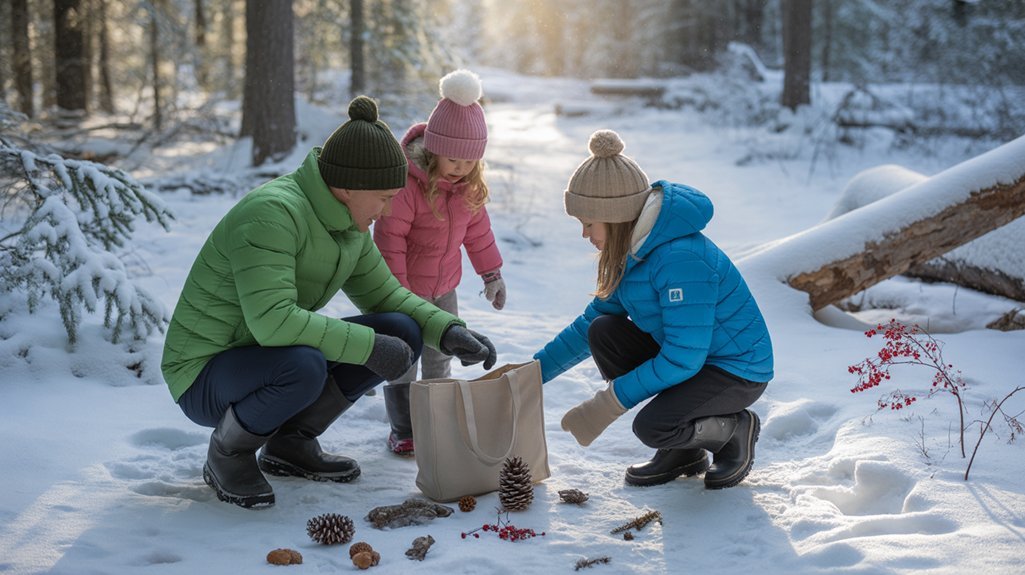
Snow hushes the world, so you can notice small wonders on a winter nature scavenger hunt.
You’re not just walking. You’re caring for each other and the land. Use gentle nature observation to spot tracks, seed pods, bark patterns, and winter wildlife. Bring a simple list. Keep it kind and fun.
1) Prepare
- Dress warm in layers.
- Pack pencils, a small bag, and a phone for photos.
- Review safe boundaries.
2) Hunt
- Look for three tracks, two nests, one bright berry.
- Listen for chickadees.
- Note tree shapes and lichens.
3) Care
- Stay on paths.
- Leave what you find, take pictures instead.
- Thank the space.
4) Share
- Trade roles: spotter, recorder, photographer.
- Celebrate each find with a smile.
- End with warm tea and quick reflections.
Try Ice Skating at a Local Outdoor Rink
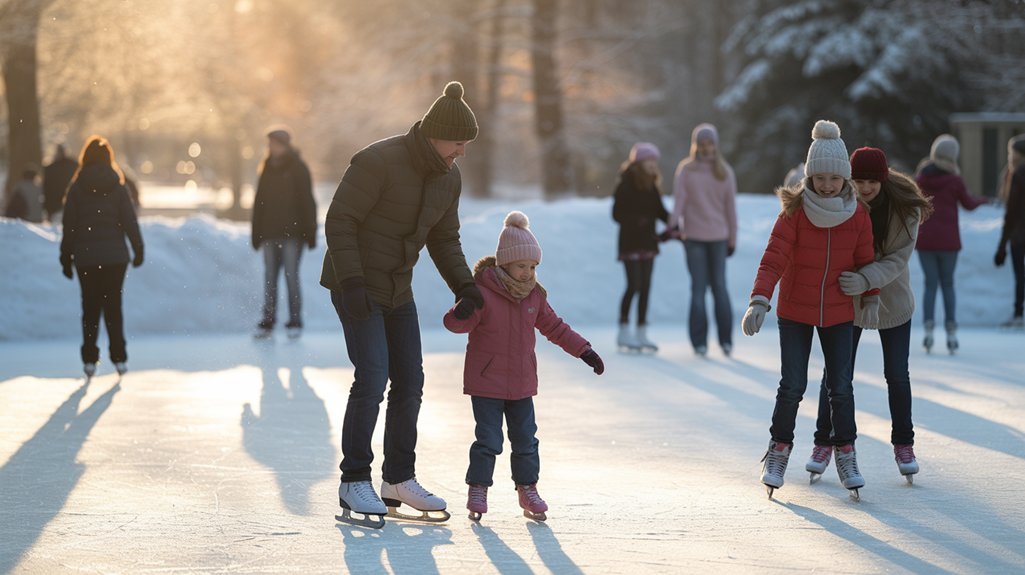
Though the ice may look a little scary at first, you’ll find your balance fast at a friendly outdoor rink. You’re doing this for your crew, and it shows. Take a breath. Smile. You’ve got this.
1) Get ready
- Wear warm layers. Thin socks.
- Helmets for kids.
- Lace skates snug at the ankle.
2) Start strong
- March in place. Then glide.
- Bend knees. Hands out for balance.
- Look where you want to go.
3) Be kind: outdoor rink etiquette
- Skate counterclockwise.
- Pass on the left. Give space to beginners.
- Keep the center open for learners.
4) Simple ice skating tips
- Short pushes. Quiet feet.
- If you fall, tuck chin, roll to a knee, stand slowly.
- Offer a hand. Cheer small wins. Take cocoa breaks.
Make Snow Angels and Frosty Footprint Art
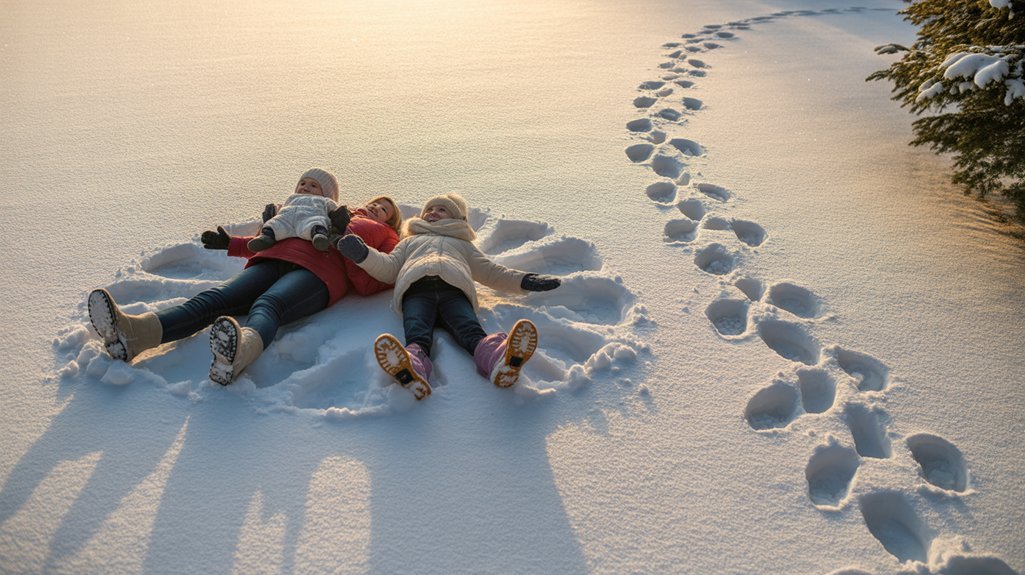
When the yard turns white, step outside and make a little magic together. Invite kids, grandparents, and neighbors. Show care with small acts. Brush off a spot, lie back, and sweep your arms and legs.
Stand up slow. Admire each angel. Snap a photo and send it to brighten someone’s day. That simple joy serves hearts.
Stand up slow, admire each angel, and share a photo to brighten a heart.
Try frosty footprint art next. Use boots, sticks, and a kind plan. Spell names, make arrows to a hot cocoa station, or outline a big heart. This is snow art with winter creativity that lifts others.
1) Prep: Dress warm, choose a gentle area, and set a safe boundary.
2) Create: Make angels first, then lay out footprint designs.
3) Share: Invite others to add steps, then celebrate together.
Go on a Christmas Lights Neighborhood Stroll in the Snow
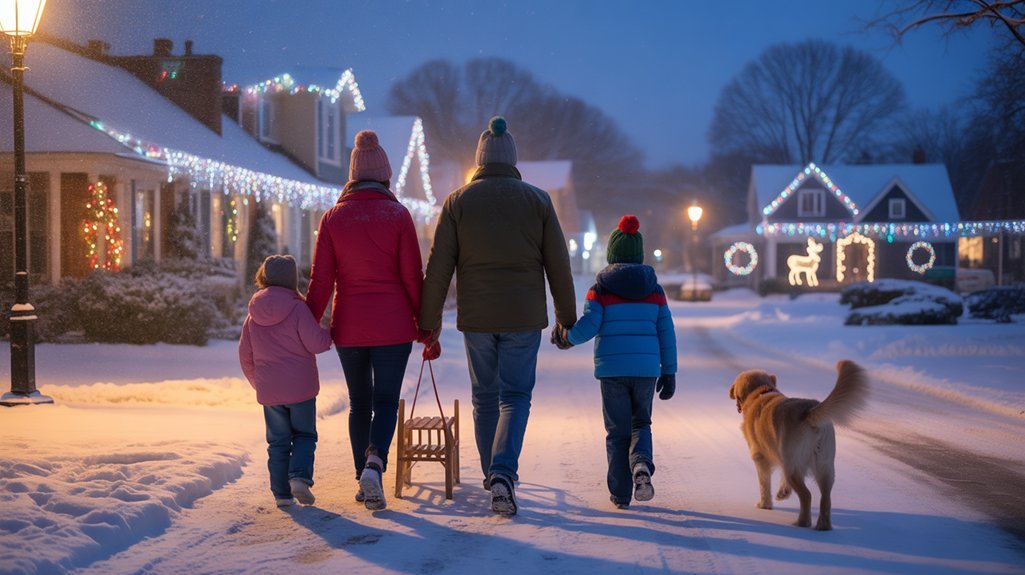
Even before the cocoa’s hot, bundle up and head out for a slow, bright walk.
1) Set your intention
- Choose care over speed. Notice needs. Offer smiles and thanks.
- Tell kids you’re looking for joy to share.
2) Pick your route
- Aim for safe sidewalks and clear crossings.
- Seek streets known for holiday decorations.
3) Walk with warm hearts
- Bring a small trash bag. Tidy a bit as you go.
- Wave to neighbors. Compliment their lights.
4) Add gentle cheer
- Play festive music softly on a phone speaker.
- Keep voices low, kind, and respectful.
5) Pause and reflect
- Spot colors, shapes, and themes.
- Ask, “Who worked hard on this? How can we bless them?”
Quick tips:
- Wear bright layers.
- Carry tea.
- Snap thank-you notes later.
Plan a Family Snowshoe Trek With Holiday Carols

Swap the sidewalk glow for snowy hush and make your walk a song-filled trek. You’ll guide your crew with care, set a kind pace, and share cheer with every step. Keep it simple. Keep it safe. And let music carry you.
1) Map it and gear up: pick a flat loop, check trail hours, and review snowshoe safety. Dress in layers, warm socks, hats, and reflective bands. Pack cocoa, a headlamp, and a small first-aid kit.
2) Set roles: you lead, an older child spots trail markers, another keeps a steady beat. Rotate jobs. Celebrate small wins. Pause for breath and sips.
3) Start a festive sing along: choose easy carols with repeats. Call-and-response works great. Smile, wave to others, and share your bright spirit as you pass.
Craft Ice Ornaments and Decorate Outdoor Trees
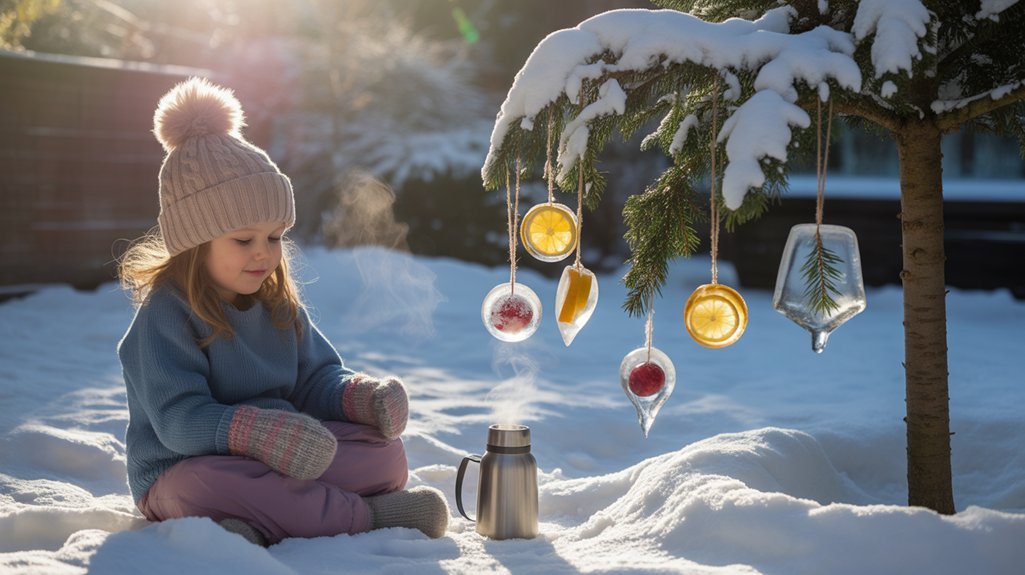
1 bowl, a few cups, and a cold night are all you need to make simple ice ornaments that turn your yard into a little winter gallery.
You’ll lift spirits, beautify a shared space, and give neighbors a smile. You’ve got this.
1) Gather
- Bowls, muffin tins, or lids
- String or ribbon
- Water
- Leaves, berries, pine, citrus slices for nature inspired designs
2) Try ice ornament techniques
- Fill molds halfway with water
- Lay a loop of string so it freezes in place
- Add greens or fruit
- Top with water, then freeze overnight
3) Unmold and hang
- Warm the back of the mold for a second
- Lift gently and carry on a tray
Tips
- Keep pieces small and light
- Hang low for kids, higher for sparkle
- Share extras with neighbors or a community tree
In case you were wondering
How Do We Keep Phones and Cameras Warm and Functional Outside?
Keep devices warm by insulating cases, tucking them in inner pockets, and adding heat packs. Limit exposure, disable unnecessary apps, and carry spares with battery insulation. Rotate gear indoors, wipe condensation, and share protected charging stations to support everyone.
What Are Safe Cold-Weather Time Limits for Young Children?
Limit cold-weather activity duration to 15–20 minutes for toddlers, 20–30 for preschoolers, extending only if dry, warm, and cheerful. Like guiding Little Match Girl indoors, you watch faces, fingers, and energy; rotate warm breaks, rehydrate, layer, and serve safety.
How Can We Spot Early Signs of Frostbite or Hypothermia?
Watch pale or gray skin, numbness, tingling, and hard, waxy patches as frostbite symptoms. Notice shivering, slurred speech, and confusion for hypothermia prevention cues. Move them indoors, warm gradually, replace wet clothes, offer warm drinks, and seek medical help.
What Layers and Fabrics Keep Kids Warm Without Overheating?
Choose moisture‑wicking base layers—merino or synthetic—for base layer benefits; add breathable fleece midlayers; top with windproof, waterproof shells. Prioritize fabric choices that dry fast, vent well, and avoid cotton. You’ll keep kids warm, comfortable, and ready to serve others.
How Do We Winterize a Car for Snowy Family Outings?
Start with car maintenance: check battery, brakes, fluids, and tires; swap to winter tires. Stock winter supplies: blankets, shovel, sand, scraper, flashlight, flares, jumper cables. Top off washer fluid, gas, antifreeze. Test wipers. Imagine helping others stranded?
Conclusion
1) You’ve got a whole snow-day playbook now. Pick one idea, then add a cozy extra: mittens, cocoa, a dry pair of socks.
2) Keep it simple. Short outings. Warm breaks. Smiles count.
3) Notice the hush. The soft white “blanket” asks you to slow down.
4) Snap a few photos, then pocket the phone.
5) End with a glow: cocoa, a story, shared thanks.
You’ve got this. Step outside. Make gentle memories that linger.