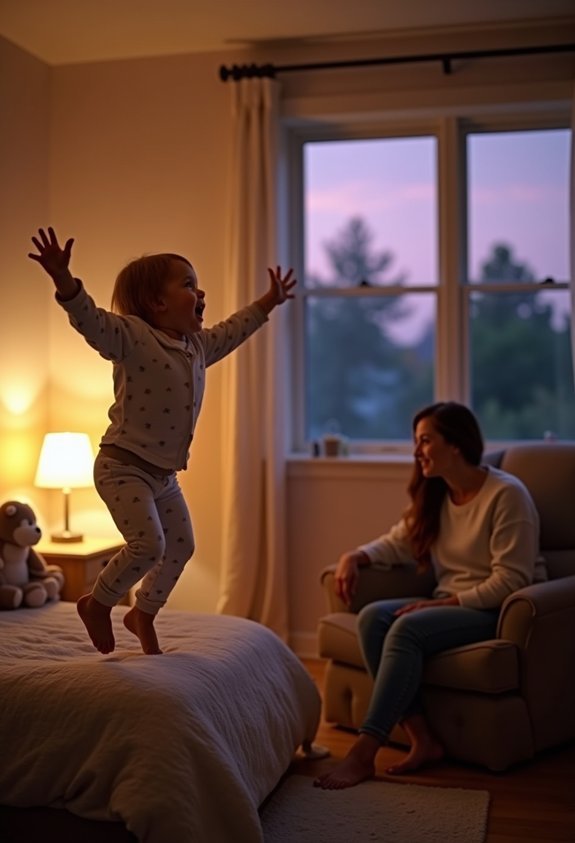
The Real Reason Bedtime Routines Don’t Work for Some Kids
Standard bedtime routines fail when they don’t match your child’s unique neurological profile. Your child’s resistance isn’t defiance—it’s their nervous system signaling a mismatch. Sensory-sensitive children may feel overwhelmed by typical bath-book-bed sequences, while kids with ADHD often experience a “second wind” that makes settling down nearly impossible. Anxiety can turn quiet bedtime moments into worry spirals. Understanding the specific factors driving your child’s struggles reveals targeted solutions that actually work.
The Myth of the One-Size-Fits-All Bedtime Routine

While popular parenting guides often promote a standardized sequence of bath, book, and bed, research in pediatric sleep science reveals that effective bedtime routines depend heavily on a child’s developmental stage, temperament, and sensory processing profile.
You can’t expect a highly sensitive child to respond the same way as a sensory-seeking one.
Bedtime flexibility isn’t permissiveness—it’s clinical wisdom. When you recognize your child’s unique neurological wiring, you can design individualized routines that actually work.
Flexibility in bedtime routines isn’t giving in—it’s tuning in to your child’s individual needs.
A toddler with tactile sensitivities may find baths dysregulating rather than calming. An anxious school-aged child might need extended wind-down time that rigid schedules don’t accommodate.
You’ll achieve better outcomes when you observe your child’s specific cues rather than forcing compliance with generic recommendations.
Understanding Your Child’s Unique Circadian Rhythm
Because circadian rhythms aren’t fixed from birth, understanding your child’s biological clock requires ongoing observation throughout their development.
Children exhibit distinct circadian variations that shift as their neurological systems mature. You’ll notice your toddler’s sleep preferences differ markedly from your school-age child’s patterns. These biological differences aren’t behavioral problems—they’re developmental realities.
Track when your child naturally shows drowsiness signals: eye rubbing, decreased activity, or mood changes. Document these patterns across two weeks to identify their authentic sleep window.
You’re looking for the 20-30 minute period when melatonin release peaks and sleep onset occurs most efficiently.
Fighting against your child’s natural rhythm creates resistance. Working with it transforms bedtime from a battle into a biological process. Your role shifts from enforcer to informed guide.
How Sensory Processing Differences Affect Sleep
Beyond circadian timing, your child’s sensory processing profile shapes their sleep readiness in ways that often go unrecognized.
Children with sensory sensitivities may find standard bedtime environments overwhelming—scratchy pajamas, ambient noise, or even the pressure of blankets can trigger arousal instead of relaxation.
Research shows that sensory-sensitive children require longer wind-down periods and more intentional environmental modifications.
You’ll need to identify whether your child is sensory-seeking or sensory-avoidant to select appropriate calming techniques.
For sensory-avoidant children, reduce environmental stimuli systematically: dim lights, eliminate background sounds, and choose soft, tagless sleepwear.
Sensory-seeking children often benefit from deep pressure input through weighted blankets or firm massage before bed.
Matching your approach to your child’s specific sensory profile transforms bedtime from a nightly struggle into achievable rest.
The Role of Anxiety and an Overactive Mind at Bedtime

Although you’ve addressed sensory needs, anxiety and racing thoughts frequently emerge as the next barrier to sleep onset. Your child’s brain may activate worry circuits precisely when external stimulation decreases, making bedtime a prime time for anxiety triggers to surface.
Children with overactive minds often report intrusive thoughts about school performance, social interactions, or catastrophic scenarios. Their prefrontal cortex hasn’t fully developed the capacity to regulate these concerns independently.
You’ll need to implement targeted calming techniques before bed. Cognitive dumping through journaling helps externalize worries. Progressive muscle relaxation teaches body awareness and tension release. Guided imagery redirects mental activity toward neutral content.
These interventions work best when practiced consistently, allowing your child’s nervous system to associate bedtime with safety rather than vigilance.
ADHD and the Struggle to Wind Down

Children with ADHD face distinct neurobiological challenges that make winding down particularly difficult. Their brains struggle to transition from high-activity states to rest, making traditional bedtime routines ineffective without modification.
ADHD symptoms like hyperactivity and impulsivity don’t simply shut off at night. You’ll notice your child may experience a “second wind” when they should be settling down. This isn’t defiance—it’s neurological.
Creating an optimal sleep environment becomes critical. Reduce stimulation gradually, dim lights early, and eliminate screens at least an hour before bed. Incorporate calming techniques such as deep pressure activities or white noise.
Routine flexibility matters here. Rigid schedules often backfire with ADHD. Instead, focus on consistent sequences rather than exact times.
Address bedtime challenges by building in extra transition time and movement breaks before the final wind-down begins.
Why Some Children Need Movement Before Rest
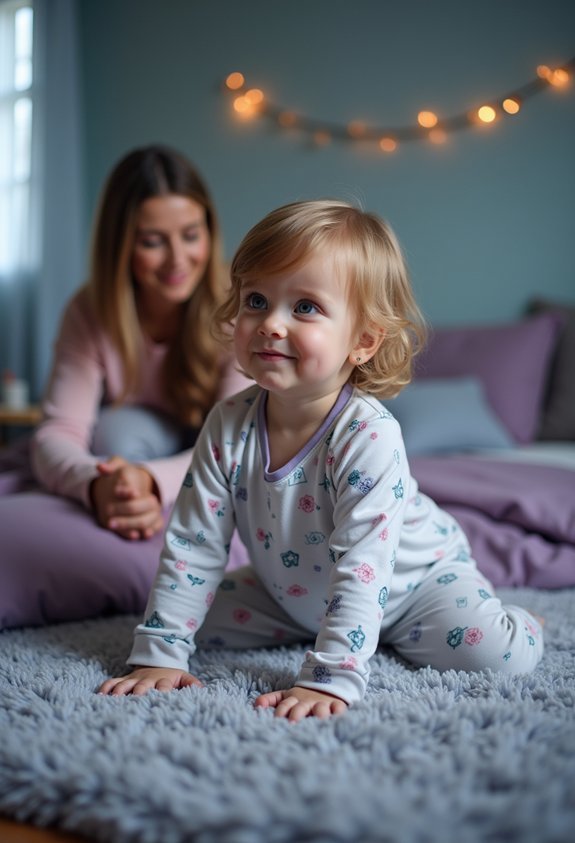
While conventional wisdom suggests calming activities before sleep, some children’s nervous systems require physical movement to achieve proper regulation. Your child’s sensory needs may demand energy release before their body can transition to rest. This isn’t defiance—it’s neurobiology.
Research shows that physical activity helps regulate arousal levels in children with heightened sensory processing. Movement breaks before bedtime transitions allow motor skills engagement while depleting excess energy stores. You might notice your child actually calms faster after structured playtime importance becomes part of your evening routine.
Consider incorporating calming techniques that involve proprioceptive input: wall pushups, bear crawls, or heavy work activities. These movements provide the sensory feedback your child’s nervous system craves, creating the physiological conditions necessary for sleep readiness without overstimulation.
The Impact of Screen Time Beyond the Blue Light Effect

Just as your child’s body needs specific sensory input to prepare for sleep, their brain requires protection from particular types of stimulation—and screen time‘s effects extend far beyond the commonly discussed blue light exposure.
Interactive content triggers dopamine release, keeping your child’s reward system activated when it should be winding down. Video games and social media create psychological arousal through variable reinforcement—the same mechanism that makes slot machines addictive. Your child’s developing prefrontal cortex can’t easily disengage from these stimuli.
Interactive screens hijack your child’s reward system right when their brain should be powering down for sleep.
Research shows that content type matters more than duration. Passive viewing causes less sleep disruption than interactive screen time.
Social media introduces additional concerns: anxiety about peer interactions and fear of missing out create cognitive hyperarousal that persists after devices are off.
Consider eliminating interactive screens entirely during the final ninety minutes before bed.
Recognizing Hidden Sleep Disorders in Children

How can you tell when your child’s sleep difficulties signal something more serious than normal developmental variations?
Watch for persistent patterns that don’t improve with consistent bedtime routines. Hidden sleep disorders require clinical evaluation when symptoms persist beyond two weeks.
Key warning signs include:
- Sleep apnea: snoring, gasping, mouth breathing, or observed pauses in breathing
- Restless legs: complaints of leg discomfort, constant movement, or inability to stay still
- Night terrors and sleepwalking: episodes occurring during deep sleep with no morning recall
- Nocturnal seizures: unusual movements, confusion, or hypersomnia the following day
Circadian disruption may mimic behavioral problems, while environmental factors can mask underlying conditions.
Don’t dismiss excessive daytime sleepiness or mood changes as normal.
Document your observations and consult a pediatric sleep specialist for proper diagnosis.
Tailoring Your Approach to Your Child’s Temperament

Once you’ve ruled out underlying sleep disorders, your focus shifts to matching bedtime strategies with your child’s unique temperament.
Research identifies distinct temperament types that respond differently to sleep interventions. High-energy children require extended wind-down periods with progressive activity reduction. Sensitive children need consistent environmental conditions and gradual transitions.
Every child’s temperament is different—matching sleep strategies to their unique personality leads to better rest for everyone.
Personalized routines account for your child’s biological tendencies rather than forcing universal approaches. If your child exhibits slow-to-warm-up traits, introduce bedtime changes incrementally over weeks.
For spirited children, incorporate physical activity earlier in the evening and provide clear, predictable sequences.
You’ll achieve better outcomes when you observe your child’s natural responses and adapt accordingly. Track which elements produce resistance versus cooperation, then refine your approach based on documented patterns rather than assumptions.
Practical Strategies for the Child Who Resists Sleep
When your child actively resists bedtime despite a well-matched routine, you’ll need targeted behavioral strategies that address the specific type of resistance you’re observing.
Consider implementing these evidence-based approaches:
- Optimize the sleep environment: Eliminate stimulating elements and introduce white noise or dim lighting to signal the body’s transition toward rest.
- Establish consistent nighttime rituals: Incorporate bedtime stories and quiet activities that create predictable sequences your child can anticipate.
- Introduce age-appropriate relaxation exercises: Teach calming techniques like deep breathing or progressive muscle relaxation to reduce physiological arousal.
- Calibrate parental involvement: Gradually fade your presence using scheduled check-ins rather than abrupt withdrawal.
Maintain a consistent sleep schedule even on weekends, as research demonstrates that irregular timing undermines circadian rhythm development and intensifies resistance behaviors.
In case you were wondering
What Age Should Children Start Having a Consistent Bedtime Routine?
You should establish bedtime consistency as early as 3-4 months when circadian rhythms begin developing. For optimal toddler sleep, you’ll want routines firmly in place by 12-18 months, when behavioral patterns become more resistant to change.
Can Melatonin Supplements Safely Help Children Who Struggle With Sleep?
While melatonin’s popular, it’s not universally safe—you should consult your pediatrician about appropriate melatonin dosage for your child’s age. Sleep safety requires ruling out underlying conditions before supplementing, as developing brains need individualized approaches.
How Many Hours of Sleep Does My Child Actually Need?
Your child’s sleep duration needs depend on age: toddlers require 11-14 hours, preschoolers 10-13 hours, and school-age children 9-12 hours. Adequate sleep directly supports developmental milestones, including cognitive function, emotional regulation, and physical growth.
Should Siblings Share a Bedroom if One Has Sleep Difficulties?
Research shows 30% of children experience disrupted sleep from bedroom sharing. You’ll need to assess your sibling dynamics carefully—if one child’s sleep difficulties consistently wake the other, separate spaces typically produce better developmental outcomes.
When Should I Consult a Pediatrician About My Child’s Sleep Problems?
You should consult a pediatrician when sleep problems persist beyond two weeks, affect daytime functioning, or involve breathing difficulties. Pediatric evaluations and sleep assessments can identify underlying conditions that standard bedtime routines won’t address.
Conclusion
You’ve now seen that your child isn’t broken—they’re simply wired differently. Like a lock requiring its own unique key, your child’s sleep needs a personalized approach that honors their neurology, temperament, and developmental stage. Armed with evidence-based strategies and deeper understanding, you can finally unlock restful nights. The journey may twist and turn, but peaceful sleep isn’t a distant dream—it’s an achievable destination waiting for your family.