15 Tips for Organizing Your Game Closet
Start by dragging every game out, making a quick list, and admitting you own four copies of Uno. Toss or donate what you never play. Group the rest by type and box size, then store them vertically on sturdy shelves like books. Put kids’ favorites low, adult stuff high. Use bins for bits, labels for everything, and a home for “games in progress.” Want your closet to work like a store, not a crime scene?
Key Takeaways
- Take full inventory of every game, noting type, location, and condition to understand what you own and what needs attention.
- Declutter by removing unplayed games, then donate or sell them, keeping only titles your household actually enjoys.
- Store games vertically on sturdy shelves or cube units, grouping similar types together for quicker selection.
- Use bags, inserts, labels, and dedicated bins to keep components, manuals, and accessories organized and easy to find.
- Create kid-friendly lower shelves and a “game in progress” area, and schedule regular refreshes to maintain order.
Take Inventory of Every Game You Own
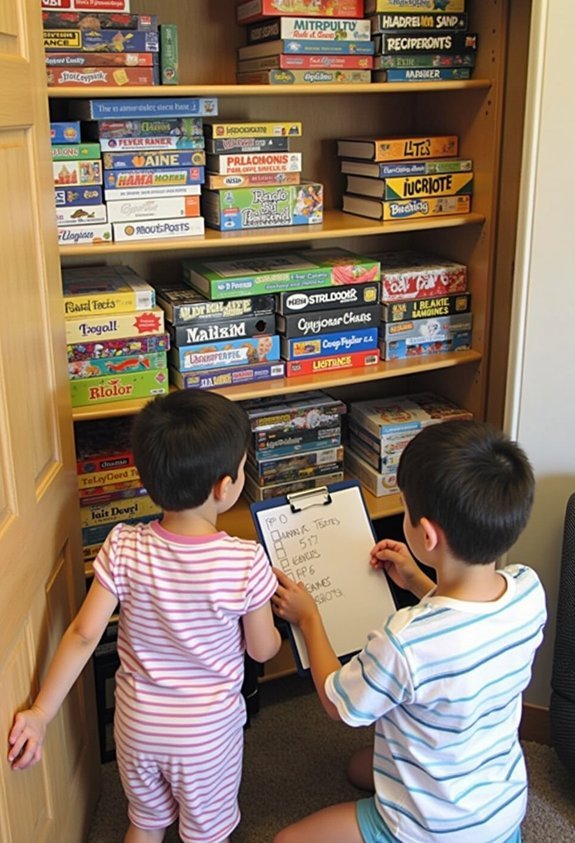
Step one is brutal but necessary: you’ve gotta face every single game you own. Drag them out from under the bed, the car trunk, that one “mystery” closet.
Pile them in one scary mountain. Now you’re going to build a game inventory, not just glance and shove stuff back. Grab a notebook or open a simple app. Write each game’s name, kind, and where it usually lives.
Add notes like “missing blue piece” or “controller sticky, send help.” Use tracking systems that you’ll actually keep using—sticky notes on boxes, color dots, or a quick spreadsheet.
As you list, you’ll spot duplicates, half-broken junk, and total surprises you forgot existed. Congrats, you finally know your battlefield.
Next time you play, nothing hides or ambushes you.
Declutter by Donating or Selling Unwanted Titles
Once you see that giant pile of games, you’ll realize something harsh: you don’t love all of these.
That towering stack of games isn’t a collection—it’s a confession that you’ve kept too much.
Some are boring. Some are broken. Some were clearly bought at 1 a.m. after too much pizza. Time to let them go.
- Pull out anything you haven’t played in a year. If it doesn’t spark even a tiny thrill, it’s a goner.
- For donation options, think libraries, schools, youth centers, and shelters. They’ll actually use those dusty boxes.
- Want cash instead of warm feelings? Use selling platforms like eBay, Facebook Marketplace, or local game groups.
- Make a “maybe” stack. Revisit it tomorrow. If you forgot what’s in it, your decision’s made.
Enjoy the space, the lighter shelf, and the games you actually play more often.
Group Games by Category, Size, or Play Style
Your shelves are lighter, your “why did I buy this?” games are gone, and now you’ve got one big question: how do you stop the rest from turning back into a cardboard avalanche?
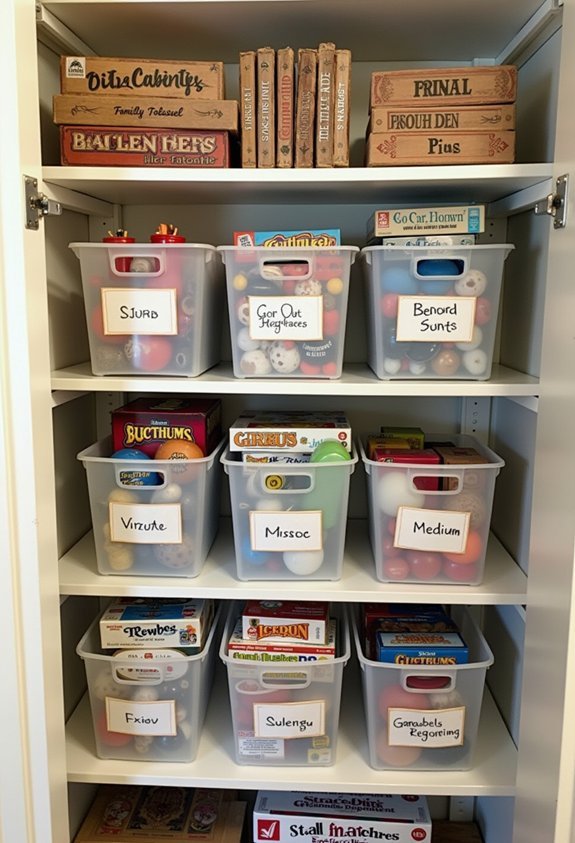
Start by sorting by how you actually play. Put party games together so you can grab them when friends drop by. Keep strategy games, campaign games, and heavier thematic games in one brain-busting zone.
Make a calm corner for cooperative games and family games, where no one flips the table. Stack card games and quick games in a “we have 20 minutes” basket.
Line up abstract games and dexterity games where you can see the shapes and weird pieces. When you know the mood, you’ll know the shelf without thinking twice.
Choose the Right Shelving and Storage Furniture

Next, you’ve got to give those games a proper home, not just “random teetering piles of doom.”
Think about what kind of shelves and storage fit your life, not the Instagram-perfect setup you’d need a ladder and a trust fund for.
Start with your space. Can you open the closet door without a helmet? Measure height, width, and depth so you don’t buy a beast that blocks everything.
Then think about shelving materials and storage solutions that won’t sag or snap when you load up your heaviest boxes.
- Sturdy wood shelves for board game hauls.
- Metal racks if you’re rough, clumsy, or both.
- Cube units for mixing games, baskets, and decor.
- Low rolling carts for kids’ games and easy grabs.
Store Boxes Vertically to Save Space and Protect Contents
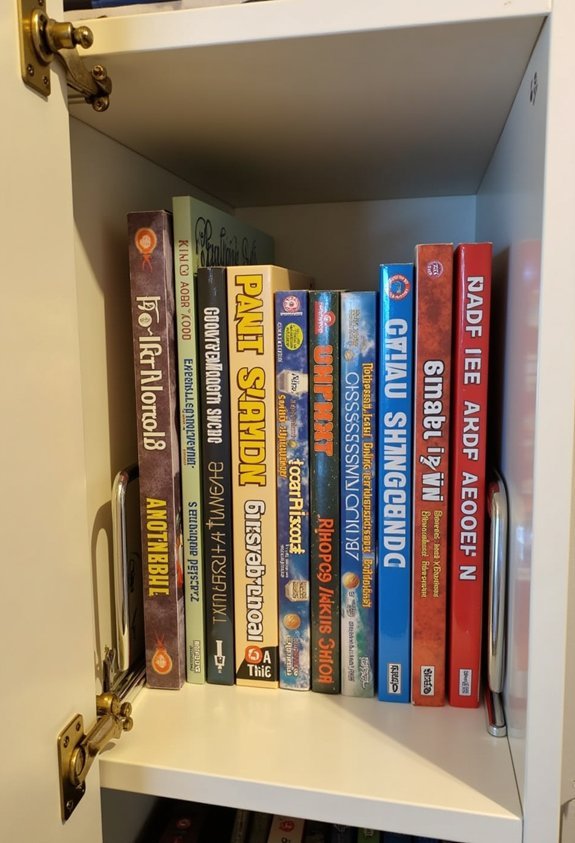
Flip those game boxes on their sides like books on a shelf and watch your closet go from chaos goblin to low-key genius.
With vertical storage solutions, you can see every title at a glance instead of digging through a cardboard landslide. You’ll grab Catan without sending Jenga tumbling to its doom.
Plus, boxes stacked flat slowly crush each other; lids bow, corners split, bits sneak out. Standing them up spreads the weight and gives built-in box protection methods.
Tight shelf? Line boxes edge to edge so they support one another. If some are slippery, add a simple bookend or wedge in a puzzle box you never finish anyway.
You’ll save space, save time, and save your favorite games from box-warp horror forever more.
Use Inserts, Baggies, and Trays to Contain Components
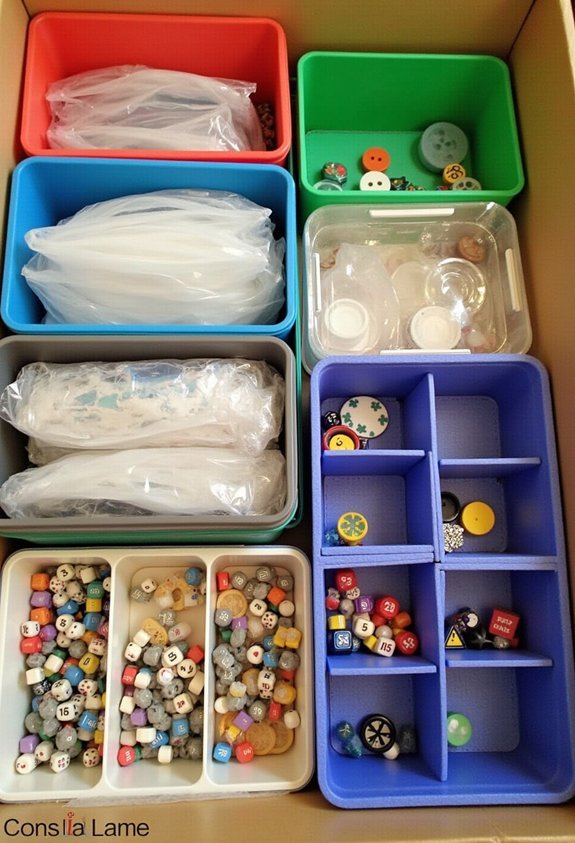
One tiny secret will save you from a lifetime of lost tokens and “where’s the blue meeple?!” drama: containment.
Containment turns chaotic game nights into smooth setups, no lost tokens, no missing meeples
When you pop open a box and every bit sits where it belongs, it feels like magic. Good component organization starts with smart storage solutions that keep stuff tight and safe for fast setup and easy teardown.
- Pick inserts options that fit your games. Foam or wood trays grab cards, dice, and minis so they don’t roam.
- Use different baggie types for bits: tiny ones for tokens, bigger ones for decks, one each for player colors.
- Mix tray sizes inside boxes to group phases, factions, or modules.
- Aim for game protection: no loose corners, bent cards, or runaway cubes ever again.
Label Shelves, Bins, and Boxes for Quick Retrieval

A little label magic turns your game closet from “black hole of cardboard” into “wow, I can actually find stuff.”
When every shelf, bin, and box has a clear name, you don’t stand there squinting at side art like you’re decoding ancient runes.
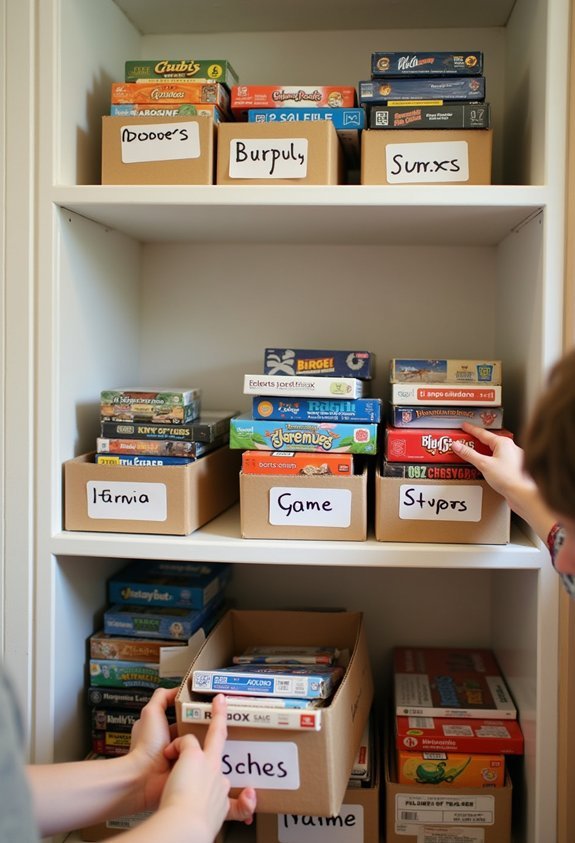
Slap labels on shelf edges: “Party Games,” “Heavy Strategy,” “Kids,” “Two-Player.”
Now your brain chills out and your eyes know where to go.
Use simple labeling techniques: a cheap label maker, painter’s tape plus marker, or sticky notes if you’re chaotic but trying.
Add color coding—blue for family games, red for long epics, green for co-ops.
Label bins too: “Dice,” “Miniatures,” “Sleeves.”
Future you’ll bless past you every game night.
Instead of digging forever, you grab, play, and start laughing.
Create a Dedicated Spot for Rulebooks and Manuals

Even if your closet still looks like a dragon’s hoard of cardboard, your rulebooks don’t have to live in the chaos.
Give them their own VIP zone so you’re not screaming, “Where’s the rulebook?” every game night.
- Pick one shelf or box just for rulebooks and manuals. One. Not three. Not “wherever they fit.”
- Stand books upright like a mini library. Use cheap bookends or even empty game boxes so they don’t flop everywhere.
- Use simple tabs or sticky notes for long games so key pages are quick to find. That’s rulebook organization magic.
- Keep pens and a small notepad next to them so you can jot house rules and reminders, boosting manual accessibility big-time.
For your future sanity levels.
Designate a “Game in Progress” Area

Your rulebooks are chilling in their VIP lounge, so now it’s time to deal with the real chaos: half-finished games taking over your life.
You need a clear “game in progress” zone, or every shelf turns into a crime scene of scattered tokens and mystery dice. Pick one spot: a small table, a tray, even the top of a dresser. That’s where all paused games live.
Keep boards, cards, and pieces together so you can jump back in fast at game night. Label a bin for ongoing campaigns that last weeks. When the area’s full, you must finish or pack something up.
No overflow. No excuses. Your future self will high-five you. And yes, this rule also applies to that endless puzzle from yesterday.
Protect Delicate or Collectible Games With Extra Care

Because some games are basically cardboard royalty, you can’t treat every box like it’s a $5 yard-sale find. Your collector’s editions, out-of-print gems, and signed boxes? Those are the VIPs of your closet nightclub.
Give them special treatment so they don’t end up warped, faded, or smelling like old basement.
- Store fancy games at eye level so you’re not dropping them like hot potatoes from the top shelf.
- Use protective cases or box sleeves to guard corners from getting smashed during “speed clean” days.
- Aim for light climate control: no damp basement, no scorching attic, no sun laser-beaming the boxes.
- Bag components—cards, minis, tokens—so one spill doesn’t turn everything into cardboard soup. You’ll thank yourself when they still look brand-new.
Leverage Door, Wall, and Under-Shelf Storage
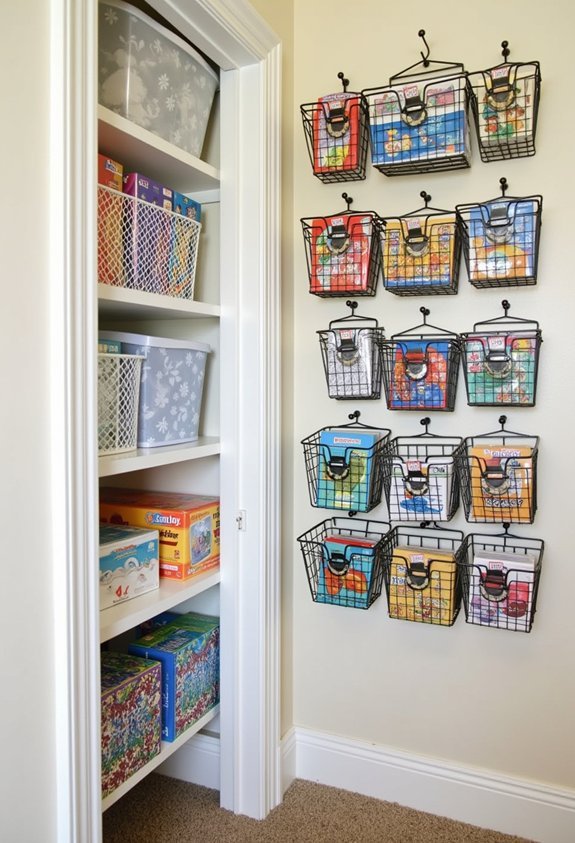
Once the fancy VIP games are safe and cozy, it’s time to deal with the rest of the chaos trying to spill out of the closet.
Start with the door. Treat it like bonus real estate. Hang organizers or sturdy door hooks and stash small card games, dice bags, and score pads. Boom—floor space saved.
Use your closet door like secret storage—hooks, pockets, and pouches for every tiny game gremlin.
Next, attack the walls. Add simple wall shelves above eye level for big box games you don’t grab every day. Stack them like cool, nerdy trophies.
Still cramped? Look under your shelves. Slide in under-shelf baskets for loose bits: extra card sleeves, replacement pieces, manuals you swear you’ll read someday.
Now everything has a clear spot, and your closet stops attacking you every time you crack it open wide.
Make Kid-Friendly Zones for Family Games
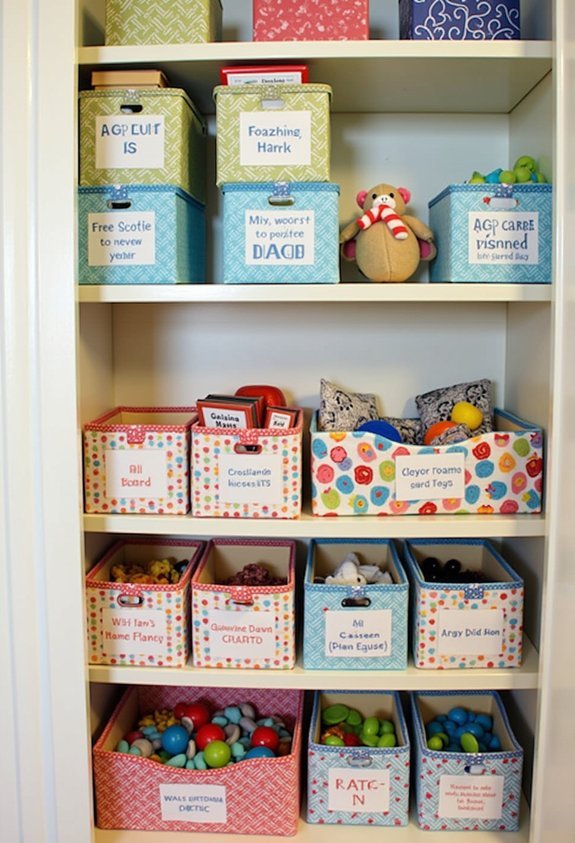
Ever notice how kids can sniff out the ONE game with 800 tiny pieces on the highest shelf and then immediately drop it on the dog?
That’s why you need kid friendly zones in your game closet. Think low shelves, easy bins, zero ladders.
- Put family favorites on the lowest shelf so kids can grab them without climbing like tiny raccoons.
- Use sturdy bins for cards and dice. If it can shatter, it doesn’t live in the kid zone.
- Label shelves with pictures, not just words, to boost game accessibility for younger readers.
- Keep “grown‑up” games up high, so big campaigns stay safe while kids raid their section like a snack drawer.
Less chaos, fewer tears, and way more actual family game time together.
Digitize Notes, House Rules, and Player Aids
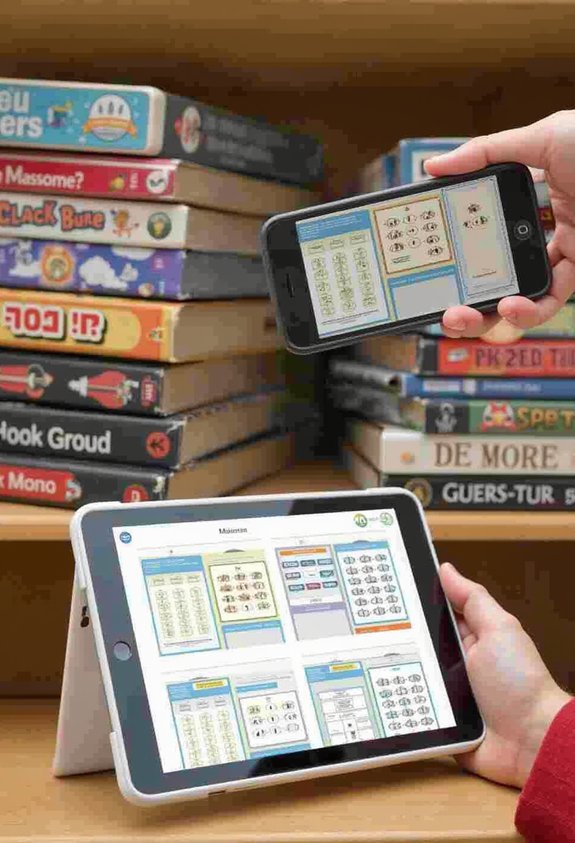
Kid shelves are sorted, tiny raccoons are contained… now let’s fix the *other* chaos: all your scribbled notes and “we don’t play that rule” rules.
Grab your phone. Snap pics of house rules, weird scoring changes, and that one-page reminder for Grandma. Store them in one cloud folder per game. Boom: instant digital organization.
Next, use a simple notes app or doc for rule tracking. List your tweaks, player aids, and “do NOT let Kyle be banker” warnings. Share the file with your group so no one argues later.
Print a clean copy if you like paper at the table, but keep the master digital. When a rule changes, update one file instead of chasing sticky notes. Future you’ll want to hug you.
Set Up a Simple System for Returning Games After Play
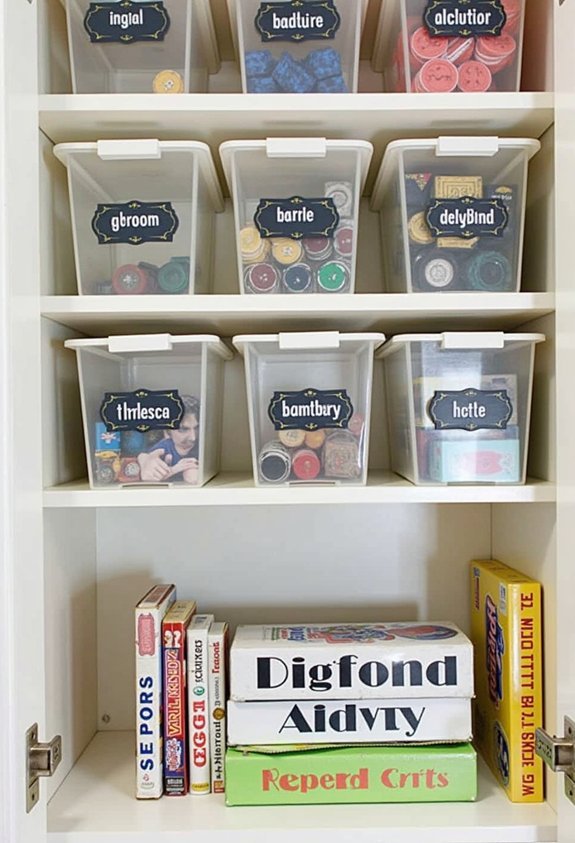
Two minutes of cleanup after a game can save you from living in permanent cardboard chaos. You just need a simple “back to the shelf” system so games don’t camp on your coffee table for three weeks.
- Pick one shelf for “played tonight” games. When you’re done, everything on that shelf goes back in the closet before anyone touches their phone.
- Keep a small bin for wandering bits. At the end of the night, dump them into the right boxes like a lost-and-found raid.
- Slip a sticky note inside each lid for game rotation and quick game tracking. Mark dates you played.
- Make cleanup a race. Timer on, trash talk allowed, winner picks next game. Nobody escapes until every box actually closes flat, okay?
Schedule Regular Refreshes to Keep Your Closet Tidy
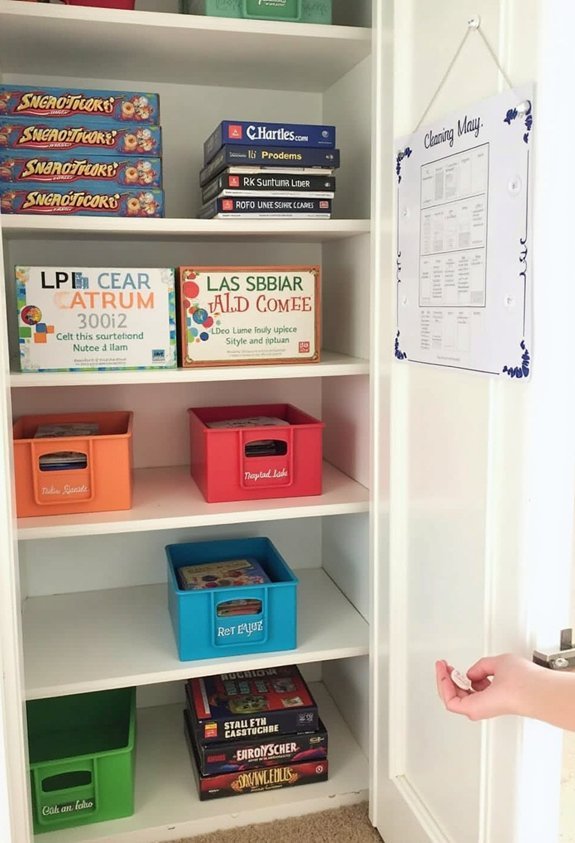
Now that you’ve got everyone actually putting games away (round of applause), it’s time to stop your closet from slowly turning into a cardboard junkyard again.
Here’s the trick: set a refresh schedule, just like trash day or laundry day. Maybe the first Sunday of every month, you open the doors, take a breath, and face the chaos.
Pick a game-closet trash day: a tiny ritual that keeps chaos from creeping back.
You don’t need hours. Ten, fifteen minutes of closet maintenance is plenty. Stand there and ask: What’s missing pieces? What’s broken? What never gets picked? Toss trash, tape ripped boxes, and move favorites to easy reach.
Rotate in a forgotten game, like a “new release” shelf. Future you’ll open that door and think, “Wow, I’m a genius.” Your games totally deserve that tiny effort.
In case you were wondering
How Do I Protect Games From Humidity, Mold, or Temperature Fluctuations?
Use airtight bins with silica gel for humidity control, keep shelves off exterior walls, and add a dehumidifier. For mold prevention and temperature regulation, avoid basements or attics and prioritize consistent conditions for game preservation.
What’s the Best Way to Catalog My Games for Insurance or Inventory Apps?
You should build a detailed game inventory; about 60% of gamers forget exact collection values. Use spreadsheet or app catalog options, record purchase price, condition, serials, photos, and store backups in cloud services for safety.
How Should I Store Games I Frequently Lend to Friends or Family?
Store them on a clearly labeled “Lending Shelf,” separate from your main collection, so you instantly see what’s out. Use a logbook or app for game tracking, documenting borrower, date, and streamlining the lending process.
Are There Safe Ways to Include Snacks and Drinks Near Stored Games?
You can safely keep snacks and drinks nearby when you separate zones: sealed drink containers on a tray, closed snack storage bins on a shelf, mats beneath, and a no-liquid line in front of boxes.
How Can I Childproof Access to Adult or Complex Board Games?
Childproof access by placing adult games on high shelves within closed game storage, then adding safety locks or latches. Store small pieces in latched containers, label boxes and keep rulebooks separate to discourage unsupervised play.
Conclusion
So yeah, it sounds like “a lot of work for some cardboard,” but think about it: you’re already wasting time digging for missing dice and that one game with “the blue dragon on it.” Do this once, you’ll save yourself 20 mini-meltdowns later. Start small—one shelf, 10 minutes. Soon you’ll open that closet and feel powerful, not doomed. And hey, more time for snacks and trash talk.