17 Weekend Sports Tips for Stronger Parent-Child Bonds
Weekend sports give you a powerful way to strengthen your bond with your child. Let them pick the activity, keep things playful over competitive, and celebrate effort instead of outcomes. Put your phone away and stay fully present. Share your own sports stories, adapt games to their skill level, and end each session with encouragement. These small shifts turn ordinary weekends into lasting memories—and the tips ahead show you exactly how.
Key Takeaways
- Let children choose their sports activities to build trust and show their voice matters in family decisions.
- Prioritize fun and shared laughter over competition to create lasting memories and boost confidence.
- Practice active listening by making eye contact and celebrating effort rather than just outcomes.
- Establish a consistent weekend sports routine with brief 30-45 minute activities to maintain engagement.
- Unplug from devices during sports time to demonstrate full presence and strengthen emotional connections.
Let Your Child Choose the Sport

Why does letting your child pick the sport matter so much? When you honor your child’s interests, you send a powerful message: their voice counts.
Kids engage more deeply when they follow their own sports preferences. They show up excited. They try harder. They stick with it longer.
When kids choose their own sport, something clicks—they show up with heart and stay for the journey.
How to guide the process:
- Ask open questions: “What sounds fun to you?”
- Offer a few options, not too many
- Watch what catches their eye naturally
- Skip the pressure—this is about connection
Maybe your child loves swimming while you dreamed of soccer. That’s okay. Your role is cheerleader, not coach.
When children feel heard, trust grows. And that trust? It’s the real win here.
Focus on Fun Over Competition
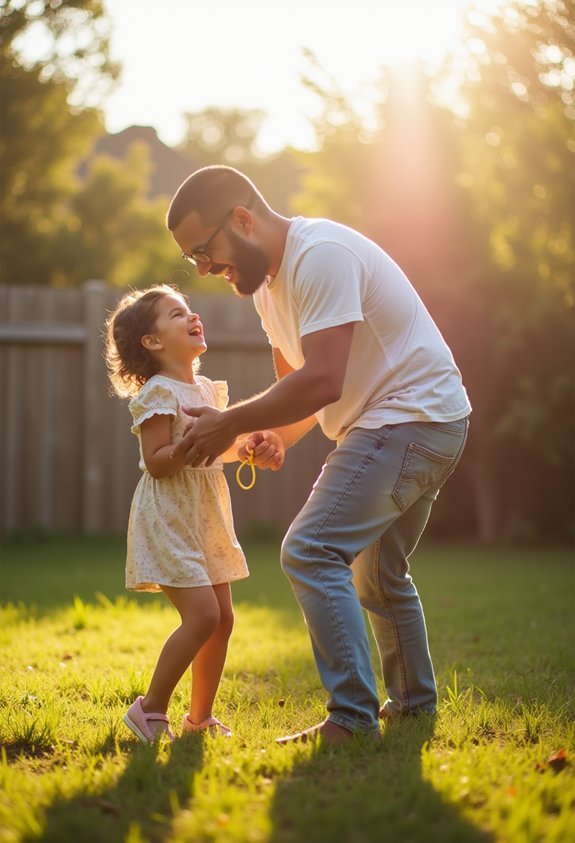
When the scoreboard becomes the main event, something precious gets lost. You’re not training future pros. You’re building memories and connection.
Why Fun Wins Every Time
- Kids remember shared laughter, not final scores
- Low pressure builds confidence faster
- Team spirit grows when everyone relaxes
Simple Ways to Keep It Light
- Celebrate effort, not just goals
- Make up silly rules together
- Take snack breaks without checking the time
- Let your child “win” sometimes—and laugh about it
Watch for These Signs
If your child dreads game time or gets upset easily, dial back the competition. Ask what they’d enjoy more.
The real victory? Your child asking, “Can we do this again next weekend?” That’s the score that matters.
Practice Active Listening During Activities
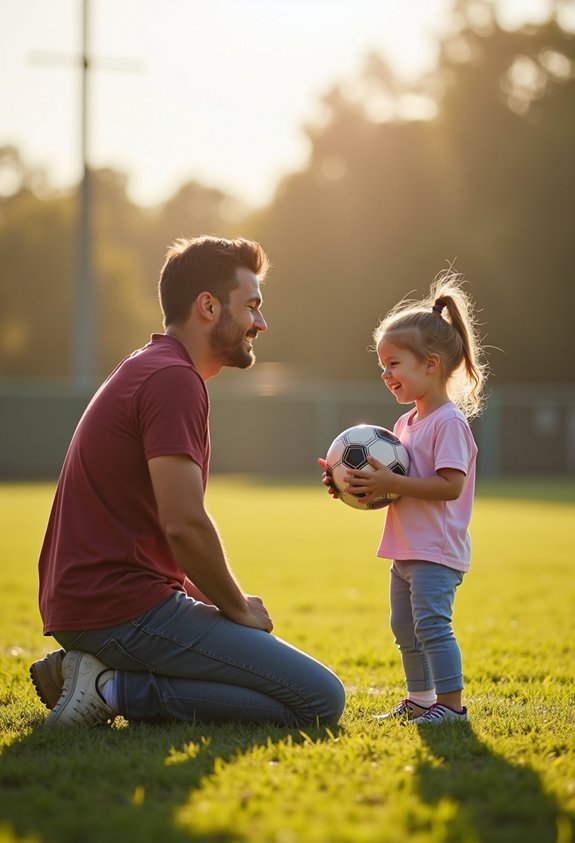
How often do you truly hear your child while you’re tossing a ball or riding bikes together? Active engagement means more than just being present—it’s about tuning in to what your child shares.
Simple ways to listen well:
- Put your phone away
- Make eye contact during breaks
- Repeat back what you heard
- Ask follow-up questions
When your child says, “Watch this!” they’re really asking, “Do you see me?” Your thoughtful feedback shows them they matter.
Try phrases like:
- “Tell me more about that.”
- “How did that feel?”
- “I noticed you worked hard on that move.”
You don’t need perfect words. You just need to be fully there. That’s what builds lasting connections through sport.
Celebrate Effort Rather Than Outcomes
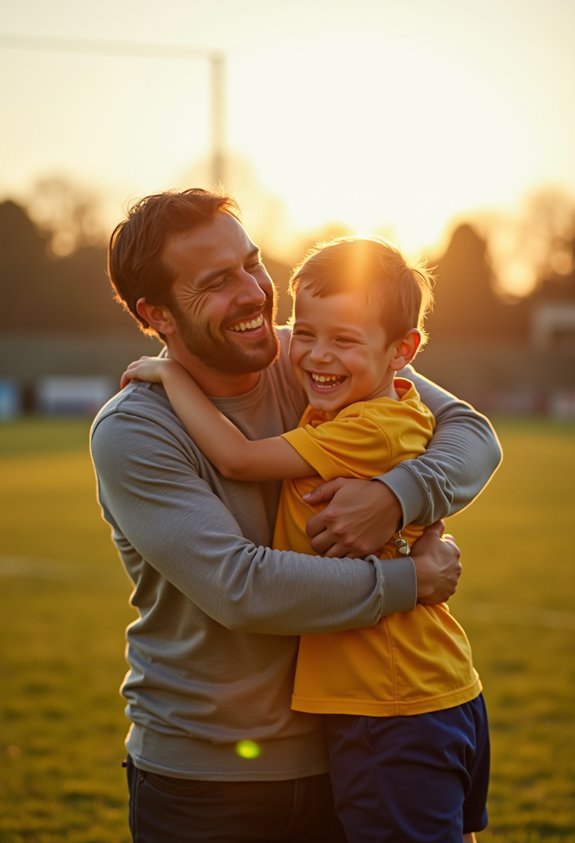
Persistence matters more than the final score. When you focus on effort recognition, you teach your child that trying hard builds character. The win or loss fades quickly. The lessons stick forever.
Simple Ways to Celebrate Effort:
- Say “I loved watching you hustle out there”
- Notice when they encourage teammates
- Praise practice improvements, not just game-day results
Outcome independence frees your child from pressure. They’ll take more risks. They’ll enjoy the game more. They’ll keep playing longer.
Try this: After each activity, share one thing you noticed about their effort. Skip the score talk completely. Watch their confidence grow.
Your words shape how they see themselves. Choose ones that honor the work, not just the trophy.
Create a Consistent Weekend Sports Routine

Building a predictable sports routine gives your weekends shape and purpose. Kids thrive when they know what to expect. A simple sports schedule creates something everyone looks forward to.
Start small and stay steady:
- Pick one morning each weekend
- Choose the same time slot
- Keep activities to 30–45 minutes
- Let kids help plan what you’ll do
Family fitness works best when it feels natural. Maybe Saturday means bike rides. Sunday could be backyard soccer. The activity matters less than showing up together.
Your child will start counting down the days. That excitement builds connection before you even step outside.
Don’t overthink it. Grab a ball. Head to the park. The routine will build itself when you just begin.
Learn a New Sport Together
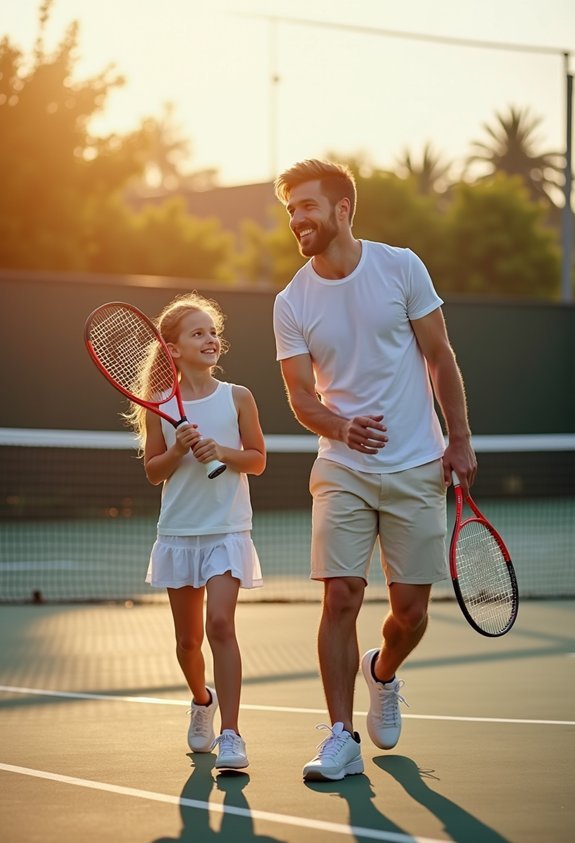
When you and your child learn something new at the same time, magic happens. You’re both beginners. You both stumble. You both grow.
This levels the playing field in the best way.
How to start:
- Explore new sports as a team—think pickleball, disc golf, or kayaking
- Try team activities like doubles tennis or two-person volleyball drills
- Pick something neither of you has done before
Your child sees you struggle and keep going. That’s a powerful lesson.
Laugh at your mistakes together. Celebrate small wins. Share the frustration and the breakthroughs.
You’re not the expert here—you’re partners on the same journey. That shared experience builds connection that lasts far beyond the weekend.
Use Car Rides for Meaningful Conversations

The drive to and from practice creates a unique space for real talk. You’re side by side, eyes on the road, and that takes pressure off. Kids often open up more when they don’t have to make eye contact.
Try these car ride reflections to spark connection:
- Ask about their favorite sports memories from the day
- Share a story from your own childhood games
- Simply listen without fixing or teaching
Keep it light. Don’t force it. Some rides will be quiet, and that’s okay too.
These moments matter more than you think. A ten-minute drive can build trust that lasts. Your child remembers you were there, paying attention, caring about their world.
Model Good Sportsmanship at All Times

Your child watches everything you do—especially at games. Sports etiquette starts with you. When you respect opponents and show fair play, your child learns those habits too.
Quick ways to model well:
- Clap for both teams
- Thank coaches and referees
- Practice handling losses with grace
- Keep celebrating victories humble
Teamwork value shines when you’re encouraging peers on the sidelines. Cheer for every kid, not just yours. This builds your child’s communication skills and shows humility in victory matters.
After tough games, use positive reinforcement. Say things like “You worked so hard” instead of focusing on the score.
Your calm presence teaches more than any lecture. Be the fan you’d want your child to become.
Take Breaks for Snacks and Connection
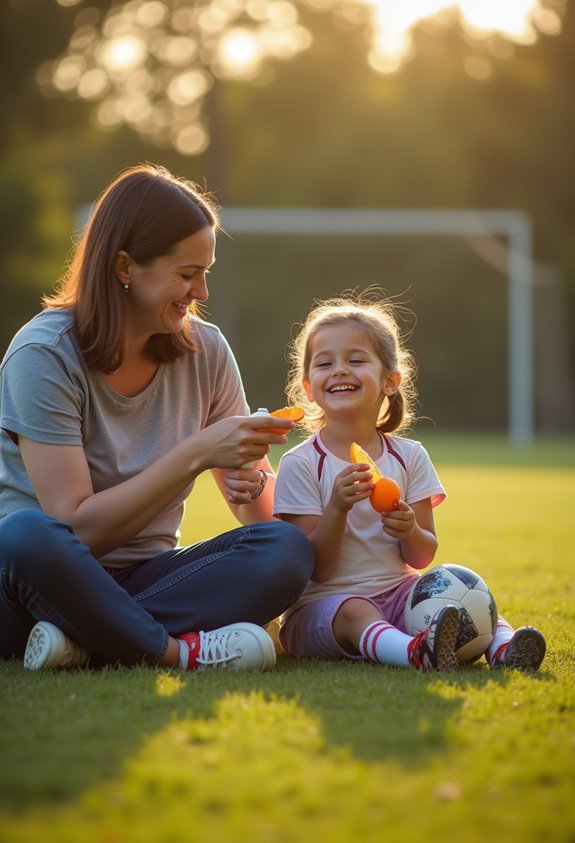
Beyond cheering from the sidelines, some of your best bonding happens during quiet moments away from the action.
Simple Snack Ideas That Work
Pack easy foods that fuel conversation:
- Apple slices with peanut butter
- Trail mix in small containers
- Cheese and crackers
- Water bottles you can refill
These snack ideas keep energy up without the mess.
Smart snacks mean more time connecting and less time cleaning up sticky fingers between plays.
Connection Activities During Breaks
Use this downtime wisely. Ask open questions like “What was your favorite play?” or “How did that last goal feel?” Listen more than you talk.
Try these connection activities:
- Take a short walk together around the field
- People-watch and make up silly stories
- Simply sit close and share the quiet
These small pauses often become the memories you’ll both treasure most.
Invite Other Families to Join You

When you invite another family along, weekend sports become something bigger than just your own tradition.
Why It Works
Playing with others builds community. Your kids learn teamwork beyond siblings. You get adult conversation while everyone moves.
Easy Ways to Start
- Host family game nights with simple backyard activities
- Sign up together for community sports events in your area
- Plan joint practice sessions at the local park
- Organize casual neighborhood tournaments with low-pressure rules
Quick Tips
- Start small—one family, one activity
- Rotate who picks the sport each week
- Keep competition friendly and light
You’ll notice something special happen. Kids cheer for each other. Parents share snacks and stories. What started as exercise becomes real connection across households.
Document Your Sports Memories Together
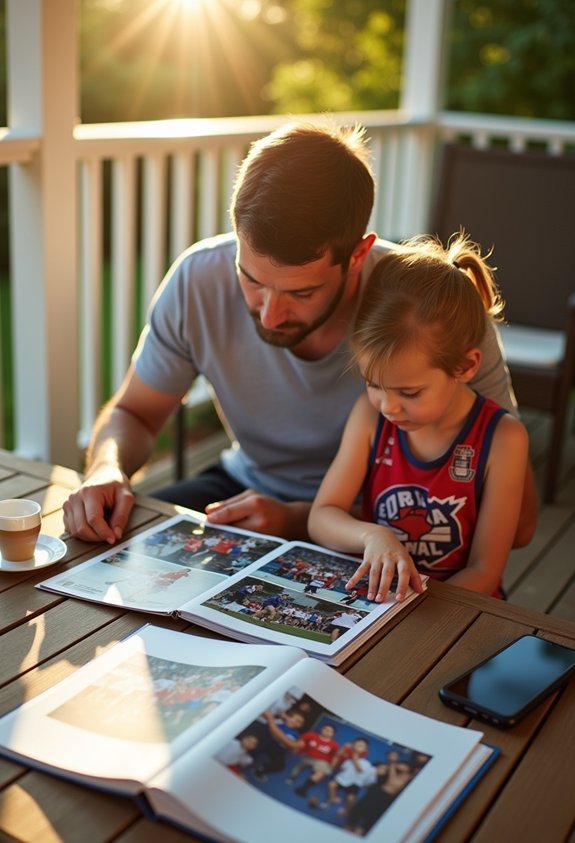
Taking photos and videos of your family sports moments often creates treasures you’ll cherish for years. These snapshots capture smiles, silly falls, and proud victories that fade from memory over time.
Try memory journaling after each outing. Grab a notebook and let your child draw or write about their favorite part. You can add details like:
- The date and weather
- New skills they tried
- Funny moments you shared
Building photo albums together makes a wonderful rainy-day activity. Let your child pick their favorite shots and add stickers or captions. This simple habit turns scattered pictures into a story.
Years from now, you’ll flip through these pages and smile. Your child will too.
Set Achievable Goals as a Team
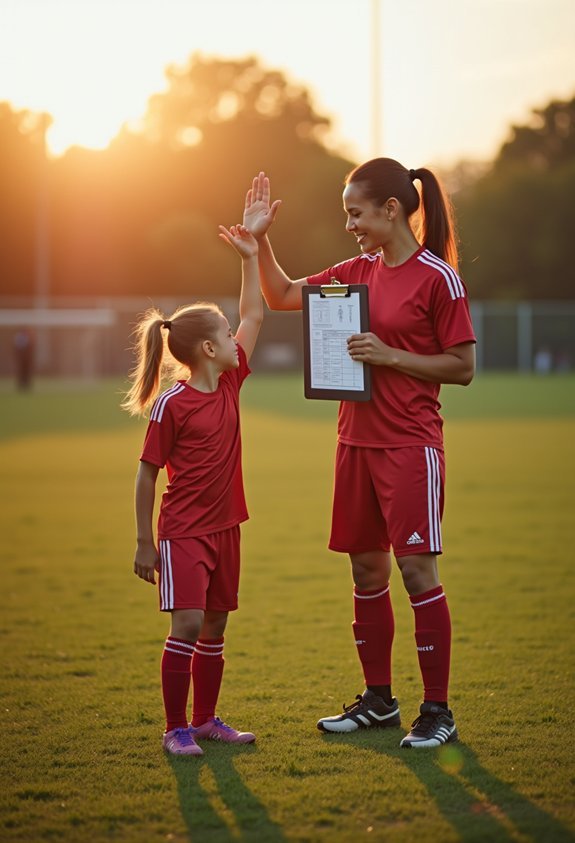
Goals give your family sports time a sense of direction and purpose. When you set targets together, you build teamwork dynamics that last beyond the game.
Start small. Try these steps:
- Pick one skill to work on each weekend
- Make it specific—”Let’s practice five catches in a row”
- Celebrate when you hit your mark
Good goal setting means everyone has a voice. Ask your child what they want to learn. Share your own hopes too. This creates real partnership.
Keep goals flexible. Some days feel harder than others. That’s okay. Adjust as needed and cheer for effort, not just results.
When you reach a goal together, that shared pride strengthens your bond in powerful ways.
Turn Setbacks Into Teaching Moments

Not every pass lands where you want it to. That’s okay. Setbacks offer real learning opportunities for resilience building. When your child misses a shot or loses a game, stay calm. Use reflective practice together. Ask what happened and what they might try next time.
Setbacks on the field become stepping stones when you pause, reflect together, and ask what comes next.
This approach builds emotional intelligence and problem solving skills. It teaches coping strategies that last a lifetime.
Picture these moments:
- Your child takes a deep breath after a fumble, then tries again with a growth mindset
- You both talk through teamwork lessons on the drive home
- A high-five and positive reinforcement replace frustration
These communication skills matter. Every stumble becomes a step forward when you guide with patience.
Unplug From Devices During Sports Time
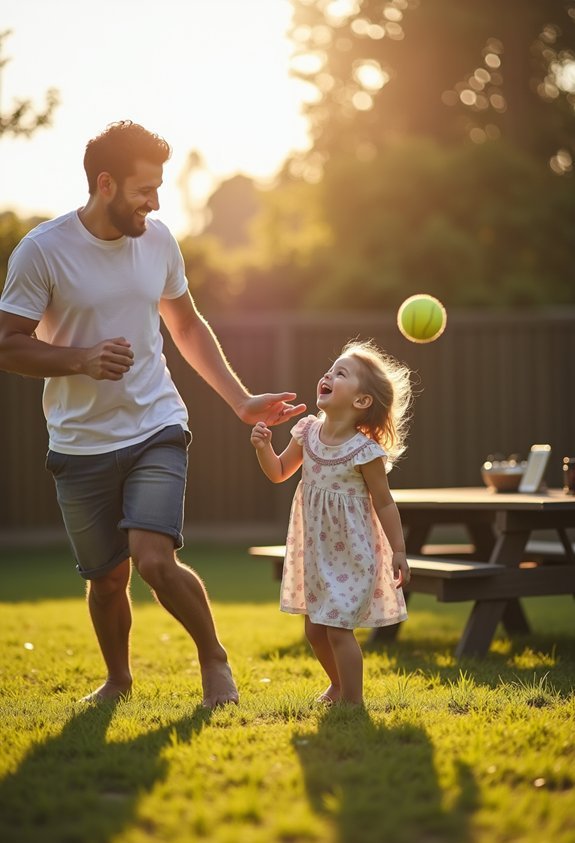
When you set your phone aside during sports time, you send a powerful message: this moment matters. Your child notices when you’re fully present. That attention builds trust and connection.
Creating device free zones works:
- Leave phones in the car or on silent inside
- Set a family rule: no screens during play
- Use a simple watch instead of checking your phone for time
Good family sports etiquette starts with you. When you model focus, your child learns to do the same. You’ll catch their proud smile after a good throw. You’ll see the small wins that screens make you miss.
These moments pass quickly. Be there for them—really there.
Adapt Activities to Your Child’s Skill Level
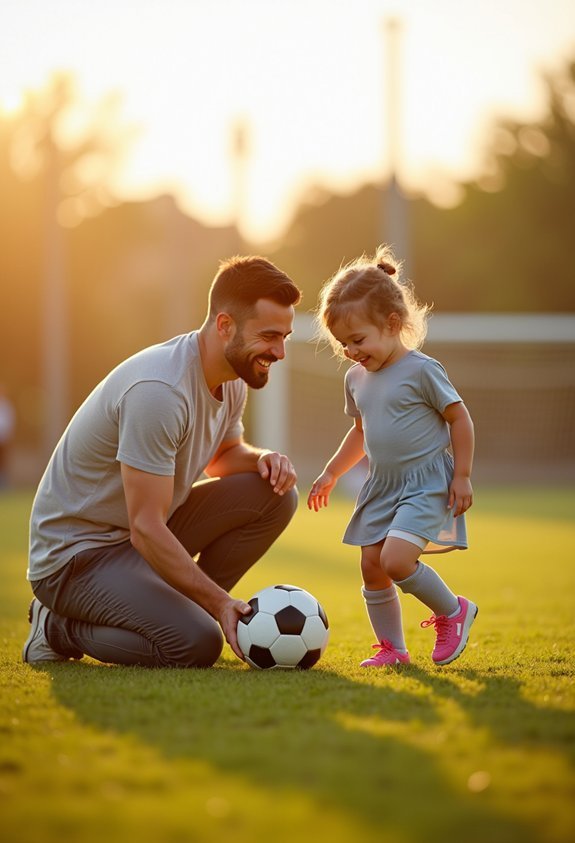
Meeting your child where they are makes sports fun instead of frustrating. You don’t need perfect form or big wins. You need connection. Focus on skill progression that feels natural, not forced.
Connection beats perfection—meet your child where they are and watch sports become joy, not pressure.
Tailored challenges keep your child engaged without overwhelming them. Try these simple adjustments:
- Lower the basketball hoop so your little one can actually make a shot and feel that rush of success.
- Use bigger balls or shorter distances when playing catch together.
- Shorten game times to match your child’s attention span and energy.
Watch for signs of struggle or boredom. Then adjust. Small tweaks make a big difference. Your child will stay motivated when activities match their abilities. That’s how confidence grows.
Share Stories From Your Own Sports Experiences

Your memories matter more than you might think. When you share tales from your playing days, you build bridges with your child.
Try these simple approaches:
- Dig up favorite memories. Talk about the game that made you love a sport.
- Include the struggles. Share times you missed a shot or struck out.
- Bring up funny moments. Kids love hearing about your goofs and bloopers.
Your stories teach valuable lessons. They show that everyone starts somewhere. They prove that setbacks happen to all of us.
Keep it brief and real. One quick story during a water break can spark great conversations. Your child sees you as human—not just a parent coaching from the sidelines.
End Each Session With Positive Affirmations
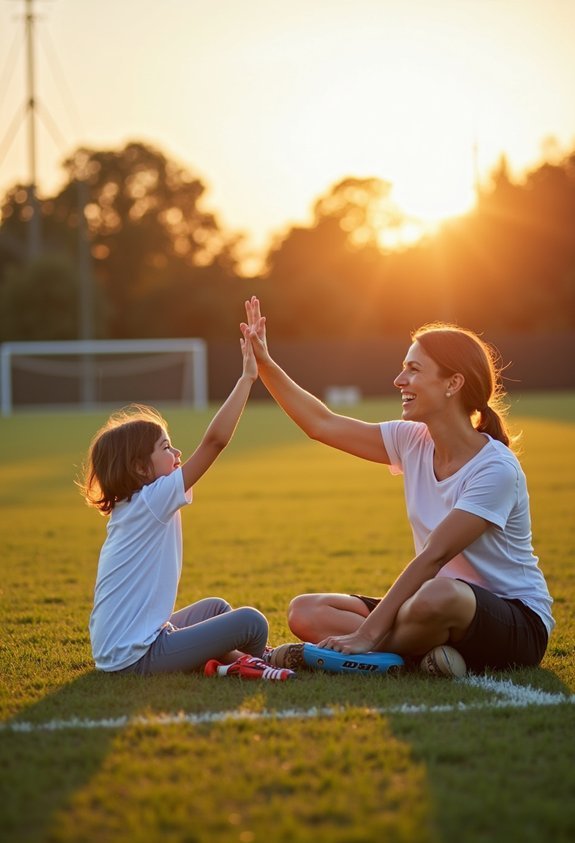
Before you pack up the gear and head home, take a moment to end on a high note. Positive reinforcement helps your child remember the joy, not just the score. A few simple encouragement phrases can shape how they feel about the whole day.
Try these affirmations:
- “I loved watching you try that new move—you’re getting braver every time.”
- “Your teamwork today made me so proud.”
- “I had the best time playing with you.”
These words stick. They build confidence and make your child eager for the next session. Keep it genuine and specific. Point out something real you noticed. Your voice carries weight, so use it wisely. End with a hug, a high-five, or a smile. That warmth lingers long after the game ends.
In case you were wondering
What Sports Equipment Should I Buy for Weekend Activities With My Child?
You should buy versatile sports accessories like a soccer ball, frisbee, and badminton set for outdoor games. Don’t forget jump ropes and hula hoops—they’re affordable, portable, and you’ll create lasting memories together.
How Long Should Each Weekend Sports Session Last for Different Age Groups?
Imagine your 4-year-old’s joy during a 15-minute backyard soccer game! You’ll want to follow age guidelines: toddlers need 15-20 minutes, school-age kids thrive with 30-45 minute session duration, while teens can handle hour-long activities.
What Are the Best Sports for Children With Physical Disabilities or Limitations?
You’ll find adaptive sports like wheelchair basketball, swimming, and boccia excellent for children with physical limitations. These inclusive activities let you bond while your child builds confidence, strength, and coordination at their own pace.
How Do I Handle My Child Refusing to Participate in Any Sports Activities?
You’re not alone in this struggle. Focus on child motivation by exploring their interests first. Try alternative activities like dance, swimming, or hiking. Let them choose, and participate together—you’ll build connection without pressure.
What Safety Precautions Should Parents Take During Outdoor Weekend Sports Activities?
You should always carry a first aid kit and keep emergency contacts readily accessible. Ensure your child wears appropriate protective gear, stays hydrated, and applies sunscreen. Check equipment regularly and supervise activities closely.
Conclusion
You’ve got the playbook for powerful parent-child connections. Start small. Pick one or two tips this weekend and watch what happens.
Remember: it’s not about perfect passes or stellar scores. It’s about showing up, staying present, and sharing smiles together.
These simple Saturday and Sunday sessions create something special—memories your child will carry forever.
So lace up, head outside, and let the bonding begin!