What Makes Nature Scavenger Hunts Educational?
Nature scavenger hunts are sneaky learning missions in disguise. Your kid thinks they’re hunting cool rocks and weird bugs, but they’re actually practicing observation, sorting, problem-solving, and using bigger, better words. They compare textures, colors, and sizes, argue (politely… hopefully) about what counts, and ask real science questions like “Why is this leaf spotty?” It’s hands-on, screen-free brain training that feels like play—and that’s just the start of what these hunts can do.
Key Takeaways
- They train careful observation and attention to detail as kids search for specific textures, colors, and shapes in nature.
- They develop classification and sorting skills when children group finds by features like size, color, or type.
- They strengthen problem-solving and critical thinking as kids plan search strategies, adjust approaches, and justify their guesses with evidence.
- They expand vocabulary and language skills through describing discoveries, comparing items, and discussing sensory experiences in context.
- They encourage scientific inquiry and curiosity by prompting questions, predictions, hands-on investigation, and simple documentation of observations.
Building Observation and Attention to Detail
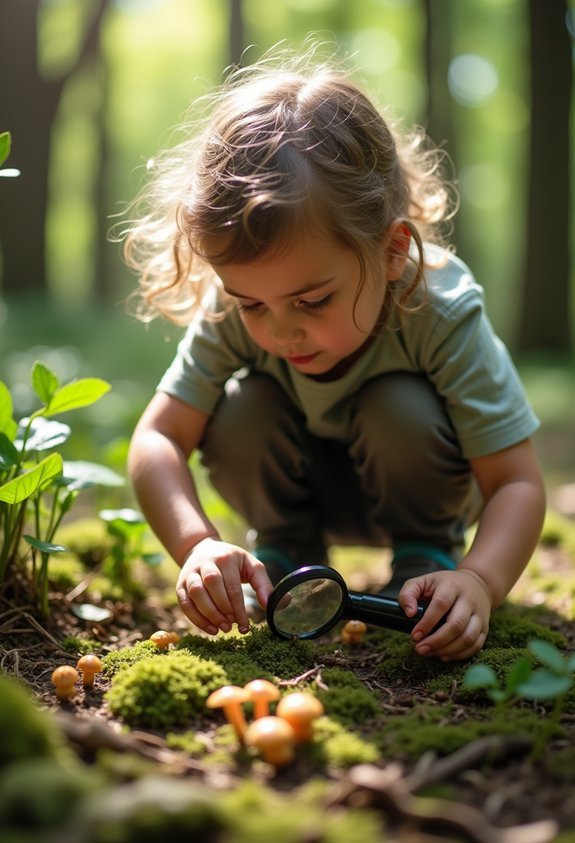
Tiny detectives—that’s what nature scavenger hunts turn kids into. When you send kids outside with a list, you’re really training their attention. They stop zombie-walking and actually look. Is that leaf smooth or bumpy? Does that rock sparkle or look boring and gray?
This kind of mindful observation pulls their brains into the moment instead of drifting off like a Wi‑Fi signal. They start noticing tiny clues: ant trails, weird bark patterns, shadows shaped like dragons. That builds detailed awareness without a worksheet in sight.
You can nudge it along with quick prompts: “Find something rough, something that smells strange, something almost hidden.” Suddenly every step is a mini-mystery, and the backyard feels like a new planet where every crack hints at secrets waiting.
Developing Classification and Sorting Skills

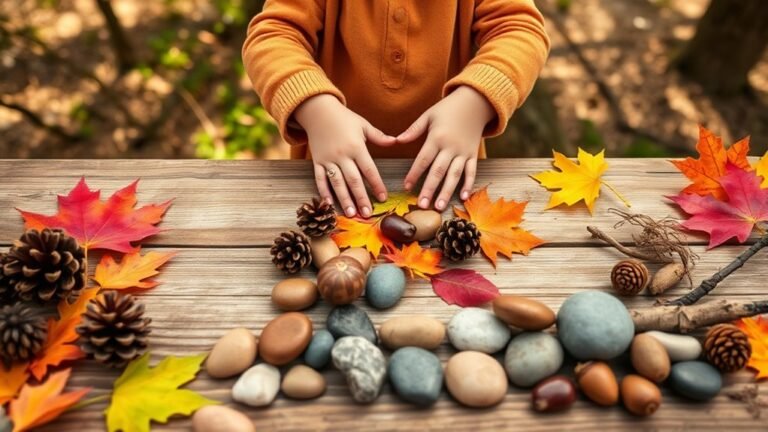
Once kids start spotting every weird bug and funky leaf, you can crank things up: now they get to sort the loot. Hand them the pile and say, “Okay, make some groups.” Boom—you’ve just snuck in real classification techniques. They might sort by color, size, texture, or where they found each item.
These simple sorting activities train their brains to notice how things are alike and different. It’s like giving their thinking a gym workout, but without the sweaty socks.
Sorting turns their brains into mini science gyms—spotting patterns, differences, and connections everywhere they look.
You can switch up the rules: “Now sort by smooth vs. rough,” or “Living, once-living, and never-living.”
Soon they’ll start using those same skills everywhere—at the park, at home, even lining up their snack foods. That’s when you know the hunt really worked today.
Strengthening Problem-Solving and Critical Thinking

When kids are out on a nature scavenger hunt, their brains basically turn into mini escape rooms—they’ve got clues, obstacles, and just enough chaos to keep things interesting.
You’re right there, coaching them through real problem solving strategies without boring worksheets. They’ve to plan, test ideas, mess up, and fix it fast.
- They scan the area, toss out wild guesses, then narrow them down. That’s sneaky critical thinking exercises at work.
- They argue, “It’s under the log!” “No, in the tree!” and must use evidence, not volume, to win.
- They hit dead ends, then adjust the plan, learning that smart people pivot.
- They compare paths—short and muddy or long and safe—and weigh trade-offs like tiny trail bosses.
Kids feel capable, clever, and hooked.
Expanding Vocabulary and Language Development
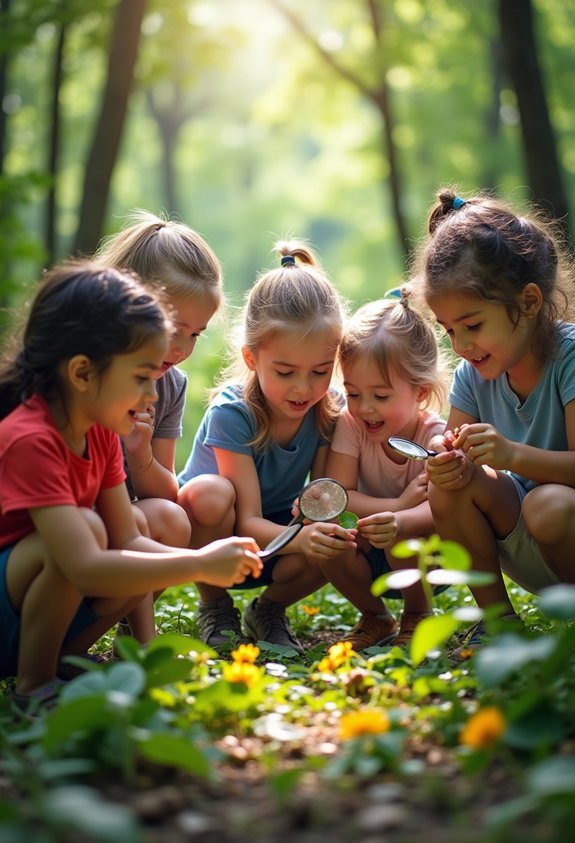
All that clue-hunting and arguing over logs vs. trees does more than build brain power—it seriously levels up your kid’s word game.
Every time you send them outside with a scavenger list, you’re sneaking in vocabulary games without the boring workbook. They’re not just finding “a leaf”; they’re hunting for “a jagged red maple leaf with spots.” That’s detail. That’s description. And it sticks.
You can toss in simple language prompts, like “Describe that sound,” or “Give me three words for this smell.”
Suddenly they’re debating if it’s earthy, rotten, or “like wet dog cereal.” You hear new words, longer sentences, and way more confident talking. Nature becomes a wild, messy, hilarious language classroom.
And you didn’t even have to open a workbook today.
Encouraging Scientific Inquiry and Curiosity
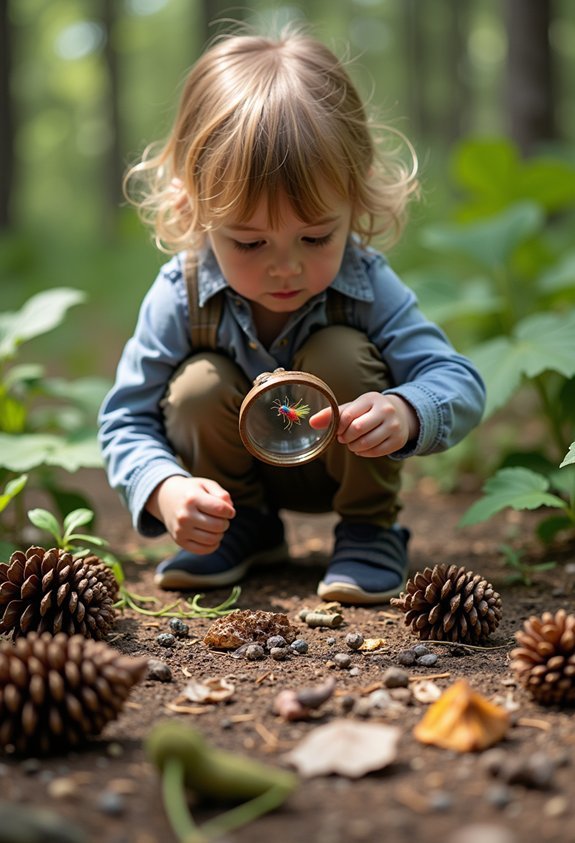
Even though it just looks like your kid poking mud with a stick, a nature scavenger hunt is basically a mini science lab in your backyard.
You’re turning everyday walks into real scientific exploration, without any boring textbooks. Instead of you giving answers, your kid asks wild questions and tests ideas on the spot.
Here’s how a simple hunt flips on curiosity driven learning:
- Ask “why” for every item—Why is this rock smooth? Why is that leaf spotty?
- Compare things—Which puddle is deeper? Which ant is faster?
- Predict what’ll happen—What if we move that log or pour water on sand?
- Record clues—Quick sketches, tally marks, or phone pics turn your kid into a tiny field scientist for the whole afternoon.
Supporting Social Skills and Collaboration
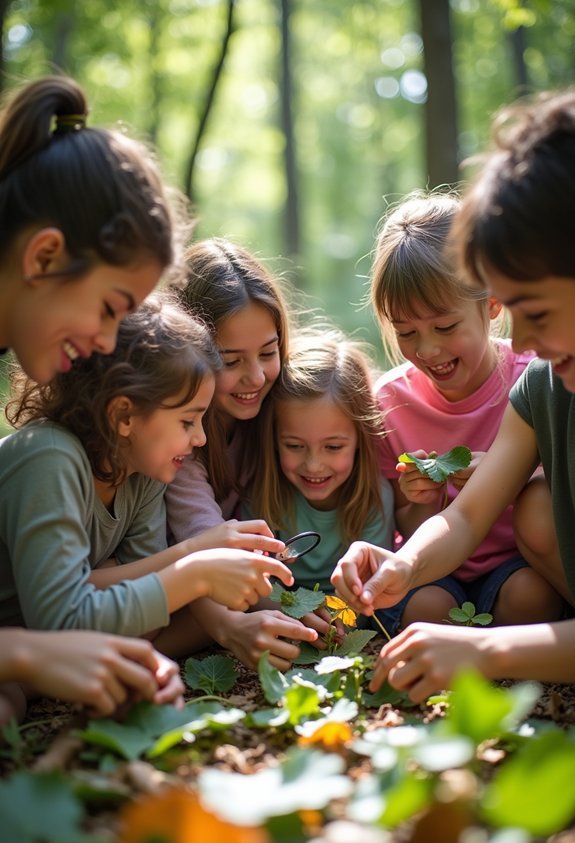
Because mud, sticks, and rocks apparently make the best “team-building workshop” on Earth, nature scavenger hunts are sneaky little social-skill machines.
Nature scavenger hunts: mud, sticks, rocks—and the best accidental social-skills workshop kids will ever attend.
You throw kids into a group, hand them a list, and boom—instant crash course in teamwork dynamics. Someone reads the clues, someone keeps time, someone yells, “Guys, the feather is literally right there!”
They learn to share jobs instead of wrestling over one cool stick. As they talk through where to search next, their communication skills get a workout. They’ve to listen, explain ideas, and disagree without going full meltdown.
You can also step in and coach: “Try asking, not telling.” Over time, they start solving problems together instead of shouting over each other. That practice sticks longer than any boring worksheet.
Connecting Learning to Local Ecosystems and Seasons
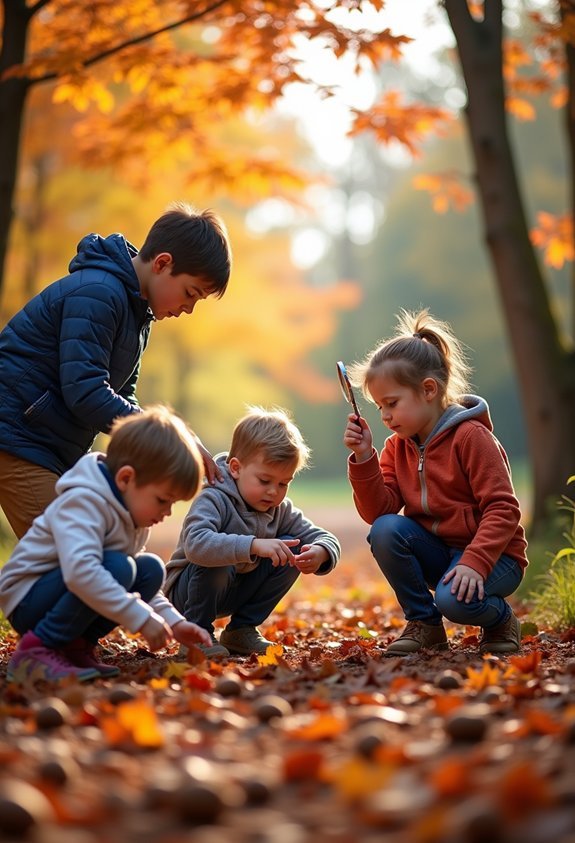
Kids don’t just build social skills out there; they also start to notice, “Whoa, our park changes all the time.”
That’s the magic move: using scavenger hunts to hook kids into their own local ecosystem and seasons. When you swap the trail in different months, kids see seasonal changes hit like plot twists. One week they’re hunting red leaves, they’re chasing maple seeds helicopters and mushrooms.
You can guide them to ask, “What lives here, and why now?”
Try cards that say:
- Find three signs of seasonal changes.
- Spot one bug, one bird, and one plant that show local biodiversity.
- Match a fallen object to the tree it came from.
- Predict what’ll look different next month, come back and check.
Promoting Physical Activity and Sensory Engagement
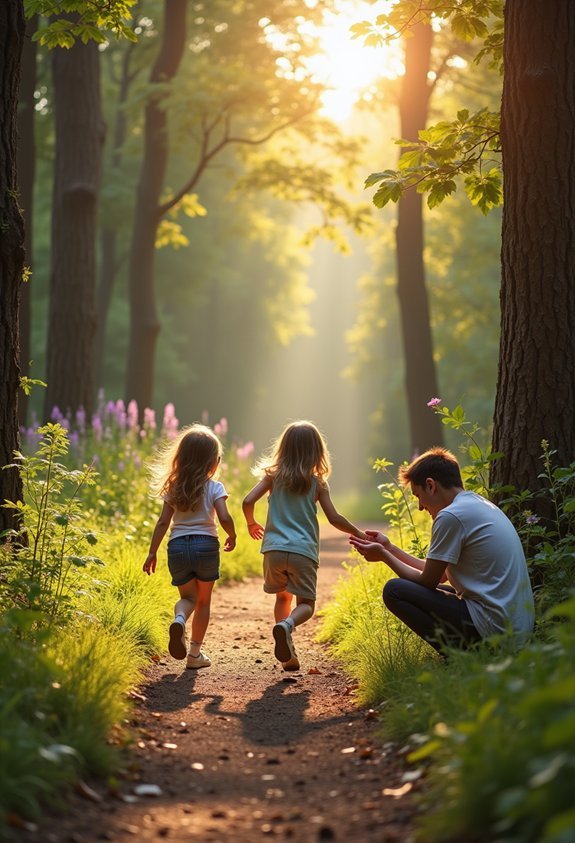
Once you throw a scavenger hunt into the mix, “Let’s go for a walk” suddenly turns into “Wait, why are they sprinting toward that random bush?”
Nature hunts sneak in a ton of movement without feeling like exercise—kids are squatting to look under logs, tiptoeing to spot birds, stretching to touch high leaves, and flat-out racing to be “first finder.”
Their bodies are busy, but so are their senses: they’re feeling rough bark, smelling crushed pine needles, listening for the loudest bird, and spotting ten shades of green you never noticed.
You call it chaos, but it’s actually mindful movement and real sensory exploration.
Ask kids to pause, breathe, and name what they see, hear, smell, or touch—suddenly every step feels like a discovery.
Adapting Scavenger Hunts for Different Ages and Subjects

How do you take one simple nature scavenger hunt and make it work for a wild preschooler, a too-cool fifth grader, and a “this better count for science” middle schooler?
You use age appropriate adaptations and switch up the challenge level. For little kids, you keep it big, bright, and obvious. Older kids? You sneak in more thinking, drawing, and explaining so it secretly feels like school credit.
Try building your hunt with subject focused themes so it actually fits your lesson plan:
- Science: hunt for life cycles, habitats, or weather clues.
- Math: measure sticks, count bird calls, compare leaf sizes.
- Language arts: snap photos, then write mini stories.
- Art and design: collect color palettes, sketch patterns, build land art.
In case you were wondering
How Long Should a Typical Nature Scavenger Hunt Last for Optimal Learning Benefits?
Aim for 45–60 minutes; you’ll balance focus and curiosity without fatigue. Shorter hunts feel rushed, longer ones dilute attention. Adjust duration considerations based on age, terrain, size, and goals to sustain optimal engagement throughout exploration.
What Materials or Tools Are Recommended to Bring on a Nature Scavenger Hunt?
You pack curiosity like a lantern in twilight: field guides, notebook, pencil, map, simple observation tools like magnifying glass and binoculars, reusable bag, water, weather-appropriate clothing, and a camera or phone to document discoveries carefully.
How Can We Ensure Nature Scavenger Hunts Are Environmentally Responsible and Leave-No-Trace?
You make scavenger hunts environmentally responsible by following sustainable practices: stay on trails, observe without collecting, avoid feeding animals, pack out trash, use pencils not markers, discuss wildlife conservation, and model curiosity rather than disturbance.
Are There Safety Guidelines for Conducting Scavenger Hunts in Unfamiliar Outdoor Settings?
Like a careful guide on a cliffside trail, you follow safety precautions: scout terrain, check weather, brief participants, carry first-aid kits, share emergency contacts, use buddy systems, set boundaries, and adapt plans if conditions change.
How Can Parents and Teachers Assess Learning Outcomes From Nature Scavenger Hunts?
You assess learning outcomes by having kids explain findings, draw observations, and connect discoveries to prior lessons. Use simple rubrics, reflection journals, quick quizzes, and group discussions as assessment methods that reveal understanding and misconceptions.
Conclusion
So yeah, a nature scavenger hunt secretly turns you into a sharper, braver, more curious human…kind of like leveling up in a video game, but with more dirt and fewer rage-quits. You’re moving, thinking, talking, laughing, all at once. You spot tiny details, ask better questions, and actually remember what you learn. So go grab a list, step outside, and start hunting. School, but sneaky fun. Like broccoli…if broccoli came with treasure.