Why Choose Card Games for Every Age Group?

You’ll find card games offer unmatched versatility for every age because they simultaneously sharpen cognitive skills, foster genuine social connections, and adapt effortlessly to any player’s ability level. A single deck provides hundreds of games that teach toddlers number recognition, challenge teens with strategic thinking, and keep seniors mentally sharp—all for less than the cost of a movie ticket. They’re portable, technology-free, and create meaningful traditions that bring generations together around the same table, building memories that last lifetimes. The following sections reveal exactly how to maximize these benefits for your family.
Key Takeaways
- Card games engage multiple cognitive systems, enhancing memory, strategic thinking, and problem-solving skills while delaying mental decline across all ages.
- A single deck costs less than most entertainment, supports hundreds of games, and requires no additional equipment or expensive technology.
- Card games facilitate intergenerational bonding, teach social skills like patience and graciousness, and maintain meaningful relationships in our digital age.
- Games adapt from toddler matching activities to teen strategic planning, developing age-appropriate skills including counting, mathematics, and complex decision-making.
- Flexible rules and team partnerships accommodate mixed age groups, creating cherished family traditions and lasting memories through regular gameplay.
Cognitive Benefits That Grow With Each Player

When you shuffle a deck and deal the cards, you’re activating far more than entertainment—you’re engaging multiple cognitive systems simultaneously.
Card games deliver memory enhancement through constant recall of played cards, opponent tendencies, and rule variations. You’ll strengthen neural pathways as you track suits, count cards, and remember sequences.
Strategic thinking develops naturally during gameplay. You’re evaluating probabilities, predicting opponent moves, and adapting tactics in real-time.
Children build foundational logic skills, while adults maintain mental sharpness and delay cognitive decline.
Each age group gains unique advantages. Young players develop pattern recognition and basic math.
Teens sharpen decision-making under pressure. Seniors preserve memory function and social connections.
The benefits compound across generations, making card games a sustainable cognitive workout that grows alongside every player.
Affordability and Accessibility for Any Budget
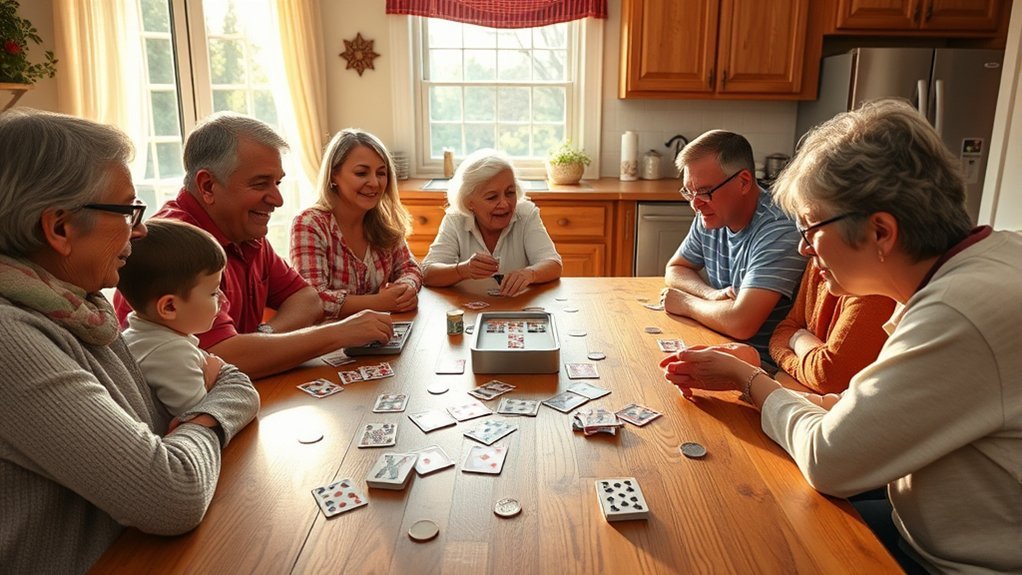
Why do card games remain popular across economic boundaries? You’ll find that a single deck costs less than most entertainment options, yet provides countless hours of enjoyment. This universal appeal crosses all income levels, making card games truly democratic.
A deck of cards democratizes entertainment—costing mere dollars while delivering endless hours of play across every economic class.
Budget-friendly options that make card games accessible:
- Standard playing cards cost just a few dollars and support hundreds of different games.
- Many card games require no additional equipment or expensive accessories.
- Digital versions often come free or at minimal cost on smartphones and tablets.
- Library card game nights provide free community access and social opportunities.
- Homemade cards work perfectly for teaching children basic games.
You’re investing in entertainment that won’t strain your wallet while delivering maximum value through repeated use and versatile gameplay options.
Building Social Connections Across Generations

Beyond their affordable price point, card games create meaningful bonds between grandparents, parents, and children in ways few activities can match. When you gather around a table for games, you’re facilitating intergenerational bonding that strengthens family ties naturally.
Grandparents share strategies they’ve used for decades while kids introduce fresh perspectives and energy.
You’ll notice how card games promote social skill development across all ages. Children learn patience, turn-taking, and gracious winning or losing. Teens practice communication and strategic thinking. Adults maintain cognitive sharpness while seniors stay mentally engaged and socially connected.
These shared experiences create traditions that transcend generations. You’re not just playing cards—you’re building memories, teaching values, and maintaining relationships that might otherwise fade in our digital age.
Card games bridge generational gaps effortlessly.
Educational Value From Toddlers to Teens

Card games transform playtime into powerful learning opportunities that adapt to each developmental stage.
Card games seamlessly blend education and entertainment, creating meaningful learning experiences that grow alongside your child’s developing capabilities.
You’ll discover that even simple matching games support early learning by building memory and recognition skills in toddlers. As your children grow, card games naturally progress with them, strengthening critical thinking and strategic planning abilities.
Key Educational Benefits by Age:
- Toddlers (2-4): Pattern recognition, color identification, and turn-taking basics
- Preschoolers (4-6): Number concepts, counting skills, and following multi-step rules
- Early Elementary (6-9): Mathematical operations, probability understanding, and decision-making
- Tweens (9-12): Strategic thinking, resource management, and social negotiation
- Teens (13+): Complex problem-solving, risk assessment, and advanced planning
This skill development happens organically while you’re simply enjoying family time together, making card games remarkably efficient educational tools.
Portable Entertainment Without Technology Dependence

A deck of cards slips easily into your pocket or purse, yet it delivers hours of entertainment that never needs charging, updates, or Wi-Fi.
You’ll find this technology free option perfect for road trips, camping adventures, beach outings, or restaurant waiting times. Unlike tablets or phones, cards won’t drain batteries or lose signal at crucial moments.
You’re fostering genuine family bonding when everyone gathers around a card game instead of staring at individual screens. The face-to-face interaction creates meaningful conversations and shared laughter that digital entertainment can’t replicate.
You’ll also save money since one deck provides countless game variations without subscription fees or in-app purchases. Cards work anywhere, anytime, making them the ultimate portable entertainment solution for building connections across generations.
Adaptable Complexity for Mixed Age Groups

When families gather with toddlers, teens, and grandparents at the same table, you’ll appreciate how card games naturally scale in complexity. You can modify game mechanics on the fly, allowing younger players to use simplified rules while older participants embrace advanced strategies.
This flexibility accommodates different skill levels without anyone feeling excluded or bored.
Ways to adapt card games for mixed ages:
- Reduce hand sizes for young children while adults play with full hands
- Allow beginners to play cards face-up for guidance
- Create team partnerships pairing experienced players with novices
- Adjust point systems to level the playing field
- Introduce optional rule variations that add depth for advanced players
You’ll find everyone stays engaged when the game grows with them.
Creating Family Traditions and Lasting Memories
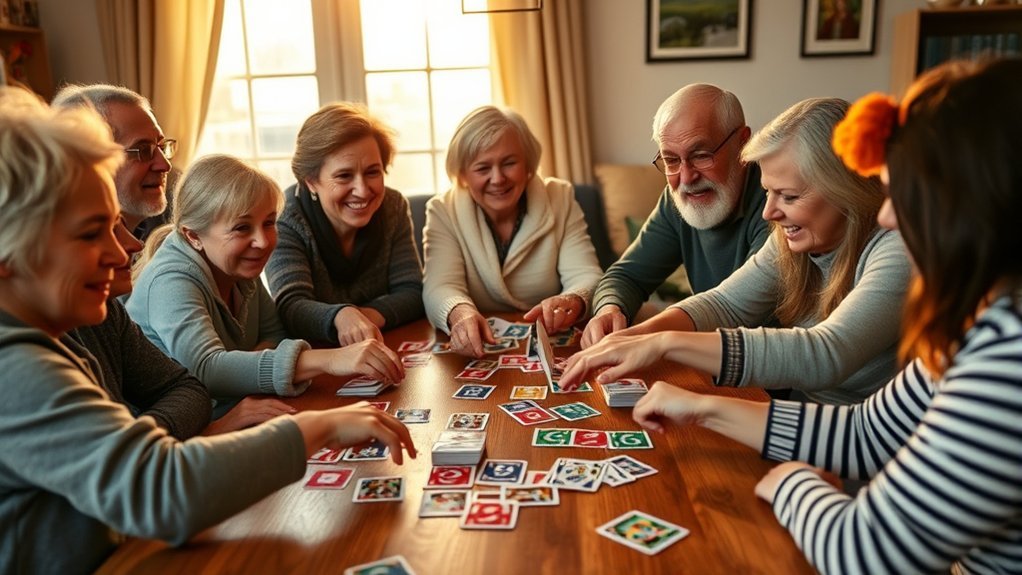
Beyond entertainment value, regular card game sessions become cherished rituals that bind generations together. You’ll create memorable experiences when you designate weekly game nights, transforming ordinary evenings into anticipated celebrations.
These recurring gatherings strengthen family bonding through shared laughter, friendly competition, and meaningful conversations that emerge naturally during play.
Card games offer unique advantages for tradition-building. They’re portable, requiring minimal setup, so you can maintain your ritual during vacations or family visits.
The tactile nature of shuffling and dealing cards creates sensory memories that trigger nostalgia years later.
As children grow, they’ll associate specific games with particular family members—remembering Grandpa’s poker face or Mom’s competitive spirit.
You’re not just playing cards; you’re weaving stories and connections that your family will treasure across decades.
In case you were wondering
What Are the Best Card Games for Players With Visual Impairments?
You’ll want games with tactile cards featuring Braille or raised symbols, like UNO Braille Edition or specially adapted playing cards. Look for games offering strong accessibility features, including high-contrast designs, large print, and textured surfaces you can easily distinguish by touch.
How Do You Store and Organize Multiple Card Game Collections?
You’ll need dedicated card storage solutions like deck boxes, card binders, or divided storage containers. Follow organization tips such as labeling each game, sorting by category, and storing frequently played decks separately for quick access.
Can Card Games Help Children With ADHD Improve Their Focus?
Studies show 75% of children with ADHD improve concentration through structured play. You’ll discover card games offer proven ADHD strategies and focus techniques, helping your child practice turn-taking, impulse control, and sustained attention in an engaging way.
What’s the Average Lifespan of a Card Deck With Regular Use?
With regular use, you’ll find a card deck lasts 3-6 months before showing wear. Deck durability depends heavily on card maintenance—you’ll extend lifespan by keeping hands clean, avoiding bending, and storing cards properly between games.
Are There Competitive Card Game Tournaments for Senior Citizens?
You bet! Senior engagement thrives through dedicated competitive events. You’ll find tournament formats specifically designed for older players, from bridge championships to poker leagues. These competitions prove you’re never too old to shuffle up and deal competitively.
Conclusion
Picture the worn edges of a beloved deck passing through eager hands, laughter echoing around your table as three generations lean in together. You’ll watch young fingers shuffle clumsily while grandparents’ weathered hands guide them patiently. That’s the magic you’re creating—not just games, but moments frozen in time. When screens fade and trends pass, you’ll still have these timeless gatherings where everyone belongs, where memories shuffle and deal themselves into your family’s story.