Why Make Earth Day Projects With Elementary Students?
Earth Day projects give your elementary students hands-on ways to connect with nature and build real environmental awareness. When kids touch, create, and problem-solve together, abstract ideas become personal and memorable. They’ll develop critical thinking skills, learn to collaborate with peers, and carry sustainable habits home to their families. These projects show young learners they can make a difference—and below, you’ll discover exactly how to make that happen.
Key Takeaways
- Hands-on Earth Day projects transform abstract environmental concepts into tangible, memorable experiences that young students can understand and retain.
- Connecting classroom activities to real-world applications increases student engagement and helps children see their ability to create change.
- Environmental projects develop critical thinking and problem-solving skills as students analyze challenges and brainstorm creative solutions.
- Collaborative Earth Day activities teach teamwork, communication, and respect for diverse perspectives among elementary students.
- Sustainable habits learned through school projects extend beyond the classroom, influencing families and creating lasting environmental awareness.
Building Environmental Awareness Through Hands-On Learning
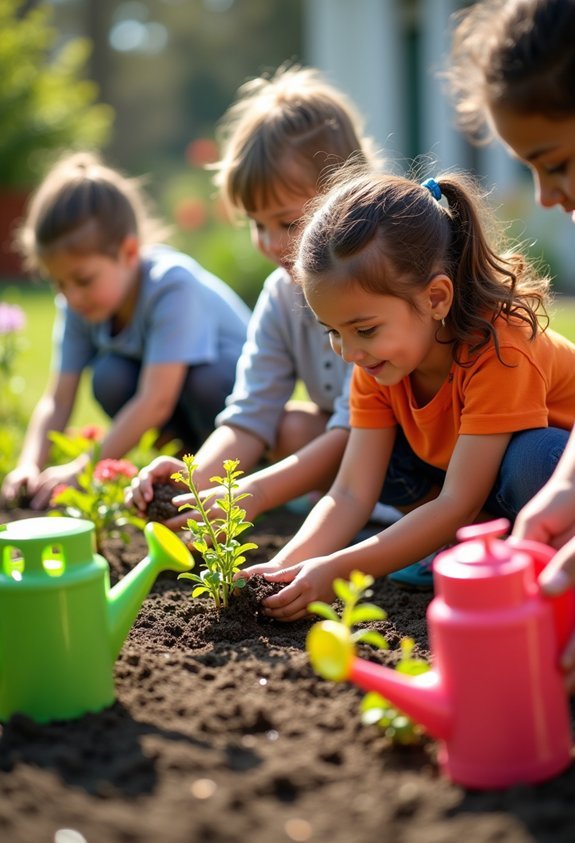
You’re giving them more than a craft project. You’re helping them understand their ecological footprint in a way that sticks.
Why hands-on works:
- Kids remember what they touch and create
- Abstract ideas become real and personal
- Small actions build lasting sustainable practices
Try these simple activities:
- Start a classroom compost bin
- Create bird feeders from recycled materials
- Plant a mini garden in cups
Each project shows your students they can make a difference. That’s powerful.
You don’t need fancy supplies or perfect plans. You just need willingness to explore together.
Connecting Classroom Lessons to Real-World Impact
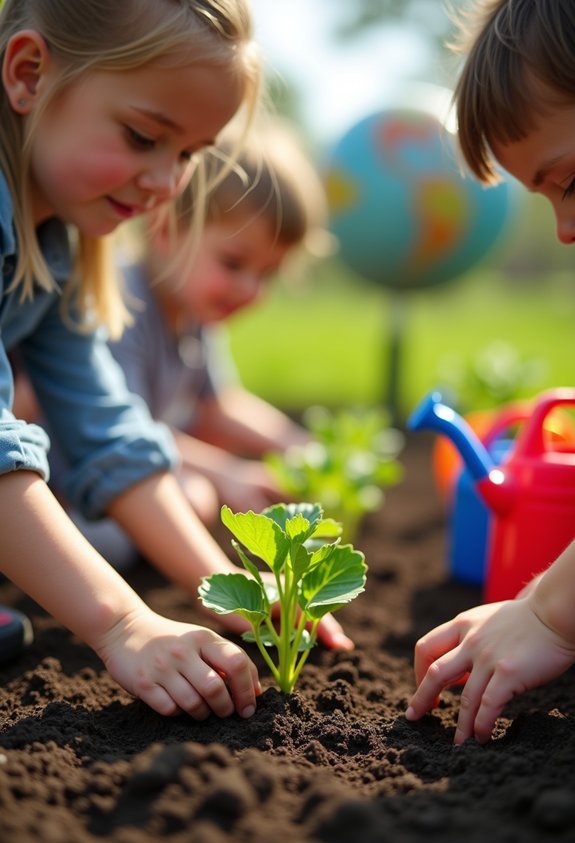
When classroom lessons connect to the world outside, something clicks for your students. They see why learning matters. Earth Day projects offer perfect real world applications that make abstract ideas concrete.
Think about it this way:
- Planting a school garden teaches math, science, and patience
- Writing letters to local leaders builds communication skills
- Tracking recycling data makes charts meaningful
Community involvement takes learning even further. When students pick up litter at a nearby park, they become part of something bigger. They see their actions create change.
When students serve their community, learning expands beyond classroom walls—and they discover their power to make a difference.
You’re helping young minds understand cause and effect. What they do in your classroom ripples outward. That’s powerful. Your students start seeing themselves as problem-solvers who can shape their world.
Developing Critical Thinking and Problem-Solving Skills
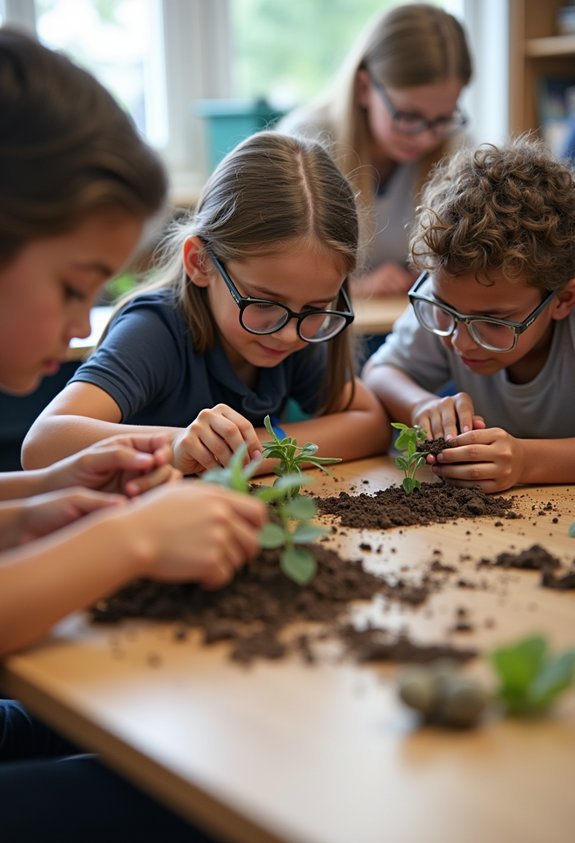
Every Earth Day project gives your students a chance to flex their thinking muscles. When kids face real environmental challenges, they naturally start asking big questions. Why does this happen? What can we do about it?
This kind of analytical thinking builds skills they’ll use forever.
Watch what happens when you ask students to reduce lunchroom waste. They’ll:
- Study the problem
- Brainstorm creative solutions
- Test their ideas
- Adjust when something doesn’t work
That’s real problem-solving in action.
You’re helping them see that challenges aren’t roadblocks. They’re puzzles to solve. Your students learn to look at issues from different angles and think beyond obvious answers.
These skills matter far beyond Earth Day. You’re shaping confident thinkers.
Fostering Teamwork and Collaboration Among Students
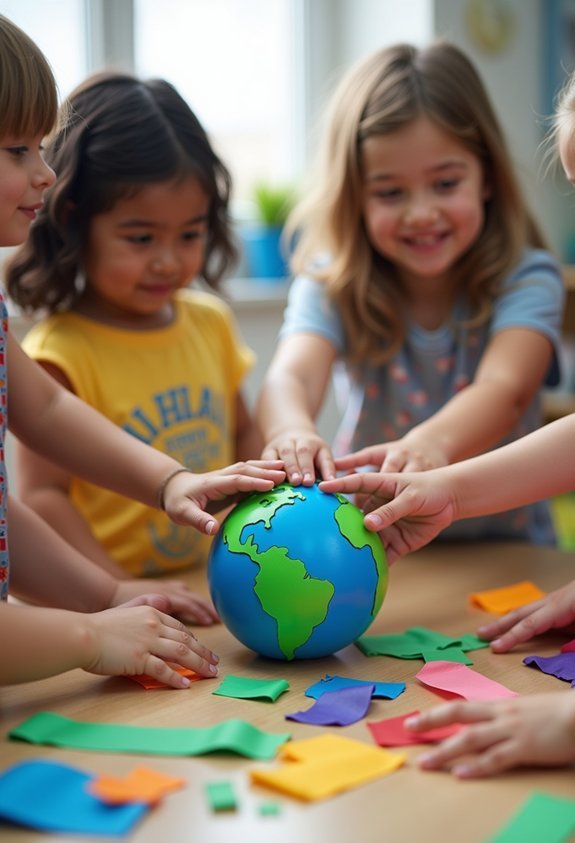
Earth Day projects do more than build thinking skills—they bring kids together. When students work side by side, they learn how to listen, share ideas, and support one another. Peer interaction during hands-on activities helps children practice patience and kindness in real time.
Group dynamics shift when everyone has a role. You’ll notice students stepping up, encouraging quieter classmates, and celebrating shared wins.
Here’s what teamwork through Earth Day projects teaches:
- Dividing tasks fairly so everyone contributes
- Communicating clearly to solve problems together
- Respecting different opinions and ideas
- Celebrating group success over individual praise
These experiences stick with kids. They carry collaboration skills into other subjects and friendships. When you guide students through Earth Day teamwork, you’re helping them grow into caring community members.
Creating Lasting Habits That Extend Beyond the Classroom
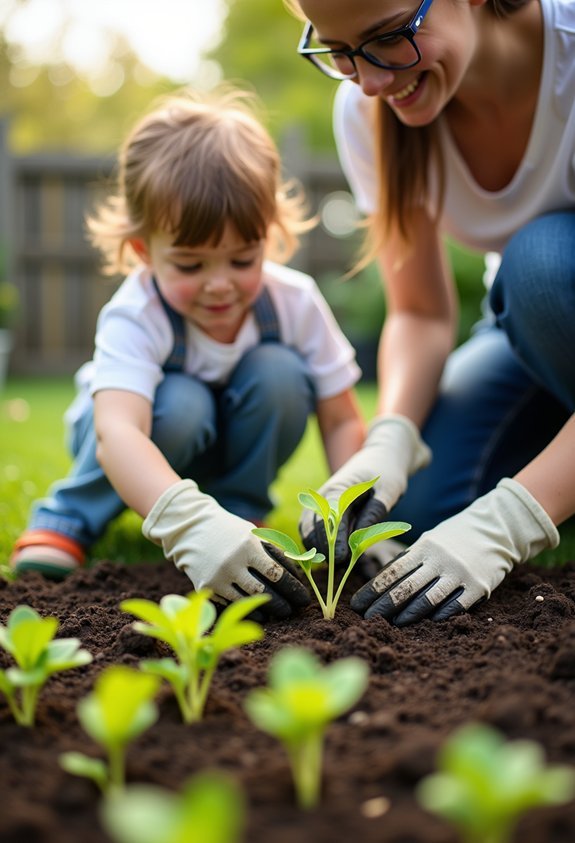
The best part of Earth Day projects isn’t what happens in your classroom—it’s what students carry home. When kids plant seeds or sort recyclables at school, they’re building sustainable habits that stick.
Here’s what you’ll notice:
- Students remind parents to turn off lights
- They spot recycling opportunities everywhere
- They ask questions about where things come from
These small moments spark lifelong learning about our planet. You’re not just teaching a lesson—you’re shaping how children see their role in the world.
Tips to extend the impact:
- Send home simple challenge cards
- Encourage family nature walks
- Create a “green goals” journal
Your Earth Day project becomes a gift that keeps giving.
Integrating Multiple Subjects Into Meaningful Activities
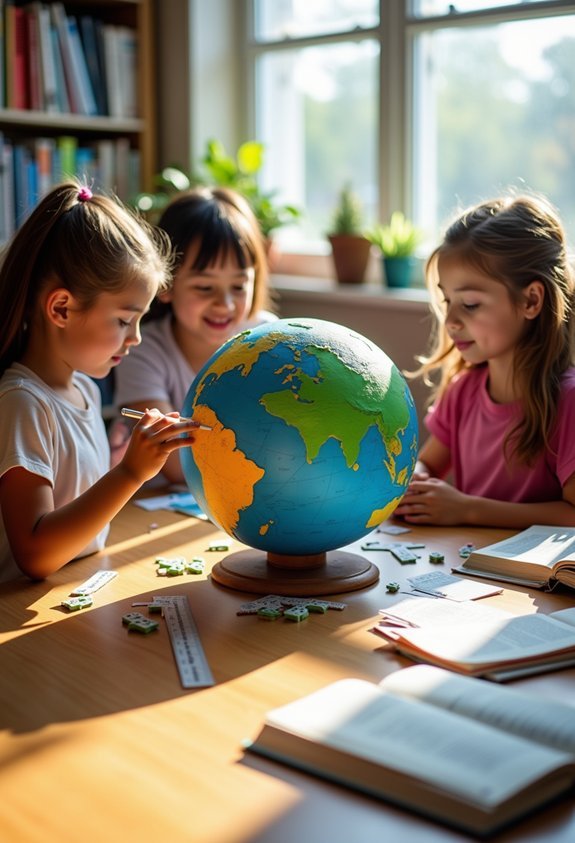
When you weave multiple subjects into one Earth Day activity, learning becomes richer and more memorable. Subject integration helps kids see how everything connects. They’re not just doing math or art—they’re solving real problems.
Here are four ways to blend subjects naturally:
- Track recycling data in math class, then create bar graphs to share results
- Write persuasive letters about protecting local wildlife for language arts
- Design posters that combine science facts with creative expression through art
- Read stories about environmental heroes, then discuss them in social studies
You’ll notice something wonderful happen. Kids stay engaged longer because the work feels purposeful. They remember lessons that matter to them.
Empowering Young Students to Become Environmental Stewards
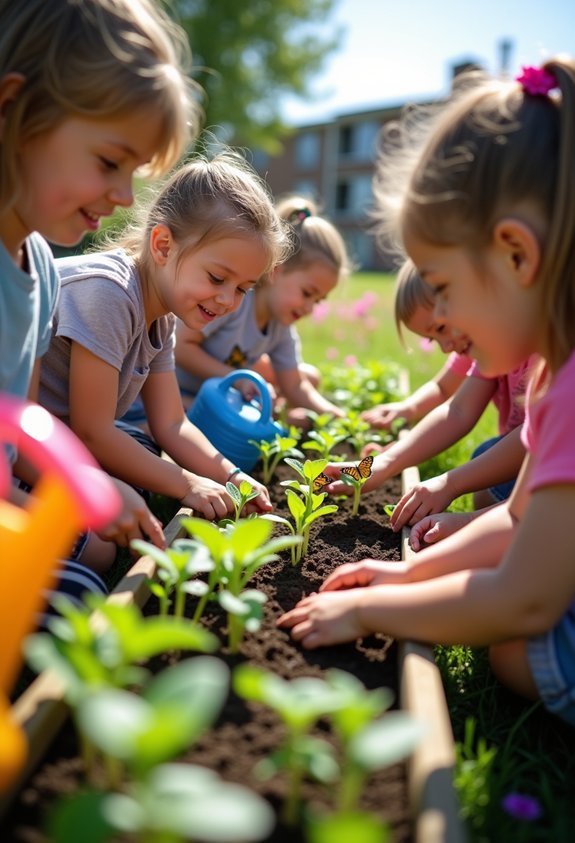
Because children learn best when they feel like their actions matter, giving them real responsibility creates lasting change. When you trust students with meaningful tasks, they rise to meet that challenge.
Here’s how to build their confidence:
- Let them lead a classroom recycling station
- Have them teach younger kids about sustainable practices
- Celebrate their ideas publicly
You’re not just teaching facts. You’re shaping future leaders who care deeply about our planet.
Small wins matter. When a child sees their eco friendly habits making a difference, something clicks. They feel powerful. They feel proud.
Your role? Guide them gently. Cheer them on. Watch them grow into the environmental champions our world needs.
In case you were wondering
What Age-Appropriate Earth Day Projects Work Best for Kindergarten Students?
You’ll find nature crafts like leaf collages and seed planting engage kindergarteners perfectly. Recycling games where they sort materials into bins teach environmental responsibility while keeping little hands busy and curious minds learning through play.
How Much Time Should Teachers Dedicate to Earth Day Project Activities?
You’ll want to plan, you’ll want to prepare, and you’ll want to execute effectively. For optimal project duration, dedicate 30-60 minutes per activity. Good time management ensures students stay engaged without feeling rushed or losing interest.
What Low-Cost Materials Can Be Used for Earth Day Classroom Projects?
You can use recycled materials like cardboard boxes, plastic bottles, and newspaper for Earth Day projects. Don’t overlook existing classroom supplies—crayons, glue, scissors, and scrap paper work perfectly without requiring additional purchases.
How Can Parents Get Involved in School Earth Day Projects?
You can boost parent involvement by inviting families to volunteer during craft sessions, donate recyclable materials, or join cleanup events. This community engagement strengthens school connections while teaching children collaborative environmental responsibility.
When Should Teachers Start Preparing for Earth Day Project Activities?
You should start your Earth Day project planning at least four to six weeks in advance. This timeline gives you enough time to gather materials, coordinate with colleagues, and integrate meaningful activities into your curriculum.
Conclusion
You’ve got everything you need to make Earth Day meaningful for your students. These projects aren’t just crafts—they’re seeds you’re planting in young minds that can literally change the world.
Pick one activity. Try it. Watch your students light up with purpose.
You’re not just teaching science or teamwork. You’re raising the next generation of planet protectors. That matters more than you know.