Why Music Activities Strengthen Family Bonds Together?
Music activities strengthen family bonds because they create shared experiences that words alone can’t match. When you sing, dance, or play instruments together, your brains release oxytocin—the bonding hormone—and your heart rates actually sync up. You’ll laugh at silly mistakes, celebrate small wins, and build traditions that become treasured memories. Music also helps everyone express emotions safely, even the tough ones. Below, you’ll discover specific ways to weave these powerful connections into your family life.
Key Takeaways
- Music evokes shared memories and emotions, activating brain regions linked to attachment that strengthen family connections.
- Singing and making music together releases oxytocin, fostering bonding and synchronizing heart rates among family members.
- Collaborative music activities encourage teamwork and celebrate shared victories, building confidence and unity within the family.
- Music provides stress relief and joyful experiences, offering a positive outlet for emotions while creating fun family moments.
- Regular musical rituals like bedtime lullabies or car karaoke become treasured traditions that anchor family togetherness.
The Science Behind Music and Emotional Connection

When you sing a lullaby or tap out a beat with your child, something powerful happens in both your brains. Your bodies release oxytocin—the bonding hormone. Your heart rates sync up. You feel closer without saying a single word.
This is musical empathy in action. When you share rhythm and melody, you literally tune into each other’s emotions.
What happens when you make music together:
- Stress hormones drop
- Trust builds naturally
- Emotions feel safer to express
Sound therapy research shows that shared musical experiences activate the same brain regions linked to attachment and comfort. You’re not just making noise. You’re building neural pathways for connection.
The best part? You don’t need talent. You just need presence.
Singing Together Creates Shared Joy and Laughter

Because singing strips away pretense, it opens the door to pure, unfiltered joy. You don’t need perfect pitch. You just need willingness.
When your family sings together, something magical happens. Joyful harmonies fill your home. Stress melts away. Everyone connects.
Why It Works
- Singing releases feel-good chemicals in your brain
- Shared laughter moments build lasting memories
- Even silly songs create deep bonds
Try These Ideas
- Belt out car karaoke on road trips
- Make up goofy lyrics to familiar tunes
- Start a bedtime song tradition
The best part? Mistakes become treasures. When someone cracks on a high note, you all laugh together. That’s the real gift—finding joy in imperfection as a family.
Learning Instruments as a Family Building Experience

The decision to pick up instruments together transforms your family into a team of learners.
Learning music as a family turns everyone into beginners again—building patience, humility, and connection one note at a time.
No one has to be perfect. Everyone starts somewhere. When you struggle through chords alongside your kids, you show them that learning takes patience. You’re all in this together.
Why instrument exploration works:
- Everyone feels vulnerable and supported
- Mistakes become funny moments, not failures
- Progress feels like a shared victory
Start with simple instruments. Ukuleles, tambourines, and keyboards work great for beginners. Let each person choose what sparks their interest.
Building your family jam sessions:
- Pick a weekly practice time
- Learn one song everyone likes
- Celebrate small wins together
These sessions create memories that last. You’re not just making music. You’re building trust, patience, and connection that strengthens your family bond.
Dance Parties That Break Down Communication Barriers

Sometimes words get stuck, but bodies never forget how to move. When talking feels hard, dancing creates a different kind of conversation. You share joy without saying a single word.
Try These Simple Ideas:
- Put on upbeat songs and let everyone move freely
- Use rhythm games like clapping patterns to connect
- Take turns leading dance moves others copy
Dance improvisation removes pressure. There’s no right or wrong way to wiggle, spin, or bounce. Shy family members often open up when the focus shifts from words to movement.
You’ll notice something beautiful happen. Laughter replaces silence. Eye contact comes naturally. Bodies sync up to the same beat.
These moments build trust. They remind everyone that connection doesn’t always need words—sometimes it just needs music.
Creating Family Traditions Through Musical Rituals

When you build musical rituals into your family’s routine, you create anchors that hold everyone together through busy days and changing seasons.
Simple Musical Traditions to Try:
- Sunday morning playlist while making pancakes
- Birthday song sung in harmony
- Bedtime lullaby rotation
- Holiday carol sessions by the tree
These family rituals don’t need to be fancy. They just need to happen regularly. That’s what makes them stick.
Consistency beats perfection — simple rituals done regularly become the traditions your family treasures most.
Your kids will remember the feeling of these moments long after they’ve grown. The songs become time capsules of love and connection.
Start small. Pick one musical tradition this week. Maybe it’s humming together during car rides or clapping rhythms before dinner. Whatever you choose, you’re weaving music into your family’s story.
How Music Helps Express Difficult Emotions Safely
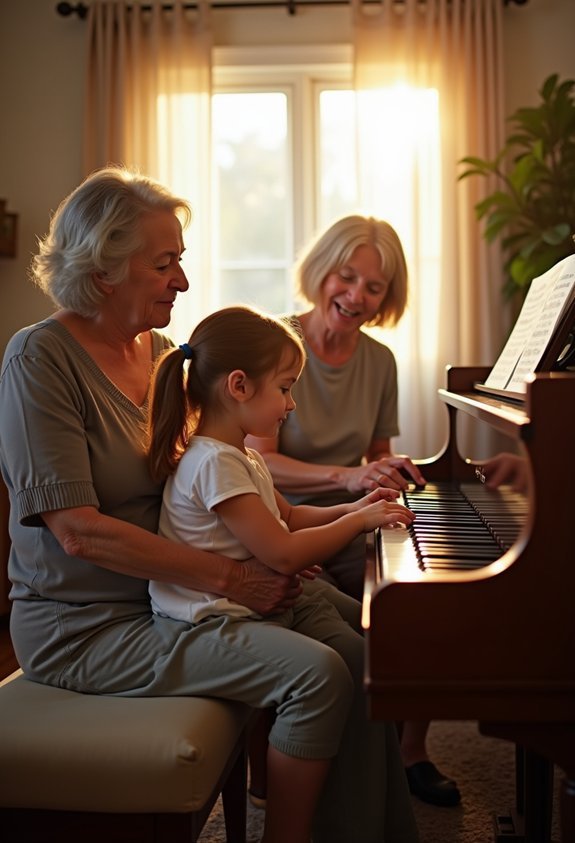
Music does more than create joyful memories together—it also opens doors when feelings get hard to talk about. When words fail, melodies step in.
Why it works:
- Songs give feelings a voice without pressure
- Rhythms help release tension stored in the body
- Shared listening creates safe space for emotional release
Music therapy shows us that sound reaches places words cannot. You can use this at home too.
Simple ways to try:
- Play calming music during tough conversations
- Let kids pick songs that match their mood
- Drum together when anger needs an outlet
- Sing loudly in the car to shake off stress
You’re giving your family healthy tools for hard days.
Attending Live Concerts Strengthens Multigenerational Ties

Sharing a live concert with grandparents, parents, and kids creates a memory that sticks with everyone for years. Live performances bring your whole crew together in a way screens just can’t match. You’ll feel the bass in your chest, see the lights dance, and watch each other’s faces light up.
Family outings to concerts offer unique benefits:
- Shared excitement builds connection across age gaps
- New conversations spark naturally about favorite songs
- Physical presence strengthens bonds without distractions
Grandma might tap her foot to a song she loved decades ago. Your teenager discovers it’s actually pretty cool. These moments bridge generations effortlessly. You don’t need expensive tickets either. Local festivals, school performances, and outdoor summer concerts all count. What matters is being there together.
Making Music Reduces Stress and Increases Family Harmony

After a long day, gathering around a piano or picking up a few drums can melt tension faster than you’d expect. Music naturally calms your nervous system. When you play together, stress relief happens almost instantly.
Your family doesn’t need talent to feel the benefits. Simple activities work wonders:
- Tap rhythms on the table
- Hum a favorite tune together
- Shake homemade shakers with little ones
These moments create family harmony without any pressure. You’re not performing. You’re connecting.
Notice how shoulders drop and smiles appear? That’s the magic working. Music releases feel-good chemicals in everyone’s brain at once.
Make it a habit. Even ten minutes of shared music can shift your home’s entire mood from frazzled to peaceful.
Building Lasting Memories Through Collaborative Playlists

Beyond those peaceful moments of playing together, you can also build something your family will treasure for years. Playlist curation becomes a fun project everyone can join. Each person picks songs that matter to them, and suddenly you have a soundtrack of your family’s life.
Here’s how to get started:
- Let each family member add five songs they love right now
- Create themed playlists for road trips, cooking nights, or lazy Sundays
- Update your family favorites list every few months to capture new memories
When you look back years from now, those playlists tell your story. You’ll hear a song and remember that summer vacation or your child’s favorite phase. Music captures moments words can’t describe.
In case you were wondering
What Age Should Children Be Before Starting Family Music Activities?
You can start family music activities from birth. Musical exposure benefits infants immediately, and you’ll notice developmental benefits as your child responds to rhythms, melodies, and shared musical moments that strengthen your family connection.
How Much Money Should Families Budget for Musical Instruments and Lessons?
You’ll obviously need to sell a kidney for instrument costs, right? Actually, budget $50-500 for beginner instruments and $20-50 weekly for lesson pricing. You can start affordably and upgrade as your family’s commitment grows.
What if Some Family Members Have No Musical Talent or Experience?
You don’t need talent to enjoy music together! Focus on musical appreciation and inclusive participation—clapping, singing along, or simply listening creates connection. Everyone can shake a tambourine or dance, making bonding accessible to all.
How Often Should Families Schedule Music Activities Together Each Week?
Like watering a garden, consistency matters most. You’ll want to aim for one to two sessions in your weekly schedule. This family commitment doesn’t require hours—even 20-minute sessions create meaningful connections when you’re genuinely present together.
Which Music Streaming Apps Work Best for Creating Collaborative Family Playlists?
You’ll find Spotify features like Blend and collaborative playlists perfect for families. Apple Music collaboration tools also let everyone add songs together. Both apps make it easy for you to build shared playlists seamlessly.
Conclusion
You’ve got the tools now. Music is the glue that holds hearts together. Whether you’re singing silly songs at dinner or dancing in the living room, these moments matter.
Start small. Pick one activity this week. Maybe create a family playlist or have a five-minute dance party.
Your family’s unique soundtrack is waiting to be written. Press play and watch your bonds grow stronger.