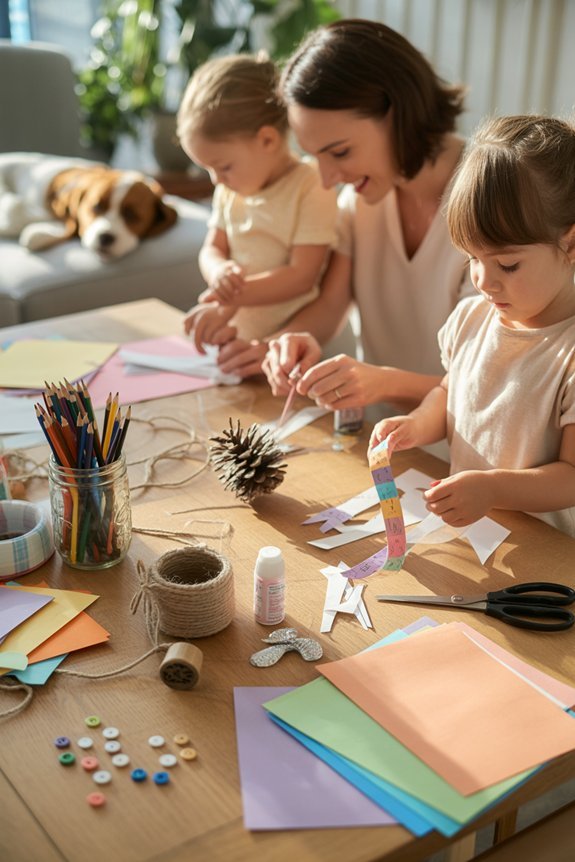
Why Preschoolers Love These Easy DIY Crafts
You love these easy DIY crafts because they’re hands-on, sensory-rich, and let preschoolers explore textures, sounds, and colors while building fine motor skills. You’ll set up fast with simple, budget-friendly materials—think recyclables, trays, and kid-height bins—and clean up quickly with cheerful cues. Open-ended prompts spark creativity, confidence, and storytelling, while keepsakes like salt-dough charms make sharing feel special. It’s playful, low-stress making that celebrates effort over perfection—and there’s even more simple magic you can try next.
Key Takeaways
- Sensory-rich, messy play lets kids explore textures, sounds, and movement, making crafting feel exciting and hands-on.
- Easy setups with minimal materials empower independence and quick success, reducing frustration and wait time.
- Open-ended prompts let children lead, fueling imagination, choice-making, and pride in their unique creations.
- Budget-friendly recyclables and familiar household items feel approachable and spark inventive problem-solving.
- Fast cleanup routines and playful transitions keep attention high and make crafting feel fun from start to finish.
Sensory-Rich Projects That Spark Curiosity
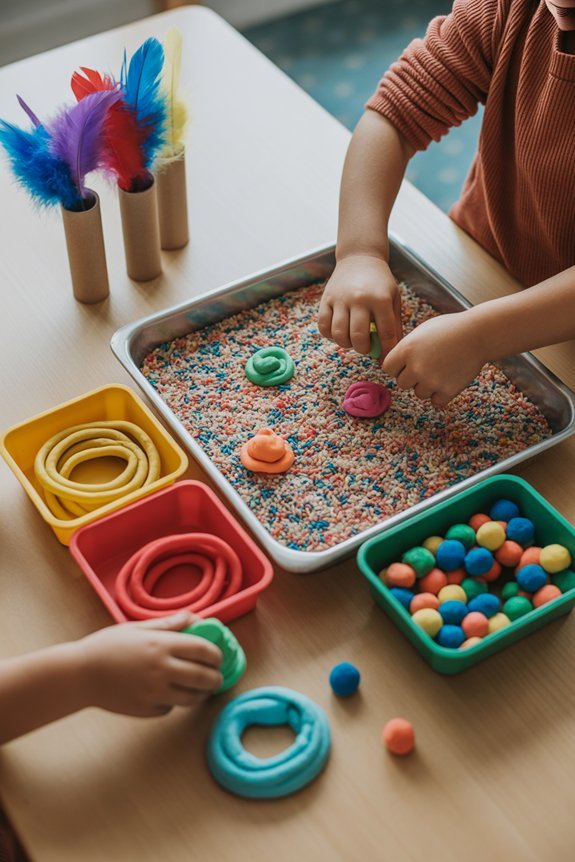
Even before you bring out the glue, invite little hands to explore textures, sounds, and scents that make learning feel like play. You’ll set the stage for sensory exploration by offering safe, simple materials—soft yarn, bumpy bubble wrap, smooth stones, scented dough, and crinkly paper.
Encourage little ones to notice how each item feels, looks, and moves. Ask playful questions: What squishes? What rustles? What rolls?
Guide them to sort, compare, and layer materials, then press, tear, sprinkle, and tap. You’re supporting fine-motor practice while nurturing curiosity development.
Keep directions light and open-ended, so children lead with wonder and you follow with language: “You made it snap!” Celebrate discoveries, not products.
When kids can touch, listen, and sniff, they stay engaged, confident, and eager to try more.
Simple Setups for Short Attention Spans

You’ll set the stage fast with quick, clutter-free prep that keeps little hands moving.
Stick to minimal materials—think paper, stickers, tape—so you can start and clean up in minutes.
You keep the focus on playful making, not managing supplies.
Quick, Clutter-Free Prep
When time’s short and attention spans are shorter, set up crafts that pop out fast and pack away even faster. You’ll keep the play flowing when prep feels like part of the game: clear space, introduce a simple prompt, and invite little hands to jump in.
Use quick organization so kids can see choices at a glance and return items independently. Aim for easy storage that snaps shut, stacks neatly, and travels from table to shelf in seconds.
1) Label bins with photos so preschoolers match tools to homes—built-in cleanup boosts autonomy.
2) Pre-portion supplies in small trays; you’ll prevent crowding and keep focus on the making.
3) Set a cheerful cleanup cue—song, timer, or rhyme—so transitions feel playful, not abrupt.
You’ll model calm routines, and creativity won’t get buried under clutter.
Minimal Materials Needed
Because simple wins with preschoolers, plan crafts that use just a few familiar items—paper, crayons, glue stick, and one surprise material like stickers or washi tape.
You’ll invite focus, not overwhelm, and keep cleanup quick. With minimalist crafting, you set clear limits that spark creativity: fewer choices mean faster starts and more joyful making.
Offer open prompts: “Draw a path, then sticker the steps,” or “Make a collage with three colors.” Kids explore textures, patterns, and cause-and-effect without waiting for supplies.
Rotate the surprise material to refresh interest.
Keep a small bin ready: scrap paper, crayons, glue stick, stickers. That’s all you need for resourceful play anywhere—kitchen table, porch, or waiting room.
Short setup, short cleanup, big engagement.
Budget-Friendly Materials You Already Have
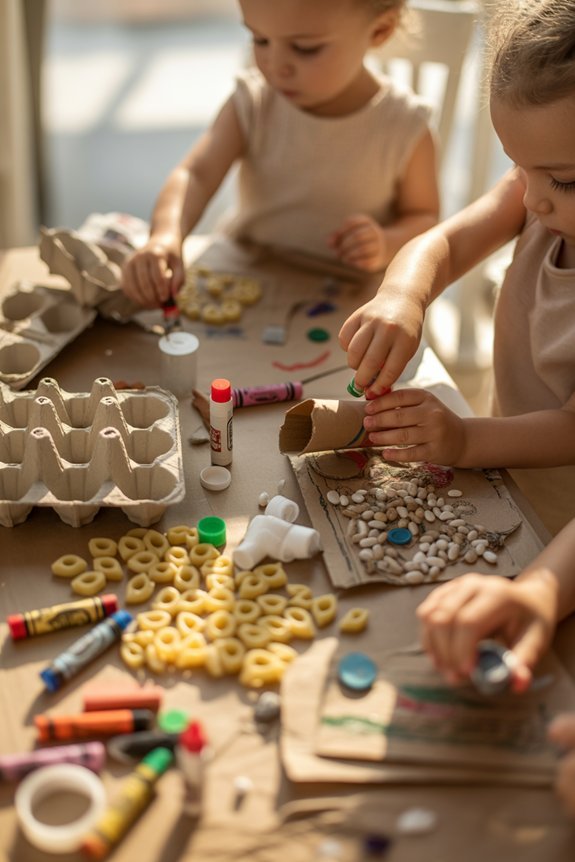
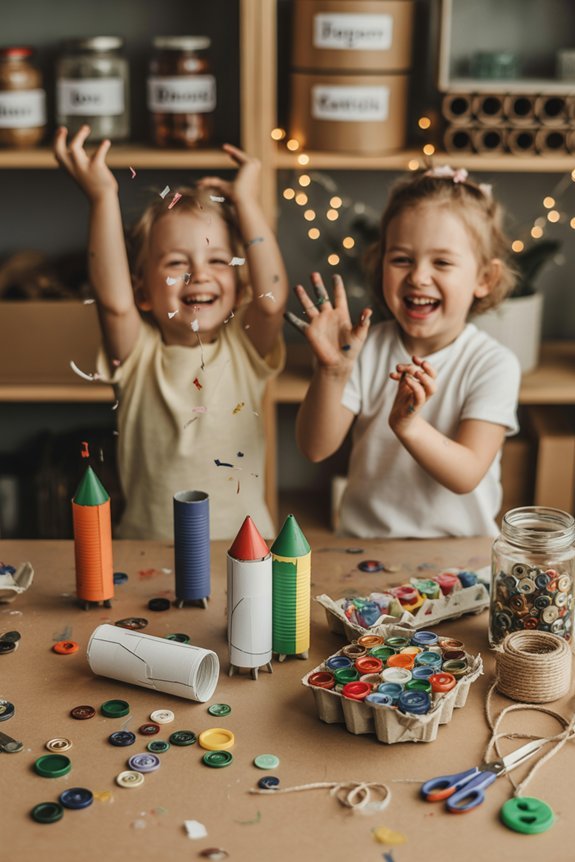
Treasure hunts start right at home: turn recyclables and household odds and ends into a preschool craft stash without spending a dime.
Turn everyday recyclables into a preschool craft stash—free, fun, and full of imagination
You’ve got more than you think—save cardboard tubes, clean jars, scrap paper, and fabric bits. Add safe kitchen supplies like muffin liners, foil, and paper plates. These familiar textures invite curious hands and playful storytelling without extra cost.
Try this simple sort-and-create routine to spark ideas and independence:
- Gather recycled materials by type—paper, plastic, fabric—and place them in low bins kids can reach.
- Add basic tools: child scissors, tape, glue sticks, and crayons; keep them in a small caddy.
- Rotate finds weekly—bottle caps one week, box lids the next—to refresh choices and prompt new inventions.
You’ll stretch creativity and your budget together.
Messy Play That Builds Fine Motor Skills
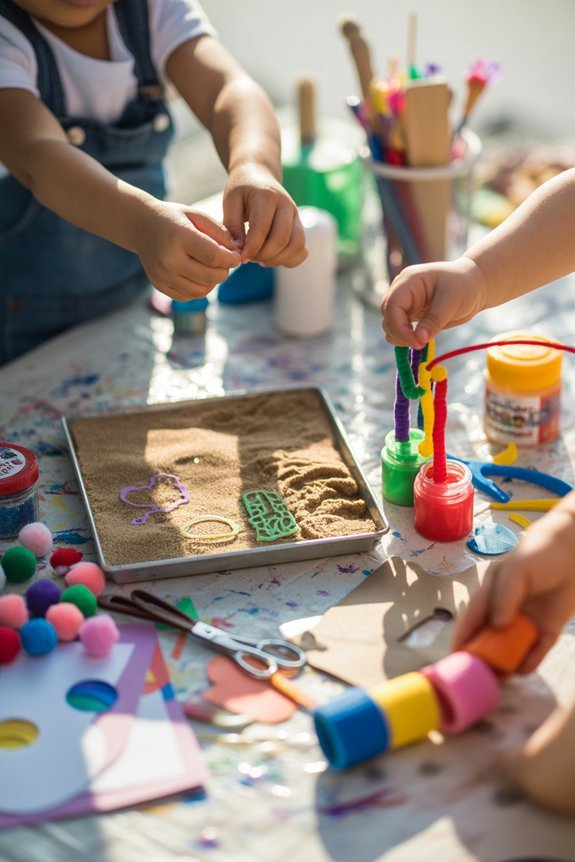
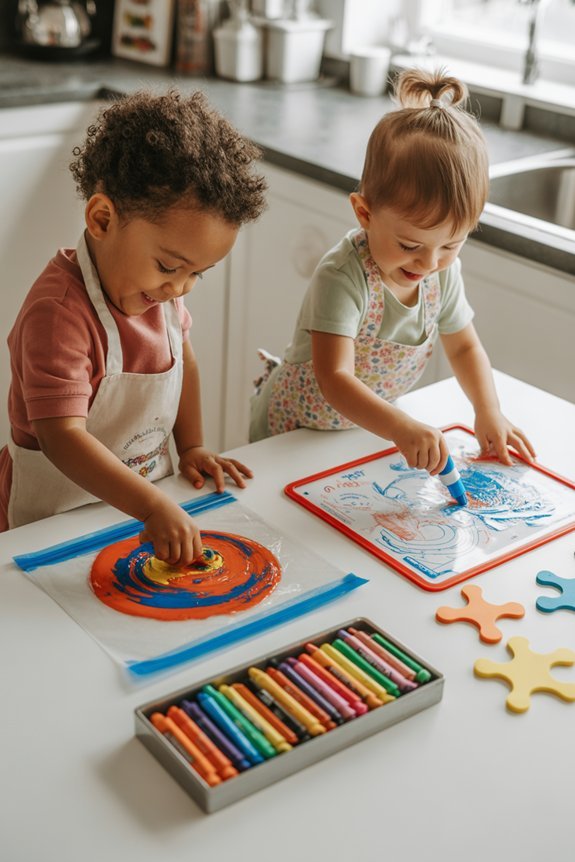
Those household finds don’t just stock a bin—they set the stage for wonderfully messy play that strengthens tiny hands. When you invite goo, grit, and squish into the day, you’re giving fine motor skills a workout.
Pour rice into a tray and add scoops and tiny cups. Show your child how to pinch, pour, and transfer—steady wrists, coordinated fingers, and grip strength grow with every scoop.
Try finger painting with pudding or yogurt on wax paper. Encourage dots, lines, and small swirls to build finger isolation and control.
Roll playdough “snakes,” snip them with child-safe scissors, and press buttons in as “spots.” That tactile push supports hand muscles and bilateral coordination.
Keep wipes nearby, embrace the messy fun, and celebrate visible skill development in playful minutes.
Open-Ended Ideas That Boost Creativity
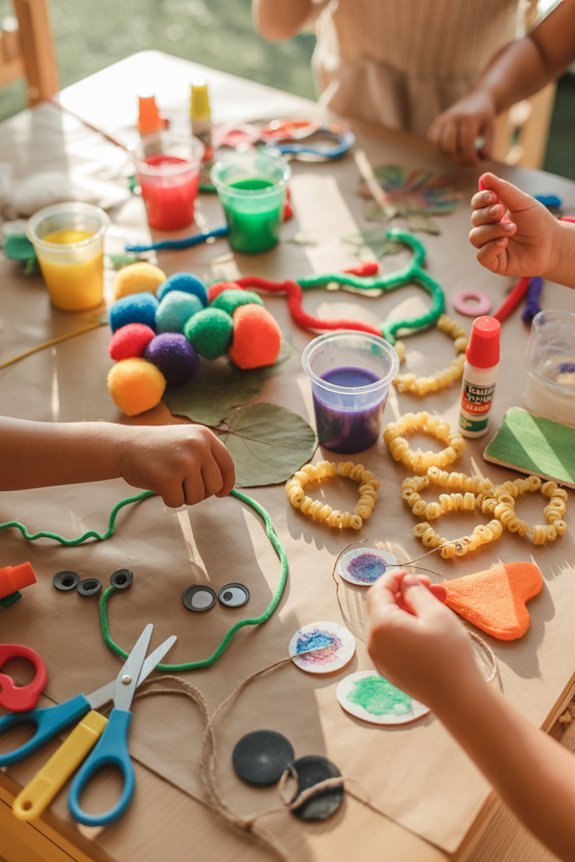
Offer prompts, not patterns, so your child decides what to make and how to make it.
Focus on process over product—notice colors mixed, textures explored, and stories told.
Gather everyday objects like boxes, lids, and fabric scraps, and you’ll spark big ideas from simple stuff.
Prompts, Not Patterns
Why not swap step-by-step templates for playful prompts that spark imagination? When you offer open-ended cues instead of patterns, your preschooler leans into imaginative exploration and playful experimentation.
Prompts invite choice, problem-solving, and joyful discovery. Say, “What could this cardboard become?” and watch ideas bloom. Provide varied materials, then step back so your child leads the making.
1) Try “Build a creature with three colors.” Your child decides shapes, textures, and features.
2) Offer “Create a place where tiny toys could live.” Boxes, tape, and fabric scraps turn into cozy worlds.
3) Ask “Make something that moves.” Straws, paper wheels, and clips inspire tinkering.
Use simple, sensory-safe supplies, narrate their ideas, and celebrate attempts. You’ll nurture confidence, flexible thinking, and genuine creative voice.
Process Over Product
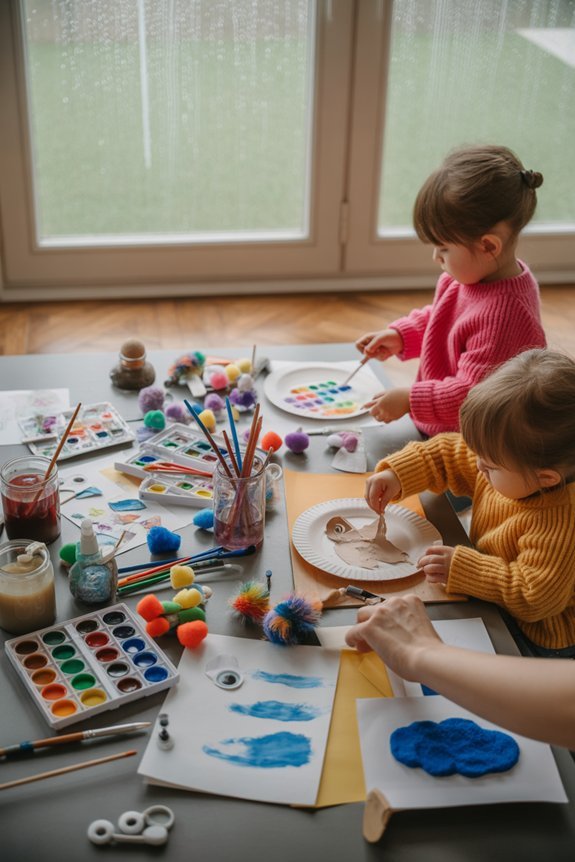
Even when glitter spills and plans change, keep the focus on the making, not the masterpiece. You’re guiding little hands through process exploration, where squishing paint, tearing paper, and pressing stickers become the real lessons.
Invite choices: “Do you want to roll, dab, or stamp?” That tiny question gives creative freedom and builds confidence.
Offer open-ended materials and step back. Describe what you notice: “You made lots of dots,” instead of judging the result.
When a child pivots mid-project, follow their lead. Celebrate effort, curiosity, and problem-solving—mixing colors, testing tools, layering textures.
Set simple boundaries—smocks on, tape here, water there—so kids feel safe to try bold ideas.
You’ll see persistence bloom, attention stretch, and voices grow as they invent their own way.
Everyday Objects Inspire
As you lean into process-first making, look around your home—spoons, boxes, lids, and leaves can spark the richest art play. You don’t need fancy supplies; household items invite curious hands to sort, stack, scoop, and invent.
Offer a simple prompt—“What could this become?”—and watch imaginative play bloom as your child tests textures, sounds, and shapes.
- 1) Make a sound lab: tap spoons on cups, shake rice in tins, compare quiet and loud.
- 2) Build a tiny world: boxes as tunnels, lids as ponds, leaves as boats, characters from clothespins.
- 3) Try printmaking: dip jar lids in paint, stamp paths, layer patterns.
Stay nearby to narrate discoveries, not direct them. Celebrate trying, revising, and noticing. Creativity grows when materials stay open-ended.
Quick Clean-Up Tips for Busy Grown-Ups
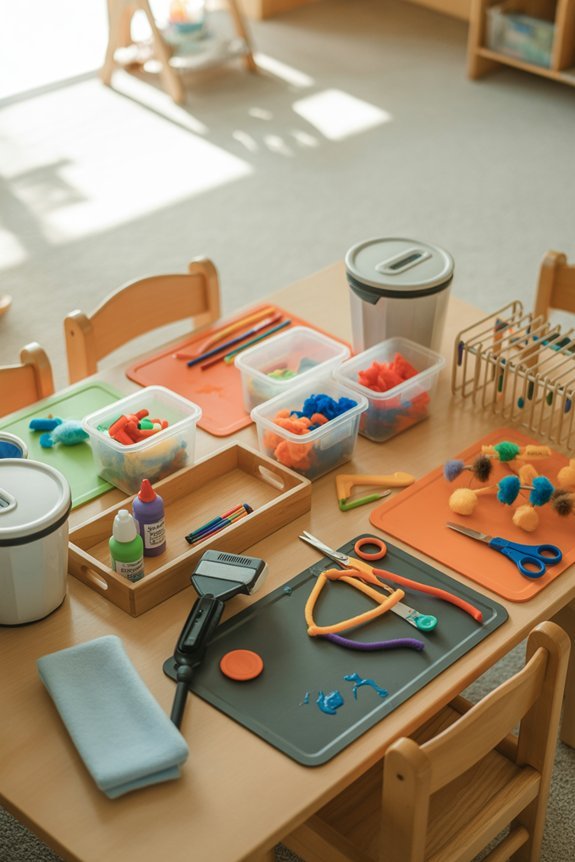
When glitter’s still twinkling on the rug, you can turn cleanup into a quick game that fits your real-life pace. Use time saving strategies that feel playful: set a one-song timer and invite your child to “feed” a color-matching bin.
Give simple jobs—stickers to the sticker bin, scraps to the “paper nest,” brushes to the “bristle bed.” You’ll model efficient organization while keeping momentum.
Assign tiny jobs: stickers to the sticker bin, scraps to the paper nest, brushes to the bristle bed.
Stage tools at kid height: a small caddy with wipes, mini broom, labeled zip bags, and a laundry basket for “return-to-shelf.”
Lay a silicone mat or shower curtain before crafting; when you’re done, lift, tip, and dump. Keep a “maybe later” box for unfinished bits, and a “recycle treasure” bin for safe leftovers.
End with a high-five and a quick hand-wash routine.
Keepsakes Kids Are Proud to Share
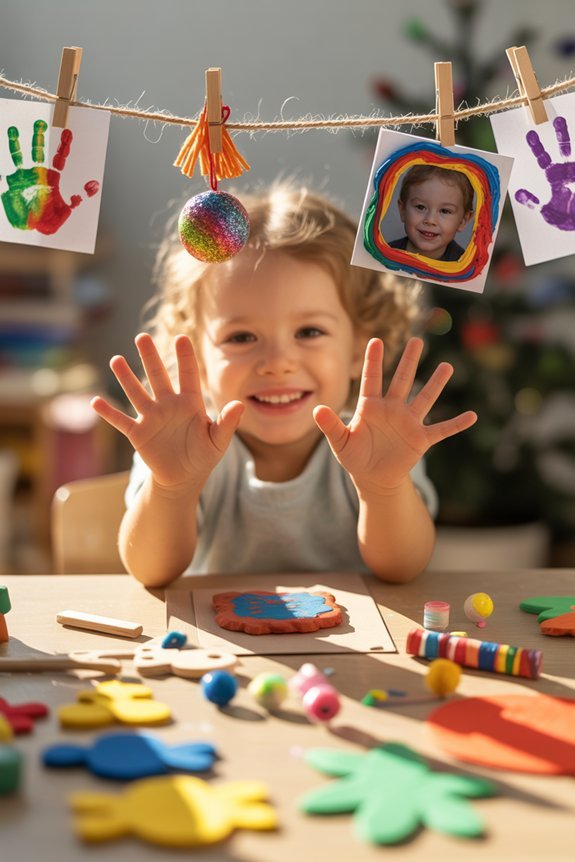
Because little hands love to gift big feelings, keepsakes shine when kids can make, tell, and share the story themselves.
You set up simple stations, then let them choose colors, textures, and words. That choice fuels memory making and pride sharing, while you celebrate effort over “perfect.” Keep directions short, materials safe, and steps tactile, so little creators stay engaged.
- Salt-dough thumbprint charms: Mix, press, bake, paint, and tie on yarn. Invite kids to tell who it’s for and why.
- Story-stamp postcards: Use foam shapes and washable ink to stamp a scene, then dictate their message on the back.
- Nature photo frames: Glue sticks, leaves, and tape around cardboard; add a snapshot or drawing.
You’ll watch confidence bloom as kids gift their own stories.
In case you were wondering
How Can I Adapt Crafts for Children With Sensory Sensitivities?
You adapt crafts by offering sensory friendly materials, letting kids choose textures, and keeping calming craft environments. You preview steps, model gently, simplify tools, add breaks, and celebrate tiny choices. You follow their lead, pace, and comfort.
What Safety Checks Should I Do Before Starting Any Craft?
Check tools for sharp edges, confirm crafting materials are non-toxic, and secure loose parts. Clear clutter with cozy workspace organization, steady tables, and good lighting. Supervise closely, model safe use, practice handwashing, and keep emergency contacts handy.
How Much Supervision Do These Crafts Typically Require?
They need close, constant supervision, but you can encourage crafting independence in tiny moments. Follow simple supervision guidelines: stay within arm’s reach, pre-cut tricky bits, model tool use, then step back briefly, cheer efforts, and rejoin when challenges pop up.
How Do I Store Finished Crafts Without Clutter?
You store finished crafts by creating playful “galleries.” Worried about clutter? Try rotating displays, labeled bins, and wall clips. Use craft storage carts, flat folders, and photo books. These organization tips invite kids to tidy, treasure, and revisit creations.
What Are Age-Appropriate Scissors and Glue Recommendations?
Choose rounded-tip child safe scissors with easy-grip handles; start with spring-assisted models for beginners. Pick washable glue sticks or school glue for low mess. Supervise closely, model snipping and dabbing, and celebrate small successes to build confident, playful skills.
Conclusion
You’ve seen how sensory-rich projects spark curiosity, simple setups fit short attention spans, and budget finds turn into big fun. With messy play building fine motor skills and open-ended ideas fueling creativity, your preschooler leads the play—and you cheer them on. Quick clean-up tips keep you sane, and sweet keepsakes celebrate their effort. Ready to grab the crayons and rice bin and make some magic together? You’ve got this—and your little maker can’t wait to create.