17 Outdoor Team Building Activities for Siblings
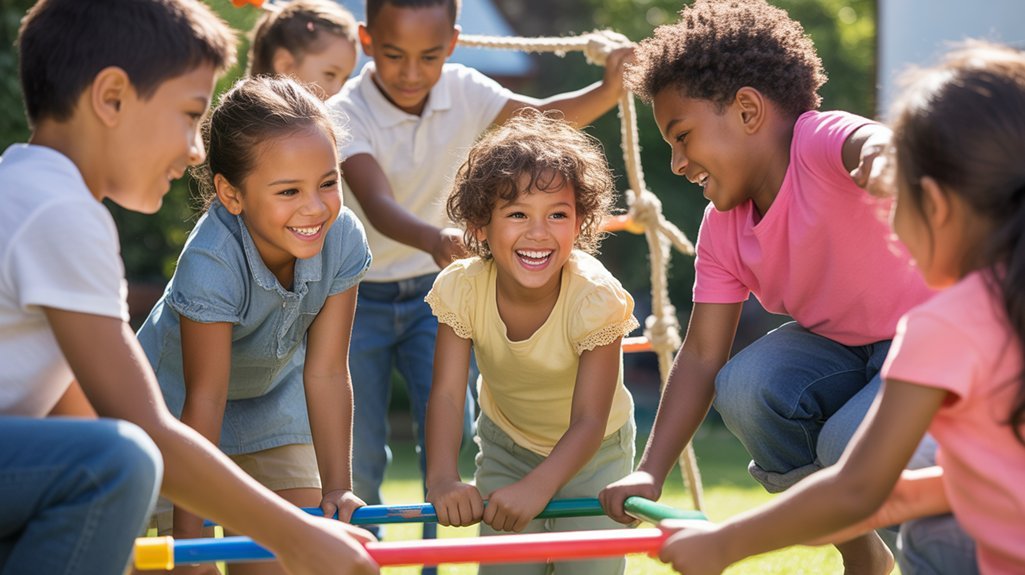
You’ll discover 17 outdoor team building activities that transform sibling rivalry into cooperation, from obstacle courses using household items to trust walks through nature where one child guides their blindfolded brother or sister. These activities include water balloon relay races, fort building projects, egg drop engineering challenges, and cooperative ball games that prioritize teamwork over competition. Each activity strengthens communication skills, builds trust, and develops problem-solving abilities while your children create lasting memories together through shared challenges and collaborative play that’ll benefit them for years to come.
Key Takeaways
- Obstacle courses and relay races develop physical coordination while teaching siblings to communicate effectively and work together toward shared goals.
- Trust-building activities like blindfolded nature walks strengthen bonds by requiring precise verbal guidance and creating shared vulnerable experiences.
- Creative projects including fort building and nature art encourage collaborative decision-making, role assignment, and negotiation skills among siblings.
- Engineering challenges like egg drop projects and puzzle hunts promote problem-solving through brainstorming, task division, and combining unique strengths.
- Cooperative ball games and gardening activities shift focus from competition to teamwork, celebrating collective achievements over individual victories.
Obstacle Course Challenge
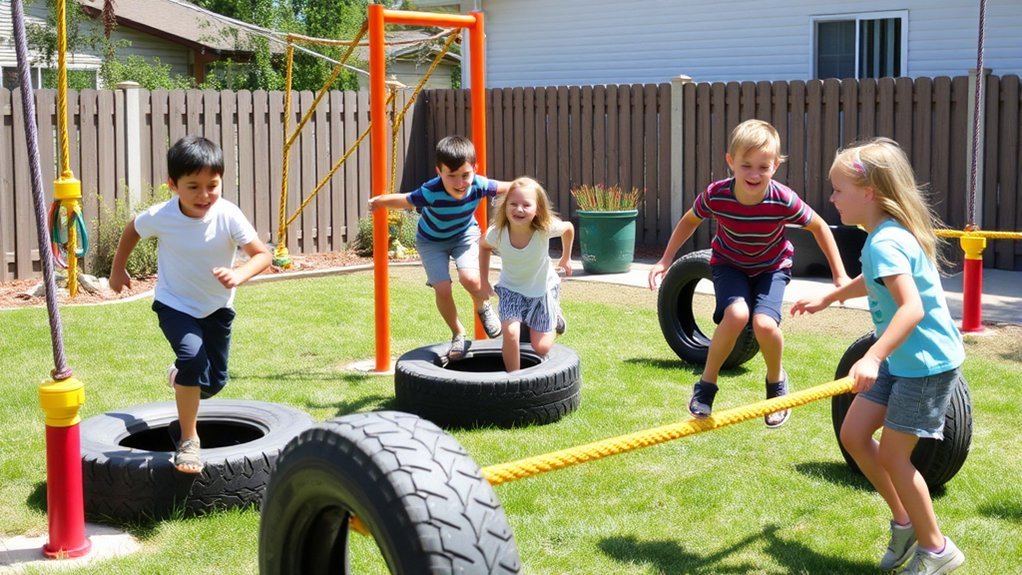
When siblings compete through an obstacle course, they develop physical coordination while learning to encourage each other’s progress. You can create challenging stations using household items like hula hoops, cones, ropes, and balance beams. Each section requires different skills—crawling under nets, jumping over hurdles, or weaving through markers.
Design the course so siblings must work together on certain obstacles. They’ll naturally develop team strategy when facing walls they can’t climb alone or puzzles requiring multiple hands. Obstacle navigation becomes easier when they communicate and plan their approach together.
Collaboration-focused obstacles teach siblings that some challenges require teamwork, turning individual effort into shared problem-solving and mutual support.
Time each run and encourage them to beat their previous records. You’ll notice they start coaching each other, celebrating successes, and problem-solving as a unit.
This activity transforms competition into collaboration while building resilience and physical confidence.
Scavenger Hunt Adventure
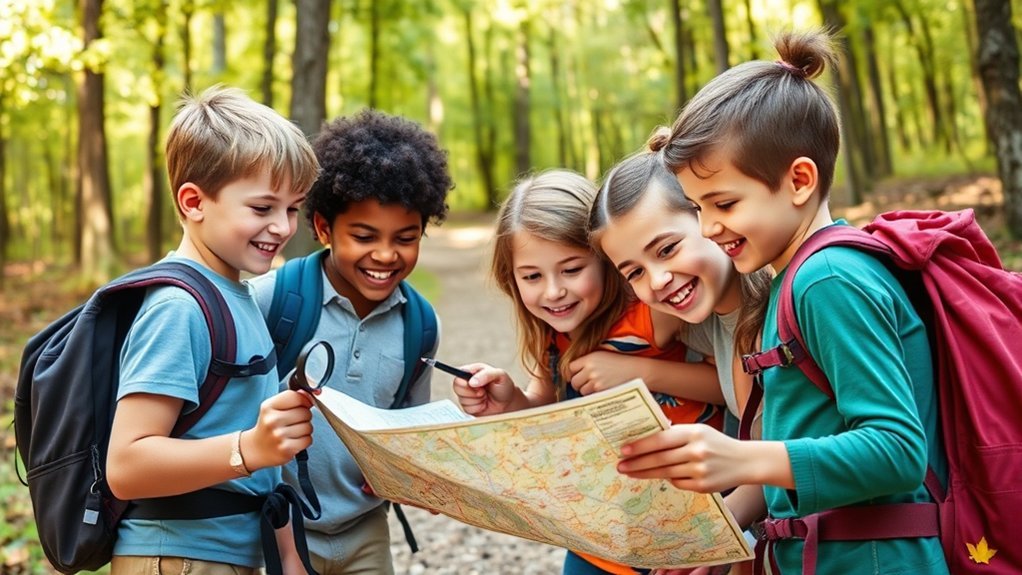
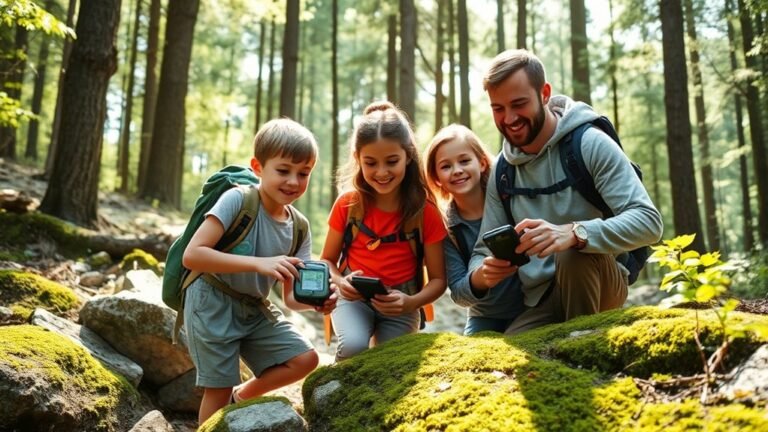
As siblings search for hidden treasures across your backyard or local park, they’ll sharpen observation skills while building cooperative strategies. Scavenger hunts transform ordinary spaces into exciting exploration zones where teamwork becomes essential.
Start with clue creation that matches your children’s ages and abilities. Younger siblings benefit from picture-based hints, while older ones enjoy riddles and coded messages.
Design challenges requiring collaboration—like “find three red objects together” or “locate the tallest tree as a team.”
Map making adds another dimension to the adventure. Have siblings draw their own treasure maps, marking landmarks and creating symbols for hiding spots.
They’ll practice communication when one sibling reads clues while another navigates. Include physical challenges between stations to keep energy high and engagement strong throughout the hunt.
Trust Walk Through Nature
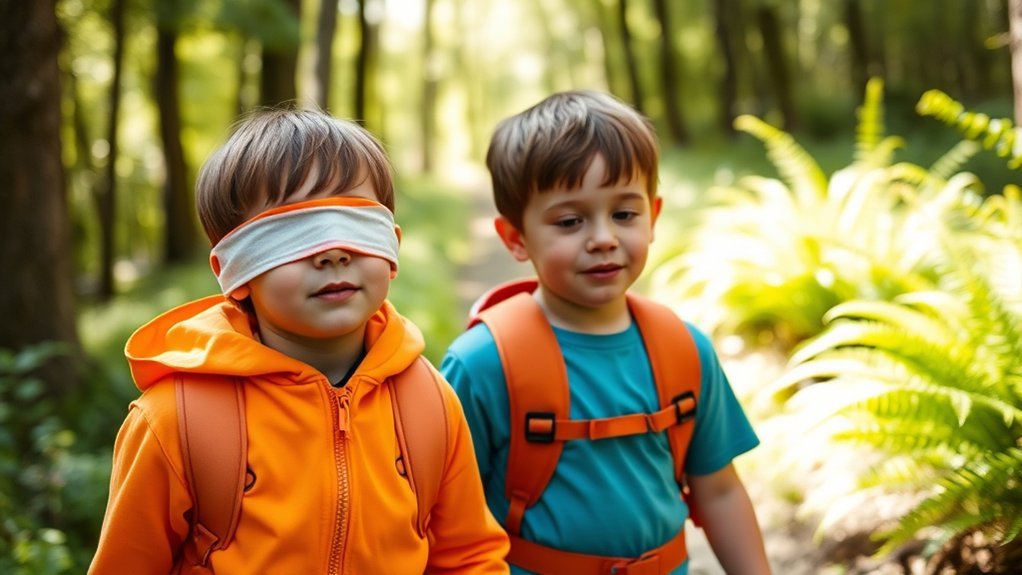
Through blindfolded nature walks, siblings develop profound trust while experiencing the outdoors through heightened senses. One sibling wears a blindfold while the other acts as their guide, navigating forest paths, streams, and varied terrain together.
This trust building exercise requires the guide to provide clear verbal directions and physical support when needed. The blindfolded sibling must rely completely on their partner’s guidance, strengthening their bond through vulnerability and dependence.
You’ll notice significant improvements in communication skills as siblings learn to give precise instructions and actively listen. Switch roles halfway through so both children experience leading and following.
Choose safe trails with interesting textures—moss-covered rocks, crunchy leaves, or smooth bark—that engage the blindfolded participant’s remaining senses while building mutual confidence.
Build a Fort Together
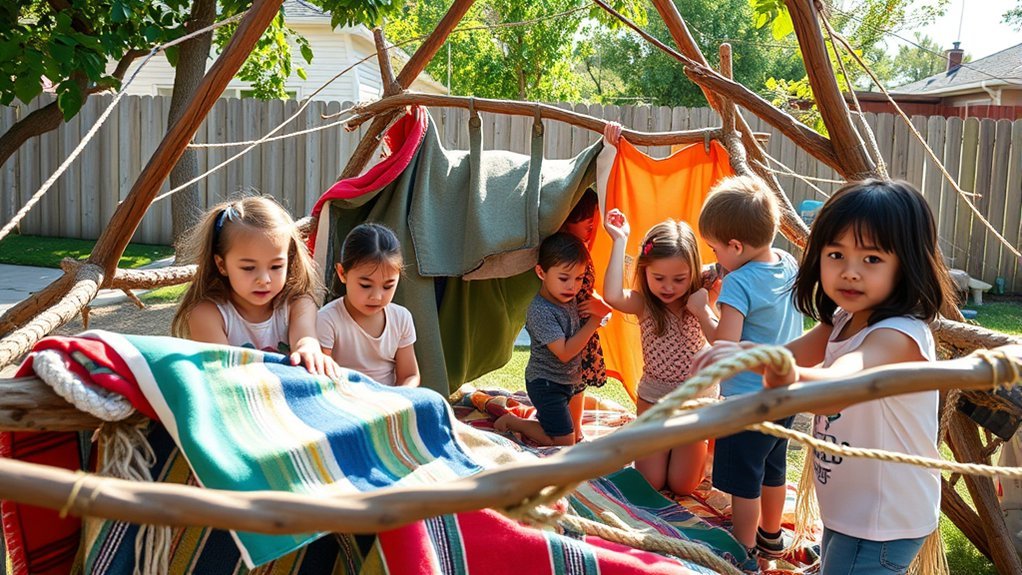
Building forts transforms siblings into collaborative architects who must negotiate, plan, and problem-solve together in the great outdoors.
You’ll watch your children develop essential teamwork skills while gathering branches, leaves, and rocks to construct their masterpiece.
Start by encouraging your siblings to scout for fort materials around your yard or local park. They’ll need to discuss design strategies that work with available resources and terrain.
Scouting materials together sparks natural conversations about design possibilities, teaching children to assess resources and adapt plans to their environment.
Essential steps for successful fort building:
- Assign roles based on each child’s strengths and interests
- Create a basic blueprint before gathering materials
- Test structural stability as you build each section
- Add creative touches like leaf roofs or stone pathways
This activity strengthens communication skills while siblings learn compromise and shared decision-making in a playful, outdoor environment.
Water Balloon Relay Race
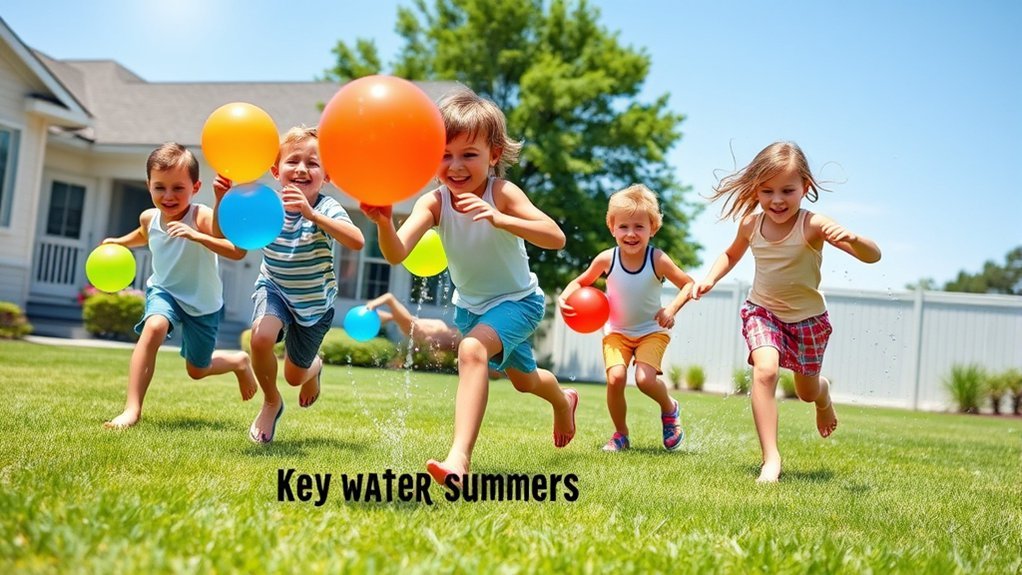
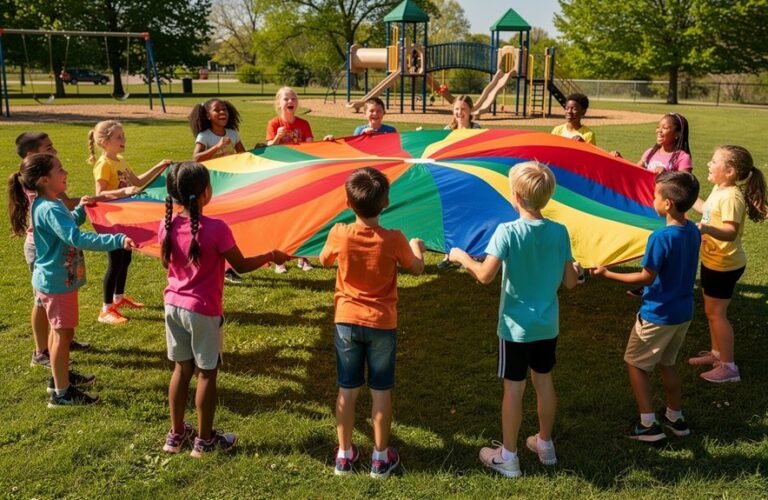
Water balloon relay races combine friendly competition with cooperative strategy as siblings must balance speed against the delicate task of transporting fragile cargo.
You’ll need to set up stations where siblings pass water balloons using different relay strategies—between knees, on spoons, or cradled in linked arms.
Master various water balloon techniques by practicing gentle catches and smooth handoffs before racing. Siblings learn to communicate timing and adjust their pace to prevent breaks.
Try variations like three-legged races while carrying balloons or creating obstacle courses that require creative problem-solving.
The activity teaches patience, coordination, and adaptability as teams strategize the best approach. When balloons inevitably burst, siblings discover that setbacks require quick regrouping and teamwork to continue.
The combination of laughter and collaboration makes this activity memorable for building stronger sibling bonds.
Human Knot Game
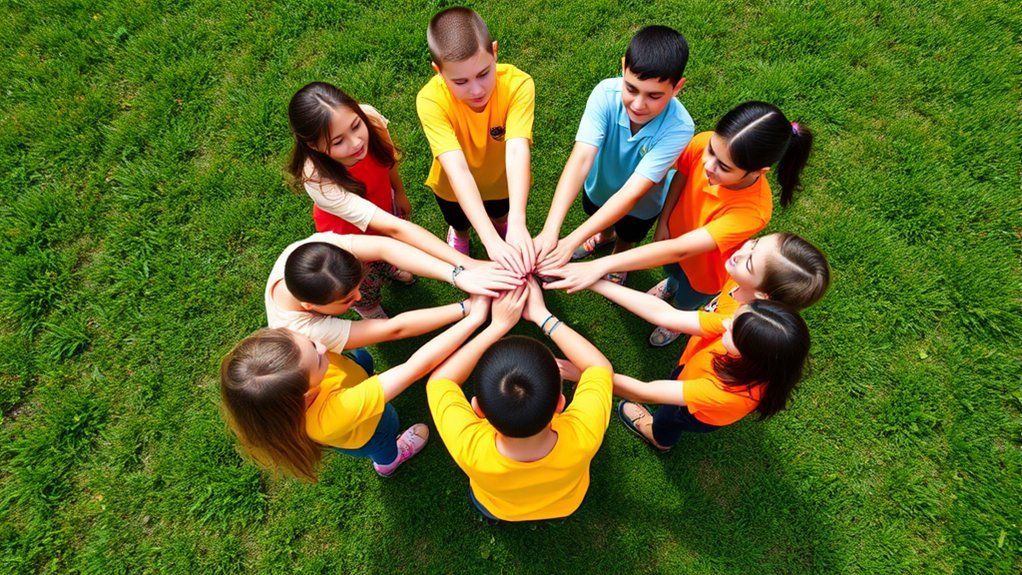
While water balloon races develop coordination through careful handling, the Human Knot Game shifts focus to collaborative problem-solving that requires no equipment at all. Your siblings stand in a circle, reach across to grab two different people’s hands, then work together to untangle themselves without releasing their grip.
This activity strengthens team coordination as everyone must communicate clearly and move in sync.
Here’s how to set it up:
- Form a tight circle with at least four siblings
- Have each person grab hands with two different people across the circle
- Challenge the group to untangle into a circle without letting go
- Allow 10-15 minutes for problem solving
The physical and mental challenge creates memorable bonding moments while building essential teamwork skills.
Capture the Flag
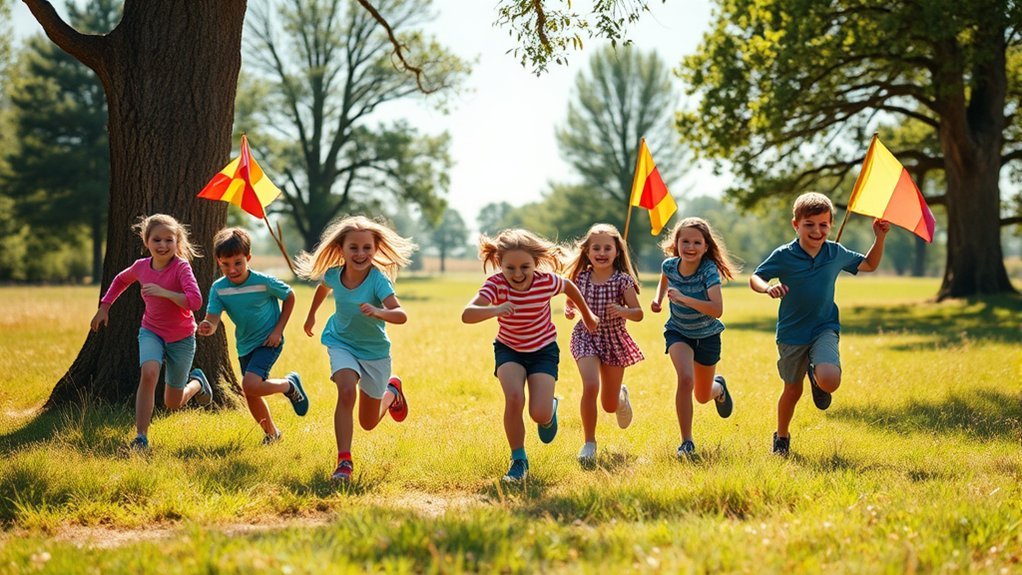
When siblings split into teams to protect their territory and raid enemy ground, Capture the Flag transforms your backyard into an exciting battlefield of strategy and speed.
You’ll watch your children develop critical thinking skills through strategy development as they plan defensive positions and offensive raids.
Each team hides their flag in their designated territory while defending it from opponents. Flag hiding becomes an art form—siblings learn to balance accessibility for their teammates with concealment from enemies.
The game encourages quick decision-making: Should they guard the flag or pursue opponents?
Physical activity combines with tactical planning as kids sprint, dodge, and collaborate.
They’ll negotiate roles, create diversion tactics, and experience the thrill of teamwork. This classic game builds communication skills while burning energy outdoors.
Three-Legged Race Variations
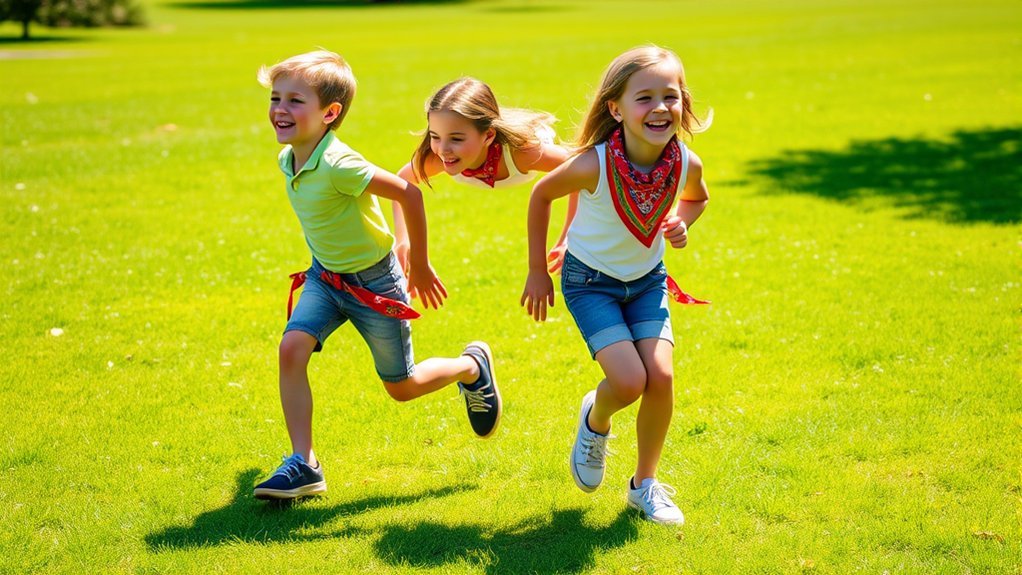
Because three-legged races force siblings to move as one unit, they’ll discover the power of physical synchronization and mutual patience.
You’ll watch them develop team strategies as they coordinate their movements and timing.
Try these race variations to keep the challenge fresh:
- Obstacle Course Three-Legged Race: Add cones to weave through, low hurdles to step over, and balls to carry while bound together.
- Backward Three-Legged Race: Bind siblings’ adjacent legs and have them race backward, requiring even greater communication.
- Three-Legged Relay: Create teams of sibling pairs competing in relay format, passing a baton between bound duos.
- Progressive Three-Legged Race: Start with two siblings bound, then add a third person for increased difficulty.
Each variation demands different coordination skills and adaptability.
Nature Art Collaboration
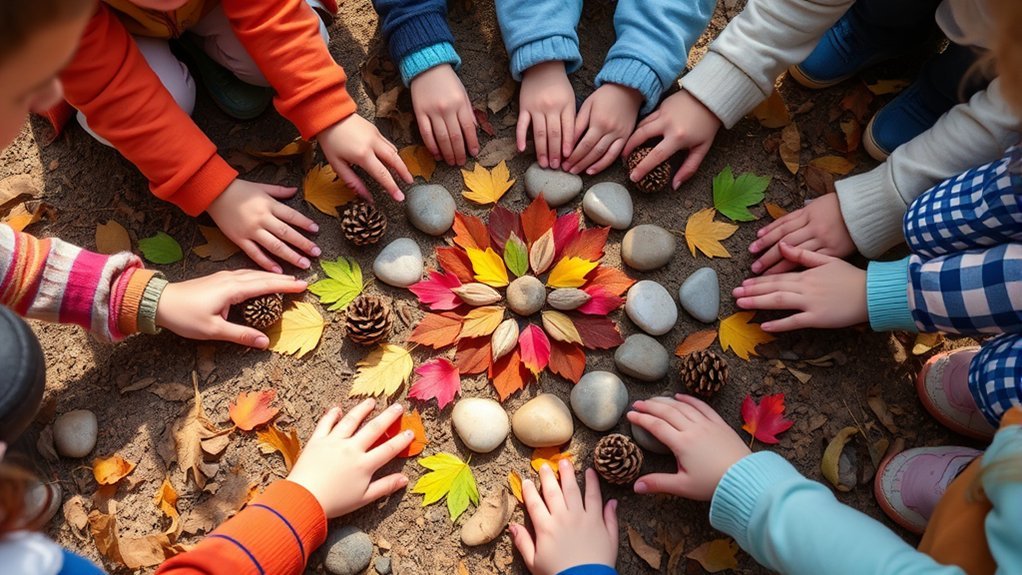
Nature art collaboration transforms your backyard or local park into a creative canvas where siblings must pool their artistic vision and natural materials.
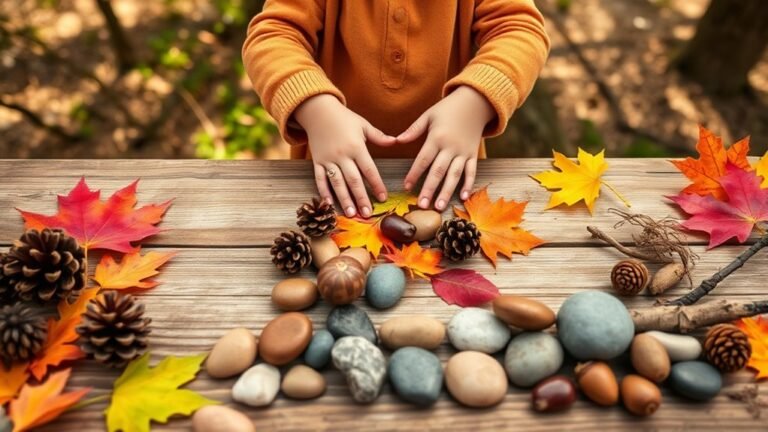
Start with a nature scavenger hunt where your children collect leaves, twigs, stones, and flowers. They’ll need to communicate about what they’re gathering and why it matters for their shared project.
Once materials are collected, assign them a collaborative painting task using their findings. They might create a mandala pattern, build a nature sculpture, or arrange items into a landscape scene.
Each sibling contributes different elements while respecting the overall design. This activity strengthens negotiation skills as they decide on themes and placement.
They’ll learn compromise when artistic visions differ and celebrate their combined creativity when viewing the finished masterpiece together.
Tug of War Team Challenges
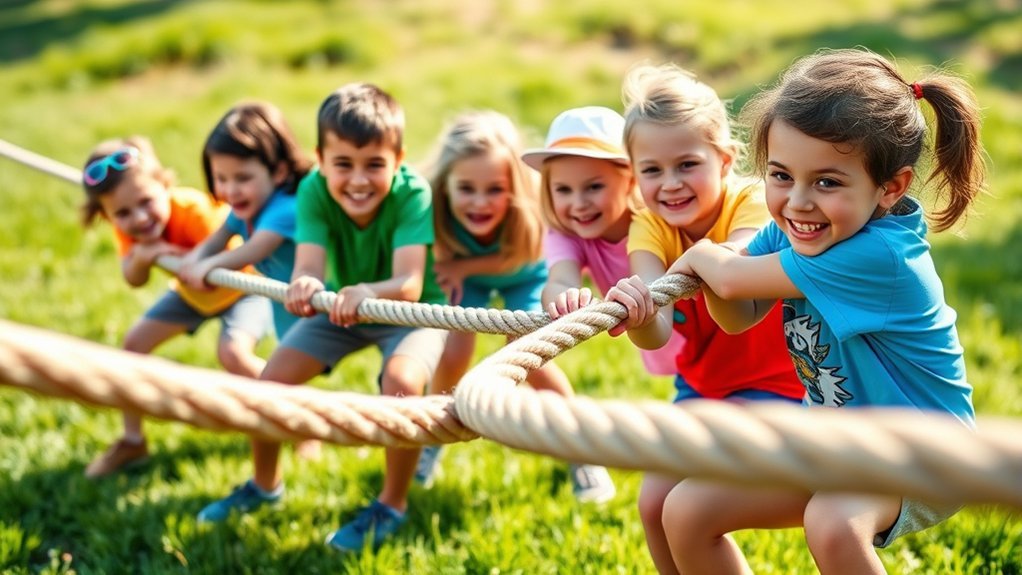
Tug of war transforms sibling rivalry into structured teamwork by requiring children to coordinate their strength and timing.
When siblings pull together rather than apart, competitive energy becomes their greatest bonding tool.
You’ll watch your kids develop team strategy as they determine optimal positioning and pulling rhythm. This classic outdoor activity channels competitive spirit into collaborative effort.
Set up engaging variations to maximize participation:
- Best-of-three matches – Rotate team members between rounds to ensure everyone experiences different positions
- Handicap challenges – Add team members or adjust rope length to balance uneven ages and sizes
- Timed holds – Teams maintain their ground for 30 seconds instead of crossing a line
- Obstacle integration – Position the rope over small hills or around trees for added difficulty
These modifications keep siblings engaged while reinforcing the importance of unified effort over individual strength.
Backyard Camping Mission
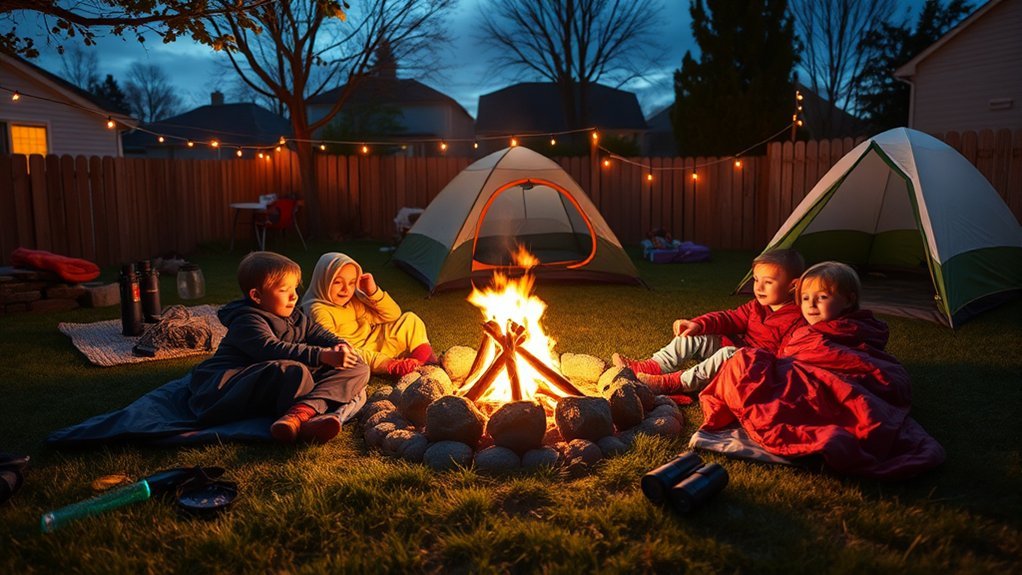
While tug of war builds teamwork through short bursts of coordinated effort, a backyard camping mission extends collaboration across an entire evening of problem-solving and shared responsibilities.
You’ll challenge your siblings to pitch a tent together, requiring clear communication and coordinated movements. Assign roles: one reads instructions, another organizes poles, while others secure stakes. They’ll learn delegation and patience.
After setup, they’ll work together preparing a simple campfire meal, practicing safe fire management and food preparation.
As darkness falls, campfire storytelling encourages creative expression and active listening skills.
End your stargazing night by having siblings identify constellations using a star map. They’ll take turns teaching each other about different celestial formations, reinforcing knowledge-sharing and mutual respect.
This extended activity builds lasting cooperation habits beyond single-event challenges.
Egg Drop Engineering Project
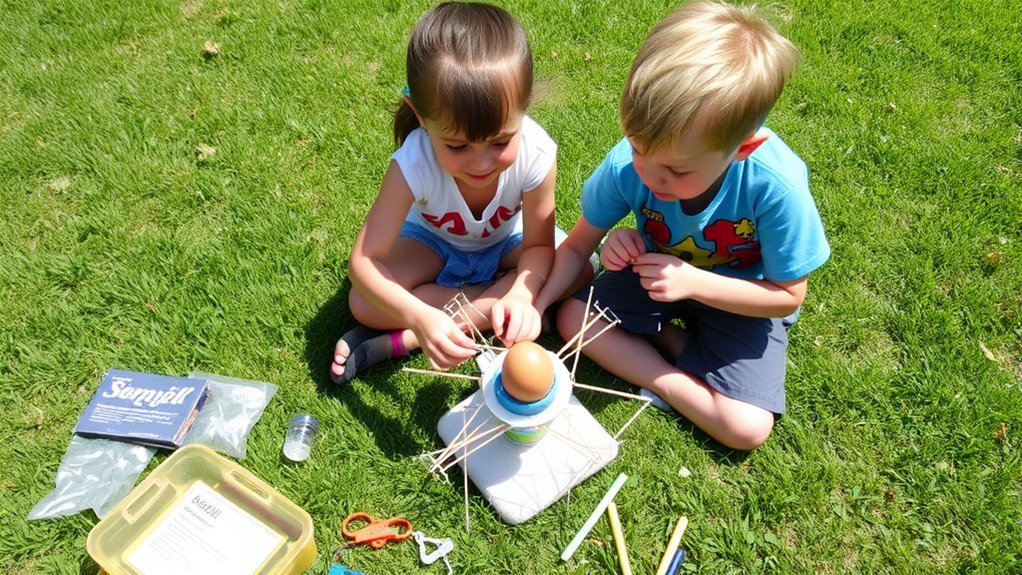
Unlike overnight camping that builds collaboration gradually, the egg drop engineering project compresses teamwork into an intense, high-stakes challenge where siblings must brainstorm, design, and construct a protective device within a set timeframe.
The egg drop project transforms siblings into collaborative engineers, forcing quick decisions and shared problem-solving under an unforgiving deadline.
They’ll need to work together through every decision.
Key phases include:
- Material gathering – collecting cushioning supplies like bubble wrap, cotton, and cardboard
- Egg selection strategies – choosing eggs and testing container sizes
- Parachute design – creating drag systems to slow descent speed
- Testing rounds – dropping from increasing heights before the final attempt
You’ll watch your children negotiate roles, divide tasks, and problem-solve under pressure.
When the egg survives impact, they’ll celebrate their shared victory.
If it breaks, they’ll learn to handle disappointment together and improve their approach.
Outdoor Puzzle Hunt
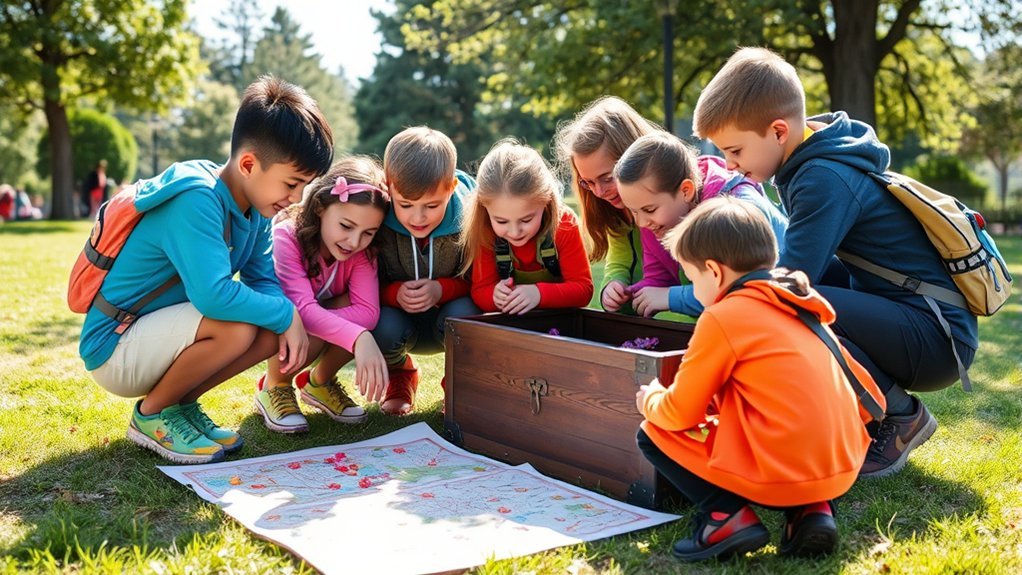
When siblings work together to decode clues and navigate checkpoints across your backyard or local park, they’ll develop problem-solving skills that extend far beyond the hunt itself.
You’ll create riddles, maps, and challenges that require different puzzle strategies—from word problems to visual patterns—ensuring each child contributes their unique strengths.
Design checkpoints where siblings must collaborate to unlock the next clue. One child might excel at math puzzles while another decodes word scrambles. This natural division of labor strengthens sibling teamwork as they learn to rely on each other’s abilities.
Hide clues in trees, under rocks, or behind landmarks.
Include physical challenges between stations—like three-legged races to the next checkpoint—that combine mental and physical cooperation, making success dependent on their combined efforts.
Blindfolded Navigation Course
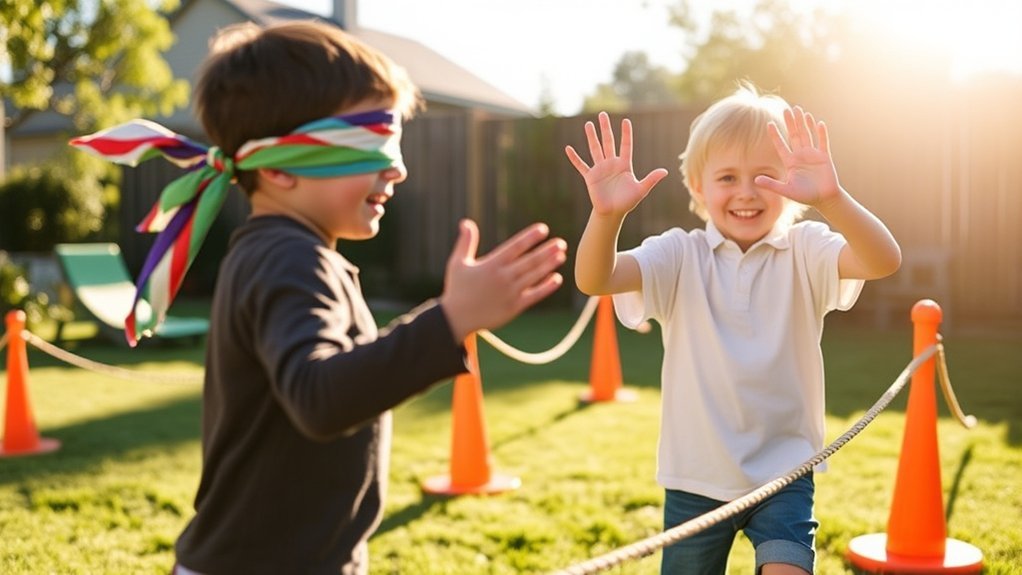
Trust takes center stage when you introduce a blindfolded navigation course to your siblings’ outdoor activities. This exercise transforms simple movements into powerful lessons about blindfolded teamwork and sensory exploration. One sibling wears the blindfold while others provide verbal guidance through obstacles, creating genuine trust-building moments.
Set up your course with these elements:
- Natural barriers like trees, rocks, or logs to navigate around
- Texture stations where blindfolded participants identify materials through touch
- Sound markers using bells or wind chimes as directional cues
- Safe zones where siblings can pause and regroup
You’ll watch communication skills sharpen as guides learn precise directions while blindfolded participants develop confidence. This activity strips away visual distractions, forcing siblings to rely on each other completely.
Team Sack Race
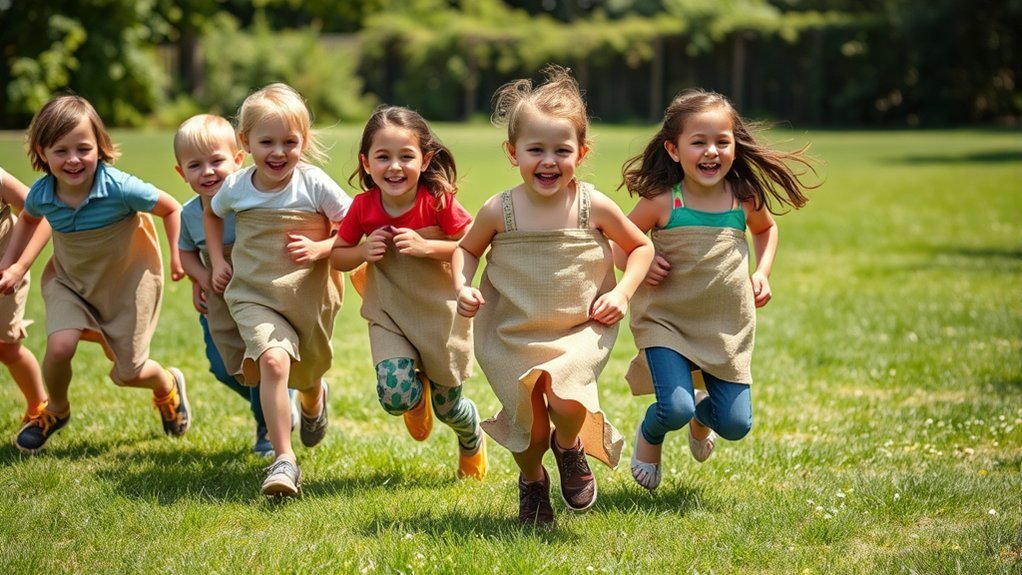
Few activities generate as much laughter and friendly competition as a team sack race.
You’ll watch your children develop essential sibling teamwork skills while hopping toward the finish line together.
Pair siblings inside large burlap sacks and watch them coordinate their movements. They’ll quickly discover that successful sack race strategies require synchronization and communication.
Encourage them to count “one, two, three, jump!” in unison to maintain rhythm.
Create relay-style races where one sibling completes a leg before tagging their partner. You can also challenge pairs to stay inside one sack together, forcing them to wrap arms around each other’s shoulders and hop simultaneously.
This simple activity teaches patience, timing, and mutual support.
Your kids will learn that rushing independently leads to tumbles, while moving together creates success.
Garden Planning and Planting
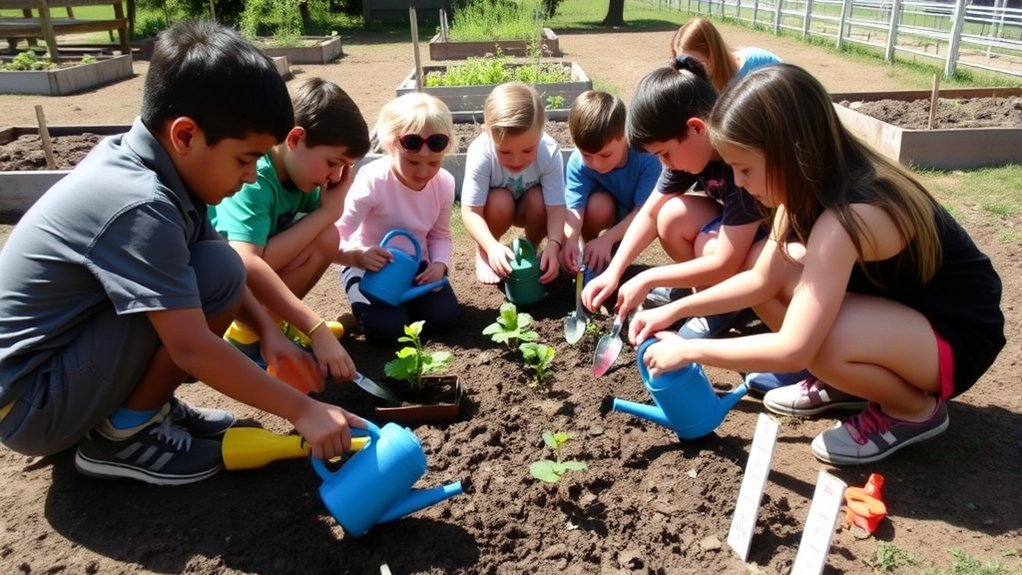
How can you transform yard work into a collaborative adventure that teaches siblings long-term commitment and shared responsibility?
Garden planning and planting creates a perfect opportunity for teamwork that extends beyond a single afternoon.
Start by having your siblings work together on the garden layout, measuring spaces and deciding what to grow. They’ll negotiate placement, debate vegetable choices, and compromise on flower selections. This planning phase builds communication skills naturally.
Next, teach them various planting techniques:
- Seed starting indoors for early-season crops
- Direct sowing for vegetables like carrots and beans
- Transplanting seedlings with proper spacing
- Companion planting to maximize growth
As the garden grows, siblings share watering duties, weeding responsibilities, and harvesting rewards. They’ll witness tangible results from their collaborative efforts throughout the growing season.
Cooperative Ball Games
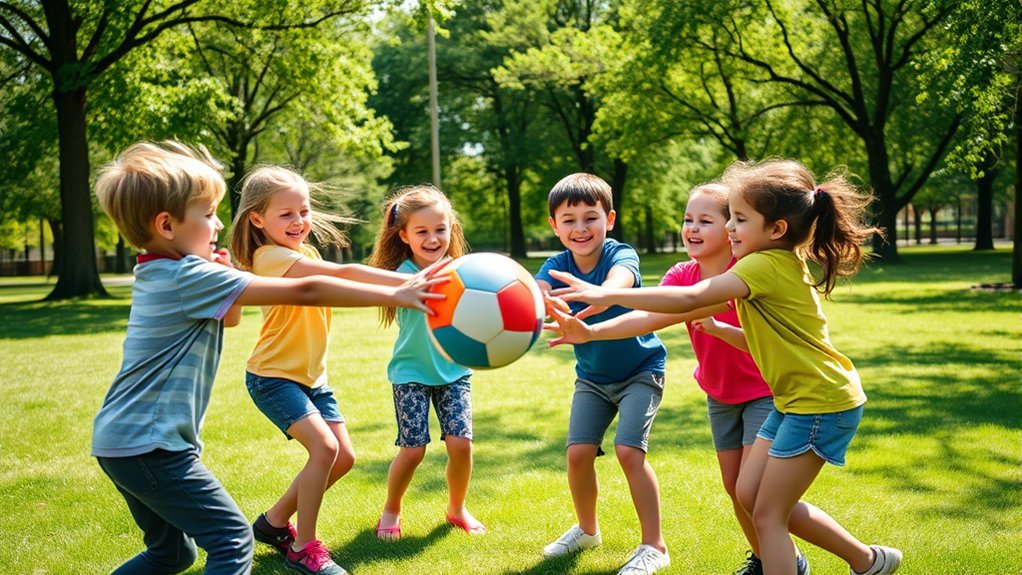
Ball games designed for cooperation rather than competition give siblings a chance to work toward shared goals while developing physical coordination together.
Start with simple ball passing exercises where siblings must complete a certain number of consecutive passes without dropping. Increase difficulty by adding movement requirements or distance challenges.
Try “Keep It Up,” where everyone works to prevent a beach ball from touching the ground using only specific body parts.
Introduce team strategy through games like cooperative soccer, where siblings must pass to each player before scoring. Set up obstacle courses requiring careful ball handling and communication.
Create partner challenges where siblings tie their adjacent legs together while passing balls back and forth.
These activities build trust and encourage siblings to celebrate collective achievements rather than individual victories.
In case you were wondering
What Age Gaps Work Best for Sibling Team Building Activities?
You’ll find age gaps of 2-4 years work best since age dynamics remain similar and developmental stages align closely. Siblings can participate equally in activities, communicate effectively, and challenge each other appropriately without frustration or boredom.
How Do You Handle Sibling Rivalry During Competitive Outdoor Games?
Think of rivalry as fire—it’ll either warm or burn. You’ll handle it by emphasizing friendly competition over winning, teaching conflict resolution skills immediately when tensions rise, and celebrating each sibling’s unique strengths throughout every outdoor challenge.
What Safety Equipment Is Essential for Outdoor Sibling Activities?
You’ll need helmets, knee pads, and first-aid kits as essential safety gear. Don’t forget sunscreen and water bottles for outdoor precautions. Proper footwear and reflective clothing are also crucial when you’re supervising siblings during activities.
How Long Should Each Activity Last to Maintain Sibling Engagement?
Time flies when siblings are having fun! You’ll want to keep activity duration between 20-45 minutes to match their attention spans. Rotate based on sibling interests and energy levels, preventing boredom from creeping in and enthusiasm from fading away.
What Weather Conditions Are Unsafe for Outdoor Sibling Team Building?
You shouldn’t conduct outdoor activities during extreme temperatures below 32°F or above 95°F, severe storms with lightning or heavy rain, high winds exceeding 25mph, or when air quality’s poor. These conditions pose serious safety risks.
Conclusion
You’ve got the activities—now here’s what matters most. When you send your siblings outside together, you’re not just filling an afternoon. You’re building something that’ll outlast every game, every race, every fort that falls apart. Years from now, they won’t remember who won the relay. But they’ll remember the person beside them. That’s the real challenge. Are you ready to start?