How to Create Backyard Science Adventures

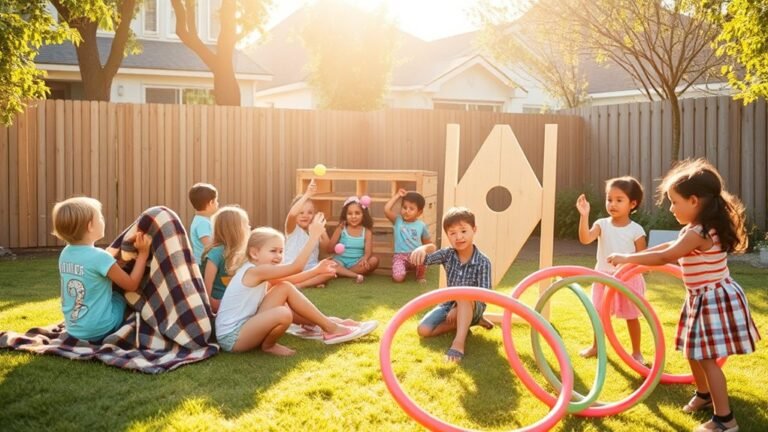
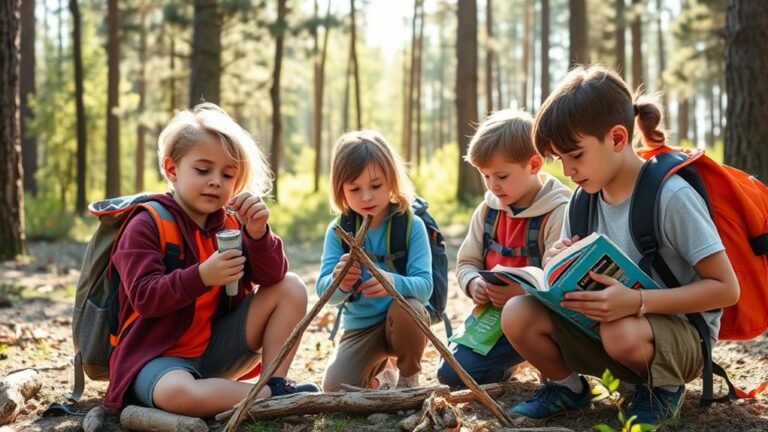
Transform your backyard into a living laboratory by setting up a dedicated science station with weatherproof storage and clear boundaries. You’ll engage your kids through weather tracking experiments, insect observation stations, and kitchen chemistry projects like vinegar volcanoes. Add simple machines like catapults and pulleys, then expand into astronomy sessions where you’ll document lunar phases and meteor showers. These hands-on activities foster curiosity while teaching physics, environmental science, and engineering fundamentals. The following sections reveal specific techniques to maximize your outdoor learning adventures.
Key Takeaways
- Set up a dedicated outdoor science station with weatherproof storage, clear boundaries, and a wash station for safe experimentation.
- Track weather patterns using homemade tools like rain gauges and barometers while maintaining a detailed observation journal.
- Observe insect behavior and wildlife through tracking stations, motion-activated cameras, and field journals documenting patterns and interactions.
- Conduct hands-on chemistry and engineering experiments including erupting volcanoes, chromatography, catapults, and pulley systems.
- Explore astronomy by documenting lunar phases, planetary alignments, and meteor showers while investigating ecosystem interactions and environmental processes.
Setting Up Your Outdoor Science Station
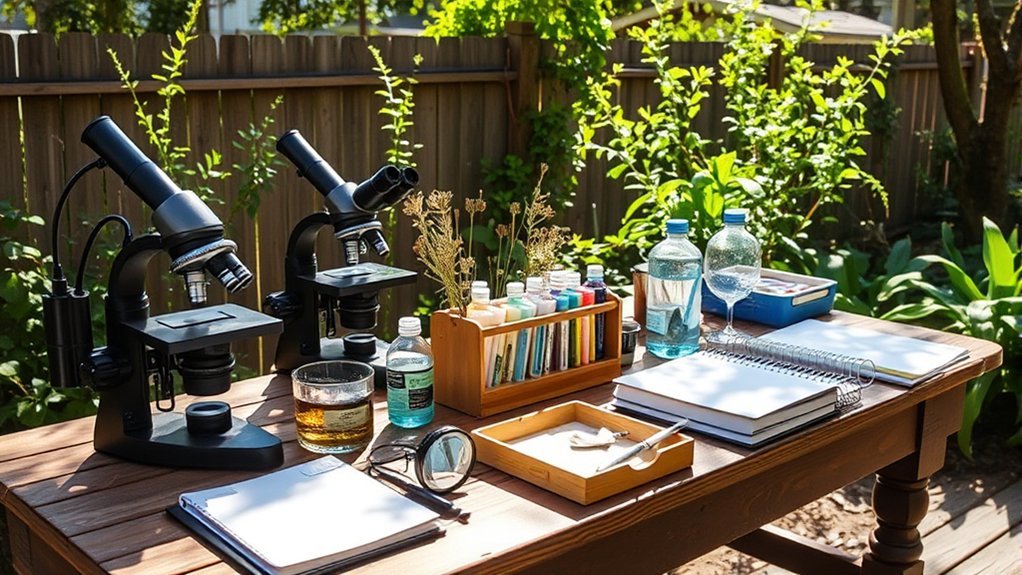
Before you dive into experiments, you’ll need a dedicated workspace that protects your materials and keeps everything organized. Choose a flat, shaded area like a patio table or portable folding station. This protects sensitive science supplies from direct sunlight and weather damage.
Store your materials in weatherproof containers with clear labels. Keep frequently used items like magnifying glasses, measuring cups, and notebooks in an easily accessible caddy. Install a small shelf or hooks nearby for hanging safety goggles and aprons.
Organization is key: weatherproof containers, labeled supplies, and dedicated storage keep your outdoor science station functional and ready for discovery.
Prioritize outdoor safety by establishing clear boundaries for your workspace. Keep a first-aid kit within reach and ensure proper adult supervision for younger scientists. Position your station away from garden chemicals, grills, and other hazards.
Add a wash station with soap and water for quick cleanups.
Weather Watching and Meteorology Experiments
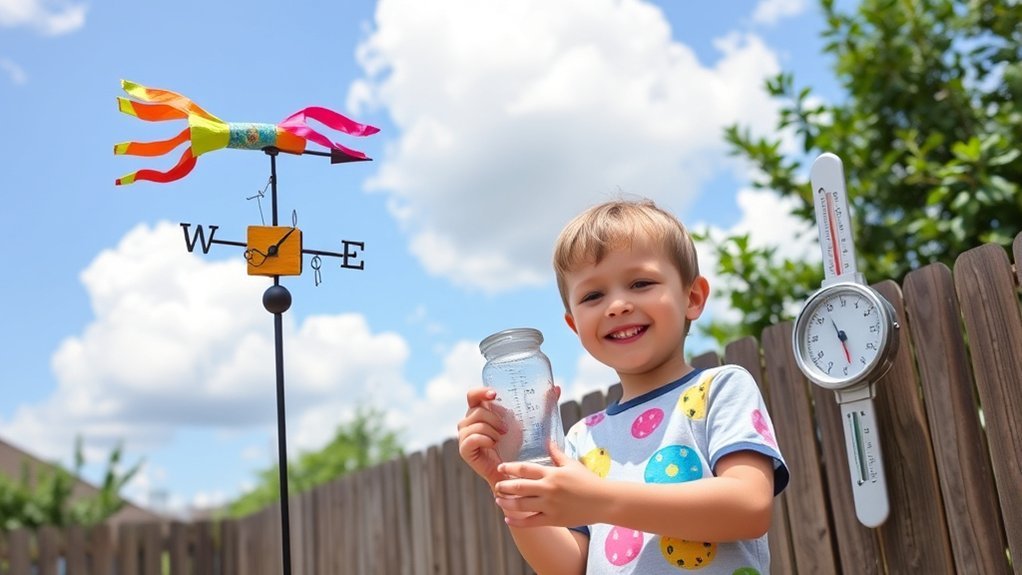
Once your outdoor science station is ready, you can transform your backyard into a meteorology lab. Start by creating a simple rain gauge using a clear plastic bottle to measure precipitation.
You’ll track weather patterns by recording temperature, wind direction, and cloud formations daily. Build a barometer with a jar and balloon to predict approaching storms based on air pressure changes.
Install a basic weather station to collect consistent data over weeks and months. This long-term observation helps you understand seasonal variations and teaches valuable lessons about climate change.
You can compare your findings with official weather services to verify accuracy.
Encourage your kids to maintain a weather journal, documenting observations and making predictions. They’ll develop critical thinking skills while connecting with nature’s dynamic atmospheric systems.
Exploring Insect and Wildlife Behavior
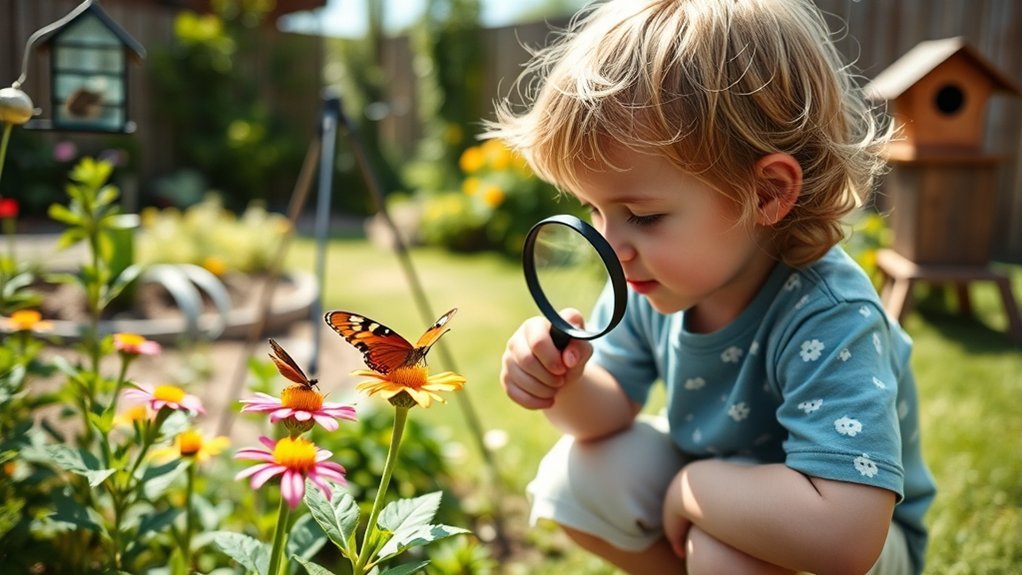
While you’re recording weather patterns above ground, an equally fascinating world of activity unfolds right beneath your feet and in the surrounding vegetation.
Transform your backyard into a living laboratory by studying insect behavior through simple observations. Set up observation stations near anthills, spider webs, or flowering plants to document feeding patterns, communication methods, and social structures.
Your backyard becomes a field station where anthills, webs, and flowers reveal the hidden languages and societies of insects.
Wildlife tracking extends your research beyond insects. Create tracking stations using sand boxes or mud patches to capture footprints of visiting animals.
Install motion-activated cameras to record nocturnal visitors you’d otherwise miss. Document bird feeding habits, squirrel travel routes, and pollinator preferences.
Keep detailed field journals with sketches, timestamps, and environmental conditions.
You’ll discover patterns that reveal how creatures adapt to seasonal changes and human presence.
Kitchen Chemistry in the Great Outdoors
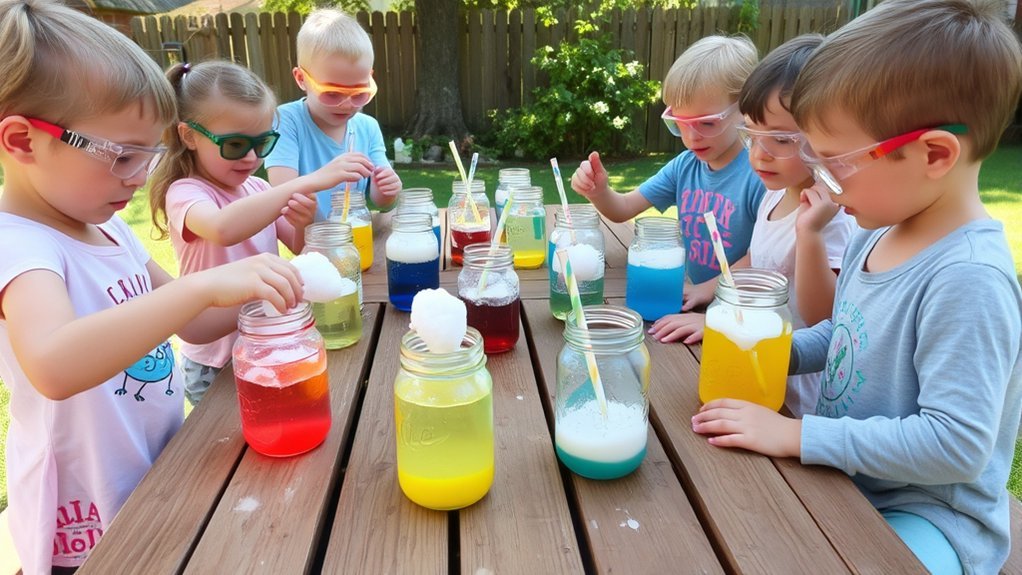
Your backyard transforms into a chemistry lab when you bring simple kitchen ingredients outdoors for hands-on experiments.
Start with baking soda reactions by creating erupting volcanoes using vinegar, dish soap, and food coloring. You’ll witness acid-base reactions that produce carbon dioxide gas, creating spectacular fizzing fountains. Mix different ratios to observe how variables affect reaction intensity.
Try outdoor chromatography by placing coffee filters on grass and adding water-diluted washable markers. Watch as pigments separate into rainbow bands, revealing hidden colors within each marker.
You can also experiment with leaf pigments by crushing petals and observing color separation.
These activities demonstrate real scientific principles while keeping cleanup worries minimal. Your outdoor space provides ventilation, room for messy reactions, and natural lighting that enhances observations.
Building Simple Machines and Engineering Projects
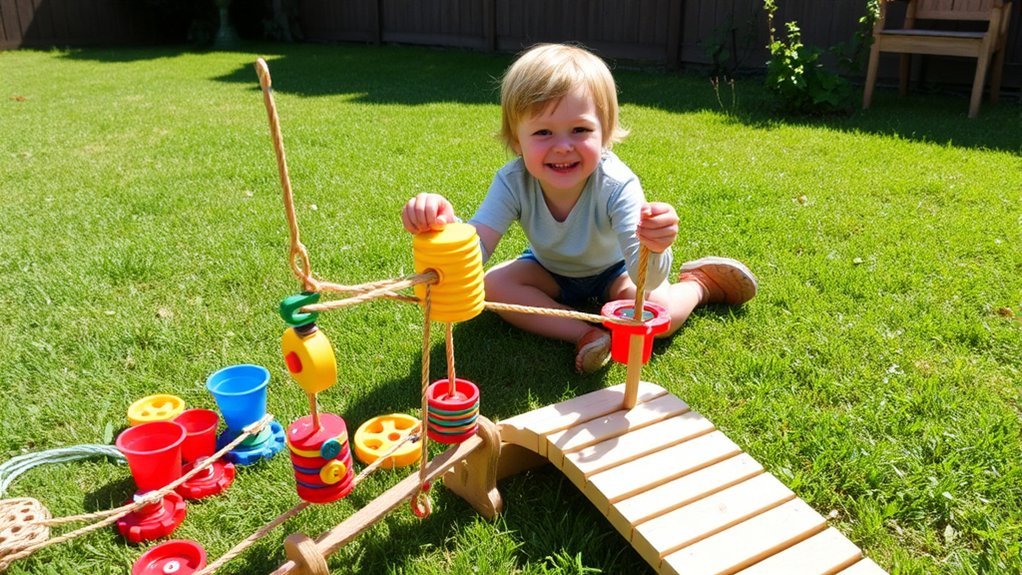
Beyond mixing chemicals and watching reactions, your backyard becomes an ideal workspace for constructing machines that move, lift, and transfer energy.
You’ll discover engineering principles through hands-on catapult construction, where tension and trajectory teach physics fundamentals. Pulley systems demonstrate mechanical advantage when you’re hoisting water buckets or building materials overhead.
Start with these foundational projects:
These hands-on engineering projects transform your outdoor space into a physics laboratory where mechanical principles become immediately visible and testable.
- Lever-based catapults using wooden spoons, rubber bands, and fulcrum points to launch projectiles
- Fixed and movable pulley systems that reduce lifting effort by 50% or more
- Rube Goldberg machines combining multiple simple machines for chain-reaction entertainment
Each project transforms abstract concepts into tangible understanding.
You’re not just reading about mechanical advantage—you’re feeling it when a pulley makes heavy objects effortless to lift, or experiencing Newton’s laws when your catapult sends objects soaring.
Plant Growth and Gardening Investigations
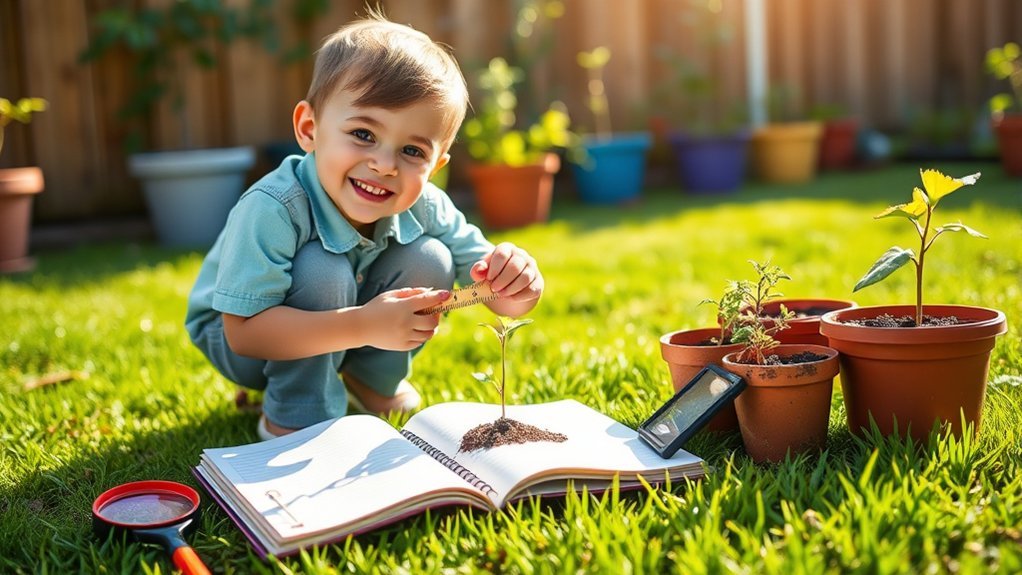
How does a seed transform into a thriving plant, and what conditions make the difference between withered stems and abundant harvests?
You’ll discover answers through hands-on gardening investigations that reveal nature’s mechanisms.
Start with seed germination experiments, comparing different vegetable varieties under varying light and moisture conditions.
Test soil composition by measuring pH levels and nutrient content.
Conduct photosynthesis experiments using plants covered with colored filters to understand light’s role in growth.
Examine plant anatomy by dissecting flowers and stems, identifying parts responsible for water transport and reproduction.
Learn composting techniques to create nutrient-rich soil amendments.
Study pollinator attraction by planting flowers that draw bees and butterflies.
Document garden pests and research organic control methods.
Your backyard becomes a living laboratory where botanical principles come alive.
Physics Experiments Using Natural Materials
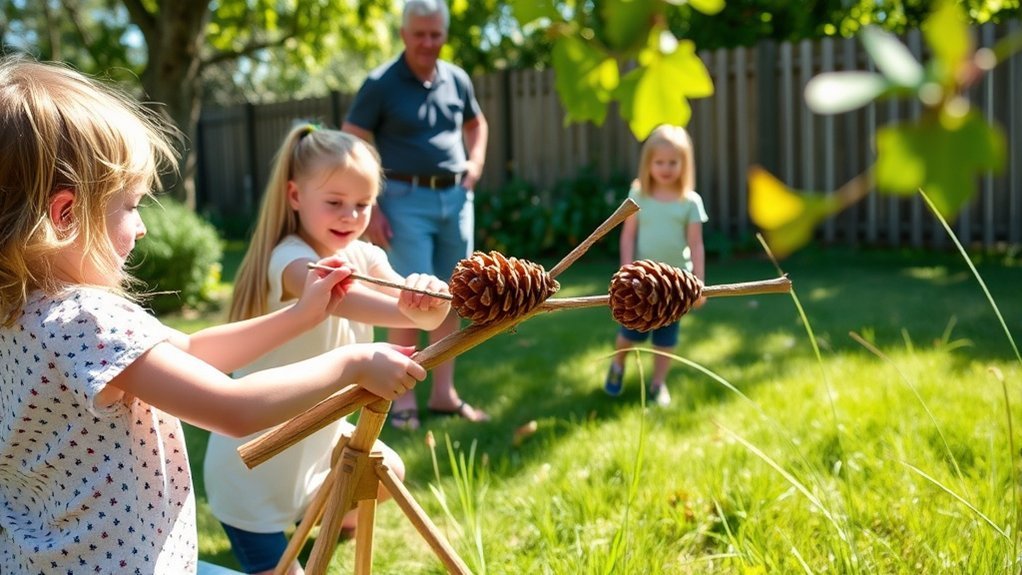
When you drop a rock into a pond or watch leaves spiral through autumn air, you’re witnessing fundamental physics principles that become even clearer through deliberate experimentation. Your backyard offers countless opportunities to explore energy transfer and motion using only natural materials.
Transform simple observations into gravity games by testing how different objects fall. Compare pine cones, acorns, and feathers to understand air resistance. Roll rocks of various sizes down hills to observe momentum and friction.
Create these engaging experiments:
- Pendulum investigations using sticks and stones tied with vines
- Water wheel designs powered by garden hoses demonstrating rotational energy
- Catapult construction from branches showing stored elastic energy
These hands-on activities reveal how energy moves through systems while encouraging creative problem-solving with readily available resources.
Water Science and Aquatic Discoveries
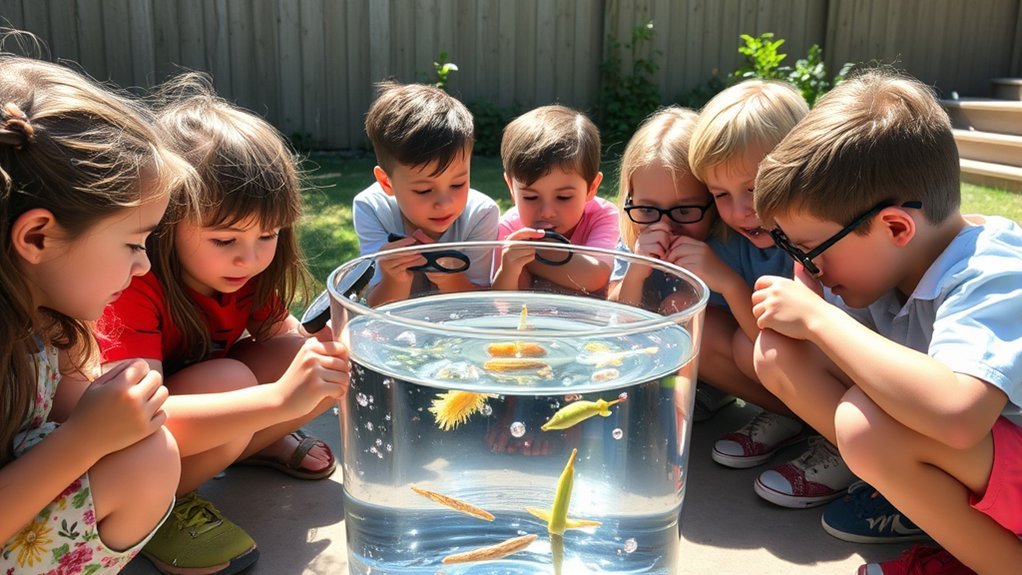
Water transforms your backyard into a living laboratory where you can explore everything from surface tension to aquatic ecosystems.
Set up simple water filtration systems using sand, gravel, and charcoal to demonstrate how nature purifies water. Create miniature aquatic ecosystems in clear containers, observing how plants, insects, and microorganisms interact.
Layer sand, gravel, and charcoal in clear bottles to watch dirty water transform into clean—nature’s filtration system made visible.
Conduct buoyancy experiments by testing which objects float or sink, then modify them with clay or foil to change their behavior. Build a water cycle model using a plastic container, demonstrating evaporation, condensation, and precipitation in action.
You’ll discover that a basic kiddie pool, buckets, or rain barrels provide endless opportunities for hands-on learning. These water-based investigations reveal fundamental scientific principles while keeping kids engaged and curious about the natural world.
Astronomy and Night Sky Observations

Your backyard becomes a natural planetarium once darkness falls, offering spectacular views of celestial wonders that captivate young astronomers.
Star gazing doesn’t require expensive equipment—begin with naked-eye observations before investing in telescopes. You’ll discover constellations, planets, and meteor showers that spark endless curiosity.
Track celestial events throughout the year to maximize learning opportunities:
- Lunar phases – Document the moon’s transformation from new to full, noting craters and maria through binoculars.
- Planetary alignments – Watch Jupiter, Saturn, and Mars move across the night sky at predictable intervals.
- Annual meteor showers – The Perseids (August) and Geminids (December) produce spectacular displays.
Download stargazing apps that identify constellations in real-time, transforming smartphones into educational tools.
You’re cultivating scientific observation skills while creating memorable family experiences.
In case you were wondering
What Age Groups Are Best Suited for Backyard Science Adventures?
You’ll find backyard science adventures work for all ages! Toddler exploration activities focus on sensory experiences and simple observations, while teen challenges involve complex experiments and independent research. You can adapt projects to match your child’s developmental stage perfectly.
How Much Does It Typically Cost to Start Backyard Science Activities?
You’ll need minimal initial investment—around $20-50 for basic supplies like magnifying glasses, containers, and notebooks. Ongoing expenses stay low since you’re using natural materials. Most activities cost practically nothing once you’ve got starter items.
What Safety Precautions Should Parents Take During Outdoor Experiments?
You’ll need to supervise constantly, ensure proper fire safety by keeping extinguishers nearby, practice safe chemical handling with gloves and goggles, establish clear boundaries, and always have a first-aid kit accessible during experiments.
How Can I Adapt Activities for Children With Different Learning Abilities?
Every child’s a unique learner! You’ll want to offer visual aids like picture cards and diagrams alongside hands-on sensory activities. Let kids touch, smell, and observe at their own pace, making science accessible for all abilities.
What Should I Do if My Child Loses Interest in Science Experiments?
Try re-engagement strategies like switching to different hands-on activities that match your child’s current interests. Let them choose experiments, take breaks when needed, and celebrate small discoveries to reignite their natural curiosity about science.
Conclusion
You’ve got everything you need right outside your door—no fancy lab required. Whether you’re tracking clouds, building catapults, or discovering what makes fireflies glow, you’re not just playing; you’re thinking like a scientist. So what’s stopping you? The greatest laboratory on Earth is waiting in your own backyard, where curiosity meets discovery and every experiment writes its own adventure. Your next breakthrough could be just one question away.