17 Geography Games Kids Actually Want to Play
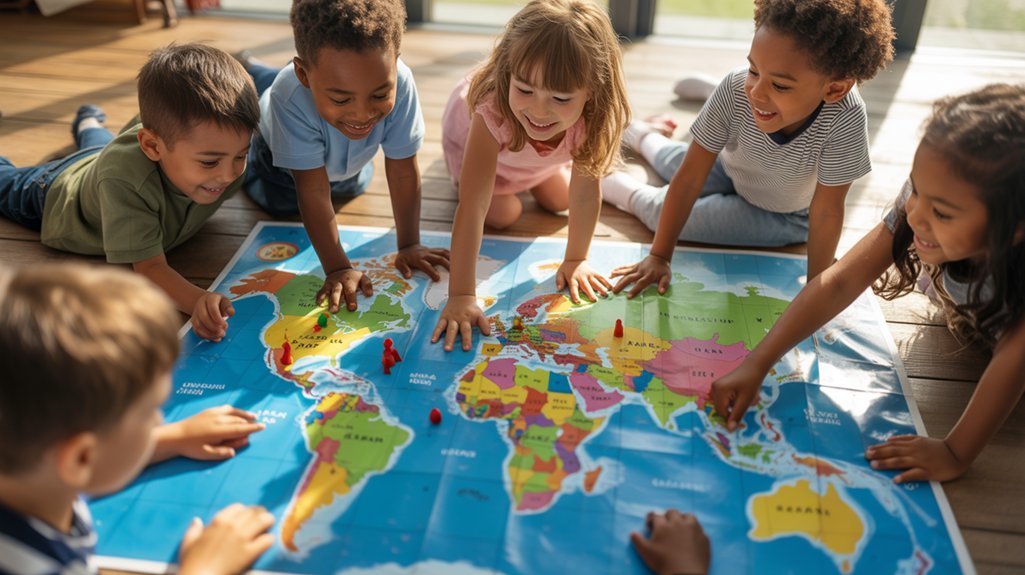
You’ll find 17 engaging geography games that transform learning into play, from turning your floor into a giant world map with painter’s tape to organizing scavenger hunts that connect household items to their countries of origin. Create DIY passports for stamp collections, host relay races for continent identification, play Geography Bingo with flags, and explore the world virtually through Google Earth challenges. Add competitive trivia, treasure map building, and global food tasting experiences that make geography memorable through movement and sensory engagement. The complete collection below offers activities for every age and learning style.
Key Takeaways
- Transform your floor into an interactive world map using painter’s tape and sticky notes for physical, engaging geography learning.
- Create scavenger hunts linking household items to their countries of origin, teaching global trade through everyday objects.
- Design DIY passports for children to collect stamps from geography activities, tracking cultural exploration progress across continents.
- Play Geography Bingo using country flags instead of numbers, mixing familiar and lesser-known flags for competitive learning.
- Use Google Earth for virtual exploration games like Mystery Location challenges and designing dream vacation routes worldwide.
Human Map: Turn Your Floor Into a Giant World Atlas
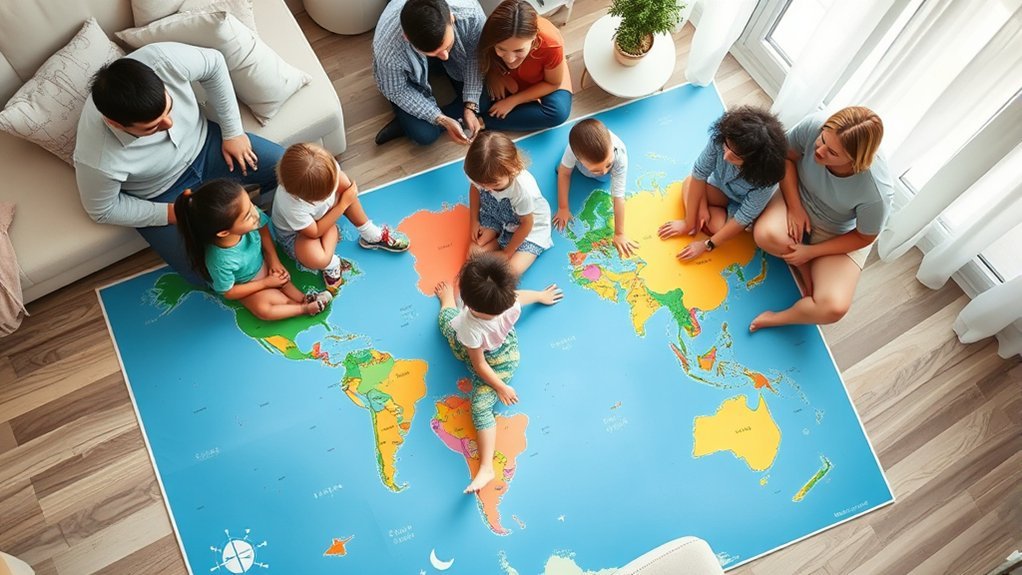
One of the most engaging ways to teach geography is by transforming your living room or classroom floor into an interactive world map. Use painter’s tape to outline continents, oceans, and country borders directly on your floor. This hands-on floor design lets kids physically jump between locations, making abstract geography concepts tangible and memorable.
Label major cities and world landmarks with sticky notes or paper markers. Challenge your children to “travel” from the Eiffel Tower to the Great Wall of China by walking the correct route. They’ll develop spatial awareness while learning distances and directions.
You can modify the game’s complexity based on age. Younger kids can identify continents, while older ones can locate specific countries, capitals, or calculate distances between destinations.
Geography Scavenger Hunt Around the House
Transform everyday household items into geography learning opportunities by creating a scavenger hunt that connects objects to their countries of origin.
You’ll challenge your kids to find items like Italian pasta, Swiss chocolate, or Japanese electronics while they learn where products come from.
Create clue cards that describe each item’s homeland without naming it directly. “Find something from the country shaped like a boot” leads to Italian products, making indoor exploration both educational and entertaining.
Encourage your children to examine labels, packaging, and cultural artifacts throughout your home.
They’ll discover bananas from Ecuador, coffee from Colombia, or spices from India. This activity transforms ordinary household items into geography lessons, teaching kids about global trade, different cultures, and international connections while keeping them engaged and moving.
Passport Stamp Collection Challenge
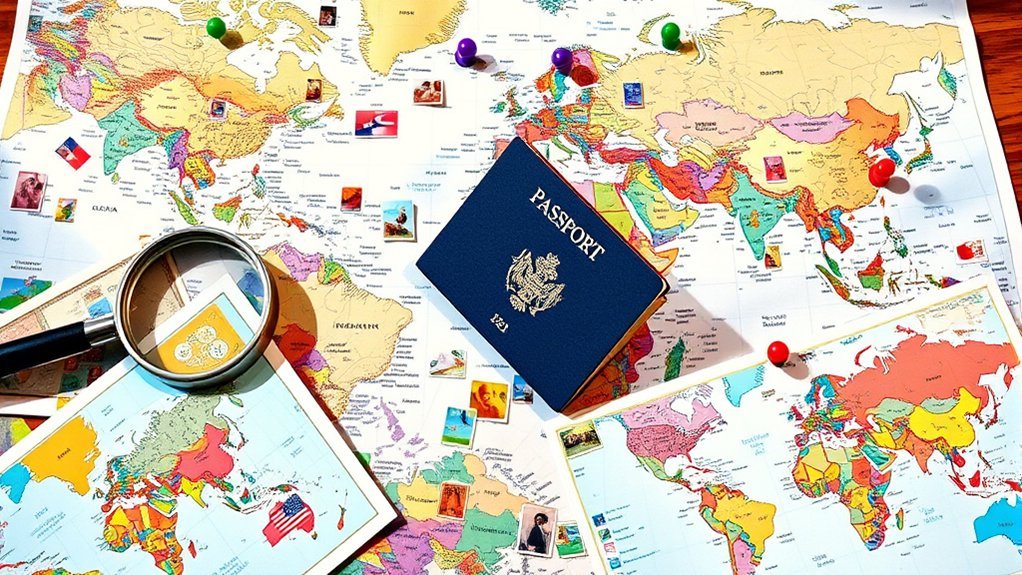
Create a DIY passport for your child that they’ll stamp each time they “visit” a new country through books, recipes, or cultural activities.
You can design simple stamp designs using ink pads and carved potatoes, or print templates online featuring iconic landmarks from various passport destinations. Each completed activity earns them a new stamp, turning geography learning into a collectible adventure.
Challenge your child to fill their passport with stamps from all seven continents. They might cook Italian pasta, read a Japanese folktale, or build an Egyptian pyramid from blocks.
Track their progress on a world map, connecting pins to each stamped destination. This hands-on approach transforms abstract geography concepts into tangible achievements, motivating kids to explore diverse cultures while building their collection organically.
Pin the Country on the Continent Relay Race

While collecting passport stamps builds individual knowledge, adding a competitive element can energize group learning sessions. This relay race transforms country identification into an exciting physical challenge that gets kids moving while they’re learning.
Divide players into teams and set up large continent maps on opposite walls. Each team receives a stack of country cards with velcro backing. On “go,” the first player grabs a card, races to pin it on the correct continent, then sprints back to tag the next teammate.
The catch? They must place countries in their proper locations for points.
This game sharpens continent recognition skills while introducing healthy competition. You’ll notice kids naturally memorizing country positions as they strategize their team’s approach.
Mystery Location: 20 Questions Geography Edition

The classic game of 20 Questions gets a geographical twist in this brain-teasing activity that develops critical thinking and deductive reasoning.
You’ll select a mystery location—whether it’s a country, city, landmark, or natural feature—and kids take turns asking yes-or-no questions to identify it. They’ll learn to ask strategic questions like “Is it in the Northern Hemisphere?” or “Does it border an ocean?” Each answer provides mystery clues that narrow down possibilities.
You can adjust difficulty by choosing obscure locations for older children or famous landmarks for beginners. Keep track of questions on a whiteboard to build suspense.
This game naturally incorporates geographical trivia as kids discover facts about climate zones, population sizes, and continental features. It’s perfect for car rides, classroom downtime, or family game nights.
DIY Salt Dough Map Building

Your kids can transform geography lessons into a hands-on sculptural experience by molding their own three-dimensional maps with homemade salt dough.
Mix one cup salt, two cups flour, and one cup water to create this pliable material that hardens beautifully when air-dried.
They’ll build mountain ranges, carve river valleys, and shape coastlines while learning about topography and landforms. The salt texture provides excellent grip for small hands to sculpt detailed terrain features.
Once dried, they can paint their creations using map colors like blue for water bodies, green for lowlands, and brown for elevated areas.
This activity works perfectly for recreating their state, a country they’re studying, or even an imaginary continent. It’s messy, memorable, and reinforces spatial understanding better than any textbook.
Geography Charades With Landmarks and Cultures
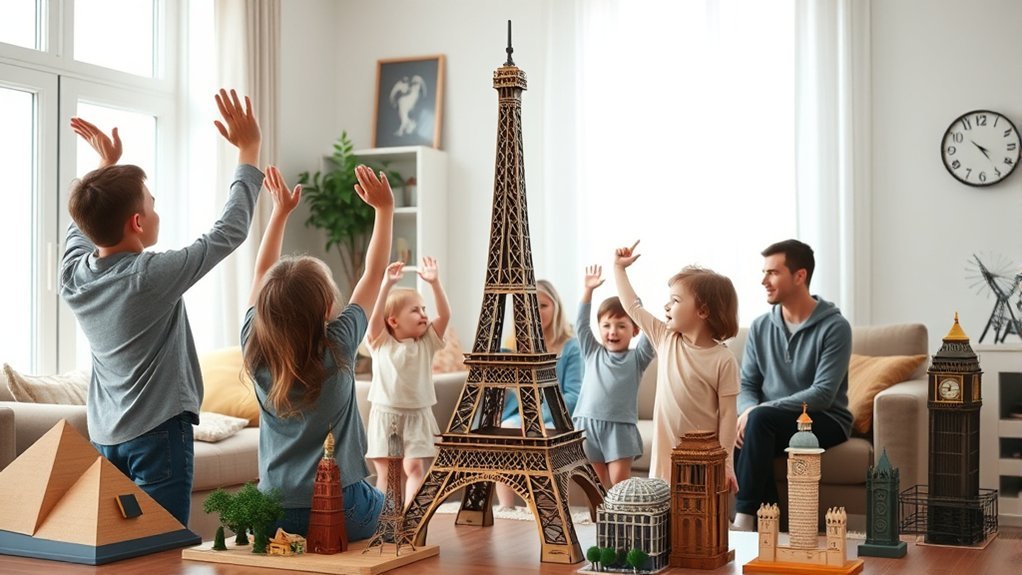
When kids leap up to mime the Eiffel Tower or pretend they’re eating sushi with chopsticks, they’re absorbing geography in the most entertaining way possible. Geography charades transforms learning about distant places into active play.
You’ll divide players into teams and prepare cards featuring famous landmarks and cultural practices. Kids act out their cards while teammates guess. Landmark impressions might include Big Ben’s clock tower stance or the Statue of Liberty’s torch pose. Cultural gestures cover eating pasta Italian-style, performing a traditional dance, or greeting someone with a bow.
The beauty lies in how children naturally research their subjects to portray them accurately. They’ll discover why certain gestures matter and what makes landmarks distinctive.
This kinesthetic approach cements geographical knowledge far better than passive memorization ever could.
Balloon Globe Toss Quiz Game
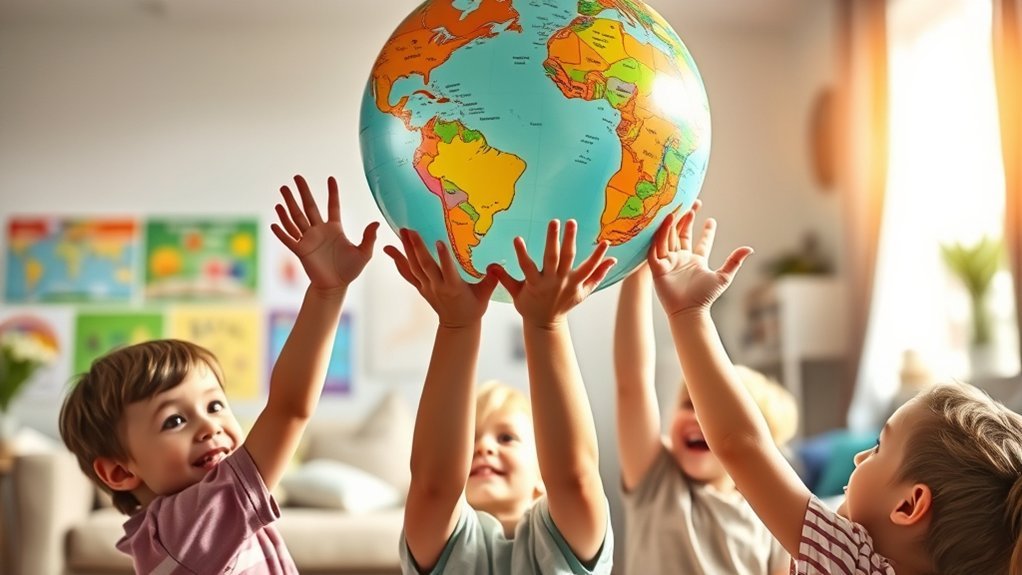
Inflatable globes become surprisingly effective teaching tools when combined with quiz questions and a simple game of catch.
You’ll toss the globe to a child, and wherever their right thumb lands, they must answer a question about that location. This balloon geography approach keeps kids moving while learning about continents, oceans, and countries.
You can adjust difficulty based on age—younger children identify continents or oceans, while older kids name capitals or describe climate zones. The physical activity maintains engagement better than traditional worksheets.
This interactive learning method works perfectly for groups of three to ten children.
You’ll notice they actually pay attention because nobody wants to fumble an answer when catching the globe. The combination of movement and geography creates memorable learning moments.
Capital City Memory Match Cards
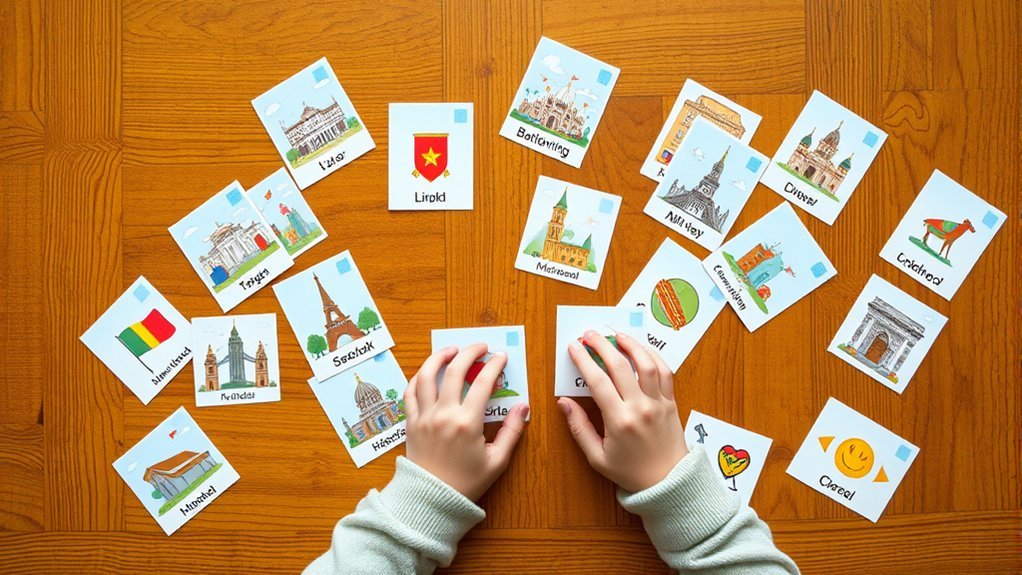
Create paired cards featuring countries and their capitals. Kids flip two cards at a time, hunting for matches while absorbing capital city trivia without realizing they’re studying.
Here’s what makes this memory match game effective:
- Start simple with 10 country-capital pairs for younger players.
- Add difficulty levels by mixing continents or including flags.
- Use colorful illustrations of landmarks to strengthen visual associations.
- Let winners create the next set of cards.
You’ll find kids’ naturally competitive spirit transforms memorization into genuine fun.
Treasure Map Creation and Navigation
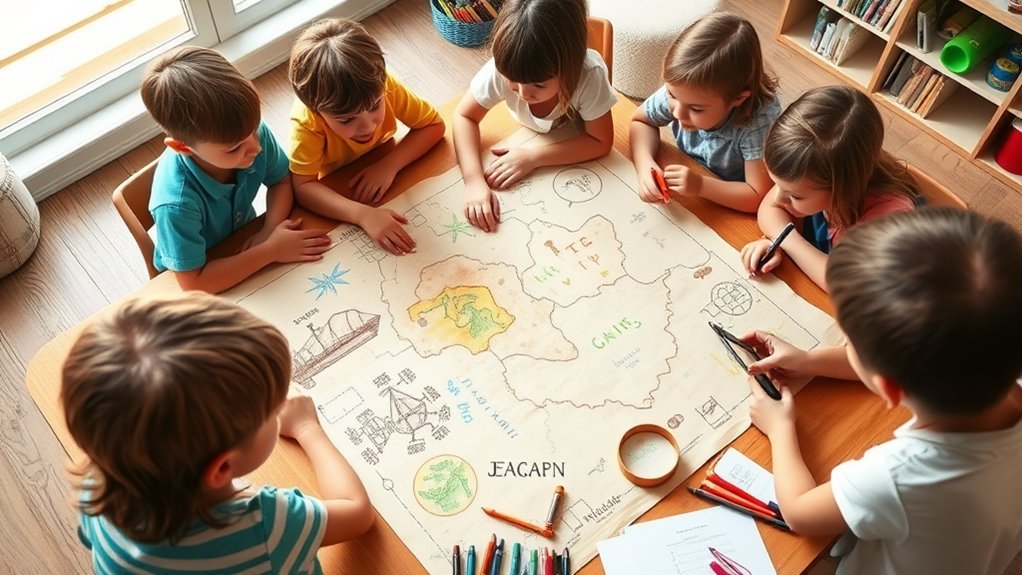
Let your child’s imagination soar by transforming basic geography lessons into swashbuckling adventures with handmade treasure maps. Start by having your kids draw their own maps of your backyard, home, or neighborhood, incorporating essential map symbols like trees, rocks, and landmarks.
Hide small treasures throughout the space and create treasure clues that require reading compass directions—north, south, east, and west—to locate each prize. This activity builds crucial navigation skills while keeping children engaged through play.
You can increase difficulty by introducing intermediate directions or adding scale measurements. Kids learn to interpret symbols, follow sequential directions, and understand spatial relationships.
The best part? They’re practicing real-world geography skills without realizing they’re learning, making this game endlessly repeatable with new maps and hidden treasures.
Google Earth Virtual Travel Adventures
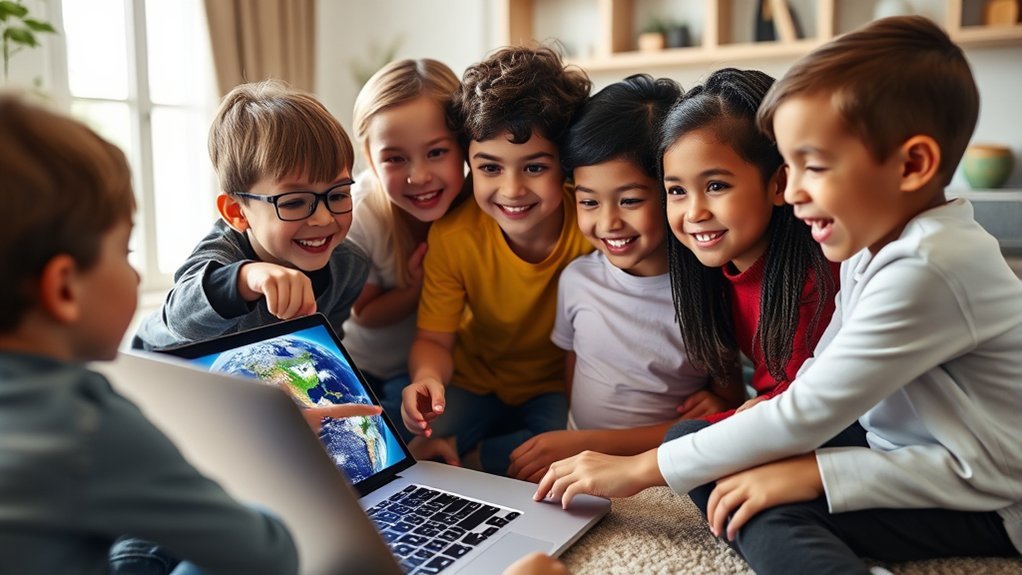
While treasure maps spark imagination close to home, Google Earth opens up the entire planet for exploration right from your living room.
This virtual globe exploration transforms geography into an exciting adventure your kids will actually enjoy.
Turn interactive map adventures into engaging challenges:
- Mystery Location Game: Drop your child at a random spot and have them identify the continent, country, or city using visual clues like architecture, vegetation, and landmarks.
- Virtual Scavenger Hunt: Create a list of specific features to find—waterfalls, pyramids, famous bridges, or unusual landforms.
- World Tour Planning: Let kids design their dream vacation route, exploring destinations and calculating distances between stops.
- Time Travel: Use historical imagery to compare how places have changed over decades.
Geography Bingo With Countries and Flags
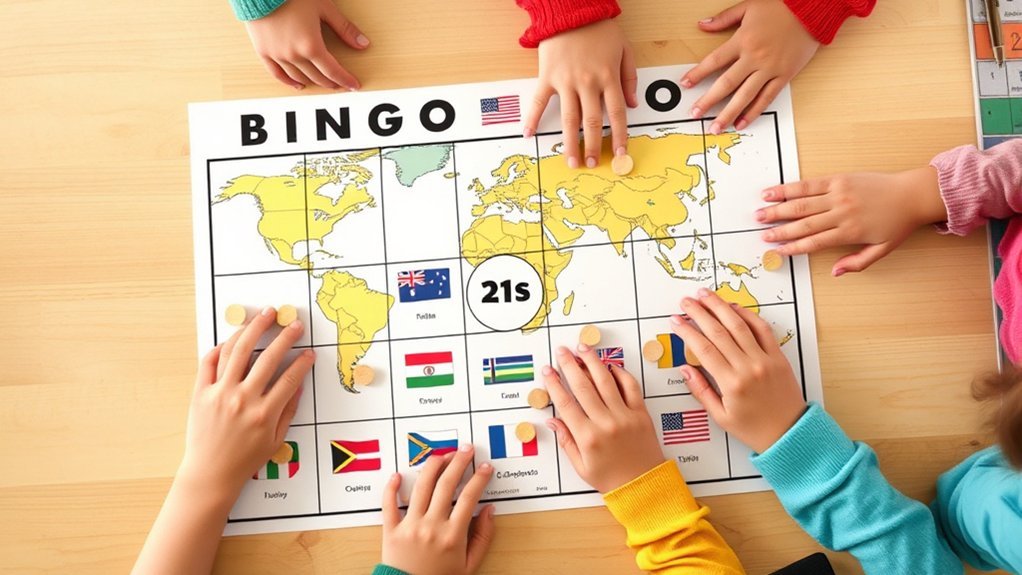
Geography Bingo transforms flag and country recognition into a competitive game that gets the whole family involved.
You’ll create bingo cards featuring different country flags instead of numbers, then call out countries while players match them to the correct flags on their cards.
You can increase difficulty by adding geography trivia questions before revealing each answer. For example, ask “Which country has a maple leaf on its flag?” before players can mark Canada. This approach reinforces country flag matching skills while building geographical knowledge.
Mix familiar flags with lesser-known ones to challenge advanced players. You’ll find free printable templates online, or create custom cards featuring specific regions you’re studying.
The first player to complete a row shouts “Bingo!” and wins the round.
Musical Continents: A Geography Twist on Musical Chairs
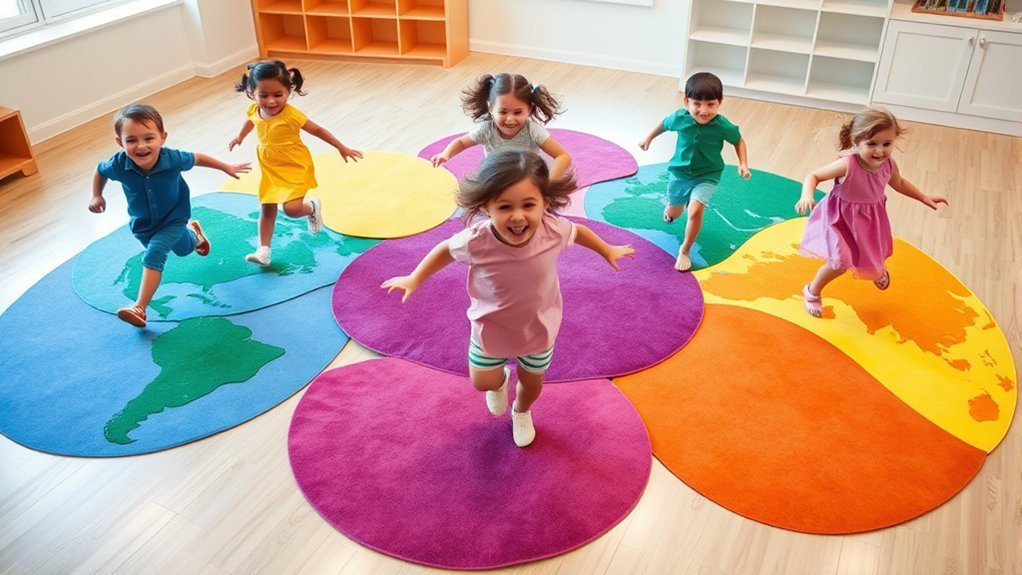
When the music stops in this active learning game, players must race to stand on the correct continent rather than scrambling for chairs.
You’ll create a geography music experience that gets kids moving while they learn about Earth’s landmasses. This continent dance transforms your floor into a world map where students physically engage with geographical concepts.
Setup Requirements:
- Create large continent labels or cutouts spread across your floor space
- Prepare a playlist and geography-based callouts like “Find Antarctica” or “Stand on Asia”
- Start the music while players walk around the continents
- Call out a specific continent when stopping the music
Players who reach the correct continent fastest earn points.
You can increase difficulty by adding compass directions or requiring teams to arrange themselves geographically.
License Plate Geography Tracking Game
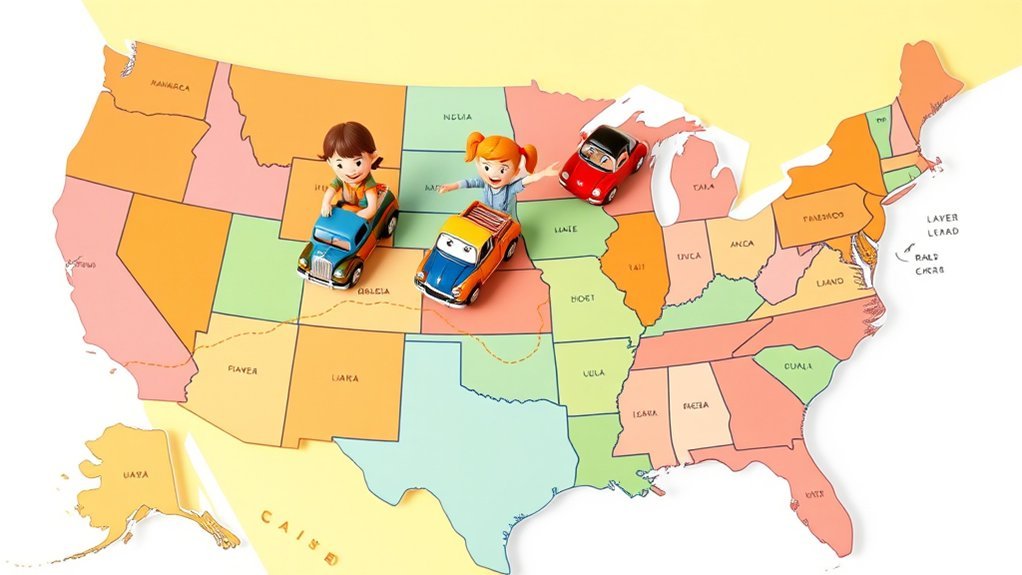
Turn your family road trips into an engaging geography lesson with a license plate tracking game that spans weeks, months, or even years.
Create a simple chart or use a printable US map where kids mark off each state they spot. They’ll sharpen their geography skills while learning state abbreviations, capitals, and locations.
Make it competitive by assigning point values—nearby states earn fewer points while distant ones score higher. Hawaii and Alaska become the ultimate prizes.
Kids can photograph rare plates or keep a travel journal documenting where they spotted each one.
This license plate tracking activity transforms boring car rides into exciting treasure hunts. Children naturally become more observant of their surroundings while building lasting knowledge of US geography.
Plus, it’s completely free and requires minimal preparation.
Build Your Own Country Creative Project
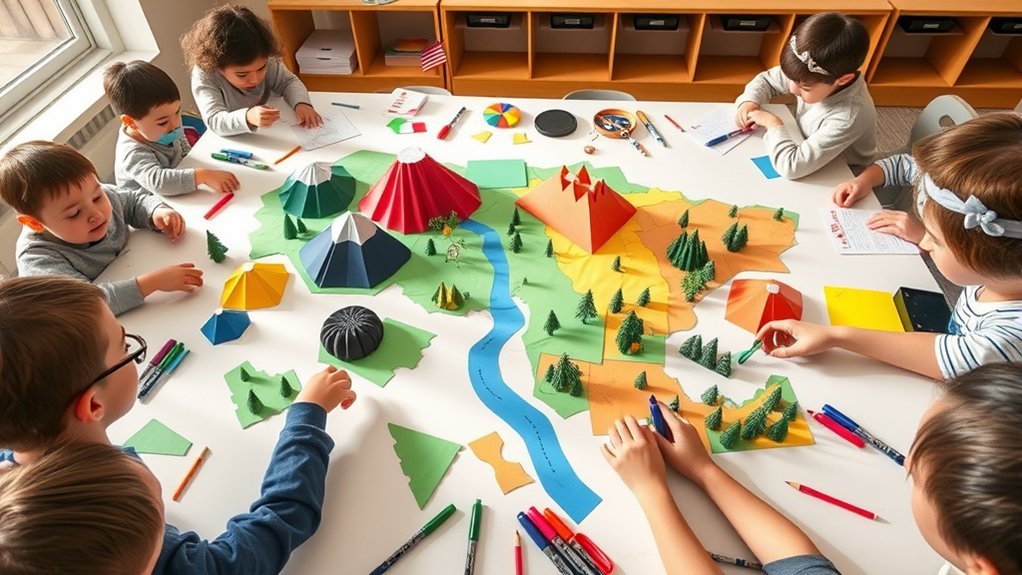
Invite your child to become president, cartographer, and city planner all at once by designing their own imaginary country from scratch.
This engaging project transforms geography concepts into hands-on creativity while teaching spatial relationships, climate zones, and cultural diversity.
Your child should develop these essential elements:
- Map design – Draw terrain features, cities, rivers, and borders with a proper scale and compass rose.
- Country flag creation – Design a flag incorporating colors and symbols representing their nation’s values.
- Cultural celebration planning – Establish national holidays, traditional foods, and customs unique to their society.
- Government structure – Define laws, currency, and leadership roles.
This comprehensive activity reinforces map-reading skills, encourages critical thinking about how societies function, and lets kids express their imagination through geographical storytelling.
Geography Jeopardy: Homemade Edition
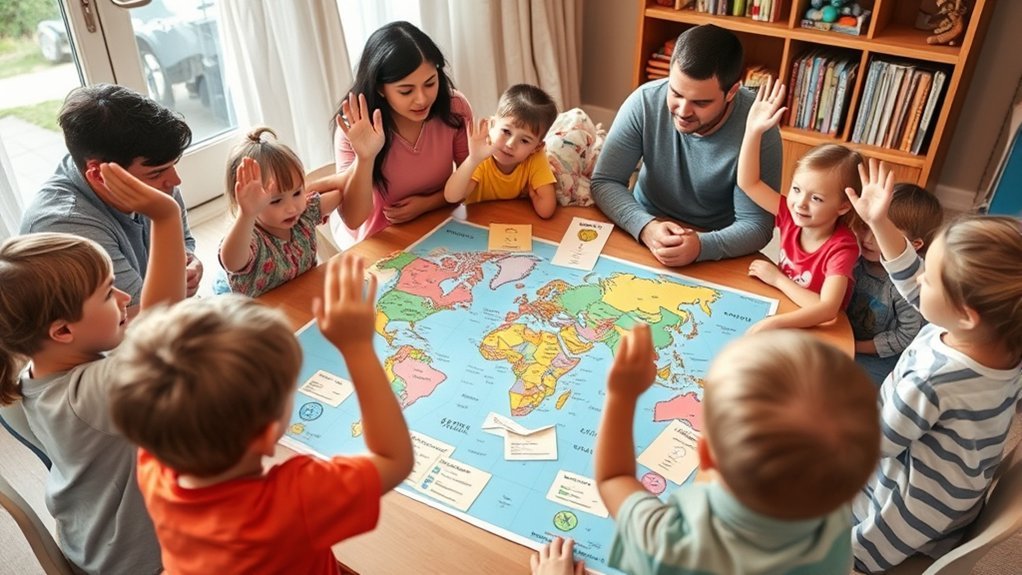
After your child masters creating their own geographical world, challenge them with a game that tests their knowledge of real places around the globe.
Geography Jeopardy transforms learning into exciting competition that’ll have your kids begging for more rounds.
Set up your homemade board using poster board or a whiteboard. Create jeopardy categories like “World Capitals,” “Rivers and Oceans,” “Mountain Ranges,” “Famous Landmarks,” and “Country Flags.”
Assign point values from 100 to 500 based on difficulty.
Establish a clear scoring system where correct answers add points while incorrect responses subtract them.
You’ll need a bell or buzzer for that authentic game-show feel. Players must phrase answers as questions, just like the real show.
This format works brilliantly for family game nights or classroom review sessions.
Around the World Food Tasting Challenge
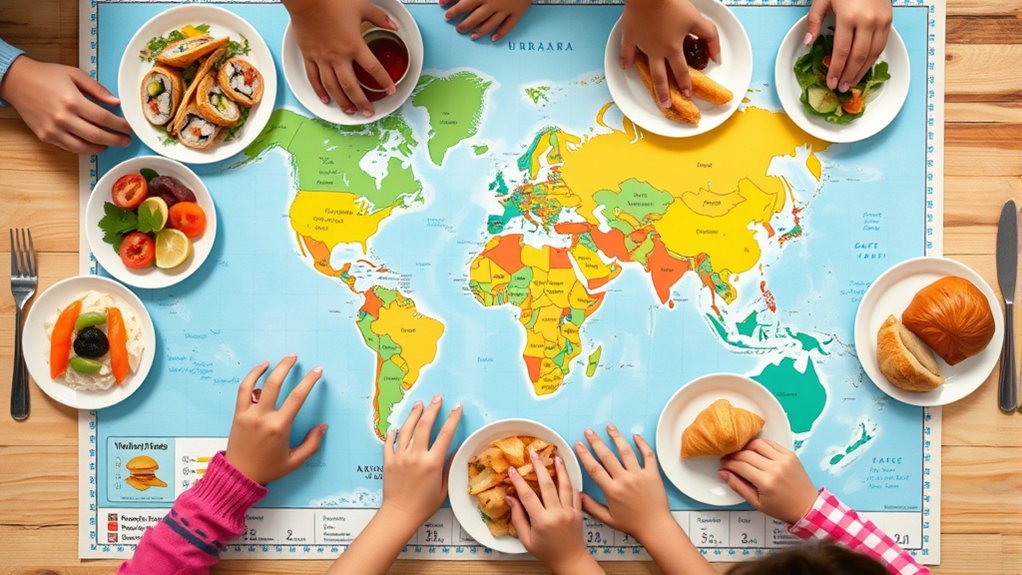
Geography comes alive through your child’s taste buds when you connect countries to their distinctive cuisines. This taste exploration transforms learning into a delicious adventure where kids discover cultural dishes and flavor profiles from different continents.
Create your global cuisine challenge with these steps:
- Select five countries and research their regional recipes and culinary traditions.
- Prepare or purchase international snacks representing each location’s authentic flavors.
- Create food trivia cards with facts about ingredient origins and cooking methods.
- Award points for correctly guessing each dish’s country of origin.
Kids naturally engage when learning involves sensory experiences. They’ll remember that Italy’s known for pasta or Japan’s famous for sushi far better than memorizing facts from textbooks.
This interactive approach makes geography memorable and fun.
In case you were wondering
What Age Group Are These Geography Games Most Appropriate For?
These games are most appropriate for kids ages 6-12, though age recommendations vary by complexity. You’ll find the target demographics focus on elementary and middle school students who’re developing spatial awareness and critical thinking skills.
How Can I Adapt These Games for Children With Learning Disabilities?
You can adapt these games by incorporating more visual aids like colorful maps and picture cards. Include sensory activities such as textured globes or sand-based landform building. Simplify rules, allow extra time, and use repetition to reinforce learning effectively.
Where Can I Find Free Printable Geography Materials for These Activities?
You’ll find free resources at Education.com, Teachers Pay Teachers, and National Geographic Kids. You’ll discover online downloads at Geography.org and Enchanted Learning. You’ll access printable maps, worksheets, and game materials—all ready for your geography activities today.
How Long Does Each Geography Game Typically Take to Complete?
Most geography games you’ll play have a game duration of 15-30 minutes, perfect for classroom settings or home learning. You can adjust playtime expectations based on your kids’ age, attention span, and the activity’s complexity level.
Can These Games Be Played Outdoors or Only Indoors?
You’ll find geography games work like chameleons—they adapt to any environment! Most transition seamlessly between outdoor exploration and indoor activities. You can take scavenger hunts, compass challenges, and mapping games outside, while keeping quiz-based options indoors when weather doesn’t cooperate.
Conclusion
You’ve probably noticed something interesting—the best geography lessons never feel like lessons at all. They happen when you’re laughing over a mispronounced country name, debating whether that license plate’s from Montana or Manitoba, or arguing about which homemade nation has the coolest flag. Isn’t it funny how the moment kids stop thinking they’re learning is exactly when they learn the most? These games don’t just teach geography; they spark curiosity that’ll last way beyond game time.