17 Fun Writing Games for Little Kids
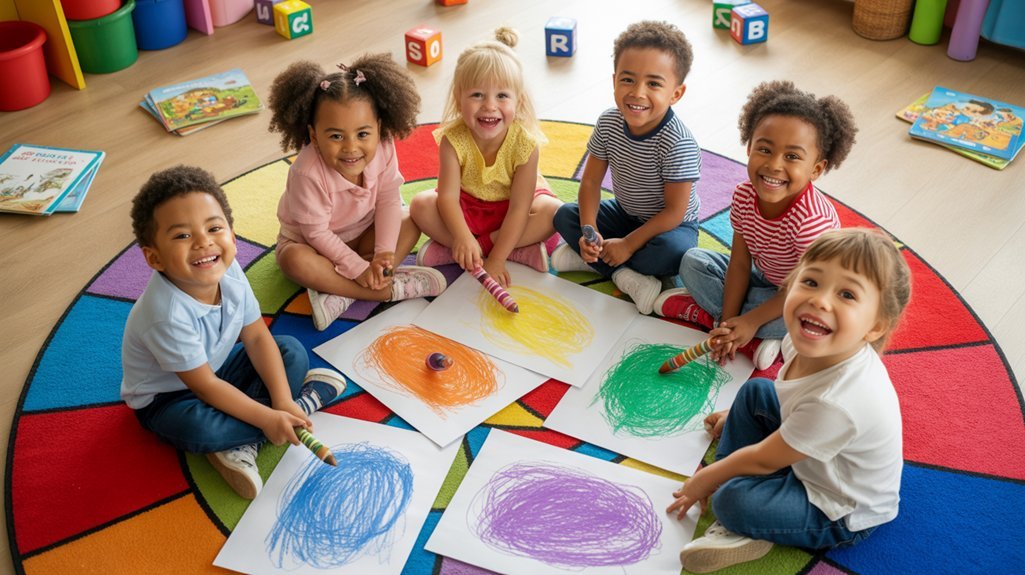
You’ll find endless ways to make writing fun for your little ones through sensory activities like rainbow salt trays, shaving cream letter tracing, and playdough formation that build fine motor skills. Spark their imagination with story dice adventures, collaborative drawing stories, and mystery messages using white crayons and watercolors. Transform letter recognition into active play through letter hopscotch, magnetic treasure hunts, and sidewalk chalk games. These multisensory approaches create low-pressure environments where kids experiment freely and develop essential literacy skills while having a blast—and there’s so much more to discover.
Key Takeaways
- Sensory activities like shaving cream writing, salt trays, and playdough letters make learning fun while building fine motor skills.
- Letter recognition games including hopscotch, treasure hunts, and memory matching transform alphabet practice into active play.
- Story dice, story chains, and picture prompts encourage creative storytelling through collaborative and imaginative games.
- Invisible writing and mystery messages reduce pressure, allowing children to experiment freely and build confidence.
- Combining movement with learning through sidewalk chalk and physical activities keeps young children engaged and motivated.
Rainbow Letter Tracing With Salt Trays
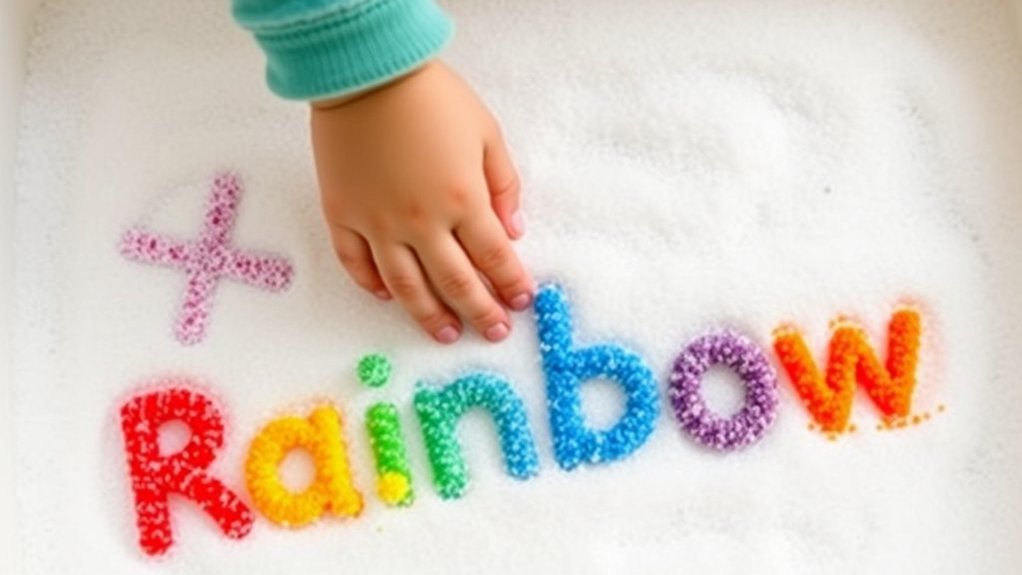
Rainbow letter tracing with salt trays transforms handwriting practice into a sensory adventure that captivates young learners. You’ll need a shallow tray filled with salt and food coloring in rainbow colors. Mix different sections to create vibrant hues that engage your child’s visual senses.
The salt tray benefits extend beyond simple letter formation. Your child develops fine motor skills while experiencing tactile feedback that reinforces muscle memory. They’ll trace letters with their fingers, feeling the grainy texture as they practice proper strokes.
Salt trays boost fine motor development while tactile feedback strengthens muscle memory, making letter formation practice both effective and engaging for young learners.
You can easily reset the surface by shaking the tray gently. This activity accommodates multiple practice rounds without wasting paper. Kids stay motivated longer because they’re not just writing—they’re creating colorful patterns.
The multisensory approach helps strengthen letter recognition and writing readiness.
Story Dice Adventures
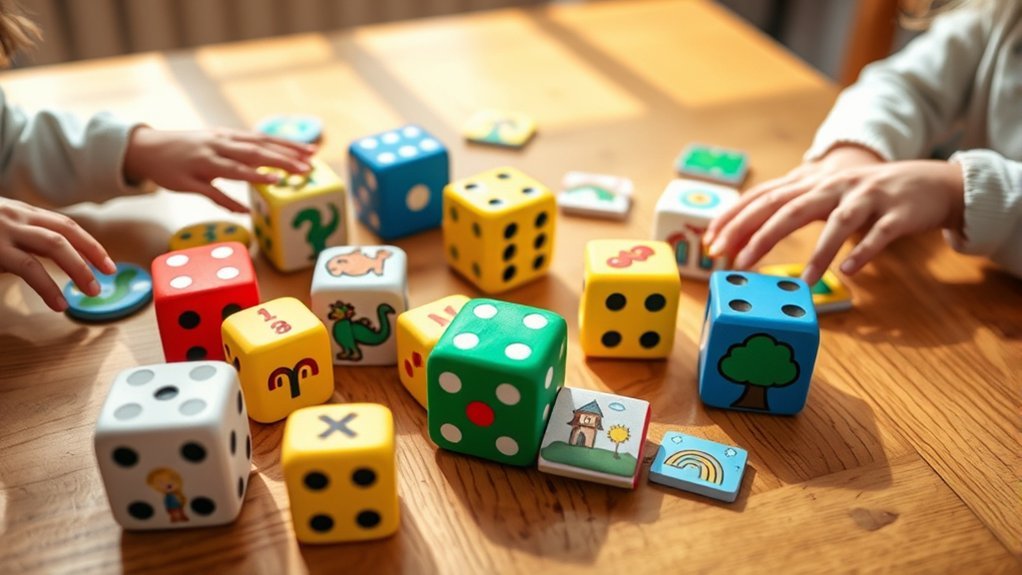
Story dice adventures turn creative writing into an exciting game where your child becomes the author of endless tales.
You’ll roll dice featuring pictures or words that become story prompts for your little one’s imagination. Each roll reveals characters, settings, or actions they must weave into their narrative.
Start simple with three dice and help your child connect the images into a short story. As they improve, add more dice to increase complexity. This game naturally encourages character development as your child creates personalities and motivations for the rolled elements.
You can purchase commercial story dice or make your own using wooden blocks and stickers. The spontaneous nature keeps writing fresh and exciting, removing the pressure of facing a blank page while building essential storytelling skills.
Invisible Writing With Water and Paintbrushes
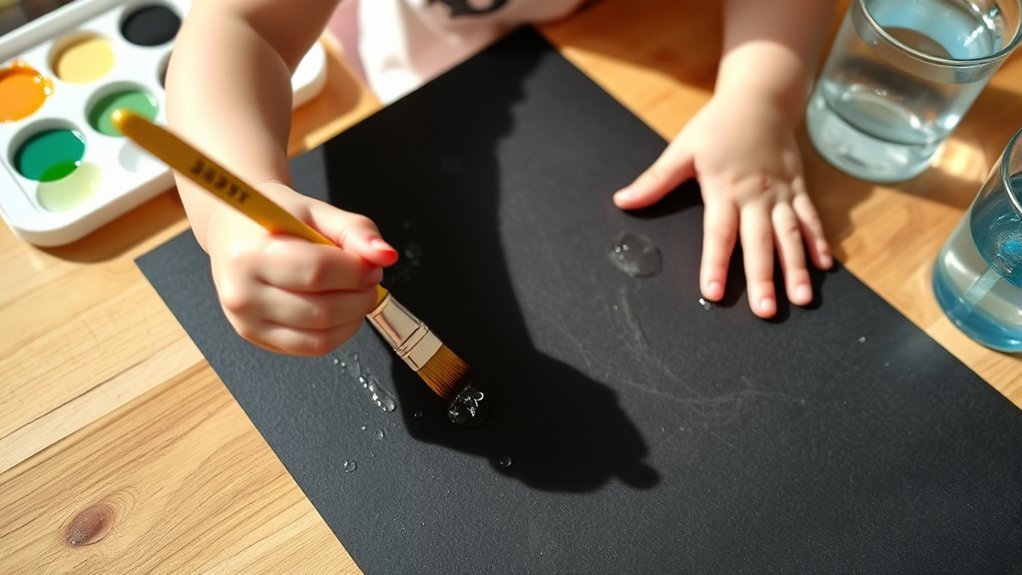
Something magical happens when children discover their letters can disappear and reappear on command. Invisible writing with water and paintbrushes transforms outdoor fun into artistic learning opportunities your kids will love.
Hand your child a paintbrush and water bucket, then watch them practice letters on concrete, chalkboards, or fences. This water play activity combines sensory exploration with fine motor skills development as they control brush strokes and letter formation.
The temporary nature encourages creative expression without pressure. Kids can experiment freely, knowing their work vanishes as it dries, making room for playful discovery. They’ll write words, draw pictures, and try again without erasers.
This imaginative writing exercise works perfectly on sunny days when quick evaporation adds excitement. Your budding writer develops confidence through repetition while enjoying mess-free outdoor learning.
Magnetic Letter Treasure Hunt
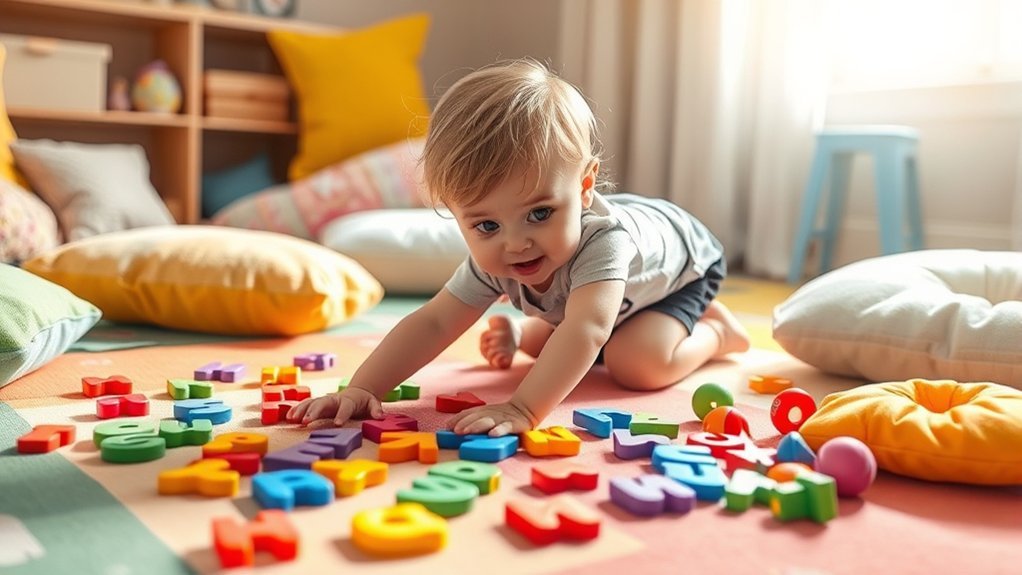
While water painting keeps kids engaged outdoors, magnetic letters bring the alphabet adventure inside with a playful twist.
Hide magnetic letters around your house and create a simple treasure map with picture clues showing where they’re hidden. Your child follows the map, discovering letters one by one.
Once they’ve collected all the letters, challenge them to arrange their finds on a cookie sheet or fridge. They’ll practice magnetic letter exploration while building words or simply organizing alphabetically.
You can increase difficulty by hiding specific letters that spell their name or simple words like “cat” or “dog.”
This treasure map creation activity combines movement, problem-solving, and letter recognition. It transforms ordinary alphabet practice into an exciting quest that keeps little ones motivated to learn.
Playdough Letter Formation
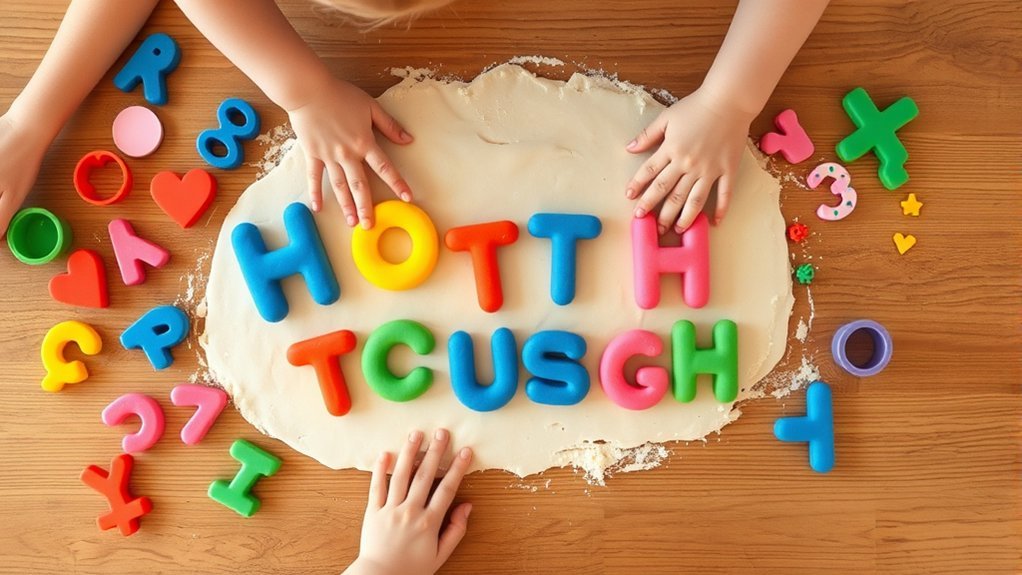
Playdough offers a tactile, forgiving medium that lets young children shape letters with their hands while building fine motor skills. You’ll find that kids naturally engage with this tactile learning approach, rolling snakes to form straight lines and curves for letter shapes.
Set out different playdough colors to make creative activities more exciting. Encourage your child to trace letters with their finger first, then recreate them using the dough. This sensory experience reinforces letter recognition through touch and movement.
Combine guided practice with imaginative play by creating letter families or spelling simple words. The malleable nature of playdough means mistakes disappear with a quick squeeze, reducing frustration.
These sensory experiences transform abstract symbols into three-dimensional forms children can manipulate and understand.
Mystery Message Reveal With White Crayon and Watercolors
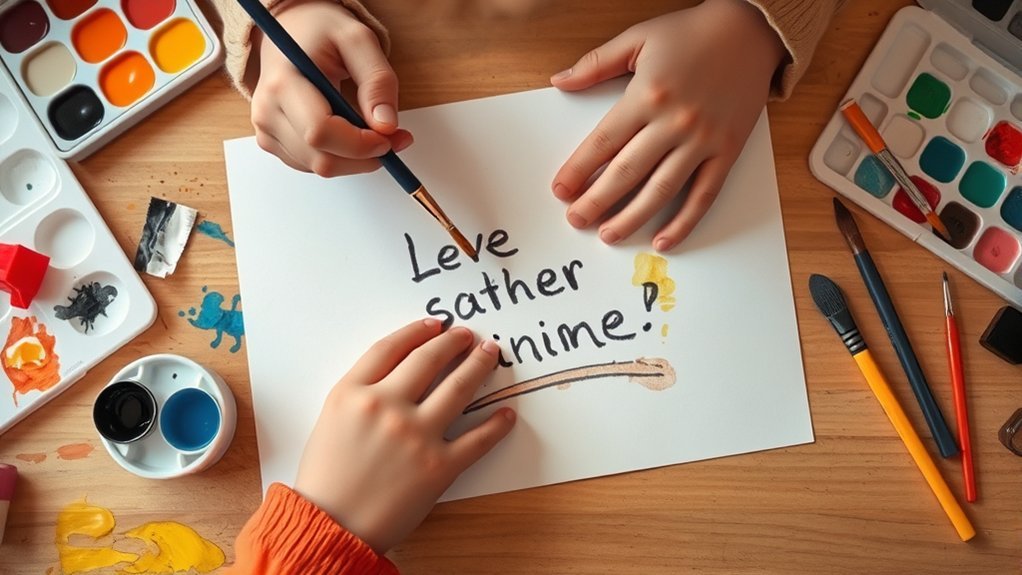
Because children delight in uncovering hidden surprises, this activity transforms writing practice into an exciting discovery game. You’ll write letters, words, or simple sentences using a white crayon on white paper, creating hidden messages that remain invisible until your child paints over them with watercolors.
Start by demonstrating the technique yourself. Write your child’s name or a short word in white crayon, then let them brush diluted watercolors across the paper. They’ll squeal with excitement as the letters magically appear through the paint.
Once they understand the concept, encourage them to create their own hidden messages for family members. This creative art activity strengthens pencil grip, letter formation, and pre-writing skills while maintaining engagement through the element of surprise and colorful revelation.
Story Chain With Picture Prompts
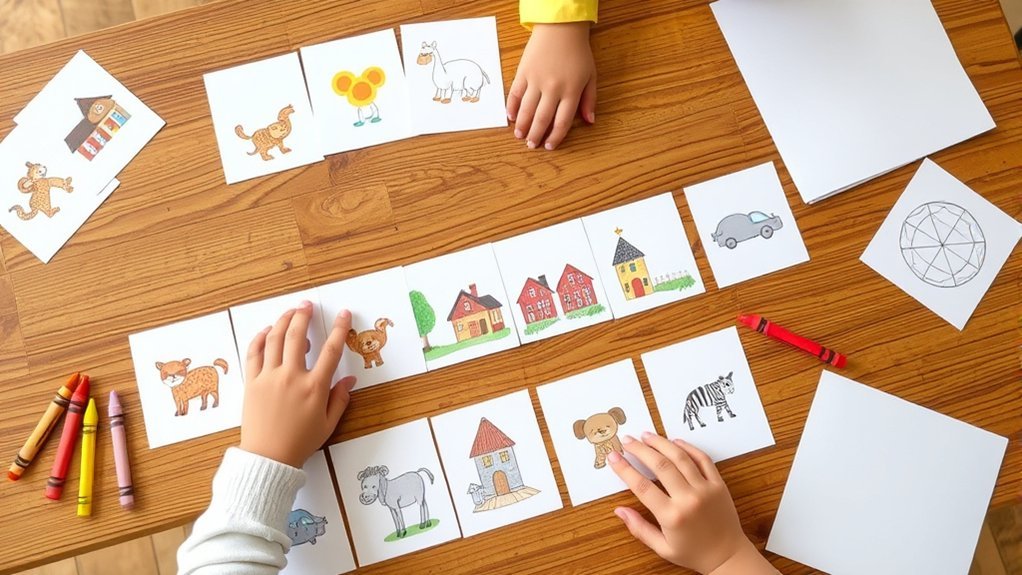
Story chains build narrative skills by having children contribute to an evolving tale one sentence at a time.
You’ll display a picture prompt, and the first child creates an opening sentence. Each subsequent child adds their own sentence, building upon what came before.
Use diverse picture prompt ideas to spark imagination:
- A dragon wearing oversized glasses sitting in a library
- A robot gardener tending to giant flowers
- A detective cat examining mysterious paw prints
This game naturally encourages story character development as kids decide what their protagonist does next.
You can guide younger children by asking questions like “What happens now?” or “How does the character feel?”
The collaborative format removes pressure while teaching story structure. Kids learn that narratives need beginnings, middles, and endings through hands-on practice rather than instruction.
Letter Hop Scotch
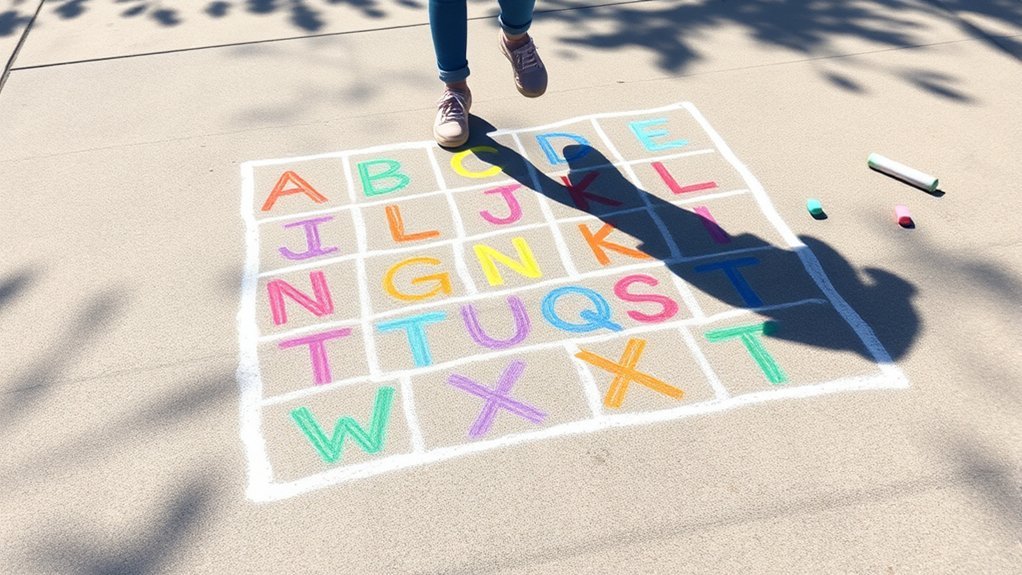
When children jump between letters chalked on pavement, they’re absorbing alphabet recognition through movement rather than worksheets.
You’ll transform ordinary hopscotch into a literacy tool by drawing letters instead of numbers in each square.
Call out a letter and watch your child hop to it. For beginners, use sequential alphabet squares. Advanced players can navigate letter patterns like vowels, consonants, or letters in their name.
Try these hopscotch variations: create matching uppercase and lowercase pairs, spell simple words by hopping through C-A-T, or challenge kids to jump only on letters that make specific sounds.
You can also draw two parallel hopscotch grids where children match beginning sounds or rhyming patterns.
This kinesthetic approach strengthens letter recognition while burning energy—perfect for restless learners.
Sensory Writing in Shaving Cream
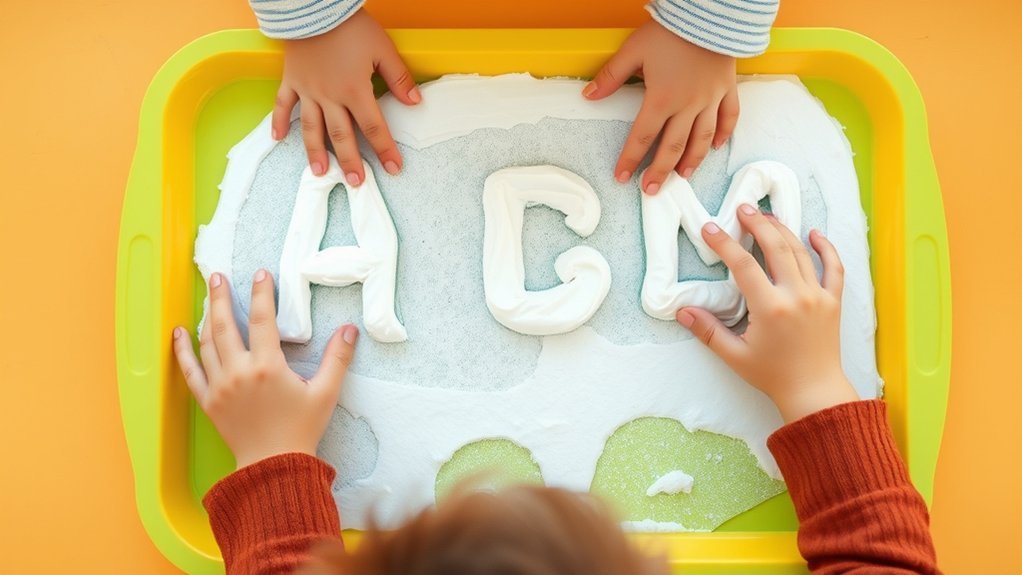
While worksheets restrict young writers to pencil and paper, shaving cream transforms any smooth surface into a multisensory writing playground. You’ll spray foam onto tables or trays, letting children spread it smooth with their palms.
Through shaving cream exploration, kids trace letters with their fingers, experiencing writing as a tactile adventure rather than a rigid task. The sensory engagement keeps young learners focused and excited:
- Fluffy white clouds covering the table invite tiny hands to draw swooping letter curves
- Cool, slippery texture gliding beneath fingertips as they form their names
- Sweet scent filling the air while they practice alphabet shapes
Mistakes vanish with one quick swipe, eliminating fear of errors. This low-pressure environment encourages experimentation, building confidence as children develop letter formation skills naturally.
Build-a-Story Card Game
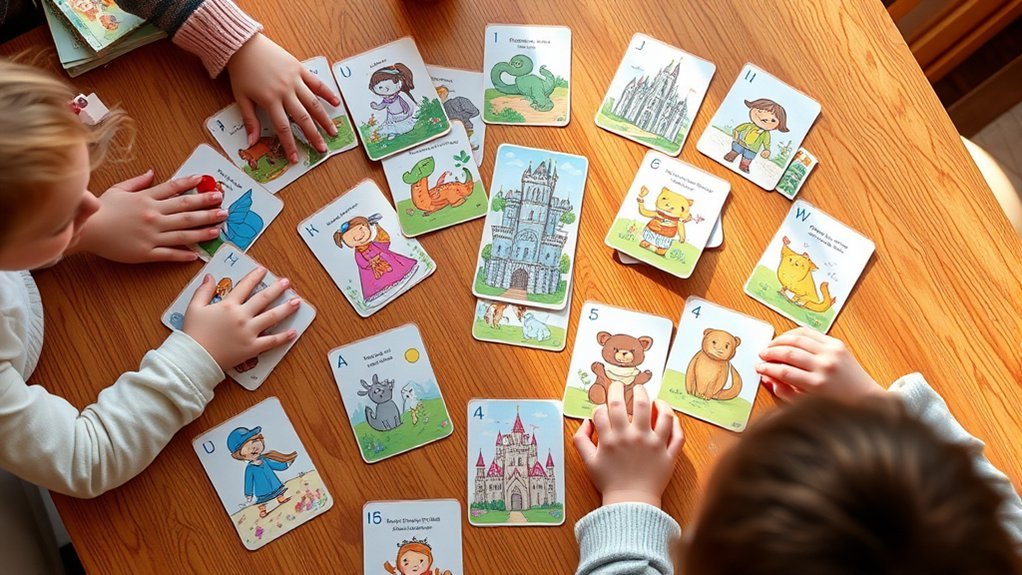
A deck of illustrated cards scattered across the floor becomes a launching pad for young imaginations.
You’ll draw three cards together—one showing a character, another depicting a setting, and a third revealing an object or action. These combinations serve as story prompts that spark creative narratives.
Your child picks cards and weaves them into a tale. “The astronaut found a magic key in the castle!” they might exclaim. You’ll write down their words, demonstrating how spoken stories transform into written ones.
This game strengthens character development as kids describe their protagonist’s feelings and motivations.
Why does the astronaut need that key? What happens next? Each question deepens their narrative skills while keeping writing playful and pressure-free.
Sidewalk Chalk Letter Challenges
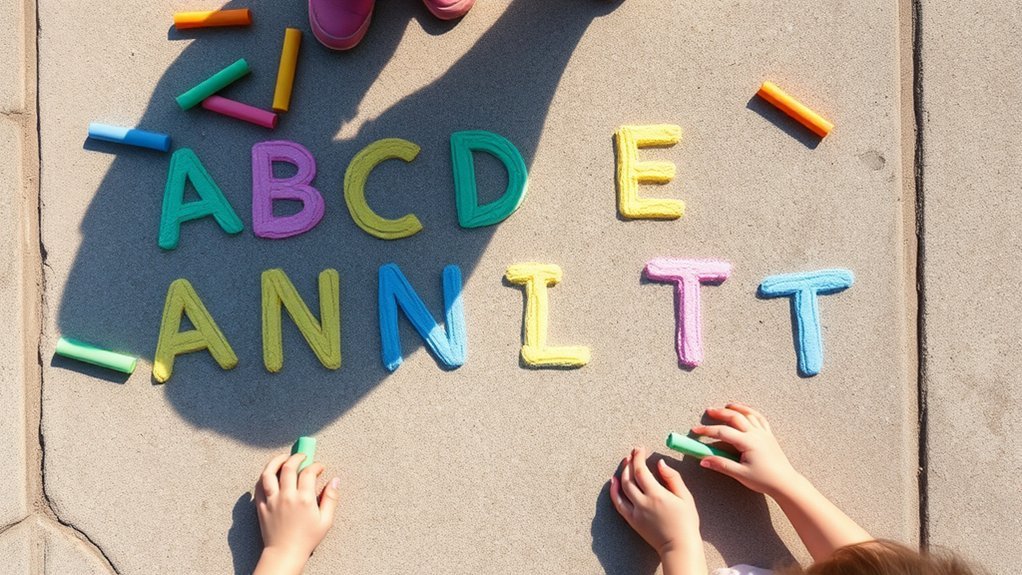
Taking the writing adventure outdoors transforms letter practice into full-body fun. Sidewalk chalk opens up endless possibilities for letter games that get kids moving while learning. You’ll watch them squat, stretch, and hop as they engage with letters in creative ways.
Try these exciting activities:
- Letter Hopscotch: Draw letters instead of numbers in hopscotch squares, calling out which letters to jump on.
- Rainbow Letters: Challenge kids to trace the same letter in multiple colors, creating vibrant masterpieces.
- Giant Letter Maze: Create oversized letters they can walk through, following the proper stroke order with their feet.
These activities strengthen letter recognition while burning energy. You’re combining physical development with literacy skills, making learning feel like playtime rather than work.
Texture Writing on Sandpaper Letters
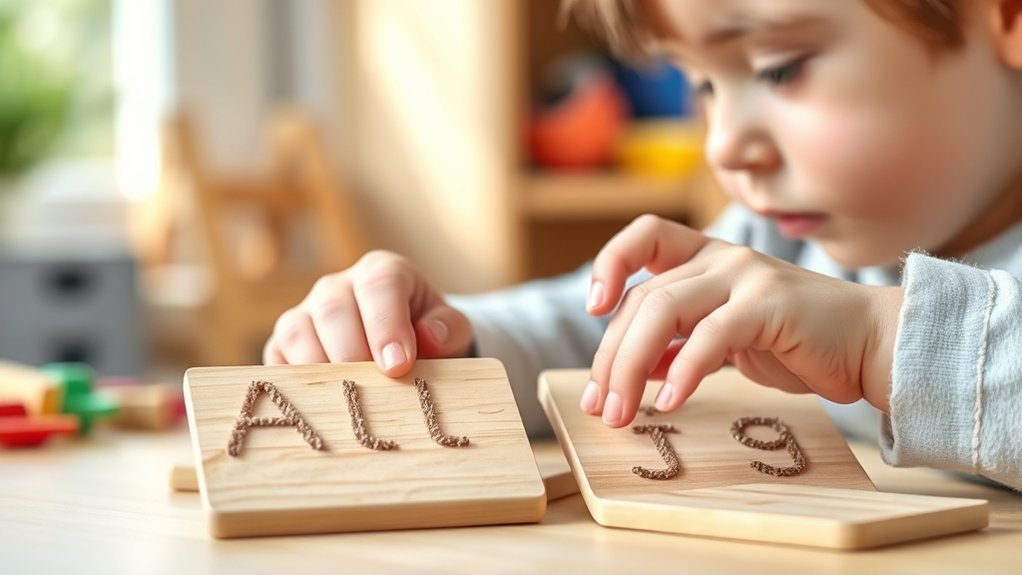
When children trace letters cut from coarse sandpaper, they’re engaging their sense of touch to build muscle memory that reinforces proper letter formation. This tactile learning approach helps young writers understand how letters should look and feel as their fingers follow the textured surface.
Sandpaper letters transform touch into learning, building muscle memory as small fingers trace textured paths toward confident letter formation.
You can purchase pre-made sandpaper letters or create your own by cutting letter shapes from fine-grit sandpaper and gluing them onto cardboard. Guide your child to trace each letter with their index and middle fingers in the correct directional strokes.
This sensory exploration method works especially well for kinesthetic learners who grasp concepts through physical interaction. The rough texture provides immediate feedback, helping children distinguish between different letter shapes.
You’ll notice they’ll often close their eyes while tracing, deepening their sensory connection to each letter’s unique form.
Story in a Bag
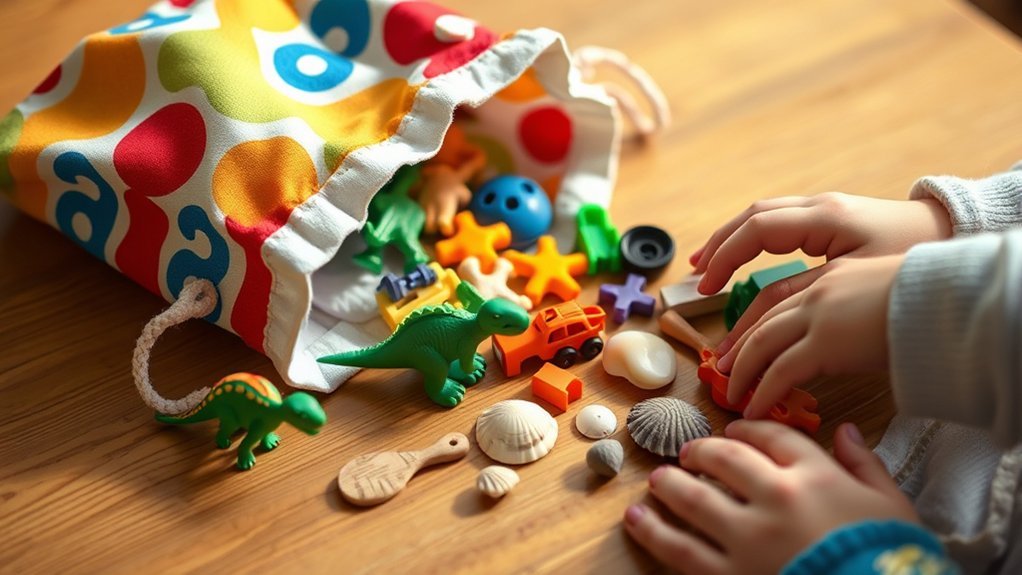
While sandpaper letters build letter recognition through touch, moving objects inspire young writers to craft complete narratives. “Story in a Bag” transforms random household items into creative writing prompts that spark imagination and help children understand story structure.
Place three to five small objects in a paper bag. Your child pulls them out one by one, weaving them into an original tale. A toy car, plastic dinosaur, and ribbon might become an adventure about a brave dinosaur racing to deliver an important gift.
This game strengthens character development as children assign personalities and motivations to their objects. Story themes emerge naturally when kids connect seemingly unrelated items:
- A spoon becomes a magic wand
- A button transforms into a treasure
- A feather represents a flying companion
You’ll watch storytelling skills flourish through playful practice.
Letter Matching Memory Game
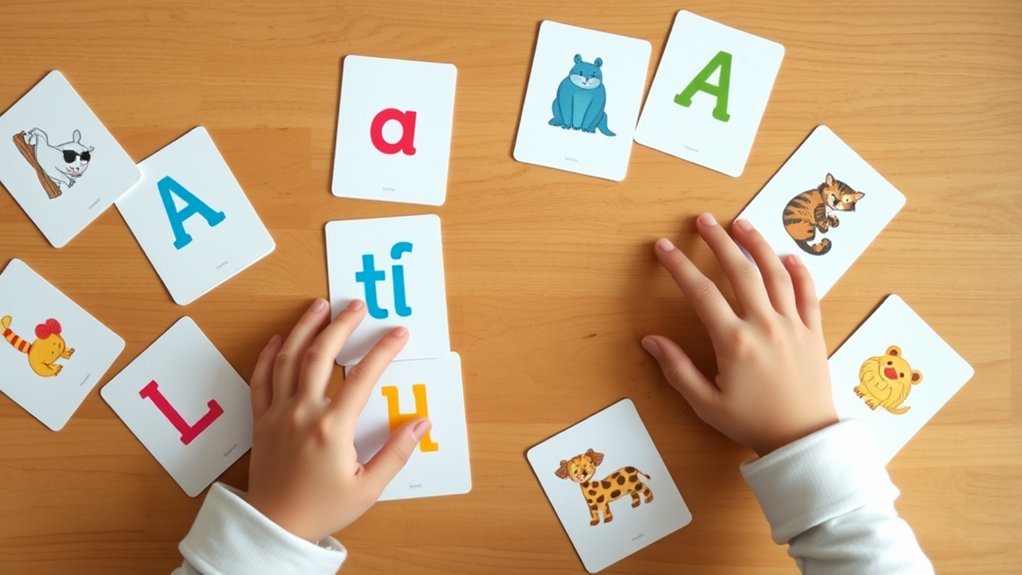
The familiar concentration game gets a literacy boost when you replace picture cards with matching letter pairs. Create cards featuring uppercase and lowercase versions of the same letter, or use identical letter pairs. Spread them face-down and let your child flip two at a time, searching for matches.
This game strengthens letter recognition while building memory skills through repeated practice. Your child will naturally absorb letter shapes as they concentrate on remembering card positions. Start with just six pairs for beginners, then gradually increase difficulty as their confidence grows.
You can personalize the game by focusing on letters from your child’s name or using colorful markers to make each set distinctive. The competitive element keeps kids engaged while they’re actually learning foundational literacy skills.
Collaborative Drawing Stories
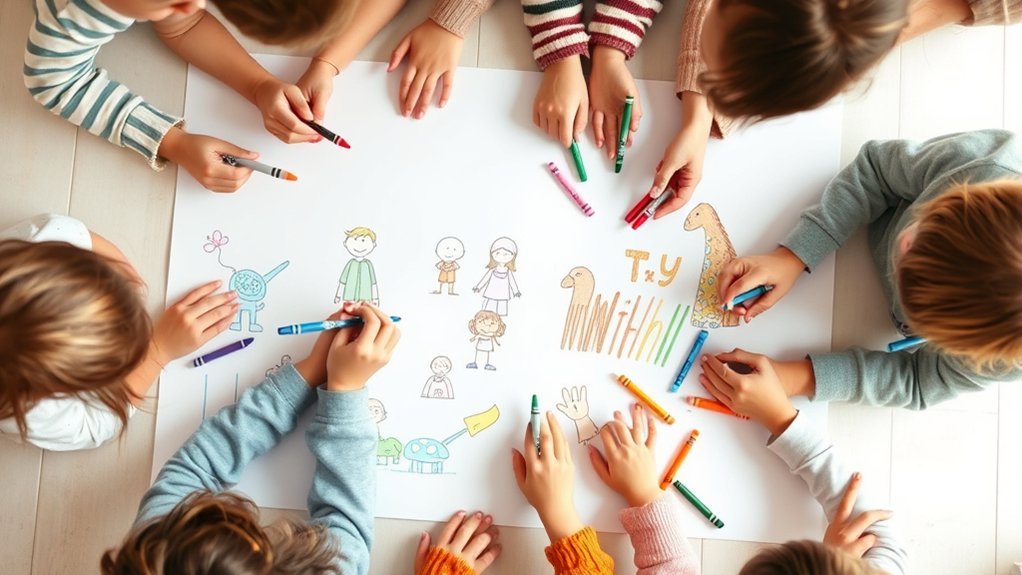
As your child scribbles their first wobbly lines, you can transform random marks into meaningful narratives by taking turns adding to each other’s drawings. This collaborative approach naturally weaves storytelling techniques into playtime while building early writing foundations.
Start with simple prompts. Your child draws a circle, you add ears—suddenly it’s a bunny needing adventure. Each addition sparks imagination and introduces character development through visual choices.
Each mark becomes a story invitation—your additions guide discovery while your child’s choices lead the adventure forward.
- Picture a purple monster gaining friendly eyes and a welcoming smile
- Imagine a wonky house sprouting colorful flowers and a winding path
- Visualize squiggly lines transforming into ocean waves with hidden treasures
You’ll guide the narrative while respecting their creative choices. Ask questions like “Where’s our character going?” or “What happens next?”
This interactive process strengthens pre-writing skills through engaging, pressure-free expression.
Wikki Stix Letter Bending
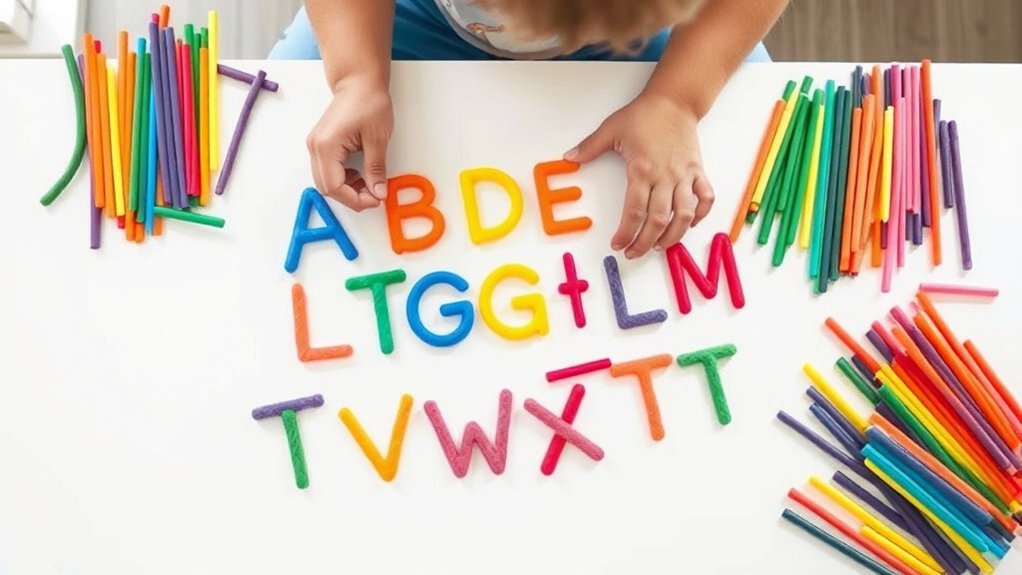
Bendable wax-covered yarn sticks offer tactile magic for emerging writers who aren’t ready for pencils. You’ll watch your child’s wikki stix creativity flourish as they shape these colorful strands into alphabet forms without frustration or mess.
Start with straight letters like I, L, and T. Your little one can press the sticks onto laminated letter cards, tracing each shape. They’ll develop muscle memory while enjoying the sensory experience of bending and sticking.
Progress to curved wikki stix letters like C, O, and S. The wax coating lets kids reposition their work without tears or eraser marks. They’re building fine motor skills and letter recognition simultaneously.
Create a letter hunt game where they form letters matching objects around your home. “B” for ball, “D” for door. This connects writing to their world meaningfully.
Roll and Write Story Cubes
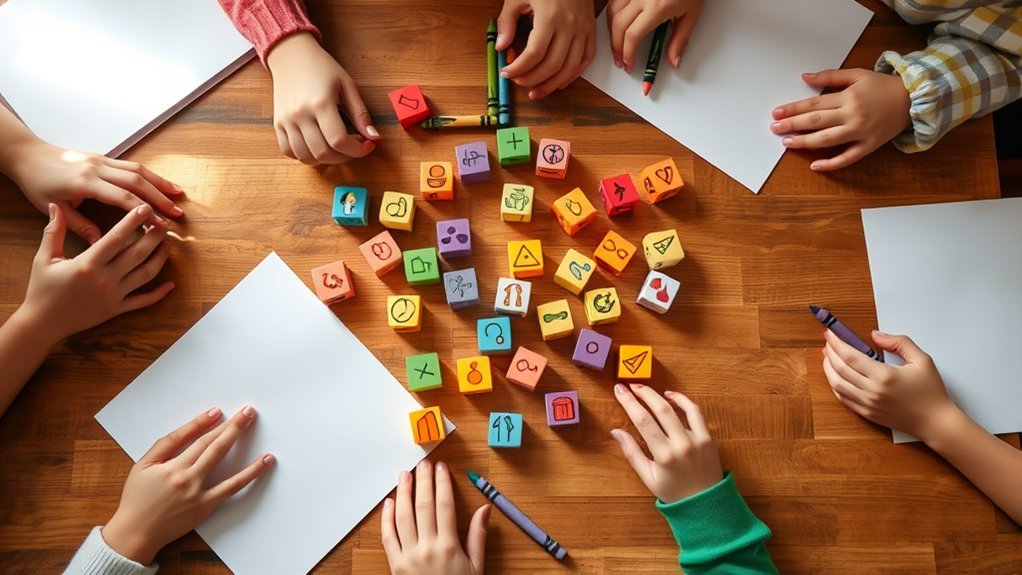
Story cubes transform random chance into narrative adventures that’ll have your preschooler writing without realizing they’re practicing.
Story cubes turn playful dice rolls into creative writing practice, sneaking literacy skills into imaginative adventures your preschooler will love.
You’ll roll dice featuring simple images, and your child creates stories connecting the pictures. This story cube exploration builds imaginative storytelling while developing sequencing skills.
Start with basic picture dice showing familiar objects:
- A smiling sun, spotted dog, and red apple appear on the table
- Your child’s eyes light up as they connect the images into their tale
- Crayon scribbles gradually form words describing their adventure
Let them dictate their story first, then encourage writing key words or simple sentences.
Don’t worry about perfect spelling—focus on connecting ideas. As confidence grows, add more dice or create custom cubes with photos of family members, pets, or favorite toys for personalized narratives.
In case you were wondering
What Age Should Children Start Learning to Write Letters and Words?
Most children are ready to start early writing around ages 3-4, when they’ve developed basic letter recognition skills. You’ll notice your child showing interest in drawing and making letter-like shapes, signaling they’re prepared to begin learning letters and words.
How Long Should Writing Practice Sessions Be for Young Children?
Think of your child’s attention span like a melting ice cream cone—enjoy it quickly! Keep writing practice to short sessions of 5-10 minutes. You’ll maintain their enthusiasm by rotating engaging activities that feel more like play than work.
What if My Child Shows No Interest in Writing Activities?
Don’t force it! Try different engaging activities like drawing stories, writing in sand, or dictating adventures you’ll transcribe. Creative motivation comes from making it playful and pressure-free. Follow your child’s interests and celebrate small efforts enthusiastically.
Are Left-Handed Children Delayed in Developing Writing Skills Compared to Right-Handed?
Don’t let myths cloud your judgment—left-handed children aren’t delayed! They simply need adapted writing techniques that honor their natural hand position. Actually, left handed advantages include enhanced creativity and problem-solving abilities that’ll benefit their overall development.
When Should I Be Concerned About My Child’s Writing Development?
You should be concerned if your child misses key writing milestones for their age group or shows significant developmental delays. Consult your pediatrician if they’re struggling considerably compared to peers or can’t grasp basic pre-writing skills by kindergarten.
Conclusion
You’ve now got a treasure chest of playful writing games that’ll transform those early learning struggles into joyful discoveries. Whether you’re sprinkling salt for tracing or molding playdough letters, you’re building your child’s confidence one game at a time. Don’t worry about perfection—focus on the giggles, the messy hands, and those proud moments when they recognize their first letter. You’re not just teaching writing; you’re igniting a lifelong love of learning through play.