13 Proven Spelling Games Your Kids Will Love
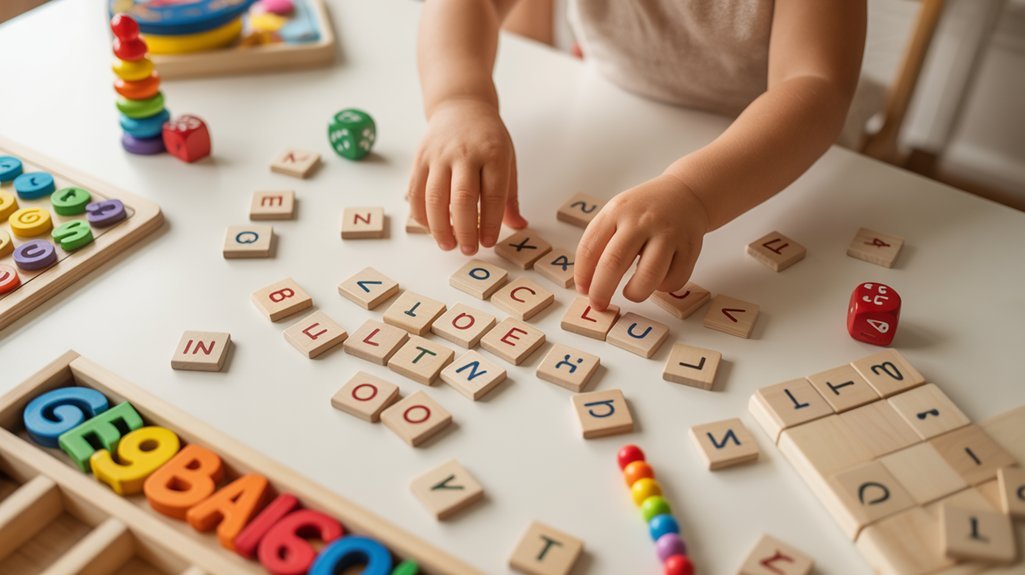
You’ll transform spelling practice into exciting play with games like Word Ladder Challenge, where kids change one letter at a time to create new words, or Spelling Scavenger Hunt, which combines physical movement with letter recognition. Try Magnetic Letter Races for competitive fun, Spelling Hopscotch for active learning, or Hangman With a Twist using themed vocabulary. Digital options like Online Spelling Adventure Games blend storytelling with practice, while tactile activities such as Playdough Letter Building and creative Story Creation develop multiple skills simultaneously. Spelling Tic-Tac-Toe and Bingo variations round out these proven strategies that’ll make spelling your child’s favorite activity.
Key Takeaways
- Physical games like Spelling Hopscotch and Magnetic Letter Races combine movement with learning, ideal for active children.
- Competitive activities such as Word Ladder Challenge and Spelling Tic-Tac-Toe transform practice into engaging puzzles and races.
- Creative approaches including Story Creation and Playdough Letter Building integrate spelling with imagination and tactile learning.
- Digital spelling adventure games use gamification, quests, and leaderboards to make practice interactive and immediately rewarding.
- Traditional game variations like themed Spelling Bingo with picture clues adapt familiar formats for effective vocabulary reinforcement.
Word Ladder Challenge
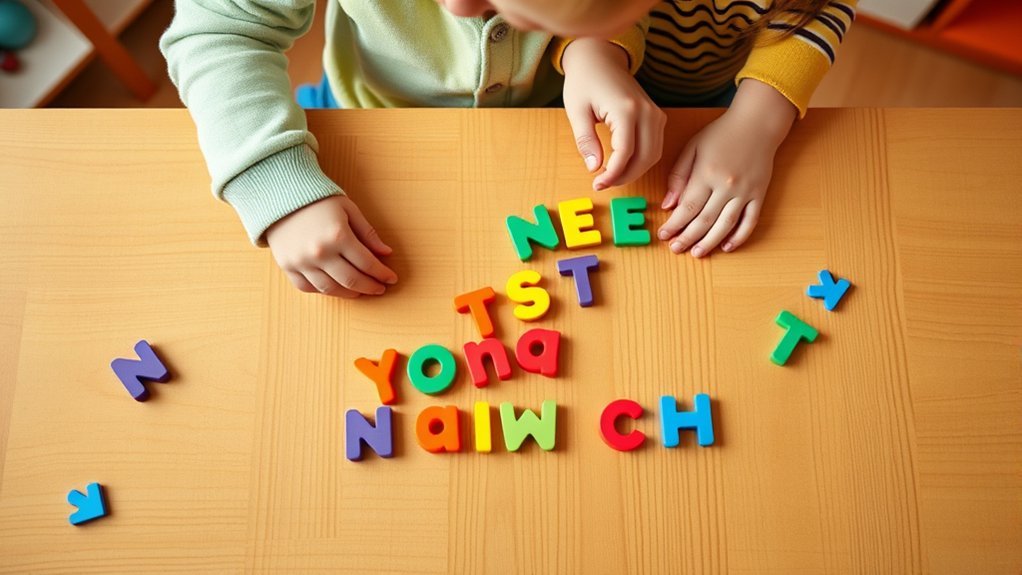
Word Ladder Challenge transforms a simple spelling exercise into an engaging puzzle that’ll sharpen your child’s vocabulary and critical thinking skills.
You’ll start with one word and change a single letter at each step to create new words until you reach the target word.
Begin with three-letter words like CAT to BAT to BIT to SIT. As your child masters word ladder strategies, increase difficulty with four or five-letter words. They’ll need to plan ahead and consider multiple pathways to success.
Create creative ladder challenges by choosing themed words—transform COLD to WARM or FROG to TOAD. You can also set time limits or award points for using fewer steps.
This game naturally builds spelling proficiency while developing problem-solving abilities your child will use beyond the classroom.
Spelling Scavenger Hunt
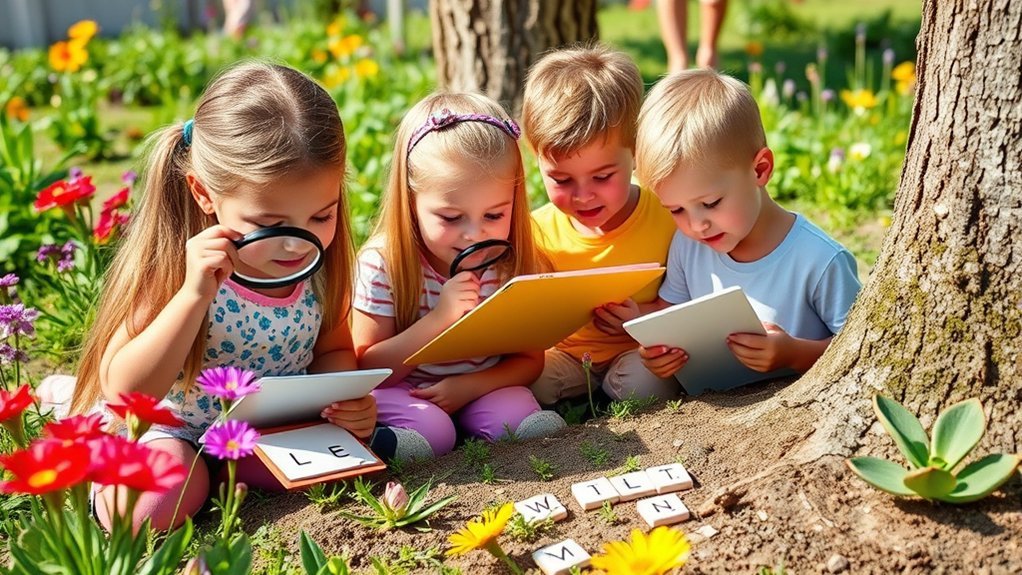
Transform your home or classroom into an adventure zone where your child searches for objects that start with specific letters or match spelling patterns. This interactive game combines physical movement with literacy skills, making it perfect for kinesthetic learners.
Create spelling word searches by hiding letter cards throughout the space. Your child collects them to form complete words. You can increase difficulty by adding phonetic sound matching challenges—ask them to find items with long vowel sounds or specific consonant blends.
Hide letter cards around your space and challenge children to collect them, forming complete words while hunting for specific phonetic patterns.
Set a timer for added excitement, or turn it into a team competition. Provide clues like “find something that rhymes with ‘book'” or “locate an object with a silent ‘e’.”
This hands-on approach reinforces spelling concepts while keeping kids engaged and active.
Hangman With a Twist
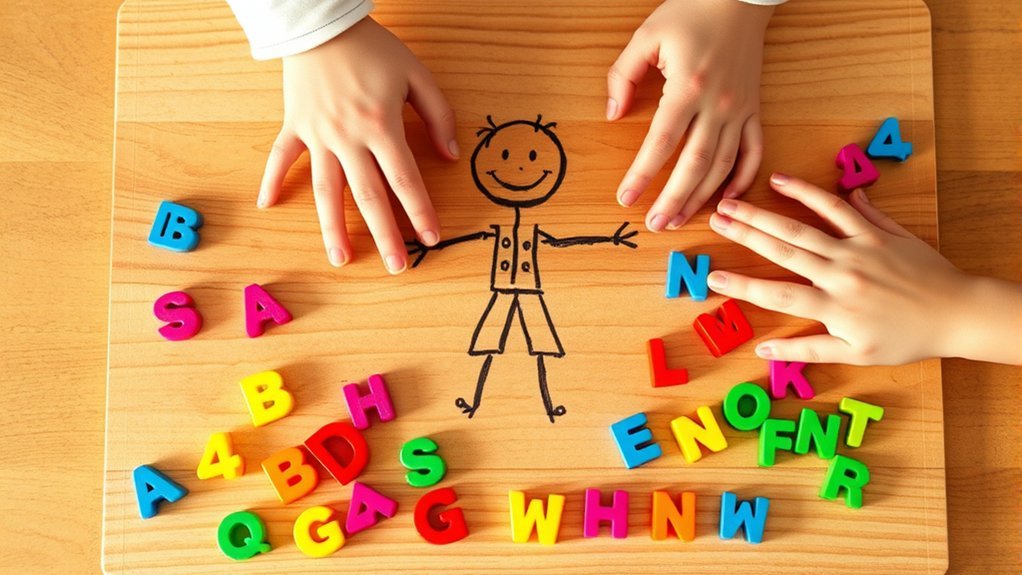
While the classic hangman game teaches spelling effectively, adding creative variations makes it even more educational and entertaining.
Try theme-based hangman where all words relate to a specific topic like animals, foods, or holidays. This reinforces vocabulary within categories your child’s studying.
You can also implement reverse hangman, where your child thinks of the word and you guess, strengthening their spelling confidence.
For tech-savvy families, digital hangman apps offer interactive features like animated characters and difficulty levels that adapt to your child’s progress. These platforms often include hints and definitions, expanding vocabulary alongside spelling skills.
Another twist involves using phrases instead of single words, teaching proper spacing and punctuation.
You’ll also notice that timed rounds add excitement while encouraging quick recall of spelling patterns and letter combinations.
Magnetic Letter Races

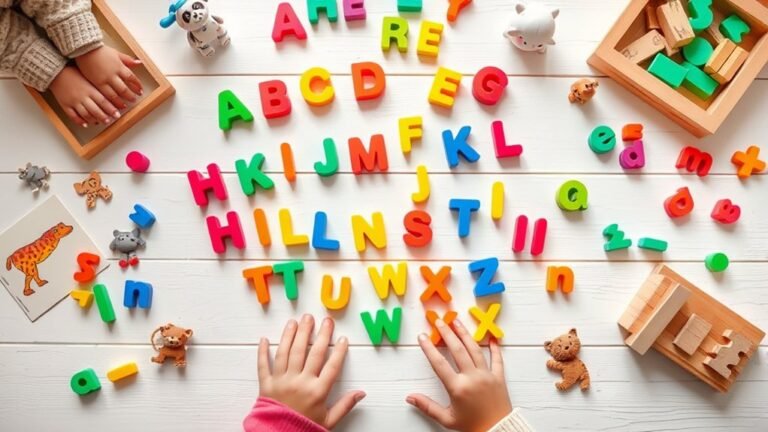
When you scatter magnetic letters across your refrigerator or a metal board, you’ve created an instant spelling competition that gets kids moving. Call out a word, and watch your children race to find the correct letters and arrange them in order.
This speed competition transforms letter recognition into an exciting physical activity. You can adjust difficulty levels by using longer words or adding time limits. For multiple players, assign each child different colored magnets or create separate racing lanes on your metal surface.
The tactile nature of manipulating magnetic letters reinforces spelling patterns through muscle memory. Your kids won’t realize they’re practicing phonics and word construction while they’re frantically searching for letters.
Start with simple three-letter words, then gradually increase complexity as their confidence grows.
Spelling Tic-Tac-Toe
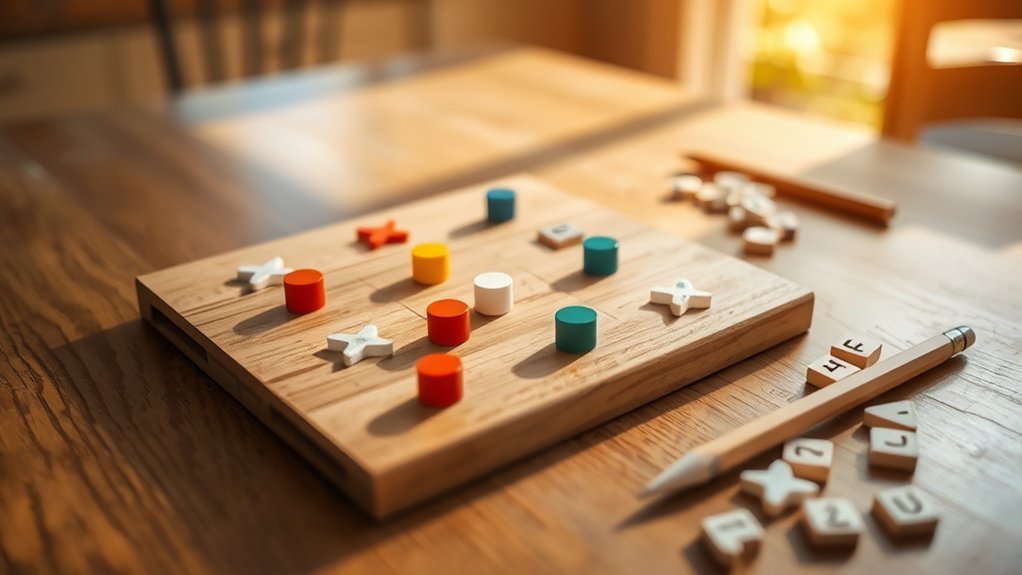
Draw a standard tic-tac-toe grid and assign spelling words to each square instead of using X’s and O’s. Players must correctly spell the word in their chosen square to claim it. This transforms a familiar game into an educational challenge that’ll keep your kids engaged.
You can implement various spelling strategies by adjusting difficulty levels. Assign easier words to corner squares and challenging ones to the center. Players earn their marks only after spelling correctly, making each turn meaningful.
Try these tic tac toe variations to maintain interest: use themed word lists, add bonus squares worth two marks, or create larger grids for older children. You can also introduce time limits or require players to use words in sentences.
This game works perfectly for solo practice or competitive play between siblings.
Rainbow Writing Practice
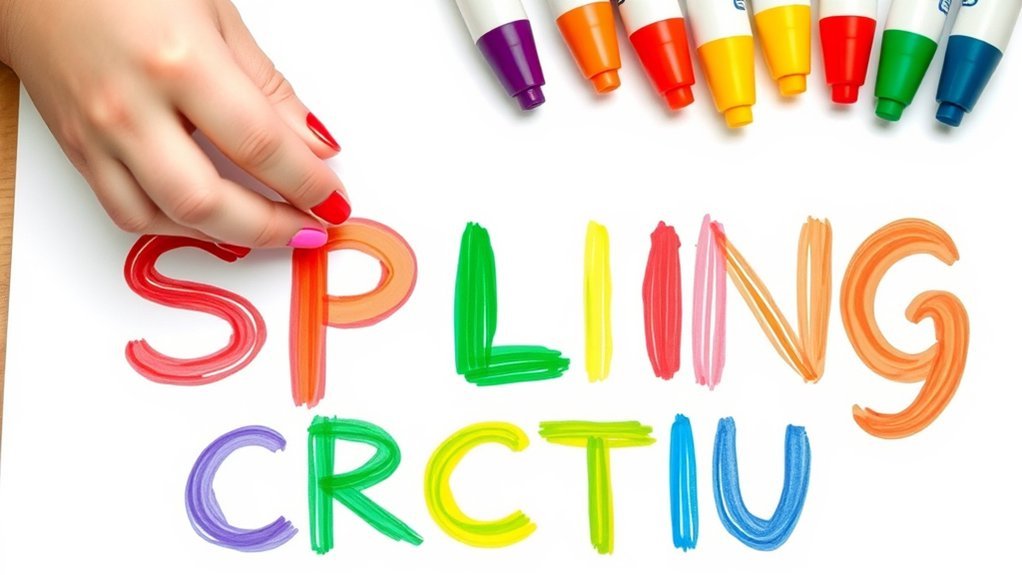
Rainbow Writing Practice turns spelling into a colorful art project that engages visual and kinesthetic learners. Your child writes each spelling word multiple times, using a different colored pencil, crayon, or marker for each layer. This creates vibrant, overlapping colorful letters that make words memorable and visually striking.
Rainbow Writing transforms spelling practice into a vibrant art activity where children layer multiple colors to create memorable, visually striking words.
You’ll need crayons or markers and plain paper. Have your child write the first word in one color, then trace over it repeatedly using different colors. The layering technique reinforces letter formation while allowing creative expression. Each word becomes a miniature rainbow masterpiece.
This method works exceptionally well for children who struggle with traditional repetitive writing. The artistic element transforms mundane practice into something enjoyable.
You can display finished rainbow words on the refrigerator, celebrating both spelling achievement and artistic effort simultaneously.
Spelling Bee Relay
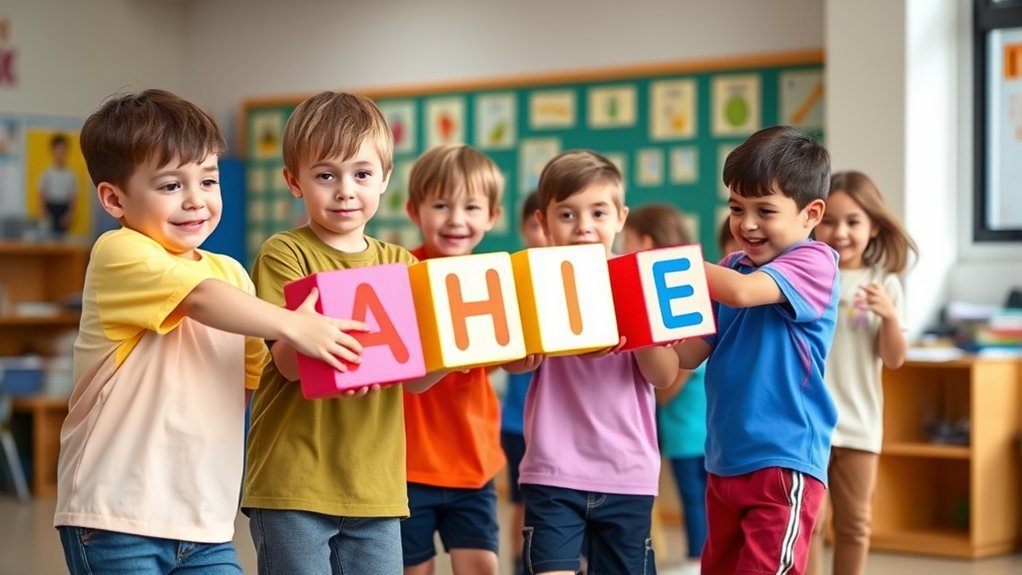
While rainbow writing offers individual creative practice, Spelling Bee Relay transforms spelling into an energetic group activity that gets kids moving.
You’ll divide children into teams, placing spelling word lists at one end of the room and team members at the other.
Here’s how it works: one player races to the word list, memorizes a word, runs back, and spells it aloud to their team. If correct, the next teammate goes. This format encourages team collaboration as children cheer each other on and work toward a common goal.
The physical movement helps kinesthetic learners retain information better while making practice feel like play rather than work.
You can adapt difficulty levels by adjusting word complexity, and kids naturally develop spelling strategies through repeated exposure and peer support.
Memory Match Spelling Cards
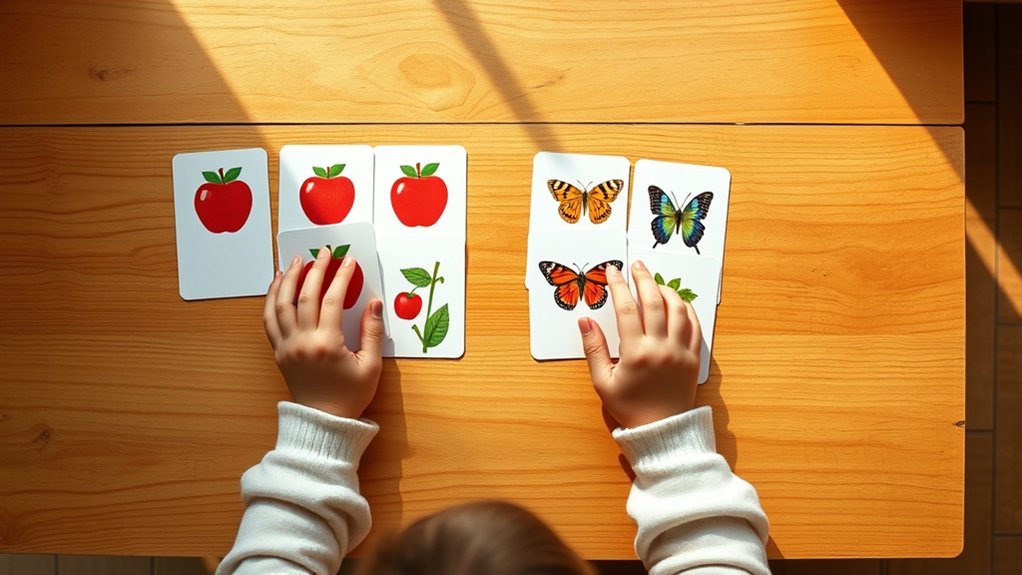
Memory Match Spelling Cards combine the classic concentration game with spelling practice, creating an engaging activity that strengthens both visual memory and word recognition.
You’ll create pairs of cards featuring words and corresponding images or definitions. When your child flips two cards, they’ll search for matches while reinforcing spelling patterns. Effective memory match strategies include starting with 6-8 pairs for younger learners and gradually increasing difficulty.
For card design ideas, use colorful index cards with clear, large letters. Consider themed sets like animals, foods, or action words to maintain interest. You can also create challenge cards pairing homophones or rhyming words.
This game naturally encourages repetition without feeling tedious. Your child develops concentration skills while unconsciously memorizing correct spellings through repeated visual exposure.
Bingo With Spelling Words
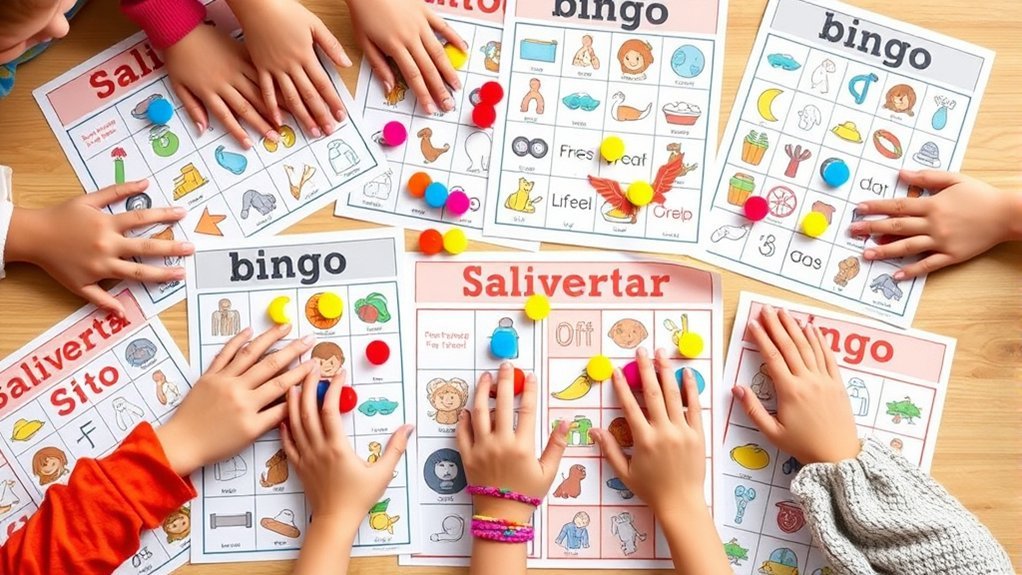
Bingo transforms traditional spelling practice into an exciting game of anticipation and quick recognition. You’ll call out definitions or use words in sentences while your kids mark the corresponding spelling words on their cards. This approach reinforces word meaning alongside correct spelling.
Essential bingo variations to maximize engagement:
- Themed boards: Create cards around creative themes like animals, seasons, or subjects your child’s studying.
- Picture clues: Draw simple images instead of calling words aloud for younger learners.
- Blackout rounds: Challenge players to fill entire cards for extended practice sessions.
- Team play: Pair struggling spellers with confident ones to encourage peer learning.
You can reuse laminated cards with dry-erase markers, making this cost-effective. The competitive element motivates reluctant learners while maintaining educational value.
Online Spelling Adventure Games
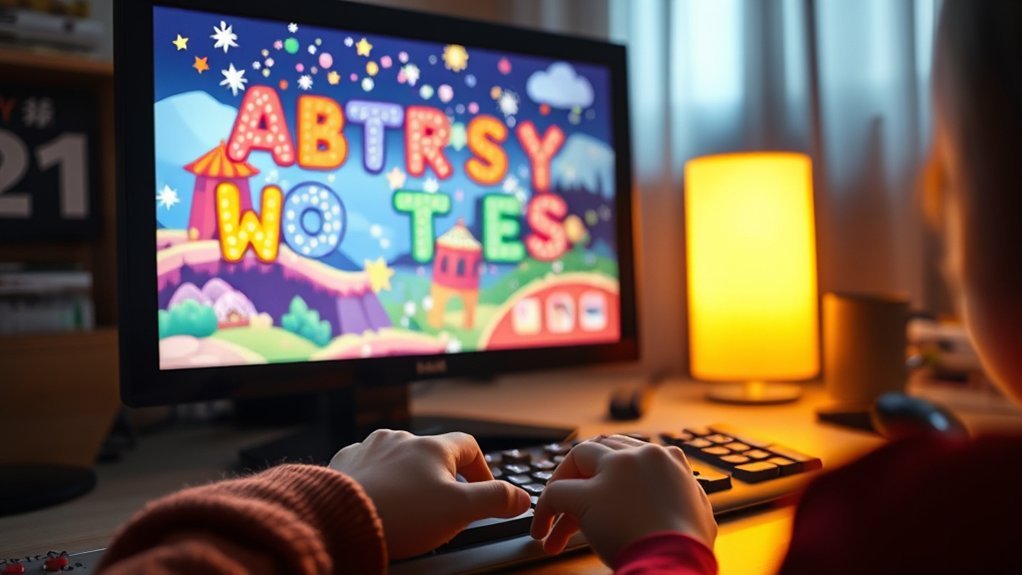
When you combine storytelling with spelling practice, online adventure games transform education into genuine entertainment your kids will request by name. These interactive spelling apps place children in fantasy worlds where correct spelling unlocks new levels, defeats villains, or rescues characters. Your kids won’t realize they’re learning because they’re invested in the narrative.
Popular platforms feature quest-based challenges where spelling accuracy determines success. Characters gain powers, earn rewards, and progress through increasingly complex storylines.
Many apps include online spelling competitions where children compete against peers nationwide, adding excitement through leaderboards and achievements.
The gamification approach works because it provides immediate feedback and tangible progress. Your child sees real consequences for their spelling choices, making each word memorable and meaningful within the game’s context.
Playdough Letter Building
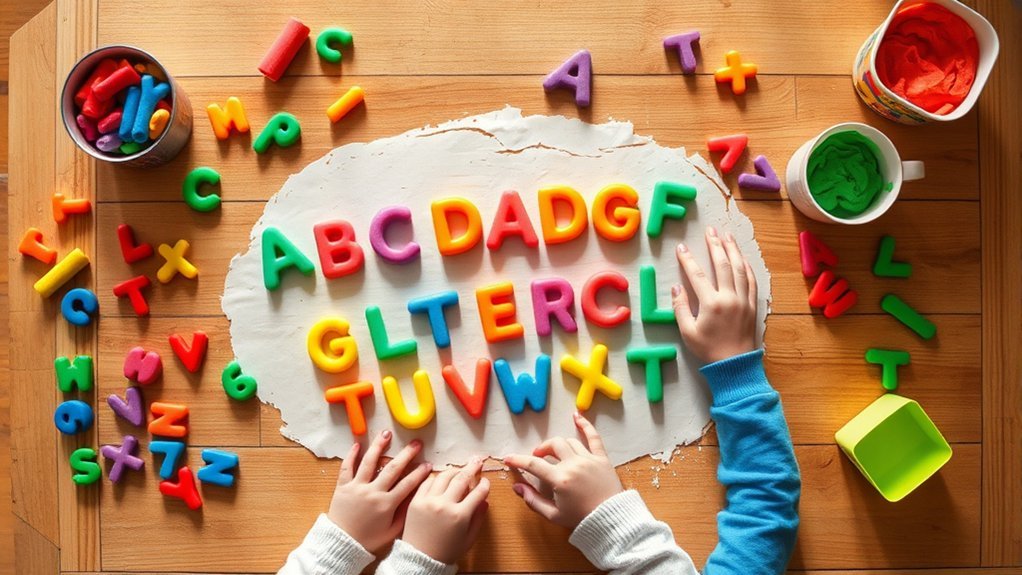
Tactile learning transforms spelling from an abstract concept into something your child can literally grasp and mold. Playdough letter building engages multiple senses simultaneously, reinforcing memory retention through hands-on manipulation.
When your child forms playdough letters, they’re developing fine motor skills while internalizing letter shapes and spelling patterns.
This creative spelling approach works exceptionally well for kinesthetic learners who struggle with traditional methods:
- Roll and shape each letter individually, then arrange them to form complete words
- Create 3D letter sculptures that stand upright for enhanced visual impact
- Mix colors to differentiate between vowels and consonants
- Build entire word families using the same base patterns
You’ll find this multisensory technique particularly effective for memorizing tricky words. The physical act of molding each letter creates stronger neural pathways than passive writing alone.
Spelling Hopscotch
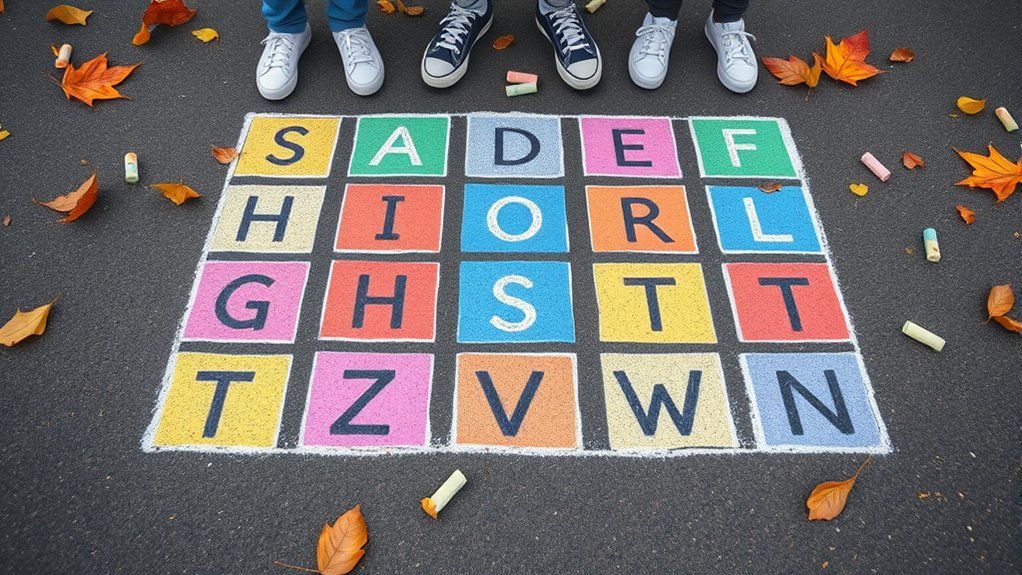
Transform your driveway or sidewalk into an active learning zone where spelling meets physical movement. Draw a hopscotch grid with chalk, placing one letter in each square instead of numbers. Call out a word, and your child hops to each letter in sequence to spell it correctly.
You can create spelling variations by designing multiple grids with different letter arrangements or color-coding vowels and consonants.
Advanced hopscotch techniques include adding bonus squares for silent letters or creating branching paths where kids choose between correct and incorrect spellings.
This game burns energy while reinforcing letter recognition and word formation. Your kinesthetic learners especially benefit from this approach, as they’re physically jumping through each spelling pattern, making the learning experience memorable and engaging.
Story Creation With Target Words
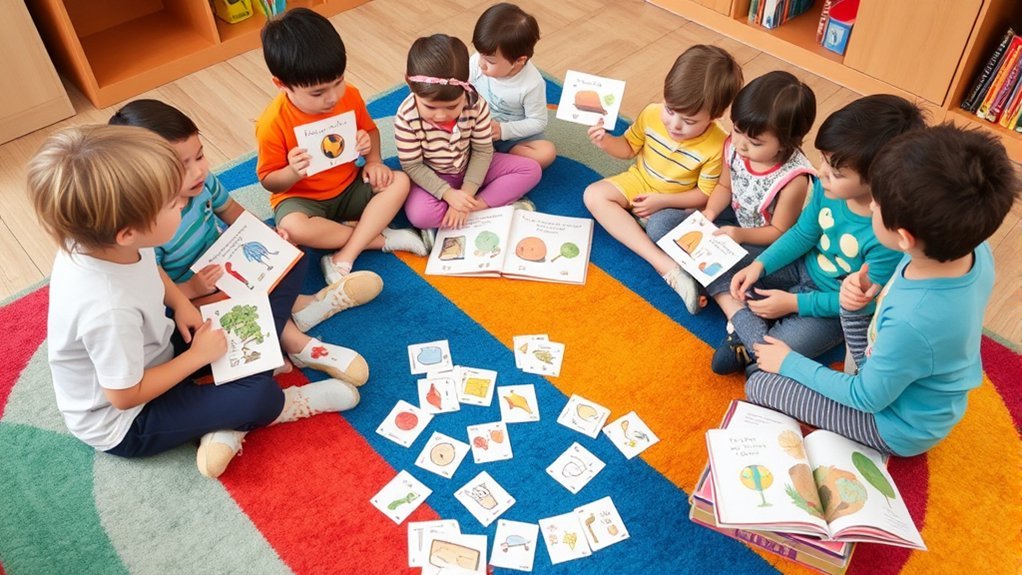
By combining imagination with spelling practice, you’ll help your child develop both creative writing skills and accurate word usage. Story creation with target words transforms vocabulary expansion into an adventure where your child weaves spelling words into original narratives.
Story creation transforms spelling practice into creative adventure, helping children master vocabulary through imagination and personal narrative engagement.
Give your child 5-10 spelling words and challenge them to craft a story incorporating each term. This approach reinforces correct spelling while encouraging creative storytelling.
Effective implementation strategies:
- Start with shorter stories (3-5 sentences) for younger children, gradually increasing complexity.
- Let them illustrate their stories to deepen engagement with the words.
- Create theme-based challenges like mysteries, adventures, or fairy tales.
- Have them read their stories aloud to practice pronunciation alongside spelling.
This method makes spelling memorable through context and personal connection.
In case you were wondering
How Often Should My Child Practice Spelling Each Week?
You should aim for 3-5 practice sessions weekly to establish ideal spelling frequency. Each practice duration works best at 10-15 minutes to maintain your child’s focus and enthusiasm. Short, consistent sessions beat lengthy, infrequent cramming every time.
What Age Is Best to Start Teaching Spelling to Children?
You can start teaching spelling around age 5-6 when your child begins kindergarten. This timing perfectly aligns with phonics integration and early literacy development. However, you’ll want to adjust based on your child’s individual readiness and interest level.
How Do I Assess My Child’s Spelling Progress Over Time?
Research shows kids who track their spelling retain 30% more words long-term. You’ll effectively monitor growth through regular spelling assessments—weekly tests, writing samples, and digital apps. Tracking progress with charts helps you celebrate improvements and identify challenging patterns.
Should Spelling Practice Be Done Before or After Reading Activities?
You’ll get better results doing spelling practice after reading activities. Reading builds phonetic awareness and comprehension first, creating context for word patterns. Then spelling reinforces what they’ve learned, making connections stronger and more meaningful for retention.
Can Spelling Games Replace Traditional Spelling Homework Assignments?
Yes, you can use spelling games as homework alternatives since they offer equal spelling effectiveness while boosting engagement. They’re not just replacements—they’re often superior because your child’ll retain words better through interactive, enjoyable practice methods.
Conclusion
You’ve explored creative games, you’ve discovered active challenges, and you’ve learned engaging strategies to transform spelling practice. Now it’s time to put these proven methods into action. Whether you’re racing with magnetic letters, hopping through words on the driveway, or building stories together, you’re not just teaching spelling—you’re creating memories, you’re building confidence, and you’re fostering a genuine love for language that’ll last a lifetime.