What Recycled Crafts Make Kids Happiest?
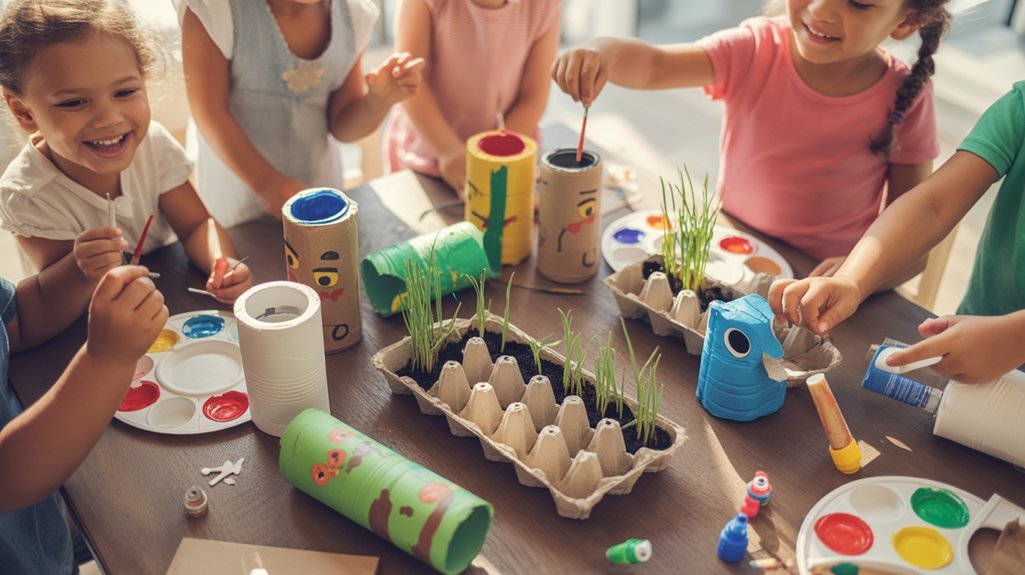
Kids find the most joy in recycled crafts they can actually play with rather than just display. You’ll see their faces light up when cardboard boxes become castles and playhouses, plastic bottles transform into rockets and birdfeeders, and egg cartons turn into puppets and creatures. Tin can robots, homemade musical instruments from recyclables, and paper roll puppet theaters also rank high because they encourage imaginative storytelling and interactive play. The guide below explores each project’s unique benefits and how to create them with materials you already have at home.
Key Takeaways
- Cardboard box creations like castles, playhouses, and vehicles spark imaginative play and adventurous storytelling in children.
- Plastic bottle crafts such as colorful flowers and birdfeeders let kids see their creative design choices come alive.
- Egg carton animals including caterpillars, ladybugs, and monsters encourage hands-on creativity with dimensional texture and expressive designs.
- Tin can robots promote problem-solving skills while transforming everyday trash into personalized mechanical toys kids can rebuild.
- Musical instruments from recyclables enable rhythm exploration and collaborative performances that bring joy through sound and teamwork.
Cardboard Box Creations That Spark Imagination
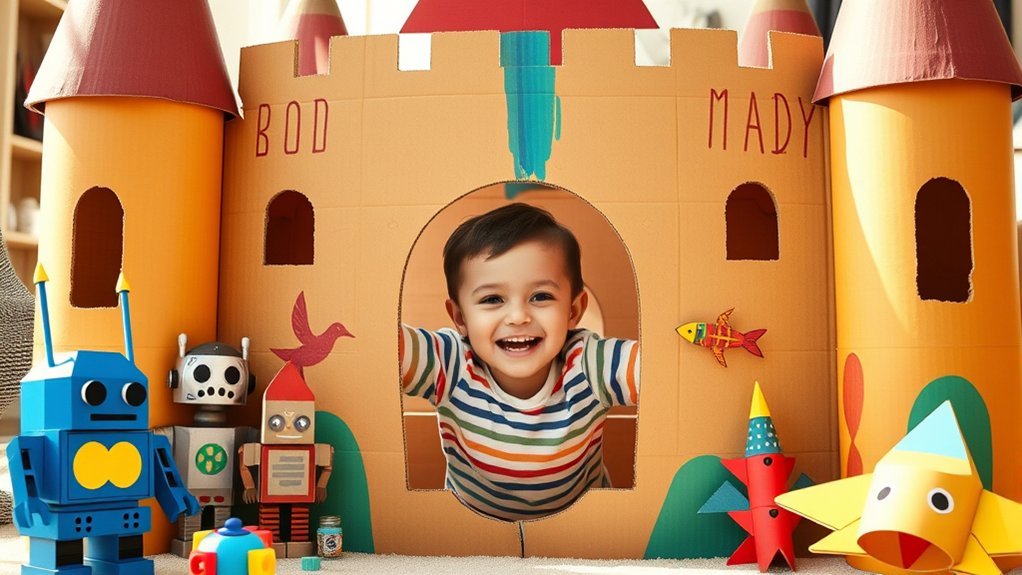
While most people see cardboard boxes as trash destined for the recycling bin, kids recognize them as blank canvases for unlimited creative potential.
You’ll discover that transforming boxes into cardboard castles lets children create medieval fortresses complete with towers and drawbridges. These structures become settings for epic adventures and royal tales.
Playhouses offer cozy hideaways where kids develop social skills through pretend domestic scenarios. You can help them add windows, doors, and decorative touches that make these spaces truly their own.
Imaginative vehicles like rockets, race cars, and submarines transport children to distant galaxies and ocean depths.
Meanwhile, puppet theaters provide stages for storytelling performances, encouraging creative expression and confidence. Each project develops problem-solving abilities while keeping materials from landfills.
Plastic Bottle Transformations Kids Love

Just as cardboard boxes offer creative possibilities, plastic bottles present another treasure trove of crafting opportunities that kids can’t resist.
You’ll find that plastic bottle flowers rank among the most popular projects. Kids cut and shape the bottles into vibrant petals, then paint them in rainbow colors. These permanent blooms make excellent gifts for grandparents.
Plastic bottle birdfeeders transform recycling into wildlife care. Your children will love cutting openings, adding perches from wooden spoons, and decorating the exteriors. Once hung outside, they’ll excitedly monitor visiting birds daily.
Turning plastic bottles into birdfeeders combines creative crafting with environmental responsibility, giving children hands-on experience in wildlife conservation and sustainable living.
Bottle rockets, piggy banks, and bowling pins offer additional entertainment. You’re teaching sustainability while fostering creativity.
The clear material lets kids see their design choices come alive, making each transformation uniquely rewarding and environmentally conscious.
Egg Carton Animals and Creatures
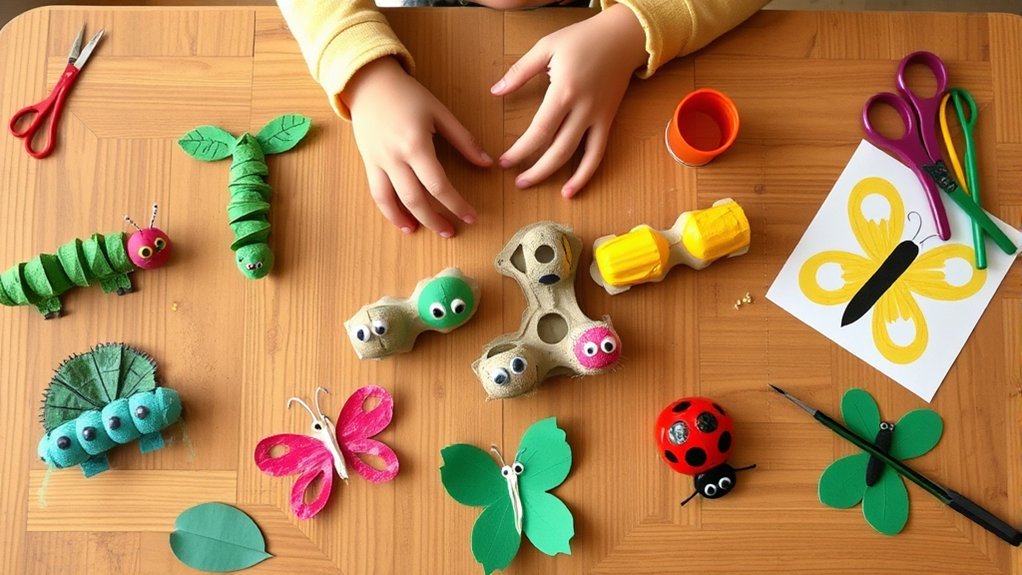
Egg cartons transform into delightful creatures with just a few snips of scissors and dabs of paint. You’ll find that individual cups become perfect bodies for caterpillars, spiders, and adorable ladybugs.
Cut them apart, let your kids paint them in vibrant colors, and add pipe cleaner legs or googly eyes.
Egg carton puppets bring stories to life when you attach popsicle sticks to painted cups. Your children can create entire animal families or stage puppet shows with their handmade characters.
Egg carton monsters are particularly popular—kids love designing scary-silly faces with felt teeth, yarn hair, and mismatched button eyes.
The texture of cardboard cartons adds dimension that paper crafts can’t match. You’ll watch your kids’ imaginations soar as they spot animal potential in every compartment.
Tin Can Robots and Character Builds
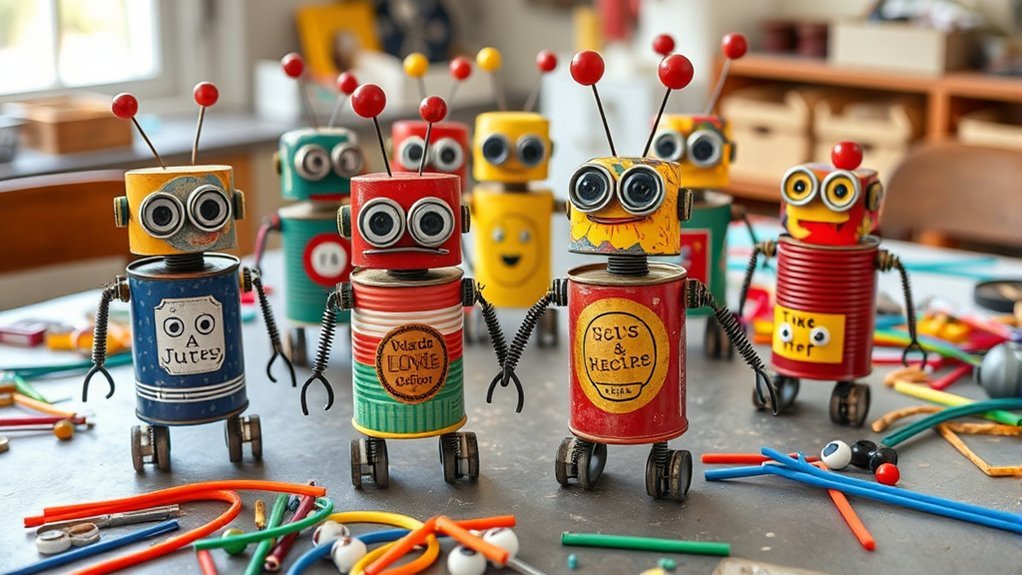
Empty soup and vegetable cans become building blocks for your child’s mechanical masterpieces. You’ll watch creativity soar as they stack, connect, and paint these cylinders into expressive robots and characters.
Hot glue helps younger crafters attach googly eyes, pipe cleaner arms, and bottle cap details, while older kids can drill small holes for more complex wire connections.
These projects naturally lead to tin can challenges where children design robots with specific functions or personalities. You can organize robot competitions at home, judging creations on originality, stability, or storytelling elements.
Kids learn problem-solving as they balance structures and incorporate found materials like cardboard wings or fabric capes. The satisfaction of transforming trash into treasured toys makes this craft endlessly repeatable.
Paper Roll Puppets and Playsets
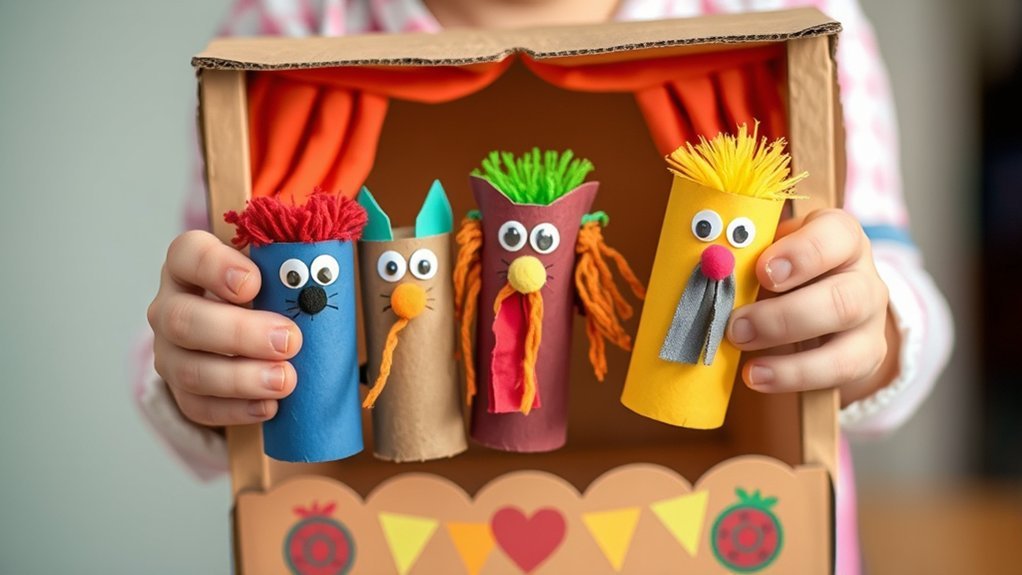
Toilet paper and paper towel tubes offer another versatile canvas for character creation, this time with built-in puppet potential. You’ll find kids naturally gravitate toward making paper roll animals—from snakes and caterpillars to owls and lions. The cylindrical shape provides instant structure, requiring only construction paper, googly eyes, and markers to bring creatures to life.
What elevates this craft is pairing puppets with homemade puppet theaters. You can construct stages from cardboard boxes, creating curtains from fabric scraps and decorating backdrops with paint.
Kids won’t just make individual characters; they’ll develop entire storylines and performances. The combination transforms recycling into immersive play.
Children become directors, performers, and designers simultaneously. They’re building fine motor skills while exercising imagination, proving that entertainment doesn’t require expensive toys—just creativity and cardboard tubes.
Musical Instruments From Household Recyclables
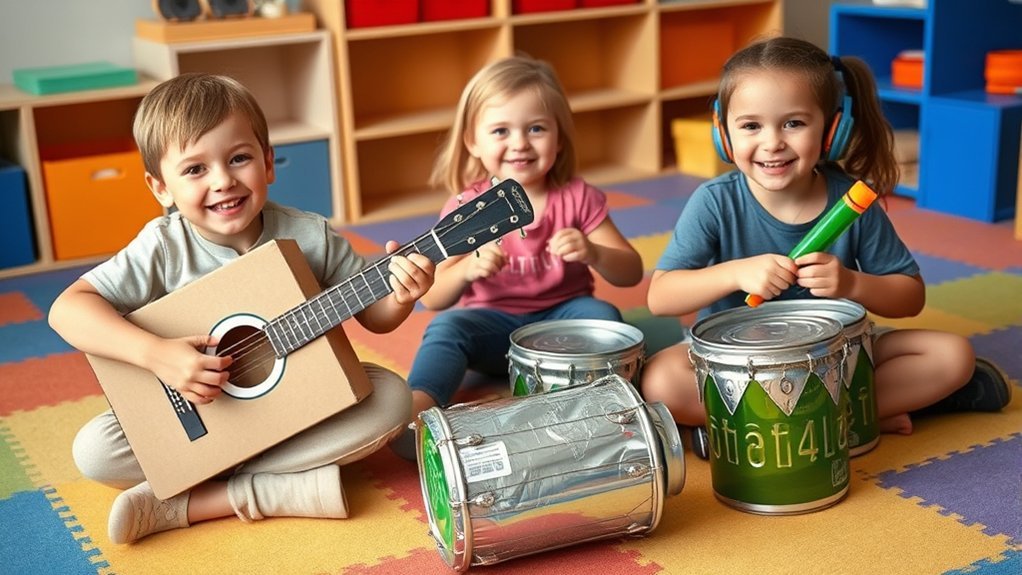
Your kitchen and recycling bin contain a complete orchestra waiting to be assembled. Transform empty containers into homemade maracas by filling plastic bottles or metal cans with rice, beans, or buttons. Seal them tightly and decorate with colorful tape or paint.
Create cardboard guitars using tissue boxes as sound chambers. Stretch rubber bands across the opening for strings, and attach paper towel tubes as necks. Kids can strum different melodies while customizing their instruments with markers and stickers.
Tin cans become drums when turned upside down, while glass bottles filled with varying water levels produce different musical notes. Arrange them in sequence to create a water xylophone.
These instruments encourage rhythm exploration, musical creativity, and collaborative band performances that’ll keep children entertained for hours.
Milk Jug Planters and Garden Projects
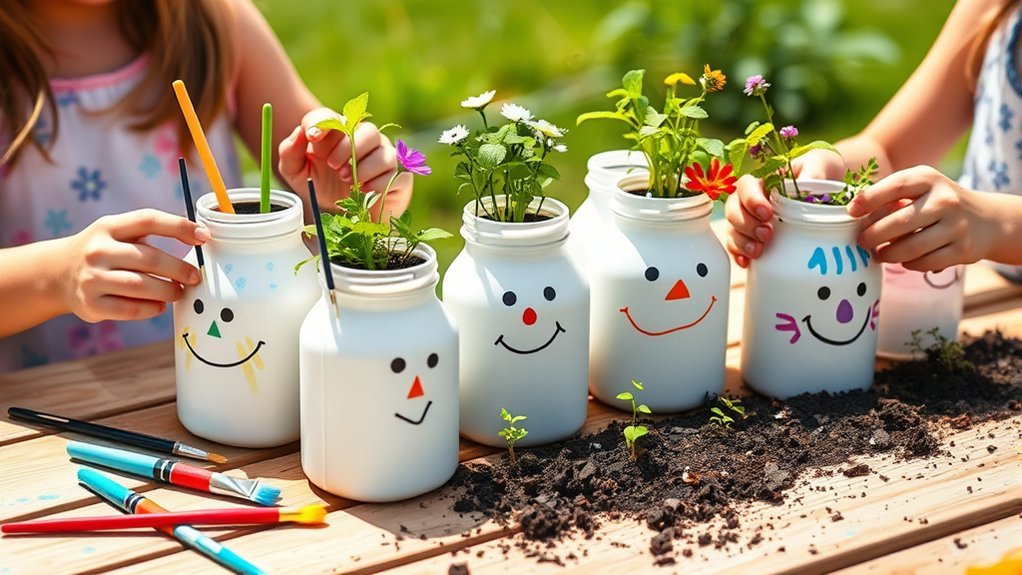
When those gallon milk jugs pile up in your recycling bin, they’re perfect candidates for creative garden projects. You’ll transform these containers into vibrant milk jug gardens that teach kids about nature and sustainability.
Cut jugs horizontally to create simple planters, or vertically for self-watering systems with clever wicking methods. Kids love decorating their containers with permanent markers, creating cheerful faces or colorful patterns before adding soil.
Transform ordinary milk jugs into custom planters by cutting them horizontally or vertically, then let kids unleash their creativity with colorful decorations.
They’ll experience creative planting firsthand by growing herbs, flowers, or vegetables in their personalized containers. You can also cut jugs into scoops, watering cans, or protective cloches for seedlings.
These projects combine artistic expression with environmental education. Children develop responsibility by maintaining their gardens while learning that everyday items deserve second lives rather than landfill space.
Magazine and Newspaper Collage Art
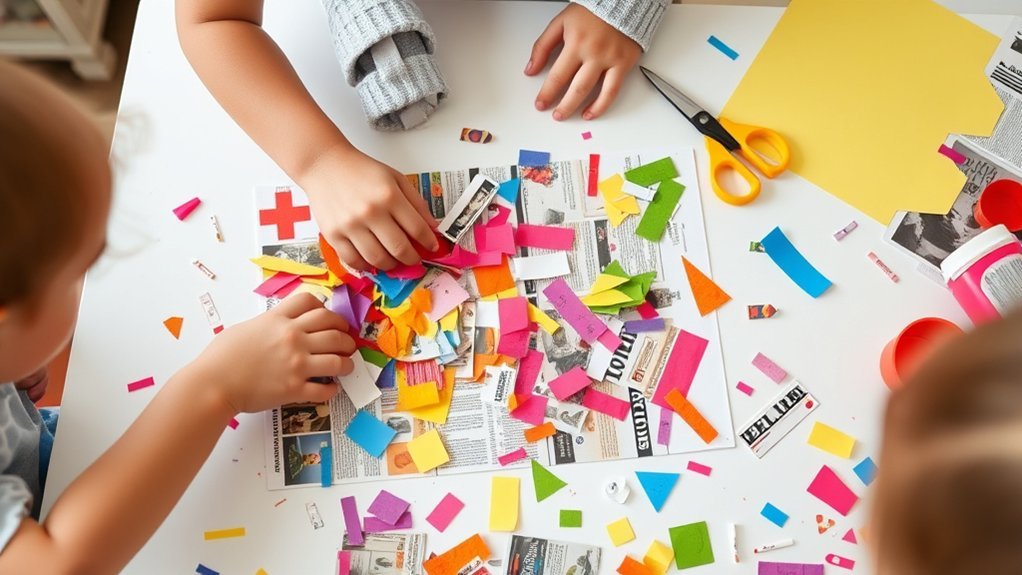
Stacks of old magazines and newspapers offer endless possibilities for colorful collage creations. You’ll help your kids develop artistic skills while teaching them about reusing materials. Tear or cut images, words, and patterns from various sources to create unique compositions on cardboard or poster board.
Your children can explore themes like nature, animals, or abstract designs by layering different paper types. They’ll discover texture exploration through combining glossy magazine pages with rough newsprint. This contrast adds depth and visual interest to their artwork.
Encourage them to overlap pieces, creating colorful layers that tell stories or express emotions. You can extend this activity by making greeting cards, bookmarks, or decorative frames.
It’s an inexpensive craft that promotes creativity while keeping recyclables out of landfills.
In case you were wondering
What Age Groups Are Best Suited for Recycled Craft Activities?
You’ll find age recommendations span from toddlers to teens, though crafting preferences vary significantly. Preschoolers (3-5) enjoy simple projects, elementary kids (6-11) handle moderate complexity, and teenagers (12+) tackle advanced designs. You should match difficulty to your child’s developmental stage.
How Do You Safely Clean Recyclables Before Kids Use Them for Crafts?
You’ll want to wash recyclables with hot, soapy water, then rinse thoroughly. Remove sharp edges and labels. Key safety tips include air-drying completely and inspecting for cracks. These cleaning methods ensure materials are craft-ready and child-safe.
What Basic Supplies Are Needed Alongside Recyclables for Successful Craft Projects?
You’ll shockingly need *actual* basic crafting supplies beyond trash—how revolutionary! Stock essential tools like scissors, glue, tape, markers, and paint. Yes, cardboard boxes alone won’t magically transform themselves into masterpieces without proper adhesives and decorating materials.
How Long Do Recycled Crafts Typically Last Before Falling Apart?
Craft longevity depends on material durability and how you reinforce them. You’ll find simpler projects last days to weeks, while well-constructed crafts with proper sealing can survive months or even years with careful handling and storage.
Are There Educational Benefits to Making Crafts From Recycled Materials?
Yes, you’ll boost your child’s cognitive development through problem-solving and creativity while building environmental awareness. They’ll learn resource conservation, understand recycling’s importance, and develop critical thinking skills as they transform everyday materials into something new.
Conclusion
You’ve now got eight fantastic ways to turn your recycling bin into a creativity goldmine. Studies show that 87% of children engage more deeply with toys they’ve made themselves compared to store-bought options. That’s powerful! When you let your kids transform everyday recyclables into imaginative creations, you’re not just keeping waste out of landfills—you’re building their confidence, problem-solving skills, and creative thinking. So grab those cardboard boxes and plastic bottles, and watch the magic unfold.