What Nature Activities Build Your Child’s Confidence?
Turn any park trip into a “secret mission” walk—hunt for funny-shaped rocks, weird sounds, or five things that aren’t green. Let your kid climb (safely), balance on logs, scramble over rocks, and wrestle up grassy hills. Plant a tiny garden or herb pot they’re fully in charge of. Make nature art with sticks, leaves, and mud, then snap photos like it’s their museum. Want more ways to turn dirt and puddles into a confidence factory?
Key Takeaways
- Turn everyday walks into playful “missions” where kids make choices, solve small challenges, and lead the adventure.
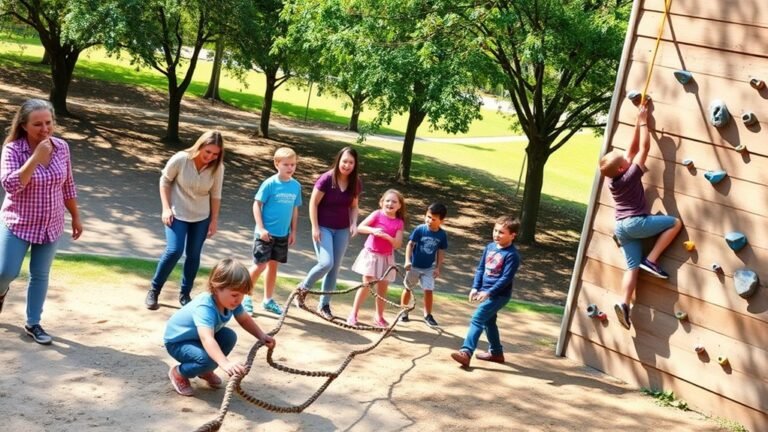
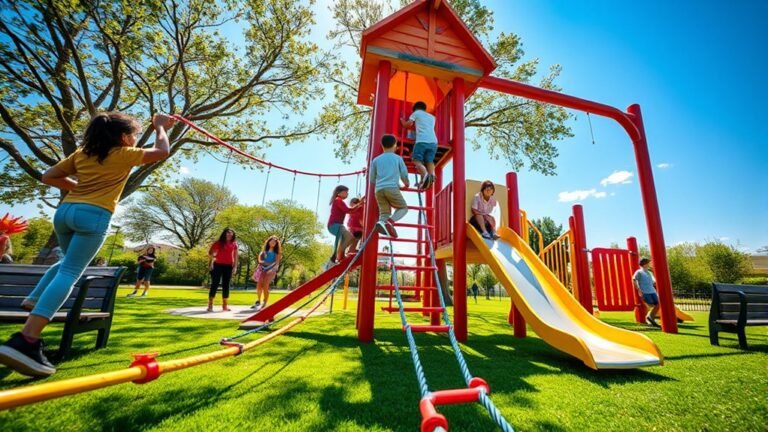
- Encourage safe climbing, balancing, and rough-and-tumble play to build physical courage, resilience, and body confidence.
- Start simple gardening projects so children can nurture plants, track growth, and feel proud of caring for something living.
- Create nature art and crafts that showcase your child’s ideas, asking open-ended questions and celebrating each creation as unique.
- Set up outdoor obstacle courses and team challenges that require problem-solving, cooperation, and persistence to succeed.
Turning Walks Into Mini Adventures
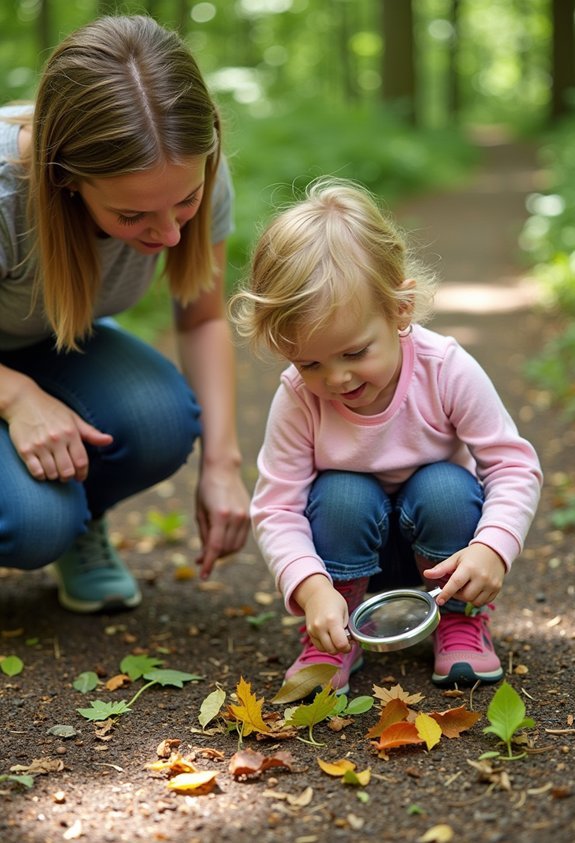
Even a “boring” walk around the block can turn into a full-on mini adventure if you treat it like a mission instead of just exercise.
Tell your kid you’re explorers on a secret quest. Suddenly you’re Indiana Jones, but with snacks and hand sanitizer.
Announce a secret explorer mission, and suddenly your walk needs snacks, maps, and dramatic whispers.
Give simple “missions”: find three kinds of leaves, spot something red, listen for the weirdest sound.
When you’re exploring trails, pretend each turn is a choice in a video game. Left path? Dragon. Right path? Magical ice cream portal. Let your child pick.
You can also hunt for “mystery markers” by discovering landmarks—cracked sidewalk hearts, twisty trees, grumpy mailboxes.
They’ll start to notice, decide, and lead, and that tiny walk starts shouting, “Hey, I can do things, all by myself!”
Confidence Through Climbing, Balancing, and Rough-and-Tumble Play
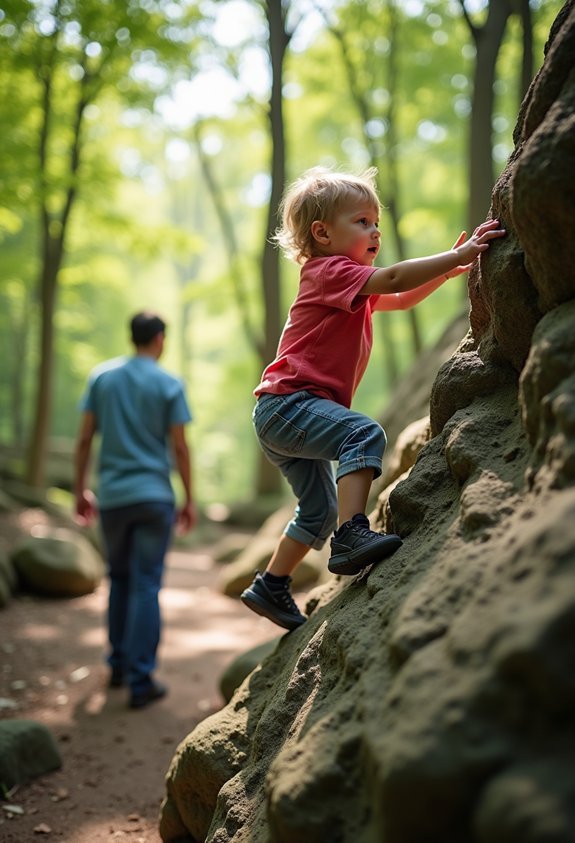
While screens are busy turning kids into potatoes, climbing and rough-and-tumble play quietly turn them into warriors. When your child hauls themselves up a tree branch, they’re not just burning energy; they’re learning, “I can do hard things.”
You can coach simple climbing techniques: three points of contact, test each branch, eyes where you’re going, not where you’re scared of falling.
Try this outside:
- Log walking: turn fallen trunks into balancing games. First slow, then add goofy challenges, like tiptoes or silly walks.
- Rock scrambling: low boulders only; you spot while they choose the path.
- Hill wrestling: rolling, gentle tackling, tons of laughter, clear rules.
- Obstacle course: mix stumps, rocks, and safe jumps so they feel fast, strong, and bold.
Gardening Projects That Grow Self-Belief
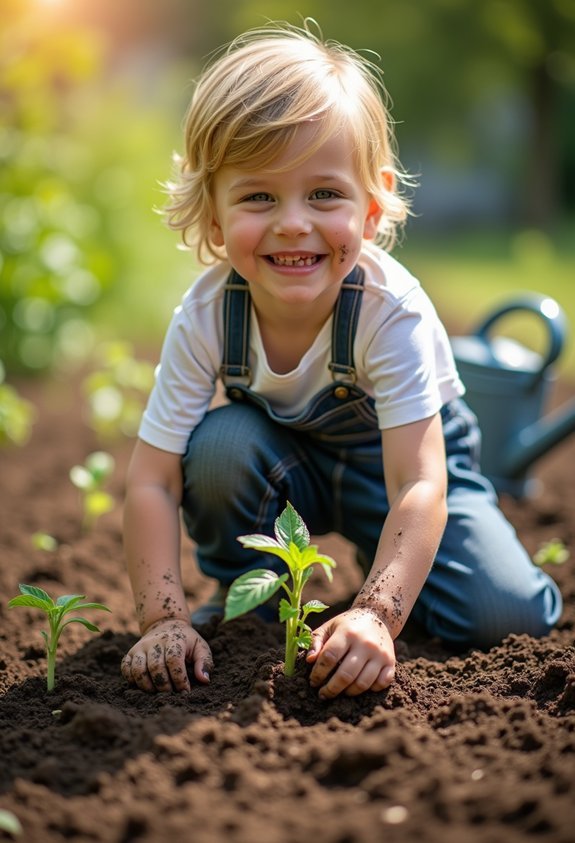
Because nothing boosts a kid’s ego like keeping a tiny thing alive, gardening is basically confidence training in dirt form.
You hand your child seeds, and suddenly they’re in charge of a mini kingdom. Herb gardening is a great starter. Tiny pots on a windowsill, big sense of power. They water, they sniff, they boss the basil around. When it doesn’t die, they think, “Whoa, I did that.”
Next level is vegetable planting. Give them a small patch or a big pot that’s theirs alone. Let them pick what to grow, make the labels, track the sprouts.
Every new leaf is proof they can stick with something, solve problems, and actually make good things happen. Then they eat it and feel like total legends.
Nature Crafts That Celebrate Your Child’s Ideas
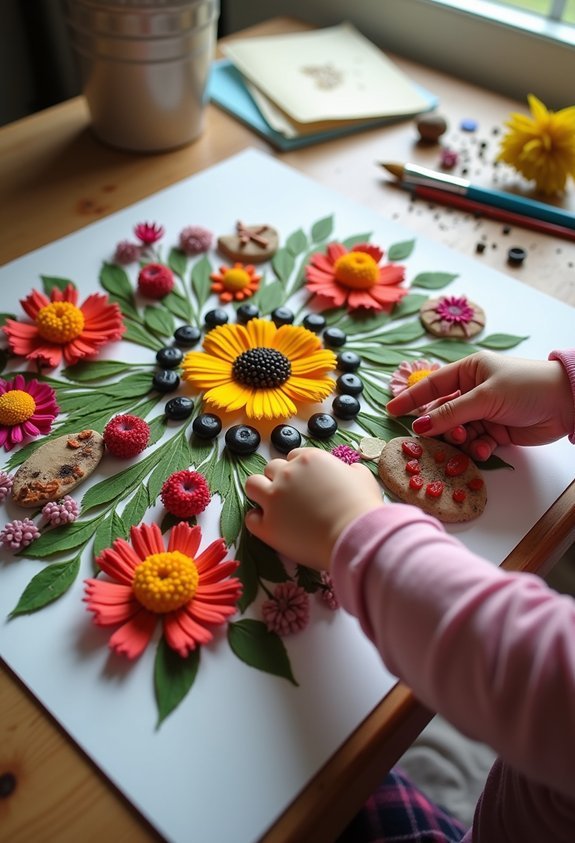
One of the fastest ways to supercharge your kid’s confidence is to let them make weird, wonderful stuff out of leaves, sticks, and dirt and then treat it like it belongs in a museum.
Celebrate every mud pie and stick sculpture like it’s a masterpiece, and watch their confidence skyrocket
When you cheer on their nature art, you’re saying, “Your ideas matter. A lot.” That’s huge.
Here are easy ways to celebrate their creative expression outdoors:
- Set up a “forest studio” with a blanket and let your kid design leaf crowns, stick people, or rock pets.
- Snap photos of their creations and make a “gallery” on the fridge.
- Ask questions like, “Whoa, what’s happening in this scene?” instead of judging or fixing.
- Give their project a title and clap like you’ve just seen a Broadway show.
Outdoor Challenges That Build Problem-Solving Skills
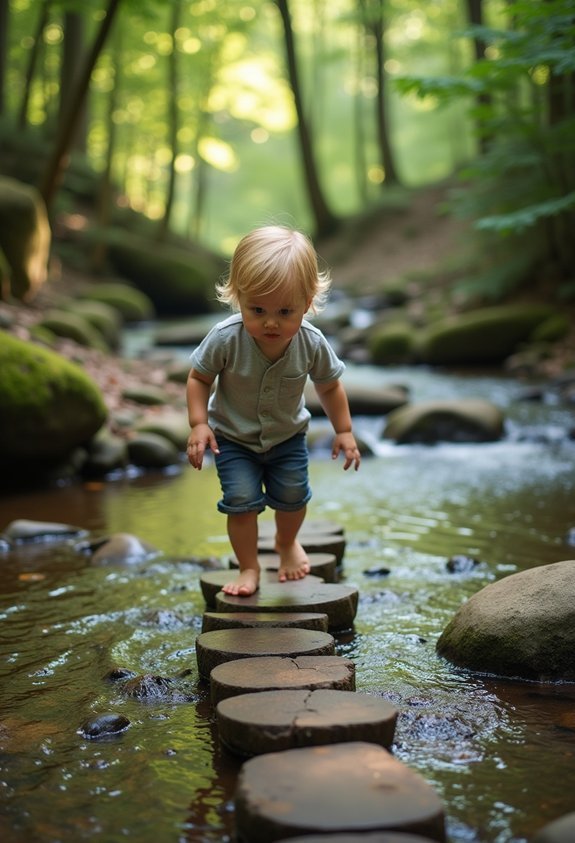
Two magical things happen when you toss your kid outside with a challenge: they get busy solving problems, and you get five minutes to drink your coffee hot.
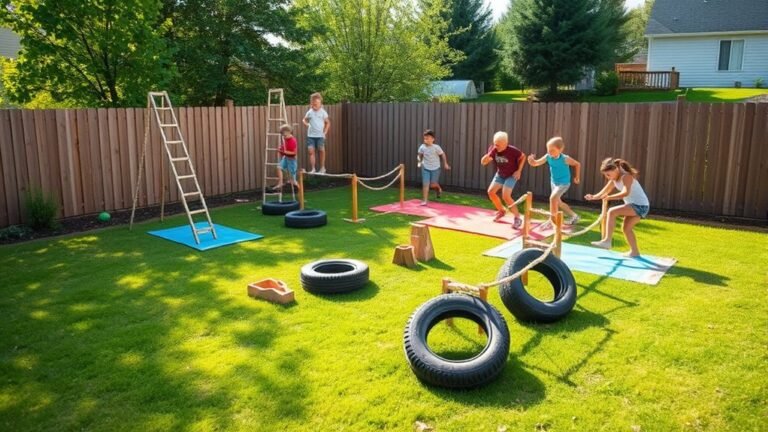
Start with simple obstacle courses in the yard. Lay out sticks to jump over, a log to balance on, a rope to crawl under, maybe a bucket to toss pinecones into. Don’t explain everything. Just say, “Here’s the course. Go!” and watch their brain light up.
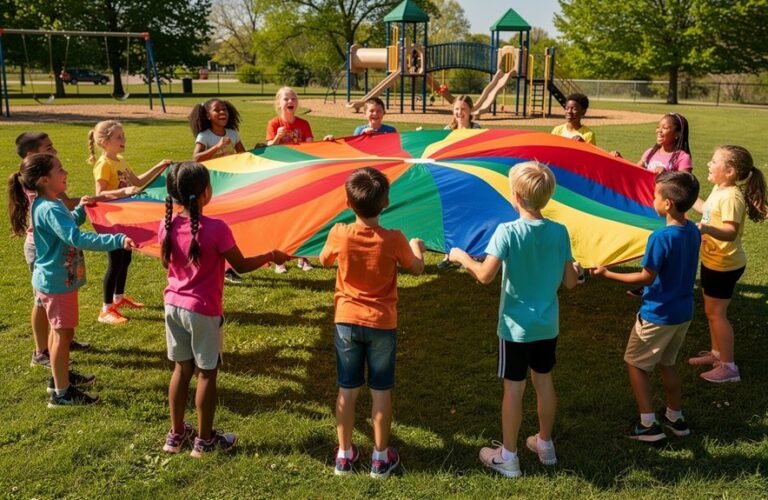
Next, try team challenges. Ask siblings or friends to move water from one bucket to another using only cups, sponges, or even their hands. They’ll argue, test ideas, fix mistakes, and learn to listen.
You’ll see it: that proud, “We did it!” grin. That moment rewires how they see themselves.
Using Wildlife Watching to Foster Curiosity and Pride
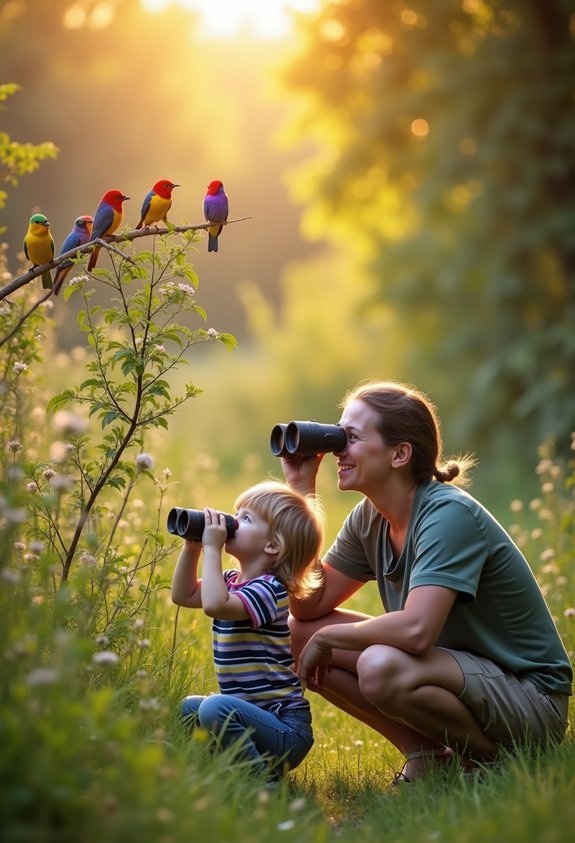
Before you buy another noisy toy with flashing lights, walk outside and let your kid stare at a bug for five minutes—it’s like watching their brain plug into the universe.
Wildlife exploration turns tiny moments into “Whoa, did you SEE that?!” victories. Your child spots a bird, remembers its color, and suddenly feels like the smartest detective alive.
Watching wildlife turns tiny glances into giant “I did it!” moments of kid confidence
Here’s how to make watching critters boost confidence:
- Pick a “mission,” like finding three birds or one weird bug.
- Let your kid lead the route, even if it’s the long way.
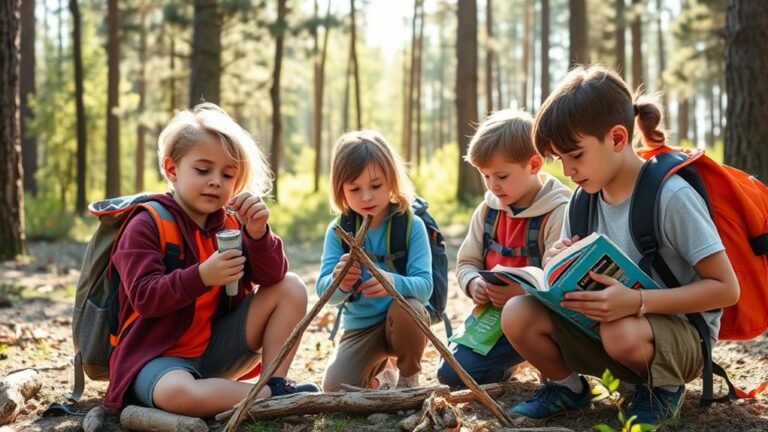
- Start simple nature journaling: quick sketches, funny names, bold colors.
- Celebrate every find like it’s a rare treasure, not “just” a squirrel.
They’ll walk home taller, like a tiny, proud scientist.
Simple Daily Habits to Keep Confidence Blooming Outdoors
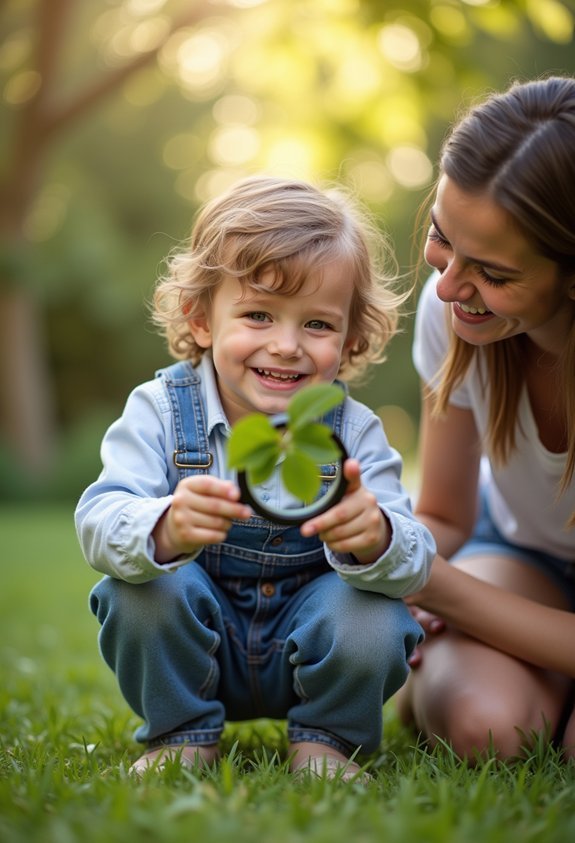
Even if your days feel like a speed-run of alarms, snacks, and “Where are your shoes?!” you can still sneak in tiny outdoor habits that quietly pump up your kid’s confidence.
Walk the long way to the car and let your child stomp in every leaf pile like it’s their personal fan club. Point out one cool thing—loud crow, weird cloud, heroic dandelion in the sidewalk. That’s a quick hit of wonder.
Try nature journaling with five-minute sketches on the porch; sloppy drawings totally count. Build mindful moments, too. Pause, close eyes, ask, “What three sounds can you hear?”
When your child notices more, they feel capable, brave, and wildly alive out there. Over time, these tiny rituals stack up into serious inner courage.
In case you were wondering
How Can Nature Activities Support Children With Social Anxiety or Shyness Around Peers?
You can use nature activities to expose your child to peers, encouraging shared exploration, cooperative games, and outdoor routines that build social skills, promote anxiety reduction, boost self-trust, and make interactions feel safer and enjoyable.
What Low-Cost Nature Activities Work for Families Without Access to Large Green Spaces?
You can use small spaces: balcony herb pots, sidewalk tree-watching, cloud-spotting, urban foraging for fallen leaves or seeds, nature scavenger walks around the block, where your child photographs colors, insects to spark curiosity and confidence.
How Do I Adapt Nature Confidence-Building Activities for Children With Physical Disabilities?
Gentle, growing goals guide you: you’ll choose accessible paths, use adaptive equipment like all-terrain wheelchairs, simplify tasks, spotlight strengths, and shape inclusive games where every child scouts, senses, and shares nature, celebrating effort over endurance.
Are There Specific Safety Guidelines for Supervising Multiple Kids During Outdoor Confidence Activities?
Yes, you should follow clear safety protocols: set boundaries, assign buddies, keep ratios low, pre-teach rules, carry first-aid, and continually headcount. Use layered group supervision so adults cover zones, transitions, bathrooms, emergencies, and departures.
How Can I Track My Child’s Confidence Growth From Repeated Nature Experiences Over Time?
You can track your child’s confidence by noting that kids who journal progress increase persistence by 20%; use simple confidence assessment checklists, photos, reflection prompts, and growth tracking charts to compare independence, risk‑taking, and problem‑solving.
Conclusion
So that’s the deal: you’re not just “taking the kids outside.” You’re basically running a low-key confidence boot camp with mud, sticks, and snack breaks. When you turn walks into quests, climbing into “mountain missions,” and bugs into tiny science projects, your child starts to feel ten feet tall. You don’t need fancy gear or epic plans—just show up, say yes a lot, and let nature do the heavy lifting.