17 Fun Games That Build Self-Control Skills
If you want your kids to stop losing it over the blue cup and actually wait their turn, you need sneaky “brain gym” games. Think Freeze Dance, Red Light Green Light, Simon Says with silly twists, Silent Ball, Musical Chairs with extra waiting, “Would You Rather?” debates, slow-motion races, secret handshakes, and wild storytelling chains. They’ll practice self-control, focus, and patience while cracking up—and you’ll get a front-row seat to the chaos upgrade. Keep going for the full playbook.
Key Takeaways
- Use movement games like Freeze Dance and Red Light, Green Light to practice stopping, starting, listening, and physical self-control in a playful way.
- Play memory and concentration games, such as Silent Ball and card-flipping challenges, to strengthen focus, patience, and impulse control.
- Use Charades and Simon Says variations to train kids to pause, listen carefully, plan actions, and resist reacting to trick commands.
- Choose cooperative board games and “Would You Rather?” to build decision-making, turn-taking, and thoughtful consideration of consequences.
- Incorporate creative, collaborative activities like slow-motion races, secret handshakes, and storytelling to practice waiting, no-interrupt rules, and coordinated self-regulation.
Freeze Dance Fun
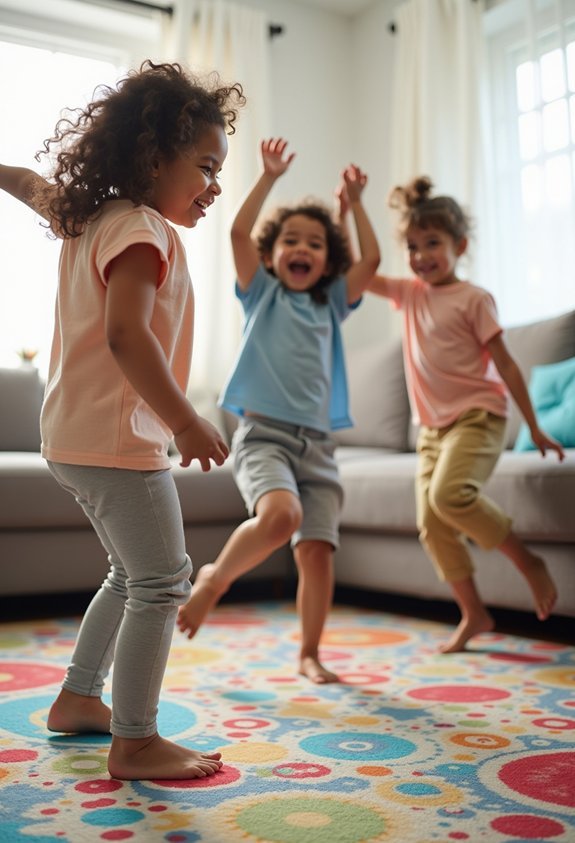
Even though it looks like pure chaos, Freeze Dance is secretly a genius way to practice self-control. You blast music, dance like a maniac, then slam to a stop the second the sound cuts. Your brain’s screaming, “Keep dancing!” but you stay frozen, even when you’re wobbling or mid–chicken wing. That’s self-control training in disguise.
To level it up, you add simple dance techniques. Maybe you spin, clap, or slide on the beat. Now you’re not just stopping and starting; you’re building rhythm awareness and focus.
If you move early, you’re out. If you laugh and fall over, you’re out. Soon you’re listening harder, thinking quicker, and learning to pause before you act—without a boring lecture. Plus, everyone looks ridiculous, so nobody feels embarrassed.
Classic Red Light, Green Light
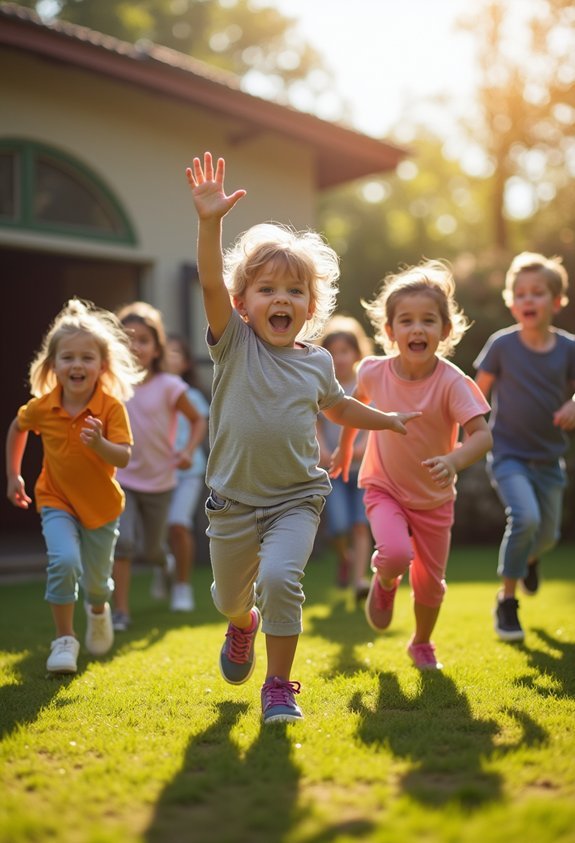
Stomp to a stop, or you’re toast. That’s the whole mood of Classic Red Light, Green Light. You stand with your back turned, yell “Green light!” and everyone bolts toward you like they’re racing for the last slice of pizza.
Then you whip around and shout “Red light!” If they’re still moving, they’re out. Drama. Tears. Laughter.
To build self-control, crank up your red light strategies. Hold the red a little longer. Toss in fake coughs or sneezes to tempt kids to peek or wiggle.
Then play with green light variations. Try “slow-motion green,” “tiptoe green,” or “giant steps green.” Each switch forces kids to pause, reset, and move with control instead of pure chaos. They practice waiting, listening, and stopping bodies on command.
Simon Says With a Twist
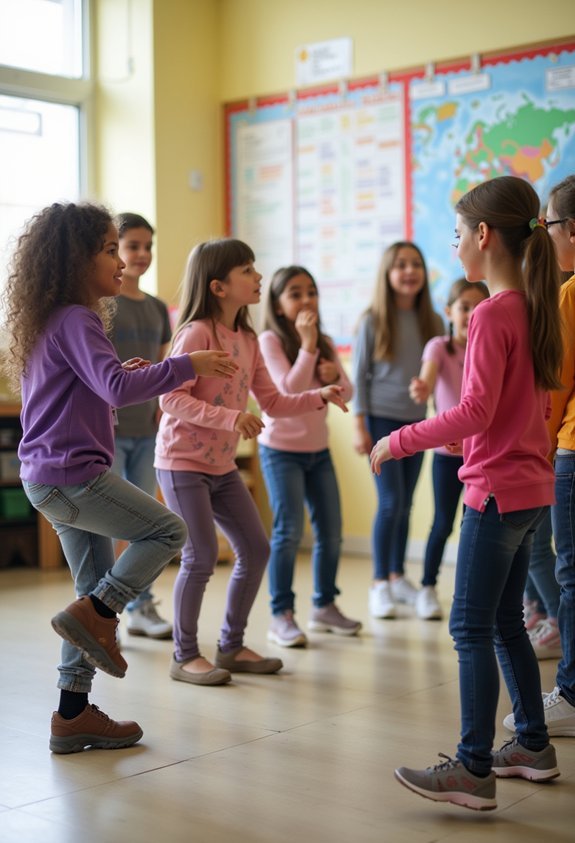
While Red Light, Green Light is all about stopping on command, Simon Says is the game that exposes who’s actually listening and who’s just copying their friends.
You can turn it into a secret self-control workout with a few wild simon says variations. First rule: talk fast. Kids have to slow their bodies while their brains race to keep up.
Toss in creative commands like, “Simon says freeze with one eyebrow up,” or “Simon says laugh silently for five seconds.” Watch them crack up while still trying to follow directions.
Switch patterns: three real “Simon says” commands, then one fake. Add tricks like touching toes while naming vegetables. They’ll slip, they’ll giggle, they’ll beg to play again.
And they won’t even notice they’re practicing.
Silent Ball Challenge
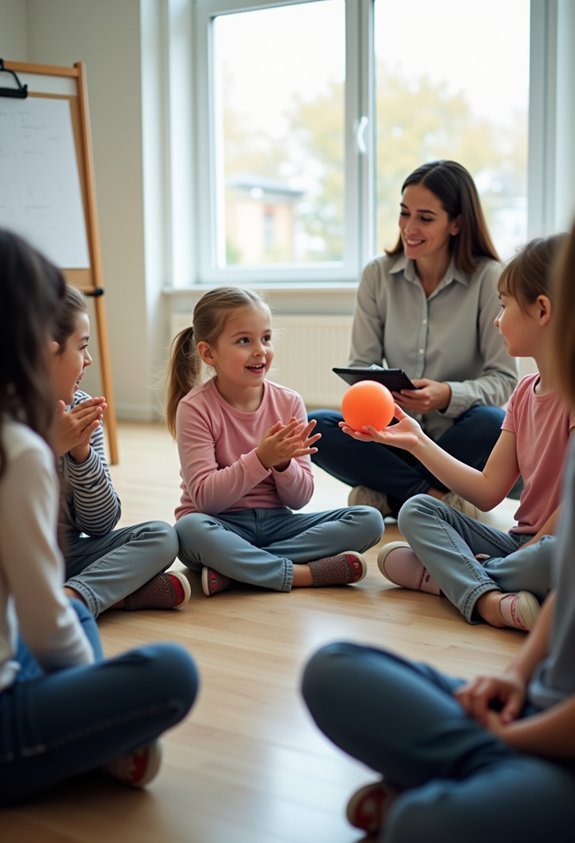
You teach kids to read eyes, hands, tiny nods—pure silent strategies.
You train students to trade chatter for glances—building secret, silent teamwork in plain sight.
They’ve to freeze their words and let their brains do the talking. Want to boost focus? Add two balls.
Or make them sit on desks so they balance and throw at the same time.
Soon they’re using real concentration techniques: steady breathing, still bodies, laser eyes.
It feels like recess, but it’s ninja-level self-control training.
The Waiting Game: Musical Chairs
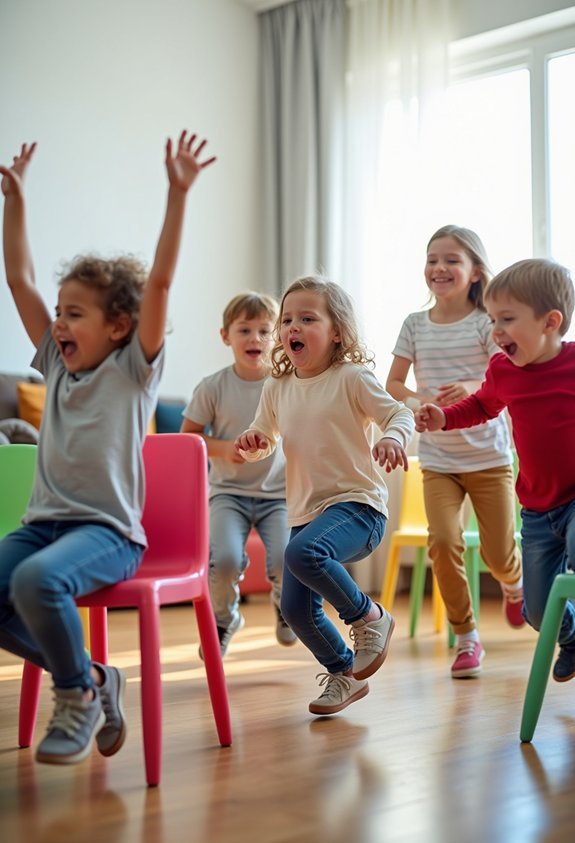
As the music blasts and kids circle the chairs like tiny sharks, the real game isn’t grabbing a seat—it’s waiting without losing their minds. You’re teaching them to ride the musical rhythm without panicking. No shoving, no screams of doom, just deep breaths and sharp focus.
Before you start, explain that the point isn’t winning, it’s staying calm when the music suddenly stops.
- Ask them to walk, not run, and match their steps to the beat.
- Change up the chair strategy: fewer chairs, weird angles, even one in the corner.
- When a kid’s out, give them a “calm coach” job so they still play, cheer, and practice self-control from the sidelines.
They learn patience, quick thinking, and how to lose without melting down inside.
Reverse Follow the Leader

Chaos with a purpose—that’s Reverse Follow the Leader. You don’t copy the leader; you do the opposite. If they hop, you freeze. If they whisper, you yell “BANANA” in slow motion.
Everyone has to think before they move, which is sneaky self-control training. Your brain screams, “Jump!” but you slam the brakes.
You’ll also see teamwork dynamics explode. Some kids charge ahead, some hang back and double-check. You all adjust to each other’s pace so the game doesn’t totally melt down.
Want it extra fun? Build imaginative scenarios. Pretend you’re astronauts in slow gravity, or kittens walking on hot lava.
Every new scene forces you to pause, notice the leader, and choose the opposite—on purpose. You’ll mess up, laugh hard, and get sharper anyway.
Card Games That Build Patience
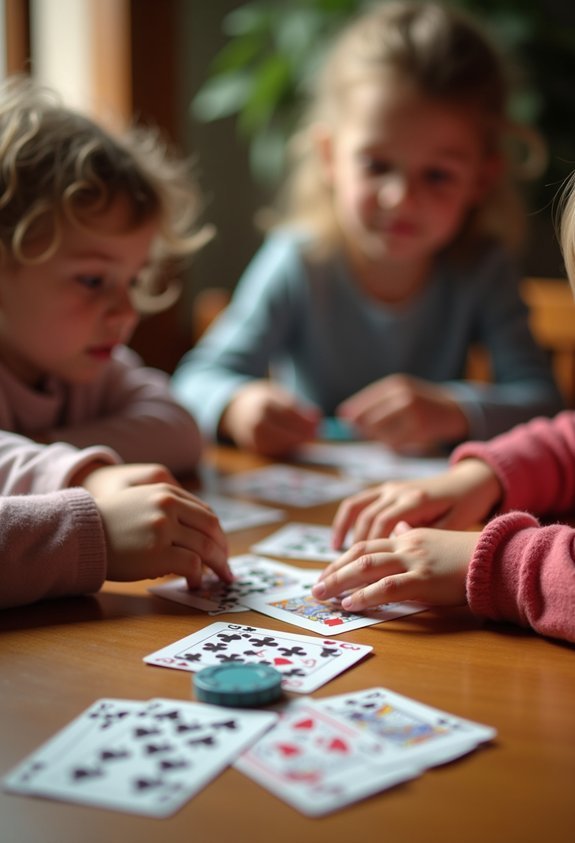
Even with just a tiny stack of cards, patience suddenly turns into a full-contact sport for your brain.
Card games slow you down in the best way. You want to grab, flip, and win now, but the deck says, “Nope, wait.” That’s pure patience building, right there. You’ve got to breathe, think, and hold back when your hands itch to move.
Try card games like:
- Slow-motion War, where you flip one card at a time and pause before each battle.
- Calm Go Fish, where you plan moves and practice polite “nope, not in my hand.”
- Strategy Rummy, where you use serious strategic thinking and don’t melt down when someone grabs the set you wanted.
Then shuffle again and feel your patience.
Cooperative Board Game Night
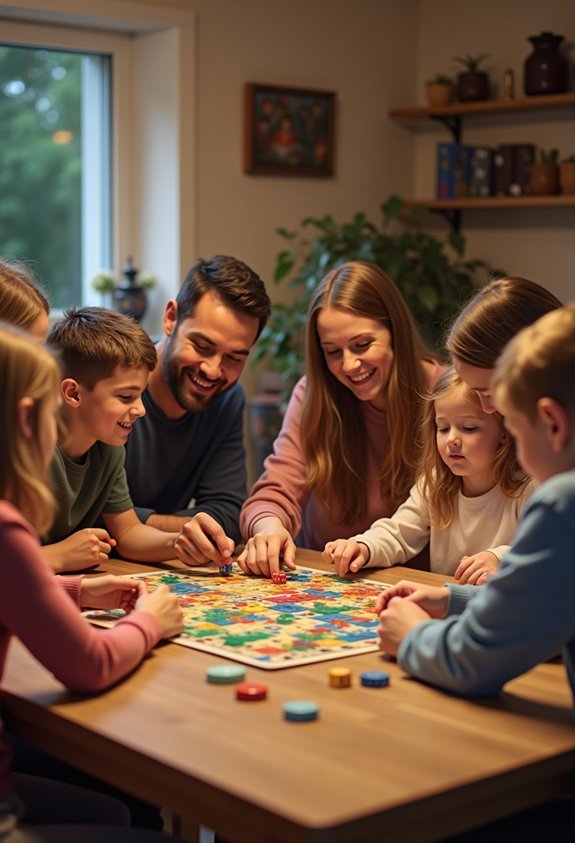
One table, one game, and suddenly you’re all on the same side instead of trying to crush each other’s souls.
Cooperative board games flip the usual “I win, you lose” drama. Now you’re racing a timer, stopping a fake disease, or saving a doomed spaceship together. To survive, you’ve gotta slow your mouth, listen, and plan a smart cooperative strategy instead of shouting random ideas.
Teamwork dynamics get real fast: one person wants to rush, another wants to study the rules like it’s homework. You practice taking turns, sharing control, and saying, “Okay, your call,” even when you’re sure you’re right.
Co-op games drill real-life skills: slowing down, sharing control, and trusting someone else’s risky call.
When the group finally wins, it’s proof your self-control muscles actually did something. And if you lose, hey, at least chaos was hilarious.
Jenga for Careful Moves
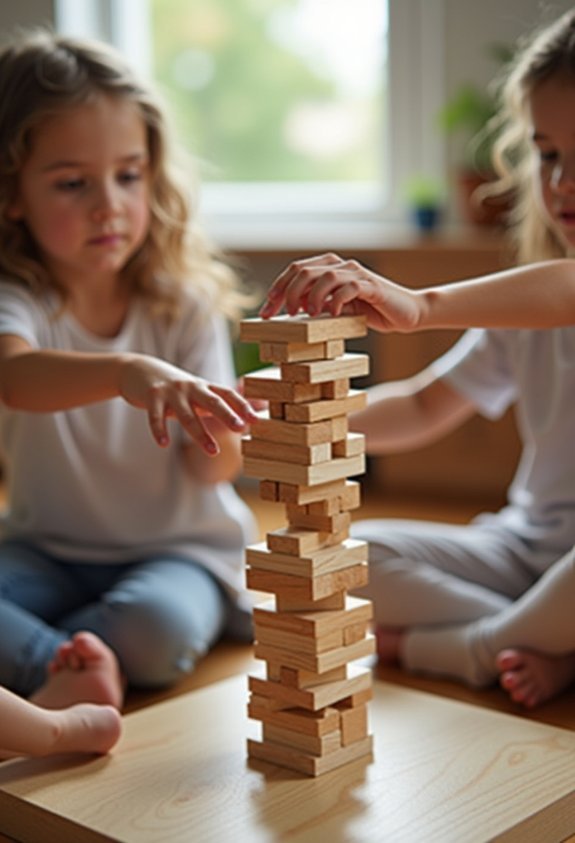
You start testing pieces, breathing slow, planning Jenga strategies like you’re defusing a bomb made of IKEA scraps.
To boost focus, try:
- Use one finger and move like you’re poking a wild animal.
- Talk through moves together to build quiet Jenga teamwork.
- Make a “no rushing” rule, even when the tower leans like it’s filing for workers’ comp.
You’re not just stacking blocks. You’re training your “don’t panic” muscle.
Next meltdown, you’ll stay weirdly, impressively calm.
Mindful Coloring Races
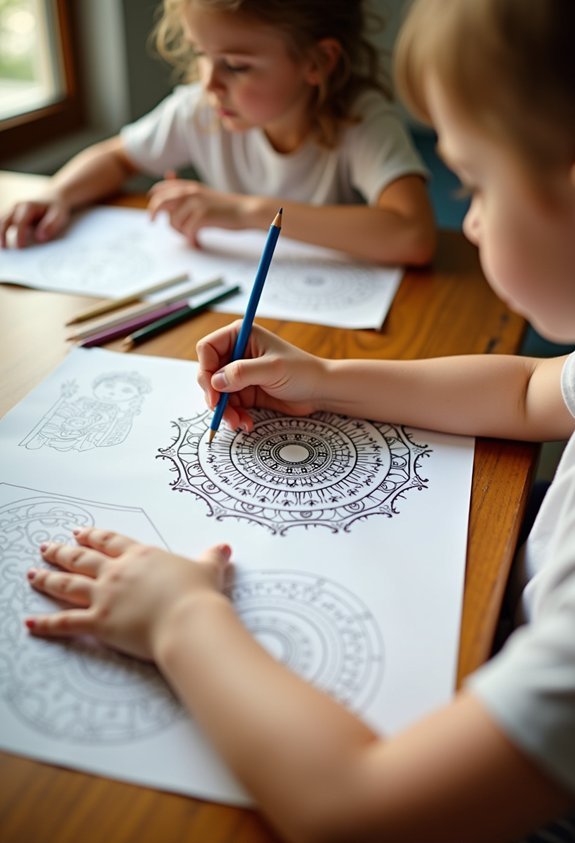
Because “relaxing” can feel like a scam on stressful days, mindful coloring races sneak calm in through the side door.
Grab the same coloring page as your kid, set a short timer, and race to fill it in without scribbly chaos. The rule: speed is fun, but staying inside the lines wins extra glory.
You model slow, steady strokes and simple coloring techniques—light pressure, one section at a time, no wild crayon attacks.
Try creative themes like “quiet sunset,” “spicy dragon,” or “super-boring homework scene” and let your kid choose colors that match the mood.
When the timer dings, pause, breathe, and laugh at the results together.
Then ask, “When did you want to rush?” and spot those tiny self-control wins like hidden treasure.
Obstacle Course With Stop-And-Go Rules
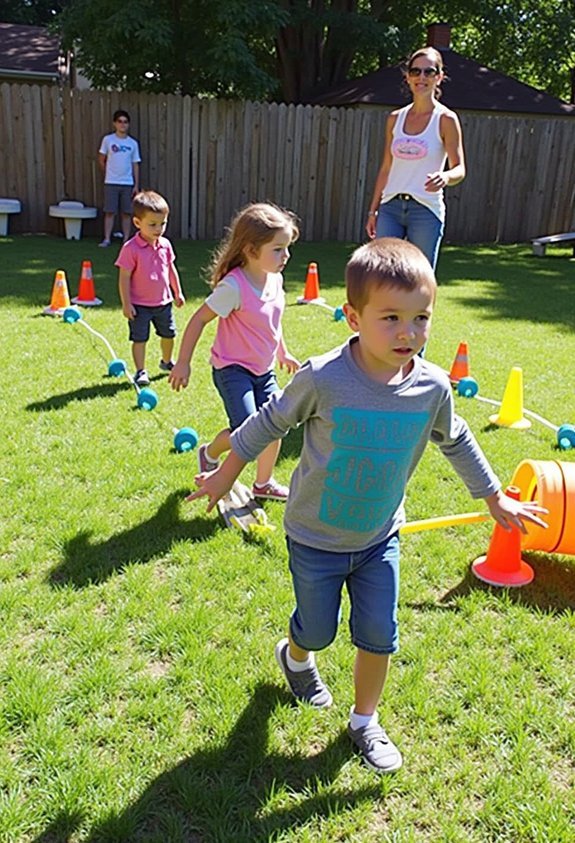
When the couch starts to swallow your kid whole, an obstacle course with stop-and-go rules yanks them back to life fast. You call out “green light” and they dash, then “red light” and they freeze mid-step, wobbling and giggling.
Every pause makes their brain slam the brakes instead of just doing the first wild thing it wants.
- Toss couch cushions, chairs, and a balance beam made from tape on the floor, then shout colors to control their moves.
- Add timing challenges: “You’ve got ten seconds to crawl under the table, then FREEZE!”
- Let them be the caller sometimes, so they feel the power of making, holding, and changing rules without melting down.
You’ll see their focus grow, even while they’re laughing like tiny maniacs.
Memory Match Concentration
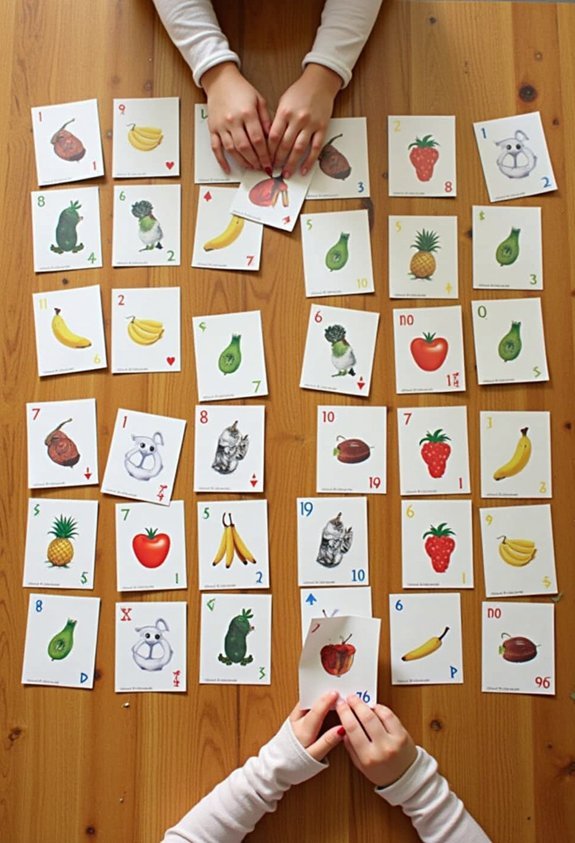
Memory mayhem hits different when you turn it into a card-flipping smackdown. You lay cards face down, pretend you’re calm, then flip one and pray it matches. It doesn’t. Now the real game starts. You’ve gotta remember spots, use little memory techniques, and stop yourself from flipping cards at random like a raccoon in a snack cabinet.
Each turn, you pause, breathe, and think, “What did I see two moves ago?” That pause is self-control training in disguise. When someone else grabs the pair you were hunting, you feel rage, but you still wait your turn. That’s emotional control.
Plus, rules twists, like switching partners or card locations, force your brain to practice cognitive flexibility without feeling like homework. Weirdly intense, sneaky, and relaxing.
Charades With Thinking Time
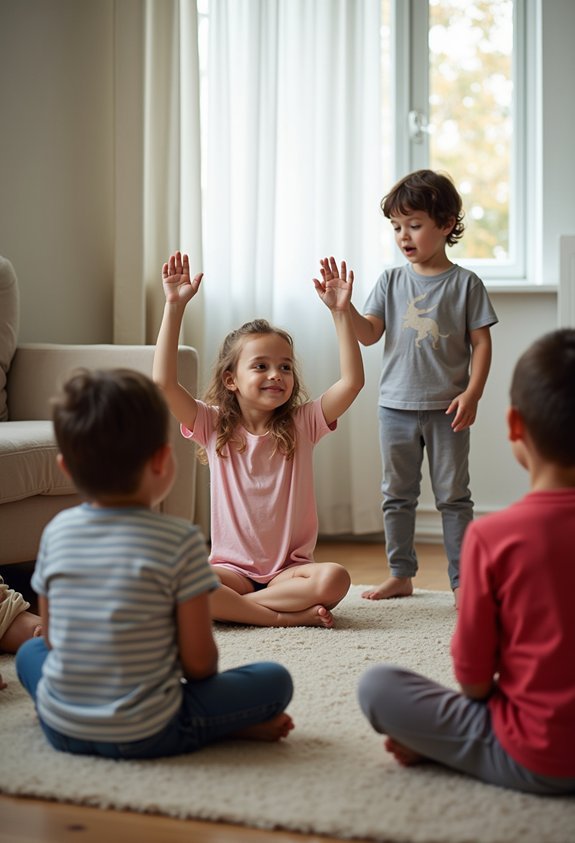
You’ve trained your brain with cards, now it’s time to flail your arms in the air like a confused mime. In Charades With Thinking Time, you don’t just jump up and wiggle; you pause, breathe, and plan.
Set a timer for ten silent seconds before acting. That tiny wait builds self-control like a mental gym.
Use that pause to pick a smart charades strategy:
- Picture one clear scene from the word, like a movie still.
- Break it into three moves: start, middle, finale, then act in order.
- Plan a backup clue if your first idea totally crashes.
Those thinking pauses keep you from panicking, yelling out words, or storming off when no one guesses “toaster.” You stay calm, focused, and way more hilariously effective.
Would You Rather?” Decision Game
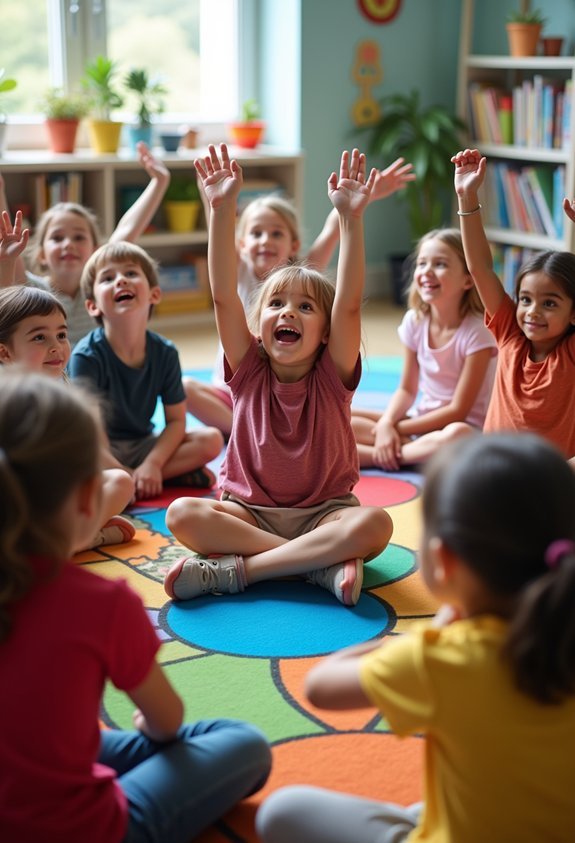
How do you train your self-control while also arguing about whether you’d rather fight one horse-sized duck or 100 duck-sized horses?
You play “Would You Rather?” on purpose, not just for chaos. Pick wild hypothetical scenarios, then slow down before you answer. Don’t shout the first thing in your head. Pause, breathe, and notice your reasons. That tiny gap builds self-control.
Play “Would You Rather?” slowly on purpose—pause, breathe, notice your reasons. That tiny gap is where self-control grows.
Use it to test your decision making strategies: “Would I rather get $5 now or $20 on Friday?” “Ice cream daily, or a strong, healthy body?”
Talk through pros, cons, and feelings. Challenge yourself to sometimes pick the wiser, not easier, option. Laugh hard, argue loudly, but practice staying calm, kind, and thoughtful the whole time. That’s how this silly game trains you.
Slow-Motion Races
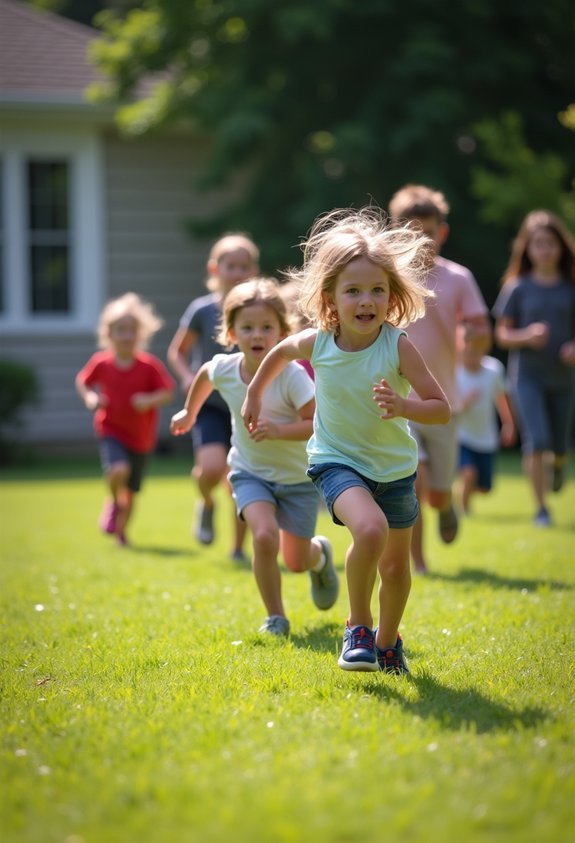
Even though it sounds like a joke, “slow-motion races” are a legit self-control workout in disguise. You don’t try to win by being fast; you win by being the absolute slowest without stopping.
Every muscle wants to sprint, but you keep choosing tiny, careful moves instead.
Pick a lane, set a finish line, then use your best slow motion techniques. Creep your feet, swing your arms like you’re underwater, and keep your face super serious for bonus drama.
- Freeze if someone yells “fast!” and restart even slower.
- Try wild race strategies: robot walk, tiptoe turtle, or sleepy zombie.
- Let one person be “judge” and call out who’s speeding, wobbling, or totally nailing the slow victory for pure focus, control, and laughter.
Secret Handshake Pattern Game
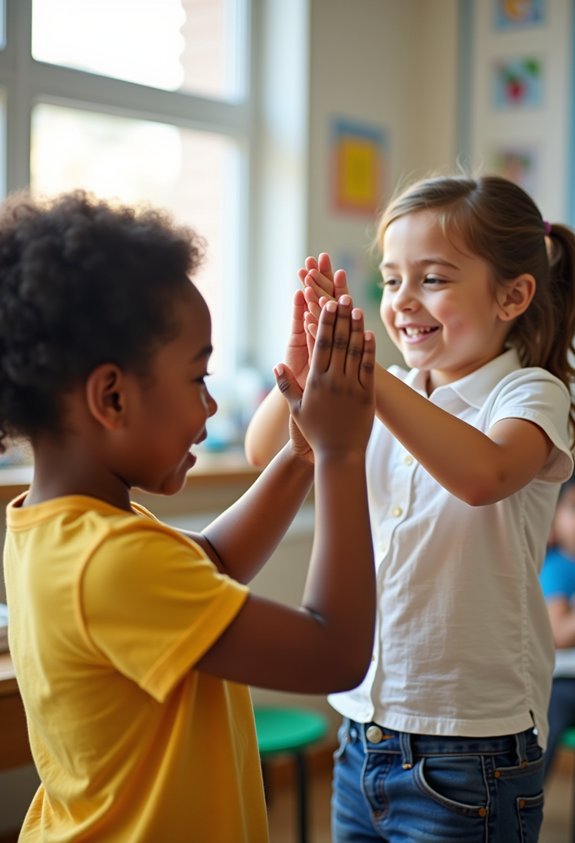
When a regular high-five gets boring, it’s time to level up with a secret handshake pattern game. You and a partner create a short pattern: clap, snap, spin, elbow tap, whatever.
Level up from basic high-fives with your own weird, wonderful secret handshake pattern game
Then you’ve gotta repeat it in the exact order, at the same speed, without messing up. Sounds easy, until your brain freezes on step three.
Here’s the trick: you keep adding little handshake variations, like a remix. Every new move forces you to slow your body down and focus hard.
If you rush, the whole thing falls apart and you both crack up. You’re also practicing teamwork dynamics, because you have to read each other, stay in sync, and admit, “Yep, that was totally my bad. Restart!”
Do it again, but slower.
Storytelling Round-Robin Game
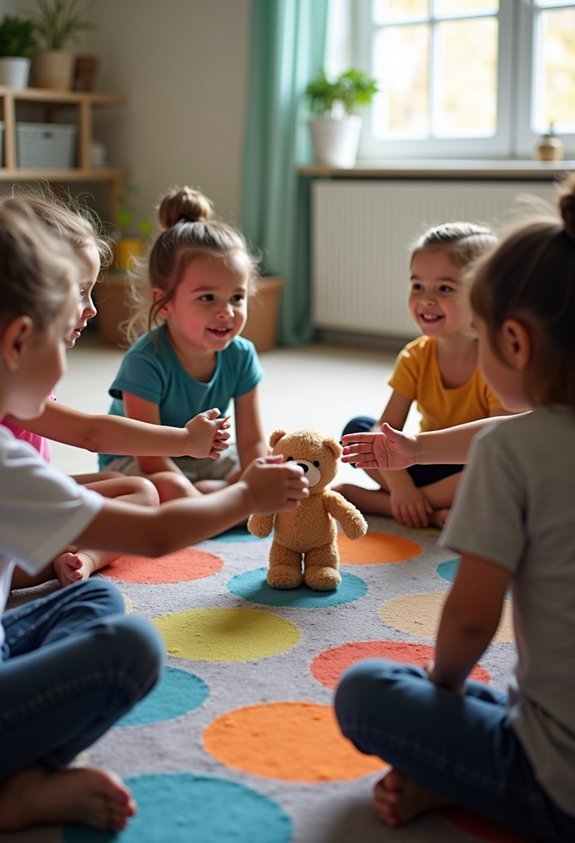
Because your brain loves drama, a storytelling round-robin game lets you turn that chaos into pure fun.
You sit in a circle, pick one of those wild story prompts, and take turns adding to the tale.
Here’s the twist: you can’t talk over others, you can’t steal the ending, and you have to roll with whatever weird plot they throw at you.
- Start with a simple prompt: “A pizza box showed up on the doorstep… and it was humming.”
- Build character development by asking, “What does this person want, and what could ruin their day?”
- Add a self-control rule, like “No interrupting, no rewinding,” then notice how your brain screams, but you wait anyway.
In case you were wondering
How Often Should We Play These Self-Control Games to See Noticeable Improvement?
You should play them several times a week; with consistent practice, you’ll notice improvement within a few weeks. Adjust game frequency to your schedule, but avoid long gaps, and briefly reflect afterward to reinforce skills.
What Age Range Are These Self-Control Games Most Appropriate and Effective For?
You’ll find these self-control games most effective from ages 4–12, when developmental stages shift rapidly and age specific games matter. Research shows children face about 20 self-control demands daily, so you’ll match and adjust challenges.
Can These Games Be Adapted for Children With ADHD or Sensory Processing Differences?
Yes, you can adapt these games by using game modifications and sensory adaptations: shorten rounds, simplify rules, add visuals, offer movement breaks, adjust noise levels, and collaborate with your child to discover what feels regulating.
How Do I Measure Whether My Child’s Self-Control Skills Are Actually Improving?
Like watching a dimmer switch slowly brighten, you measure improvement by defining self control indicators, logging behaviors, noting fewer impulsive reactions, quicker recoveries after setbacks, and asking teachers or therapists for feedback when tracking progress.
Are There Simple Ways to Modify These Games for Use in a Classroom Setting?
You can adapt these quickly: use smaller groups, visual rules, clear time limits, and rotating roles. Simple game modifications support classroom integration by keeping transitions predictable, reinforcing expectations, and letting students practice self-control during routines.
Conclusion
So think of it like this: your brain’s a tiny dragon. Cute, but wild. These games are your dragon-training school. Freeze Dance? Teaches it to slam the brakes. Red Light, Green Light? Helps it follow rules instead of chasing every squirrel thought. Silent Ball? Laser focus. Bit by bit, you’re not just “playing games.” You’re building a calm, mighty, well-trained dragon… who still knows how to breathe fire when it counts.