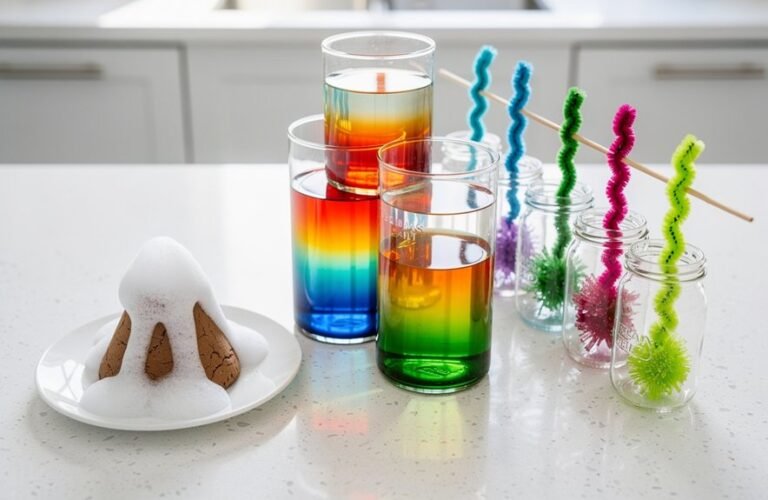
10 Outdoor Science Experiments for Summer Fun
Turn your yard into a summer science park. Launch backyard bottle rockets, race ice cubes in solar-powered melting lanes, build a DIY weather station, and make color-changing sidewalk chalk explosions. Rig a water-powered sprinkler, test floating vs sinking in a bin, track shadows to map the sun, build a bug hotel, and run rolling ramp races. Cap it off with a wild outdoor physics race course that’s way more fun than it sounds right now.
Key Takeaways
- Launch backyard bottle rockets to explore water pressure, aerodynamics, and design changes that affect height, distance, and flight direction.
- Set up solar-powered ice melting races to compare how surface color, sunlight, and cube size influence melt speed.
- Build a DIY weather station with a thermometer, rain gauge, and wind vane to collect and analyze daily weather data.
- Create color-changing sidewalk chalk art using baking soda and colored vinegar to observe chemical reactions and color mixing outdoors.
- Construct a water-powered sprinkler from a plastic bottle and garden hose to experiment with water pressure, hole size, and spray patterns.
Backyard Bottle Rockets
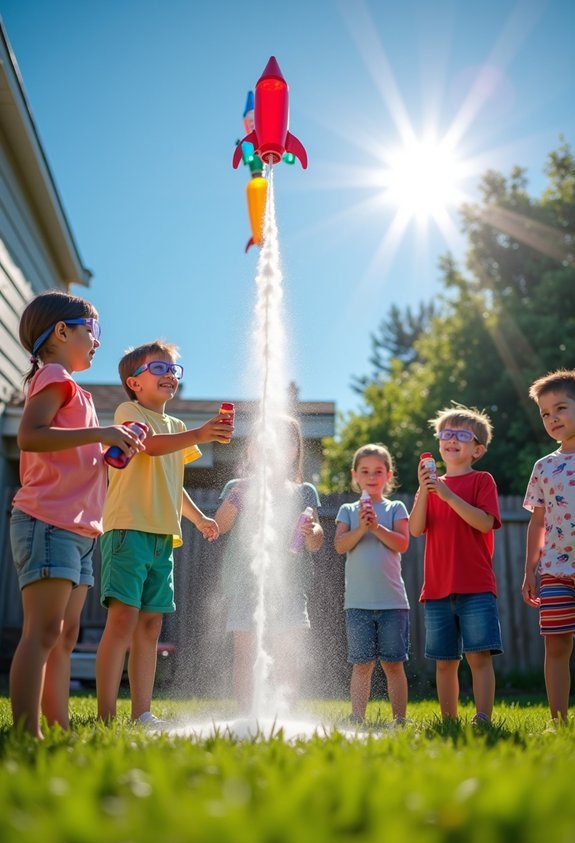
There’s this one science trick that makes everyone in the backyard scream, duck, and then yell, “DO IT AGAIN!”—backyard bottle rockets.
You grab an empty soda bottle, some water, and a pump, then turn your lawn into a mini spaceport. Different bottle rocket designs change how high it flies. Add more fins, and it might go straighter. Use less water, and it may blast to a wild launch height.
Of course, you also might soak your shoes and spray your neighbor’s cat. Test one design, write down what happens, then tweak it and try again. You’re not just making noise; you’re running a real experiment and learning what rockets love.
Soon you start guessing results before launch and feel like mission control in flip-flops.
Solar-Powered Melting Races
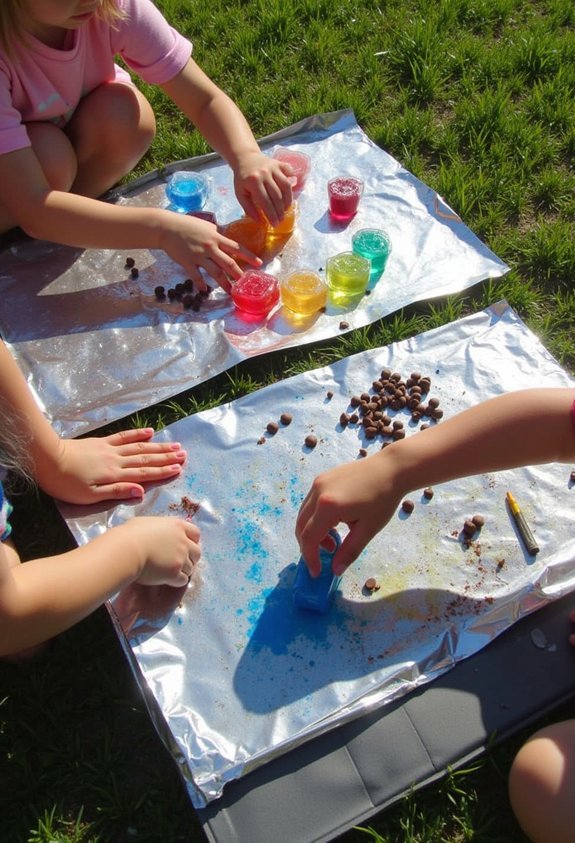
If launching bottle rockets turned your yard into a space station, solar-powered melting races turn it into a tiny, screaming desert. Grab a sunny spot, a timer, and a bunch of ice cubes.
Give each cube its own “race lane”: one on plain concrete, one on foil, one on black paper, maybe one under a glass bowl. Start the timer and yell “MELT!” like a maniac. You’re testing how solar energy hits different surfaces and speeds up melting ice.
Line up icy racers on wild surfaces, shout MELT, and let the sun pick its champion
Dark stuff soaks up more light, so that cube usually dies first. Write down times, crown a “melting champion,” then switch things up. Try shade versus sun, big cubes versus small.
You’re basically running a tiny, dramatic science Olympics in your backyard, no tickets required.
DIY Weather Station in the Yard
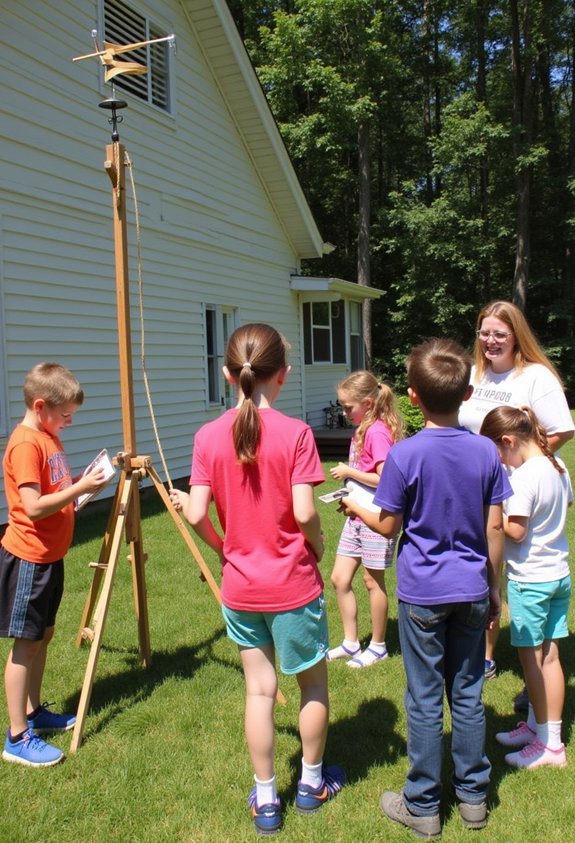
Before you trust some random weather app that’s wrong half the time, build your own tiny weather station in the yard and become the local weather boss.
You’ll track real weather data, not mystery numbers from the cloud. Start simple: stick a thermometer in a shaded spot for accurate temperature measurement, then check it at the same times each day.
Next, make a rain gauge from a clear jar with a ruler taped on the side. Mark each storm like it’s a high score.
Add a wind vane from cardboard and a straw, and boom, you’re basically a backyard meteorologist.
Keep a notebook, graph your results, and call your predictions before the forecast does. Then brag, kindly of course, when you’re the one right.
Color-Changing Sidewalk Chalk Science
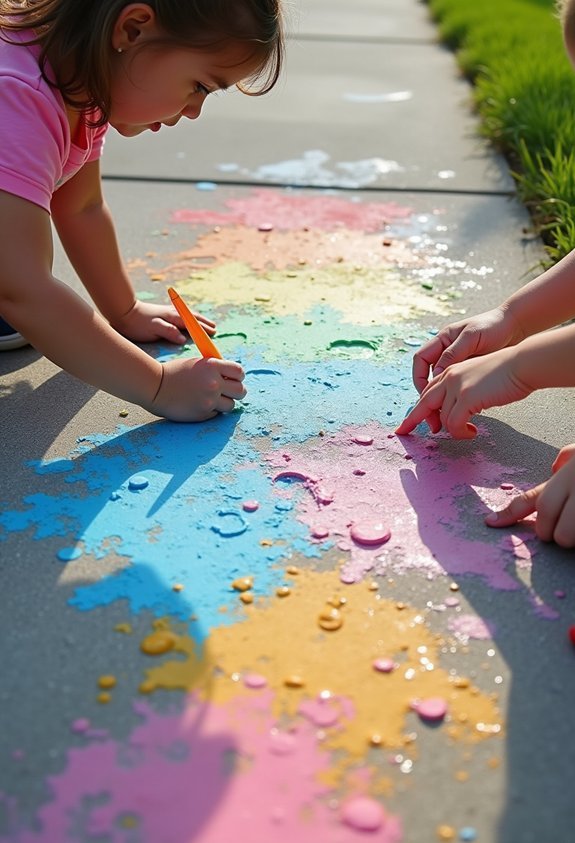
Ever wished your sidewalk art could do a magic trick instead of just sitting there looking cute? Grab some sidewalk chalk, baking soda, and cups of colored vinegar.
Draw bright pictures first. Think suns, dragons, or your math teacher as a superhero. Now drizzle the vinegar over the chalk. Boom—instant fizz and color shift.
That wild chalk reaction happens because vinegar is an acid and baking soda is a base. They mix, make gas, and push the colors around. You’re also playing with color theory. Red vinegar over blue chalk? Say hello to purple storms.
Try layering different shades and guessing what new colors will show up. It’s like testing secret potions, minus the explosions. Neighbors will stare, but hey, science looks good outside.
Build and Test a Water-Powered Sprinkler
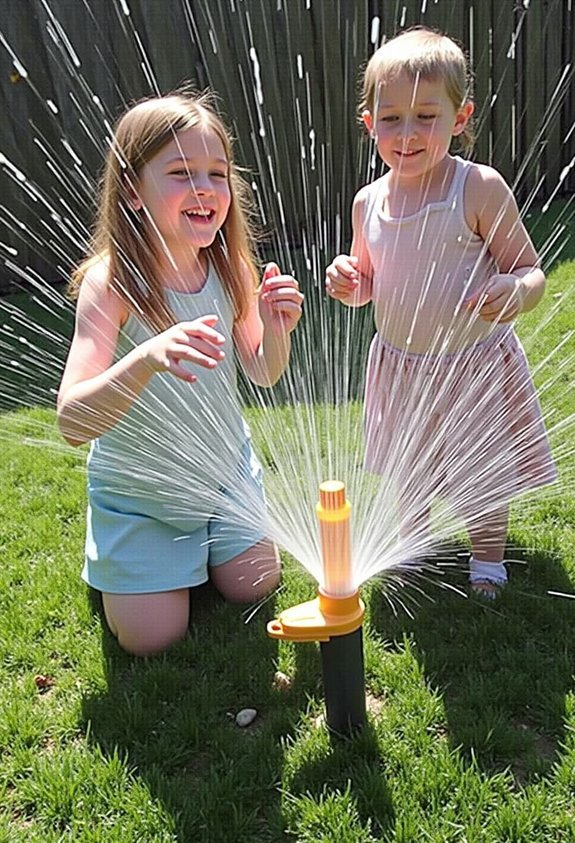
How cool would it be to build your own mini water park in the yard with stuff you probably already have? Grab a plastic bottle, poke holes around the sides, and duct-tape it to the end of your garden hose.
Turn the water on low first. You’ll see tiny streams. Crank it higher and boom—instant sprinkler monster. That’s water pressure in action: more pressure, stronger spray, wilder chaos.
Now play with sprinkler design. Try big holes, tiny holes, or rows that spiral. Does the water shoot higher, fall softer, spin around? Measure how far the spray reaches. Time how fast a bucket fills.
You’re not just getting soaked—you’re running your own backyard lab. Science, sunshine, and spray fights—pretty much the perfect summer experiment ever.
Nature Scavenger Hunt With a Scientist’s Eye
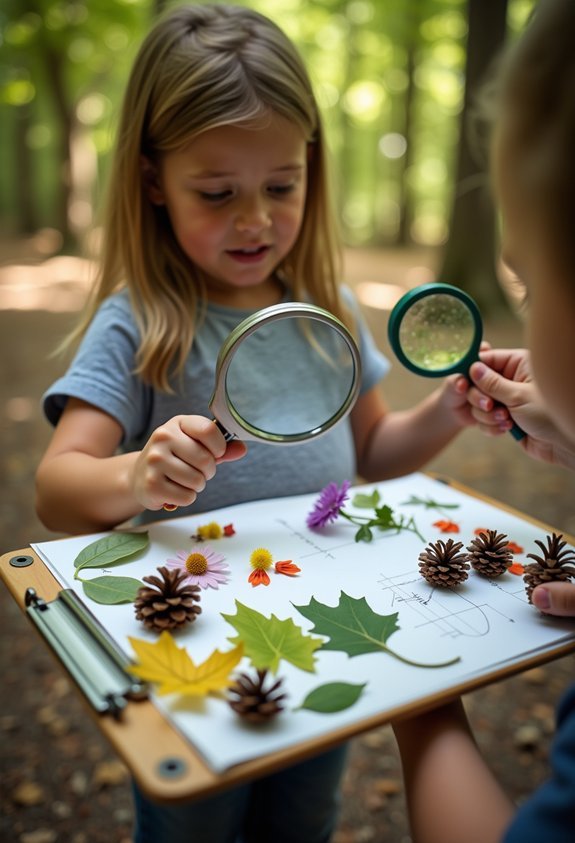
Even if you think you’ve walked your yard a million times, today you’re going in as a full-on nature detective.
Grab a notebook, a pencil, and your serious “I smell science” face. Your mission: a nature scavenger hunt that feels like hide-and-seek with the planet.
Make a list of things to spot: three leaf shapes, two animal tracks, something rough, something that smells weird but not deadly.
Practice nature identification as you go. Don’t just say “a bug.” Ask, “What kind? What’s it doing?”
Use this list or tweak it:
- Something living, something dead, something changing
- Three shades of green
- One sign animals passed by
- One tiny thing you almost missed, plus a quick ecological observation about it
Write it down so future you feels genius.
Floating and Sinking With Pool or Tub Experiments
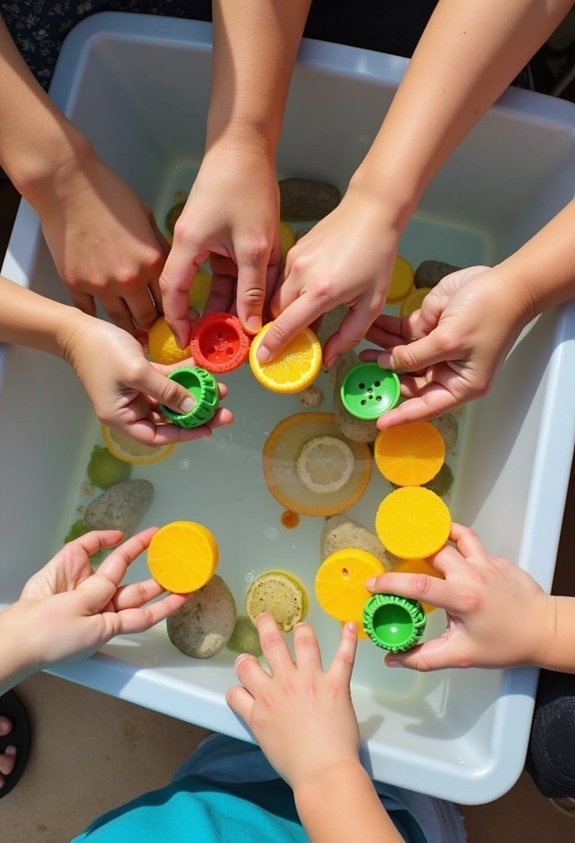
Once you start tossing random stuff into water, science turns into a game of “Will it sink like a rock or float like a lazy donut?”
Grab a tub, sink, or pool and raid your house for test objects: spoon, crayon, toy car, orange, paper clip, plastic cup—whatever’s not alive and not your phone.
Drop each item in and shout your guess first. Cheer when you’re right, roast yourself when you’re wrong.
Now notice patterns. Heavy isn’t the real boss here; density differences are. A big, light plastic ball floats, but a tiny metal key plummets. That’s buoyancy basics: if an object is less dense than water, water pushes it up.
Challenge yourself: build a floating “boat” from tinfoil that holds the most coins.
Shadow Tracking and Sun Mapping

Before you chase the sun across the galaxy, step outside and chase your own shadow first. Grab some chalk and stand in the driveway at different times. Trace your feet and your shadow each time. Soon the ground looks like crime-scene art, but it’s really a map of shadow patterns.
Compare morning and afternoon outlines. Watch your shadow shrink, stretch, and spin as sun angles change. You’re basically a giant sundial, minus the Roman robe.
- Mark times beside each outline so you can see the day’s story in chalk.
- Stand in the same spot daily and compare how winter-level and beach-day sun angles differ.
- Lay a stick upright, trace its shadow every hour, then brag you built a backyard clock.
- Snap photos for proof.
DIY Bug Hotel and Mini Ecosystem Study
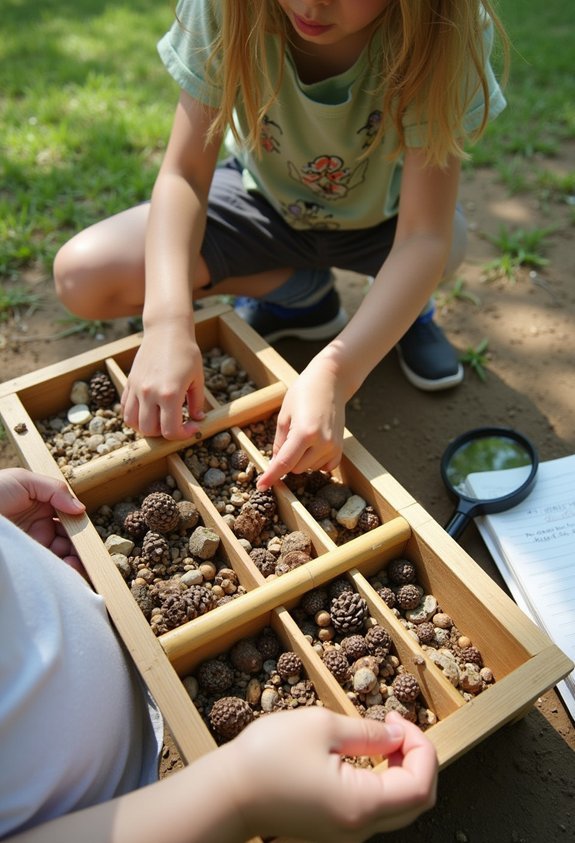
While some people build fancy hotels with pools and room service, you’re about to build a tiny, weird one where the guests eat dead leaves and sleep under sticks.
Grab a shoebox, flowerpot, or old bucket. Stuff it with sticks, bark, dry leaves, pinecones, and a small rock or two. Boom: instant insect habitat. Tuck it in a shady corner and wait for beetles, pill bugs, and spiders to move in like it’s Black Friday.
Now do the science part. Visit daily. Sketch who’s living where. Is it damp or dry? Crowded or calm? When it rains, does anyone vanish?
You’re watching ecosystem balance in action: tiny hunters, recyclers, and prey all sharing one weird little hotel you built in the dirt this summer.
Rolling Ramp Races and Motion Experiments
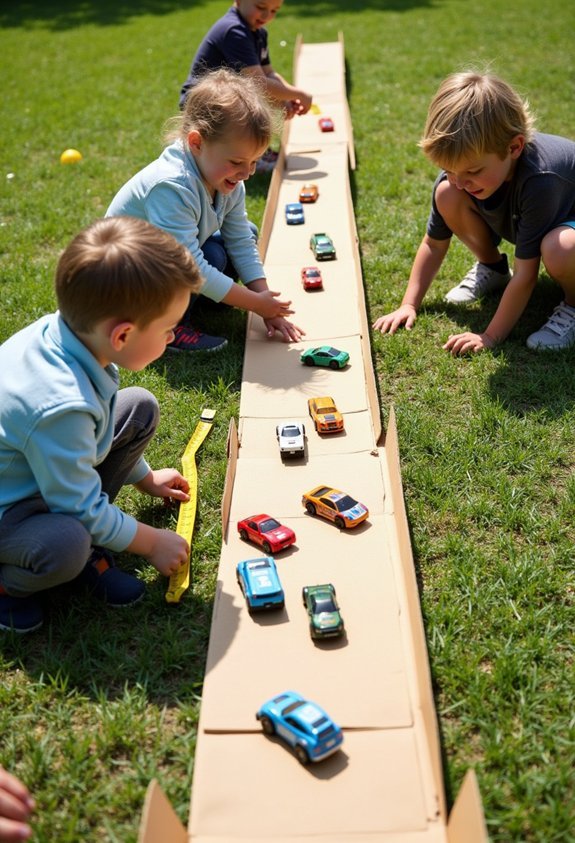
Everybody loves a good race, and today you’re turning your yard into a tiny roller coaster lab. Grab some cardboard, books, and any round thing that rolls: toy cars, balls, maybe a brave potato.
Build two ramps with different ramp height and see which racer wins. Bigger slope, faster whoosh.
For speed measurement, mark start and finish with tape, then time each run with a phone. Do three tries so you’re not fooled by one weird roll. Compare results and brag like a proud champ.
- Swap racers and guess which will win before you test.
- Change ramp height and chart the times.
- Try grass, sidewalk, and dirt as racing “roads.”
- Make a family race night and crown a Physics Champion.
In case you were wondering
How Can We Adapt These Experiments for Kids With Sensory or Mobility Challenges?
You prioritize choice and comfort, add sensory adaptations like softer textures, gentler sounds, and scent-free options, and use mobility modifications such as tabletop setups, extended tools, seating, and clear paths, so every child participates confidently.
What Are Some Low-Cost or Recycled-Material Alternatives for Common Experiment Supplies?
You generate about pounds of trash daily; you can transform that into recycled materials for experiments, using jars, cardboard, bottle caps, and paper scraps as cost effective supplies, replacing beakers, trays, counting chips, and notebooks.
How Do I Turn These One-Time Activities Into a Longer Learning Project or Journal?
Turn single experiments into ongoing investigations by repeating them, changing one variable, and recording observations in dated project journals. Plan weekly activity extensions, add sketches, questions, predictions, and summaries so you gradually build deeper understanding.
What Safety Guidelines Should Parents Follow for Unsupervised Backyard Science Play?
You set clear experiment zones, forbid chemicals, fire, and sharp tools, and insist kids wear safety equipment. You limit experiments to water, soil, and plants, require parental supervision, teach emergency steps, and review activities afterward.
How Can We Connect These Experiments to School Science Standards or Curricula?
You can make a billion bridges between play and class by mapping activities to science standards, checking grade-level benchmarks, using teacher guides, and documenting observations, vocabulary, and data to strengthen curriculum connections and reinforce concepts.
Conclusion
So there you go—you just turned your yard into a budget science theme park. No tickets, no lines, just explosions, bubbles, shadows, bugs, and maybe one slightly soggy scientist. Now it’s your turn to grab a bottle, some chalk, a bucket, or a bug jar and start testing stuff. Treat summer like a giant lab. Make a mess, ask weird questions, and keep experimenting. Who knows—you might even impress yourself.