10 Best Screen-Free Physical Activities for Kids
Want your kids moving their bodies, not just their thumbs? Try backyard obstacle courses, wild tag games, dance parties, scavenger hunts, and silly relay races. Head outside for nature walks, mini sports challenges, and active dress‑up missions. Inside, set up indoor circuits, freeze dance, and kid‑friendly yoga for a calmer finish. You’ll burn energy, spark giggles, and maybe even win bedtime… and that’s just the start of what you can try with these high-energy ideas.
Key Takeaways
- Build backyard or indoor obstacle courses using household items, adding silly movement rules to burn energy and boost creativity.
- Play classic tag variations like freeze tag or shadow tag, encouraging sprinting, laughter, and social interaction.
- Set up indoor treasure hunts or scavenger hunts with themed clues, maps, and small rewards to promote movement and problem-solving.
- Host a living-room dance party with Freeze Dance, using music and playful challenges to keep kids active and engaged.
- Practice kid-friendly yoga, stretching, and mindful breathing with animal poses and short “tiny naps” to support both movement and calm.
Backyard Obstacle Course Adventure
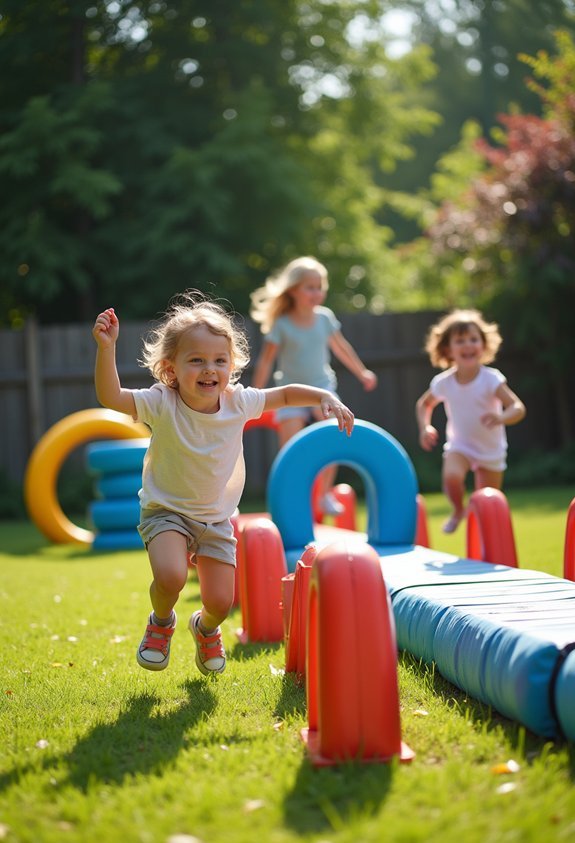
One of the easiest ways to turn a boring afternoon into pure chaos (the fun kind) is a backyard obstacle course.
Turn any dull afternoon into hilarious backyard mayhem with a homemade obstacle course.
You don’t need fancy gear; you need junk from your garage and a little obstacle creativity. Grab chairs for tunnels, a broom for a jump bar, and a hose to zigzag like it’s a lava snake.
Time your kids, then let them design the next round. Suddenly they’re arguing about where the “pit of doom” goes and not about screen time.
Mix in silly rules: hop like frogs, crab-walk, spin three times before running. Join in, wipe out, laugh hard.
These backyard adventures burn energy, build confidence, and give you epic stories to tease them with later. They’ll beg to play it again.
Classic Tag Games With a Twist

Before your kids vanish into the couch like sleepy potatoes, tag can yank them back to life fast—especially when you give the old game some weird new rules.
Start with freeze tag. When someone’s tagged, they freeze like a statue. To unfreeze, another player has to crawl through their legs or high-five them. It turns your yard into a wild rescue mission.
Next, try shadow tag. Instead of tagging bodies, players stomp on each other’s shadows. You’ll see kids suddenly care a lot about where the sun is.
For extra chaos, add “safe zones” that keep moving, like a hula hoop you slowly walk around.
Everyone’s sprinting, yelling, laughing—and totally forgetting screens exist. It’s cheap, simple, loud, and wears them out before bedtime tonight.
Indoor Treasure Hunts and Scavenger Quests
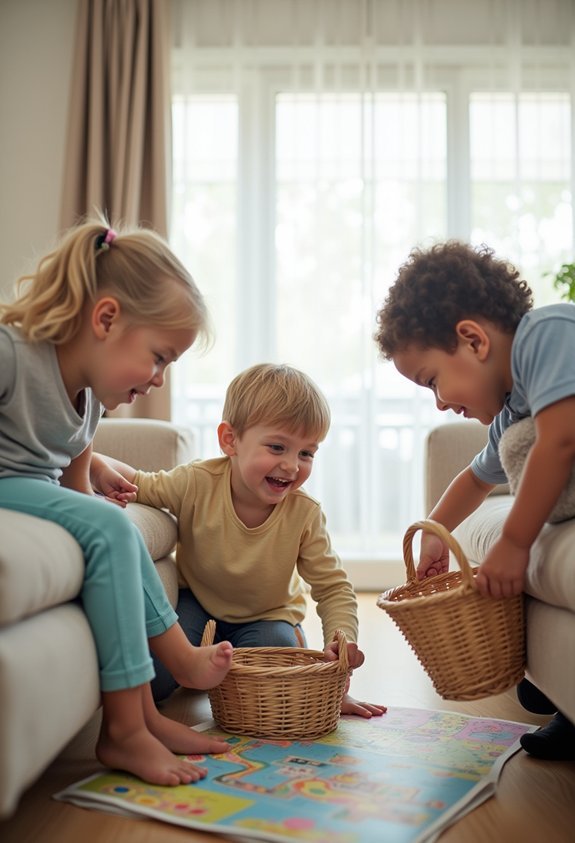
Once the rain starts and everyone’s whining there’s “nothing to do,” that’s your cue to turn the house into a full-on treasure island.
Start with theme selection: pirates, spies, wizards, or “find Mom’s missing sanity.” Then dive into clue creation. Hide hints under cushions, inside shoes, behind cereal boxes.
Start with a theme—pirates, spies, wizards—then stash sneaky clues in every nook and cranny
Add simple map making with crayon paths from room to room. Mix in time challenges so kids race instead of wander.
Treasure crafting is easy: wrap snacks, LEGO bags, or silly coupons for “stay up late.” Push team collaboration by pairing big kids with little ones for mystery solving.
Do quick adventure planning before you start, but stay flexible. If chaos erupts, congratulations—quest unlocked.
They’re laughing, running, and totally forgetting screens even exist today anyway.
DIY Dance Party and Freeze Dance Fun

If the kids are bouncing off the walls, that’s your sign to crank up the music and turn your living room into a budget dance club. Blast their favorite songs, kill the lights, and toss them some glow sticks or flashlights. You’re not just surviving the chaos; you’re directing it.
Here’s a simple plan:
- Pick silly dance themes: robots, superheroes, slow-motion sloths—whatever makes them crack up.
- Build quick music playlists for each theme so you can hit play and let them go wild.
- Play Freeze Dance: yell “FREEZE!” at random, and anyone who wobbles does three jumping jacks.
- Add bonus rounds—dance with stuffed animals, dance on a paper “stage,” or copy the grown-up’s ridiculous moves. They’ll beg for encores tomorrow.
Nature Walks and Neighborhood Explorations
Your living room dance club was awesome, but let’s be honest—you probably don’t want to find glitter in your couch cushions for the next six years.
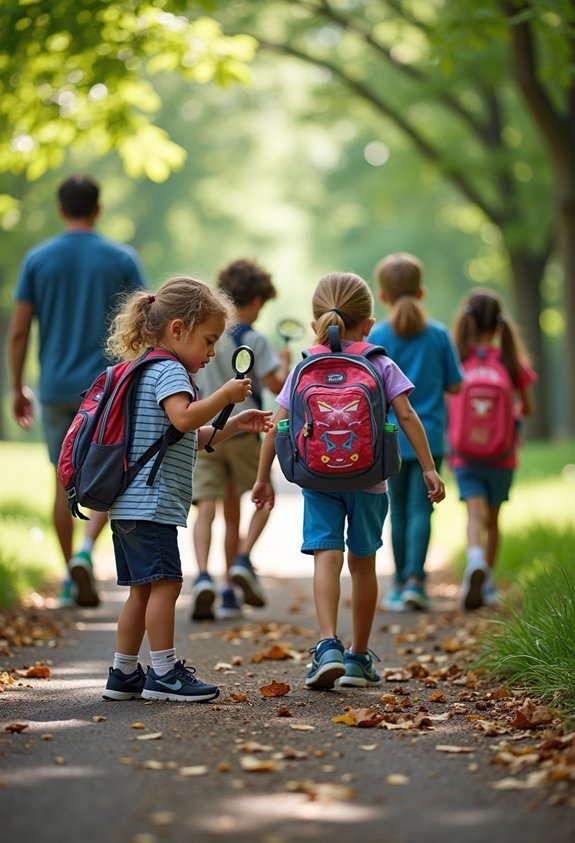
Time to move the party outside. Grab your kid, lace up shoes, and turn a simple walk into an adventure quest.
Play “Detective Feet” and hunt for weird leaves, cool rocks, and mystery smells. Toss in wildlife observation: Who’s chirping? Who’s zooming past that puddle? You don’t need a forest; cracked sidewalks grow whole jungles of ants.
Bring a tiny notebook for nature journaling. Your kid can sketch a squirrel with “criminal eyes” or write, “This worm was THICC.”
You’re walking, laughing, moving your body—and zero one is asking for Wi‑Fi. No batteries, no screens, just kid chaos.
Balloon and Beach Ball Movement Games

A single balloon can turn your living room into a full‑blown Olympic stadium of chaos. You just need space, a kid, and a tiny bit of energy left in your body.
Balloons and beach balls move slow, so kids get big action without big crashes.
- Play balloon volleyball. No net? Use the couch as the “net” and yell dramatically every time someone scores.
- Try “Don’t Let It Drop.” Kids dive, twist, and scream like the floor is hot lava.
- Do a beach ball toss circle. Add silly rules: clap twice, spin, then whack it.
- Make a “Wind Storm.” You and your kid blow balloons or beach balls across a finish line. Collapse proudly. Then drink water, breathe, and admit you’re more tired than them.
Simple Sports Skills and Mini Challenges
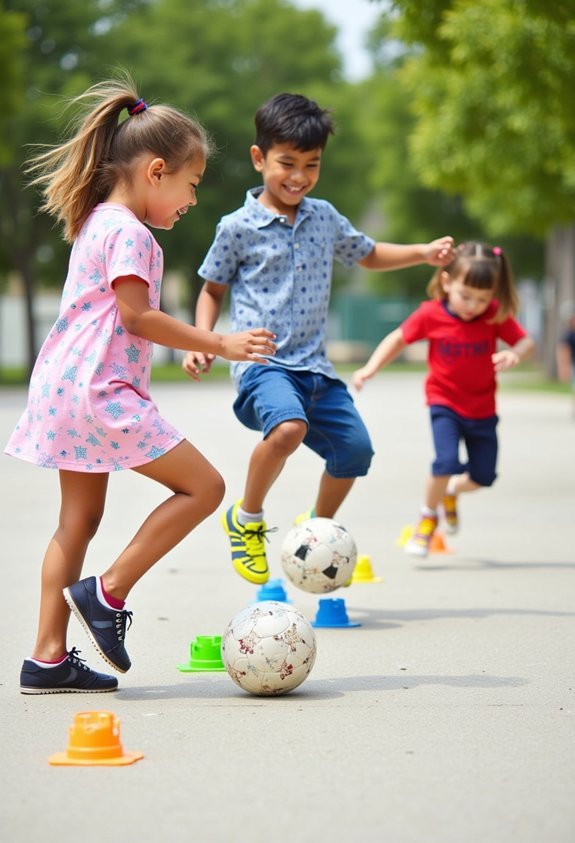
After all that balloon chaos, you can level things up with simple sports skills that still feel like play, not practice.
Think backyard mini-games: 10 perfect throws into a laundry basket, five in a row, no bounces allowed. Miss one? Start over. Drama. Kids eat that up.
Use whatever you have: a soft ball, plastic cups, sidewalk chalk. Set up quick skill challenges—dribble to the fence and back, jump over a line ten times, toss, catch, spin, repeat.
Time them with a kitchen timer and shout out their “world record.”
Rotate roles so kids coach you too. Let them make rules, add silly twists, and argue about scores.
Boom: movement, laughter, and sneaky coordination practice. They’re tired, sweaty, and oddly proud of beating you.
Active Imagination Play and Dress-Up Missions
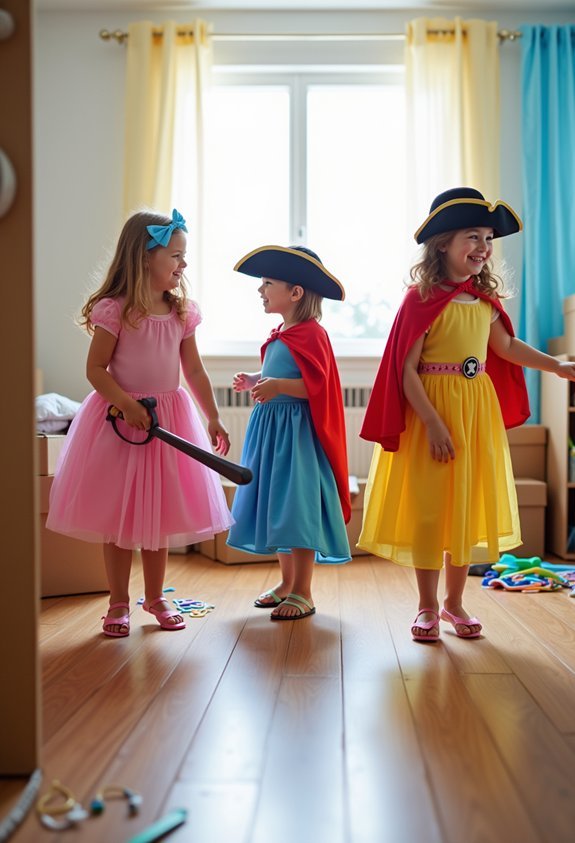
When kids slip into dress-up mode, it’s like their brains yell, “Costume = chaos = LET’S GO.”
Costumes don’t just change outfits—they flip the switch from calm kid to full-blown adventure mode
One second they’re in pajamas, the next they’re a dragon doctor saving stuffed animals from lava in the hallway.
Your job? Turn those wild ideas into full-body missions.
Pull out imaginative costumes, plan role playing adventures, and set clear “quests” that make them run, crawl, and sneak.
Think less fashion show, more action movie.
- Spy Rescue: They tiptoe past “laser” yarn to save a teddy hostage.
- Jungle Explorer: Couch cushions become cliffs; they leap, climb, and roar.
- Restaurant Rush: Tiny chef takes orders, “cooks,” then races meals across the room.
- Superhero Drill: Villain (that’s you) attacks; they dodge, chase, and tag you down.
Yoga, Stretching, and Mindful Movement for Kids

Instead of bouncing off the walls like a pinball, your kid can actually learn how to chill on purpose—and still have fun doing it.
Think of yoga as sneaky calm exercise. You roll out a towel, not a fancy mat, and say, “Let’s pretend we’re animals.” Boom: instant yoga poses. Cat, cow, sleepy puppy, wobble flamingo. They stretch, balance, and accidentally get stronger.
Add mindful breathing, and you’ve basically hacked their nervous system.
Try “smell the pizza, blow out the candles.” Inhale slow, exhale slower. It looks silly, but watch their shoulders drop.
You can end with a “tiny nap.” Lights low, soft voice, two minutes. They reset. You reset. No screens, no chaos, just quiet power.
It feels like magic, but it’s practice.
Rainy-Day Relay Races and Indoor Circuits
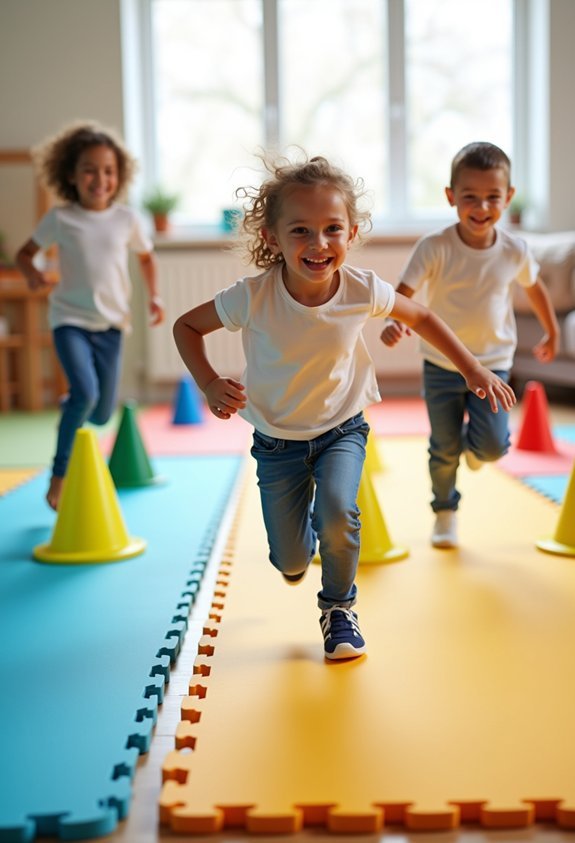
Calm stretching is great… until your kid suddenly has the zoomies and starts parkouring off the furniture. That’s your cue for rainy day relays.
Think “Olympics,” but in your hallway. You grab pillows, tape, laundry baskets, and boom—you’ve built a mini arena.
Try a simple indoor circuits setup:
- Sprint to the door, tag it, crab-walk back.
- Bear-crawl around chairs, then hop over a pillow “river.”
- Balance a sock on your head while stepping over toys—instant chaos.
- Time each run, cheer loudly, and switch roles so you race too.
Kids burn energy, you protect your sanity, and nobody launches off the couch “cliff” again.
Rotate moves, change course order, and you’ve got a new game every stormy afternoon.
Bonus: no screens, no whining, just laughs.
In case you were wondering
How Can I Motivate My Child to Choose Active Play Over Screens Daily?
Invite your child to choose active play by joining in, setting routines, and offering fun screen alternatives. Celebrate small efforts, rotate activities, involve friends, and keep screens limited, predictable, and less exciting than moving together.
What Are Safe Physical Activities for Kids With Limited Mobility or Special Needs?
You might notice your child light up when you offer gentle yoga, water therapy, wheelchair dancing, adaptive sports, or inclusive games; you also create obstacle courses, balloon volleyball, and sensory walks tailored to their abilities.
How Much Daily Physical Activity Is Recommended for Different Age Groups of Children?
You should follow age specific guidelines: toddlers need active play throughout the day, preschoolers about 3 hours, kids 6–17 at least 60 moderate-to-vigorous minutes; these activity duration recommendations support health, sleep, learning, and emotional regulation.
How Do I Keep Multiple Ages Engaged in the Same Screen-Free Activity?
Playful purposeful planning keeps everyone engaged: you choose mixed age games with simple rules, assign rotating roles, and design cooperative challenges where older kids mentor, younger kids explore, and everyone moves, imagines, and celebrates successes.
What Budget-Friendly Equipment Can Support Varied Screen-Free Physical Play at Home?
Choose jump ropes, chalk, balls, cones, and blankets; you’ll create DIY Sports Equipment and Affordable Outdoor Games. Repurpose cardboard for targets, laundry baskets for hoops, and plastic bottles for bowling so different ages play together.
Conclusion
Now picture your kid zooming across the yard, hair wild, cheeks red, laughing so hard they can’t even breathe. That’s what these screen‑free adventures give you: muddy shoes, loud giggles, and epic bedtime stories. So shut the laptop, toss the tablet on the couch, and open the door. Start with one game today. You’ll blink, and suddenly your living room’s empty and your backyard’s the fun park everyone begs for tomorrow, and they’ll want more.