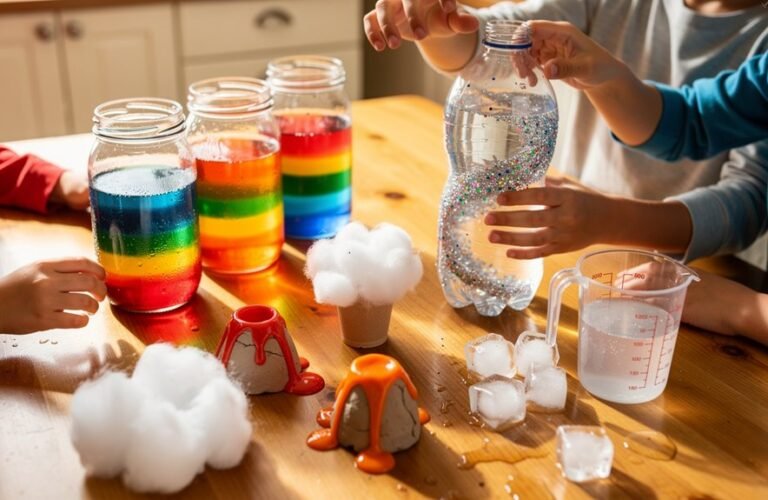
What Makes Backyard Volcano Experiments So Exciting?
Backyard volcano experiments are exciting because you get to cause chaos on purpose. You mix boring kitchen stuff—baking soda, vinegar, maybe some dish soap—and boom, your homemade mountain starts spewing wild, fizzy “lava.” You feel like a mad scientist, but it’s actually real chemistry: gas builds up, pressure rises, and the foam erupts. Plus, you get color, mess, goggles, and dramatic yelling like “STAND BACK!” And that’s just the start of what makes them so fun.
Key Takeaways
- They turn simple chemistry into dramatic eruptions, showing how trapped gas builds pressure and bursts out like a real volcano.
- Kids get hands-on experience mixing ingredients, seeing instant cause-and-effect instead of just reading about reactions.
- Everyday household items like baking soda, vinegar, and dish soap make the activity easy, safe, and affordable to set up.
- Building and decorating the volcano shape taps into creativity, connecting art with real-world volcanic structures.
- The foamy “lava,” colorful mess, and shared cleanup create memorable, high-energy family or classroom moments.
The Simple Science Behind a Spectacular Eruption
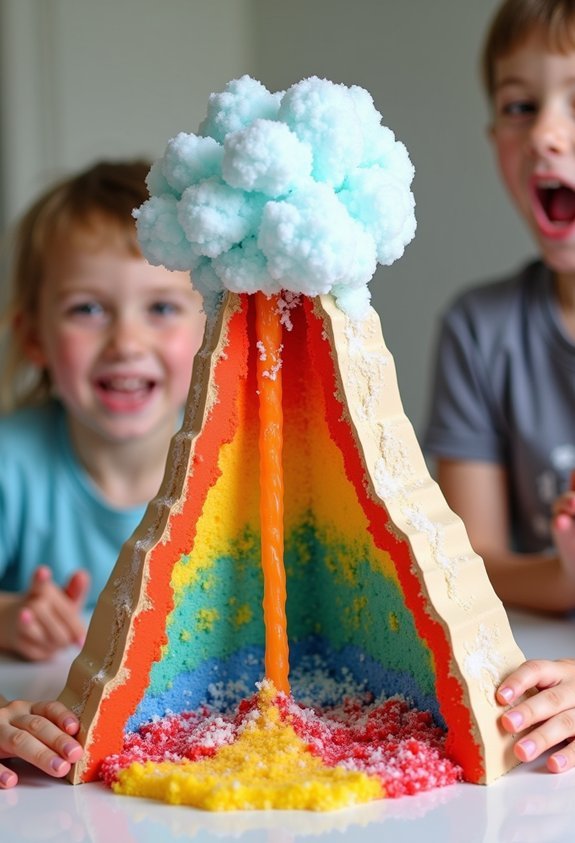
Even though it looks like wild magic, your backyard volcano is really just a tiny, messy chemistry show. You build a small mountain, then trap gas inside it. That gas wants out, badly.
Your DIY volcano isn’t magic—it’s a cramped gas prison desperate to explode in fizzy chaos
As bubbles form, pressure rises, kind of like when you shake a soda and crack it open too fast. Volcano mechanics is just that struggle between trapped gas and whatever’s holding it in. When the pressure wins, boom—eruption.
Eruption dynamics is the way that boom behaves: slow ooze, fast blast, tall fountain, or short burp. The shape of your volcano, the size of its “throat,” and how quickly gas builds all change the show.
You’re basically directing a tiny, fizzy disaster. It’s like stage-managing chaos, but with more foam and screaming.
Turning Everyday Ingredients Into Lava
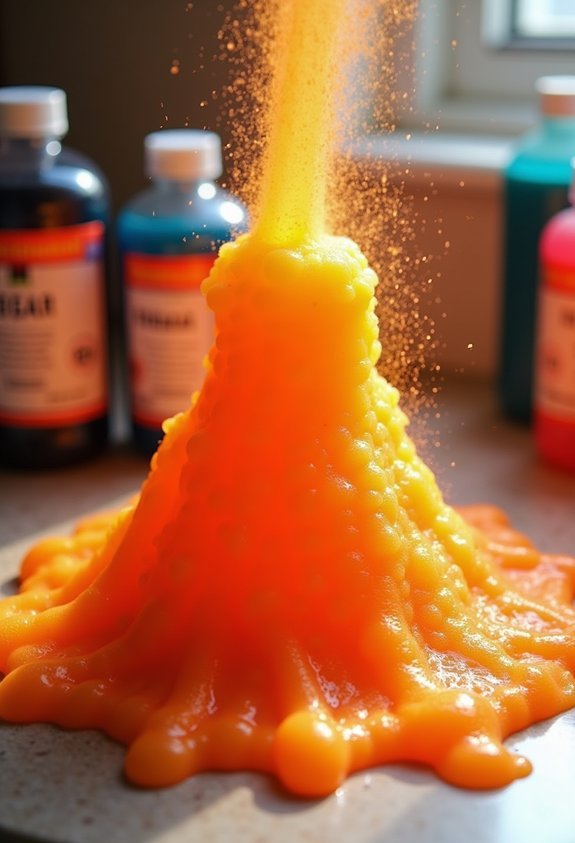
Once you know the trick, turning pantry junk into “lava” feels like cheating on science class. You grab baking soda, dump it in the volcano, and it just sits there, looking bored.
Then you pour in vinegar and boom—the vinegar reaction kicks off like a tiny rocket. Gas rushes out, pushing the foamy “lava” over the sides.
Add dish soap and the bubbles hang around longer, like they paid rent.
Now the fun flex: color mixing. Split the volcano into channels, tint one red, one yellow, one blue. When they crash together, you get wild swirls and new shades.
It’s like running a paint shop for dragons, except your supplies came from the fridge and cleaning cabinet. Cheap, messy, awesome, and weirdly very satisfying.
Hands-On Learning That Kids Actually Enjoy
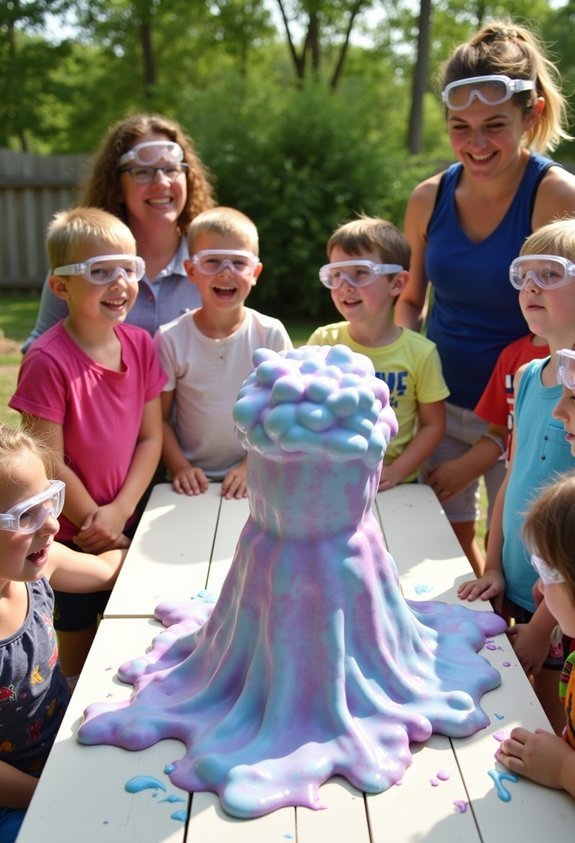
When kids get to build a volcano and make it explode on purpose, their brains basically switch from “school is boring” to “mad scientist mode.”
Volcano projects flip the switch from bored student to gleeful, hands-on mad scientist in seconds
They’re not just sitting there, staring at a worksheet and wondering how time moves so slowly; they’re pouring, mixing, yelling “STAND BACK!” like they’re in a movie.
You get instant interactive play plus sneaky learning.
Kids remember what they touch, spill, and accidentally launch across the yard. That’s real educational engagement, not just memorizing a definition.
Here’s what you’re really teaching:
- Cause and effect: “I pour this, boom, that happens.”
- Careful measuring, so the foam doesn’t hit the neighbor’s cat.
- Patience, because resetting the volcano takes longer than the eruption.
Kids think it’s chaos; know science.
Creativity Meets Chemistry in DIY Volcano Builds
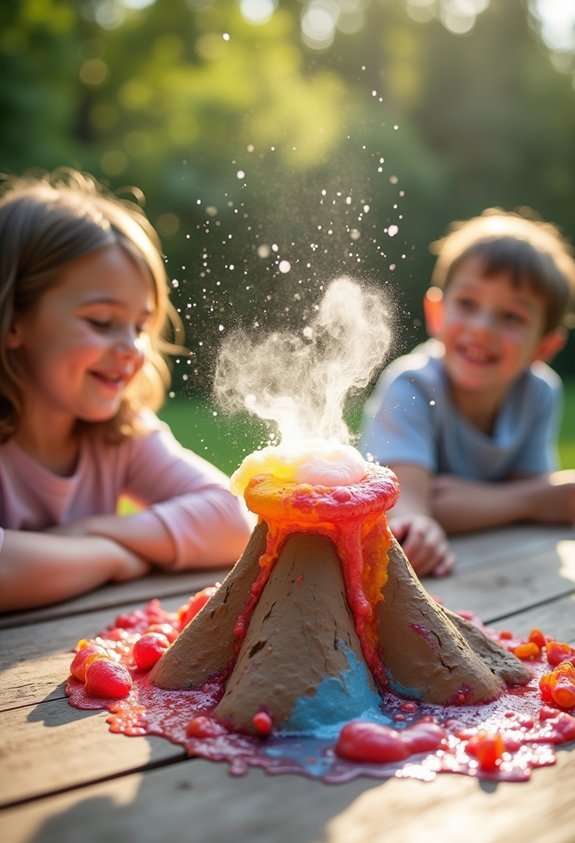
Before you dump in the baking soda and scream “ERUPTION!”, you get to do the fun part: actually building the volcano.
This is where your creative designs explode long before the lava does. You can mold the mountain from clay, dirt, cardboard, or that mystery craft bin under your bed.
Want a classic cone? Easy. Want a dragon volcano that spits “fire” from its mouth? Even better.
Paint rocky cracks, glowing magma rivers, or tiny trees fleeing for their lives. Your artistic expressions don’t just make it pretty; they help you imagine how real volcanoes look and move.
Every color choice, every goofy detail, turns simple kitchen chemistry into your own mini movie set, starring one very dramatic lump of science.
Ready to blow.
Safe, Messy Fun for the Whole Family
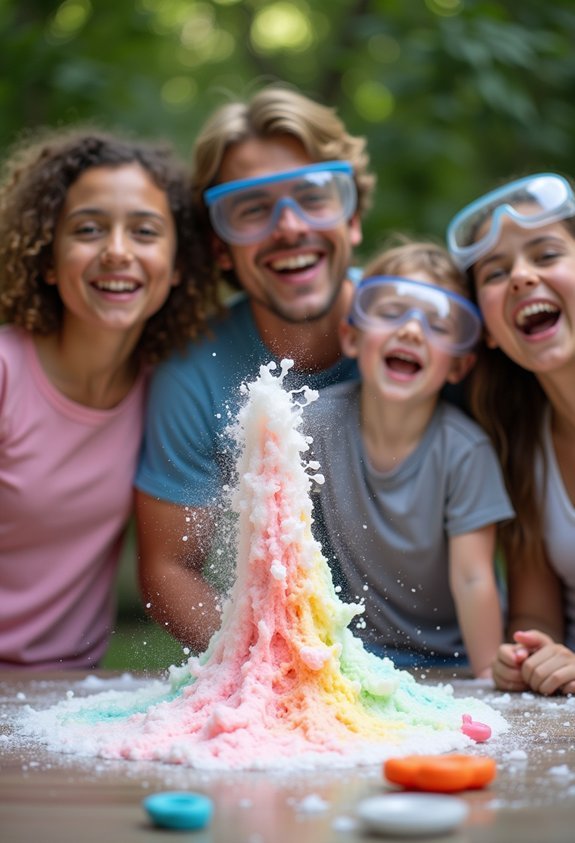
Your volcano looks amazing, but let’s be real—you’re about to make a foamy, flying, possibly ceiling-bound mess. That’s the fun part, as long as you’re smart about it. A few simple safety precautions keep the chaos awesome, not scary. Think of it as party control for tiny lava monsters.
- Lay down a big trash bag or old sheet. Trust me, you’ll thank yourself when the “lava” sprints for the carpet.
- Hand out goggles and explain why eyes matter. Kids feel like scientists, you feel less like calling the doctor.
- Set clear “no touch” rules for the mixture and the food coloring.
When you plan the mess together, you turn cleanup, laughs, and surprises into real family bonding. These wild moments stick in everyone’s memory.
Sparking Curiosity About Earth’s Real Volcanoes
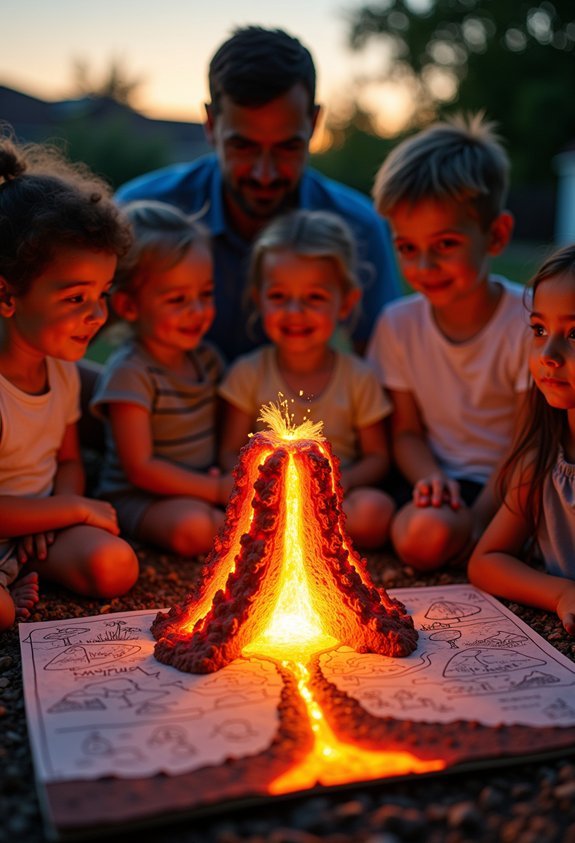
Ever wonder what real volcanoes are doing while you’re exploding baking soda on the porch? Your tiny foam blast is like a movie trailer for the wild stuff Earth does for real.
When you build a model, you start to notice volcano types: tall, classic cones, wide shield volcanoes, cracks in the ground that just ooze. You compare your red lava sludge to videos of glowing rock rivers and think, “Whoa, mine’s cute, theirs is terrifying.”
You also begin to ask big questions about eruption impacts. How far does ash travel? Could lava reach a town? Why do some people live near volcanoes anyway?
Your little backyard mess turns into a backstage pass to Earth’s loudest, hottest show. You’ll never see mountains the same.
From Backyard Experiments to Bigger Science Projects
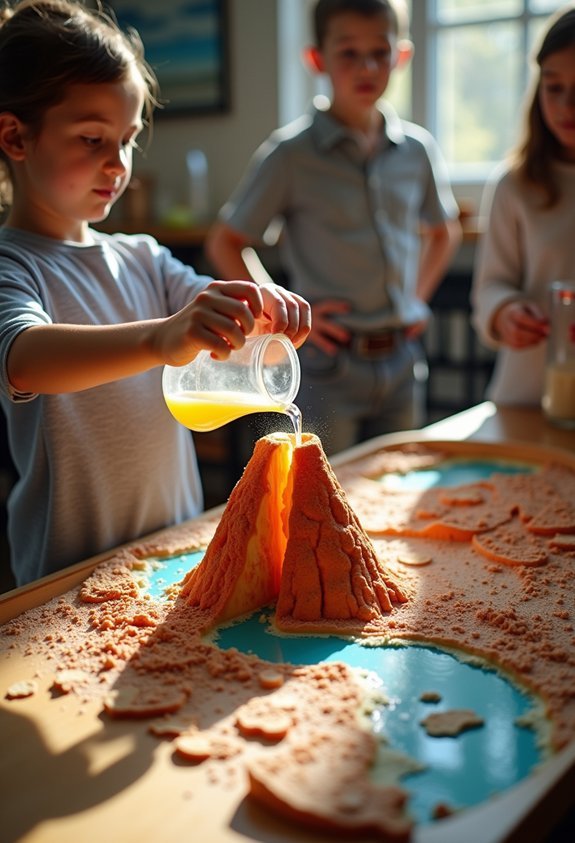
Now you’re thinking like a scientist. You test, measure, and write stuff down instead of just yelling, “COOL!” and running away from the foam.
Here are some ways to go bigger:
- Track how fast “lava” flows on sand, dirt, or grass, then compare.
- Build different volcano shapes and see which ones “erupt” farther.
- Time how long each eruption lasts and graph the results like a mini research lab in your own backyard.
Tips for Making Your Eruption More Dramatic and Colorful
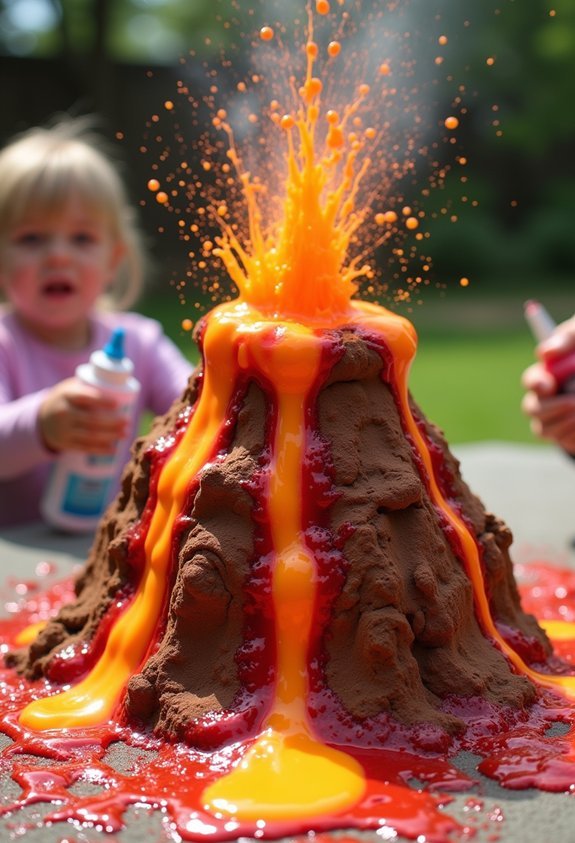
One simple truth: if you’re gonna make a backyard volcano, you might as well make it EPIC.
First, shrink your bottle opening so pressure builds before it blasts. A funnel or clay ring works great.
Next, go for colorful eruptions. Add food coloring, drink mix, or washable paint to the vinegar. Red screams lava, blue feels like alien slime, green means “maybe don’t touch that.”
For bigger dramatic effects, use warm vinegar and a tall, narrow bottle. More height, more wow.
Mix in a squirt of dish soap so the foam sticks around instead of fizzling out like a sad soda.
And always test outside first, unless you want your kitchen to look “post-apocalyptic.” Your future self will thank you when cleanup stays survivable.
In case you were wondering
How Much Does It Typically Cost to Set up a Backyard Volcano Experiment?
You typically spend $5–$25, depending on materials needed like baking soda, vinegar, coloring, and a container. With budget considerations, you can reuse items, choose cardboard over plaster, skip kits, and still create a dramatic eruption.
What’s the Best Way to Clean up the Volcano Mess Afterward?
About 80% of the mess wipes up with warm, soapy water, so you start there for simple cleanup methods. Then you scrape baking-soda chunks, rinse surfaces, and bag debris for smart, stress-free mess management afterward.
At What Ages Can Kids Safely Participate in Backyard Volcano Experiments?
Kids can join backyard volcano experiments from about age three, with supervision, while you reserve toddler participation to simple pouring. Older children enjoy measuring ingredients; teen involvement lets you discuss chemistry, safety, and responsible experimentation.
Can Backyard Volcano Experiments Be Done Indoors, or Only Outside?
Backyard volcano experiments can work indoors, but you must treat indoor safety like a shield. You protect surfaces, use trays, supervise closely, and keep eruptions small, making the eruption simulation controlled and easy to clean.
How Can I Film the Eruption so It Looks Impressive in Photos and Videos?
You make the eruption look impressive by using low camera angles, backlight the spray, and slow motion. You control exposure, avoid cluttered backgrounds, stabilize your shot, and shoot multiple takes to capture peak bursts dramatically.
Conclusion
So when you build a backyard volcano, you’re not just making a mess. You’re flipping your yard into a mini science lab with lava. You mix, it foams. You tweak, it explodes bigger. You wonder, “What if I add more red?” Boom—dragon spit. It’s learning in disguise, like broccoli dressed as pizza. So grab the baking soda, drag everyone outside, and light that fuse on your curiosity. Your volcano’s waiting to blow.