Montessori-Inspired Valentine Activities for Preschoolers at Home
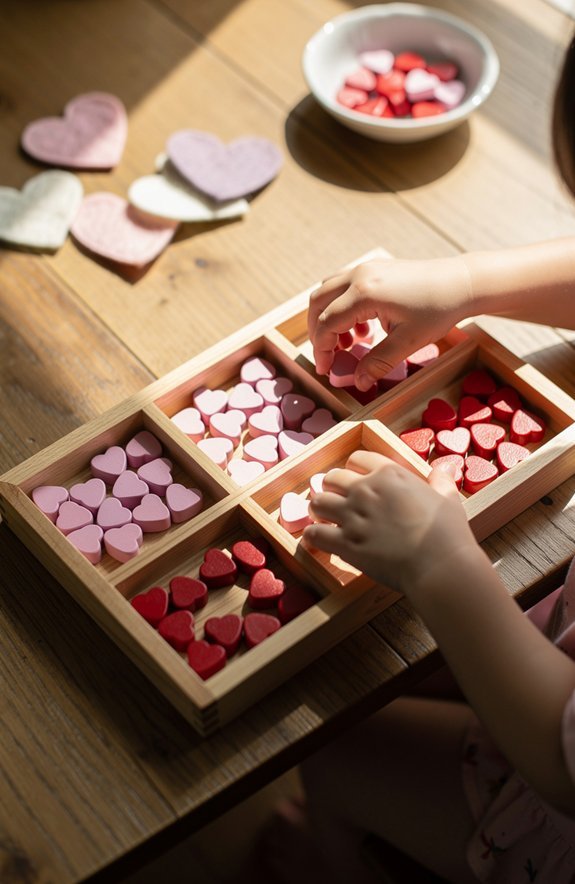
You can set up a simple Valentine activity shelf with three to five trays featuring heart sorting, bead threading, and pom-pom transfers with tongs. These self-directed tasks build fine motor skills your kiddo actually uses—like pouring cereal and getting dressed. Younger preschoolers can tear paper hearts while older ones practice cutting. Toss in some heart-shaped playdough and a mini mailbox for name writing, and you’ve got engaged kids without the glitter explosion. We’ve got all the details below.
What you will leave with
- Set up a low activity shelf with three to five Valentine trays arranged left-to-right, rotating weekly to maintain interest.
- Include heart-themed sensory play like scented playdough with cookie cutters to build hand strength and creativity.
- Use pom-pom transfers with tongs and heart lacing cards to develop pincer grip and fine motor coordination.
- Add color sorting activities with conversation hearts or pom-poms to practice counting, sequencing, and pattern recognition.
- Create a Valentine mailbox station to encourage letter formation, name writing, and literacy skills through purposeful play.
Why Montessori Valentine Activities Beat Traditional Crafts
When you hand a three-year-old a pre-cut heart covered in glitter glue, you’re basically giving them a tiny disaster waiting to happen. —and zero chance to actually learn anything.
Traditional Valentine crafts look cute on Pinterest.
But let’s be real—your kid just glued their fingers together while you did all the actual work.
Traditional Valentine crafts often mean parents do the real work while kids just watch—and maybe glue their fingers together.
Montessori activities flip the script.
They boost student engagement by letting little hands do real tasks.
Cutting their own hearts.
Sorting buttons by color.
Threading beads onto string.
Here’s the magic part: skill transfer.
When kids practice pouring, sorting, and fine motor work during Valentine prep, those skills show up everywhere else.
These self-directed processes build analytical thinking that structured adult-led crafts simply can’t replicate.
Breakfast cereal? Nailed it.
Getting dressed? Way easier.
Setting Up a Valentine Activity Shelf at Home
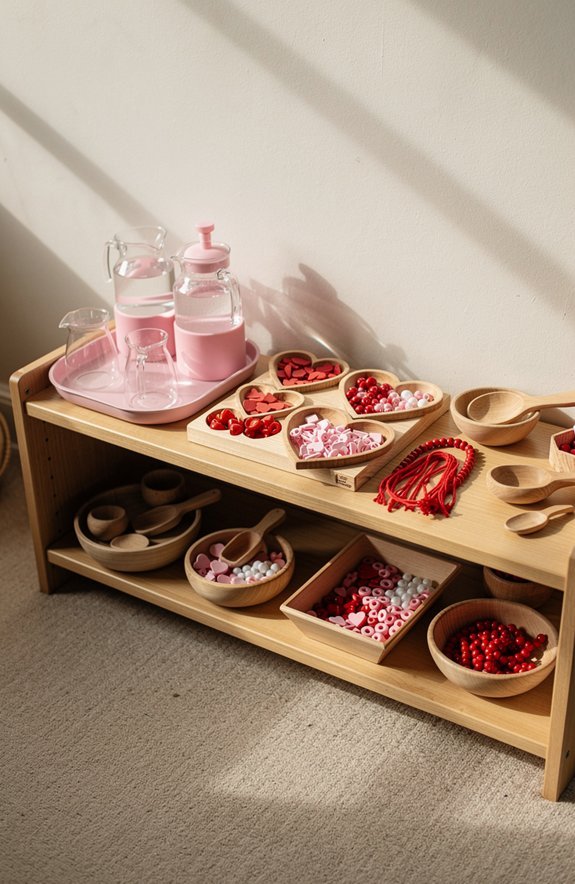
Because Montessori shelves look deceptively simple, most parents overthink them into oblivion.
You don’t need Pinterest perfection here. Grab a low bookshelf, clear off the clutter, and breathe.
Space optimization matters more than aesthetics.
Pick three to five Valentine activities max.
Seriously, that’s it!
Too many options overwhelm little brains faster than you can say “glitter explosion.”
Use shelf labeling to help your kiddo find and return materials independently.
A heart sticker or simple picture works great.
Fancy labels? Totally unnecessary.
Place each activity in its own tray or basket.
Left to right, top to bottom—just like reading.
Your preschooler will naturally gravitate toward what interests them.
Prioritize open-ended toys that encourage imaginative play and creativity over single-purpose items.
Rotate activities weekly so things stay fresh and exciting.
Boredom is the enemy, and you’re now officially winning!
Basic Supplies for Montessori Valentine Trays
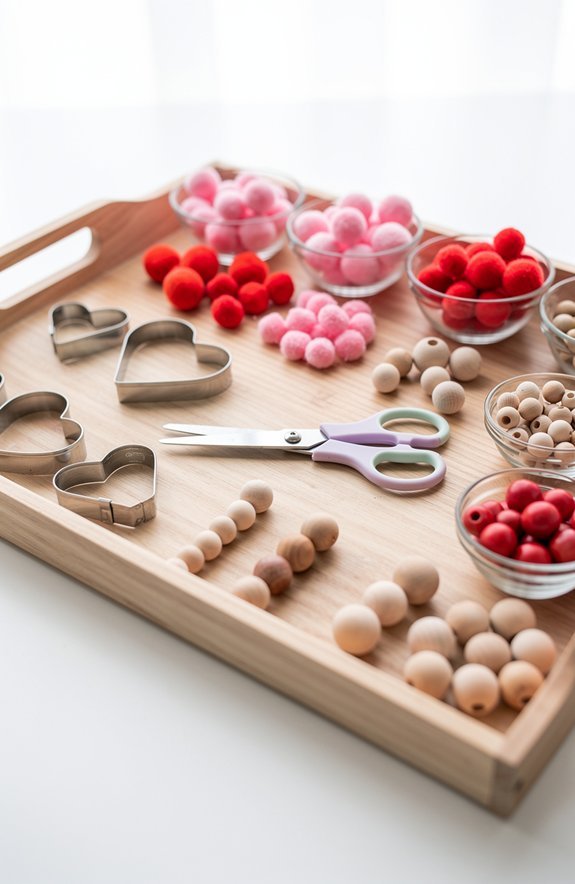
Now that your shelf is all set up, let’s talk about what actually goes on those cute little trays.
You don’t need anything fancy here.
Grab some glue sticks, kid-safe scissors, and construction paper in reds, pinks, and whites.
Add some heart-shaped stickers, pom poms, and maybe some doilies if you’re feeling extra.
For sensory bins, think dried pink pasta, heart-shaped erasers, or even conversation hearts.
Toss in some tongs or scoops and boom—instant entertainment.
Here’s the thing: you probably have half this stuff already.
Check your junk drawer.
Raid the craft closet.
That random bag of buttons? Perfect.
Those old magazines? Heart-cutting goldmine.
Empty egg cartons become bodies for adorable Valentine creatures like love bugs or heart-shaped caterpillars.
Keep supplies simple and swap them out weekly.
Fresh trays equal fresh excitement.
Your kiddo will think you’re a genius!
Adapting Valentine Activities by Age and Skill Level
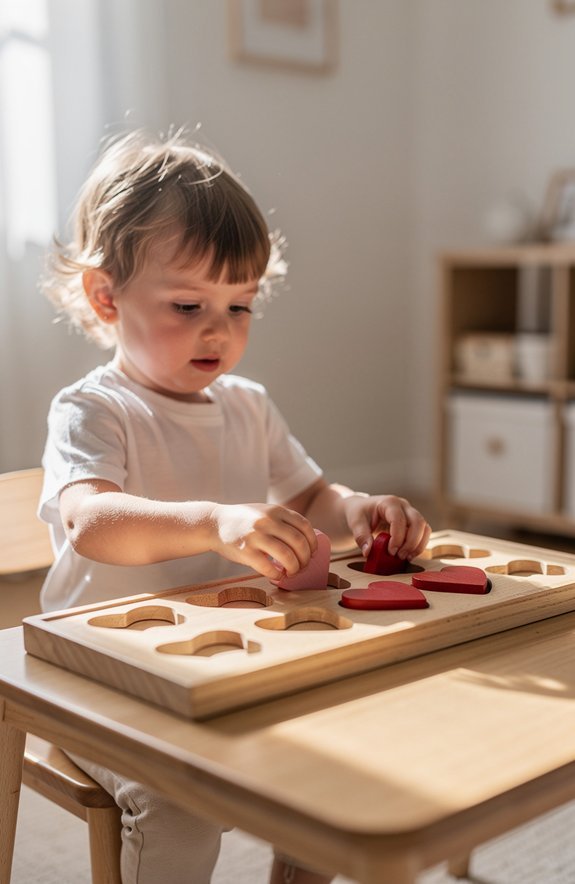
Not every two-year-old can handle scissors, and that’s totally okay! That’s where skill differentiation saves the day. Your tiny tot can tear paper hearts while your four-year-old cuts them out. Same activity, different approaches. Everyone wins!
Think about age appropriate tweaks for each task. Younger kids? Give them stickers, chunky crayons, and lots of glue. Older preschoolers? Bring on the lacing cards and bead sorting.
Watch your child closely. If they’re frustrated, simplify. If they’re bored, add a challenge. You know your kid best! This approach of graduated difficulty levels helps build confidence through small victories while preventing discouragement.
The magic happens when activities grow with your child. Start simple in February, and by next Valentine’s Day, they’ll blow your mind with what they can do. Progress is pretty sweet!
Valentine Mailbox Station for Real Writing Practice
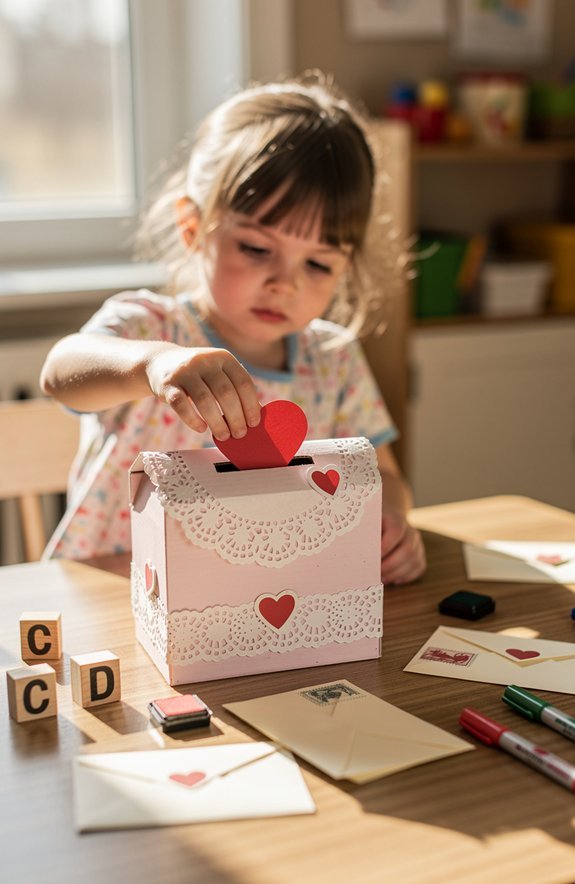
Setting up a Valentine mailbox station is like giving your preschooler their own tiny post office, and they’ll absolutely eat it up! Grab a shoebox, let them decorate it with stickers and hearts, and boom—instant mail headquarters.
Here’s where the magic happens: they’ll want to write cards for everyone.
The dog? Sure. Grandma? Obviously. Their stuffed unicorn? Why not! This natural motivation makes letter formation practice feel like play instead of work.
Stock the station with pencils, crayons, and simple Valentine cards. Watch as they scribble names and draw wobbly hearts. You’re sneaking in a penmanship routine without the tears or battles. For extra tactile fun, add playdough so kids can shape letters into Valentines, which transforms abstract symbols into tangible forms they truly understand.
Check the mailbox together each day. Their face when they find a note from you? Priceless. Pure, heart-exploding joy.
Heart Beading and Lacing for Fine Motor Skills
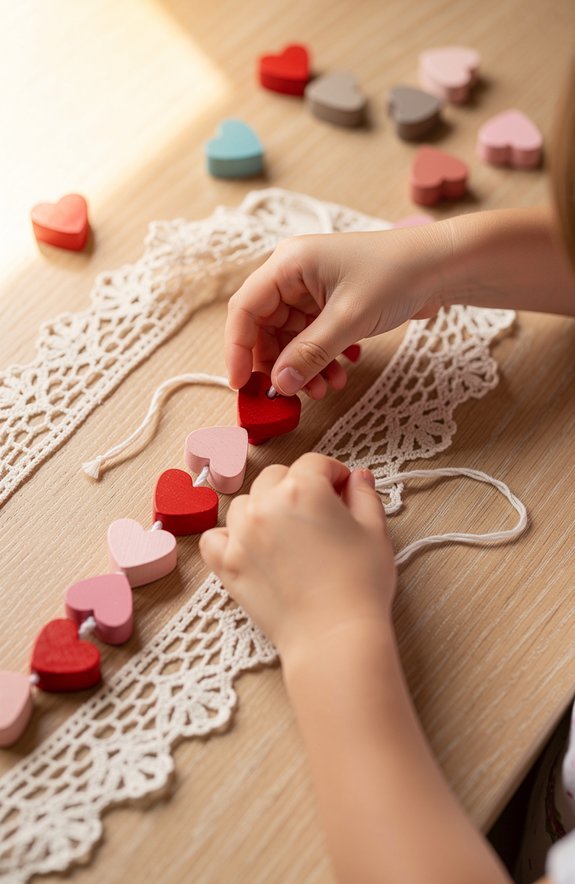
Those little fingers that just addressed seventeen Valentine cards to stuffed animals?
They’re ready for more action.
Heart beading and lacing activities are basically a gym workout for tiny hands.
Grab some heart-shaped beads and shoelaces with stiff tips.
Now watch the magic happen.
Your kiddo will work on bead sequencing—red, pink, red, pink—while building the grip strength they’ll need for writing.
It’s sneaky learning at its finest.
Lacing patterns through cardboard hearts work the same muscles.
Punch holes around a big paper heart.
Hand over a yarn “needle.”
Then step back.
Fair warning: they’ll want to wear their creations.
You might attend dinner with a child sporting seven bead necklaces.
That’s just Tuesday now.
Worth it for those strengthening fingers!
Love to Pieces Gluing Tray With Ripped Paper
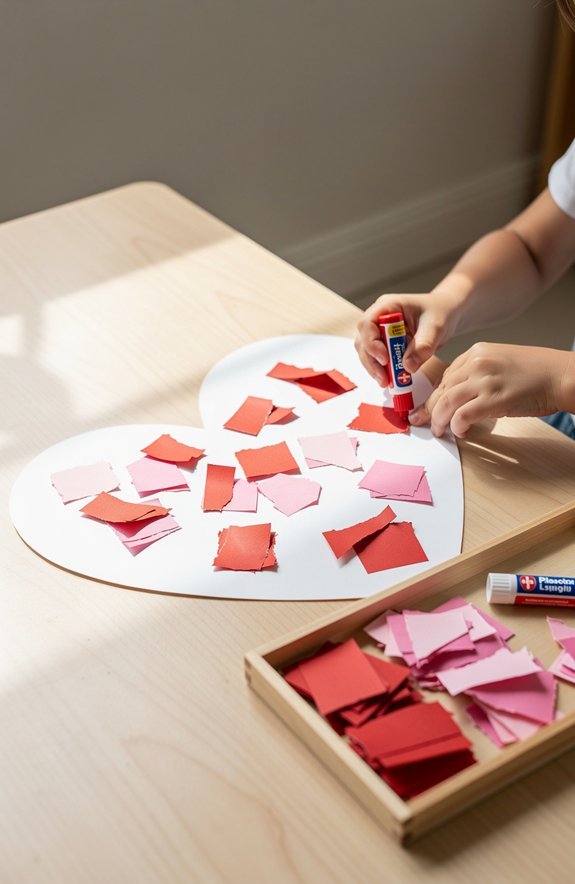
Ripping paper into tiny pieces isn’t destruction—it’s art therapy for the preschool set.
Your kid gets to tear stuff up AND make something beautiful? Win-win.
Grab a tray, some construction paper in reds and pinks, a glue stick, and a heart-shaped outline.
Let your little one go wild ripping paper into small pieces.
Seriously, they’ll love this part way too much.
Next comes the gluing technique practice.
Show them how to dab glue inside the heart, then press those ripped paper bits down.
It’s like a mosaic, but messier and cuter.
The pincer grip they’re using?
That’s pre-writing gold.
And the focus required to fill that whole heart?
Chef’s kiss for concentration skills.
Plus, you’ve got instant grandparent-worthy fridge art.
Valentine Pom-Pom Transfer With Tongs and Tweezers
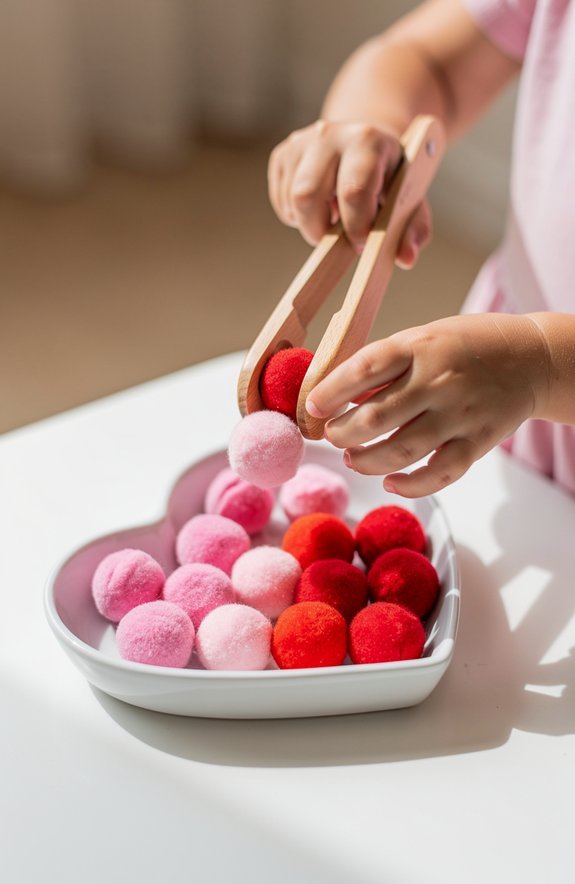
Now that your kiddo has mastered the art of ripping things apart, let’s channel that hand strength into something a little more precise.
Grab some pink and red pom-poms, a couple of heart-shaped containers, and tongs or tweezers.
The goal? Transfer those fuzzy little balls from one spot to another without launching them across the room.
Easier said than done!
This activity is pure gold for pincer grip practice.
Those tiny muscles in your child’s fingers are getting a serious workout.
And grip development like this?
It’s basically pre-writing boot camp disguised as playtime.
Watch your preschooler’s face scrunch up in concentration.
Maybe a pom-pom flies.
Maybe three.
That’s part of the fun!
Just keep encouraging those little fingers to squeeze, grab, and release.
Heart-Shaped Playdough for Sensory Exploration
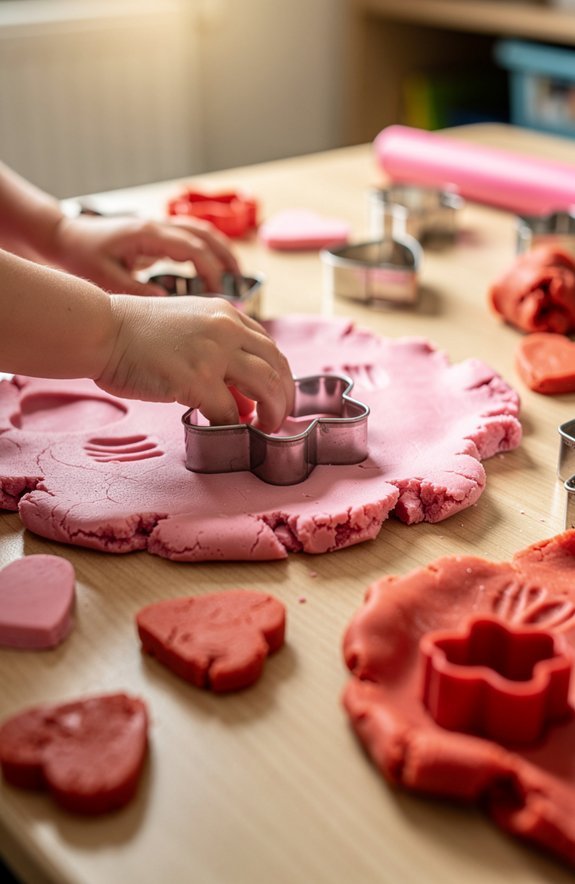
Squish, roll, and smash—playdough is basically therapy for tiny hands.
Make a batch of pink or red scented dough using lavender or vanilla extract, and watch your kiddo go wild.
The smell alone will have them hooked.
Give them heart-shaped cookie cutters and let the magic happen.
They’ll press, poke, and create dozens of wonky valentines.
It’s adorable chaos.
Want to level up?
Try color mixing by giving them red and white dough.
When they smoosh them together and pink appears, their minds will be blown.
You’d think they discovered fire.
This activity builds hand strength, sparks creativity, and keeps them busy for a solid twenty minutes.
That’s basically a vacation in toddler time.
You’re welcome.
Cookie Cutter Heart Stamping With Paint
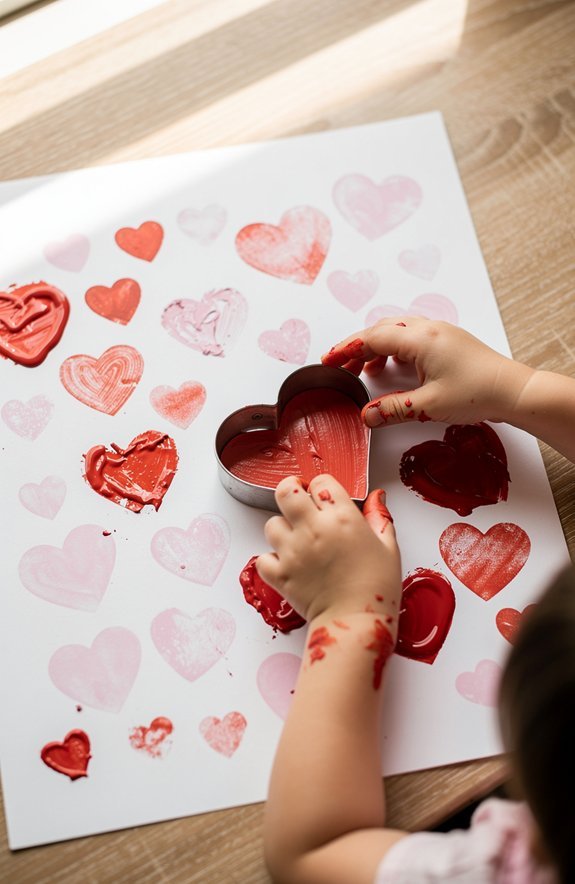
Dipping cookie cutters into paint is basically giving your preschooler a license to make adorable messes.
Grab some heart-shaped cutters, shallow trays of washable paint, and big sheets of paper.
Then let the stamping chaos begin!
- Try different stamping techniques like pressing lightly for outline hearts or firmly for solid shapes
- Layer colors by stamping one heart inside another for a cool effect
- Make patterns in rows or scattered randomly—both look amazing
Here’s your paint safety tip: stick with non-toxic, washable options because tiny hands will absolutely end up covered.
That’s just science.
You’ll find paint in hair, on noses, maybe on the dog. It happens.
The results? Genuinely cute Valentine cards that grandparents will obsess over.
Total win.
Textured Heart Basket for Learning Descriptive Words
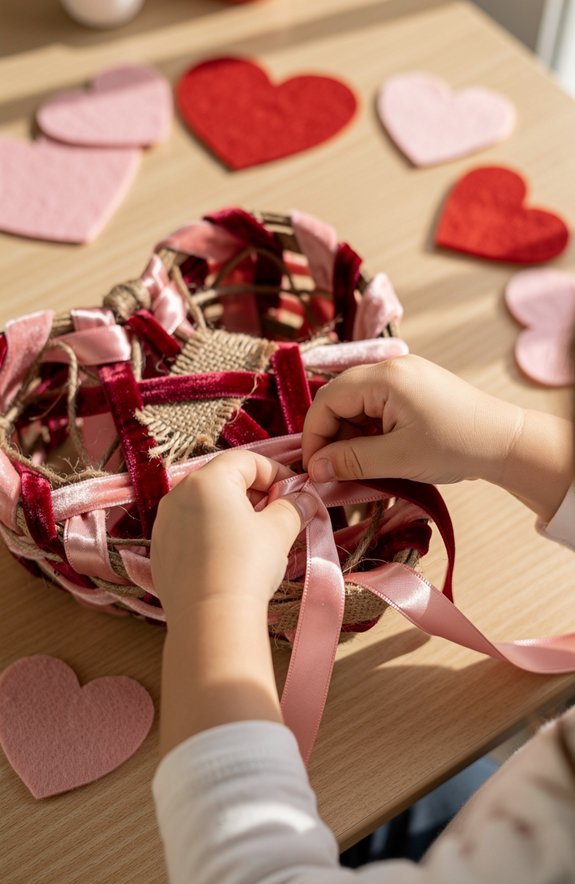
Ready to give those little hands a break from paint?
Grab a basket and fill it with heart-shaped objects that feel wildly different.
Think fuzzy felt hearts, bumpy beaded ones, smooth wooden cutouts, and crinkly foil versions.
Here’s where the magic happens.
Your kiddo pulls out each heart and describes what they feel.
This builds texture vocabulary like nobody’s business!
“Squishy,” “rough,” “slippery”—these sensory adjectives practically tumble out.
Make it silly.
Ask, “Does this heart feel like a cat’s tongue or a pillow?”
Watch their face scrunch up as they think hard about it.
Pro tip: Raid your craft drawer for materials.
Sandpaper hearts? Chef’s kiss.
Velvet scraps? Fancy!
You’re basically turning trash into a language lesson.
Montessori would be so proud.
Valentine Color Sorting for Counting Basics

Sorting stuff by color might seem basic, but it’s secretly genius for teaching counting.
Grab some conversation hearts, red and pink pom poms, or even colorful buttons.
Dump them in a pile and let your kiddo go wild organizing them into groups.
Here’s why this works so well:
- Color sequencing builds pattern recognition — their brain starts connecting “what comes next” without even trying
- Counting strategies develop naturally as they tally up each pile
- Fine motor skills get a sneaky workout from all that picking and placing
Once they’ve sorted everything, ask “How many pink ones?” Watch their little fingers count each item.
You’ve just turned candy into a math lesson. Parenting win!
Valentine Loose Parts Tray for Creative Play
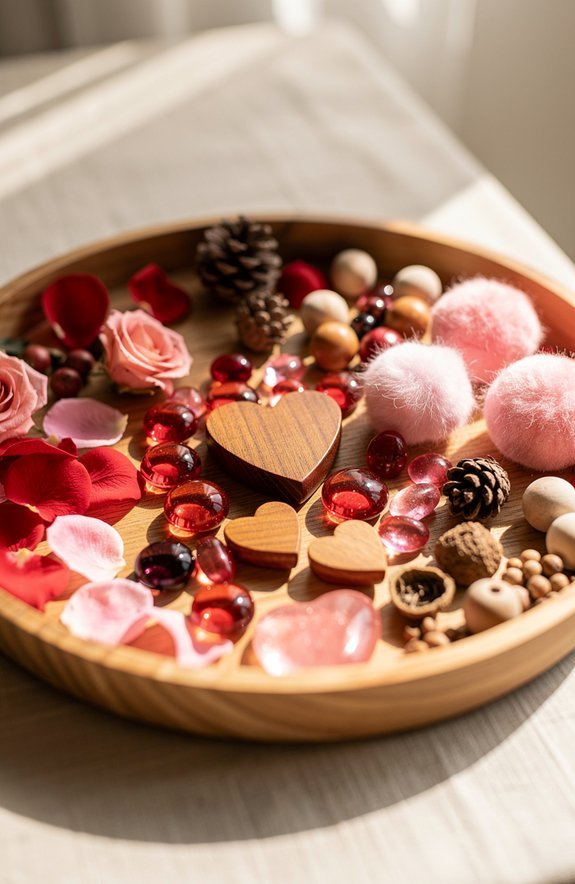
A loose parts tray is basically a fancy way of saying “a bunch of random stuff on a tray that your kid can mess around with.”
And honestly? It’s genius.
Grab a muffin tin or shallow tray.
Fill each section with heart buttons, pink pom-poms, red ribbon scraps, wooden beads, and conversation hearts.
Then step back and watch the magic happen.
This is creative play at its finest.
No rules.
No “right way.”
Just pure materials exploration.
Your kid might sort everything by color.
Or build a tower.
Or create a tiny Valentine village for invisible fairies.
Who knows! That’s the whole point.
The best part? You probably have most of this stuff already.
Raid your craft drawer and let them go wild.
Split Heart Matching Game for Pattern Recognition
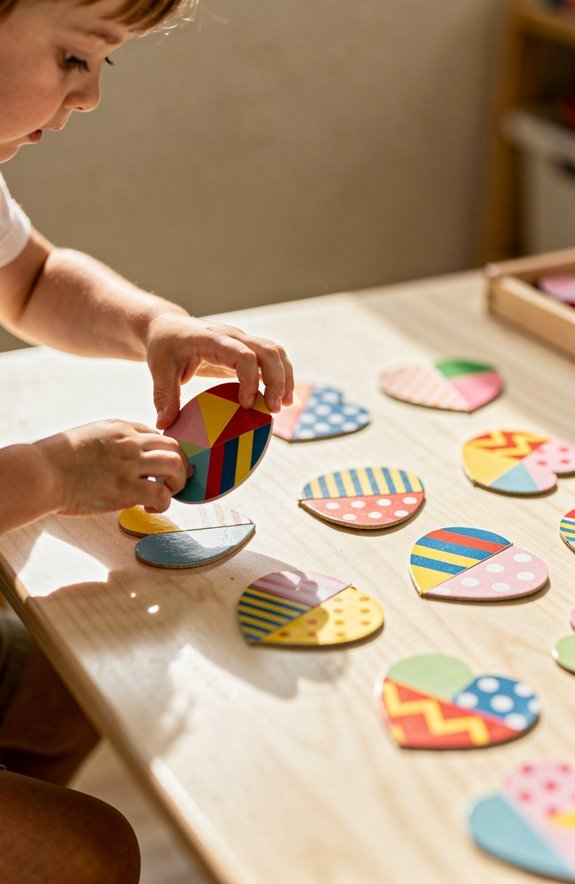
Cut paper hearts in half using zigzag, wavy, or straight lines—and you’ve just created a game that’ll keep your preschooler busy while secretly boosting their brain power.
Transform simple paper hearts into a brain-boosting matching game with one clever snip.
Here’s why this works so well:
- Kids match split halves by lining up patterns, colors, or designs
- Color sequencing gets a workout when you add stripes or dots
- Those little fingers build fine motor skills while problem-solving
Start with just four hearts.
Too easy? Crank it up to ten!
Your kiddo will hunt through the pile like a tiny detective, squinting at edges and flipping pieces.
The victory dance when they nail a tricky match?
Absolutely worth the paper scraps everywhere.
Pro tip: laminate these bad boys, and you’ve got a game that survives sticky fingers all month long.
Heart Number Cards for Counting Practice 1–10
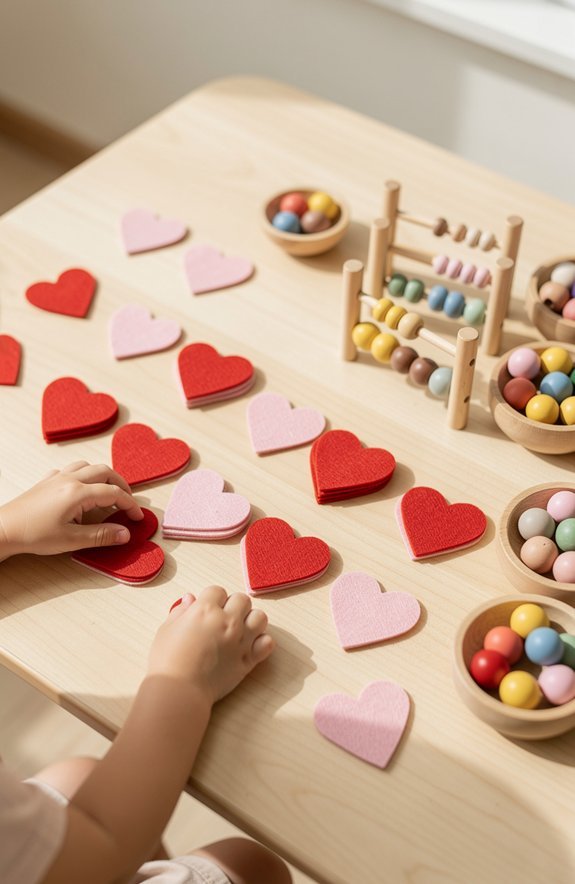
Once your little one’s conquered the pattern-matching challenge, it’s time to throw some numbers into the mix.
Grab some cardstock, cut out ten hearts, and write numbers 1–10 on each one.
Boom—instant number recognition practice!
Here’s where it gets fun.
Give your kiddo a bowl of conversation hearts or mini pompoms.
They’ll match the right amount to each card, building those counting sequences one candy at a time.
Watch their face light up when they nail seven!
Pro tip: Start with cards 1–5 if ten feels overwhelming.
There’s zero shame in keeping it simple.
You can also hide the hearts around the room for a scavenger hunt twist.
Nothing motivates a preschooler like hunting for treasure—especially when counting’s involved!
Alphabet Hearts for Letter Sounds and Name Building
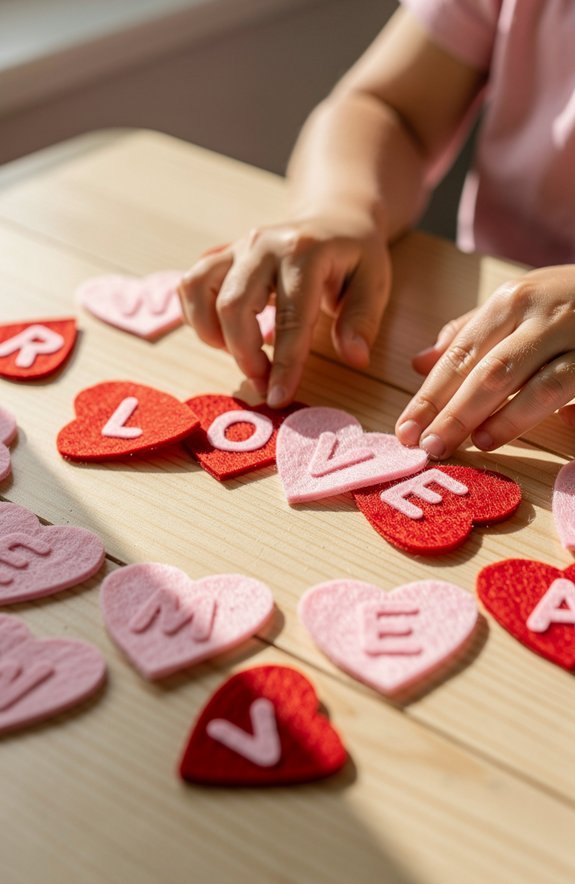
Letters become way more exciting when they’re shaped like hearts!
Cut out paper hearts and write one letter on each.
Your kiddo can match uppercase to lowercase, build their name, or sort by sounds.
It’s phoneme play disguised as Valentine fun!
Here’s how to make it pop:
- Sound hunt: Say a letter sound and watch them race to find the matching heart
- Name puzzle: Spell out their name and let them put the hearts in order
- Letter routines: Practice 3–4 Hearts daily before switching to new ones
The magic happens when learning feels like a game.
Your preschooler won’t even realize they’re practicing!
Toss in some glitter hearts and suddenly phonics becomes the best part of their day.
Valentine Mail Labels for Name Recognition Practice
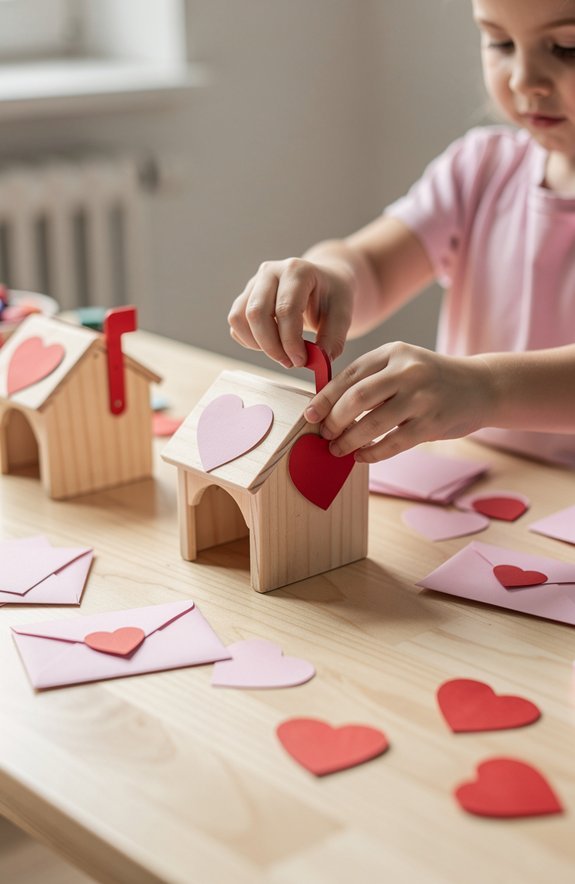
A simple stack of Valentine cards turns into a name recognition goldmine when you add mail labels to the mix.
Valentine cards plus mail labels equals the ultimate name recognition activity for your little learner.
Your kid becomes the official mail carrier, and suddenly reading names actually matters!
Write family members’ and friends’ names on sticky labels. Spread Valentine cards across the table. Now watch your little one match labels to cards like a tiny postal worker with a mission.
Smart labeling strategies make this even better.
Use different colored labels for each family member.
Add a small heart sticker next to tricky names.
Your child will start recognizing “Grandma” faster than you can say “special delivery.”
The best part? They’re building name recognition skills while feeling incredibly important. Nothing beats a preschooler who takes mail duty seriously!
Tea Time Pouring and Serving With Heart Trays
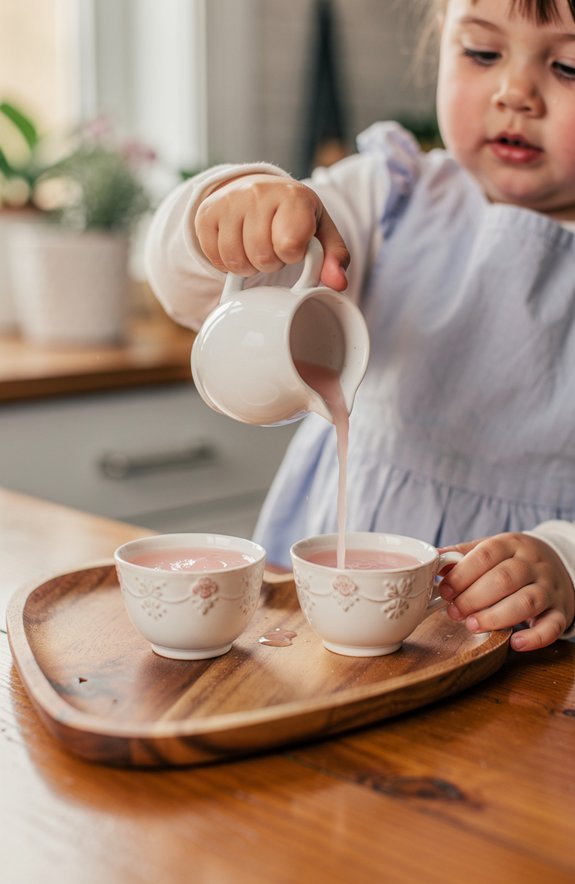
Pouring water into tiny cups sounds simple until you hand a pitcher to a three-year-old and watch chaos unfold.
But that’s the magic! This activity builds concentration and motor control while looking adorable.
- Use a heart-shaped tray to contain spills and boost tray aesthetics
- Start with a small pitcher filled only halfway
- Teach teacup care by showing gentle two-handed holds
Set up a mini tea party station with real ceramic cups. Yes, real ones!
Kids rise to the occasion when trusted with breakable items.
Add a tiny sponge for cleanup duty because spills will happen.
Your child pours, serves imaginary guests, and practices saying “Would you like some tea?”
The whole scene is ridiculously cute and genuinely educational. Win-win!
Card Making That Teaches Kindness and Empathy
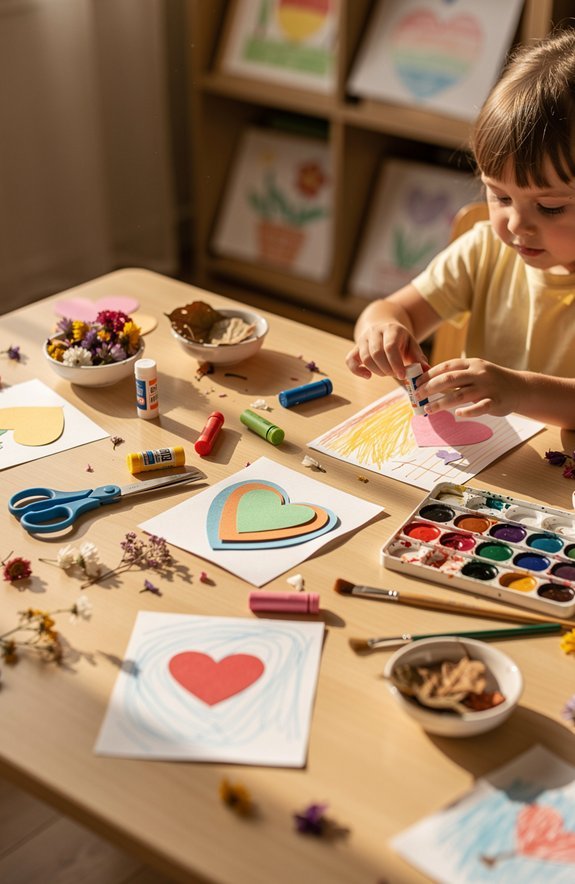
Why does a homemade card hit different than a store-bought one? Because your kiddo poured actual thought into it!
Start by asking who they want to make a card for and why. This simple empathy dialogue opens up big feelings.
“What makes Grandma smile?” or “Why do you like playing with Marcus?”
Watch their little faces light up as they think about others.
Let them dictate messages while you write. Their words are pure gold.
Encourage kindness reflections by asking what makes someone a good friend.
Then they decorate however they want—stickers, stamps, messy glitter explosions.
The “imperfect” results are honestly the best part.
A wobbly heart drawn by tiny hands? That’s the stuff people keep forever in their special drawer.
Cooperative Heart Hunt Game for Turn-Taking
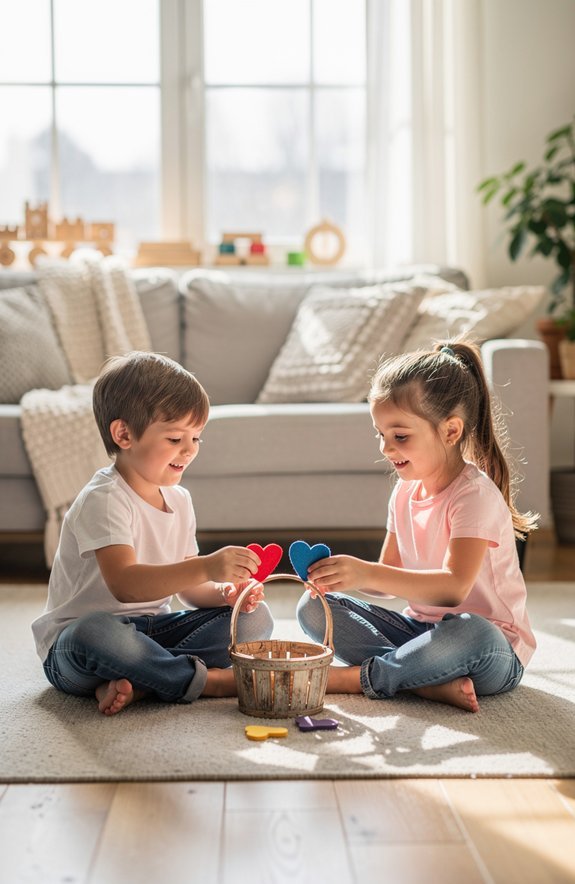
Before you hide those paper hearts around the living room, here’s the real magic of this game—it’s not about who finds the most. It’s about group collaboration! Each kid takes ONE turn finding ONE heart, then tags the next friend. Wild concept, right?
The real magic isn’t finding the most hearts—it’s watching kids tag their friends and cheer each other on.
Here’s why it works:
- Kids practice sharing strategies without even realizing it
- Nobody melts down because someone “got all the good ones”
- You’ll actually hear them cheering for each other (tears of joy, honestly)
The trick? Make the hearts different colors and assign each kiddo a specific shade. Now they’re literally hunting FOR their friends. Turn-taking becomes exciting instead of torture. Your preschoolers transform into a tiny, enthusiastic search party—and you get to sip your coffee while teamwork happens naturally.
Role-Play Tea Party for Grace and Courtesy Skills
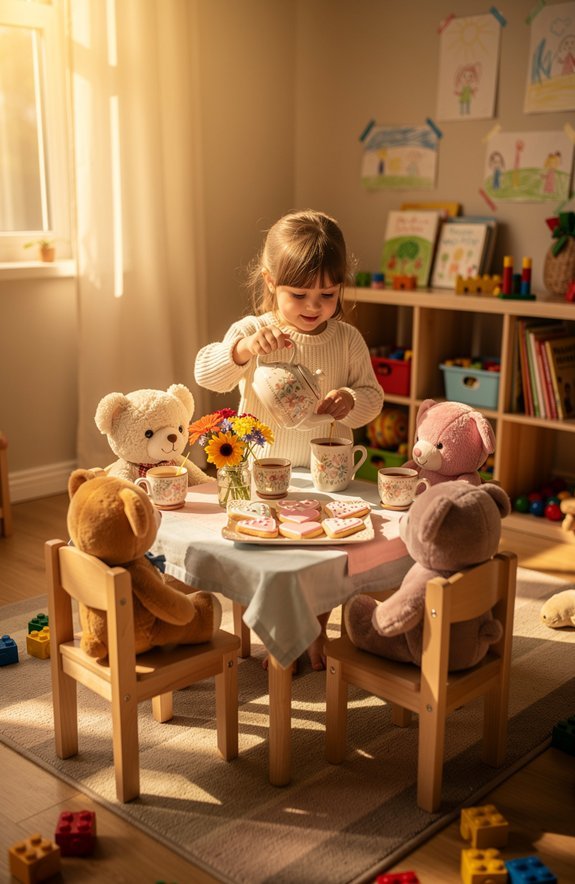
A tiny tea party might seem like just cute playtime, but it’s secretly a grace and courtesy goldmine. Set up a small table with plastic cups, a teapot, and maybe some heart-shaped cookies.
Then watch the magic happen.
Your kiddo gets to practice saying “please” and “thank you” about fifty times.
They’ll pour pretend tea without splashing it everywhere (hopefully).
The roleplay benefits are huge—kids learn by doing, not by lectures.
Etiquette exploration feels natural when teddy bears are involved.
“Would Mr. Bear like more tea?”
Boom. Polite conversation skills unlocked.
Throw in some Valentine napkins and you’ve got a themed winner.
Kids love feeling fancy and grown-up.
Plus, you might actually get offered some imaginary cookies.
Score!
Valentine Books to Pair With Hands-On Activities
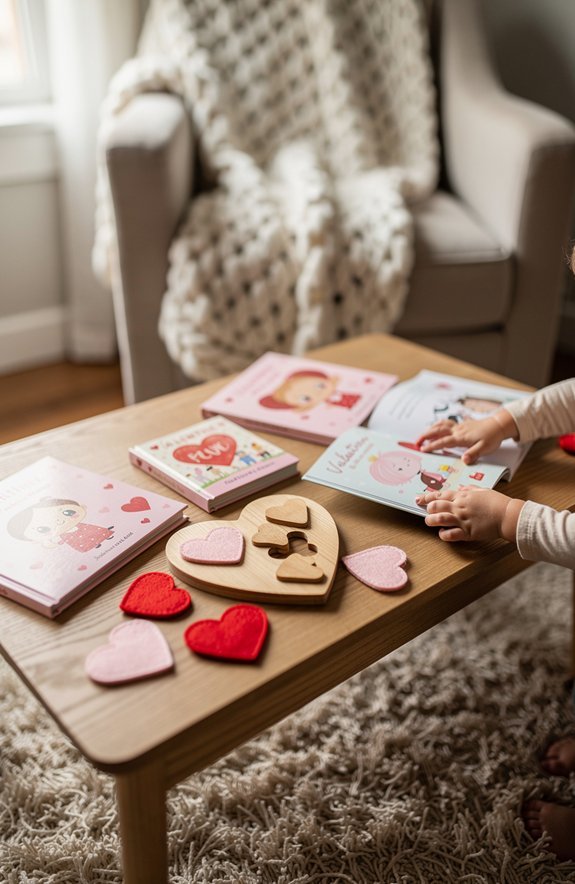
Books and hands-on activities go together like peanut butter and jelly—each one makes the other way better.
Picture books spark your child’s imagination, then crafts let them dive right in.
Picture books light the spark—crafts fan the flame. Let kids get messy and make the story their own!
It’s basically magic for little learners.
Try these winning combos:
- Read The Day It Rained Heartsthen cut out paper hearts to sort by size
- Grab Love Monsterand create a fuzzy monster valentine card
- Share Guess How Much I Love Youthen measure things around your house with yarn
Reading prompts make storytime interactive.
Ask your kiddo questions like “What would YOU give a friend?” or “How does that bunny feel?”
These simple conversations build comprehension skills without any worksheets.
Plus, your little one gets to share their wild ideas.
Win-win!
Rotating Valentine Materials to Keep Kids Engaged
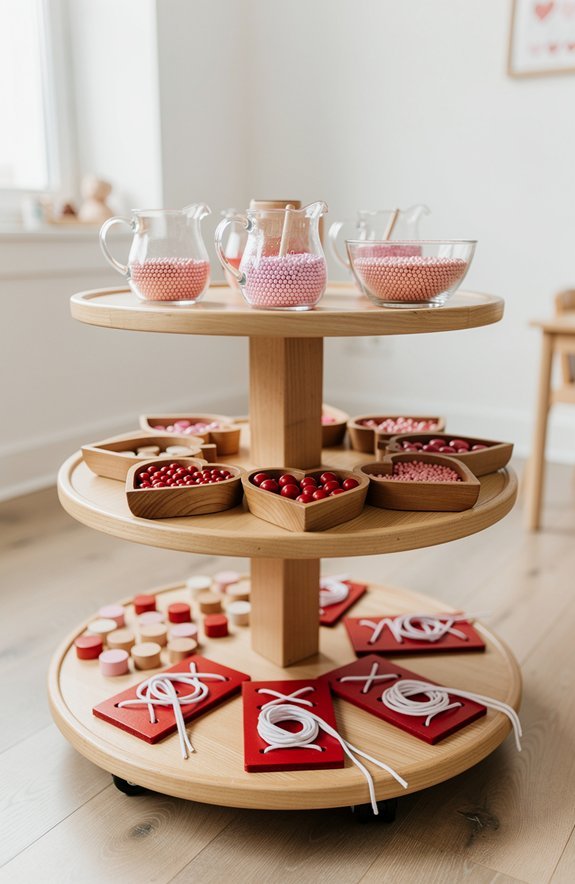
Once your kiddo has explored those book-and-activity combos a few times, you might notice something: the excitement starts to fade.
That’s totally normal!
Kids crave novelty like we crave coffee on Monday mornings.
Here’s your secret weapon: material rotation.
Instead of dumping every Valentine activity out at once, keep some hidden away.
Swap them out every few days.
Suddenly that pink playdough feels brand new again!
This engagement strategy works because preschoolers have goldfish-level attention spans (no offense, goldfish).
When you rotate materials, old becomes exciting again.
It’s basically magic without the wand.
Try keeping three activities out and three tucked away.
Switch them mid-week.
Your little one will gasp like you just pulled a rabbit from a hat.
Works every single time!
Taking Valentine Learning Beyond the Activity Tray
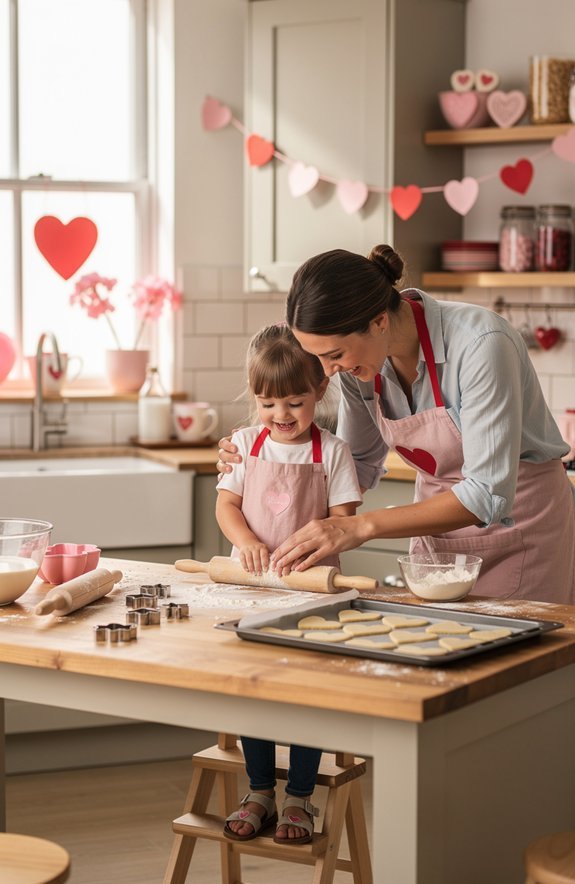
While activity trays are awesome, the real magic happens when Valentine learning spills into everyday life.
Activity trays spark learning, but everyday moments turn Valentine’s Day into real-world lessons your preschooler will carry forever.
Think bigger! Your kiddo can count hearts on neighborhood walks or sort red leaves at the park.
Outdoor learning turns the whole world into a classroom.
Here’s how to spread the love:
- Bake heart cookies together and deliver them to neighbors (hello, community projects!)
- Hunt for heart shapes in nature—rocks, clouds, puddles
- Write Valentine cards for mail carriers, librarians, or firefighters
These experiences teach kindness in action.
Your preschooler learns that love isn’t just crafts and candy.
It’s connecting with real people!
Plus, you’ll both get fresh air and maybe even make someone’s whole week.
That’s the Montessori spirit—practical life meets big-hearted fun.
Reusable Valentine Materials for Repeated Practice
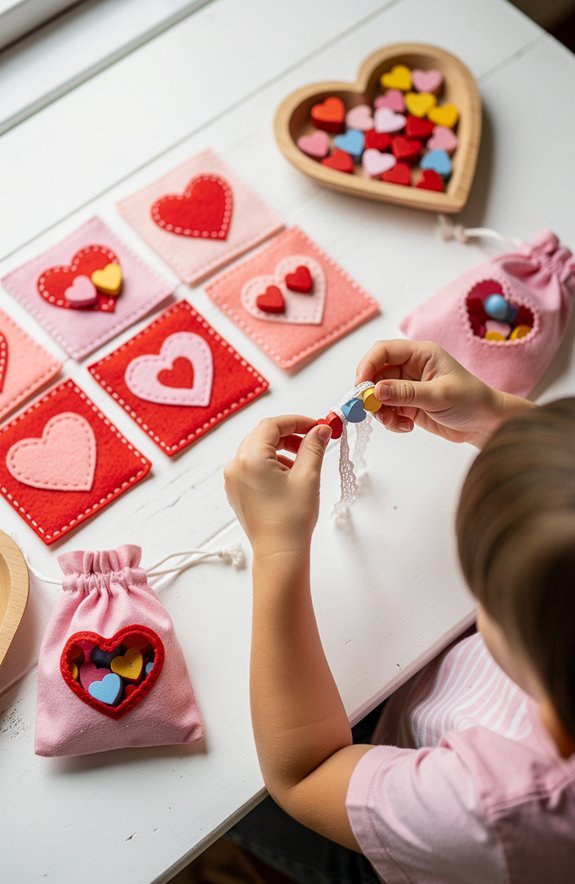
The best Montessori materials aren’t one-and-done deals—they’re workhorses your kid uses again and again until mastery clicks.
So skip the flimsy paper hearts that fall apart after two uses.
Instead, grab washable materials like laminated counting cards, felt hearts, and wooden beads.
Your kiddo can spill juice on them, and you’ll just wipe everything clean.
No tears.
No drama.
Here’s the real game-changer: durable storage keeps everything organized and ready to go.
A simple basket or container means your child can pull out their Valentine sorting activity whenever the mood strikes.
Tuesday morning? Sure.
Sunday after nap? Go for it.
The magic happens through repetition.
That same heart-matching game gets easier each time until—boom—your little one nails it without even thinking.
In case you were wondering
How Do I Handle My Child’s Frustration When Valentine Activities Feel Too Challenging?
You’ll support emotional regulation by acknowledging your child’s feelings and offering a simplified version of the activity. Use gentle pacing—break tasks into smaller steps and celebrate small wins to rebuild confidence.
Can Siblings of Different Ages Work on Valentine Trays Together Peacefully?
Studies show 85% of siblings experience conflict during shared activities. You’ll foster sibling collaboration by assigning age-appropriate roles on valentine trays. Peaceful teamwork emerges when older children guide younger ones, creating meaningful connections rather than competition.
What if My Child Only Wants to Do One Valentine Activity Repeatedly?
You should embrace your child’s repetition—it’s natural interest exploration at work. Don’t force activity rotation; instead, let them master what captivates them. When they’re ready, they’ll naturally move on to new valentine challenges.
How Long Should I Leave Valentine Materials Out Before Switching Themes?
You’ll want to keep Valentine materials out for 2-3 weeks, following your child’s interest level. Theme timing works best when you observe engagement fading. Material rotation should happen naturally, not by strict calendar dates.
Are Glitter and Stickers Appropriate for Montessori-Inspired Valentine Activities?
You can use stickers and glitter, but you’ll want to choose wisely and supervise carefully. Focus on sticker selection that encourages purposeful placement. Prioritize glitter safety by using glitter glue instead of loose particles.
Conclusion
Think of these activities like planting tiny seeds. One mom watched her three-year-old struggle with heart cutting for weeks—then suddenly, scissors clicked. That’s Montessori magic in action.
You’ve got the tools now. Grab a tray, set up a shelf, and let your kiddo loose. They’ll surprise you. Valentine’s Day isn’t just about candy hearts—it’s about growing capable, confident little humans. Now go make some beautiful messes!