Classroom Valentine’s Day Party Ideas Teachers and Parents Will Love
You’ll love classic Valentine Bingo with candy heart markers—kids eat their pieces when someone wins, so cleanup handles itself. Toss in a heart hunt with silly rhyming clues, a left-right story game that gets everyone passing prizes and laughing, and conversation heart stacking challenges that’ll have teams competing for the tallest tower. Add a quiet memory matching station for breathers between the chaos. These ideas are just the start of your stress-free party toolkit.
What you will leave with
- Valentine Bingo with candy heart markers offers easy setup, minimal cleanup, and edible game pieces kids love.
- Heart hunts with hidden clues and small prizes create memorable classroom adventures where every student wins.
- Conversation heart sorting doubles as sneaky math practice through graphing, counting, and comparing color quantities.
- Allergy-safe snacks like fruit kabobs and sunflower seed butter cups ensure all students can participate safely.
- Fine-motor crafts like spin wheels and mini-books provide hands-on creativity with minimal prep and maximum engagement.
Valentine Bingo With Candy Heart Markers
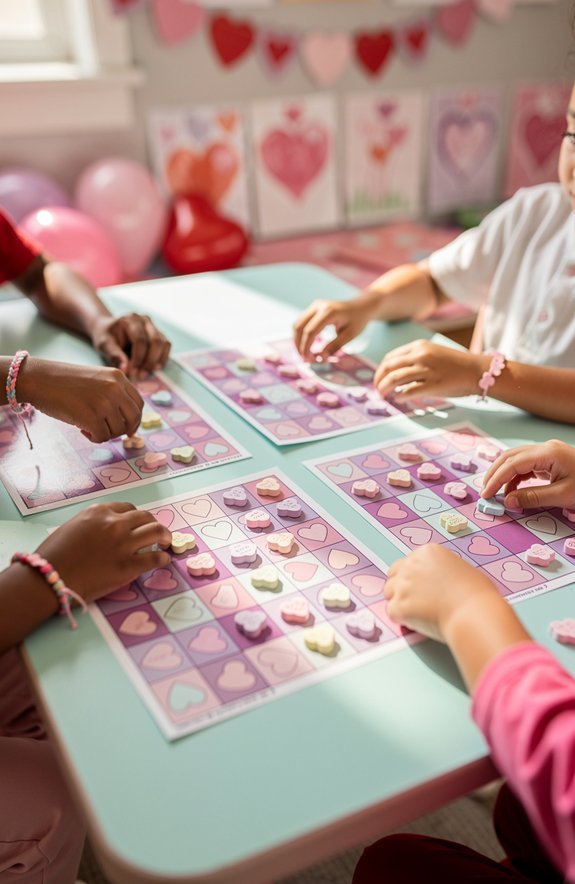
Playing bingo gets a whole lot sweeter when you swap out boring chips for candy hearts.
Kids go absolutely wild for this game, and honestly, who wouldn’t?
Here’s the deal with marker durability—candy hearts won’t smudge your cards or roll off the table like those tiny plastic circles do.
They just sit there looking adorable until someone yells “BINGO!”
Then chaos erupts, and everyone eats their markers.
It’s beautiful.
You’ve got plenty of candy options too.
Classic conversation hearts work great, but chocolate hearts or even gummy bears add variety.
Print free bingo cards online with Valentine themes, and you’re set.
The whole setup takes maybe ten minutes, and cleanup?
The kids literally eat the evidence.
This simple activity lets introverted parents participate through a quiet job while kids handle the excitement themselves.
Heart Hunt With Hidden Clues and Prizes
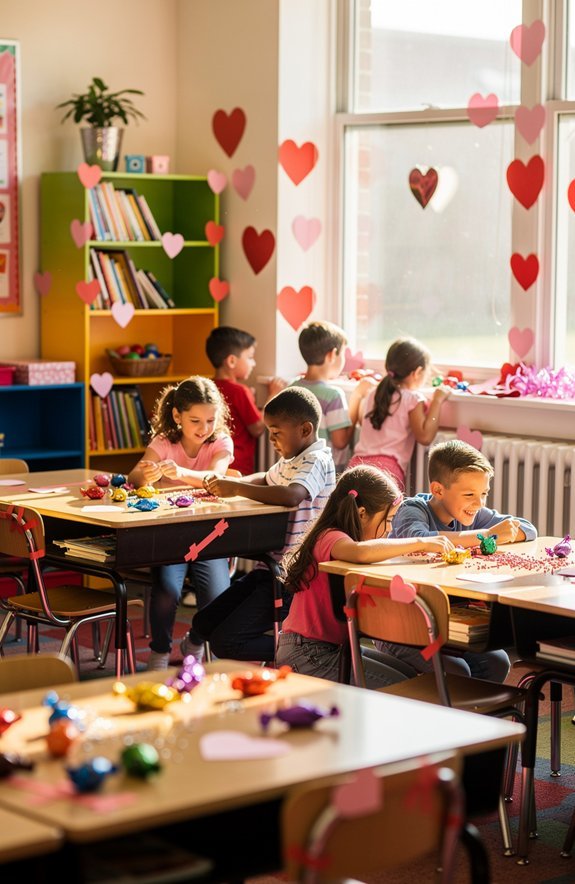
Around the classroom, tiny paper hearts are hiding in spots your students will never expect—and that’s exactly what makes this game so thrilling.
Tiny paper hearts tucked in unexpected classroom corners turn ordinary Valentine’s Day into an unforgettable adventure.
Under the pencil sharpener?
Behind the globe?
Inside someone’s desk?
Pure chaos.
Pure joy.
Your clue design doesn’t need to be fancy.
Simple rhymes work great: “I’m hiding where books like to sleep” leads them straight to the reading corner.
Kids go absolutely bonkers solving riddles.
Now, prize logistics matter here.
You don’t want thirty kids fighting over one chocolate bar.
Hide enough hearts so everyone wins something small—stickers, erasers, or temporary tattoos.
Snap photos of your hiding spots for easier cleanup later when the excitement dies down.
The hunt itself is the real prize anyway.
Watch them scramble, giggle, and high-five when they crack each clue.
It’s Valentine’s Day magic at its finest.
The Left-Right Story Game That Gets Everyone Laughing

When you need a game that practically runs itself while kids laugh until their sides hurt, the Left-Right Story Game delivers every single time. Everyone sits in a circle holding a small prize. You read a Valentine’s story out loud, and whenever kids hear “left,” they pass their prize that way. Hear “right”? Pass it the other direction. This simple activity lets kids experience the joy of unstructured play while building social skills through shared laughter.
Conversation Heart Stacking and Toss Challenges
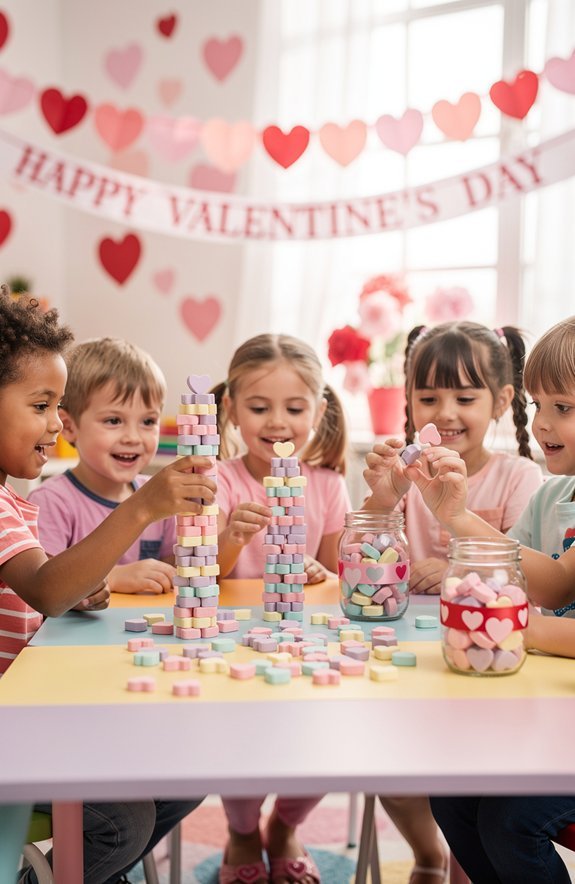
Those tiny candy hearts with cheesy sayings like “BE MINE” aren’t just for eating—they’re perfect for competitive chaos.
Split kids into teams and challenge them to build the tallest tower.
Watch them develop stacking strategies on the fly—some go slow and steady, others just yeet hearts into a wobbly mess. It’s hilarious either way.
For the toss challenge, set up cups at different distances and let kids practice their toss techniques.
Close cups are worth one point, far cups get five. You’ll see some wild throwing styles emerge. Underhand? Overhand? The weird flick thing? All fair game.
Pro tip: buy extra hearts because some will definitely end up as “quality control snacks.” The floor will also claim a few casualties. That’s just science.
These activities are perfect for preschoolers since they build fine motor skills through the precise movements needed for stacking and tossing.
Valentine Memory Matching for a Quieter Station
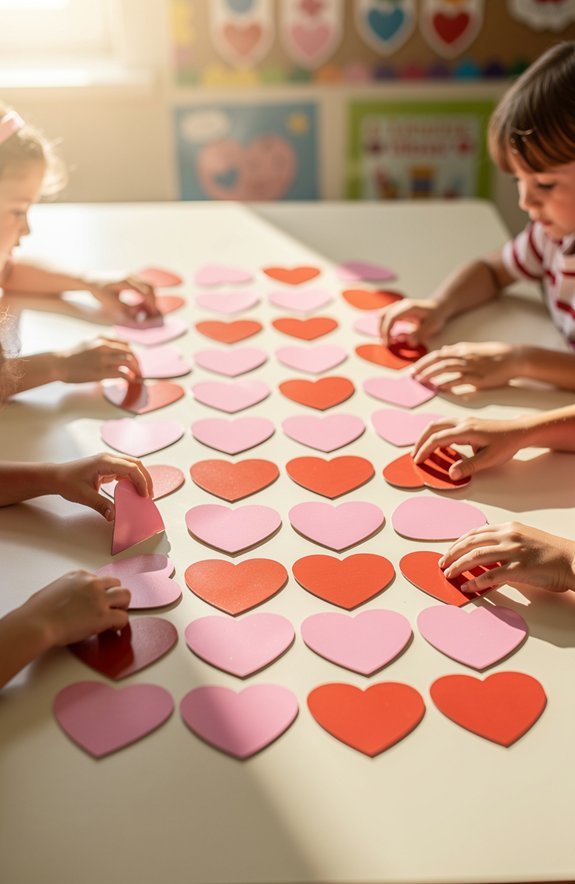
Every party needs a chill zone, and a memory matching game is perfect for kids who need a brain break from all that sugar-fueled mayhem.
Grab some cardstock and make pairs of Valentine images—hearts, cupids, candy boxes, love letters. Lay them face down and let kids flip two at a time.
Simple? Yes. Sneakily educational? Also yes.
Here’s the cool part: you’re teaching memory strategies without anyone noticing.
Kids naturally start grouping cards by location or making up silly stories to remember spots.
“The teddy bear is next to the corner cookie!”
You can easily adjust the difficulty by increasing the number of card pairs or introducing time limits to keep visual memory skills(/) sharp.
Use quiet prompts like gentle hand signals instead of shouting “YOUR TURN!” This keeps the vibe mellow while chaos reigns at other stations.
It’s basically a spa for overstimulated brains.
DIY Valentine Card-Making With Kindness Prompts
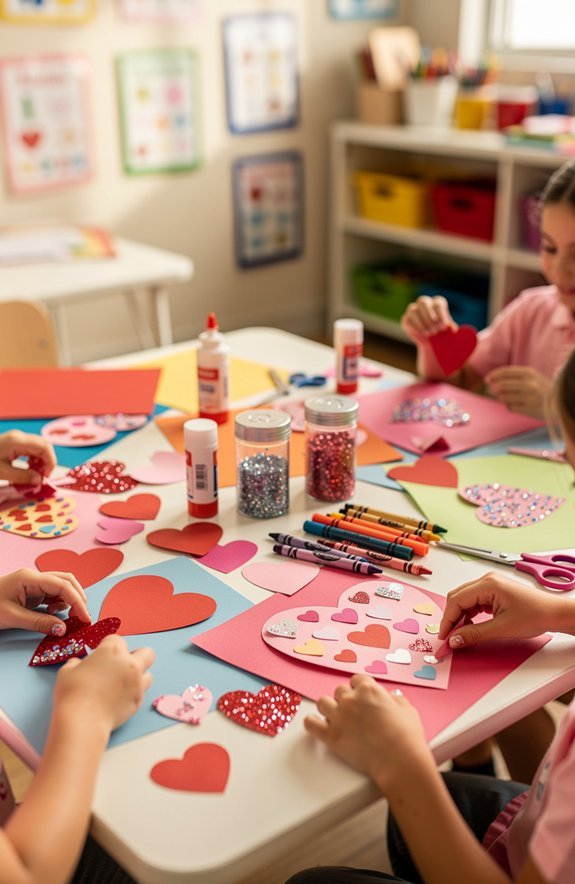
Ready to move from brain games to heart games? This station is where the magic happens. Set up a card assembly area with paper, stickers, and washable markers.
Kids go wild for glitter glue, but fair warning—you’ll find sparkles in your hair for weeks.
Here’s the twist that makes this special: kindness prompts.
Instead of generic “Happy V-Day” messages, give kids conversation starters.
Things like “Write something you admire about the person” or “Share a time they made you smile.”
Suddenly, cards become tiny treasures instead of obligatory exchanges.
Watch a shy kid light up when someone notices they’re great at soccer.
That’s the good stuff right there.
Pro tip: have extra prompts ready because some kids will want to make ten cards!
Origami Heart Bookmarks Students Will Actually Use

Why stop at cards when you can give kids something they’ll actually use? Origami heart bookmarks are basically tiny paper hugs for books. Plus, they slip right onto page corners, so they won’t fall out and disappear into the backpack abyss.
The folding technique is super simple—even the kid who somehow turns everything into a paper airplane can nail this.
You’ll want to chat about paper durability though.
Regular construction paper works, but slightly thicker cardstock holds up way better against grubby little fingers.
Here’s the fun part: let students decorate their hearts with stickers, doodles, or their friend’s name.
They’re making valentines AND bookmarks in one shot.
That’s called efficiency, people.
Teachers everywhere just did a happy dance.
Love Bug Cups for Collecting Valentine Cards

Those plain white paper bags taped to desks? Boring. Let’s upgrade to adorable love bug cups that kids will obsess over.
Grab red plastic cups and let students go wild with googly eyes, pipe cleaner antennae, and heart stickers. The cup design possibilities are endless—some kids make cute ladybugs while others create hilarious monster bugs with seventeen eyes. Both are perfect.
Here’s the genius part: these cups actually stand up on their own. No more valentines sliding off desks onto the floor where they get stepped on. Tragic.
You can even teach a quick sorting method afterward. Have kids organize their cards by type—candy attached, no candy, homemade. It sneaks in a little categorization practice without anyone noticing they’re learning.
Sneaky teacher wins again.
Gratitude Garlands That Double as Classroom Decor
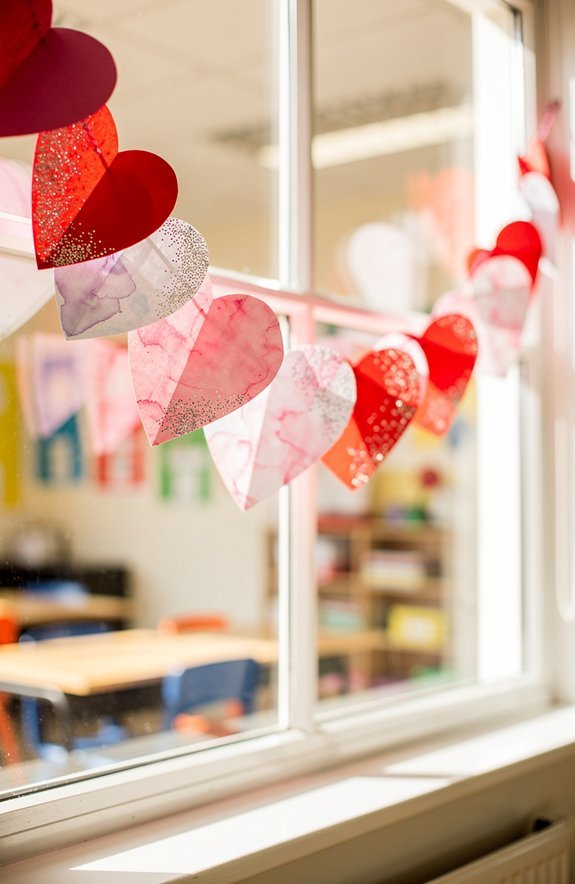
Valentine’s Day decorations usually come down February 15th and get shoved in a closet until next year.
But these gratitude garlands? They’re sticking around way longer. Kids write gratitude messages on heart-shaped paper, then string them together during garland crafting time. Boom—instant classroom decor that actually means something.
Here’s why this craft rocks:
- Kids practice kindness AND fine motor skills (sneaky learning for the win)
- The garland stays up through spring as a daily reminder of good vibes
- Zero glitter mess to vacuum out of your carpet for six months
Each heart features something students appreciate—their best friend, pizza Friday, recess.
It’s sweet without being cheesy.
Plus, you’ll finally have decorations that don’t scream “single awareness day” to visiting parents.
Valentine Spin Wheels and Mini-Books for Fine-Motor Fun
Spin wheels and mini-books are basically the secret weapons of Valentine’s Day parties—kids think they’re playing, but you know they’re actually building hand strength and coordination.
Spin wheels and mini-books turn party fun into sneaky fine-motor practice—kids play while building the hand strength they need for writing.
Wheel spins get everyone hyped. Create a spinner with prompts like “give a compliment” or “do a silly dance.” Kids take turns flicking the arrow, and honestly? The anticipation alone is worth it.
Those little fingers are working hard without even realizing it.
Book crafts are equally sneaky. Fold paper into tiny accordion books where students write one thing they love on each page. Stapling, folding, cutting—it’s a fine-motor workout disguised as fun.
The best part? Both activities are cheap and easy to prep. You’ll look like a party genius while kids strengthen the same muscles they need for writing.
Conversation Heart Graphing for Sneaky Math Practice
Once kids have flexed those fine-motor muscles, it’s time to sneak in some math—and conversation hearts are your secret weapon.
Pour out a handful, sort by color, and boom—you’ve got instant data.
Kids won’t even realize they’re learning graphing strategies while counting their candy stash.
- Sort and stack: Have kids organize hearts by color, then build bar graphs right on their desks
- Compare and contrast: Ask questions like “Which color has the most?” or “How many more pink than yellow?”
- Level up: Older kids can tackle equation practice by adding totals or finding differences between groups
The best part?
They get to eat their math manipulatives when they’re done.
Try doing that with boring old cubes!
Valentine Writing Prompts About Friendship and Kindness
After all that candy-fueled math excitement, it’s the perfect time to channel those sugar-rush vibes into some heartfelt writing.
Friendship prompts are gold for Valentine’s Day.
Ask kids to describe their best friend using only five words.
Or have them write about a time someone made them feel included.
Bonus points if they get specific—”She shared her fruit snacks when I forgot my lunch” hits way harder than “She’s nice.”
Kindness prompts work magic too. Try “Write about a small act that made your whole day better.” Kids will surprise you with their answers. Sometimes it’s just someone holding a door open.
These prompts take maybe fifteen minutes but create keepsake-worthy writing. Parents absolutely melt when they read these. Trust me on this one!
A Quick Heart-Rate Experiment Kids Love
Why not sneak in a little science while everyone’s still buzzing from the writing activity? This quick heart-rate experiment gets kids moving and laughing—plus they’ll actually learn something cool about their bodies.
Here’s how it works: kids find their pulse, count beats for 15 seconds, then multiply by four. Easy math, big excitement.
- Have students jump in place for 30 seconds, then measure again—watch their eyes go wide at the difference!
- Create a simple chart for pulse tracking so kids can compare resting versus active rates
- Turn data interpretation into a game by guessing whose heart beats fastest
The best part?
Kids get so competitive about their numbers.
They’re basically doing a science experiment without even realizing it.
Sneaky teacher win!
Partner-Pairing Cards That Build Social Skills
Now that hearts are pumping from that experiment, let’s channel all that energy into something social!
Create matching cards with conversation starters on them.
Think candy hearts meet speed dating for kids.
One card says “chocolate.”
Another says “vanilla.”
Kids find their match, and boom—instant partners!
Here’s where it gets good.
Each pair gets dialogue prompts like “What’s your favorite pizza topping?” or “Would you rather fly or be invisible?”
They chat for two minutes, then you call out a partner rotation.
New match, new questions, new friend potential!
This activity is sneaky brilliant.
Shy kids get a script.
Chatty kids get boundaries.
Everyone practices actual conversation skills without even realizing it.
Plus, watching a kid passionately defend pineapple on pizza? Comedy gold right there.
Nut-Free and Allergy-Safe Valentine Snack Ideas
The snack table can make or break your Valentine’s party—especially when allergies enter the chat.
You don’t want to be the reason someone’s kid puffs up like a balloon.
Allergy safety isn’t optional—it’s essential.
Going nut free keeps everyone happy and breathing normally, which is kind of the goal.
Here are some crowd-pleasers that won’t send anyone to the nurse:
- Heart-shaped fruit kabobs with strawberries, watermelon, and grapes
- Sunflower seed butter cups (tastes like peanut butter’s cooler cousin)
- Red and pink popcorn drizzled with white chocolate
These treats look adorable and taste amazing.
Plus, parents will actually thank you instead of side-eyeing the snack table.
Win-win! Your classroom party stays fun, festive, and safe for every kiddo.
Decorate-Your-Own Valentine Cookies Without the Mess
Cookie decorating sounds like a blast—until you’re scraping frosting off the ceiling and wondering how a seven-year-old got sprinkles in your coffee.
Cookie decorating with kids is pure chaos disguised as a craft—but it doesn’t have to end in disaster.
Here’s the secret: pre-bake your heart-shaped cookies at home and use simple glaze techniques instead of thick buttercream.
Thin royal icing dries fast and doesn’t smear everywhere.
Pour it into squeeze bottles for easy control.
Kids can drizzle, dot, and swirl without turning the classroom into a crime scene.
Want even less chaos? Try these icing tips: set out just three colors max and skip the loose sprinkles entirely.
Use sanding sugar instead—it sticks where it lands.
Each kid decorates two cookies in under ten minutes.
One to eat, one to gift.
Cleanup takes five minutes flat.
You’re welcome.
Heart-Healthy Snack Options for the Valentine Spread
Why should sugar cookies have all the fun when you can sneak some actual nutrition onto that party table?
You’ll be the sneaky hero parents secretly thank you for.
Try these heart-healthy hits:
- Fruit skewers shaped like arrows (strawberries, grapes, and banana slices make Cupid proud)
- Yogurt parfaits layered with pink berries and granola in clear cups
- Heart-shaped watermelon bites that disappear faster than you can say “seconds”
Here’s the thing—kids won’t even notice they’re eating something good for them.
The bright colors and fun shapes do all the convincing.
Plus, fruit skewers give them something to wave around dramatically, which they absolutely will.
And those yogurt parfaits? They look fancy enough for Instagram but taste like dessert.
Non-Food Valentine Prizes Every Student Can Enjoy
Have you ever watched a kid’s face fall because they can’t eat the candy prize everyone else is enjoying? Yeah, it’s a total bummer. That’s why inclusive prizes are the way to go!
Inclusive prizes mean every kid gets to celebrate — no sad faces, no left-out feelings, just pure party joy.
Think mini notebooks, funky erasers shaped like hearts, or temporary tattoos that make kids feel like tiny rebels.
Stickers are basically currency in elementary school, so stock up.
Glow bracelets? Instant hit.
Every. Single. Time.
Reusable incentives are smart too.
Grab some Valentine pencils or small containers of playdough.
These gifts keep giving long after the party ends.
The best part? No allergy worries, no sugar crashes, and every single student gets to join the fun.
Plus, parents won’t side-eye you for sending their kid home wired on chocolate.
Win-win!
A Simple Valentine Photo Booth on a Teacher Budget
Now that you’ve got prizes sorted, let’s talk about capturing those adorable moments!
A photo booth doesn’t need to cost a fortune.
Seriously, forget those fancy rental setups.
You’ve got this!
Here are some easy wins:
- Lighting hacks: Push your booth near a window for free natural light, or grab a cheap ring light from the dollar store
- Props ideas: Raid your craft closet for paper hearts on sticks, silly glasses, and speech bubbles that say “Be Mine”
- Backdrop magic: A pink tablecloth taped to the wall works perfectly fine
Grab some red streamers, throw in a few balloons, and boom—instant photo magic.
The kids will go absolutely wild, and parents will think you spent hours planning this masterpiece!
Freeze Dance and Three More Valentine Movement Breaks
After all those photo booth poses, your students are gonna need to burn off some serious energy—and honestly, so might you!
Freeze dance is the ultimate energy management tool.
Crank up some love songs, let kids go wild, then hit pause.
Frozen statues everywhere.
It’s hilarious.
But don’t stop there!
Try “Cupid Says” (like Simon Says, but cuter).
Or do a heart hop—tape paper hearts on the floor and call out colors to jump to.
Musical hearts works too.
Kids walk around hearts while music plays, then scramble to stand on one when it stops.
Smart music pacing keeps things from getting too chaotic.
Slow songs = calm down time.
Fast songs = let loose.
You control the vibe completely!
Why the Station Model Works for Valentine Parties
When you’ve got 25 hyped-up kids, a mountain of valentines, and exactly 45 minutes to make magic happen, the station model is your best friend.
Trust me on this one.
The station benefits are seriously game-changing for classroom logistics.
Here’s why stations save the day:
- No bottlenecks – Kids rotate in small groups, so nobody’s waiting around getting antsy (or starting a marker sword fight)
- Built-in variety – Short bursts at each station keep energy up and meltdowns down
- Easy parent helper jobs – You assign one adult per station, and boom, everyone knows their role
Basically, you’re turning chaos into organized fun.
Kids stay busy, helpers feel useful, and you don’t end up hiding in the supply closet by minute twenty.
Plan 3–6 Stations for a 45-Minute Valentine Party
So you’re sold on the station model—great! Now let’s talk numbers.
For a 45-minute party, you’ll want between 3 and 6 stations.
Fewer than three? Kids get bored.
More than six? You’ll lose your mind trying to manage it all.
Here’s the sweet spot for time management: divide your party time by your station count.
Six stations means about 7 minutes each.
Four stations gives you roughly 10 minutes per activity.
Easy math, even for us adults who forgot long division.
Station rotation works best when you build in a minute or two for transitions.
Kids don’t teleport between tables (unfortunately).
They wander, they chat, they “accidentally” bump into their crush.
Plan for that chaos, and you’ll actually finish on time.
Put Parent Volunteers at Stations, Not on Float Duty
Assigning parent volunteers to specific stations is the secret sauce that keeps your party from turning into a circus.
Trust me, parent involvement works way better when everyone has a clear job.
Give every parent a specific role and watch the magic happen—clear jobs beat chaotic hovering every single time.
Floating parents just hover awkwardly or chat in corners while kids go wild.
Station supervision gives each adult a mission.
They own that space.
They know exactly what to do when little Timmy squirts glue in his hair.
Here’s why stationed parents rock:
- Kids get focused attention instead of random adult chaos
- Parents feel useful and actually enjoy the party
- You’re not herding cats trying to manage everyone yourself
Match parent skills to stations too.
Crafty mom? She’s on the card-making table.
Energetic dad? Games station, obviously.
Boom—organized fun!
Bin Your Valentine Station Materials the Night Before
Before the big day arrives, you’ll want to bin all your station materials the night before—and I mean everything.
Grab clear bins so you can see what’s inside without playing guessing games.
Label each one with the station name.
Trust me, future you’ll be so grateful.
Your night prep should include a supply checklist for each bin.
Scissors? Check.
Glue sticks? Check.
That weird glitter glue you found in the back closet? Double check.
Count everything twice because nothing ruins party vibes faster than realizing you’re three pairs of scissors short.
Toss in a few extras of each supply.
Kids lose things.
Things break.
It happens.
When you wake up party morning, you’ll grab those bins and feel like a genius.
No stress, no scrambling.
How to Run a Smooth Valentine Card Exchange
Getting those valentines into the right hands without total chaos takes some planning.
Smooth valentine exchanges don’t happen by accident—a little planning prevents a whole lot of classroom chaos.
Trust me, you don’t want 25 kids swarming desks like hungry seagulls at a beach picnic.
Smart card logistics make all the difference between smooth sailing and pure mayhem.
Here’s how to nail swap etiquette without losing your mind:
- Assign delivery windows – Let 4-5 kids distribute at a time while others work on a craft
- Use numbered bags – Match bag numbers to a class list so nobody gets skipped
- Set a “no opening” rule – Cards stay sealed until everyone’s done distributing
This keeps things fair and prevents the dreaded “I got more than you!” drama.
Kids stay busy, feelings stay intact, and you keep your sanity.
Win-win-win!
A 10-Minute Valentine Cleanup Game That Resets the Room
After the last valentine hits the bag, your classroom probably looks like a confetti bomb exploded inside a glitter factory.
Don’t panic.
You’ve got a cleanup strategy that actually works—and kids will think it’s fun.
Set a timer for exactly ten minutes.
That reset timing creates urgency without stress.
Divide the room into zones and assign teams.
First group to collect the most paper scraps wins bragging rights.
Boom—instant competition.
Crank up some music.
Kids move faster when there’s a beat.
Toss them trash bags like you’re handing out superpowers.
Here’s the secret: make it dramatic.
“Three minutes left, people! We’re losing daylight!”
They’ll scramble like it’s the championship game.
Timer dings.
Room’s clean.
You’re a genius.
In case you were wondering
How Do I Handle Students Who Don’t Receive as Many Valentines as Others?
You can implement equity strategies by requiring students to bring valentines for everyone or none at all. Use inclusion practices like creating a class mailbox where you distribute cards evenly, ensuring no child feels left out.
What Age Group Works Best for Station-Based Valentine Parties?
Station-based valentine parties work absolutely brilliantly for ages 5-10! You’ll find station setup keeps younger kids engaged without overwhelming them. Age suitability peaks around first through fourth grade when children can rotate independently.
Should Students Bring Valentines for Every Classmate or Just Close Friends?
You should encourage students to bring valentines for every classmate. This valentine etiquette prevents hurt feelings and teaches inclusivity. Avoiding classmate selection ensures no child feels left out during your classroom celebration.
How Far in Advance Should I Send Party Information Home to Parents?
Time flies like cupid’s arrow! You’ll want to send notification timing about two weeks before the party. This parent outreach window gives families enough breathing room to purchase valentines and organize any contributions you’ve requested.
What Do I Do if Not Enough Parent Volunteers Sign Up?
If you don’t get enough parent volunteers, try digital signups through apps like SignUpGenius for easier access. You’ll also want to identify backup volunteers from staff members or older students who can step in.
Conclusion
You’ve got the games, the setup secrets, and the speedy cleanup tricks. Now it’s time to party with purpose and passion! These playful plans prevent pandemonium and bring big smiles. Trust yourself—you’re totally prepared. Your students will swap cards, stack hearts, and laugh until their cheeks hurt. And you? You’ll actually enjoy the chaos this year. Go make some magical memories, friend!