Best Family-Friendly National Parks Near You

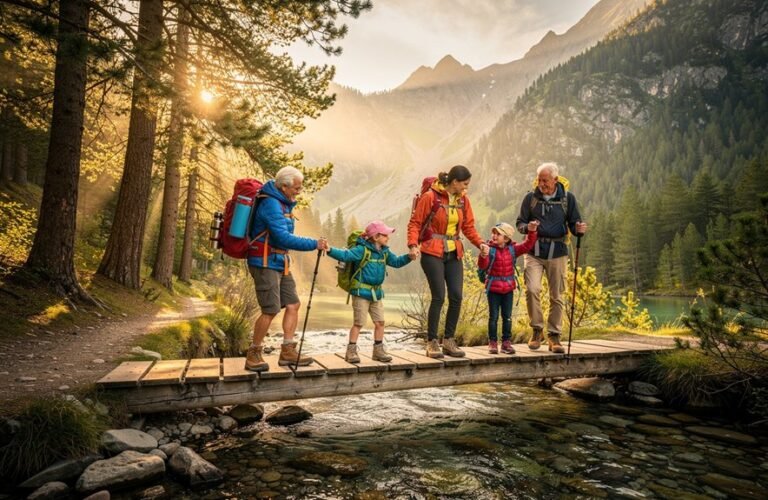
You’ll find excellent family-friendly national parks across America, each offering unique adventures for all ages. Acadia in Maine features coastal trails and stroller-friendly carriage roads, while Great Smoky Mountains provides free entry and abundant wildlife viewing. Yellowstone captivates with geysers and boardwalk trails, and the Grand Canyon offers paved rim paths perfect for young hikers. Yosemite enchants families with waterfall hikes and valley scenery. Each park includes Junior Ranger programs that’ll engage your children while exploring these natural wonders together.
Key Takeaways
- Great Smoky Mountains offers free entry, diverse wildlife viewing, and over 800 miles of trails for all fitness levels.
- Yellowstone features boardwalk-accessible geothermal wonders like Old Faithful and excellent wildlife spotting in Lamar Valley.
- Acadia provides stroller-friendly carriage roads, gentle coastal trails, and opportunities to see seals and porpoises.
- Grand Canyon’s South Rim has paved paths connecting viewpoints and family-friendly hikes like the 2.3-mile Ooh Aah Point trail.
- Yosemite Valley offers easy waterfall hikes, paved stroller-accessible paths, and ranger-led educational programs for children.
Acadia National Park, Maine: Coastal Beauty and Kid-Friendly Trails
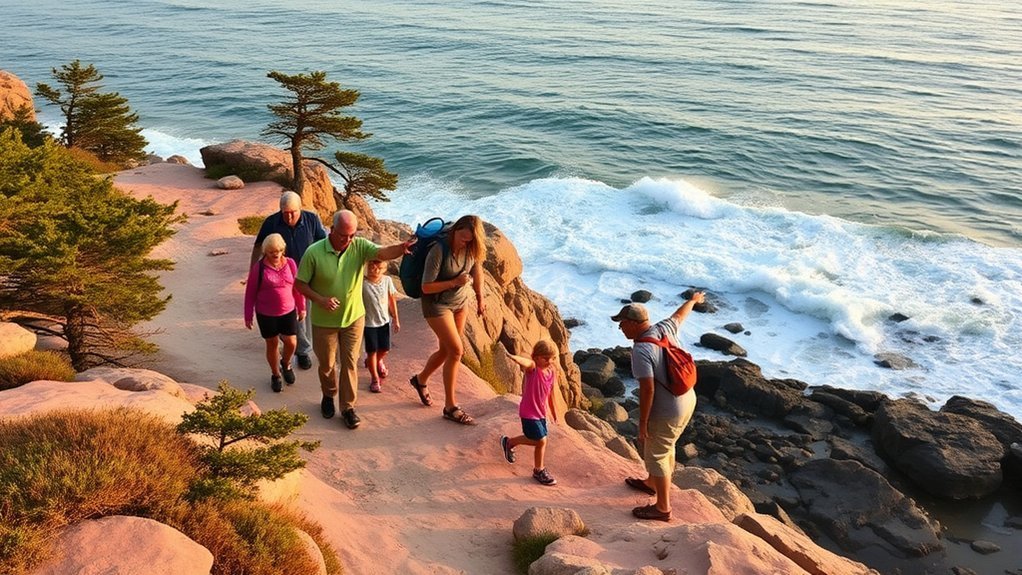
Perched along Maine’s rugged coastline, Acadia National Park offers families an ideal blend of ocean vistas and accessible adventures.
You’ll discover gentle trails perfect for little legs, including the Ocean Path, where your kids can explore tidal pools teeming with starfish and crabs along the rocky coastline.
The park’s carriage roads provide stroller-friendly routes through forests and past pristine lakes.
Wildlife watching opportunities abound—you might spot seals, porpoises, or even whales from Thunder Hole.
Don’t miss Cadillac Mountain’s summit drive for breathtaking sunrise views without the hike.
Sand Beach offers a unique swimming experience, though the water stays chilly year-round.
Rangers lead engaging Junior Ranger programs that’ll transform your children into passionate park stewards while teaching them about coastal ecosystems.
Great Smoky Mountains National Park, Tennessee/North Carolina: Easy Access and Abundant Wildlife
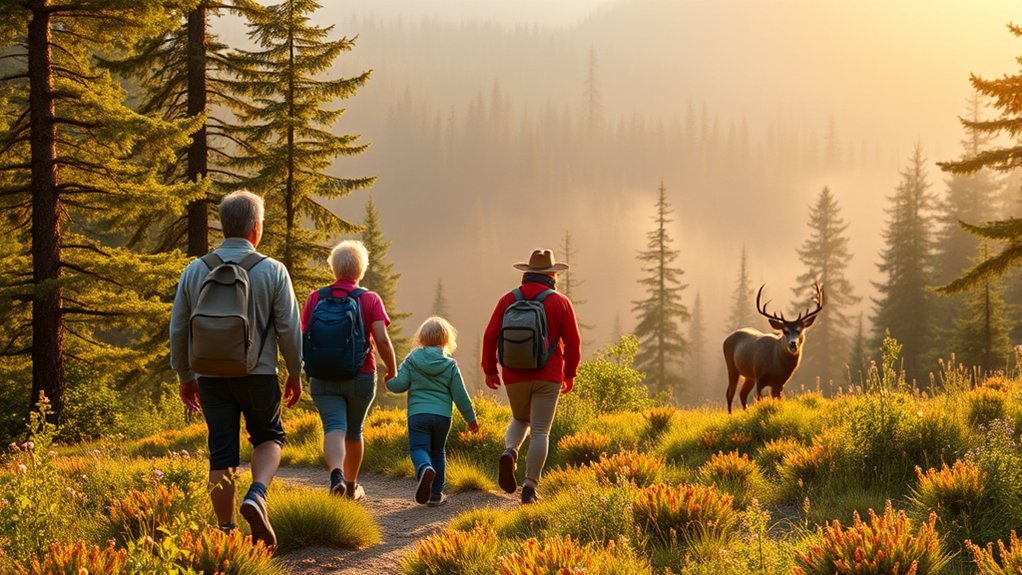
Straddling the border between Tennessee and North Carolina, Great Smoky Mountains National Park stands as America’s most visited national park—and for good reason.
You’ll find no entrance fees here, making it budget-friendly for families. The park offers exceptional wildlife encounters, where you can spot black bears, elk, and white-tailed deer along roadways and trails.
Your family hikes can range from easy waterfall walks like Laurel Falls to kid-approved adventures such as Cataract Falls. The Cades Cove Loop Road provides an 11-mile scenic drive perfect for young children, with frequent pullouts for exploration.
With trails spanning easy waterfall strolls to scenic loop drives, families of all ages find their perfect Smoky Mountains adventure.
You’ll discover over 800 miles of trails, ensuring options for every fitness level. Junior Ranger programs engage kids through educational activities, while historic buildings and grist mills add cultural dimension to your outdoor experience.
Yellowstone National Park, Wyoming: Geysers, Hot Springs, and Unforgettable Experiences

Spanning over 2.2 million acres across Wyoming, Montana, and Idaho, Yellowstone National Park captivates families with its otherworldly geothermal features and wildlife spectacles.
You’ll witness Old Faithful‘s predictable eruptions and explore the vibrant Grand Prismatic Spring‘s rainbow-colored waters. The park’s geothermal features create unforgettable teaching moments about Earth’s geology.
Your kids will marvel at bubbling mud pots and steaming fumaroles along boardwalk trails designed for all ages.
Wildlife watching opportunities abound throughout Yellowstone. You’ll spot bison herds crossing roads, elk grazing in meadows, and possibly bears foraging in distant valleys.
The Lamar Valley offers exceptional viewing conditions during early morning hours.
Junior Ranger programs engage children with hands-on activities while ranger-led talks explain the park’s unique ecosystem.
Plan multiple days to fully experience Yellowstone’s diverse attractions and accommodate the vast distances between features.
Grand Canyon National Park, Arizona: Rim Walks Perfect for Young Explorers
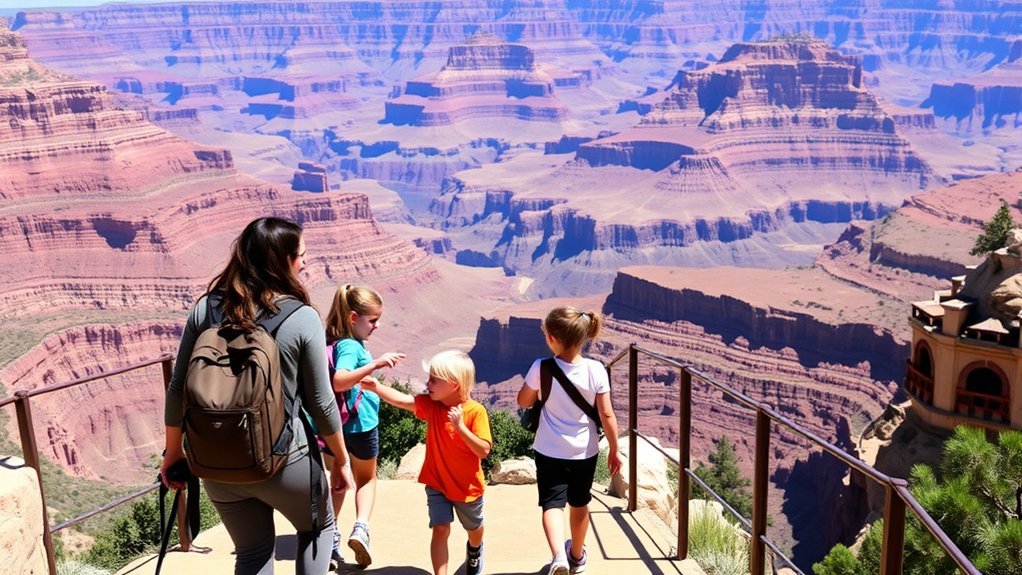
While the Grand Canyon’s vast chasm stretches 277 miles across northern Arizona, the South Rim provides families with accessible trails and viewpoints that showcase this natural wonder’s magnificence without requiring strenuous hikes.
You’ll find the Rim Trail offers mostly paved paths connecting scenic viewpoints like Mather Point and Yavapai Observation Station, where your kids can safely peer into the canyon’s colorful layers.
For family hiking, try the 2.3-mile round trip to Ooh Aah Point on the South Kaibalo Trail. Your children will love earning their Junior Ranger badges through the park’s educational program.
Visit during spring or fall when temperatures remain comfortable. Don’t forget to pack plenty of water and snacks, as Arizona’s high elevation affects energy levels quickly.
Yosemite National Park, California: Waterfalls and Valley Adventures
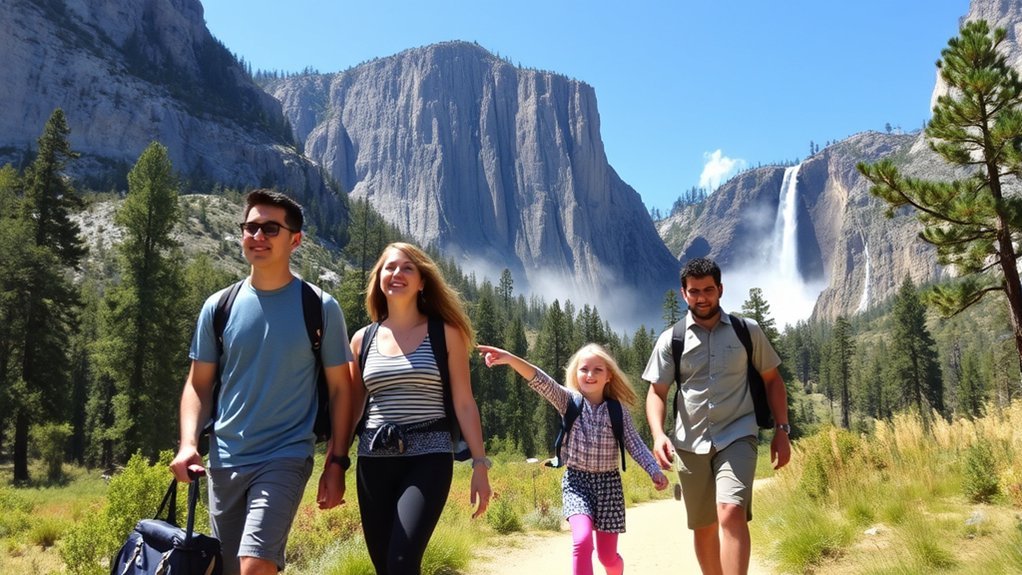
Towering granite cliffs and thundering waterfalls make Yosemite Valley an outdoor playground that’ll captivate your entire family.
You’ll find gentle waterfall hikes leading to Bridalveil Fall and Lower Yosemite Fall, both perfect for little legs. The paved paths let strollers roll easily while offering spectacular views.
Valley photography opportunities abound at every turn. Your kids can snap pictures of Half Dome, El Capitan, and meadows filled with wildflowers.
Every corner of Yosemite Valley offers picture-perfect moments—from iconic granite peaks to colorful wildflower meadows waiting to be captured.
The valley floor’s flat terrain means you won’t exhaust young hikers before lunch.
Consider visiting during spring when waterfalls peak with snowmelt, creating dramatic cascades.
Summer brings warmer weather and ranger-led programs designed specifically for children.
Pack plenty of snacks, bring binoculars for wildlife spotting, and prepare for an unforgettable adventure your family will discuss for years.
Rocky Mountain National Park, Colorado: Alpine Scenery With Accessible Viewpoints
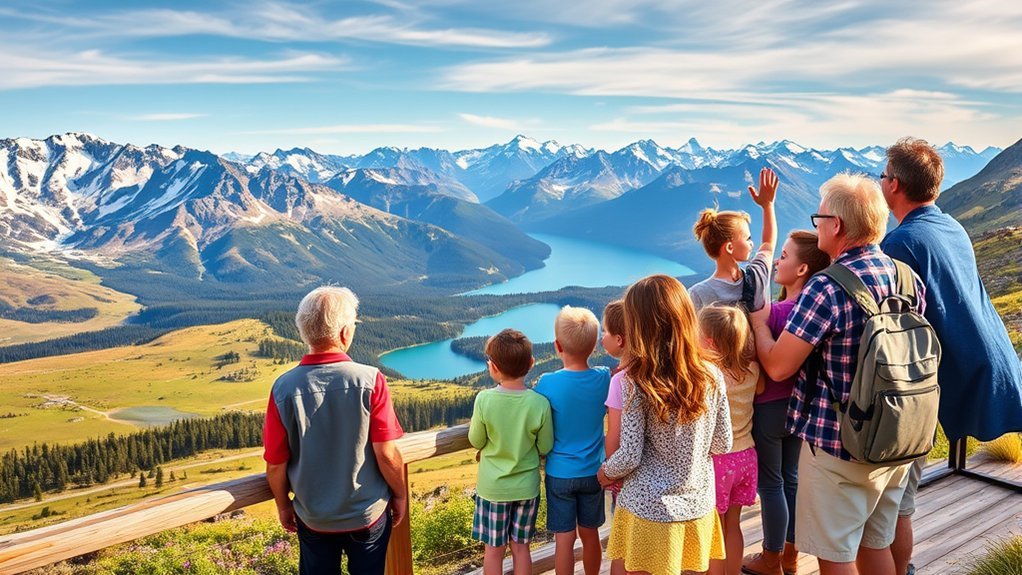
Head to Colorado’s high country where Rocky Mountain National Park delivers breathtaking alpine views without requiring strenuous hikes.
Trail Ridge Road, one of America’s highest scenic drives, reaches 12,183 feet and offers pull-offs where you’ll spot mountain wildlife like elk, bighorn sheep, and marmots from your vehicle.
Bear Lake provides a flat, paved half-mile loop perfect for strollers and young walkers.
Sprague Lake features another easy trail with stunning mountain reflections. The Alpine Visitor Center sits at 11,796 feet, giving your family instant access to tundra landscapes.
Visit between late May and October when Trail Ridge Road opens.
Arrive early to secure parking at popular trailheads.
Pack layers since temperatures drop significantly at elevation, and afternoon thunderstorms develop quickly during summer months.
Zion National Park, Utah: Shuttle System and Paved Riverside Paths
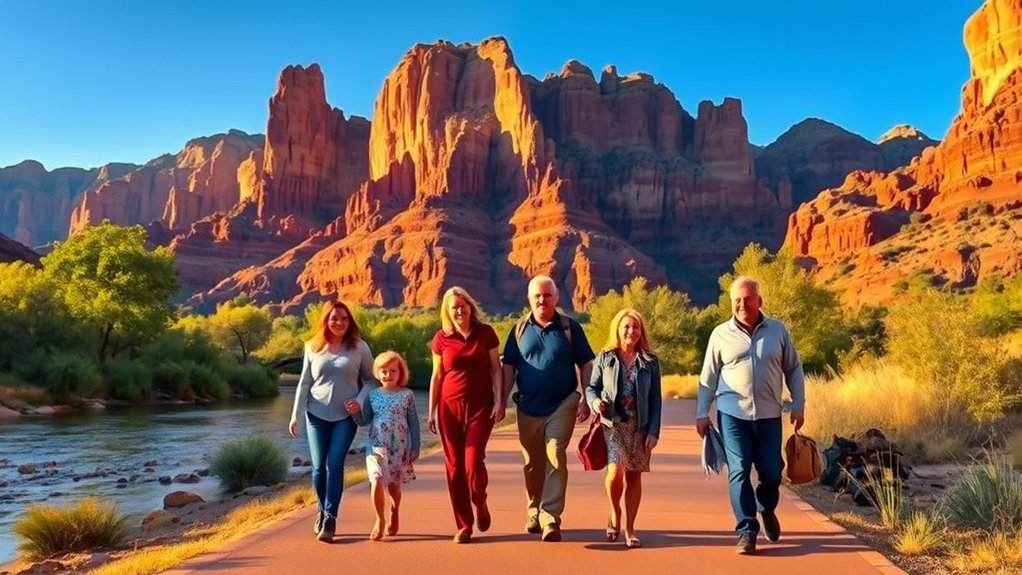
Zion National Park eliminates parking stress with its free shuttle system that runs through the canyon from April through October.
You’ll hop on and off at designated stops throughout Zion Canyon, making exploration effortless with kids in tow.
The paved Riverside Walk stands out as a family favorite. This one-mile trail follows the Virgin River, offering spectacular canyon views without challenging terrain.
Your stroller-pushing days won’t hold you back here—the flat, accessible path accommodates wheels beautifully.
Pa’rus Trail provides another excellent option for families. You’ll bike or walk this paved route alongside the river, spotting wildlife and towering sandstone cliffs.
Both trails keep you close to shuttle stops, so little legs won’t get overtaxed.
The shuttle system’s narrated commentary teaches kids about the park’s geology and history during rides.
Olympic National Park, Washington: Beaches, Rainforests, and Diverse Landscapes

Olympic National Park delivers three ecosystems in one destination—rugged coastline, temperate rainforest, and alpine mountains.
You’ll find kid-friendly trails through moss-draped Hoh Rainforest, where your children can spot Roosevelt elk and search for banana slugs. The coastal areas offer exceptional beachcombing adventures at Ruby Beach and Rialto Beach, where tide pools reveal starfish, anemones, and crabs.
Hurricane Ridge provides accessible viewpoints without strenuous hiking, perfect for families with young children.
The park’s Sol Duc Falls trail is an easy 1.6-mile round trip that rewards you with a stunning waterfall. Wildlife spotting opportunities abound—watch for black bears, deer, and over 300 bird species.
You’ll appreciate the park’s variety, ensuring every family member finds something captivating regardless of age or ability level.
In case you were wondering
What Age Is Appropriate for Children to Start Visiting National Parks?
You can start taking children to national parks as young as infancy! There aren’t strict age recommendations—childhood exploration benefits kids at every stage. Toddlers love easy trails, while older children enjoy more challenging adventures suited to their abilities.
Do National Parks Offer Junior Ranger Programs for Kids?
Like earning scout badges on a camping adventure, you’ll find Junior Ranger programs at most national parks. Your kids complete activity booklets, explore trails, and earn official badges—program benefits include hands-on learning and unforgettable memories they’ll treasure forever.
Are Pets Allowed on Trails in Family-Friendly National Parks?
Pet policies vary by park, but most family-friendly national parks have trail restrictions for pets. You’ll typically find dogs allowed on paved paths and campgrounds, though they’re prohibited on backcountry trails to protect wildlife.
What Medical Facilities Are Available Inside or Near National Parks?
Most parks don’t have park hospitals inside, but they’ll provide emergency services through ranger stations and visitor centers. You’ll find full medical facilities in nearby gateway towns, typically within 30-60 minutes of park entrances.
How Much Does It Cost for a Family to Enter National Parks?
National park entrance fees typically range from $15-$35 per vehicle, covering everyone inside. You’ll find family discounts through annual passes costing $80, which grant unlimited access to over 2,000 federal recreation sites nationwide year-round.
Conclusion
You’ll create memories that’ll last a million lifetimes when you explore these incredible national parks with your family. Whether you’re drawn to Acadia’s rocky coastlines, Yellowstone’s bubbling geysers, or Zion’s towering red cliffs, there’s a perfect park waiting for you. Don’t let another summer pass by—pack your bags, grab your kids, and hit the trails. Your family’s greatest adventure is just around the corner, and these parks won’t disappoint.