15 Best Nature Learning Games for Kids
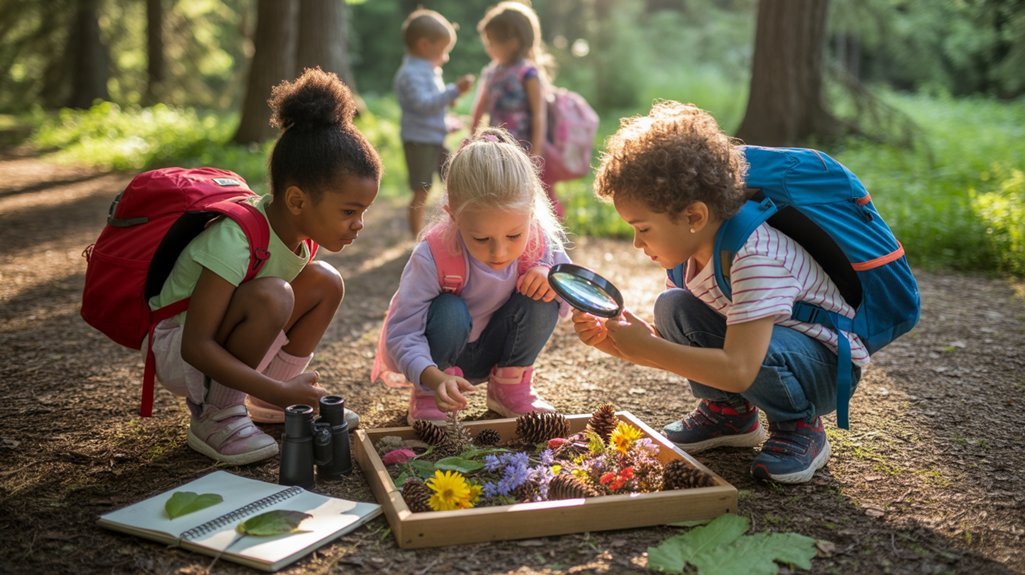
You’ll discover transformative nature learning games that turn outdoor time into educational adventures, from scavenger hunts that develop identification skills to sound mapping exercises that sharpen listening awareness. Your kids can explore bark rubbing art, cloud storytelling, color collection challenges, and bug safaris that build scientific curiosity. Interactive activities like nature bingo, memory match games, and the web of life demonstration make ecological concepts tangible while keeping children engaged. These experiences combine physical activity with creative expression, fostering environmental stewardship and observation skills that’ll benefit your children throughout their lives.
Key Takeaways
- Nature scavenger hunts and bingo games transform outdoor walks into engaging detective missions that develop observation and identification skills.
- Sound mapping and micro-hike exploration teach children patience while sharpening their listening abilities and attention to environmental details.
- Creative activities like bark rubbing art and cloud storytelling combine artistic expression with nature observation and communication skills.
- Bug safaris and web of life activities turn backyards into living laboratories that foster scientific curiosity and ecological understanding.
- Nature memory match and color collection challenges strengthen cognitive development through pattern recognition and detailed environmental observation.
Nature Scavenger Hunt
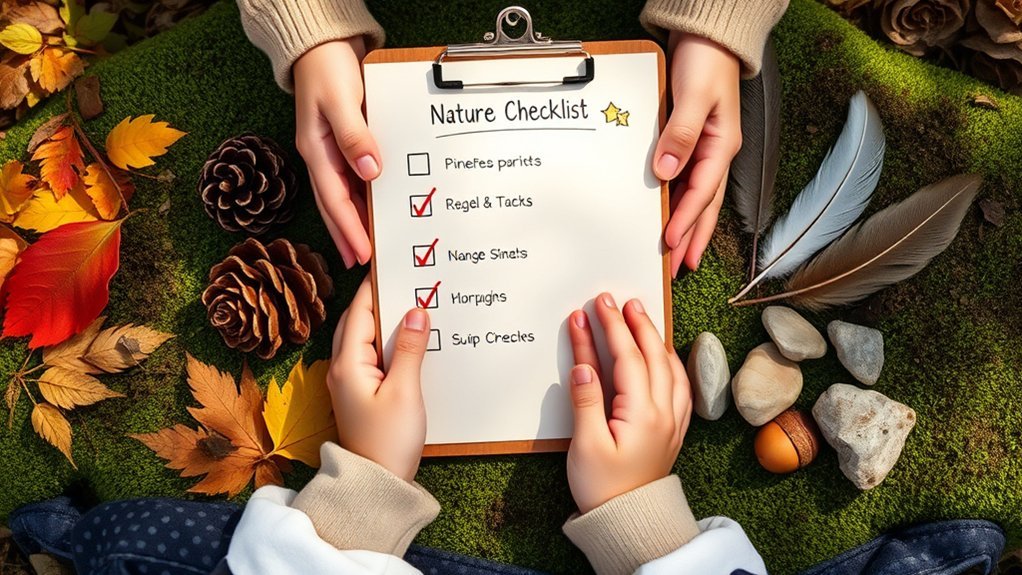
A nature scavenger hunt transforms an ordinary outdoor walk into an exciting detective mission where kids search for specific plants, rocks, insects, and natural objects.
You’ll create a list of items for children to find, encouraging them to observe their surroundings carefully. They’ll develop identification skills while learning about local ecosystems.
You can enhance this activity by having kids document their discoveries in a nature journal, sketching what they find and recording observations. This practice strengthens both scientific thinking and artistic abilities.
Consider challenging them to collect fallen leaves, pinecones, or interesting stones for outdoor art projects afterward. They’ll arrange their treasures into mandalas, collages, or nature portraits, combining physical activity with creative expression while deepening their connection to the natural world.
Sound Mapping
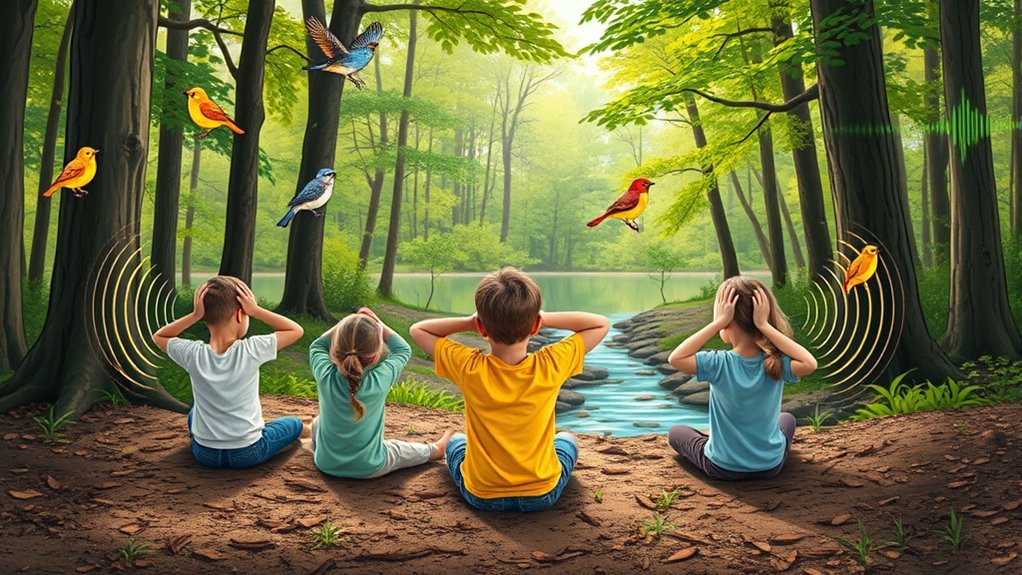
Sound mapping invites children to sit quietly in one spot and document every noise they hear around them. This auditory observation activity sharpens listening skills while connecting kids to nature’s soundscape creation.
Sound mapping transforms children into silent observers, documenting nature’s symphony while developing patience and deepening their connection to the outdoor world.
You’ll help them draw a simple map with themselves at the center, then mark where each sound originates.
Essential materials for sound mapping:
- Paper and pencils or crayons
- Clipboard or hard surface for drawing
- Timer (start with 5-10 minutes)
- Comfortable sitting spot outdoors
- Optional: compass for directional accuracy
Children mark bird calls, rustling leaves, distant traffic, or buzzing insects on their maps using symbols or words.
This contemplative practice teaches patience and reveals nature’s often-overlooked audio layers. You’ll notice kids becoming more attuned to environmental sounds during future outdoor adventures.
Color Collection Challenge

How many colors can your child find hidden within a single square meter of nature? This color collection challenge sharpens observation skills while building a diverse color palette from natural objects.
Mark off a small outdoor area using sticks or string, then challenge your child to discover every color variation within that boundary. They’ll collect leaves, flowers, pebbles, bark, and soil samples, arranging them by hue.
This activity strengthens color recognition as kids differentiate between subtle shades—forest green versus lime, crimson versus pink.
You can extend the challenge by asking them to find natural items matching specific paint chips or crayon colors. It’s perfect for teaching color theory basics while encouraging detailed environmental observation and fostering patience during their nature exploration.
Bug Safari and Insect Investigation
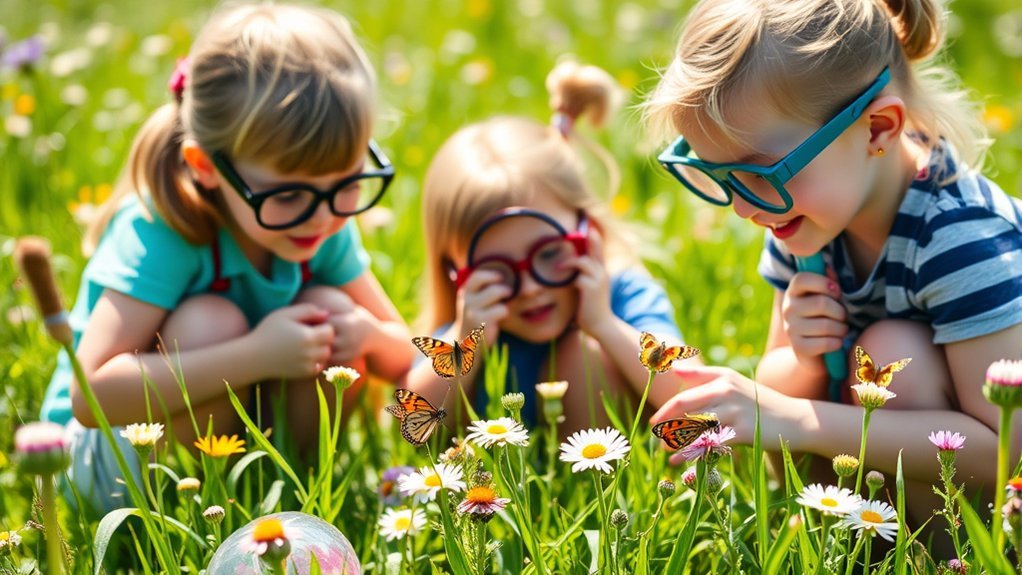
What better way to spark scientific curiosity than by exploring the miniature world beneath your feet? Bug Safari and Insect Investigation transforms your backyard into a living laboratory where kids observe bug behavior and discover insect habitats firsthand.
Equip young explorers with magnifying glasses and observation journals to document their findings. They’ll learn identification skills while studying how insects interact with their environment.
Essential Bug Safari Activities:
- Create bug collection containers with breathing holes for temporary observation
- Photograph insects in their natural insect habitats without disturbing them
- Sketch detailed drawings noting colors, patterns, and unique features
- Track bug behavior like feeding, moving, or building
- Compare different species found under rocks, logs, and leaves
This hands-on investigation develops observation skills, patience, and respect for nature‘s smallest creatures.
Nature Bingo
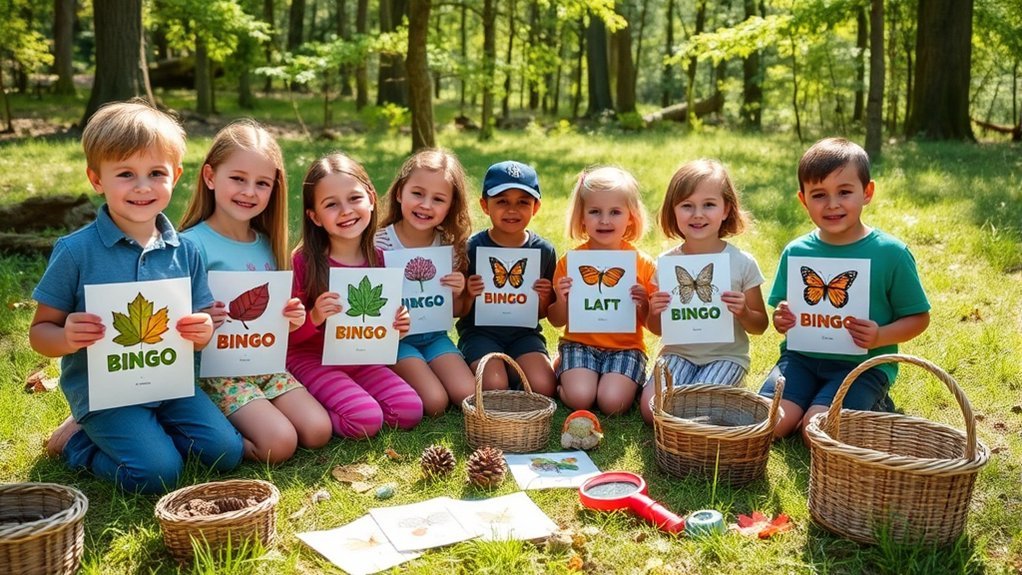
Turn an ordinary nature walk into an exciting scavenger hunt with Nature Bingo, where kids race to spot items like pinecones, butterflies, and bird nests.
You can create customized bingo cards featuring nature themes specific to your location and season. Include local wildlife, plants, trees, and natural objects your children will likely encounter. Print multiple cards with different arrangements to keep the game fair and engaging.
Try these bingo variations to maintain interest: blackout bingo requires filling the entire card, four corners challenges kids to spot items in specific positions, or speed bingo rewards the fastest finder.
You can also introduce photo bingo, where children snap pictures of items instead of marking them off.
This adaptable game sharpens observation skills while teaching kids to identify natural elements in their environment.
Camouflage Hide and Seek
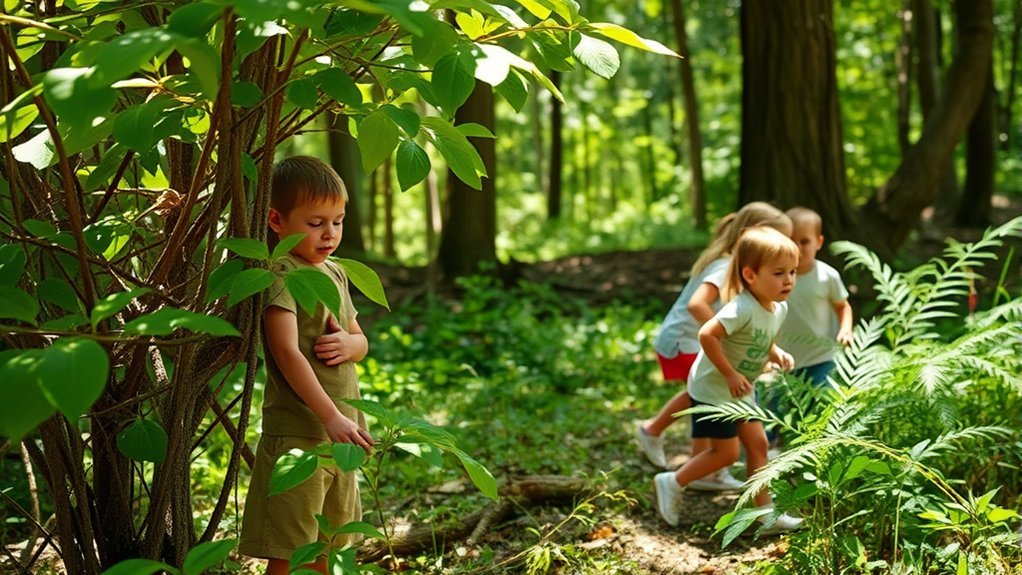
This twist on traditional hide and seek challenges children to blend into their natural surroundings just like animals do in the wild. Kids learn valuable camouflage techniques while developing nature observation skills that’ll serve them for years to come.
Game Setup:
- Designate a safe outdoor area with varied terrain and natural features
- Give children 5-10 minutes to find hiding spots using natural materials
- Encourage them to match their clothing colors with surroundings
- Have seekers practice scanning techniques like animals hunting prey
- Discuss afterward which camouflage techniques worked best and why
You’ll notice children become more aware of patterns, colors, and textures in nature.
They’ll understand how animals survive by blending in, making this educational experience both thrilling and memorable for young learners.
Leaf Identification Race
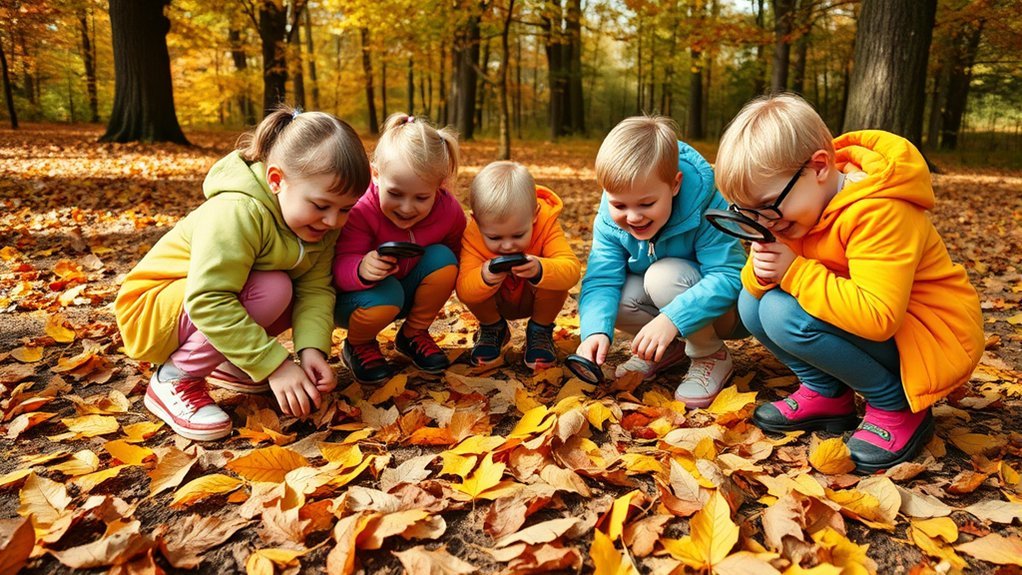
While camouflage teaches kids to observe nature’s subtle details, a leaf identification race kicks their observation skills into high gear through friendly competition.
You’ll give each child a collection bag and set a timer for them to gather different leaf types. They’ll search for oak, maple, birch, and whatever else grows in your area.
Once collection time ends, you’ll teach basic identification techniques like examining leaf edges, vein patterns, and overall shapes. Kids compare their finds using field guides or apps, earning points for each correctly identified specimen.
The winner collects the most diverse, accurately labeled leaves.
This game sharpens scientific thinking while building their botanical vocabulary. You’re transforming a simple nature walk into an engaging educational challenge that kids actually want to repeat.
Bird Call Imitation Game
After kids master visual identification, you’ll engage their auditory skills by having them mimic the sounds echoing through your local habitat. This game sharpens sound recognition while teaching children about bird behavior through listening.
Start by playing recordings of common local species, then venture outside to identify live calls.
Begin with recorded birdsongs indoors to familiarize young ears, then take the learning outside for real-world acoustic identification practice.
Essential steps for this activity:
- Record birds on your smartphone during morning walks when they’re most vocal
- Create flashcards pairing each bird’s photo with its distinctive call
- Practice mimicking calls together before heading outdoors
- Award points when kids correctly identify and imitate wild bird songs
- Document successful identifications in a nature journal
You’ll notice improved observation skills as children connect visual cues with specific vocalizations, deepening their understanding of avian communication patterns.
Nature Memory Match
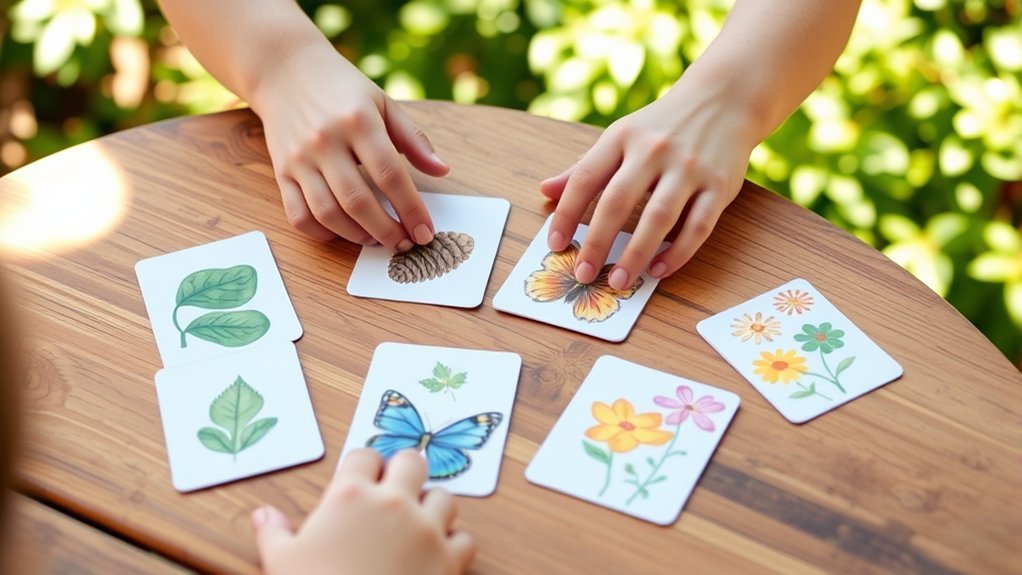
Once your kids have sharpened their auditory skills with bird calls, they’re ready to test their visual memory with natural objects. Nature Memory Match transforms the classic card game using nature themes like leaves, flowers, insects, and animal tracks.
You’ll create pairs of cards featuring identical natural elements, placing them face-down for children to flip and match. This game strengthens cognitive development while teaching pattern recognition and observation skills.
Include wildlife facts on each card to boost learning—when kids make a match, they’ll discover interesting information about their find. You can use photographs, drawings, or real pressed flowers and leaves laminated between clear contact paper.
Start with 12 cards for younger children, gradually increasing difficulty. Playing outdoors adds authenticity, letting kids compare their cards with actual specimens nearby.
Micro-Hike Exploration
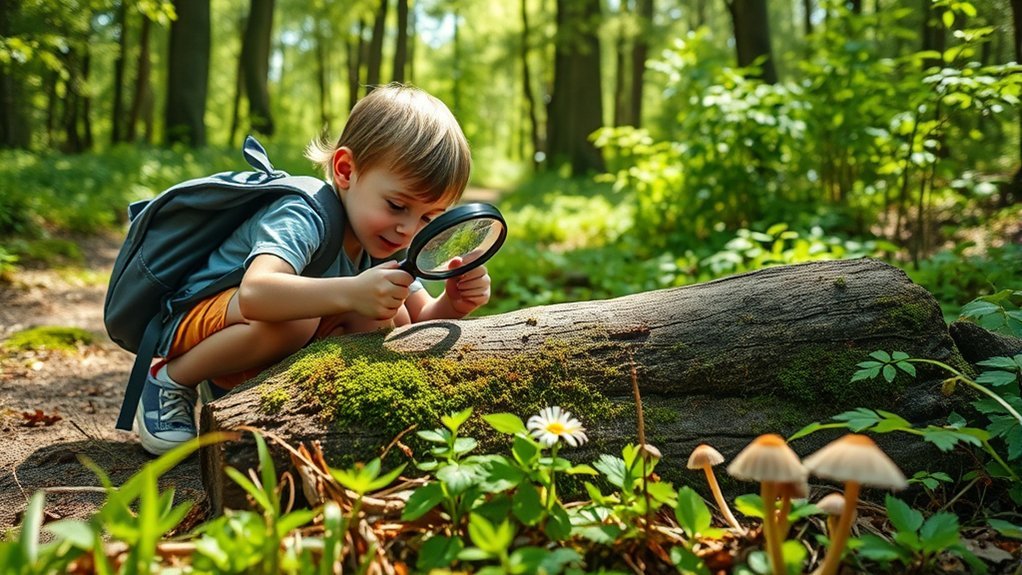
When you hand your child a magnifying glass and designate a small area—just a few square feet of ground—you’ll transform their perspective on nature’s hidden world.
A magnifying glass and a small patch of earth can revolutionize how children see the natural world around them.
This micro-hike focuses on intensive exploration rather than trail navigation, teaching kids to observe carefully instead of rushing through outdoor spaces.
Essential items for micro-hike exploration:
- Magnifying glass for close-up inspection
- Small notebook to sketch discoveries
- Plant identification guide or app
- Ruler to measure findings
- Collection jar for temporary observation
Challenge your child to count how many different species they can find.
They’ll discover insects, varied leaf shapes, moss patterns, and soil textures. This concentrated observation builds scientific thinking and patience while developing genuine curiosity about ecosystems existing beneath our feet.
Web of Life Activity

After your child has observed individual organisms up close, help them understand how these discoveries connect to each other through the Web of Life activity.
Gather your family in a circle and assign each person a role: sun, plant, insect, bird, or predator. Using yarn, create a physical food web by connecting each organism to what it eats or depends on.
When you’re finished, gently tug one strand and watch the entire web shake, demonstrating habitat interdependence.
This hands-on experience reveals how removing one species affects the entire ecosystem. Your child will grasp that nature isn’t just individual creatures but an interconnected system where everything relies on something else.
It’s a powerful lesson that transforms abstract ecological concepts into tangible understanding.
Bark Rubbing Art Hunt
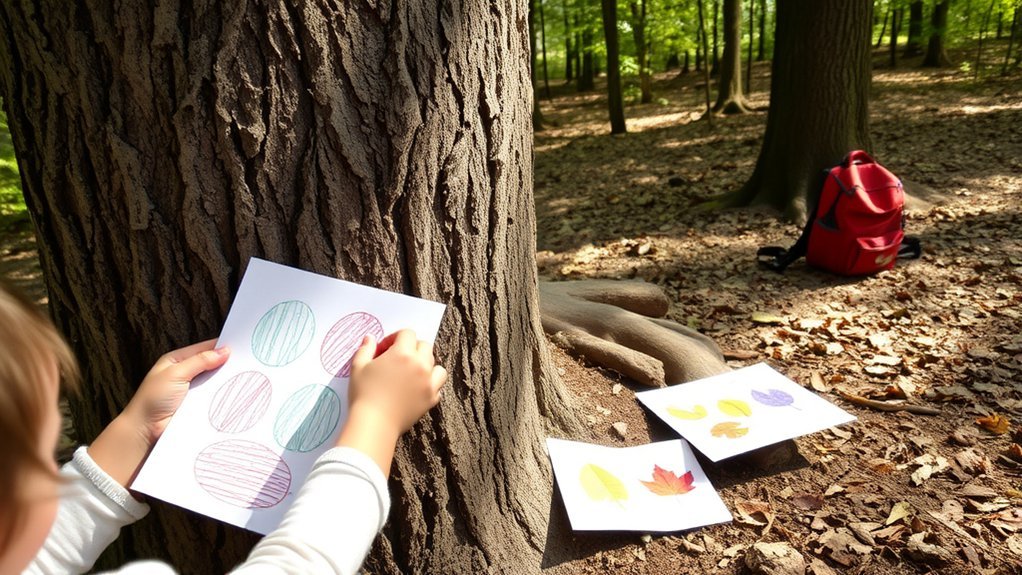
Trees become living art galleries when you equip your child with paper and crayons for a bark rubbing adventure. This bark texture exploration transforms ordinary walks into creative expeditions where kids discover unique patterns hidden on every trunk.
Essential supplies for your hunt:
- White paper or newsprint sheets
- Unwrapped crayons in various colors
- Masking tape to secure paper
- Collection bag for fallen leaves
- Field guide for tree identification
Your child holds paper against bark, rubbing sideways with crayons to reveal intricate designs. Each tree species offers distinct textures—rough oak ridges, smooth beech surfaces, or shaggy hickory patterns.
Every tree tells its own textured story through bark—from oak’s deep ridges to beech’s silk-smooth surface waiting to be discovered.
This nature art inspiration creates stunning collection pieces while teaching observation skills. Challenge kids to find five different bark patterns, comparing rubbings to identify species and understand forest diversity.
Cloud Shape Storytelling

Looking up provides just as much wonder as examining tree trunks below.
Cloud watching transforms into an imaginative learning experience when you encourage kids to find cloud shapes and weave stories around them. Lie down on a blanket and ask children what animals, objects, or characters they see floating overhead.
Use storytelling prompts to deepen engagement: “What’s that dragon-shaped cloud doing?” or “Where is that ship sailing?” Kids can take turns adding to a collective narrative, building communication skills while observing nature’s ever-changing canvas.
This activity sharpens observation abilities and sparks creativity without requiring materials. It teaches patience as clouds slowly morph and encourages descriptive language development.
You’ll find it works anywhere—parks, backyards, or beaches—making it perfectly portable for spontaneous learning moments.
Nature ABC Search
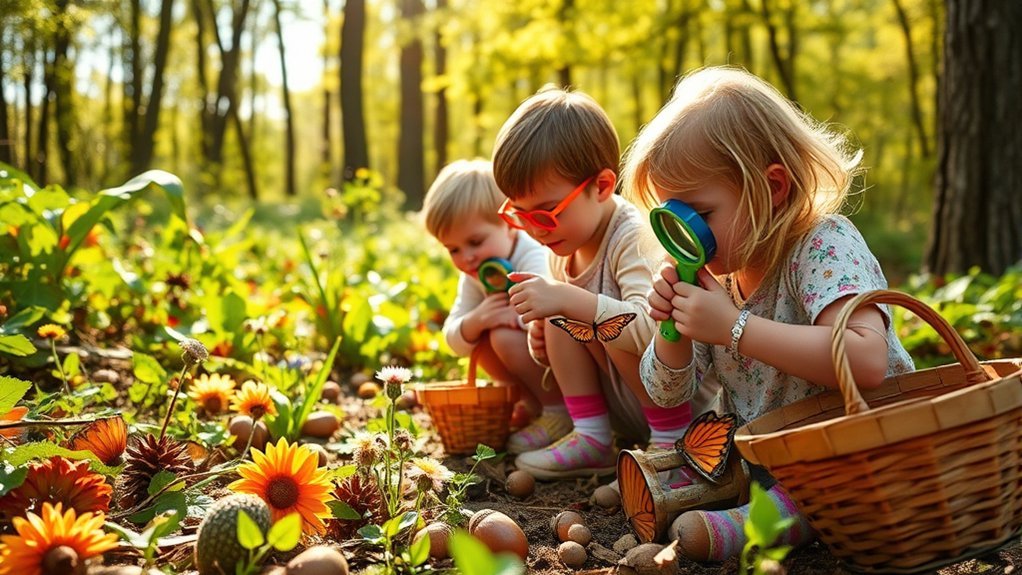
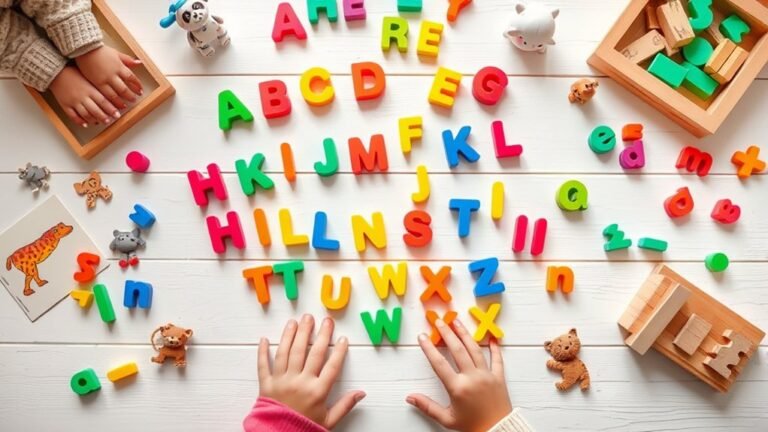
The alphabet becomes an exciting scavenger hunt when you challenge kids to find nature items for each letter. This nature alphabet activity transforms ordinary walks into educational adventures where children search for outdoor letters from A to Z.
Kids can collect or photograph items like acorns, bark, clover, dandelions, and evergreen needles. You’ll watch their observation skills sharpen as they scan their surroundings for hidden treasures.
Make your nature alphabet hunt more engaging with these ideas:
- Create alphabet collection cards for kids to check off discoveries
- Set time limits for competitive searching
- Allow creative interpretations (Y-shaped sticks count for Y)
- Take photos instead of collecting delicate specimens
- Award bonus points for unusual finds
This game works perfectly for various ages since you can adjust difficulty by accepting broader or stricter matches for outdoor letters.
Ecosystem Role-Playing Game
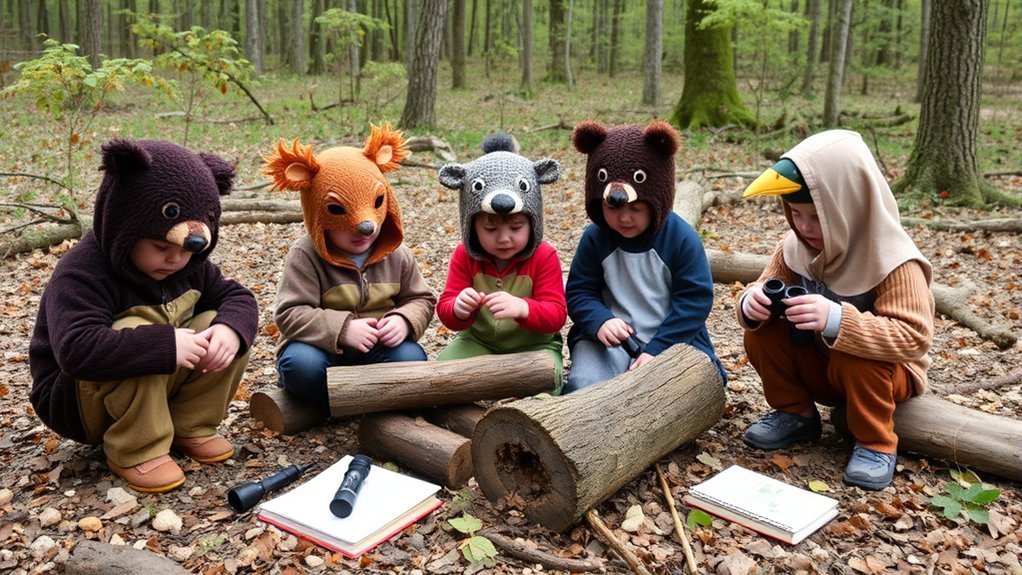
When children act out the roles of predators, prey, and plants in a backyard ecosystem, they’ll grasp food chain concepts far better than any textbook could teach. You can assign roles like hawk, rabbit, grass, and decomposer, then watch as kids navigate survival scenarios together.
Role-playing as hawks, rabbits, and grass teaches children food chain dynamics through active experience rather than passive reading.
This game reveals ecosystem dynamics through direct experience. Your child learns that removing one species affects the entire system, demonstrating interconnectedness naturally. They’ll understand why habitat preservation matters when they see how losing “trees” eliminates shelter for “birds.”
Set clear boundaries for your play area and establish simple rules. Let children problem-solve independently as they discover balance within their mini-ecosystem.
You’ll find they develop genuine environmental awareness while having fun outdoors.
In case you were wondering
What Age Groups Are These Nature Learning Games Most Appropriate For?
You’ll find nature learning games typically suit ages 3-12, with age recommendations varying by complexity. They’re designed to match developmental benefits at each stage, so you can choose activities that’ll challenge your child appropriately while fostering environmental awareness.
How Can These Games Be Adapted for Children With Physical Disabilities?
You can modify nature games using adaptive equipment like sensory bins at wheelchair height, textured nature cards, and audio descriptions. Create inclusive play by offering multiple ways to participate—touching, listening, or observing nature elements together.
What Safety Precautions Should Parents Take During Outdoor Nature Games?
You’ll need to pack a first aid kit and ensure kids wear appropriate outdoor gear like sun hats and closed-toe shoes. Always supervise children, check weather conditions beforehand, and establish clear boundaries for play areas.
Can These Nature Games Be Played Indoors During Bad Weather?
Yes, you’ll find many weather alternatives for nature games indoors. You can create indoor adaptations like scavenger hunts with household items, grow plants in containers, observe insects in terrariums, or study nature through books and videos.
How Long Does Each Nature Game Typically Take to Complete?
Game duration varies widely—you’ll find activities lasting five minutes to full-fledged adventures spanning several hours. Time management matters most; you can adapt nature games to fit your available schedule, whether you’ve got minutes or memorable afternoons ahead.
Conclusion
You’ve now got nine fantastic nature games to transform ordinary outdoor time into extraordinary learning adventures. Funny how the best classroom doesn’t have walls, and the best teacher doesn’t need a degree—nature’s been waiting all along to show your kids its secrets. Whether you’re dealing with restless energy or curious minds, these games work double-duty: they’ll tire out those legs while firing up those brains. Now get outside and play!