15 Educational Valentine’s Day Activities That Teach Kindness and Math
You can turn Valentine’s Day into a sneaky math lesson by combining kindness activities with number practice. Try a compliment jar where kids count slips on Fridays, build kindness chains for skip-counting by 2s, 5s, and 10s, or play bingo with math problems and kindness spotting. Chocolate box grids teach arrays, bead patterns introduce early algebra, and tally walls track who gave the most high-fives. Below, you’ll find even more heart-themed ideas to try.
What you will leave with
- Compliment jars combine kindness with counting practice as students tally anonymous kind notes weekly and celebrate totals together.
- Kindness chains teach skip-counting by 2s, 5s, and 10s using colored paper strips documenting individual kind acts.
- Valentine Kindness Bingo requires solving math equations and witnessing acts of kindness to mark squares and win prizes.
- Candy hearts enable sorting, graphing, estimation, and addition/subtraction practice while celebrating the Valentine theme.
- Kindness tracking with tally marks creates data for bar graphs, helping students analyze which days had the most kind acts.
Start a Valentine Kindness Challenge With Daily Math Tracking

create a chart where kids track daily kind acts.
Held a door? That’s one point.
Shared crayons? Two points!
By week’s end, they’re adding, graphing, and celebrating their kindness scores.
Now, a quick heads-up about privacy concerns.
Don’t post names publicly without asking first.
Some families have consent issues around sharing their child’s info, even for sweet stuff like this.
A simple permission slip fixes everything.
Let kids tally their own totals privately if they prefer.
You can also use digital tools like Trello or Habitica to track kindness actions and celebrate achievements with older students.
The goal is building math skills AND empathy—not making anyone uncomfortable.
When done right, you’ve got engaged students who see numbers as tools for tracking goodness.
Pretty cool, right?
Build a Classroom Compliment Jar With Counting Practice
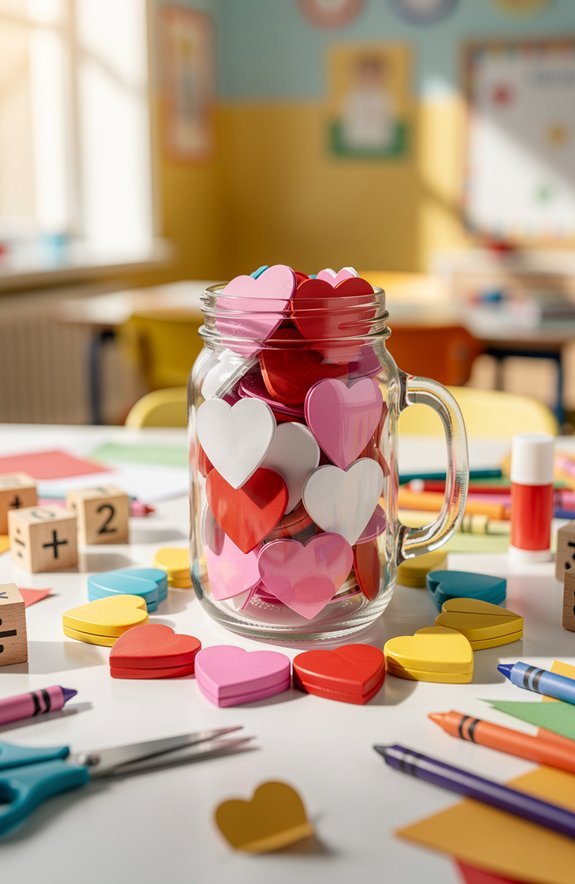
Moving from tracking kindness to celebrating it feels pretty natural, right? A compliment jar takes all those warm fuzzies and makes them countable.
Kids write nice notes about classmates, fold them up, and drop them in.
For jar design, let students go wild with stickers, hearts, and glitter. It’s their creation, so they’ll actually use it.
Now, here’s where privacy guidelines matter. No names on the outside of notes—just inside. This keeps things anonymous until reading time.
Nobody wants their compliment broadcast before they’re ready.
Every Friday, count those slips together. “We collected 47 kind words this week!” That’s real math with real meaning. Kids see kindness literally adding up. Research shows that hands-on activities improve information retention by 73%, making this counting practice stick far better than worksheets.
Plus, watching that jar overflow? Pure magic. They’ll compete to fill it faster.
Create Kindness Chains That Double as Skip-Counting Tools
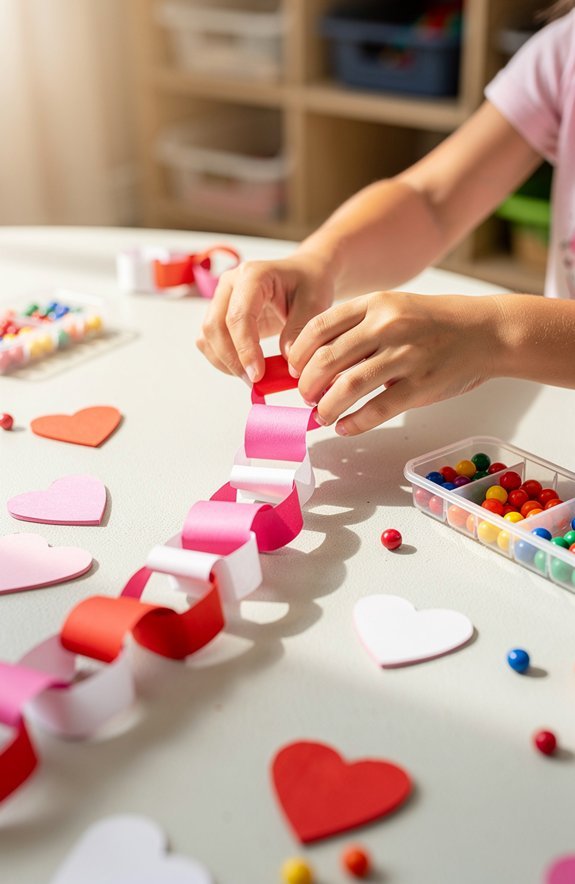
While the compliment jar collects kindness in one spot, a kindness chain spreads it across your entire classroom ceiling.
Here’s the deal: cut construction paper into strips—red, pink, and white work perfectly.
Each student writes one kind act they’ll do, then links their strip to the growing chain.
Boom! You’ve got a visual kindness tracker that takes over your room like festive ivy.
Now for the sneaky math part.
Use chaining strategies to teach skip counting!
Count by 2s with red links, 5s with pink, and 10s with white.
Kids spot counting patterns without even realizing they’re doing math.
That’s the dream, right?
Watch their faces when the chain hits 100 links.
Pure magic.
Plus, you’ve got ceiling decorations that actually mean something.
These kinetic approaches make abstract mathematical concepts more tangible and engaging for young learners.
Play Valentine Kindness Bingo With a Math Twist
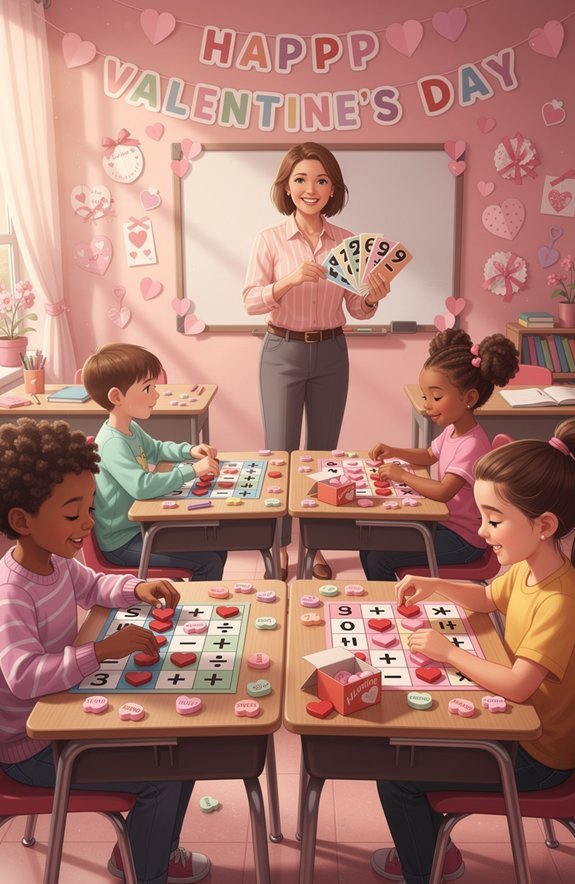
Because kindness chains stretch across ceilings, Valentine Kindness Bingo spreads across desks—and it’s twice as competitive.
Kindness chains decorate the walls, but Valentine Kindness Bingo turns compassion into a classroom competition everyone wants to win.
Here’s the deal.
You create bingo cards with math problems instead of numbers.
Kids solve equations to find their squares, then mark them when they witness acts of kindness.
Saw someone share crayons? Solve 7×4 and stamp that 28!
The bingo rules are simple: five in a row wins, but here’s the twist—you must describe the kind act you spotted.
No making stuff up!
Prize ideas don’t need to break the bank.
Think extra recess minutes, homework passes, or the ultimate glory: line leader for a week.
Suddenly, everyone’s hunting for kindness AND doing mental math.
Your classroom becomes a kindness surveillance squad.
It’s sneaky.
It’s brilliant.
This activity encourages creativity in kids while fostering their self-expression through both math problem-solving and recognizing positive behaviors in their peers.
Write Valentine Thank-You Notes With Tallying Practice
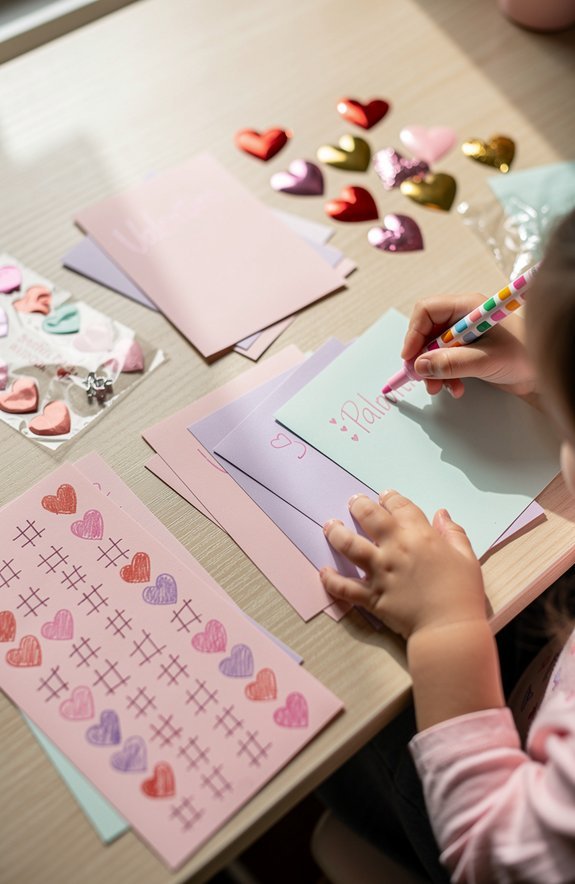
From hunting kindness to counting it—thank-you notes are the perfect next move. Your kid gets to practice letter etiquette while secretly doing math. Sneaky, right?
Here’s the game plan:
- Have them write thank-you notes to family, teachers, or friends
- Tally each note completed with old-school tally marks
- Count totals by fives—boom, skip counting practice
- Compare who wrote more notes using greater than and less than symbols
The best part? They’re building genuine gratitude muscles while working on their handwriting style. Win-win situation here, folks.
Let them decorate each tally mark with hearts or stickers. Suddenly math feels like crafting. This hands-on approach serves as a training ground for emotional and cognitive development while making numbers feel accessible. And honestly? Watching a seven-year-old dramatically count “five, ten, fifteen” with total confidence is pretty adorable.
Use Candy Hearts for Sorting, Graphing, and Estimation
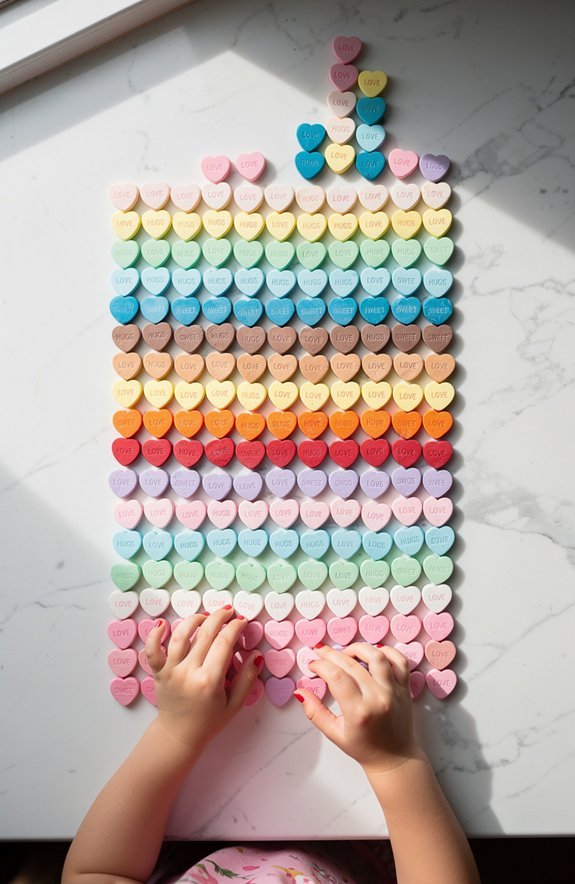
Sorting candy hearts by color might be the easiest way to trick your kid into doing actual math.
Dump out a bag, and suddenly you’ve got a hands-on lesson that tastes delicious.
Candy sorting feels like play, but it’s secretly teaching categorization skills.
Once they’ve got color piles, grab some paper and make a simple bar graph together.
Which color wins?
Pink or purple? The drama is real.
Now here’s where heart estimation gets fun.
Before opening a new bag, have your kid guess how many candies are inside.
Write down the prediction.
Then count together and see who nailed it.
Spoiler: nobody ever guesses right, and that’s hilarious.
Math plus sugar equals zero complaints.
You’re welcome.
Practice Addition and Subtraction With Candy Heart Equations
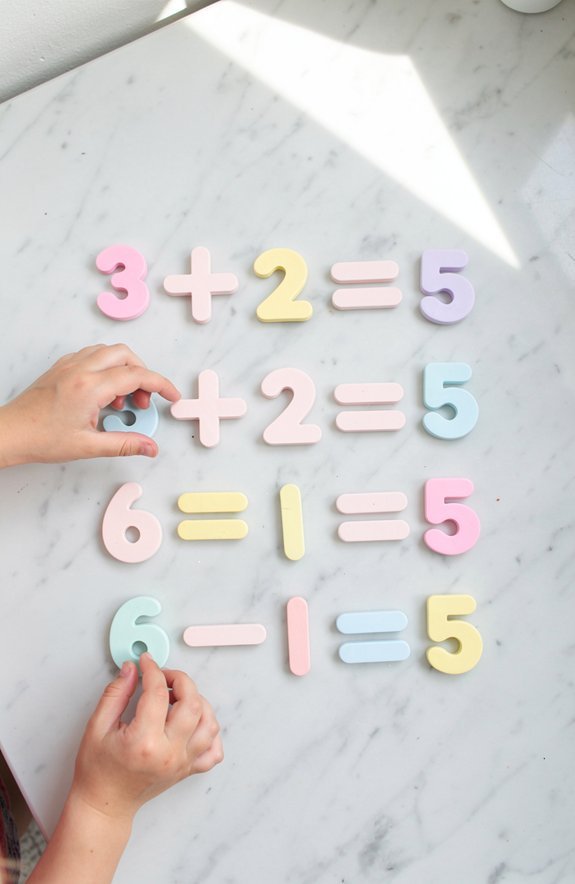
Why stop at sorting when those candy hearts can become tiny math manipulatives?
Heart equations turn snack time into brain time, and honestly, that’s a win-win situation.
Here’s how to make it happen:
- Start simple – Grab five hearts, eat two, and boom: candy subtraction in action.
- Write it down – Use paper to record each equation as you go.
- Challenge mode – Give kids a target number and let them figure out which hearts to combine.
- Trade and solve – Partners swap equations and race to find answers.
The best part? You’re bribing kids with sugar while teaching real math skills.
They’ll remember “7 minus 3” way better when candy’s involved.
Sneaky? Absolutely. Effective? You bet.
Set Up Valentine Math Centers for Number Sense and Shapes
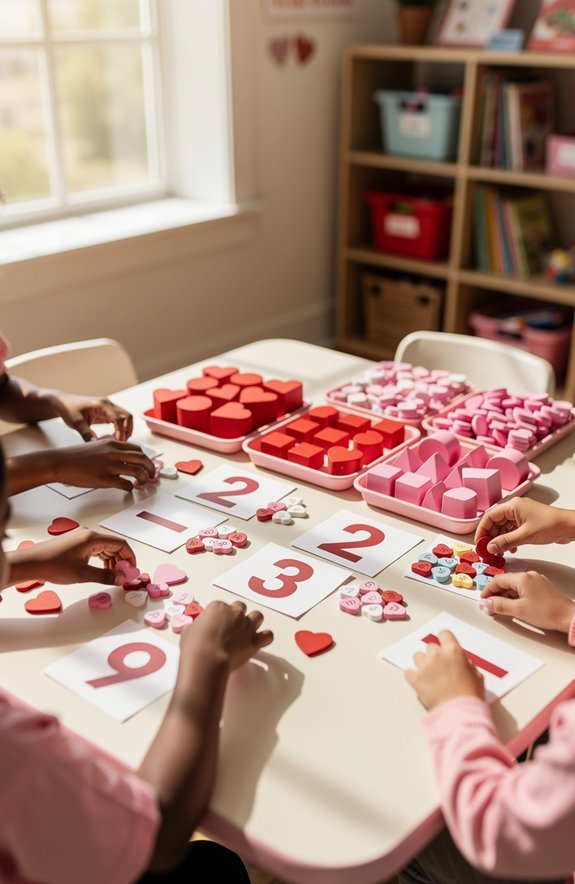
Once you’ve conquered candy equations, it’s time to level up with Valentine math centers that’ll make your classroom feel like a party.
Your center setup doesn’t need to be fancy—just grab some heart-shaped cutouts, foam stickers, and a few plastic bins.
At one station, kids sort hearts by size and color.
Boom, instant pattern practice.
At another, they count conversation hearts into groups of ten.
Number sense? Nailed it.
Shape activities are where things get wild.
Have students build valentines using only triangles, rectangles, and circles.
You’ll get some hilarious robot-looking cards, but hey, they’re learning geometry without even realizing it.
The secret? Rotate every ten minutes.
Kids stay engaged, nobody melts down, and you look like a teaching genius.
Design a Valentine Escape Room With Operations Puzzles
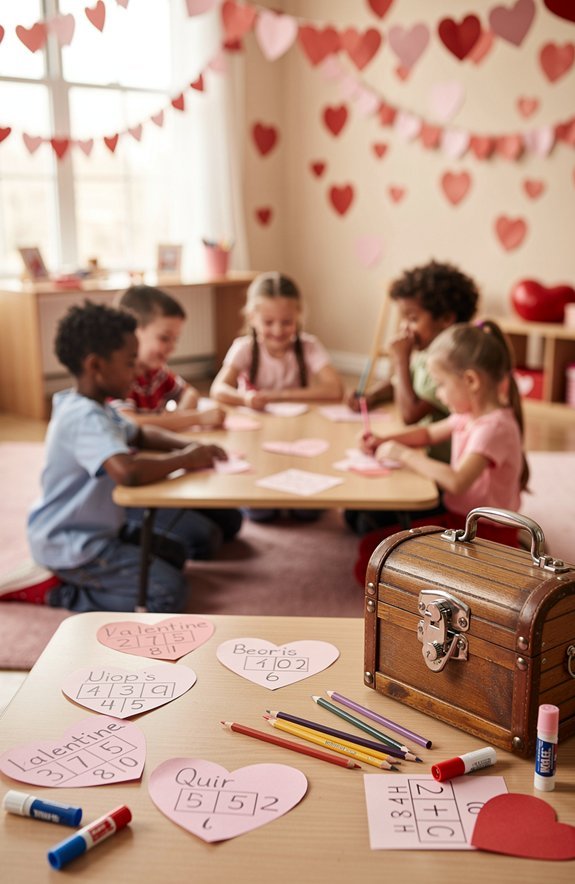
If you really want to blow your students’ minds, transform your classroom into a Valentine escape room where math skills unlock the path to freedom. Kids go absolutely bonkers for this stuff!
Turn your classroom into a Valentine escape room where math becomes the key to freedom—students will absolutely love it!
Your narrative design can be simple: Cupid lost his arrows, and only math wizards can find them. Puzzle pacing matters here—start easy, then crank up the challenge.
Try these operations puzzles:
- Multiplication problems that reveal a locker combination
- Division equations where answers spell secret words
- Addition chains that lead to hidden envelopes
- Subtraction sequences unlocking the final treasure chest
Watch your students huddle together, scribbling calculations like their lives depend on it. They’ll beg you to do this again. Math suddenly becomes the coolest thing ever—and you didn’t even have to bribe them!
Host a Valentine Scavenger Hunt With Math Clue Stations
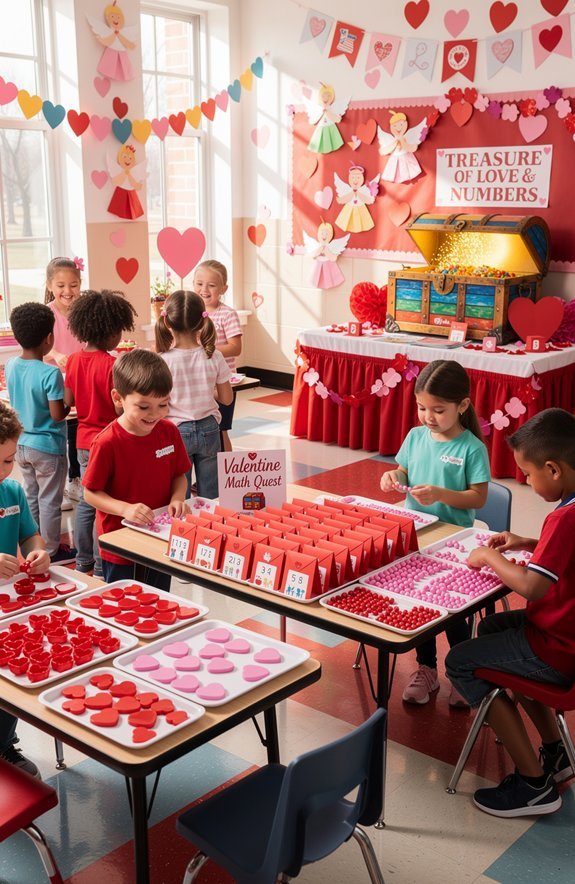
How much fun would it be to watch your students sprint around the classroom hunting for math clues?
Trust me, it’s hilarious.
Kids turn into tiny detectives, and suddenly multiplication feels like cracking a secret code.
Here’s the deal with hunt logistics: tape math problems at different stations around your room.
Each solved problem reveals the next location.
Maybe station one says, “12 × 3 = ? Go to locker number ___!”
Easy peasy.
For clue pacing, don’t cram all the hard stuff together.
Mix easy problems with tricky ones so nobody rage-quits mid-hunt.
Start simple, build up, then end with something satisfying.
The grand finale? A box of Valentine stickers or tiny chocolates. Nothing motivates a kid like snacks. Absolutely nothing.
Measure Valentine Hearts and Cards With Different Units
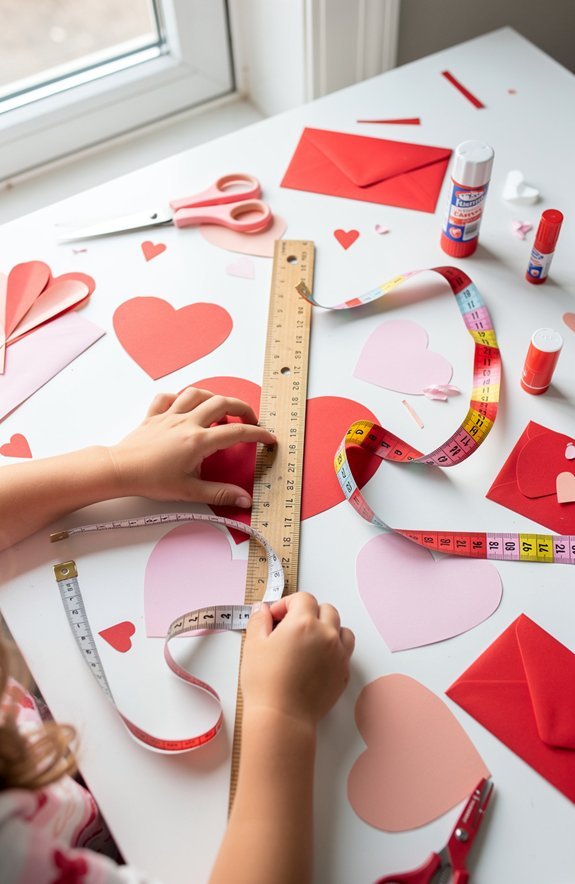
After all that running around, it’s time to slow things down—but keep the learning cranked up. Grab those Valentine hearts and cards because you’re about to turn them into measuring superstars!
Slow the pace, not the learning—transform Valentine hearts into hands-on measuring tools kids will love.
Here’s the fun part—units comparison gets wild when you use weird stuff to measure:
- How many paper clips long is that heart?
- How many gummy bears wide is your card?
- What about erasers? Crayons? Your thumb?
- Now measure the same heart with a ruler in inches AND centimeters
That last one? Pure unit conversion magic. Kids flip out when they realize the same heart is different numbers depending on what you use. It’s like a math brain explosion—but the good kind. Measuring has never been this ridiculous or this educational!
Explore Arrays and Area With Chocolate Box Grids
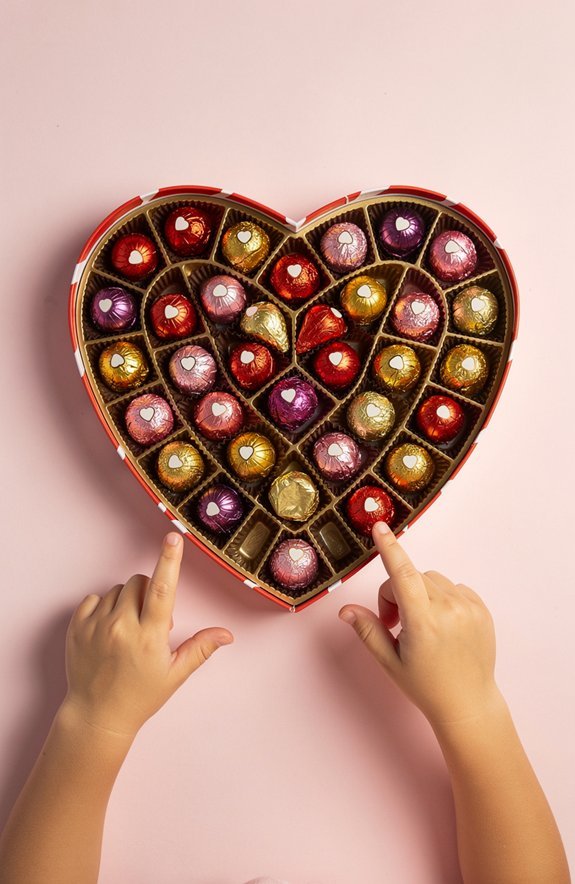
Ever wondered what happens when chocolate meets math?
Pure magic, honestly.
Grab an empty chocolate box and let your kids count the little compartments.
That grid isn’t just packaging—it’s perfect array visualization in action!
Have them count rows and columns.
Three rows of four?
That’s 3 × 4 = 12 chocolates.
They’re basically doing area calculation without even realizing it.
Sneaky, right?
No empty box?
Draw grids on paper and pretend.
Kids can color in “chocolates” and figure out how many fit.
You can even make it dramatic: “Oh no! Someone ate five chocolates! How many are left?”
The best part?
This turns multiplication from boring memorization into something delicious.
Math has never tasted so good—even if the actual chocolates disappeared days ago.
Create Valentine Bead Patterns for Early Algebra Skills
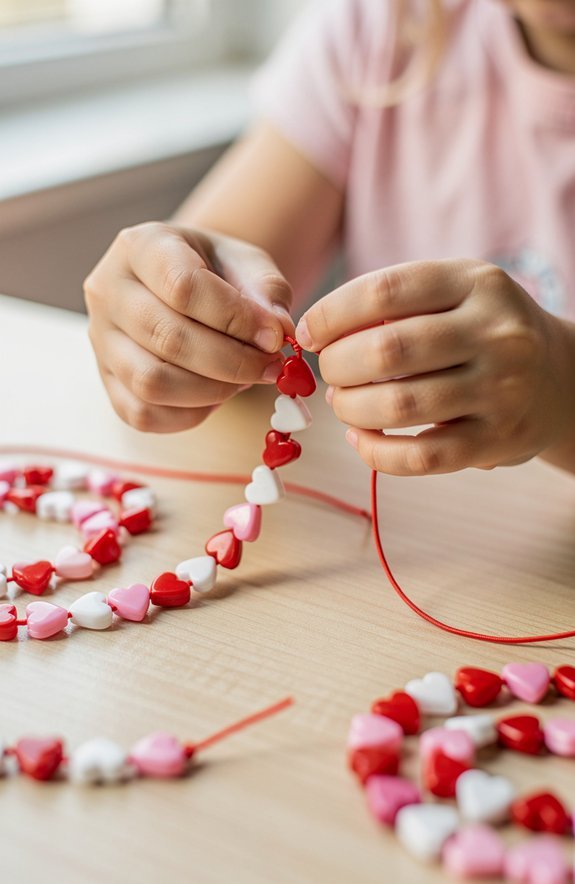
Chocolate boxes teach multiplication, but beads? They’re secretly algebra teachers in disguise! When kids string Valentine beads, they’re learning pattern sequencing without even knowing it. Sneaky, right?
Beads are undercover math teachers—kids master algebra basics through pattern play without realizing they’re learning.
Here’s how to make it work:
- Start with simple AB patterns like red-pink-red-pink
- Level up to ABC patterns with hearts, stars, and circles
- Challenge them to predict what bead comes next
- Create matching bracelets using bead symmetry
The magic happens when kids realize patterns have rules.
That’s literally what algebra is!
You’re basically raising tiny mathematicians while making friendship bracelets.
When they figure out bead symmetry on their own, their faces light up like they’ve cracked a secret code.
Which, honestly, they have.
Math never looked so cute.
Track How Kindness Spreads With Simple Data Graphs
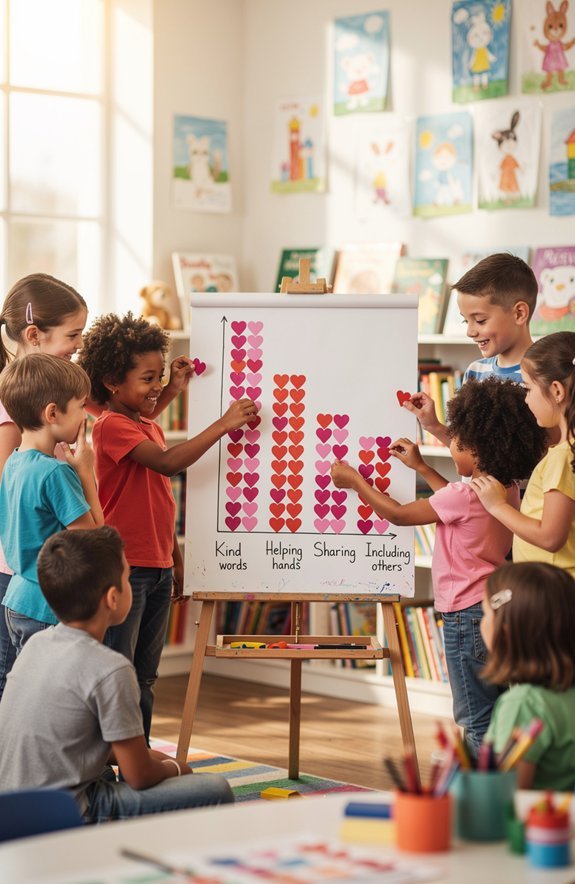
Tracking kindness sounds cheesy, but stick with me here—it’s actually genius.
Give each kid a chart.
Every time they do something nice—or receive kindness—they add a tally mark.
By week’s end, you’ve got real data storytelling happening.
Kids can graph their results with simple bar charts.
Who gave the most high-fives?
Which day had the most kind acts?
Watch their faces light up when they spot spread patterns.
Kindness literally multiplies when people pay it forward!
The math sneaks in beautifully.
They’re counting, comparing, and analyzing without even realizing it.
Plus, you’re showing them that kindness isn’t just fluffy feelings—it’s measurable.
Pro tip: Use heart stickers instead of tally marks.
Same data, way cuter.
Your classroom walls will look adorable and educational.
Map Classroom Gratitude on a Valentine Tally Wall
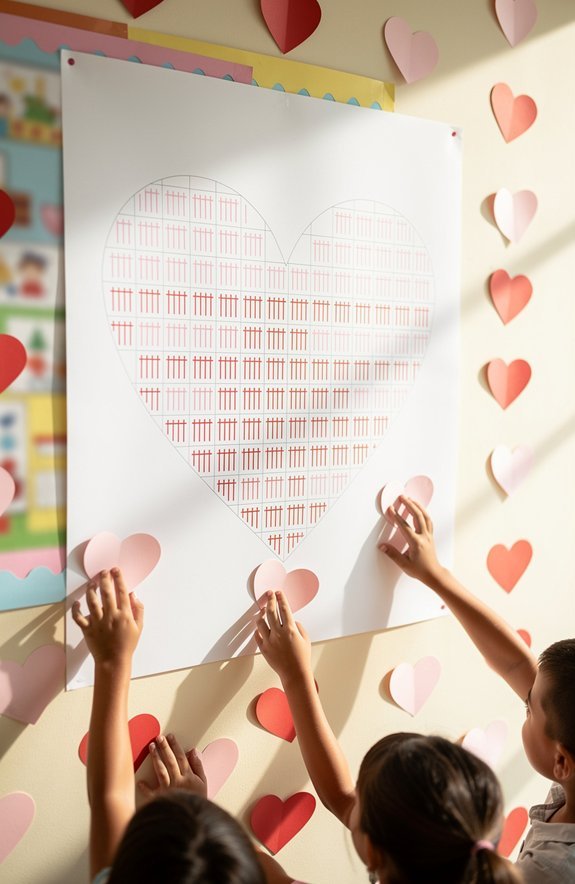
Now let’s take that data magic and blow it up—literally.
Create a giant gratitude mapping wall where kids slap tally marks every time they catch someone being awesome.
It’s like a kindness scoreboard, but way cooler.
Here’s how to make it pop:
- Divide your wall into sections for different kind acts
- Give each kid colorful stickers or markers for their tallies
- Count totals together every Friday afternoon
- Celebrate the category with the most marks
Those tally reflections hit different when they’re huge and visible.
Kids start hunting for good deeds like they’re on a treasure quest.
Plus, watching those marks multiply? Pure dopamine.
Your classroom transforms into gratitude central, and honestly, the math practically teaches itself while everyone’s busy being sweet.
In case you were wondering
How Can I Adapt These Valentine Math Activities for Students With Learning Disabilities?
You can use accessible strategies like visual aids, hands-on manipulatives, and simplified instructions. Apply universal design principles by offering multiple ways to solve problems, providing extra time, and using larger fonts with clear formatting.
What Alternative Materials Work for Candy Heart Activities With Food Allergy Concerns?
You can substitute candy hearts with nonfood items like foam hearts, plastic gems, or erasers. Sensory materials such as textured buttons or felt shapes also work well, letting students sort and count safely while staying engaged.
How Much Classroom Time Should I Dedicate to Valentine-Themed Math Activities Daily?
You should dedicate 15-20 minutes daily duration for Valentine-themed math activities. Time budgeting works best when you integrate these exercises into your existing math block rather than adding separate sessions to your schedule.
Can These Kindness and Math Activities Be Modified for Virtual or Hybrid Learning?
You can easily modify these activities for different settings. Virtual adaptations include digital card exchanges and online math games, while hybrid strategies let you combine in-person kindness projects with screen-based counting activities for flexible participation.
What Assessment Strategies Work Best for Evaluating Student Learning During Valentine Activities?
Like Cupid’s arrows revealing hidden hearts, you’ll discover student understanding through formative assessment during Valentine activities. You should provide feedback timing that’s immediate—catching misconceptions quickly while students sort candy hearts or calculate friendship bracelet patterns.
Conclusion
You’ve got fifteen ways to sneak some “extra character development” into math time! These activities turn number crunching into heart-warming moments without anyone catching on. Your kids will practice counting while spreading good vibes—that’s a total win-win. So grab those paper hearts, break out the candy boxes, and watch your classroom transform. Math class just got a whole lot sweeter, friend!