What Are Fun STEAM Projects for Kids?
Fun STEAM projects for kids include building a baking soda and vinegar volcano, creating robots from recycled materials, designing popsicle stick bridges, coding games with Scratch, and growing crystal gardens. You’ll find most supplies around your home—cardboard boxes, bottle caps, pipe cleaners, and kitchen ingredients work perfectly. These hands-on activities teach real science and engineering concepts while keeping things playful. Below, you’ll discover step-by-step guides for each project.
Key Takeaways
- Build a baking soda and vinegar volcano to create fizzy eruptions that demonstrate chemical reactions and carbon dioxide gas formation.
- Construct a simple robot using recycled materials like cardboard boxes, bottle caps, and small motors to learn basic engineering.
- Design and test popsicle stick bridges to explore engineering principles like structural stability and load-bearing capacity.
- Create video games using Scratch programming, which uses colorful snap-together blocks to teach loops, variables, and conditions.
- Grow a crystal garden using borax or salt solutions to observe science through patience and hands-on experimentation.
Build a Baking Soda and Vinegar Volcano

When you combine baking soda and vinegar, something magical happens—a fizzy eruption that looks just like a real volcano!
This classic chemical reaction creates carbon dioxide gas, which bubbles up and overflows in a spectacular volcano eruption. Your kids will love watching it happen again and again.
What You’ll Need:
- Small plastic bottle or cup
- Baking soda (2 tablespoons)
- Vinegar (1/2 cup)
- Dish soap (a few drops)
- Red food coloring
- Clay or playdough to build your volcano shape
Steps:
- Shape clay around your bottle to create a volcano cone
- Add baking soda and a drop of dish soap
- Pour in colored vinegar and watch the eruption begin
This hands-on experiment teaches real science while sparking wonder and curiosity.
Create a Simple Robot Using Recycled Materials
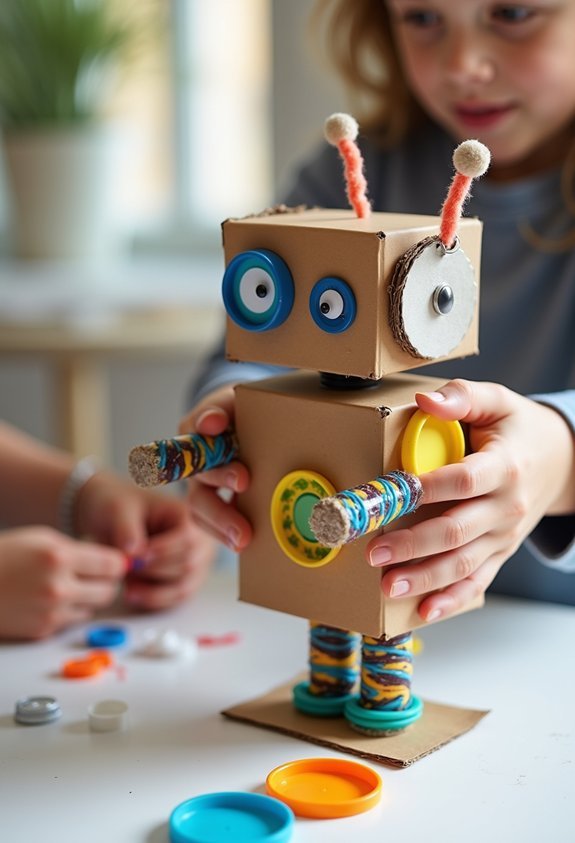
Turning old boxes and bottle caps into a moving robot sounds impossible—but you can absolutely do it!
Robot materials you’ll need:
- Cardboard boxes or tubes
- Bottle caps for wheels
- Rubber bands
- A small motor (from old toys)
- Batteries and wires
Steps to build:
- Design your robot body using cardboard
- Attach bottle cap wheels with rubber bands
- Connect the motor to create movement
- Add fun details like googly eyes or pipe cleaner arms
This project introduces programming basics in a hands-on way. You’re learning how machines work by building one yourself!
Don’t worry if your first robot wobbles. That’s part of the fun. Each try teaches you something new.
Design and Test a Popsicle Stick Bridge
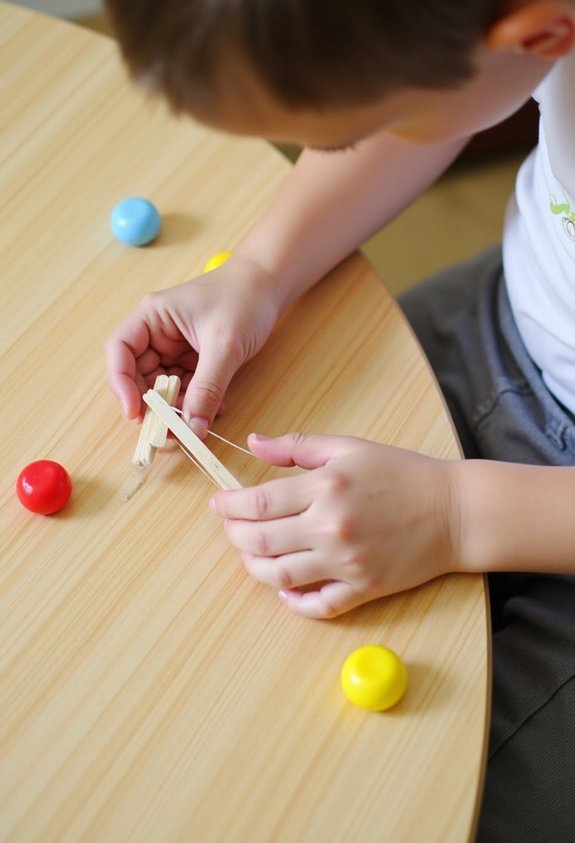
Building a bridge from popsicle sticks might seem like child’s play, but you’re actually exploring real engineering principles that shape bridges around the world!
Simple popsicle sticks unlock the same engineering secrets used to build the world’s most impressive bridges.
You’ll need:
- Popsicle sticks
- Wood glue
- Small weights or coins
Steps to build:
- Sketch your bridge design first
- Create triangular shapes for strength
- Glue sticks together and let them dry completely
- Connect your sections into one structure
Now comes the exciting part—load testing! Place your bridge between two surfaces and gradually add weight. Watch how your bridge handles the pressure.
Notice where it bends or cracks. This tells you about bridge stability and where you need more support.
Don’t worry if it breaks. That’s how real engineers learn too!
Code Your First Video Game With Scratch

Scratch opens the door to game design in a way that’s both fun and surprisingly powerful. You’ll drag colorful blocks to make characters move, jump, and score points. No typing tricky code—just snap pieces together like digital LEGOs.
Here’s what makes Scratch perfect for learning coding basics:
- You see results instantly. Click “run” and watch your sprite do exactly what you told it to do.
- Mistakes are easy to fix. Just unsnap a block and try something new.
- You can share your creations. Show friends and family what you built.
Start simple. Make a cat chase a mouse. Add sound effects when they collide. Before you know it, you’ve learned loops, variables, and conditions—real programming concepts that stick.
Grow a Crystal Garden at Home
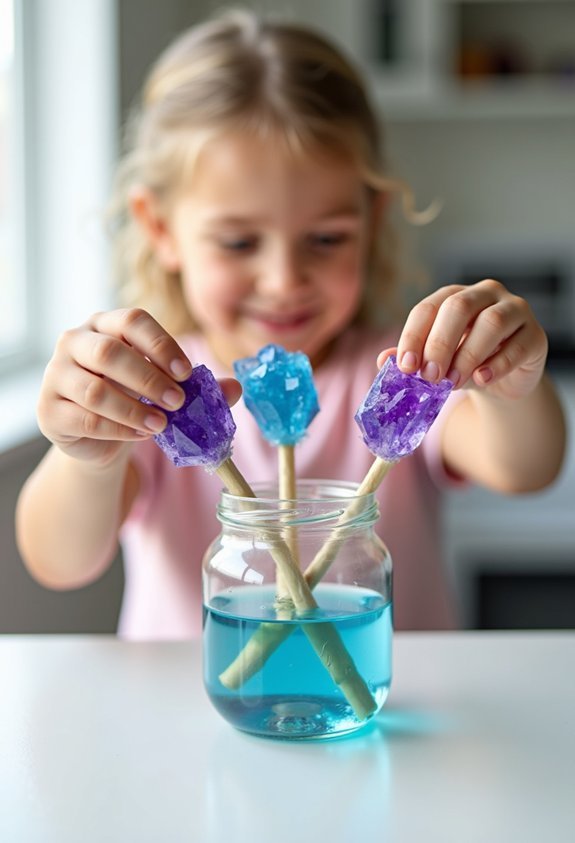
While coding brings ideas to life on a screen, growing crystals lets you watch science happen right before your eyes.
Crystal formation takes patience, but the results are magical. You’ll see tiny structures appear and grow over days.
What you need:
- Borax or salt
- Hot water
- Pipe cleaners
- Glass jars
Steps to start:
- Twist pipe cleaners into fun shapes for your garden design
- Mix hot water with borax until dissolved
- Hang your shapes in the solution
- Wait 24 hours
Watch as crystals form along every surface. Try different colors by adding food dye. Each garden turns out unique.
This project teaches patience and observation. You’re growing something beautiful from simple ingredients.
Construct a Working Electric Circuit With LED Lights

Once you’ve watched crystals grow slowly over days, you’re ready for something that happens in an instant—making light appear with your own hands.
Building a simple circuit teaches cause and effect in the most satisfying way. You’ll connect basic circuit components—a battery, wires, and an LED—and watch the bulb glow the moment the loop closes.
Here’s why this project sparks curiosity:
- You see electricity’s path clearly
- Different LED colors show energy levels
- Mistakes teach without danger
Start with a coin battery and a single LED. Touch the longer leg to positive, the shorter to negative. That glow? You made that happen.
Try adding a switch next. Now you control the light. That’s real engineering, and you’re doing it.
Launch a Homemade Rocket With Water Power
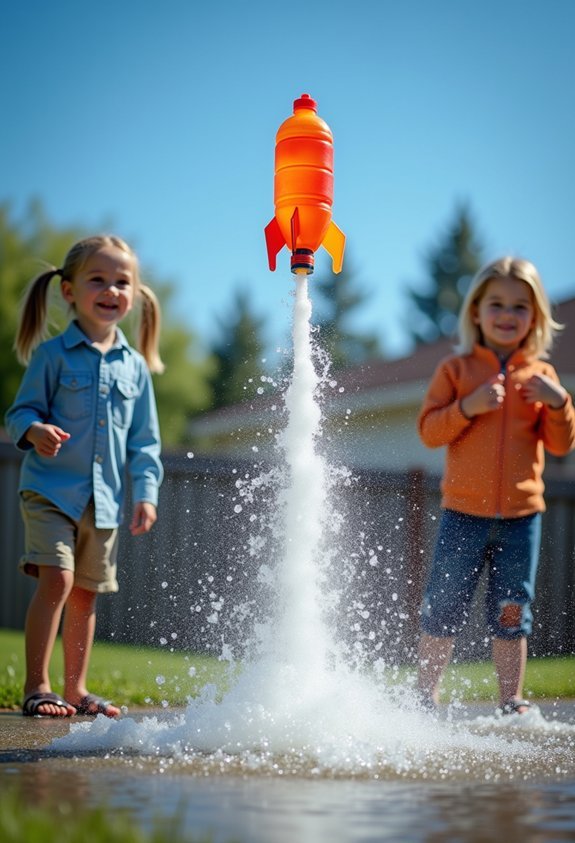
From tiny lights to big launches—now you’re ready to send something flying.
A water rocket shows rocket propulsion in action. You’ll see how water pressure creates enough force to blast a bottle skyward.
What you need:
- Empty 2-liter plastic bottle
- Bicycle pump with needle adapter
- Cork that fits snugly
- Water
- Open outdoor space
Steps to launch:
- Fill the bottle one-third with water
- Push the cork in firmly
- Insert the pump needle through the cork
- Flip the bottle upside down on a launch stand
- Pump air until the cork pops free
Stand back and watch it soar! The compressed air pushes water out fast, and your rocket shoots up. You’ve just demonstrated real science in your backyard.
Engineer a Marble Run From Cardboard Tubes
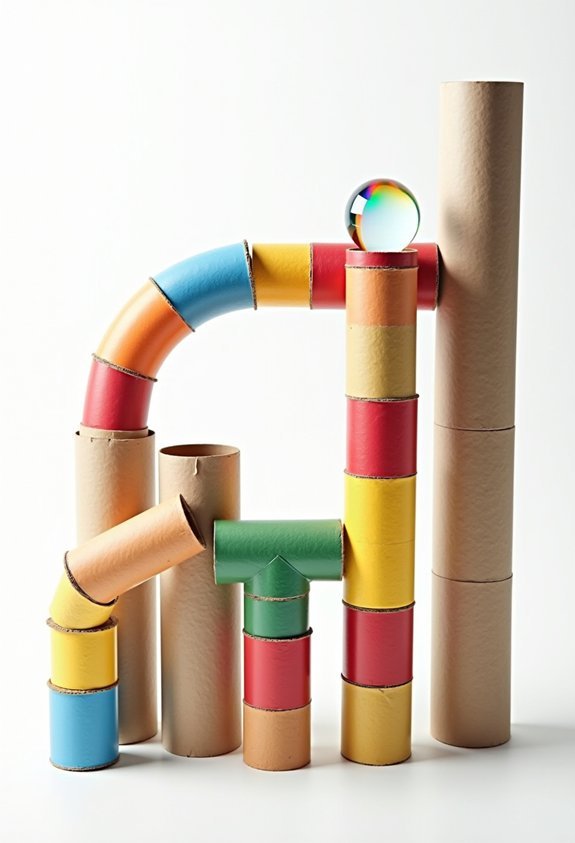
Every marble run you build becomes a mini physics playground where gravity does all the heavy lifting. You’ll discover marble mechanics firsthand as you watch your sphere zoom through twists and drops. It’s exciting to see your design come to life!
Start by collecting toilet paper rolls, paper towel tubes, and cardboard scraps. Tape them to a wall or large box at different angles. Test often and adjust as you go.
Focus on these key ideas:
- Angle matters: Steeper slopes mean faster marbles
- Tube stability: Secure each piece so nothing wobbles or falls
- Smooth transitions: Connect tubes closely to keep marbles rolling
You’re thinking like a real engineer now. Each test teaches you something new. Keep experimenting!
In case you were wondering
What Age Is Appropriate for Kids to Start Doing STEAM Projects?
You can introduce STEAM projects as early as preschool, around ages 3-4. Early education lays the foundation, and as your child hits age milestones, you’ll adjust complexity to match their developing skills and curiosity.
How Much Parental Supervision Do STEAM Projects Typically Require?
Like a watchful Marian guiding young Robin Hood, you’ll need varying supervision levels based on your child’s age and project complexity. You should always review safety guidelines beforehand, staying hands-on with younger children.
Where Can I Buy Affordable STEAM Project Supplies?
You can find affordable STEAM project supplies at online retailers like Amazon, Walmart, and educational sites. Don’t overlook local shops such as dollar stores, craft stores, and hardware stores for budget-friendly materials.
How Often Should Kids Engage in STEAM Activities Each Week?
Studies show kids who do STEAM activities twice weekly score 20% higher in problem-solving. You’ll see the best engagement benefits when you maintain this weekly frequency, allowing your child to build skills consistently.
Can STEAM Projects Be Adapted for Children With Special Needs?
You can absolutely adapt STEAM projects for children with special needs. By using adaptive techniques like sensory-friendly materials and inclusive strategies such as flexible pacing, you’ll create engaging experiences that meet each child’s unique learning requirements.
Conclusion
You’ve got the ideas. Now it’s your turn to build, mix, launch, and code. Picture your kitchen table covered in popsicle sticks, LEDs blinking, and crystals slowly forming overnight. These aren’t just projects—they’re adventures waiting to happen.
Grab your supplies. Start small. Watch curiosity grow into confidence with every experiment. You’ll make messes. You’ll learn. And you’ll have so much fun doing it.