How to Choose Perfect Family Bike Trails

Start by honestly evaluating your youngest or least experienced rider’s abilities—they’ll set the pace for everyone. Choose paved, flat trails under 5 miles for beginners, ensuring they’re separated from traffic and offer restrooms every few miles. Look for routes with multiple exit points so you can bail out if someone gets tired or cranky. Test shorter distances first, gradually building up as confidence grows. The details below will help you match every factor to your family’s specific needs.
Key Takeaways
- Evaluate each family member’s skill level, stamina, and endurance through shorter test rides before selecting longer trails.
- Choose paved, flat trails with minimal elevation changes for beginners; match terrain difficulty to your group’s capabilities.
- Select trail lengths based on youngest riders: young children handle 2-5 miles, while teens manage 10-15 miles comfortably.
- Prioritize trails with dedicated paths separated from traffic, protected crossings, and minimal road intersections for safety.
- Ensure trails have restrooms every 3-5 miles, water fountains, shaded rest areas, and multiple accessible exit points.
Assess Your Family’s Skill Levels and Physical Abilities

Before you start browsing trail maps and packing snacks, take an honest inventory of what each family member can handle on two wheels. Consider your youngest rider’s stamina and coordination alongside your teenager’s endurance. A proper skill assessment means evaluating balance, braking confidence, and how everyone manages hills.
Family fitness varies widely, so don’t assume everyone’s at the same level. Your seven-year-old might tire after three miles, while your twelve-year-old craves longer adventures. Note any physical limitations or recent injuries that could affect performance.
Test shorter rides near home first. Watch how quickly kids fatigue and whether they maintain focus throughout. This realistic evaluation prevents mid-trail meltdowns and ensures you’ll select routes where everyone succeeds, building confidence for future cycling adventures together.
Understand Different Trail Surface Types and Terrain

Once you’ve gauged your family’s abilities, you’ll need to decode what trail descriptions actually mean for your riding experience.
Trail surfaces dramatically affect ride difficulty and comfort. Understanding gravel versus asphalt helps you set realistic expectations—paved paths offer smooth, predictable riding perfect for beginners, while gravel demands more control and causes faster fatigue.
Paved paths provide smooth sailing for beginners, while gravel trails require extra skill and tire out riders more quickly.
Elevation changes matter significantly. Even gentle slopes challenge young riders, so check trail profiles beforehand.
Consider these terrain factors:
- Surface consistency – Are there exposed roots, rocks, or washouts?
- Width clearance – Can bikes safely pass others or ride side-by-side?
- Drainage conditions – Does the trail flood or stay muddy after rain?
- Technical features – Are there tight turns, narrow bridges, or steep descents?
Match terrain to your family’s capabilities.
Determine the Ideal Trail Length for Your Group
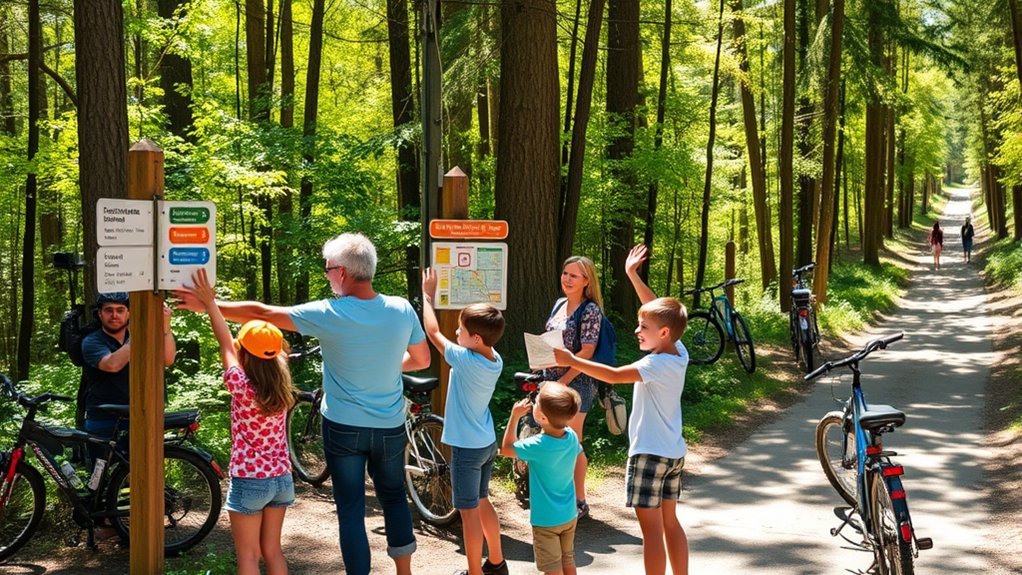
How far can your youngest rider realistically pedal before exhaustion sets in? This question should guide your trail distance preferences.
Young children typically handle 2-5 miles, while teens can manage 10-15 miles comfortably.
Assess your group endurance levels honestly. Consider each family member’s fitness level, cycling experience, and age.
Don’t let enthusiastic riders push the pace beyond what slower members can maintain.
Plan for frequent breaks by choosing trails with rest areas or scenic stops.
Remember that children need more frequent water and snack breaks than adults.
Start with shorter distances and gradually increase mileage as your family builds stamina.
It’s better to finish strong and eager for your next ride than to create negative experiences through overambitious planning.
Prioritize Safety Features and Traffic Separation
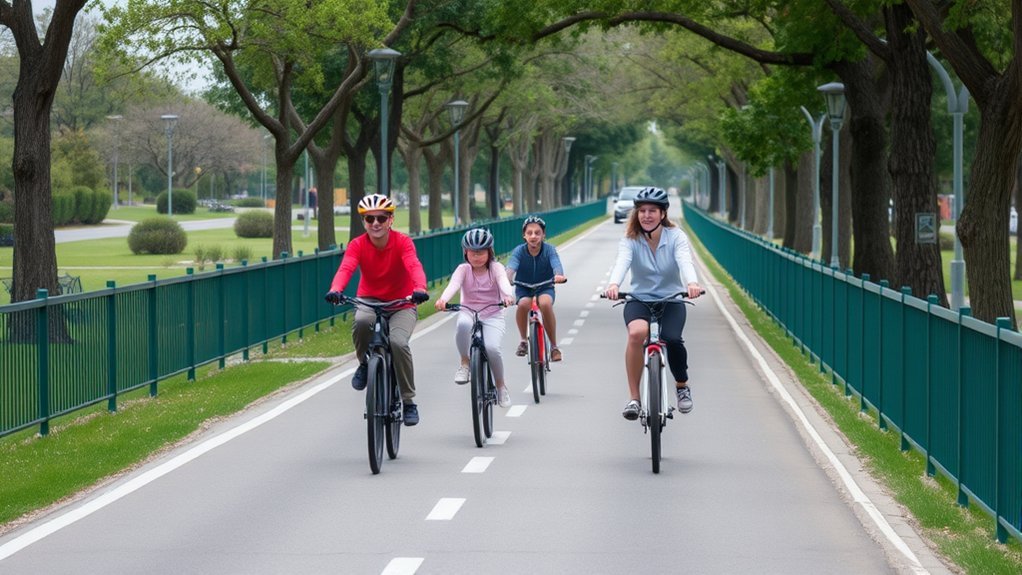
After determining appropriate trail distances, your next step involves evaluating how well a trail protects your family from vehicle traffic.
Look for dedicated paths that completely separate cyclists from cars. When complete separation isn’t available, protected bike lanes with physical barriers offer substantial safety advantages over painted lines alone.
Examine these critical safety elements:
- Grade-separated crossings that eliminate interactions with traffic signals
- Continuous bike lanes without sudden gaps or transitions into car traffic
- Wide path shoulders providing recovery space if children swerve
- Clear sightlines at intersections and curves
You’ll want trails with minimal road crossings.
When crossings exist, ensure they feature traffic signals specifically designed for cyclists, complete with clear signage and adequate crossing time for your slowest rider.
Look for Essential Amenities Along the Route
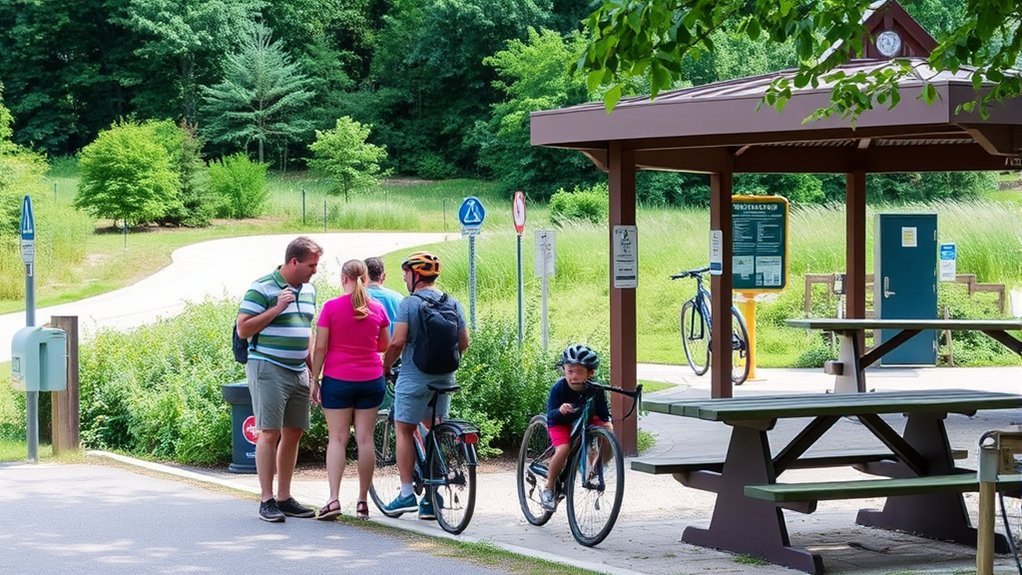
While safety features form your trail’s foundation, strategically placed amenities transform a good ride into an excellent family experience.
You’ll want trails with consistent restroom availability, especially when riding with young children who can’t wait long between stops. Look for facilities every 3-5 miles along your route.
Picnic spots matter too. Designated areas with tables and shade let your family refuel and rest without spreading blankets on the trail. Check if benches appear regularly for quick breaks.
Water fountains, bike repair stations, and parking areas near trailheads enhance convenience. Some trails offer playgrounds at intervals, giving kids alternative activities when they need cycling breaks.
Map these amenities before departing, so you’ll know exactly where to stop when needs arise.
Consider Scenic Interest and Entertainment Value

Beyond practical considerations, what captures your family’s attention and imagination during the ride? Scenic viewpoints and family friendly attractions transform ordinary trails into memorable adventures that keep kids engaged and excited.
Look for routes featuring:
Routes with natural landmarks, historical sites, playgrounds, and water features transform simple bike rides into exciting adventures that captivate young explorers.
- Natural landmarks – waterfalls, rock formations, or wildlife viewing areas
- Historical points of interest – old bridges, heritage sites, or interpretive signs
- Playgrounds or rest areas – places where kids can stretch and play
- Water features – lakes, streams, or beaches for cooling off
Choose trails offering visual variety and interesting stops along the way. Kids stay motivated when there’s something exciting to discover around each bend.
Trails with multiple scenic viewpoints give everyone reasons to pause, rest, and appreciate the journey beyond simply reaching the destination.
Check Accessibility for Bikes, Strollers, and Equipment
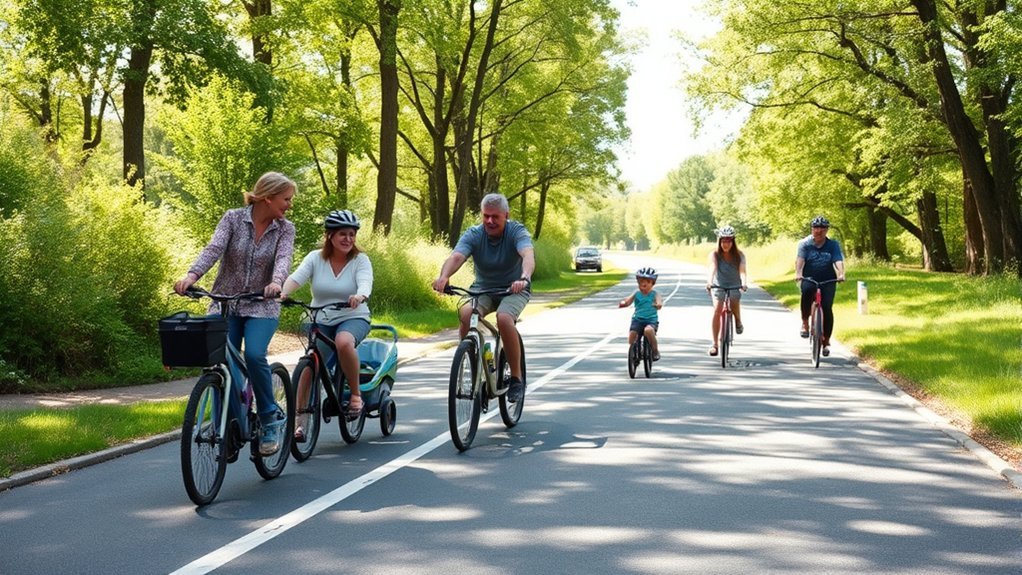
How wide are the trail entrances, and can you actually fit your gear through them? Before heading out, verify that gates and barriers accommodate bike trailers, tag-alongs, and wide-load cargo bikes. Some trails have narrow turnstiles or bollards that block larger equipment.
Check trailhead facilities for bike racks, restrooms, and water fountains. You’ll need secure places to lock bikes during breaks.
Examine parking options carefully—ensure there’s adequate space for loading and unloading multiple bikes, plus room for changing diapers or adjusting helmets.
Look for accessible ramps rather than steep stairs at entry points. Confirm the surface is paved or hard-packed enough for strollers if younger siblings aren’t biking yet.
These practical considerations prevent frustrating surprises that can derail your family adventure.
Research Trail Conditions and Seasonal Factors
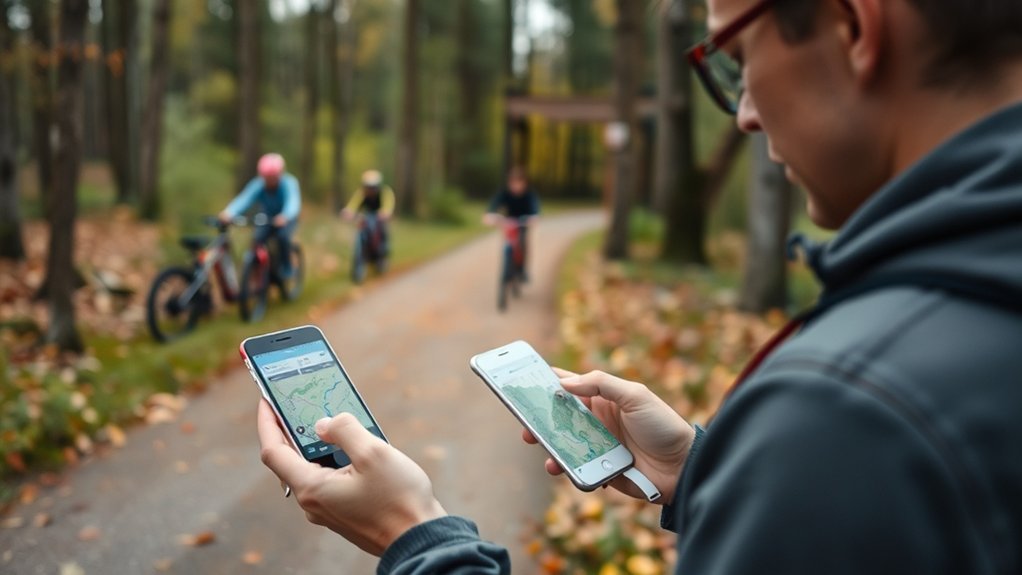
Before you pack your bikes, investigate current trail conditions through official park websites or recent user reviews. Weather patterns can transform trails dramatically—spring mud, summer dust, or fall leaves affect traction and visibility.
You’ll also want to consider seasonal wildlife activity that might impact your ride.
Key seasonal factors to check:
- Temperature extremes – Early morning or evening rides work best during hot summers
- Precipitation timing – Recent rain creates muddy, slippery conditions
- Daylight hours – Plan shorter routes during winter months
- Trail maintenance schedules – Confirm the path isn’t closed for repairs
Don’t assume yesterday’s perfect conditions apply today. Trail surfaces change quickly, and what worked last month mightn’t suit your family now.
Check updates within 24 hours of your planned ride.
Plan Your Route With Bailout Points and Alternatives

Even the most carefully researched trail can present unexpected challenges when you’re riding with children. That’s why bailout planning is essential for every family outing. Before you start, identify multiple exit points along your route where you can safely leave the trail if needed. Mark these spots on your map or GPS device, noting nearby parking areas or road access.
Route flexibility means having backup options ready. Choose trails with shorter loop alternatives or out-and-back sections that let you adjust distance on the fly. Download offline maps showing connecting paths and nearby amenities like restrooms or water fountains.
Share your planned route with someone at home, including your bailout points. This preparation ensures you’ll handle tired kids, bad weather, or mechanical issues without turning your adventure into an ordeal.
In case you were wondering
What Is the Best Age to Start Biking With Children on Trails?
You can start biking with children around age 3-4 using trailer bikes or balance bikes. Age recommendations vary by child’s development, but biking benefits include building confidence, coordination, and family bonding that’ll last years.
How Do I Transport Multiple Bikes to the Trailhead Efficiently?
Like puzzle pieces sliding into place, you’ll find bike racks solve your transport challenge perfectly. Consider hitch-mounted options for carrying multiple bikes securely. Roof racks work too, though they’re trickier with kids helping. Choose what fits your vehicle best.
Should I Purchase or Rent Bikes for My Family Members?
You’ll save money long-term by purchasing bikes if you ride regularly, but renting’s smarter for occasional trips. Consider bike maintenance costs and your family’s commitment level before deciding. Many locations offer convenient rental options for beginners.
What Are the Best Apps for Finding Family-Friendly Bike Trails?
You’ll find excellent trail mapping through TrailLink, AllTrails, and Komoot. Check app reviews before downloading, as they’ll reveal which features work best for families. These apps show difficulty levels, surface types, and amenities you’ll need.
How Much Should I Budget for Family Biking Gear and Equipment?
Most families spend $200-500 per person initially. You’ll need quality bike gear including helmets, lights, and repair kits. Smart budgeting tips: prioritize safety equipment first, then buy accessories gradually as your family’s cycling hobby grows.
Conclusion
You’ve got the tools to find trails your whole family will love. Take the Martinez family from Portland—they started with flat, paved riverside paths for their toddler and grandma, gradually building up to moderate terrain as everyone’s confidence grew. Within six months, they’d explored fifteen different trails together. Now it’s your turn. Start with that easy trail you’ve been eyeing, pack your gear, and create your own family cycling memories this weekend.